

Note: This article contains affiliate links. If you click on these links and make a purchase, I may earn a small commission at no extra cost to you. This helps support my research and content. Read my full affiliate disclosure here.
Choosing the right soil for container palms changes how well these plants establish roots, tolerate wet spells, and access nutrients in a confined pot. For potted palms, a mix that balances drainage, aeration, and water-holding capacity keeps roots healthy without frequent overwatering or constant drying. This guide covers the six top soil choices for potted palms shortlisted for typical patio, balcony, and indoor container situations. We explain why each mix type made the list and the evaluation criteria used so you can pick the right soil for your palm's size, pot material, and watering routine.
Top Picks at a Glance
| Best Overall The best all-around choice for most situations | Espoma Organic Cactus Potting Soil Mix, 4 qt |  |
| Best Quality Built to a higher standard if you want something more solid | Chalily Tropical Gold Potting Soil — Premium Mix for Tropical Plants |  |
| Best Value The sweet spot between price and what you get | Espoma Organic Cactus & Succulent Potting Mix (8 qt, 2-pack) |  |
| Best Budget The cheapest option that still gets the job done reliably | Gardenera Palm Tree Potting Mix (1 Quart) |  |
| Highest Rated A top-rated pick with lots of positive feedback | E.B. Stone Organics Citrus & Palm Mix Potting Soil, 1.5 cu ft |  |
| Most Popular A crowd favorite that many people choose with confidence | Miracle-Gro Cactus, Palm & Citrus Potting Mix, 8 qt. |  |
Espoma Organic Cactus Potting Soil Mix, 4 qt

| Brand | Espoma |
|---|---|
| Volume | 4 quarts |
| Unit Count | 128 Ounce |
| Contains | Peat moss, humus, perlite, mycorrhizae |
Espoma Organic Cactus Potting Soil Mix is a lightweight, peat-based blend designed to improve drainage and root aeration for container plants. Typical uses include repotting succulents, cacti, and smaller container palms and citrus where fast drainage is important. The mix contains sphagnum peat moss, humus and perlite, plus a mycorrhizal inoculant to support root establishment. In practice this means soil that dries out more quickly than all-purpose mixes, reducing the risk of root rot in drought-tolerant species and helping young palms settle after repotting. Because it is organic and free of synthetic fertilizers, gardeners who prefer natural inputs can use it without adding immediate chemical feeds. Limitations are its small 4 quart volume and peat-heavy base, which may require mixing with coarser materials or regular feeding for larger palms or long-term container culture.
Best for: Buyers looking for an organic, fast-draining potting mix to repot succulents or small container palms and who prefer natural ingredients over synthetic additives.
Less Ideal for: Gardeners needing large volumes for big specimen palms or long-term container culture should choose a coarser, larger-volume mix or blend this with chunky amendments.
- Formulated for drainage and aeration with peat moss and perlite
- Includes mycorrhizae to encourage root growth and establishment
- Organic blend with no synthetic fertilizers or chemicals
- Suitable for repotting succulents, cacti and smaller container palms
- Small 4 quart bag may not be cost-effective for large pots or multiple palms
- Peat-heavy mix can compress over time and may need amendment for long-term container use
Verdict: A compact, organic, fast-draining mix that helps establish roots in succulents and small container palms when you need a natural potting medium.
Chalily Tropical Gold Potting Soil — Premium Mix for Tropical Plants

| Brand | Chalily |
|---|---|
| Style Name | Tropical |
Chalily Tropical Gold is a ready-to-use potting mix aimed at tropical species such as plumeria, hibiscus, palms, and crotons. The blend is described as nutrient-enriched and moisture-retentive yet well-draining, so it can be used for repotting container-grown plumeria or refreshing topsoil in tubs and planters. Its formulation claims to support strong root establishment and large leaf growth, which is useful for quick-growing tropical ornamentals. In practice, the mix should reduce watering frequency compared with straight potting soil while avoiding waterlogging thanks to drainage components. The product is positioned for both greenhouse production and home use, so it suits frequent repotting and routine container care. Limitations are that exact ingredient proportions and feeding schedule are not specified, so growers seeking precise control over pH, fertilizer strength, or custom coarse drainage may want to amend the mix with pumice or perlite and follow a regular fertilization plan for flowering plumeria.
Best for: Home gardeners and hobbyists who want an off-the-shelf, tropical-focused potting mix for container plumeria and other heat-loving ornamentals and prefer convenience over custom blends.
Less Ideal for: Growers who require a precisely controlled, custom soil recipe for show-quality flowering or those who prefer to blend their own coarse drainage and fertilizer levels from raw components.
- Formulated specifically for tropical plants to promote strong roots and vigorous foliage
- Balanced moisture retention with claimed good drainage to reduce root stress
- Enriched with natural nutrients to support early growth without immediate fertilization
- Used by professional growers, suggesting consistency for production and repeat use
- No detailed ingredient list or component proportions provided for precise customization
- Manufacturer guidance on feeding schedule or pH is not specified in the listing
Verdict: A ready-made, nutrient-rich tropical potting mix that simplifies repotting and routine care for plumeria and other tropical container plants.
Espoma Organic Cactus & Succulent Potting Mix (8 qt, 2-pack)

| Brand | Espoma |
|---|---|
| Number of Packs | 2 |
| Unit Count | 598.4 Ounce |
| Volume | 8 quarts |
This Espoma Cactus & Succulent Potting Mix is designed to give plants that prefer fast-draining soil a balanced, organic medium for container growing. It mixes sphagnum peat moss, humus, and perlite to improve aeration and drainage while including organic amendments such as earthworm castings, alfalfa meal, kelp meal, feather meal, and a proprietary Myco-tone mycorrhizae blend to support root establishment. Typical use is for repotting or planting ponytail palms, succulents, cacti, and other container palms and citrus where preventing water retention is important. The practical benefits are easy handling, organic-certified ingredients suitable for organic gardening, and added biological support from mycorrhizae that can help young roots access nutrients. Expect noticeably better drainage than standard potting soil and reduced risk of root rot when used properly. Limitations are that the mix contains peat moss which can compact over time and may require occasional amendment or top‑dressing, and very heavy feeders may need supplemental fertilization since the product avoids synthetic fertilizers.
Best for: Buyers who want an organic, well‑draining potting mix for container-grown ponytail palms, succulents, or other drought‑tolerant plants and who prioritize natural soil biology over synthetic feeds.
Less Ideal for: Gardeners seeking a moisture-retentive mix for heavy-water‑loving tropical plants or those who want a pre-fertilized, high-nutrient potting soil.
- Formulated for good aeration and drainage suitable for succulents and palms
- Contains organic amendments and earthworm castings to improve soil biology
- Includes Myco-tone mycorrhizae to help root establishment
- Approved for organic use and made without synthetic fertilizers or chemicals
- Contains sphagnum peat moss which can compact or dry out unevenly over time
Verdict: A ready-to-use, organic potting mix that gives ponytail palms and succulents superior drainage and biological support for healthier container roots.
Gardenera Palm Tree Potting Mix (1 Quart)
| Unit Count | 1 Count |
|---|---|
| Item Type Name | Palm Tree Potting Mix |
| Volume | 1 quarts |
| Brand Name | Gardenera |
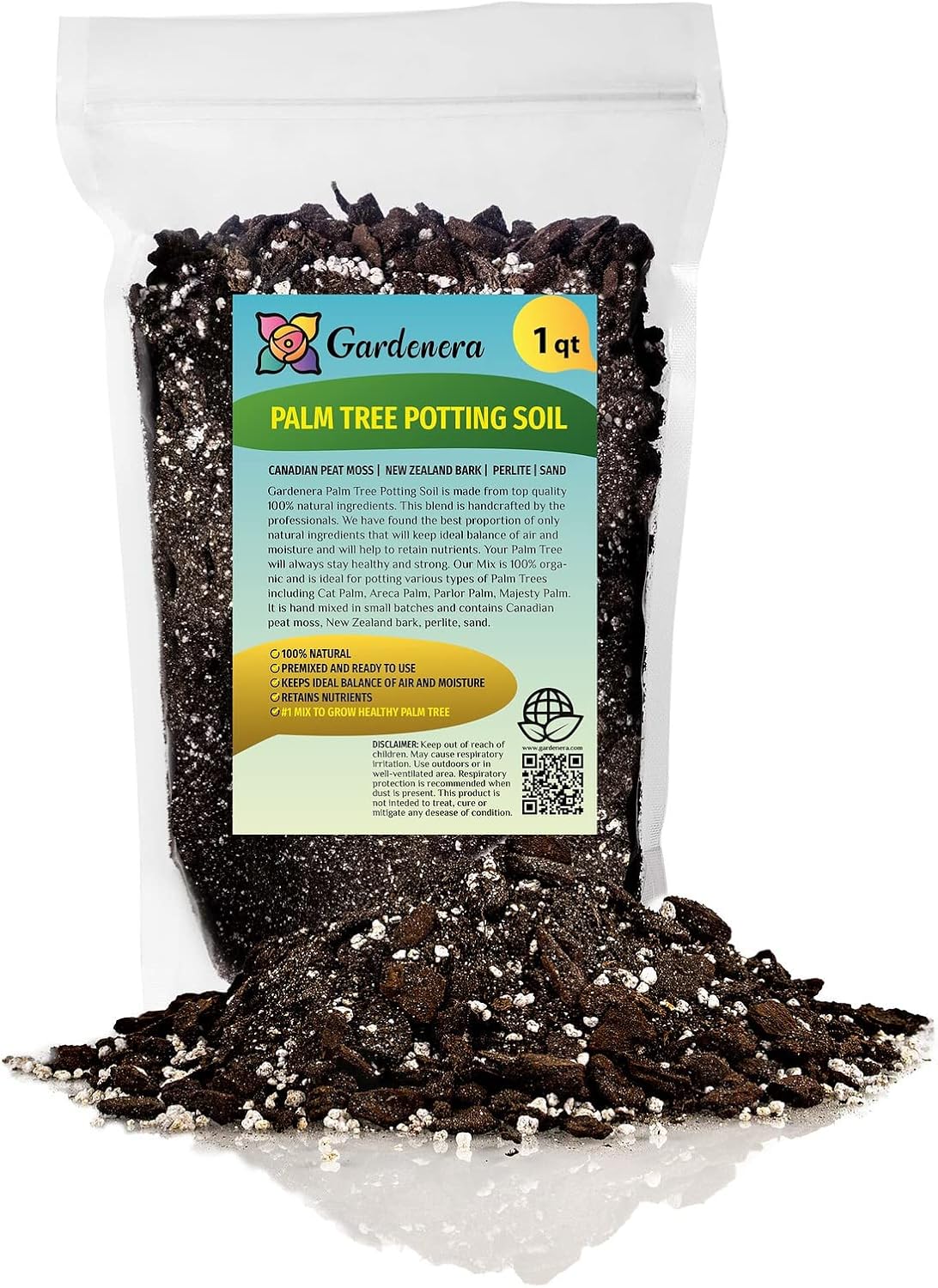
This Gardenera Palm Tree Potting Mix is a ready-to-use blend formulated for palm trees, combining Canadian peat moss, New Zealand bark, Ukrainian perlite, and sand to give a balance of moisture retention and drainage. It is typically used when repotting indoor or container palms or refreshing potting media for established potted specimens. The peat and bark add organic matter and structure while the perlite and sand increase aeration and reduce the risk of waterlogging. In practice this mix makes repotting straightforward: loosen roots, fill the new container, position the palm at the right height, and water to settle the soil. Because the bag is only 1 quart, it is best for single small pots, seedlings, or as a topdressing rather than filling large containers. The product notes safety precautions for handling dusty components, so wear a mask and gloves when working with it. If you want a palm-tailored, easy-to-use small bag for potting or small refreshes, this mix covers the bases; for larger jobs you will need multiple bags or a larger size option.
Best for: Buyers who need a small, palm-focused potting mix for repotting seedlings, small potted palms, or for topping up containers and who prioritize a product designed for palm root health.
Less Ideal for: Gardeners needing to fill large containers, multiple palm pots, or outdoor planting holes should avoid this size and choose bulk or larger-volume mixes instead.
- Formulated specifically for palms with peat, bark, perlite, and sand for balanced moisture and drainage
- Good aeration that helps prevent root rot in container palms
- Ready-to-use mix simplifies repotting and small pot top-ups
- Very small 1 quart volume limits use to seedlings or small pots
- Contains dusty components requiring gloves and a mask during handling
Verdict: A compact, palm-tailored potting mix that makes small repots and top-ups simple and effective.
E.B. Stone Organics Citrus & Palm Mix Potting Soil, 1.5 cu ft

| Brand Name | E.B. Stone Organics |
|---|---|
| Unit Count | 1536 Ounce |
| Volume | 1.5 cubic feet |
| Style Name | Potting Soil |
E.B. Stone Organics Citrus & Palm Mix is a ready-to-use organic soil blend designed for container and in-ground planting of citrus, palms, avocados and tropical foliage. The mix pairs aged fir bark and pumice to keep the root zone well aerated and fast-draining so plants that dislike soggy feet avoid root rot, while added mycorrhizae improve nutrient and water uptake. It is intended to be used straight from the bag for potting or worked into beds when planting, which simplifies planting and repotting tasks. For gardeners seeking reliability, this blend delivers consistent structure and moisture retention without heavy amendments, and the organic base supports longer-term soil biology. Limitations are the single bag volume of 1.5 cubic feet, which means larger projects will require multiple bags and mixing on site, and it does not list N-P-K numbers or slow-release fertilizer content so supplemental feeding may be needed for heavy-feeding specimens.
Best for: Gardeners who prioritize reliable, low-maintenance potting media for citrus and tropical plants and want a ready-made organic blend that supports healthy roots.
Less Ideal for: People who need large volumes for landscaping projects or who prefer a potting mix with specified fertilizer content and tailored nutrient ratios.
- Formulated specifically for citrus, palms and tropicals to match their root needs.
- Aged fir bark and pumice provide good drainage and aeration to reduce risk of root rot.
- Contains beneficial mycorrhizae to enhance root nutrient and water uptake.
- Ready-to-use bag simplifies repotting or planting without on-site blending.
- Single bag is only 1.5 cubic feet so multiple bags are required for larger trees or beds.
- No detailed fertilizer analysis provided so additional feeding may be necessary for heavy feeders.
Verdict: Choose this mix when you want a consistent, ready-to-use organic soil that promotes healthy, well-aerated roots for citrus and tropical plants.
Miracle-Gro Cactus, Palm & Citrus Potting Mix, 8 qt.
| Brand Name | Miracle-Gro |
|---|---|
| Volume | 8 quarts |
| Unit Count | 1 Count |
This 8-quart Miracle-Gro potting mix is designed for container-grown cacti, palms, and citrus and combines peat moss, sand, perlite, and forest products for faster drainage and reduced compaction. It arrives ready to use and is enriched with Miracle-Gro plant food so newly potted citrus get an initial nutrient boost without immediate fertilizing. Typical use is straightforward: choose a pot with drainage, fill about one third, set the root ball and top up, then water and allow to drain. The formula helps soil dry between waterings, which is important for citrus root health in containers, and one bag is enough for two 8-inch pots. Limitations are the small volume for larger trees and the presence of peat moss if you prefer peat-free mixes; heavier or older citrus will need larger volumes and eventual repotting. For growers wanting a quick, reliable container medium that balances moisture retention with drainage, this mix performs as expected.
Best for: Growers who repot or maintain container citrus and want a ready-to-use mix that balances drainage and initial feeding for healthier root development.
Less Ideal for: Gardeners potting mature or large citrus specimens that need large volumes of soil or those seeking a peat-free or custom mineral-heavy citrus bonsai substrate.
- Fast-draining blend reduces risk of waterlogged roots for container citrus
- Pre-enriched with plant food to give newly potted plants an initial nutrient boost
- Contains perlite and sand to resist compaction and maintain aeration
- Formulated for indoor or outdoor containers so it works across sites
- 8-quart bag is small for larger or multiple citrus containers
- Contains peat moss which some buyers avoid for sustainability reasons
Verdict: A convenient, fast-draining, plant-food–enriched container mix that makes repotting small to medium citrus trees quick and reliable.
Choosing the Right Soil for Potted Palms: Key Factors to Consider
Drainage and Aeration
Good drainage prevents root rot in potted palms by letting excess water exit while maintaining air spaces around roots. In containers, water can pool at the pot bottom or around the root ball if the mix contains too many fines. Look for particle sizes and ingredients that create a chunky, open structure so oxygen can reach roots even when the surface is moist.
Aeration matters for microbial activity and root respiration. Ingredients like coarse sand, perlite, or coconut coir combined with larger organic particles help maintain stable air pockets and reduce compaction over time.
Water-Holding Balance
Palms need a balance between quick drainage and enough moisture retention to avoid extreme drying between waterings. A mix that dries slightly between irrigations but does not go bone dry is ideal for most container palms. Water-holding components such as well-aged compost or fibered coconut retain moisture but should be blended with coarse materials to avoid waterlogging.
Consider your watering frequency and pot size: smaller pots dry faster and may need mixes with slightly higher water retention, while large containers can use lighter, faster-draining blends.
Nutrient Availability and Release
Container soils must supply accessible nutrients without frequent leaching. Palms are generally slow feeders but benefit from steady, low-dose nutrient release. Soils with a moderate amount of compost or slow-release organic fertilizer can provide steady nutrition while avoiding salt buildup. Avoid mixes that are completely inert unless you plan to manage a strict feeding schedule.
Check ingredient labels for organic matter content and whether any slow-release components are included. This affects how often you will need to supplement liquid feeds.
Organic Structure and Longevity
Organic components govern a soil mix's long-term behavior. Materials that break down quickly will reduce porosity and increase compaction over time, forcing more frequent repotting or amendment. Durable organic elements, such as coir fiber or well-composted bark, help the mix retain structure for a season or more.
Plan for periodic refreshment of the top layer and occasional repotting every few years for container palms. Choosing a mix with stable structure extends the time between full potting changes.
pH and Salt Content
Palms prefer slightly acidic to neutral pH ranges depending on species. Container mixes can vary in pH based on their components. High salt content from unwashed amendments or high-fertilizer mixes can stress roots and leaf tips, especially in smaller pots.
When buying or making mixes, look for low-salt formulations or washed ingredients and consider checking pH if you are growing sensitive palm species indoors.
Compatibility with Pot Material and Size
The same mix will behave differently in terracotta, plastic, or glazed pots because of evaporation rates and weight. Terracotta breathes and speeds drying, so a mix with slightly higher water retention may be appropriate. Plastic holds moisture longer, so a coarser blend helps prevent soggy conditions.
Consider pot depth and root volume when selecting a soil. Shallow pots limit rooting depth and require mixes that support stable moisture without staying saturated near the base.
Mixing Your Own Palm Potting Soil
Creating a custom container mix gives control over drainage and nutrient levels. A simple working blend for many potted palms is a coarse organic base, a chunk of aeration material, and a moisture-retentive but well-structured component. Adjust proportions depending on pot size and watering habits.
A practical starting recipe is coarse pine bark or hardwood fines for structure, coconut coir or well-aged compost for water retention and nutrients, and perlite or coarse sand for aeration. Combine and test a small batch in a pot to see how quickly it drains and how long it holds moisture between waterings.
- Test drainage by potting a small palm and timing how long it takes the surface to dry.
- Avoid fresh uncomposted wood chips that can tie up nitrogen.
- Sterilize reused mix by sun-drying or gentle baking to reduce pests and disease risk.
Refreshing and Reamending Container Soil
Over time, container soils lose structure and nutrients. You can refresh the top few inches of soil annually with fresh mix or compost to replenish nutrients without disturbing roots. For more compacted mixes, consider removing a third of the old soil at repotting and replacing it with fresh blend to restore aeration.
When reamending, avoid adding heavy loam or garden soil directly to pots. Those materials compact quickly in containers and change drainage behavior.
- Top-dress with compost or slow-release organic fertilizer once per year.
- Repot into a slightly larger container when roots become crowded, replacing old soil with fresh blend.
Adjusting Soil for Indoor Versus Outdoor Containers
Indoor container palms typically face lower light and less evaporation, so mixes should retain slightly more moisture and deliver steady nutrients. Outdoor pots on patios face sun and wind, so choose faster-draining blends and expect more frequent watering.
Consider environmental factors such as humidity, temperature swings, and exposure to rain when choosing a mix. Rain can leach nutrients and change moisture balance in outdoor pots, so mixes with some organic reserve are helpful.
- Use coarser mixes and extra drainage in exposed outdoor containers.
- For indoor palms, include a higher proportion of water-retentive organic material but maintain chunkiness for aeration.
Common Mistakes to Avoid with Palm Soils
A frequent error is using garden topsoil or dense potting mixes that compact in containers. Compaction reduces oxygen to roots and increases the risk of root rot. Another mistake is relying on mixes with very high peat content that hold too much water and break down quickly.
Overfertilizing to compensate for nutrients tied up in new mixes can burn root tips. Instead, choose a balanced soil approach and apply light, measured feeds according to observed plant response.
- Do not add heavy clay or raw garden soil to pots.
- Avoid fresh manure or unaged compost in high proportions that can overheat or burn roots.
Best Practices for Repotting Potted Palms
Repot when roots circle the pot or when the soil has lost structure and does not drain properly. Choose a pot only one size larger to avoid excess wet soil. Gently tease out circling roots and replace compacted soil with a fresh blend that preserves aeration.
After repotting, water thoroughly and place the palm in sheltered light until it re-establishes. Monitor moisture closely for the first month and avoid heavy fertilization until new growth appears.
- Repot in spring or early growing season for best recovery.
- Ensure the new pot has adequate drainage holes and consider adding a small layer of coarse material at the base for quick drainage.
How We Chose the Best Soil for Potted Palms
We focused on mixes and soil blends that suit palms grown in containers, not landscape soils. Selection prioritized performance in pots where root space is limited and moisture dynamics differ from in-ground planting. Key evaluation criteria included drainage rate, water-holding balance, nutrient availability and slow-release behavior, organic content and structure, and suitability for common palm species and pot sizes. We also considered how mixes perform in different container materials, such as terracotta and plastic, since those affect drying. Exclusions: we excluded garden topsoil, pure peat-only mixes, and blends designed strictly for cacti or succulents because their nutrient profiles and water behavior differ from what palms need. We filtered out mixes with ingredients known to compact quickly or that rely exclusively on fine particles that reduce aeration. The final list emphasizes mixes that maintain porosity, resist compaction, provide steady feeding, and suit typical container watering patterns.
FAQ
How often should I replace soil in a potted palm?
Plan to refresh the top few inches annually and fully repot with fresh mix every 2 to 4 years depending on species and pot size. Small pots and fast-growing palms typically need more frequent soil replacement.
Can I use garden soil for container palms?
Garden soil usually compacts in containers and reduces drainage, so it is not recommended. If you must use it, amend heavily with coarse material and organic matter to improve structure, but a purpose-made container mix is preferable.
Is peat a good ingredient for palm potting mixes?
Peat retains moisture but can compact and acidify a mix over time. It can be used in moderation if balanced with coarse materials for aeration. Alternatives like coconut coir offer similar water retention with better sustainability in some cases.
What potting mix adjustments help prevent root rot?
Improve drainage and aeration by adding coarse bark, perlite, or coarse sand and avoid overly fine, water-retentive components. Ensure pots have drainage holes and avoid leaving pots standing in water.
How do I check if a soil mix is holding too much salt?
Look for leaf tip burn, stunted growth, or discolored foliage. You can flush the pot with generous water to leach salts and consider using lower-salt amendments or periodically rinsing containers to prevent buildup.
Final Verdict
For potted palms, prioritize a soil that balances fast drainage with enough moisture retention to sustain steady growth. Focus on mixes that maintain aeration, provide steady nutrients, and resist compaction so roots can breathing and access resources in a confined pot. Weigh tradeoffs between water-holding components and coarse structural ingredients based on your pot size and watering routine. Choose a stable, well-structured mix and plan regular refreshment to keep container palms healthy and vigorous.
