

Note: This article contains affiliate links. If you click on these links and make a purchase, I may earn a small commission at no extra cost to you. This helps support my research and content. Read my full affiliate disclosure here.
If you grow variegated Monstera, the right potting mix makes the difference between vibrant white and green patterns and slow, weak growth. Variegated forms rely on careful moisture, oxygen around roots, and steady but not excessive feeding. A tailored soil helps prevent root rot while still supporting the lower photosynthetic efficiency of variegated leaves. This guide outlines the top shortlisted soils for variegated Monstera and explains the practical tradeoffs that matter in a home or indoor-growing setup. We evaluated mixes for drainage, aeration, moisture-holding capacity, and nutrient profile to help you pick a mix that suits your light, pot, and watering style.
Top Picks at a Glance
| Best Overall The best all-around choice for most situations | HydraGarden Forbidden Cereal Aroid Potting Mix, 6.5 QT |  |
| Best Quality Built to a higher standard if you want something more solid | Rosy Soil Aroid Potting Mix, Chunky Biochar Soil, 4 Quarts |  |
| Best Value The sweet spot between price and what you get | Top Tier Genetics Aroid Soil Blend for Monstera and Alocasia (4 qt) |  |
| Best Budget The cheapest option that still gets the job done reliably | Kapecute 2 Quart Monstera Soil Mix |  |
| Highest Rated A top-rated pick with lots of positive feedback | circle soil Breathable Potting Mix for Aroids, 4 Quart |  |
| Most Popular A crowd favorite that many people choose with confidence | Grow Queen Craft Aroid Potting Mix, Chunky Monstera & Tropical Plant Soil, 2 qt |  |
| Best Seller A high-volume bestseller chosen again and again | Back to the Roots Organic Indoor Potting Mix, 6 Quart |  |
HydraGarden Forbidden Cereal Aroid Potting Mix, 6.5 QT

| Unit Count | 6.5 Ounce |
|---|---|
| Brand Name | HydraGarden |
| Style Name | Houseplants & Aroids |
| Ingredients | Orchid Bark, Charcoal, Perlite, Coco Chunks, Coco Coir, LECA Clay Pebbles, Worm Castings, Sphagnum Moss |
HydraGarden Forbidden Cereal is a high-drainage, soilless potting mix built from chunky components like orchid bark, coco coir, coco chips, perlite, biochar, worm castings and LECA clay pebbles with a small bag of New Zealand sphagnum moss layered on top. It is used as a repotting and growing medium for aroids and many common houseplants where preventing waterlogging and improving root oxygenation are priorities. The mix’s large particle profile lets water move quickly through containers, reduces the chance of root rot, and keeps roots from becoming compacted while still offering organic matter and nutrients from castings and charcoal. The separated sphagnum allows you to add a moisture-retaining topper when needed without compromising overall drainage. Practical limits are that its chunky texture holds less water than peat-rich mixes so watering frequency will increase for moisture-loving species, and the soilless formula may require more frequent feeding compared with a loam-based soil. For growers who prioritize fast drainage, root health, and a lightweight, peat-free blend, this mix delivers predictable, performance-focused results.
Best for: Serious growers who prioritize root health and fast drainage for aroids and tropical houseplants and who monitor watering and feeding closely to maximize plant performance.
Less Ideal for: Casual owners who want a low-maintenance, moisture-retentive potting medium or growers of very moisture-loving species that require consistently damp substrate.
- Very high drainage and aeration from chunky ingredients reduces risk of root rot
- Peat-free, soilless organic components including worm castings and biochar for nutrient support
- Layered sphagnum moss gives flexible moisture retention as a topper or propagation aid
- Includes LECA clay pebbles for improved structure and long-term stability
- Holds less moisture than peat-based mixes so plants may need more frequent watering
- Soilless formula typically requires more regular fertilizing for sustained nutrient supply
Verdict: Choose this mix if you need a chunky, peat-free medium that maximizes drainage and root aeration for high-performance aroid growing.
Rosy Soil Aroid Potting Mix, Chunky Biochar Soil, 4 Quarts

| Unit Count | 128 Ounce |
|---|---|
| Volume | 4 quarts |
| Item Highlight | Peat-Free, Microbially Active, Superior Aeration & Drainage |
| Style Name | Aroid Soil |
Rosy Soil Aroid Potting Mix is designed specifically for Monsteras, philodendrons, anthuriums and other tropical aroids that need fast-draining, airy media. The mix combines pine bark fines, pumice and biochar to give a chunky structure that resists compaction and lets roots breathe while water moves through quickly. It is also enriched with worm castings, mycorrhizae and compost to create a microbially active medium that supports nutrient uptake and root vigor over time. Because it is peat-free and formulated to be carbon negative, it is a good choice for growers who want an environmentally friendlier alternative to peat-based mixes. In practical use the mix fills multiple small pots from a 4-quart bag, comes in a resealable bag to stay fresh, and is well-suited for repotting and top-ups where drainage and aeration are priorities. Limitations are the small package size for larger collections and the chunky texture may dry faster than peat blends, requiring more frequent watering for some indoor conditions.
Best for: Buyers who prioritize plant performance and root health for Monsteras and other tropical aroids and who want a fast-draining, microbially active soil that keeps roots airy.
Less Ideal for: Casual plant owners who prefer low-maintenance, moisture-retentive peat blends or who need large volumes for many pots should consider other options.
- Chunky mix with pine bark and pumice provides excellent drainage and prevents compaction
- Includes biochar and beneficial microbes to boost nutrient availability and root health
- Peat-free, designed to reduce carbon impact compared with traditional peat mixes
- Resealable bag and 4-quart volume convenient for repotting multiple small houseplants
- 4-quart bag is small for larger collections or multiple repots
- Chunky texture dries faster than peat-based mixes and may require more frequent watering
Verdict: Choose this mix if you want a high-performance, chunky potting medium that gives Monsteras and other aroids superior drainage, aeration, and microbial support.
Top Tier Genetics Aroid Soil Blend for Monstera and Alocasia (4 qt)
| Volume | 4 quarts |
|---|---|
| Ingredients | Orchid bark; coco coir; pumice; coco husk; worm castings; biochar; mycorrhizae |
| Unit Count | 64 Ounce |
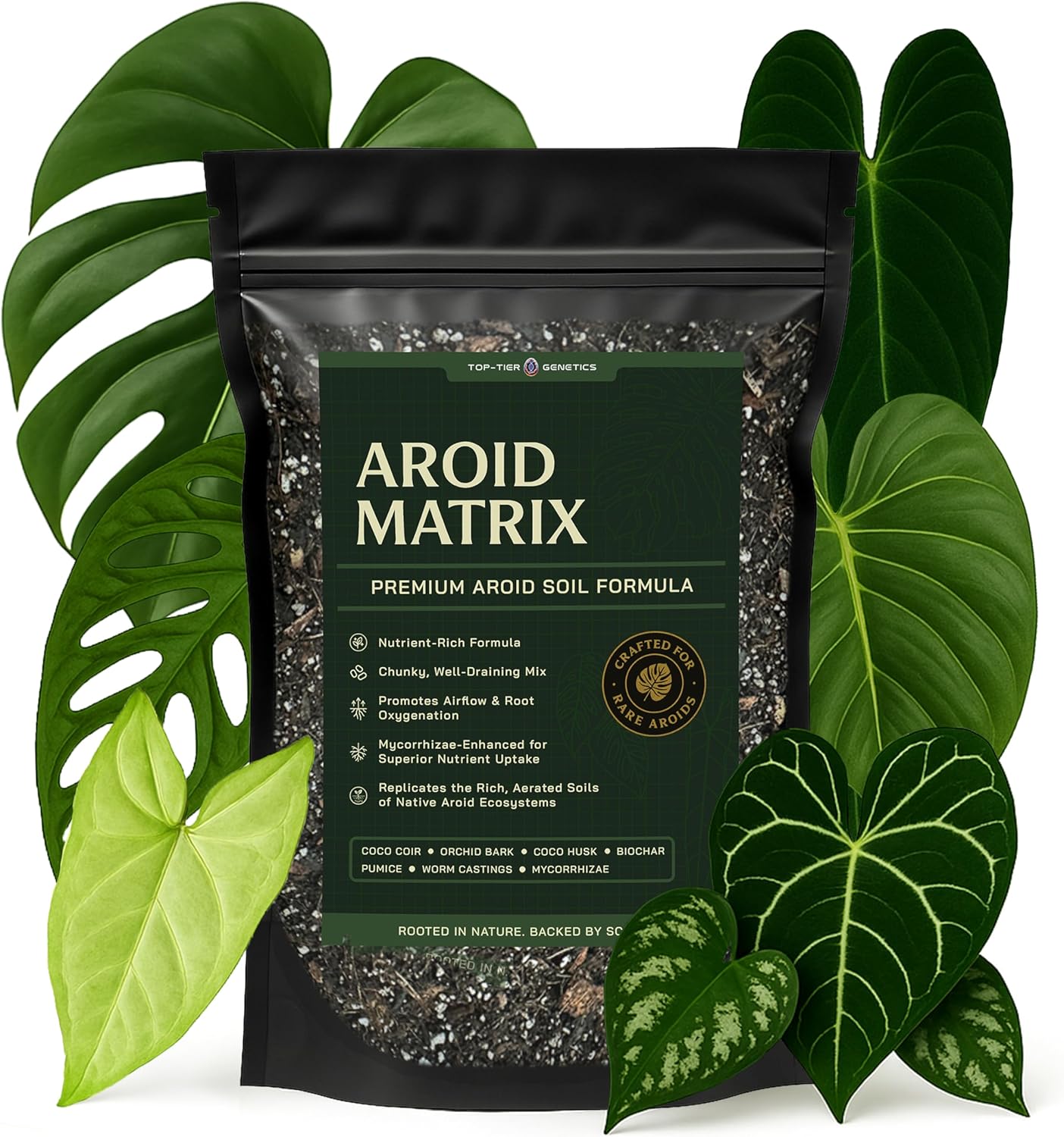
This ready‑to‑use aroid soil is designed for plants like Alocasia and Monstera and aims to give fast-draining, airy conditions without additional mixing. The mix combines orchid bark, coco coir and pumice for chunky structure that keeps media loose and prevents compaction, while coco husk and coir offer balanced moisture retention so roots stay hydrated but not waterlogged. Worm castings and mycorrhizae add nutrients and beneficial fungi to support early root establishment and leaf growth, and biochar helps hold nutrients and foster microbial life over time. Practical benefits include saving time—you can pot plants straight from the bag—and reducing common aroid problems such as slow drainage and root rot. Limitations are the small 4 quart volume, which means it is best for repotting small to medium plants or for top dressing rather than redoing large specimens, and gardeners who prefer precise DIY mixes may find ready blends less customizable.
Best for: Buyers who want a convenient, ready-made soil that minimizes repotting hassle and targets the drainage and biology needs of Alocasia and other aroids.
Less Ideal for: Growers repotting large specimens or those who prefer to custom-blend exact proportions of bark, coir and pumice should look for larger bags or individual components.
- Chunky, well-aerated mix reduces compaction and improves drainage for aroids
- Includes worm castings and mycorrhizae to support root development and nutrient uptake
- Biochar and organic matter help long-term soil biology and nutrient retention
- Ready to use out of the bag saves time compared with mixing components yourself
- Small 4 quart bag may be insufficient for repotting larger Alocasia plants
- Pre-blended formula limits ability to adjust ratios for individual plant preferences
Verdict: A convenient, biology‑forward chunky mix that gives Alocasia the fast drainage and microbial boost they need without any mixing.
Kapecute 2 Quart Monstera Soil Mix

| Brand | Kapecute |
|---|---|
| Unit Count | 7.4 Ounce |
| Item Type Name | Monstera Soil |
| Volume | 2 quarts |
This Kapecute 2 Quart Monstera Soil Mix is a lightweight, pre-blended potting medium aimed at Monstera and other aroid houseplants. It pairs sphagnum moss debris for moisture retention and mild acidity with pine bark and perlite to improve aeration and drainage, which helps reduce the risk of root rot in potted Monsteras. The mix arrives compressed in a compact package and is best used for repotting small plants or top-dressing nursery containers. Notable features include handpicked bark and perlite to limit fines and a small amount of balanced granular fertilizer to support initial growth. Practical benefits are easy use straight from the bag and a texture that resists compaction compared with plain garden soil. Limitations are the very small quantity provided, so it is suitable only for one or two small repots, and the included fertilizer is light so you will need to supplement feeding during active growth. Also take care when hydrating because compressed sphagnum will expand and may require fluffing before use.
Best for: Practical plant owners who want an off-the-shelf Monstera-specific mix for a single repot or to refresh a small pot without blending their own media.
Less Ideal for: Collectors with multiple large Monsteras or gardeners who need bulk potting mix for many plants should choose full-size bags or custom blends instead.
- Blend of sphagnum moss, pine bark, and perlite improves both moisture retention and drainage
- Light, non-compacting texture that helps prevent root rot in Monstera
- Handpicked components reduce dust and small particle fines
- Contains a small amount of balanced granular fertilizer for initial feed
- Only a 2 quart (7.4 ounce) compressed package which is too small for multiple repots
- Fertilizer in the mix is minimal so additional feeding is required for sustained growth
Verdict: A handy small-format Monstera mix that delivers airy, moisture-retentive media for one or two small repots without the need to blend components yourself.
circle soil Breathable Potting Mix for Aroids, 4 Quart

| Unit Count | 48 Ounce |
|---|---|
| Volume | 4 quarts |
| Style Name | Breathable Potting Mix |
| Ingredients | Biochar, Coconut Coir, Coconut Husks, Compost, Worm Castings, Volcanic Minerals |
This breathable mix is built for aroids such as Monstera, Philodendron, and Alocasia that need fast drainage and an open root environment. It combines chunky biochar, coconut husk and coir, local compost, worm castings and volcanic minerals to provide structure, some nutrient content, and microbial support straight from the bag. In practice the coarse particles and biochar keep the soil from compacting, so water passes through rather than pooling at the crown, which reduces root rot risk and helps repotted plants establish faster. The resealable 4-quart bag is convenient for small repots and top-ups. Because it is peat-free and relatively chunky the mix holds balanced moisture without staying soggy, but it will dry faster than denser blends so plants in dry microclimates or high light may need more frequent watering. The small bag size is ideal for hobbyists and individual plants but not for large-scale potting projects.
Best for: Plant owners who prioritize reliable root health for single aroids and want a ready-to-use, peat-free mix that prevents compaction and reduces risk of root rot during repotting.
Less Ideal for: Growers needing bulk soil for many plants or large pots, or those who prefer a moisture-retentive, fine-textured houseplant mix.
- Chunky biochar and coconut husk create high airflow and resist compaction
- Contains compost and worm castings for on-delivery nutrient support
- Peat-free formula for a more sustainable alternative to peat mixes
- Resealable 4-quart bag is convenient for small repots and storage
- Small 4-quart volume is insufficient for multiple large repots
- Chunky, fast-draining texture may require more frequent watering in dry conditions
Verdict: Choose this mix when you want a compact-resistant, peat-free soil that reliably improves drainage and root health for Monstera and other aroids.
Grow Queen Craft Aroid Potting Mix, Chunky Monstera & Tropical Plant Soil, 2 qt

| Brand | Grow Queen |
|---|---|
| Volume | 2 quarts |
| Ingredients | Tree fern fiber, earthworm castings, lava rock, biochar, coco coir, gypsum, alfalfa meal |
| Designed for | Monstera, Alocasia, Philodendron, Anthurium and tropical houseplants |
This Grow Queen Craft Aroid Mix is a ready-to-use, chunky potting soil built to replicate a rainforest floor for Monsteras, Alocasias and similar tropical houseplants. The blend combines large bark pieces, pumice and lava rock for fast drainage and aeration, while coco coir and charged biochar retain modest moisture so the mix does not go bone dry between waterings. It also includes earthworm castings, alfalfa meal and gypsum to support beneficial microbes and provide gentle nutrition out of the bag. The mix arrives pre‑moistened and is straightforward for repotting, especially when you want to reduce compaction and lower the risk of overwatering. Notable limitations are the small 2 quart bag size for larger repotting jobs and the absence of perlite if you prefer that specific amendment. This is a practical, botanist‑informed option for people who want a sustainable, peat‑free alternative tailored to aroids and other chunky‑soil‑loving houseplants.
Best for: Buyers who want a ready-made, sustainable potting mix that mimics tropical forest soil for Monsteras and other aroids and who value drainage with living amendments over DIY mixing.
Less Ideal for: Growers repotting many large plants at once or those who prefer to fully customize their own soil recipe with specific additives like perlite or added fertilizer concentrates.
- Chunky, well aerated formula with bark, pumice and lava rock to improve drainage and prevent compaction
- Includes charged biochar and earthworm castings to support microbes and provide starter nutrients
- Peat free and perlite free, using coco coir and natural porous aggregates for sustainability
- Pre‑moistened and ready to use straight from the bag for easy repotting
- Small 2 quart volume may be impractical for repotting multiple or large plants
- Does not contain perlite, which some growers prefer for a lighter texture
Verdict: Choose this mix if you want a peat‑free, botanist‑designed chunky soil that gives Monsteras and other aroids the fast drainage and living nutrition they need straight from the bag.
Back to the Roots Organic Indoor Potting Mix, 6 Quart

| Unit Count | 192 Fluid Ounces |
|---|---|
| Item Type Name | Indoor Potting Mix 6qt |
| Item Highlight | Peat-free, 100% organic, made in the USA |
| Ingredients | Coconut Coir, Yucca, Mycorrhizae, Perlite, Horticultural Sand |
This Back to the Roots indoor potting mix is a ready-to-use, 6-quart blend designed for common houseplants such as pothos, monstera and ferns. It combines coconut coir, yucca extract, mycorrhizae, perlite and horticultural sand to improve moisture retention, drainage and root development without peat. In practice it feels light and friable, so it is easy to pot seedlings or repot mature plants and it reduces compaction that can suffocate roots. The added mycorrhizae helps young roots establish and take up nutrients more efficiently while yucca extract helps the mix hold water between waterings, which is convenient for forgetful or busy plant owners. Because it is peat-free and made in the USA, it is a more sustainable choice versus traditional peat-based mixes. Limitations are the small 6-quart size, which means frequent repurchasing for larger collections, and the bag does not include fertilizer so you will need to feed plants separately as they grow.
Best for: Buyers who prioritize low-risk, easy-care houseplant solutions and want an organic, ready-to-use potting mix that reduces watering hassles and supports healthy root growth.
Less Ideal for: Not ideal for gardeners who need large-volume soil for many pots or for those expecting a mix that includes built-in fertilizer for long-term feeding.
- Peat-free organic formula that reduces environmental impact
- Yucca extract improves moisture retention between waterings
- Contains mycorrhizae to support root development and nutrient uptake
- Light, well-draining texture suitable for repotting seedlings and houseplants
- Small 6-quart volume may require frequent repurchasing for larger plant collections
- Does not include fertilizer so additional feeding is necessary
Verdict: A compact, peat-free potting mix that simplifies indoor plant care by holding moisture and boosting root establishment.
Choosing the Right Soil for Variegated Monstera: Key Factors to Consider
Drainage and Aeration
Variegated Monstera are sensitive to saturated roots because the reduced chlorophyll in variegated leaves lowers overall energy available to cope with stress. A mix that drains freely and retains generous air pockets helps roots respire and resist fungal issues.
Look for chunky components such as bark, perlite, or pumice mixed with finer organic matter. Those larger pieces create stable voids that keep water flowing through the profile instead of all pooling around the root crown.
Moisture Retention Without Waterlogging
You want soil that holds enough moisture to feed the plant between waterings but not so much that it stays soggy for days. Organic constituents like coconut coir or well-composted bark bind water while still releasing it gradually.
Balance is important: too little retention means you must water often, which stresses variegated leaves; too much retention increases root rot risk and can cause yellowing and drop.
Particle Size and Structure Stability
Particle size determines how the mix behaves over time. Small particles and fine compost compress and reduce pore space as they decompose, while mixed-size blends with larger chunks maintain structure longer.
A stable structure keeps aeration consistent from one potting cycle to the next and means you will repot less often. That is particularly useful for variegated Monstera, which can be slower to recover from disturbance.
Nutrient Profile and Feeding Strategy
Variegated Monstera need accessible but not excessive nutrients. High soluble fertilizer can cause salt buildup and burned root tips; organic slow-release sources or balanced controlled-release formulas provide steady nutrition without spikes.
Consider mixes with modest compost or worm castings and avoid heavy, pre-fertilized soils that force aggressive growth and can stress variegated foliage.
pH and Salt Levels
Aroids generally prefer slightly acidic to neutral mixes. Extremely alkaline or saline soils impair nutrient uptake and can cause marginal leaf issues. Monitor pre-mixed soils for reported pH and avoid those with a history of salt-heavy amendments.
If you use tap water high in dissolved solids, choose a mix with good leaching capacity and flush pots occasionally to prevent salt accumulation.
Sterility and Cleanliness
Starter mixes that are free of weed seeds and pathogens reduce the chance of root disease and pest hitchhikers. While complete sterility is unnecessary, mixes that have been screened and composted properly are less likely to carry pests or pathogens.
If you repurpose outdoor soil or homemade compost, screen and age it first to avoid introducing organisms that can exploit weakened variegated plants.
How Pot Size and Soil Interact for Variegated Monstera
Pot volume changes how quickly a soil dries and how much buffer it offers between waterings. Larger pots hold more water and can prolong damp conditions in mixes with poor drainage. Conversely, small pots can cause a well-draining mix to dry out too fast, stressing variegated leaves that need consistent moisture.
Match pot size to your watering rhythm and the chosen mix. If you prefer less frequent watering, choose a slightly coarser mix in a larger pot to maintain aeration. If you like small pots, use a mix with a bit more moisture-holding organic content and monitor soil moisture closely.
- Larger pots = slower dry-down, favor mixes with higher aeration.
- Smaller pots = faster dry-down, favor mixes with higher moisture-holding components.
- Consider internal pot liners or double-potting to buffer moisture swings.
Adjusting Mixes for Indoor Light and Humidity
Variegated Monstera often live in lower indoor light with moderate humidity. Lower light reduces transpiration, so soil dries more slowly. That makes drainage and aeration even more important indoors to avoid root problems.
In higher-humidity rooms, lean toward mixes that dry a little faster, adding more chunky materials. In dry, bright rooms, add more moisture-retentive components like coir or fine compost to keep the root zone from drying between waterings.
- Low light + high humidity: increase drainage components.
- High light + low humidity: increase moisture-holding organic matter.
- Use a moisture meter or finger test to adjust watering rather than a fixed schedule.
Repotting Tips to Preserve Variegation Health
Repotting can shock variegated Monstera, so minimize root disturbance. When repotting, refresh only the top third to half of the soil if roots are healthy, or move up one pot size with a well-structured mix if rootbound.
If roots show rot, trim affected tissue and repot into a fresh, fast-draining mix. Always allow the plant to settle in bright, indirect light and moderate humidity until new growth appears.
- Refresh soil gradually to reduce shock.
- Trim rotted roots back to firm tissue and repot into a drier, aerated mix.
- After repotting, hold off on heavy feeding until growth resumes.
Watering Techniques That Work with the Right Soil
Water thoroughly until excess drains from the pot, then allow the top portion of the mix to dry to an appropriate depth before watering again. This encourages roots to explore and reduces constant saturation.
Flushing pots occasionally helps prevent salt buildup if you feed regularly. Match watering frequency to the mix and pot size rather than calendar days to avoid overwatering.
- Soak-and-drain watering encourages even wetting.
- Allow partial dry-down based on root depth and mix retention.
- Use room-temperature water to avoid shocking roots.
Amendments and Topdressing to Extend Mix Life
You can refresh a pot by topdressing with a thin layer of fresh mix or adding a small amount of chunky material to the pot surface to improve surface drainage. Slow-release organic amendments like worm castings can supply gentle nutrition.
Avoid heavy applications of fresh compost or dense potting soil on top because those materials can compact and reduce oxygen exchange. Instead, maintain structure with occasional additions of chunky ingredients.
- Topdress with a light layer of fresh mix every 12-18 months.
- Add coarse bark or pumice to maintain surface drainage.
- Use gentle organic feeds rather than heavy, fast-release fertilizers.
How We Chose the Best Soil for Variegated Monstera
We focused on attributes that directly affect the root environment and long-term leaf health in variegated Monstera. Primary evaluation criteria included drainage and aeration to prevent waterlogged roots; moisture retention that supports intermittent watering without prolonged saturation; nutrient profile and slow-release feeding appropriate for slower-growth variegated varieties; particle stability so the mix does not compact over time; and pH and salt levels compatible with aroids. We excluded mixes designed only for succulents, orchids, or cacti because those extreme substrates do not suit Monstera root architecture. We also filtered out heavily amended commercial potting soils that rely on high soluble fertilizers unsuitable for steady, low-intensity feeding. For each candidate we assessed ingredients and structure rather than brand claims, favoring mixes that balance chunky aerating components, organic matter that holds moisture, and gentle, plant-friendly nutrient sources.
FAQ
Can I use standard indoor potting soil for a variegated Monstera?
Standard indoor potting soil may be too fine and retain too much moisture for variegated Monstera. If you use it, amend with chunky materials such as perlite, pumice, or orchid bark to improve aeration and drainage.
How often should I repot a variegated Monstera?
Repotting every 18 to 36 months is common depending on growth rate and pot size. Choose repotting when the plant is rootbound or the mix has compacted; otherwise refresh the top layer to reduce disturbance.
Is coconut coir a good base for this mix?
Coconut coir is useful because it holds moisture without becoming dense and aids consistent watering cycles. Pair it with bark or pumice to ensure the mix stays airy and drains well.
Should I be concerned about fertilizer strength for variegated varieties?
Yes. Variegated plants often need gentler feeding because they photosynthesize less. Use lower-strength, steady sources of nutrients and avoid heavy, high-salt feeds that can damage roots.
How can I tell if my soil is compacting and needs replacement?
Signs include slow drainage, water pooling on the surface, and roots circling near the surface. If the mix no longer holds its structure or smells musty, it is time to repot or replace the soil.
Does potting material differ for climbing versus trailing variegated Monstera?
The basic needs are similar: good drainage, stable aeration, and gentle nutrition. Climbing plants in larger supports may benefit from mixes that retain more moisture near the stake, while small trailing specimens in shallow pots may need mixes with higher moisture-holding capacity.
Final Verdict
Choose a soil that balances free drainage and consistent moisture for variegated Monstera. Prioritize mixes with chunky aerating materials plus modest organic matter so roots stay oxygenated without drying out too fast. Weigh tradeoffs between watering frequency and pot size, and prefer stable-structure mixes to reduce repotting stress. With a well-chosen mix and modest, steady feeding you can support healthy variegation and steady growth.
