

Note: This article contains affiliate links. If you click on these links and make a purchase, I may earn a small commission at no extra cost to you. This helps support my research and content. Read my full affiliate disclosure here.
If you have carpenter ants inside your house, choosing the right bait changes how quickly and reliably you eliminate the colony. Indoor carpenter ant bait works by attracting worker ants to feed and carry the toxin back to the nest, so bait formulation and proper placement determine whether you reduce the root cause rather than just kill surface foragers. This guide covers seven shortlisted indoor options that fit common home situations and explains the practical factors we used to evaluate them. Expect clear guidance on formulation type, bait longevity, bait station placement, and safety considerations so you can pick an approach that fits your living spaces and infestation severity.
Top Picks at a Glance
| Best Overall The best all-around choice for most situations | Syngenta Advion Ant Gel (4 Tubes, 30 g each) |  |
| Best Quality Built to a higher standard if you want something more solid | Envu Maxforce Fleet Ant Bait Gel (4 × 27 g) |  |
| Best Value The sweet spot between price and what you get | Advance Carpenter Ant Bait Granules (8 oz) |  |
| Best Budget The cheapest option that still gets the job done reliably | Advion Ant Gel Station Ready-to-Use Gel Bait, 9 Stations (3 Boxes) |  |
| Highest Rated A top-rated pick with lots of positive feedback | ROUTADE 48-Pack Slow-Acting Ant Gel Bait Stations |  |
| Most Popular A crowd favorite that many people choose with confidence | Syngenta Advion Ant Gel Bait, 30 g |  |
| Best Seller A high-volume bestseller chosen again and again | TERRO Liquid Ant Bait Stations, 18 Count (3 Pack) |  |
Syngenta Advion Ant Gel (4 Tubes, 30 g each)

| Unit Count | 4.23 Ounce |
|---|---|
| Included Components | 4 Tubes x 30-Grams, 1 Plunger and 2 Tips |
| Item Form | Gel |
| Active Ingredients | 0.05% indoxacarb |
| Target Species | Insects |
Advion Ant Gel is a user-friendly gel bait intended to control common household and structural ant species by exploiting worker foraging behavior. You apply small spots or short lines of the odorless gel along active trails, in cracks and crevices, and near entry points; foraging workers consume the bait and carry it back to the nest where it is shared, helping to eliminate the queen and other nestmates. The kit ships with four 30 g tubes plus an applicator plunger and tips for precise placement, which makes targeting tight spaces straightforward. Its non-repellent formula with 0.05% indoxacarb is formulated to be attractive to a range of species including Argentine and carpenter ants, and it is labeled for both indoor and outdoor use. Limitations to note are that it is a chemical bait so safety precautions are needed around children and pets and efficacy depends on ants accepting the bait matrix versus other available food sources.
Best for: Homeowners and renters who want a targeted, easy-to-apply solution to eliminate established ant infestations and prefer a bait that works via worker-mediated transfer to treat whole colonies.
Less Ideal for: People seeking non-chemical or immediate-contact kill methods or those who need a one-time spray rather than ongoing baiting strategies should consider other options.
- Non-repellent gel formulation designed for worker ants to feed and transfer bait to the colony
- Includes four 30 g tubes plus a plunger and application tips for precise placement
- Labelled for both indoor and outdoor use, suitable for common pest species
- Odorless formula that is easy to place along trails, cracks, and crevices
- Contains a chemical active ingredient so it must be kept away from children and pets
- Effectiveness depends on ants preferring the bait over other available food sources
Verdict: Choose Advion Ant Gel when you want a precise, bait-based solution that encourages workers to carry poison back to the nest for colony-level control.
Envu Maxforce Fleet Ant Bait Gel (4 × 27 g)

| Item Form | Gel |
|---|---|
| Target Species | Ants, Argentine Ants, Carpenter Ants, and Household Ants |
| Active Ingredients | Fipronil |
| Included Components | Four Syringes |
| Specification Met | EPA |
Maxforce Fleet is a thick, syringe-applied ant gel that uses fipronil to kill foraging ants and pass the active ingredient through trophallaxis to the queen and brood. You apply small dots or beads along trails, entry points, or near nests indoors or outdoors where warranted. The gel’s viscosity helps it stay put on vertical surfaces and reduces dripping during placement, while the concentrated fipronil provides fast knockdown of hard-to-control species including carpenter ants. In practice the product shortens the time to colony suppression compared with typical baits, and the included multiple syringes let you treat several hotspots without frequent refills. Important limits are that it is a chemical control and should be used with standard safety precautions around pets and children, and success still depends on correct bait placement and ant foraging activity rather than blanket application. For targeted, performance-focused control of persistent ant problems this gel is a reliable option.
Best for: Buyers who want a fast, high-performance chemical bait to eliminate persistent carpenter and household ant infestations and who will place bait strategically along active trails and entry points.
Less Ideal for: People looking for non-chemical or organic ant control methods or those unwilling to follow safety precautions around insecticide use.
- Contains fipronil, a potent active ingredient effective against carpenter and other tough ant species
- Thick gel formula adheres to vertical surfaces and resists dripping
- Designed for trophallaxis so foragers can transfer the bait to the queen and brood
- Includes four syringe applicators for treating multiple sites without frequent refills
- Contains a professional insecticide that requires careful handling around people and pets
- Effectiveness depends on correct placement where ants are actively foraging
Verdict: Choose this fipronil gel when you need a fast, professional-strength bait that targets and breaks down stubborn carpenter ant colonies through forager-to-nest transfer.
Advance Carpenter Ant Bait Granules (8 oz)

| Item Form | Granules |
|---|---|
| Target Species | Ants |
| Liquid Volume | 227.3 ml |
| Active Ingredients | Abamectin 0.011% |
Advance Carpenter Ant Bait is a granular bait that uses a low-concentration abamectin formulation and delayed action to let foraging ants carry treated food back to the nest. You spread small amounts where ants forage or place it in wall voids and other indoor harborages; it can also be broadcast near a structure perimeter outdoors. The active ingredient begins to affect workers within about 24 hours, which helps the bait reach queens and halt reproduction over time. Notable features are the ready-to-use granule form that many ant species will pick up and the ability to use it in multiple application types. Practical benefits include targeted colony control without spraying surfaces and compatibility with integrated baiting strategies. Important limitations are safety and use restrictions: the product is hazardous to people, pets, fish, and wildlife and should be applied strictly according to the label, and prior insecticide sprays can make baits unattractive so placement and timing matter for success.
Best for: Buyers who want a practical, no-mix bait to target indoor carpenter ant infestations and who plan to use careful, label-driven placement as part of a baiting strategy.
Less Ideal for: Households unable to follow strict safety precautions around children, pets, or water features should avoid this product and consider nonchemical control or professional service.
- Ready-to-use granules that require no mixing
- Delayed-action abamectin formulation allows workers to transfer bait to the colony
- Usable both indoors in voids and outdoors around structure perimeters
- Granule size that many ant species will pick up, increasing bait acceptance
- Contains a toxic active ingredient and poses hazards to people, pets, fish, and wildlife
Verdict: A ready-to-use granular bait that reliably delivers delayed-action abamectin to foraging ants, making it a practical choice for focused carpenter ant colony control.
Advion Ant Gel Station Ready-to-Use Gel Bait, 9 Stations (3 Boxes)

| Included Components | 9 stations |
|---|---|
| Item Form | Gel |
| Target Species | Insects |
| Manufacturer | Syngenta |
The Advion Ant Gel Station is a ready-to-use gel bait system that targets common household ants, including carpenter ants, by delivering an indoxacarb-based bait inside tamper-resistant stations. Use is straightforward: remove the top tab, squeeze the gel capsule into the station, then set stations near ant trails or entry points. The MetaActive action helps the active ingredient activate after ingestion, allowing for horizontal transfer through the colony and increasing the chance of killing the queen and brood. The no-mess sealed capsule and compact station make placement around counters, baseboards, garages, and utility rooms practical and discreet. This kit comes as nine stations, which is useful for covering multiple hotspots without buying extra single units. Limitations are that results depend on ants accepting the gel as food so some species or heavily competing food sources may reduce effectiveness, and bait stations need monitoring and replacement as they are consumed. This product is focused on baiting rather than instant contact kill, so expect colony reduction over days to weeks rather than immediate elimination.
Best for: Homeowners who want a simple, low-mess bait solution to reduce indoor carpenter ant activity and prefer placing discreet stations around known trails and entry points.
Less Ideal for: People needing an immediate visible knockdown or those who require a non-bait contact spray for large, widespread infestations.
- Ready-to-use sealed gel capsule for low-mess application
- MetaActive indoxacarb formulation promotes transfer through the colony
- Includes nine stations for treating multiple hotspots
- Suitable for indoor placement in kitchens, basements, and near baseboards
- Effectiveness depends on ants accepting the bait and may be slower than contact insecticides
- Not an immediate knockdown product, colony control can take days to weeks
Verdict: A convenient nine-station, ready-to-use gel bait that quietly targets colonies through horizontal transfer for effective indoor carpenter ant control.
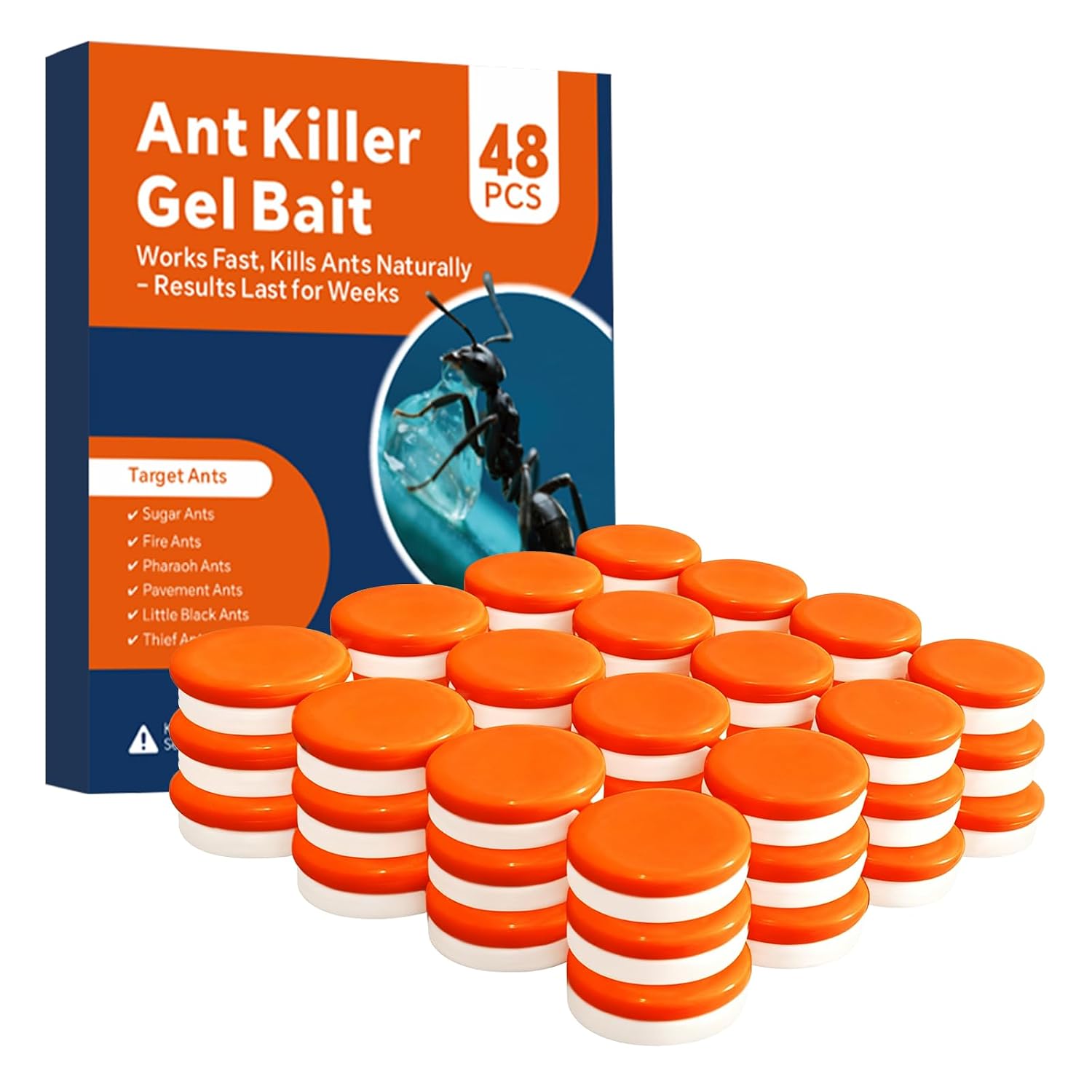
ROUTADE 48-Pack Slow-Acting Ant Gel Bait Stations
| Unit Count | 48 Count |
|---|---|
| Item Form | Gel |
| Target Species | Ants |
| Included Components | Ant gel bait |
This 48-pack of ROUTADE slow-acting ant gel bait stations is built for systematic, long-term ant control in and around the kitchen. Each station contains a gel formula that worker ants consume and carry back to the nest, which helps reduce the entire colony rather than only visible foragers. The product is supplied in ready-to-use stations with adhesive tape so you can place them along baseboards, in cabinets, near sinks, and on entry thresholds without messy sprays or frequent repositioning. The large pack lets you deploy multiple stations in high-traffic areas and replace them over time for continuous coverage. Because the formula is slow-acting, it is effective against a range of common household species including carpenter ants and sugar ants, but it requires several days to weeks to knock down a colony and will not give instant removal of visible ants. Also the stations are small and contain gel rather than a tamper-resistant hard block, so keep them away from children and pets. For someone wanting a low-maintenance, colony-focused approach to kitchen ant problems, this kit makes it easy to set and forget while the bait works.
Best for: Homeowners who prioritize reliable, long-term elimination of ant colonies in kitchens and want a low-maintenance bait they can deploy across multiple hotspots.
Less Ideal for: People who need an immediate knockdown of visible ants or who require childproof solid bait stations should consider alternatives.
- Slow-acting gel designed for worker ants to carry bait back to the nest for colony-level control
- Ready-to-use bait stations with adhesive for easy placement along baseboards and in cabinets
- 48-count pack provides broad coverage around a kitchen and enough replacements for extended use
- Versatile for indoor and outdoor placement to block entry points and high-traffic ant routes
- Slow-acting formula takes days to weeks to eliminate a colony so visible results are not immediate
- Gel in small stations may require careful placement to keep away from children and pets
Verdict: A practical, deploy-and-forget gel bait kit for reliable colony-level control of kitchen ant infestations.
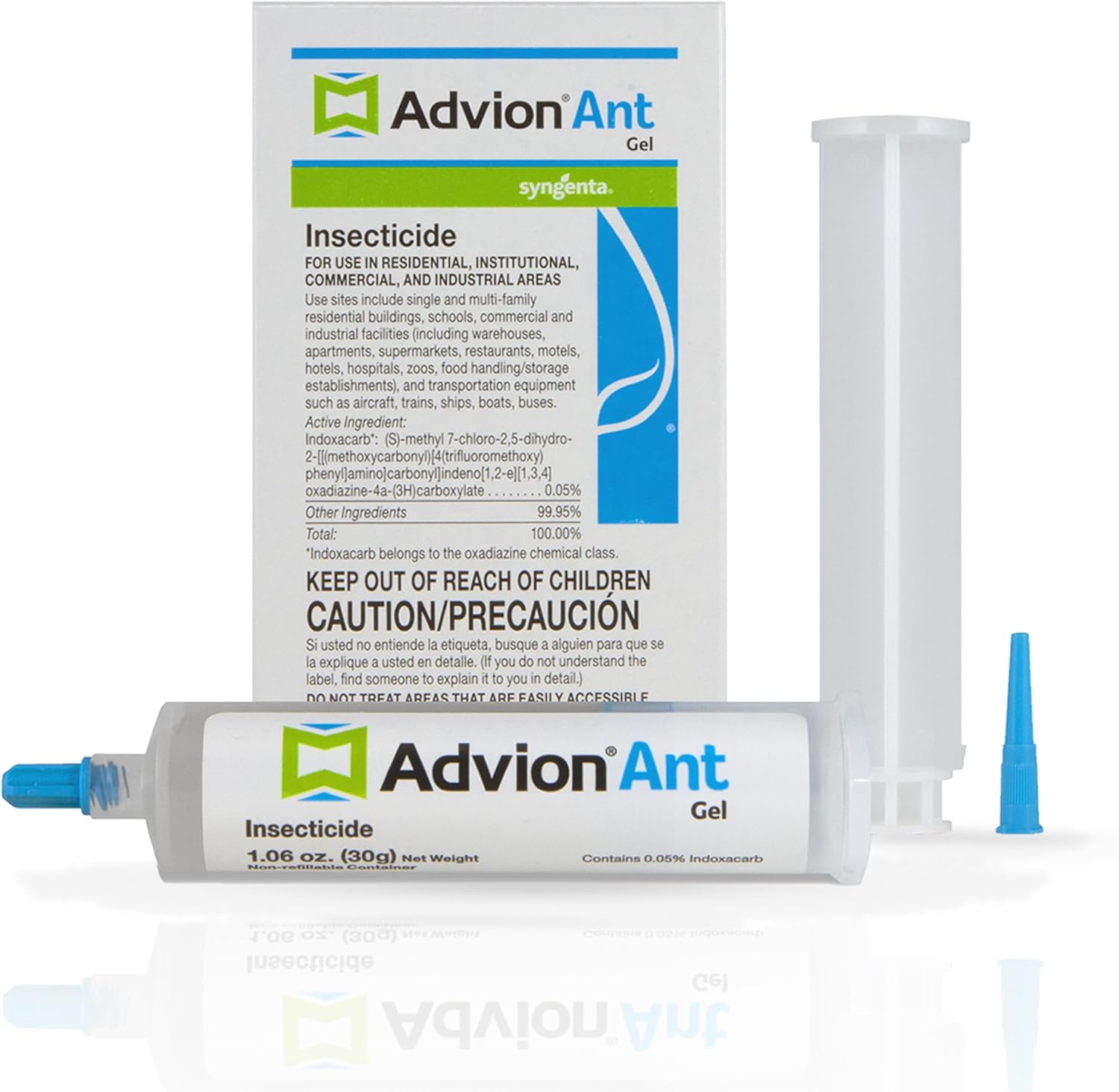
Syngenta Advion Ant Gel Bait, 30 g
| Item Form | Gel |
|---|---|
| Target Species | Insects |
| Active Ingredients | Indoxacarb |
Advion Ant Gel is a concentrated, professional-style ant bait formulated around indoxacarb and a highly palatable gel matrix to lure foraging ants and carry toxicant back to the colony. You apply small dabs of the translucent, nonstaining gel in ant trails, near nesting sites, or in voids where ants forage; workers feed on the gel and transfer it through trophallaxis, which helps suppress entire colonies rather than just worker ants. The formulation is touted for lasting integrity with low odor and high attractiveness to sweet-feeding species, so you do not need frequent reapplication in protected spots. Because it is a targeted bait rather than a broadcast insecticide, it is practical for spot treatments in kitchens, pantries, and around baseboards as well as sheltered outdoor locations. Important limits are that it is a bait product requiring worker-mediated distribution so results are not instant and indoor use requires keeping it away from children and pets.
Best for: Buyers who prioritize effective colony-level control and want a concentrated, professional-style bait for spot treatments inside homes or in sheltered outdoor locations.
Less Ideal for: People needing immediate knockdown of visible ants or those who require a product for widespread outdoor perimeter treatments should consider different control methods.
- Contains indoxacarb, a potent active ingredient with a unique mode of action
- Highly palatable, translucent gel that attracts sweet-feeding ants
- Maintains formulation integrity for extended periods in sheltered application sites
- Suitable for indoor and sheltered outdoor spot treatments
- Relies on worker feeding and transfer so colony elimination can take several days to weeks
- Not intended for broad outdoor broadcast use or exposed wet areas
Verdict: Choose Advion Ant Gel when you want a high-performance, worker-transferred bait that targets colonies rather than just knocking down visible ants.
TERRO Liquid Ant Bait Stations, 18 Count (3 Pack)

| Unit Count | 18 Count |
|---|---|
| Item Form | Liquid |
| Target Species | Insects |
| Active Ingredients | Sodium Tetraborate Decahydrate (Borax) |
| Specification Met | EPA |
TERRO Liquid Ant Bait Stations are compact, ready-to-use traps that use a sweet liquid bait containing borax to attract foraging ants and carry the poison back to the colony. Typical use is placing the small stations along baseboards, in corners, behind appliances, or on counters where you see ant trails; no mixing or setup is required beyond opening the tab. The kit includes 18 bait stations (three packs of six) and the liquid formula is kept from drying by the sealed station design so it stays attractive for extended periods. Practical benefits include quick visible reduction in worker ants within a few days and the potential to eliminate the colony if placements are maintained until the bait is gone. Limitations: it is for indoor use only and works on ants that take sweet baits, so species that prefer greasy or protein foods may be less affected; results can take up to two to four weeks for full control and you should remove competing food sources for best results.
Best for: Homeowners or renters who want a low-effort, evidence-backed way to target kitchen ant trails and remove colonies without sprays, and who prefer products with a strong track record and social proof.
Less Ideal for: People needing immediate knockdown of visible ants or those dealing with species that avoid sweet baits should consider fast-acting sprays or alternative bait types instead.
- Ready-to-use stations require no mixing or tools
- Sealed liquid design resists drying so bait remains attractive over time
- Attracts worker ants that share bait, which can eliminate the colony
- Includes multiple stations for widespread placement around a kitchen
- Indoor-only product not formulated for outdoor use
- Relies on ants accepting a sweet bait so may be less effective on non-sugar-seeking species
Verdict: A ready-to-use, proven liquid bait kit that targets kitchen ant trails and can eliminate colonies with minimal effort.
Choosing the Right Indoor Carpenter Ant Bait: Key Factors to Consider
Bait Formulation and Worker Preference
Carpenter ant colonies shift food preferences through the year. Foraging workers will seek out sugars in late summer and fall, but protein or grease may be more attractive during brood-rearing. Choosing a bait formulation that matches what foragers are actively seeking improves uptake and the chance that workers will carry bait into the nest.
Consider how quickly a bait dries out or becomes unattractive inside warm, dry rooms. Gel and paste formulations typically stay palatable longer in sheltered indoor locations, while liquid baits can evaporate if exposed. Knowing the likely preference and choosing a bait type that stays attractive in your indoor microclimate matters for success.
Toxicant Transferability to the Nest
A good indoor carpenter ant bait uses an active ingredient with delayed toxicity so workers have time to transport the bait back to the colony, including brood and the queen. Fast-acting toxicants often kill foragers at the bait site and do not affect the nest, producing only temporary reductions in visible ants.
Look for formulations designed to be fed to nestmates and that list transfer or secondary poisoning as part of their action profile. This factor directly affects whether the treatment suppresses the colony over weeks rather than producing a short-lived decline in activity.
Indoor Safety and Residue Risk
Using baits inside living spaces requires careful attention to household safety. Evaluate label guidance for use around children, pets, and food preparation areas. Low-residue gels and contained bait stations reduce the chance of accidental contact and staining on floors or countertops.
Also consider odor and whether the bait attracts other pests such as ants that are not the target or even roaches. Products that come in sealed stations or thick gels generally minimize mess and reduce the risk of residue that needs cleanup.
Placement Flexibility and Station Design
Indoor infestations often involve narrow crawl spaces, voids, and gaps behind baseboards. Bait systems that fit into small corners, tuck behind appliances, or sit flush against a wall will be easier to deploy where ants actually travel. Some stations have low profiles and removable lids for re-baiting without touching the bait directly.
Think about how you will place bait along trails, near visible galleries, and close to suspected entry points. Stations that allow monitoring without disturbing the bait let you confirm activity and refresh the bait only when necessary.
Longevity and Resistance to Drying Out
An effective indoor bait maintains palatability over the time it takes for workers to find and distribute it. Some baits keep their attractiveness for days or weeks when placed in sheltered indoor spots; others dry and harden quickly, reducing uptake. Longevity is particularly important for small, scantily foraging colonies where only a few workers collect food each day.
Evaluate whether the bait requires frequent replacement and whether that level of maintenance fits your schedule. Longer-lasting formulations reduce disruption and increase the chances of colony-wide exposure.
Ease of Monitoring and Reapplication
Controlling a carpenter ant infestation often requires ongoing observation. Bait systems that let you easily check for feeding and that allow clean re-baiting without touching the active material make management safer and more effective. Clear windows or removable tops on stations help identify when bait is being consumed.
Also consider whether instructions call for bait rotation or alternating formulations to match seasonal shifts in ant preference. Systems that support safe, straightforward monitoring lower the barrier to completing treatment until activity ceases.
Identifying Carpenter Ant Activity Indoors
Carpenter ants are most often detected as trails of workers, sawdust-like frass near wood galleries, or loud rustling inside wall voids. Not every indoor ant is a carpenter ant, so confirming nesting behavior such as chewed galleries or frass will help concentrate bait placement where it will reach the colony.
Inspect entry points, moisture-damaged wood, and attic or crawlspace penetrations. Workers often forage along predictable routes like baseboards and utility lines, so follow visible trails to place bait stations where ants are actively recruiting.
- Look for coarse sawdust frass rather than fine powder
- Follow worker trails to find the nearest feeding sites
- Check moist or hollow wood for exit holes and galleries
Safe Placement Practices for Homes with Pets and Children
Always follow label directions about allowed indoor locations and any restrictions around kitchens or food prep areas. Place bait stations in out-of-reach locations, such as behind appliances, along upper baseboards, or inside cabinets that are not routinely opened by children or pets.
If pets have access to the treatment area, use tamper-resistant stations and avoid placing loose baits on surfaces where they could be licked or ingested. If a home occupant is particularly vulnerable, consider temporarily restricting access to treated rooms until monitoring shows bait uptake has reduced activity.
- Use tamper-resistant or sealed stations when possible
- Avoid placing bait on countertops or open surfaces
- Keep tracking to hidden, high-traffic ant routes rather than general living spaces
When to Expect Results and How to Monitor Progress
Bait strategies that transfer to the nest typically show gradual reductions in forager numbers over 1 to 4 weeks. You may see a short-term spike in activity as workers recruit to new, attractive food before numbers decline as the colony is affected.
Monitor bait stations daily at first, then every few days once feeding is confirmed. Replace or refresh bait when consumption slows or when the formulation is no longer attractive. If foraging continues at the same rate after several weeks, re-evaluate bait type and placement rather than simply adding more bait.
- Expect gradual declines rather than immediate disappearance
- Record where and when ants feed to refine placement
- Switch bait formulations if there is no measurable uptake after several days
Combining Baits with Non-Residual Measures
Baits work best as the central tactic for colony elimination, but non-residual measures support long-term success. Fixing moisture problems, sealing entry points, and removing exposed food sources reduce the need for continuous treatments and help prevent re-infestation.
Use physical exclusion and sanitation alongside baiting. For example, repair leaky gutters and caulk exterior gaps that lead to indoor galleries, and reduce clutter near foundations to lower the chances of new colonies establishing close to the house.
- Seal cracks and gaps around foundations and utility penetrations
- Reduce indoor attractants like unsealed food and pet bowls
- Address wood moisture and rot that encourage nesting
How We Chose the Best Indoor Carpenter Ant Bait
We prioritized products and features that make a real difference for indoor carpenter ant control. Our evaluation focused on bait formulation and attractiveness to worker ants, because carpenter ants may prefer protein, sugar, or oily foods depending on the season and colony stage. We measured bait persistence and residue risk to judge how long a bait remains effective indoors and whether it leaves stains or slick residues. Placement flexibility and station design were assessed to ensure baits can be used in tight interior spaces, along baseboards, and near suspected entry points. We examined active ingredient mode of action and delayed toxicity to ensure the bait is transferable to the nest rather than providing only quick kills at the bait site. Safety for households with children and pets guided our exclusions; any product with labeling that prohibits indoor use in homes with pets was excluded. We also excluded non-bait treatments such as barrier sprays or dusts from consideration here, since the list is focused solely on ingestible bait strategies. Final selections balanced field-proven bait behaviors and practical indoor handling considerations.
FAQ
How long should I wait to see fewer carpenter ants after baiting?
You will often see a reduction in visible workers within one to four weeks when bait is being taken to the nest. Some short-term increases in activity can occur as workers recruit to the bait before the colony declines.
Can I use indoor bait if I have pets or small children?
Many indoor baits are formulated for household use, but placement matters. Use tamper-resistant stations, keep baits out of reach, and follow label restrictions. If household members are highly vulnerable, avoid loose or liquid baits in open areas.
What if ants ignore the bait?
If there is no bait uptake after a few days, try a different bait formulation because carpenter ants change preferences by season and colony needs. Also move the station closer to active trails or entry points to increase discovery.
Should I remove visible ant trails before baiting?
Do not disrupt active trails before placing bait. Ants need to find a consistent path to the bait so workers can recruit nestmates and transport the toxicant back to the colony. Wiping trails can slow bait discovery.
How often should I refresh bait stations indoors?
Check stations daily until feeding is established, then every few days. Refresh bait when consumption slows or if the bait dries out and becomes unattractive. Longevity varies by formulation and indoor conditions.
Can bait alone eliminate a large colony?
Bait can eliminate many colonies if the active ingredient is transferable and workers feed it to nestmates. Very large or widely dispersed colonies may require extended monitoring, multiple placements, or integrated measures like exclusion and moisture repair.
Final Verdict
Prioritize bait formulations and station designs that indoor foragers will accept and that enable transfer back to the nest. Focus first on matching bait type to forage preference and placing low-residue, tamper-resistant stations along active trails. Expect a gradual reduction in activity over weeks and plan to monitor and refresh bait as needed. Balancing attractiveness, transferability, and household safety will give you the best chance of eliminating an indoor carpenter ant colony without unnecessary exposure or cleanup.
