

Note: This article contains affiliate links. If you click on these links and make a purchase, I may earn a small commission at no extra cost to you. This helps support my research and content. Read my full affiliate disclosure here.
Picking the right plant pot for orchids matters more than many gardeners expect. Orchids need pots that give roots air, channel excess water away, and keep the crown from sitting in moisture. Using an unsuitable pot can lead to root rot, poor flowering, or a stressed plant. This guide looks at six shortlisted plant pots for orchids chosen for real-world growing situations from windowsills to shaded patios. We evaluate drainage and airflow, material behavior in humid conditions, and how easy each pot is to manage during repotting and routine care. Read on for the practical criteria we used and clear guidance to help you pick the right pot for your orchids.
Top Picks at a Glance
| Best Overall The best all-around choice for most situations | rePotme Slotted Clear Orchid Pots — Growers Assortment (8-pack: 2 each of 3", 4", 5", 6") |  |
| Best Quality Built to a higher standard if you want something more solid | Mama Cozy Life Porcelain Orchid Pot with Removable Saucer (6.5 inch) |  |
| Best Value The sweet spot between price and what you get | TRUEDAYS Clear 5-inch Orchid Plant Pots, 4-Pack |  |
| Best Budget The cheapest option that still gets the job done reliably | FUIJOL Clear Plastic Orchid Pots 6-Pack with Saucers (4 inch) |  |
| Highest Rated A top-rated pick with lots of positive feedback | Yuvori Clear Orchid Pots (10-Pack) with Vertical Air Column Drainage |  |
| Most Popular A crowd favorite that many people choose with confidence | HOLANHING Clear Plastic Orchid Pot Set (6 pack, 3 sizes) |  |
rePotme Slotted Clear Orchid Pots — Growers Assortment (8-pack: 2 each of 3", 4", 5", 6")

| Material Type | Plastic, Polypropylene (PP) |
|---|---|
| Other Special Features | Aeration, Breathable, Drainage Hole, Lightweight, UV Resistant |
| Indoor Outdoor Usage | Indoor, Outdoor |
| Unit Count | 8 Count |
| Included Components | 3 inch, 4 inch, 5 inch, 6 inch orchid pots |
These rePotme slotted orchid pots are a practical kit for growers who want reliable drainage and root airflow without fuss. The set includes two each of 3, 4, 5, and 6 inch clear pots useful for seedlings through medium-sized orchids. The slotted design and raised core let air reach the roots and let excess water escape, which helps prevent root rot and keeps potting mixes like bark or moss from staying soggy. Made from UV-resistant polypropylene, the pots are lightweight and durable enough for indoor use or protected outdoor displays, and the clear sides make it easy to inspect root health and moisture. They also work well as liners inside decorative outer pots. Limitations are that these are basic plastic planters with no built-in saucers or self-watering features, so you will need to monitor watering and provide a tray if you want to protect surfaces. Overall they suit hobbyists who repot regularly and want a straightforward, performance-focused container for orchids and other small houseplants.
Best for: A practical indoor orchid grower who values healthy roots and easy monitoring and wants a single kit that covers seedling to medium sizes for routine repotting.
Less Ideal for: Buyers seeking decorative display pots, integrated self-watering systems, or large containers for mature large orchids should consider other options.
- Slotted design and raised core improve root airflow and drainage to reduce overwatering risks.
- Clear plastic lets you see root development and moisture without disturbing the plant.
- Includes four commonly used sizes in one kit, useful for different growth stages.
- UV-resistant polypropylene construction keeps pots durable for indoor or sheltered outdoor use.
- No saucers or integrated water reservoirs so surface protection and watering control require extras.
- Basic plastic finish may not suit buyers looking for decorative or ceramic planters.
Verdict: This eight-piece slotted pot assortment is the go-to, no-nonsense choice for growers who prioritize root health and easy monitoring across multiple orchid sizes.
Mama Cozy Life Porcelain Orchid Pot with Removable Saucer (6.5 inch)

| Material Type | Ceramic, Porcelain |
|---|---|
| Other Special Features of the Product | Aeration, Breathable, Drainage Hole, Fade Resistant, Lightweight |
| Indoor Outdoor Usage | Indoor |
| Included Components | Saucer |
| Plant or Animal Product Type | Orchid |
This porcelain orchid pot is built for growers who prioritize healthy roots and tidy watering. The pot's lace-inspired perforations provide extra airflow around orchid roots, and a single bottom drainage hole plus the included removable saucer make routine watering and runoff management straightforward. Made from glazed porcelain, the planter feels refined yet is described as lightweight for handling during repotting and cleaning. Its roughly 6.5 inch diameter gives enough room for medium-sized orchids and new potting mixes without crowding roots. The decorative pattern doubles as functional aeration but does reduce total soil exposed to light and will require careful watering to avoid water sitting against the decorative surface. This is an indoor-focused planter intended mainly for typical orchid care rather than heavy outdoor use. For growers focused on root health and neat indoor display, this pot balances style and function, though serious hobbyists who need multiple specialized drainage configurations or larger capacity may prefer a more technical grower's pot.
Best for: Buyers who want an attractive indoor orchid planter that supports root aeration and tidy watering and who prioritize plant health alongside home display.
Less Ideal for: Growers who need very large pots, multiple drainage configurations, or heavy-duty outdoor planters should consider more utilitarian containers.
- Perforated lace design improves airflow to orchid roots.
- Glazed porcelain construction is durable and easy to wipe clean.
- Removable saucer collects runoff for tidy indoor use.
- Size suits repotting most medium orchids without replanting immediately.
- Not configurable for multiple drainage setups or internal liners.
- Design may require careful watering technique to avoid water clinging to decorative surface.
Verdict: A stylish porcelain orchid pot that actually supports healthier roots through aeration and clean drainage, ideal for buyers who want performance with home-ready looks.
TRUEDAYS Clear 5-inch Orchid Plant Pots, 4-Pack

| Capacity | 2.95 liters |
|---|---|
| Number of Pieces | 4 |
| Other Special Features | Aeration, Drainage Hole, Root Visible, Weather Resistant |
| Material Type | Plastic |
| Indoor Outdoor Usage | Indoor, Outdoor |
These TRUEDAYS clear orchid pots are basic, practical containers aimed at healthy root development and easy maintenance. The transparent plastic makes it simple to monitor root color and moisture without disturbing the plant, and built-in drainage holes and aeration features help prevent waterlogging—important for most orchids. They are lightweight and shatter-resistant, so they work well as standalone pots or as liners inside decorative cachepots. In everyday use you can repot, water, and check roots quickly, which is helpful for both novice and experienced growers managing several plants. Limitations include standard plastic aesthetics and a single size per pack, so they do not suit display-focused setups that need color or multiple size options. These are dependable utility pots that prioritize function over decorative finish.
Best for: Buyers who want low-maintenance, functional pots that make monitoring roots and watering easier for multiple orchids and who prefer practical, reusable liners over decorative planters.
Less Ideal for: Gardeners focused on decorative presentation or those who need a range of pot sizes for different orchid species should consider other options.
- Clear plastic lets you observe root health and soil moisture without unpotting
- Built-in drainage holes and aeration reduce risk of overwatering
- Durable, lightweight plastic suitable for indoor and outdoor use
- Includes four identical pots for consistent repotting or multi-plant collections
- Only one size included so you may need different sizes for varied orchid specimens
- Plain plastic appearance is not decorative on its own
Verdict: A practical, clear 4-pack of orchid pots that makes root monitoring and moisture control easy for growers who prioritize function over style.
FUIJOL Clear Plastic Orchid Pots 6-Pack with Saucers (4 inch)

| Unit Count | 6 Count |
|---|---|
| Capacity | 0.75 liters |
| Material Type | Plastic |
| Other Special Features of the Product | Drainage Hole |
| Indoor Outdoor Usage | Indoor, Outdoor |
These FUIJOL clear orchid pots are a practical, no-frills option for repotting and growing orchids at home. Each 4-inch pot is made of sturdy transparent plastic with multiple side and bottom holes plus a raised center to keep roots aerated and prevent water pooling. The included saucers catch excess water, which makes them convenient on windowsills or plant stands. The clear walls let you check root color and moisture without disturbing the plant, which helps with routine orchid care and timing repots. Because they are plastic, the pots are lightweight, durable, and easy to clean, though they will not have the breathability or aesthetic weight of terracotta or ceramic. These are best for growers looking to monitor root health and avoid overwatering on a budget; they work equally well for small succulents or seedlings. If you prefer a premium appearance or need very large containers, choose a different material or size.
Best for: Ideal for growers who want an affordable, practical pot to monitor root health and prevent overwatering while repotting small orchids or similar plants.
Less Ideal for: Not the best choice for buyers seeking decorative, heavyweight pots or for those who need larger containers for mature plants.
- Clear plastic lets you inspect roots and soil moisture without removing the plant
- Multiple side and bottom holes plus raised center promote drainage and aeration
- Includes matching saucers to catch runoff and protect surfaces
- Durable, lightweight plastic that is easy to clean and reusable
- Plastic construction lacks the breathability and aesthetic of ceramic or terracotta
- Fixed 4-inch size limits use to small orchids and seedlings
Verdict: A budget-friendly clear pot kit that makes monitoring orchid roots and preventing overwatering simple and inexpensive.
Yuvori Clear Orchid Pots (10-Pack) with Vertical Air Column Drainage

| Included Components | 10 x Clear Orchid Pots |
|---|---|
| Material Type | Thickened Clear Resin (Plastic) |
| Other Special Features of the Product | Vertical Air Column Drainage Design |
| Indoor Outdoor Usage | Indoor, Outdoor |
These Yuvori clear orchid pots are basic, nursery-style inner pots intended to keep orchid roots healthy while you use decorative outer containers. Their clear thickened resin walls let you check root color and moisture without disturbing the plant, and the vertical air column drainage design helps aerate roots and prevent standing water at the base. In practice they work well for Phalaenopsis and other small- to medium-rooted orchids during repotting and routine care. The pots come as a random 4- or 5-inch size in a 10-pack, which is handy for repotting several plants at once, and the thicker plastic resists cracking compared with flimsy alternatives. Limitations are the random-size surprise packaging and that these are inner pots only, so you will likely want matching outer decorative pots or trays for stability and style. Also they are simple plastic pots without integrated saucers, so indoor growers should plan for drip protection or a secondary holder.
Best for: Growers who prioritize reliable, easy-to-inspect inner pots for repotting multiple orchids and want durable, nursery-grade plastic that supports healthy root aeration.
Less Ideal for: Buyers seeking a single-size decorative planter or an all-in-one planter with integrated saucer and finished exterior should consider a different product.
- Clear walls allow easy visual monitoring of root health and moisture
- Vertical air column drainage improves aeration and reduces risk of root rot
- Thickened resin construction is more crack-resistant than thin plastic
- Sold in a 10-pack which is convenient for repotting multiple orchids
- Size is a random 4- or 5-inch selection rather than a chosen size
- No integrated saucer or decorative outer pot included
Verdict: A practical bulk set of durable clear inner pots that make it easy to monitor and aerate orchid roots during repotting.
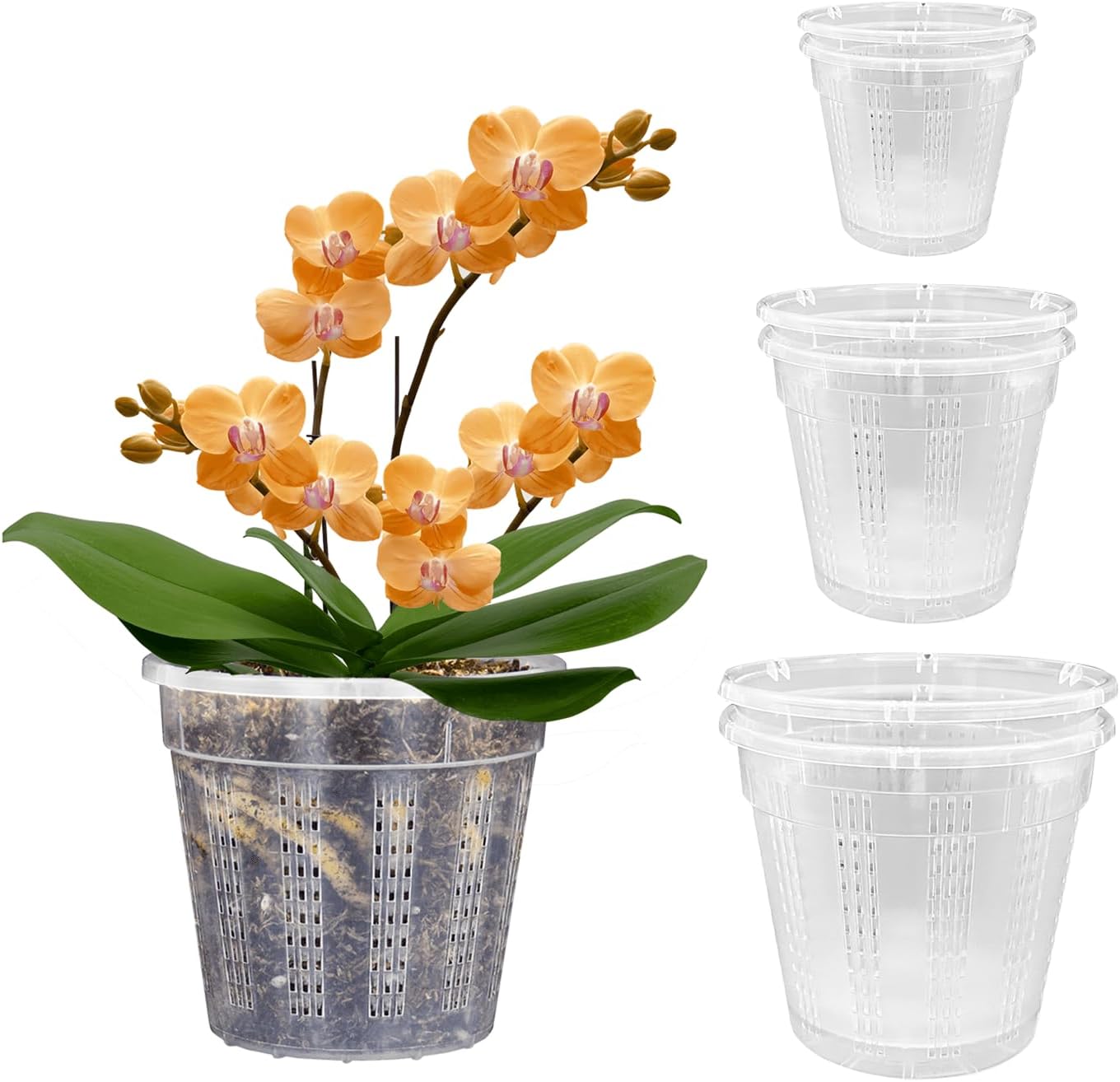
HOLANHING Clear Plastic Orchid Pot Set (6 pack, 3 sizes)
| Material Type | Plastic |
|---|---|
| Other Special Features of the Product | Drainage Hole |
| Mounting Type | Tabletop |
| Unit Count | 6 Count |
| Included Components | Clip |
These clear orchid pots are designed specifically for repotting and growing orchids indoors. The set includes two pots each of three sizes so you can move plants into progressively larger containers as they grow. Made from thicker PP plastic, the pots resist cracking and are easy to rinse clean. Multiple side and bottom holes promote 360 degree airflow and quick drainage, which helps prevent root rot and encourages healthy aerial root development. The larger, upgraded hole shapes are sized to keep potting medium from falling out while still allowing roots to access light and air. Because the pots are transparent you can check root health and substrate moisture without disturbing the plant, a useful feature for monitoring repotting timing. Trade-offs are that clear plastic lets light reach roots, which some growers avoid for certain species, and these tabletop pots are sized for small to medium orchids rather than specimen giants. The included clips are helpful for mounting or securing slotted pots during setup.
Best for: Orchid growers who want an affordable, visible repotting system and who monitor roots and moisture closely when managing indoor orchids.
Less Ideal for: Growers who prefer fully opaque, decorative pots or who cultivate very large orchids that need bigger containers and heavier materials.
- Three sizes included covers different growth stages without buying separate pots
- Clear plastic lets you monitor root health and substrate moisture without unpotting
- Multiple side and bottom drainage holes improve aeration and reduce waterlogging
- Thicker PP construction is more durable than flimsy single-use pots
- Transparent walls allow light to reach roots which some growers prefer to avoid
Verdict: A practical, durable clear-pot set that makes repotting and root monitoring easy for indoor orchid growers.
Choosing the Right Plant Pot for Orchids: Key Factors to Consider
Drainage and Overflow Design
Orchids cannot tolerate sitting in water, so how a pot sheds surplus moisture is central to plant health. Pots with multiple bottom holes, raised internal ledges, or side vents reduce the chance of water pooling and keep the crown and lower pseudobulbs drier.
Designs that channel excess water away from the root ball let you water more confidently and reduce the need for careful timing. If you use a decorative cachepot, choose one with a separate inner container or ensure the plant pot lifts away from standing water after irrigation.
Root Airflow and Venting
Many orchids have epiphytic habits and appreciate air circulation around their roots. Pots with slatted sides, mesh inserts, or built-in vents let roots breathe and dry evenly between waterings, which supports healthy root growth and nutrient uptake.
Less ventilated pots can trap moisture and restrict oxygen, increasing rot risk. Consider how the pot's vents work with your typical environment: in a dry, drafty window greater airflow helps; in a constantly humid greenhouse you may prefer moderate venting to avoid rapid drying.
Material and Resistance to Humidity
The material affects how the pot behaves in wet conditions and over time. Unglazed terracotta breathes and moderates moisture but can salt-stain and crumble with constant wet-dry cycles. Plastics resist moisture and are lightweight but may retain heat and reduce breathability.
Fiberglass and coated ceramics combine durability with less weight, while slotted or mesh pots made from rigid plastic or cork blends can offer long-lasting venting. Think about the long-term exposure to fogging, misting, and fertilizer salts when choosing a material.
Size, Root Volume, and Substrate Compatibility
Orchid roots need room to grow but not excessive loose substrate that stays waterlogged. Match pot diameter and depth to the plant's root mass and the type of potting medium you use, such as bark, charcoal, or sphagnum. A snug pot holds the medium more firmly around roots and aids stability during flowering.
If you repot into a finer medium, a slightly larger container may be fine. For coarse, chunky mixes use a pot that lets the substrate settle without leaving large air gaps around roots.
Ease of Repotting and Inspection
Frequent inspection of roots and periodic repotting are normal parts of orchid care. Pots that allow easy access to roots, such as those with removable inner liners, wide mouths, or flexible construction, reduce stress on the plant during maintenance.
Rigid pots with narrow openings make root checks harder and increase the risk of damaging new roots. Consider whether you prefer pots that let you lift the root mass intact or designs that simplify teasing the medium apart when repotting.
Stability and Mounting Options
Many flowering orchids become top-heavy when in bud. A pot that resists tipping, has a broad base, or includes hang-friendly features matters if you plan to suspend plants or place them on narrow ledges.
Some pots are designed to clip onto stakes or hang with wire loops while others sit solidly on benches. Match the pot style to your display and to how you water: hanging plants dry differently than bench plants and may need different venting or substrate choices.
When to Repot an Orchid
Repotting typically happens every one to three years depending on substrate breakdown and root health. Signs you need a new pot include compacted medium that holds too much moisture, an abundance of dead roots, or roots growing out of the drainage holes. If the plant flowers well and the medium still drains and smells fresh, you can often wait until after blooming to repot.
- Look for fresh white or green root tips as a sign of active growth.
- Replace broken-down bark or moss that traps excess water.
- Move to a pot one size larger only when roots need more room, not as a default.
Using Cachepots and Decorative Containers
Cachepots are decorative outer vessels without drainage and are popular for display. If you use a cachepot, pot the orchid in a functional inner container with proper drainage, and remove the plant to water over a sink or tray so excess water does not collect against the rootball. Alternately, place a layer of pebbles in the cachepot and keep the inner pot elevated to avoid standing water.
- Inner pots should be smaller than the cachepot to allow airflow.
- Ensure you can lift the inner pot out easily for inspections.
- Wipe and dry decorative pots regularly to avoid salt buildup.
Mounting and Hanging Options for Epiphytic Orchids
Some orchid species perform better mounted on bark or grown in slatted pots that mimic tree branches. Mounted plants need more frequent misting but benefit from greater airflow and reduced root rot risk. Slotted or basket-style pots also suit these orchids by allowing rapid drainage and drying.
- Mounting requires consistent microclimate management, especially humidity.
- Use wire baskets or cork slabs to support mounted plants.
- Adjust water frequency upward for mounted orchids compared with potted ones.
Matching Pot Choice to Your Watering Routine
If you water heavily but infrequently, choose pots that drain quickly and allow rapid drying between sessions. For daily light misting or constant moisture approaches, aim for pots and substrates that offer steady airflow to prevent stagnant wet pockets. The pot should complement your schedule so you do not have to change cultural practices drastically after purchase.
- Chunky bark mixes dry faster than moss and pair well with ventilated pots.
- Heavier pots retain temperature better and can buffer roots from sudden changes.
How We Chose the Best Plant Pot for Orchids
Our selections focused on practical features that matter for orchid culture rather than visual style alone. We prioritized pots that promote healthy root systems through ventilation and drainage, and that stand up to humid, warm conditions common where orchids grow. Evaluation criteria included drainage design because excess water is the main cause of rot; root airflow since orchids absorb moisture and oxygen through exposed roots; material durability and how it handles repeated wet-dry cycles; ease of repotting and access for inspections; and stability for top-heavy plants during bloom. We also weighed how the pot interacts with common orchid substrates and whether it allows hanging or bench placement. We excluded vessels that offer only decorative appeal without functional drainage or that are intended solely for mass-market houseplant use where root aeration is limited. The remaining options all meet minimum standards for orchid care and vary to suit different growing setups and skill levels.
FAQ
How large should a pot be for an orchid seedling?
For seedlings, choose a small pot that holds the root mass snugly so the medium stays aerated and does not retain excess water. Seedlings in oversized pots risk soggy substrate and weak root development.
Can I use a regular houseplant pot for orchids?
You can if it provides good drainage and allows root airflow, but many regular pots lack side vents that orchids benefit from. If using a standard pot, monitor drying and consider adding slits or using a mesh liner to improve aeration.
Is terracotta good for orchids?
Unglazed terracotta breathes and helps the medium dry faster, which some growers like. However, it can absorb salts and may degrade with constant wetting. It is best where you want moderate drying and in drier indoor conditions.
Do orchids need special soil in ventilated pots?
Yes. Orchids generally require coarse, well-draining substrates such as bark, charcoal, or sphagnum rather than typical potting soil. Ventilated pots work best with chunky media that allow air to circulate through the root mass.
How often should I inspect orchid roots?
Inspect roots every repotting cycle and check visually every few months for new growth or signs of rot. Frequent checks are helpful after changes in watering, light, or when introducing a new pot type.
Final Verdict
Choose a plant pot for orchids that prioritizes drainage and root airflow above decorative concerns. Think about how the pot's material and venting match your climate and watering habits, and pick a size that supports the root system without excess substrate. Balance stability for flowering with easy access for repotting and inspection. By focusing on drainage design, airflow, and compatibility with orchid substrates, you can reduce rot risk and encourage stronger growth and more consistent blooms.
