

Note: This article contains affiliate links. If you click on these links and make a purchase, I may earn a small commission at no extra cost to you. This helps support my research and content. Read my full affiliate disclosure here.
Choosing the right fertilizer for cassava matters because this root crop responds differently to nutrients than leafy vegetables. The correct blend and timing can increase root bulking, reduce crop cycles, and keep soil structure productive for following seasons. This guide focuses on fertilizers formulated for cassava or used successfully in cassava plantings and explains how each shortlisted option performs in real field conditions. We shortlisted five top fertilizer approaches gardeners and small-scale growers commonly use for cassava. Below we evaluate nutrient balance, application ease, and how these options affect root development and soil health to help you pick the best fit for your planting situation.
Top Picks at a Glance
| Best Overall The best all-around choice for most situations | Osmocote Smart‑Release Plant Food Plus Outdoor & Indoor, 2 lb |  |
| Best Quality Built to a higher standard if you want something more solid | Dr. Earth Organic Tomato, Vegetable & Herb Fertilizer (64 oz) |  |
| Best Value The sweet spot between price and what you get | Miracle-Gro Liquid All Purpose Plant Food Concentrate, 32 oz |  |
| Highest Rated A top-rated pick with lots of positive feedback | Jack's Classic 20-20-20 All Purpose Water-Soluble Fertilizer (24 oz) | 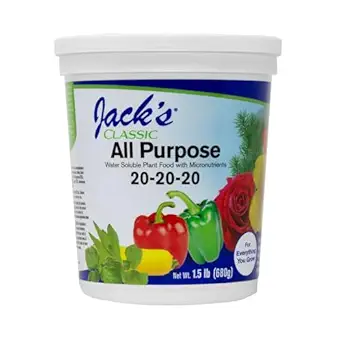 |
| Most Popular A crowd favorite that many people choose with confidence | Miracle-Gro Water Soluble All Purpose Plant Food, 1.5 lb |  |
Osmocote Smart‑Release Plant Food Plus Outdoor & Indoor, 2 lb

| Item Form | Granules |
|---|---|
| Application Method | Sprinkle |
| Target Species | All plants |
| Mixing Ratio | 1 capful (3 tablespoons) per 2 gallons soil or per 4 sq. ft. |
| Unit Count | 32 Ounce |
Osmocote Smart‑Release Plant Food Plus is a granular, resin‑coated fertilizer designed to feed flowers and other plants steadily for up to six months with 11 essential nutrients. You apply it by sprinkling the recommended amount into the top inch or two of potting mix or garden soil, watering it in, and reapplying every six months; indoor plants use about half the outdoor rate. The resin coating times nutrient release to moisture and temperature, which reduces the need for frequent feedings and lowers the risk of fertilizer burn when used as directed. It works across containers, raised beds, and in‑ground flower beds and covers up to roughly 75 square feet per 2 lb container. Limitations are that a single 2 lb container is only enough for small gardens or several pots, and the slow‑release formula is not suitable when an immediate corrective boost is needed for acute nutrient deficiencies. For gardeners focused on steady, maintenance feeding for flowering plants this is an easy, low‑effort option.
Best for: Gardeners who want reliable, low‑maintenance feeding for flowers and mixed plantings and prefer a consistent supply of nutrients over months rather than frequent liquid feedings.
Less Ideal for: Growers who need fast corrective feeding for visible nutrient deficiencies or those managing very large beds who want bulk fertilizer options to reduce trips to reapply.
- Feeds continuously up to six months with a single application
- Resin coating times nutrient release to plant needs based on moisture and temperature
- Formulated with 11 essential nutrients suitable for a wide range of flowering plants
- No-burn pledge when used as directed reduces risk of overfeeding
- 2 lb container only covers about 75 sq. ft., so frequent repurchase is needed for larger gardens
- Slow‑release formulation does not provide a rapid corrective nutrient boost
Verdict: Choose this product if you want a hands-off, long‑lasting fertilizer that keeps flowering plants fed for months with a single application.
Dr. Earth Organic Tomato, Vegetable & Herb Fertilizer (64 oz)

| Unit Count | 64 Ounce |
|---|---|
| Item Form | Granules |
| Specific Uses For Product | Organic |
| Target Species | Herb |
| Coverage | Medium |
This granular organic fertilizer is designed to boost vegetable and herb production by supplying balanced nutrients and soil biology support. It is typically broadcast into beds, mixed into potting mixes, or applied at planting and midseason for a nutritional lift; the manufacturer recommends reapplying every six weeks for containers. Notable features include a fully organic ingredient list, fast but sustained nutrient release, and a blend of probiotic microbes plus ecto and endo mycorrhizae intended to improve nutrient uptake and drought tolerance. In practice that means healthier root systems and potentially better yields and flavor in crops like cucumbers when used as part of an organic program. Limitations are that it is a medium coverage product in a 64 ounce bag so larger plots will need more frequent purchases, and it contains phosphorus so local runoff rules should be checked before use. Follow the directions for pH and application timing to avoid overapplication in small containers.
Best for: Gardeners who prioritize organic soil health and want a single, biology‑focused fertilizer to support vegetables like cucumbers in beds or containers.
Less Ideal for: Large‑scale growers seeking a bulk, high‑coverage fertilizer or those who must avoid phosphorus due to local regulations should consider other options.
- 100 percent organic formula suitable for certified organic gardens
- Contains beneficial microbes and eight strains of mycorrhizae to support root health and nutrient uptake
- Granular form releases nutrients quickly and continues feeding for several months
- Works for beds, raised planters and containers and can be used at planting, transplanting or midseason
- Bag is medium coverage so not economical for very large vegetable plots
- Includes phosphorus which may be restricted in some local jurisdictions
Verdict: Choose this product if you want an organic, microbe‑rich granular fertilizer that supports root health and steady feeding for cucumber and other vegetable plantings.
Miracle-Gro Liquid All Purpose Plant Food Concentrate, 32 oz

| Item Form | Liquid |
|---|---|
| Specific Uses For Product | Plant Growth, Root Development |
| Application Method | Mix with water in a watering can |
| Mixing Ratio | 1:10 (concentrate to water, estimate) |
Miracle-Gro Liquid All Purpose is a water-soluble concentrate you mix into a watering can and apply every 1 to 2 weeks to container and in-ground plants. It is formulated for general plant growth and root development and is marketed for flowers, vegetables, shrubs and houseplants, so it works as a straightforward feed for flowering bulbs like calla lilies. The bottle’s mixing guidance (cap measures for garden application and 1 teaspoon per gallon for containers) makes it easy to dose for pots or small beds. Practical benefits include fast uptake through the soil when applied as directed and compatibility with routine watering schedules. Limitations to note are that it is an all-purpose formula rather than a bloom-focused or calcium-rich fertilizer tailored specifically to calla lilies, so growers seeking targeted bloom enhancement or specialty nutrition may want a supplement. Also, frequent use at higher-than-recommended strength can risk fertilizer burn, so follow the mixing directions and schedule.
Best for: Buyers who want an affordable, easy-to-use liquid fertilizer to keep calla lilies and other flowering plants regularly fed without fuss.
Less Ideal for: Growers seeking a specialist bloom-boost or a fertilizer formulated for specific micronutrient needs should consider a targeted or bloom-specific product instead.
- Concentrated liquid mixes easily with water for quick application
- Clear dosing instructions for both garden beds and container plants
- Suitable for a wide range of plant types including flowering bulbs and houseplants
- General all-purpose formula not specifically formulated for enhancing blooms of calla lilies
Verdict: A budget-friendly, easy-to-use liquid concentrate that reliably feeds calla lilies and other common garden plants on a regular schedule.
Jack's Classic 20-20-20 All Purpose Water-Soluble Fertilizer (24 oz)

| Item Form | Powder |
|---|---|
| Specific Uses For Product | Plant Growth |
| Coverage | All |
| Mixing Ratio | 0.22 |
Jack's Classic 20-20-20 is a professional‑grade, water‑soluble powder fertilizer intended for general feeding of indoor and outdoor plants. You dissolve the measured spoonfuls in water and apply as a root drench or foliar spray every 7 to 14 days, or use weaker mixes for seedlings and cuttings. The even 20-20-20 NPK formula promotes quick green‑up and leaf expansion, while included micronutrients support overall plant health. Because it is a powder concentrate, a small tub makes multiple gallons of feed, which is convenient for regular maintenance across beds, containers, and ornamentals. The product ships with a measuring spoon and clear directions, so it is easy to dose consistently. Limitations to note are that it is a generalist formula rather than crop‑specific booster, so plants with specialized needs may do better with targeted blends, and it requires careful handling and dilution to avoid overfeeding. Protective handling is recommended since the powder can irritate skin and eyes.
Best for: Gardeners who want a reliable, easy-to-use all‑around fertilizer for regular maintenance of outdoor beds, containers, and ornamentals and who value predictable, balanced nutrition.
Less Ideal for: Growers seeking a specialized bloom booster or a fertilizer tailored to a single crop should choose a targeted formula instead.
- Balanced 20-20-20 NPK supports fast green-up and leaf growth across many plant types
- Water‑soluble powder stretches farther than comparable liquid feeds so one tub makes multiple gallons
- Usable as both foliar spray and root feed for flexible application
- Includes measuring spoon and clear mixing directions for consistent dosing
- Added micronutrients reduce need for separate supplements
- General all-purpose formula is not optimized for bloom or fruit boosting
- Requires accurate measuring and dilution to avoid fertilizer burn
Verdict: A straightforward, professional‑grade balanced fertilizer that delivers reliable, easy-to-dose nutrition for maintaining healthy outdoor plants.
Miracle-Gro Water Soluble All Purpose Plant Food, 1.5 lb

| Item Form | Powder |
|---|---|
| Application Method | Watering Can |
| Target Species | For all flowers, vegetables, trees, shrubs and houseplants |
| Mixing Ratio | 24-8-16 |
Miracle-Gro Water Soluble All Purpose Plant Food is a powdered, water-soluble fertilizer formulated to deliver fast nutrition to a broad mix of plants. You mix the powder into a watering can or a garden feeder and apply every 1 to 2 weeks depending on whether plants are indoors or out. The 24-8-16 NPK ratio supplies a strong nitrogen boost for leafy growth along with phosphorus and potassium to support flowering and fruit set. For pepper growers this means it can help produce vigorous plants and encourage fruit development when used at the recommended strengths. Notable features include clear mixing guidance for both indoor and outdoor use and compatibility with container and in-ground plantings. Practical benefits are quick uptake by roots and flexible application options. Important limitations are the high nitrogen proportion, which can favor foliage over fruit if overused, and the need to follow dilution instructions to avoid nutrient burn. This product is best used as a regular boost within a balanced feeding plan rather than the only fertility source for long-term soil health.
Best for: Home gardeners looking for an affordable, easy-to-use boost to support vigorous pepper plant growth and quick results in both containers and garden beds.
Less Ideal for: Growers who want a low-nitrogen or slow-release fertility plan for long-term soil building should consider specialized or organic alternatives.
- Water-soluble powder that feeds plants quickly through the roots
- Clear mixing instructions for indoor and outdoor applications
- Broadly labeled for use on flowers, vegetables, trees, shrubs and houseplants
- Feeds approximately 600 sq. ft. from the 1.5 lb container
- High nitrogen ratio may encourage foliage more than fruit if used too frequently
Verdict: A budget-friendly, fast-acting soluble fertilizer that gives bell pepper plants a regular nitrogen-rich boost to promote vigorous growth and quicker results.
Choosing the Right Fertilizer for Cassava: Key Factors to Consider
Nutrient Balance and Ratios
Cassava responds strongly to the balance of nitrogen phosphorus and potassium, but the ideal ratio depends on soil fertility and growth stage. Early on, moderate nitrogen supports canopy establishment, while higher potassium is important for root bulking. A balanced fertilizer label that lists secondary nutrients and micronutrients helps prevent hidden deficiencies.
Understanding your soil test results before choosing a fertilizer is crucial. If phosphorus or potassium is already high, selecting a product with lower amounts of those elements or supplementing only the deficient nutrients will reduce wasted inputs and potential nutrient imbalances.
Release Pattern and Longevity
How quickly a fertilizer releases nutrients affects cassava growth over its long development period. Fast-release formulations provide immediate nutrients for establishment but can leach or burn roots if overapplied. Controlled-release or split-application strategies keep nutrients available during the months when root bulking occurs.
For many growers a combination works best: an initial accessible dose to get shoots growing, followed by slower-release sources or periodic topdressings to support steady root development without spikes that encourage excessive foliage at the expense of roots.
Application Method and Labor Considerations
Cassava is often planted in hills or rows, and fertilizer needs to be applied in a way that targets the root zone without damaging stems. Granular fertilizers can be banded at planting, sidedressed later, or broadcast and incorporated depending on plot size and labor availability. Liquid or soluble fertilizers suit targeted foliar feeds but require more water and equipment.
Evaluate how much labor you can commit and whether you need a product that allows easy split applications. Packaging that is easy to store and measure reduces mistakes at planting and during follow-up feedings.
Soil Health and Organic Matter Interaction
Cassava performs best in soils with good structure and active biological life. Fertilizers that stimulate microbial activity and are compatible with organic matter additions help maintain long-term productivity. Some mineral fertilizers can be used alongside compost or cover crops to replenish organic matter and maintain porosity for root expansion.
Consider how a chosen fertilizer will affect soil pH and biology. Adding amendments that increase organic matter or using nutrient sources that do not harm microbial communities will support consistent yields over multiple seasons.
Micronutrients and Deficiency Prevention
Micronutrients such as zinc boron and manganese can limit cassava yield even when macronutrients are adequate. Fertilizer choices that include or allow easy supplementation of micronutrients reduce the chance of hidden yield constraints. Visual deficiency symptoms can be subtle; relying on soil or tissue testing helps target these trace elements accurately.
Plan for periodic testing and select fertilizers that either contain a broad spectrum of micros or pair well with common micronutrient soil or foliar applications so you can address shortages without overhauling your feeding plan.
Cost Per Effective Dose and Quantity Size
Beyond headline price, consider the cost per kilogram of available nutrient and whether package sizes fit the scale of your planting. Buying very large bags can be economical but impractical for gardeners with small plots. Conversely small retail packs are convenient but may be pricier per unit of nutrient.
Match package size to your acreage and storage capacity, and calculate how many kilograms of actual nutrient you get for the crop cycle. This helps plan budgets and reduces waste from unused fertilizer sitting in humid conditions.
Timing Fertilizer Applications for Cassava
Timing matters because cassava develops over many months. An early dose at planting supports sprout and canopy growth, while later applications during the root bulking phase provide the potassium and phosphorus that drive storage organ enlargement. Inconsistent timing can cause excess vegetative growth or poor root fill.
Plan applications around key growth stages: establishment, canopy expansion, and bulking. If you use split applications, apply smaller amounts more frequently to maintain steady nutrient availability without causing salt buildup near young roots.
- Apply starter fertilizer at or just after planting to promote early vigor
- Sidedress during canopy expansion to sustain leaf function
- Use a final feeding timed with the onset of bulking to maximize root size
Interpreting Soil Tests and Tissue Sampling
Soil tests show available macronutrients and pH, guiding whether you need to add nitrogen phosphorus or potassium. Tissue sampling during the growing season reveals what the plant is actually taking up, which can differ from soil availability. Both tests together give a clearer picture.
Use results to tailor fertilizer selection and rates. For example, low available potassium calls for higher K formulations or potash supplements, while sufficient soil phosphorus means you can focus on nitrogen and potassium instead.
- Collect soil samples from the root zone for accurate readouts
- Send samples to a regional lab or extension service familiar with cassava
- Use tissue tests mid-season if growth looks off despite normal soil numbers
Organic Options and Integrating Compost
Organic nutrient sources such as well-aged compost, manure, or rock phosphate supply nutrients more slowly and improve soil structure. They are beneficial in systems focused on long-term fertility and soil life. When paired with targeted mineral supplementation, organics help maintain steady yields and reduce dependency on soluble fertilizers.
Compost also buffers nutrient release and supports microbes that enhance nutrient cycling. For cassava, a foundation of organic matter plus strategic mineral top-ups often yields stable results, especially on smallholdings and gardens.
- Work compost into planting hills before placing cuttings
- Combine organic matter with a small mineral starter to avoid early nitrogen lock-up
- Topdress with compost between rows to maintain soil biology
Practical Tips for Applying Fertilizers in Small Plots
In garden or smallholder settings, accuracy and consistency matter more than large-scale broadcast rates. Use measuring containers and mark application bands to ensure even distribution. Avoid placing high rates of soluble fertilizer directly against stems or cuttings.
Protecting soil from erosion and runoff after application preserves applied nutrients. Lightly incorporate granular fertilizers or irrigate gently after application to move nutrients into the root zone without causing runoff.
- Use a hand spreader or measuring cup for uniform granular application
- Keep fertilizers a few centimeters away from stems to avoid burn
- Apply before a gentle rain or irrigate to activate nutrients
Common Nutrient Deficiencies in Cassava and Visible Signs
Recognizing deficiency symptoms helps with timely correction. Nitrogen deficiency shows as overall pale leaves and stunted growth. Potassium shortage can lead to marginal leaf scorch and reduced root bulking. Micronutrient shortages may cause interveinal chlorosis or abnormal leaf shapes.
Use visual cues as an early warning but confirm with tests. Correcting deficiencies late in the season is less effective for root crops, so proactive monitoring and soil health maintenance are better strategies.
- Look for pale new leaves and slow shoot growth for nitrogen issues
- Watch for leaf margin browning and reduced root formation for potassium
- Consider tissue tests if visual signs are unclear
How We Chose the Best Fertilizer for Cassava
We selected products and fertilizer approaches that reflect real cassava production needs and common small-scale grower practices. Our editorial filters emphasized nutrient ratios known to influence root bulking, sources of nitrogen phosphorus and potassium, and the practicalities of applying fertilizer in a cassava field or garden. Evaluation criteria included measured NPK balance and secondary nutrient content, how nutrients are released over time (release pattern), ease and flexibility of application for row or hill planting, and effects on soil structure and biology. We also considered packaging and quantity sizes that suit smallholders or garden plots, plus the presence of micronutrients that commonly limit cassava growth. We excluded generic ornamental blends, fertilizers formulated only for leafy vegetables, and specialty products that require industrial equipment to apply. Products with unclear nutrient labeling or no guidance for root crops were not considered. The final list focuses on options that offer clear nutrient profiles, practical application guidance, and documented suitability for cassava or similar root crops.
FAQ
How much fertilizer does cassava need per hectare or per plant?
Fertilizer rates depend on soil fertility and planting density. Generally, dosage is based on available nutrients from a soil test and the expected yield target. For small plots, calculate per-plant doses from recommended per-hectare rates adjusted to your spacing and soil test results.
Can I rely only on compost for cassava nutrition?
Compost provides many benefits and contributes nutrients, but it often cannot supply the concentrated phosphorus or potassium cassava needs for maximum bulking. Combining compost with targeted mineral supplements typically yields better root development while maintaining soil health.
When is the best time to apply potassium for cassava?
Potassium is most critical during the root bulking phase. Applying an initial supply at planting followed by a sidedress as bulking begins ensures potassium is available when roots are enlarging. Exact timing should match local growth cycles and soil test guidance.
Are foliar sprays useful for cassava micronutrient deficiencies?
Foliar sprays can quickly correct certain micronutrient shortages and are useful when soil uptake is limited. They are a short-term fix and work best alongside soil corrections, such as adjusting pH or adding deficient micronutrients to the soil when needed.
Will overfertilizing cassava increase root yields indefinitely?
No. Excessive nitrogen can favor leafy growth over root bulking, and oversupply of any nutrient can cause imbalances or salt stress. Follow recommended rates based on soil tests and split applications to maintain steady availability without overloading the soil.
How does soil pH affect fertilizer choice for cassava?
Soil pH influences nutrient availability. Acidic or alkaline soils can lock up certain nutrients, making them less accessible even if present. Adjust pH when necessary and select fertilizer forms compatible with your soil chemistry to ensure nutrients are plant-available.
Final Verdict
Selecting the right fertilizer for cassava is about matching nutrient ratios, release timing, and application method to your soil and planting system. Prioritize a balance of potassium and phosphorus during bulking, maintain adequate nitrogen for establishment without overfeeding foliage, and address micronutrients identified by testing. Choose a solution that fits your labor and plot size, combine mineral inputs with organic matter where possible, and plan split applications to keep nutrients available through the long cassava growth cycle. With these priorities you can pick the fertilizer approach that best supports consistent root yields and long-term soil health.
