

Note: This article contains affiliate links. If you click on these links and make a purchase, I may earn a small commission at no extra cost to you. This helps support my research and content. Read my full affiliate disclosure here.
If you grow collards, the right fertilizer makes a visible difference in leaf size, color, and how long plants produce before bolting. Collards respond well to steady, balanced feeding that supports leafy growth without forcing excessive stem or flower development. This guide covers our six shortlisted fertilizers for collard plants, chosen for their nutrient profiles, ease of use, and suitability for common garden situations. Below you will find practical notes on how each type behaves in a vegetable patch, plus the evaluation criteria used to compare options. Use this as a decision aid to pick a feeding strategy that fits your soil, season, and harvest goals.
Top Picks at a Glance
| Best Overall The best all-around choice for most situations | YARDi Brassicas & Greens Liquid Plant Food 32 oz (8-3-3) |  |
| Best Quality Built to a higher standard if you want something more solid | Dr. Earth Organic Tomato, Vegetable & Herb Fertilizer (64 oz) |  |
| Best Value The sweet spot between price and what you get | Miracle-Gro Water Soluble All Purpose Plant Food, 3 lb |  |
| Best Budget The cheapest option that still gets the job done reliably | Miracle-Gro Liquid All Purpose Plant Food Concentrate, 32 oz |  |
| Highest Rated A top-rated pick with lots of positive feedback | Miracle-Gro Water Soluble All Purpose Plant Food, 12.5 lb |  |
| Most Popular A crowd favorite that many people choose with confidence | Miracle-Gro Water Soluble All Purpose Plant Food, 1.5 lb |  |
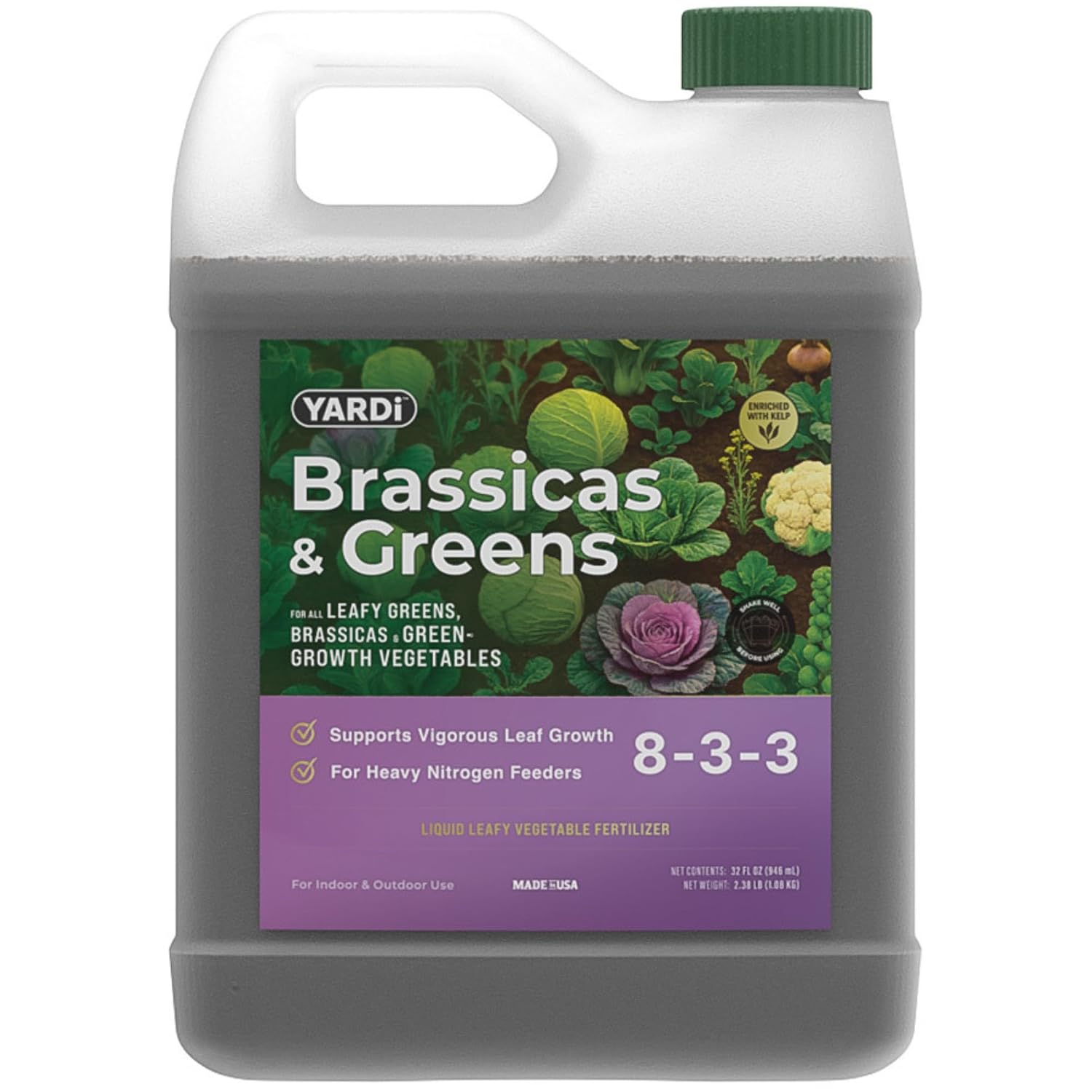
YARDi Brassicas & Greens Liquid Plant Food 32 oz (8-3-3)
| Item Form | Liquid |
|---|---|
| Specific Uses For Product | Leafy Greens |
| Target Species | Vegetables |
| Unit Count | 32 Fluid Ounces |
This 32-ounce YARDi liquid plant food is a nitrogen-forward 8-3-3 concentrate designed for outdoor brassicas and salad greens. It mixes easily with water (the label suggests 1–2 teaspoons per gallon) and can be applied as a soil drench, foliar spray, through drip irrigation, or with a hose-end applicator, making it flexible for beds, raised planters, and small-scale vegetable plots. The higher nitrogen ratio promotes lush, dark green foliage and sustained leafy growth in crops like kale, cabbage, broccoli, spinach and lettuce, and the formula includes micronutrients to support overall plant vigor. Practical benefits include straightforward dilution instructions and multiple application methods so you can feed regularly every 2–3 weeks during the growing season. Limitations are that the product is targeted to leafy vegetables and may be less appropriate for fruiting or flowering stages where balanced or phosphorus-heavy feeds are preferred, and frequent foliar or high-nitrogen use can require monitoring to avoid excess vegetative growth at the expense of yield.
Best for: Gardeners who prioritize big, healthy leaves on brassicas and salad greens and want a simple liquid feed they can use across beds and containers throughout the season.
Less Ideal for: Growers focused on flowering or fruiting crops or those who prefer granular slow-release fertilizers for low-maintenance feeding.
- High nitrogen 8-3-3 formula tailored for vigorous leafy growth
- Liquid concentrate that dilutes easily for foliar, soil drench, drip, or hose-end use
- Clear directions for regular feeding every 2–3 weeks during the season
- Includes micronutrients to support plant vigor beyond basic NPK
- Formulated specifically for leafy greens so not ideal as an all-purpose or bloom-promoting fertilizer
- Requires regular applications and careful dosing to avoid excessive leafy growth
Verdict: Choose this liquid 8-3-3 feed when your goal is consistently lush, vigorous leafy growth in brassicas and salad greens.
Dr. Earth Organic Tomato, Vegetable & Herb Fertilizer (64 oz)

| Unit Count | 64 Ounce |
|---|---|
| Item Form | Granules |
| Specific Uses For Product | Organic |
| Target Species | Herb |
| Coverage | Medium |
This granular organic fertilizer is designed to boost vegetable and herb production by supplying balanced nutrients and soil biology support. It is typically broadcast into beds, mixed into potting mixes, or applied at planting and midseason for a nutritional lift; the manufacturer recommends reapplying every six weeks for containers. Notable features include a fully organic ingredient list, fast but sustained nutrient release, and a blend of probiotic microbes plus ecto and endo mycorrhizae intended to improve nutrient uptake and drought tolerance. In practice that means healthier root systems and potentially better yields and flavor in crops like cucumbers when used as part of an organic program. Limitations are that it is a medium coverage product in a 64 ounce bag so larger plots will need more frequent purchases, and it contains phosphorus so local runoff rules should be checked before use. Follow the directions for pH and application timing to avoid overapplication in small containers.
Best for: Gardeners who prioritize organic soil health and want a single, biology‑focused fertilizer to support vegetables like cucumbers in beds or containers.
Less Ideal for: Large‑scale growers seeking a bulk, high‑coverage fertilizer or those who must avoid phosphorus due to local regulations should consider other options.
- 100 percent organic formula suitable for certified organic gardens
- Contains beneficial microbes and eight strains of mycorrhizae to support root health and nutrient uptake
- Granular form releases nutrients quickly and continues feeding for several months
- Works for beds, raised planters and containers and can be used at planting, transplanting or midseason
- Bag is medium coverage so not economical for very large vegetable plots
- Includes phosphorus which may be restricted in some local jurisdictions
Verdict: Choose this product if you want an organic, microbe‑rich granular fertilizer that supports root health and steady feeding for cucumber and other vegetable plantings.
Miracle-Gro Water Soluble All Purpose Plant Food, 3 lb

| Item Form | Powder |
|---|---|
| Application Method | Mix with water in a watering can |
| Fertilizer Analysis (N‑P‑K) | 24-8-16 |
| Unit Count | 48 Ounce |
| Coverage | Feeds approximately 1,200 sq. ft. |
Miracle‑Gro Water Soluble All Purpose Plant Food is a powdered NPK 24‑8‑16 formula that dissolves in water to give plants a quick nutrient boost. You mix measured scoops into a watering can and apply to the soil at the base of plants every 7–14 days for outdoor use or every 14 days for houseplants. Notable features include a high nitrogen content for leafy growth, compatibility with containers and in‑ground beds, and guidance for use with a Miracle‑Gro Garden Feeder for larger areas. In practical terms this is a fast‑acting feed that encourages bigger, greener foliage and works well in regular maintenance of perennials like hostas. Limitations are that it is a fast‑release fertilizer rather than a slow‑release option, so it requires regular reapplication and careful measuring to avoid overfeeding. Also, the 24‑8‑16 balance is geared toward vegetative growth, so it is not optimized if you want to prioritize flowering or bloom boosting.
Best for: Buyers who want a reliable, fast‑acting feed to maintain lush, leafy perennials and container plants and who value proven products with broad user endorsement.
Less Ideal for: Gardeners seeking a single, long‑lasting granular fertilizer or a bloom‑focused formula should consider alternative slow‑release or high‑phosphorus products.
- Water‑soluble powder mixes easily for quick uptake by roots
- High nitrogen formula promotes robust leafy growth ideal for shade plants
- Clear mixing and application instructions for both indoor and outdoor use
- Suitable for containers and in‑ground gardens and compatible with garden feeders
- Requires frequent applications so it is not a low‑maintenance, slow‑release option
- High nitrogen ratio is less suitable when the primary goal is more flowers than foliage
Verdict: A fast‑acting, water‑soluble fertilizer that reliably produces bigger, greener hosta leaves when used as directed.
Miracle-Gro Liquid All Purpose Plant Food Concentrate, 32 oz

| Item Form | Liquid |
|---|---|
| Specific Uses For Product | Plant Growth, Root Development |
| Application Method | Mix with water in a watering can |
| Mixing Ratio | 1:10 (concentrate to water, estimate) |
Miracle-Gro Liquid All Purpose is a water-soluble concentrate you mix into a watering can and apply every 1 to 2 weeks to container and in-ground plants. It is formulated for general plant growth and root development and is marketed for flowers, vegetables, shrubs and houseplants, so it works as a straightforward feed for flowering bulbs like calla lilies. The bottle’s mixing guidance (cap measures for garden application and 1 teaspoon per gallon for containers) makes it easy to dose for pots or small beds. Practical benefits include fast uptake through the soil when applied as directed and compatibility with routine watering schedules. Limitations to note are that it is an all-purpose formula rather than a bloom-focused or calcium-rich fertilizer tailored specifically to calla lilies, so growers seeking targeted bloom enhancement or specialty nutrition may want a supplement. Also, frequent use at higher-than-recommended strength can risk fertilizer burn, so follow the mixing directions and schedule.
Best for: Buyers who want an affordable, easy-to-use liquid fertilizer to keep calla lilies and other flowering plants regularly fed without fuss.
Less Ideal for: Growers seeking a specialist bloom-boost or a fertilizer formulated for specific micronutrient needs should consider a targeted or bloom-specific product instead.
- Concentrated liquid mixes easily with water for quick application
- Clear dosing instructions for both garden beds and container plants
- Suitable for a wide range of plant types including flowering bulbs and houseplants
- General all-purpose formula not specifically formulated for enhancing blooms of calla lilies
Verdict: A budget-friendly, easy-to-use liquid concentrate that reliably feeds calla lilies and other common garden plants on a regular schedule.
Miracle-Gro Water Soluble All Purpose Plant Food, 12.5 lb

| Item Form | Powder |
|---|---|
| Specific Uses For Product | Plant Food |
| Coverage | general purpose, suitable for various plants |
| Mixing Ratio | 1 tablespoon per gallon of water |
Miracle‑Gro Water Soluble All Purpose is a powder fertilizer designed to dissolve in water and deliver fast nutrients to indoor and outdoor plants. Gardeners mix the recommended scoop with a watering can or use a compatible garden feeder to apply directly to the soil around roots; the product gives routine feedings every 7 to 14 days outdoors or every 2 weeks for houseplants. Notable features include an NPK of 24‑8‑16 for strong vegetative growth, a quoted coverage of about 5,000 sq ft from a 12.5 lb container, and an included scoop with separate measuring ends for indoor and outdoor rates. In practice this means quick uptake for leafy growth and an easy, repeatable dosing routine for reliability across container and in‑ground Clusia specimens. Limitations are that it is a general‑purpose formula rather than a Clusia‑specific mix and frequent applications are required during the growing season, so you will need to follow the label closely to avoid overfeeding.
Best for: Buyers who want a dependable, easy‑to‑measure fertilizer to keep Clusia healthy with consistent, repeatable feedings and straightforward application routines.
Less Ideal for: Growers seeking a slow‑release or custom‑formulated Clusia fertilizer or those who prefer lower‑frequency, hands‑off feeding strategies.
- Fast‑acting water‑soluble formula for near‑instant nutrient availability
- Simple mixing ratios and included scoop make dosing consistent
- Large 12.5 lb container covers a lot of garden area for routine feedings
- Suitable for both container and in‑ground use so it works with potted Clusia and landscape plantings
- General all‑purpose NPK may not match specialized nutrient needs of Clusia at every growth stage
- Requires regular applications during the season rather than a slow‑release schedule
Verdict: A reliable, easy‑to‑mix water‑soluble fertilizer that delivers fast, consistent feedings for Clusia in both pots and landscape settings.
Miracle-Gro Water Soluble All Purpose Plant Food, 1.5 lb

| Item Form | Powder |
|---|---|
| Application Method | Watering Can |
| Target Species | For all flowers, vegetables, trees, shrubs and houseplants |
| Mixing Ratio | 24-8-16 |
Miracle-Gro Water Soluble All Purpose Plant Food is a powder concentrate you mix with water to give a quick nutrient boost to flowers, vegetables, houseplants, shrubs and trees. It is typically dissolved in a watering can or used with a compatible garden feeder to soak soil at the base of plants, delivering nitrogen-heavy nutrition that shows effects faster than granular fertilizers. Notable features include an easy scooping method for indoor and outdoor dosing, compatibility with containers and in-ground planting, and clear directions for feeding every one to two weeks. In practice this makes the product a convenient option when you want visible growth and greener foliage quickly, and the 1.5 lb container covers roughly 600 sq. ft. Important limitations are that it is a fast-release, high-nitrogen formula best used as a regular quick feed rather than a long-term slow-release solution, and it requires careful measuring to avoid overfeeding. For routine maintenance combine with good watering and follow the label to avoid nutrient imbalance.
Best for: Buyers who prefer proven, easy-to-use feeding routines and want noticeable growth quickly for a variety of garden and houseplants, guided by established usage directions and broad user experience.
Less Ideal for: Gardeners seeking a single, long-term slow-release solution or those who prefer organic or low-nitrogen fertilizers for sensitive plantings should consider alternative products.
- Water-soluble powder starts working quickly at the roots when mixed and applied
- Clear, simple dosing for indoor and outdoor use with included scoop guidance
- Suitable for a wide range of plants including vegetables, flowers, shrubs and houseplants
- Covers a large area from a small container (about 600 sq. ft. per 1.5 lb)
- Fast-release formula means benefits are short-term compared with slow-release granular fertilizers
- Requires precise measuring and regular reapplication to avoid overfeeding
Verdict: A reliable, fast-acting water-soluble plant food for gardeners who want easy, repeatable feeding and quick visible results.
Choosing the Right Fertilizer for Collard Plants: Key Factors to Consider
Nutrient Ratio and Nitrogen Emphasis
Collards are leafy brassicas that primarily need sufficient nitrogen to build large, tender leaves. A fertilizer with a higher first number in the N-P-K ratio, combined with adequate secondary nutrients, helps sustain vegetative growth. Avoid formulas designed to boost flowering or fruiting because excess phosphorus and potassium relative to nitrogen can shift the plant from leaf production to reproductive growth.
Check the guaranteed analysis and target a steady source of nitrogen rather than a single large dose. Balanced micronutrients such as magnesium and iron also matter because they influence leaf color and chlorophyll production. Assess how the product lists trace elements and whether they come from chelated or naturally available forms.
Release Pattern: Quick Feed Vs Slow Release
Fast-release fertilizers give an immediate green-up and are useful for corrective feeding when leaves show deficiency symptoms. They are handy midseason to revive tired plants or after heavy harvests. However, quick-release sources can cause rapid growth spurts that require more frequent watering and may increase susceptibility to pests.
Slow-release formulations provide steady nutrition over weeks or months, reducing the risk of leaching and offering lower maintenance for container-grown collards. Consider your watering routine and how often you want to reapply when choosing between concentrated quick feeds and granular slow-release options.
Application Method and Home Garden Practicality
Different fertilizers require different handling: liquids dilute for foliar or root feeding, granular products scatter or incorporate into the soil, and spikes or wafers deliver long-term feeding in small spaces. For backyard and container growers, ease of measuring, mixing, and applying is important. Liquid feeds can be measured in teaspoons and applied with a watering can, while granular products need even distribution and occasional light raking or side-dressing.
Also consider safety and storage. Gardeners who prefer minimal mess may favor dry granules or slow-release pellets; those wanting fast correction may choose soluble powders or ready-to-use liquids.
Soil Type, pH, and Compatibility
Collards prefer well-draining soil with a slightly acidic to neutral pH. Some fertilizers can alter soil chemistry over time, especially those with high sulfate or ammonium content, which can acidify soil. If you have heavy clay or a raised bed mix, choose a product whose nutrients are available in those conditions. For containers, use formulations designed for potting mixtures, which often include wetting agents and slow-release carriers.
If you rely on compost or regular organic amendments, select a fertilizer that complements that baseline fertility rather than duplicating nutrients excessively. Matching feed type to soil test results improves efficiency and reduces nutrient runoff.
Timing, Frequency, and Harvest Considerations
Timing feeds to growth stages matters with collards. Start with a baseline application at transplant or early seedling stage, then schedule follow-up feedings during active leaf production. Heavy, frequent harvests remove nutrients quickly, so plan for more frequent light applications rather than one heavy dose. Also be aware that strong late-season nitrogen pushes can delay hardening and trigger bolting in heat-stressed plants.
Choose a feeding rhythm that fits your harvest schedule and seasonal temperature patterns. In cooler months, reduce frequency; in warm, fast-growing periods, maintain consistent, moderate feeding.
Organic Vs Synthetic Inputs
Organic fertilizers release nutrients more slowly as microbes break down organic matter, which can support long-term soil health and microbial activity. They may also supply a wider range of micronutrients and improve soil structure. Synthetic fertilizers provide predictability and rapid correction of deficiencies, which helps when a quick green-up is needed.
Decide based on your gardening philosophy and how quickly you need results. Many gardeners use a blended approach, applying organic matter as a base and using targeted synthetic or soluble feeds for midseason corrections.
Feeding Schedule for Collards
Establish a simple feeding schedule that matches your climate and planting time. For spring plantings, give an initial dose at transplant, then follow with light applications every four to six weeks during active growth. For summer or fall plantings, reduce frequency as daylight shortens to avoid pushing plants toward bolt.
Adjust frequency for containers and heavily harvested beds. Containers generally need more frequent feeding because nutrients wash out with watering. If you harvest leaves continuously, plan shorter intervals with milder concentrations rather than large single doses.
- Transplant: modest starter feed with balanced N-P-K
- Active growth: light nitrogen-rich applications every 3-6 weeks
- Heavy harvests: increase frequency but reduce concentration
- Pre-winter: taper off feeding to help plants harden
Correcting Common Nutrient Deficiencies
Yellowing between veins, stunted growth, or pale leaves point to common nutrient issues in collards. Nitrogen deficiency shows as uniform pale or yellow lower leaves and reduced vigor. Iron or magnesium deficiencies often appear as interveinal chlorosis on young leaves.
Correct deficiencies with targeted feeds: a balanced soluble nitrogen for general yellowing, chelated iron for iron chlorosis, and magnesium supplements like Epsom salts when magnesium is likely low. Always confirm with a soil test when possible to avoid overapplication.
- Nitrogen deficiency: pale lower leaves, treat with soluble nitrogen
- Iron deficiency: yellow new leaves with green veins, use chelated iron
- Magnesium deficiency: interveinal yellowing on older leaves, consider magnesium supplement
Using Fertilizer with Compost and Mulch
Collards benefit from a foundation of compost, which supplies slow-release nutrients and improves soil texture. When you add a supplemental fertilizer, consider how it interacts with the background fertility of the bed. Mulch helps retain moisture and moderates soil temperature, which can influence nutrient uptake.
Apply supplemental fertilizer as a side-dress or dilute liquid rather than burying it under a thick mulch layer, which can slow nutrient movement to roots. Combine periodic compost top-dressings with light supplemental feeds for steady production over the season.
- Top-dress compost in early season for baseline fertility
- Side-dress or dilute liquids for midseason boosts
- Avoid burying granular fertilizer beneath thick mulch
Container and Small-Space Strategies
Growing collards in containers concentrates feeding needs because roots have limited soil to access nutrients. Use a potting mix with some slow-release fertilizer built in, and plan for supplemental liquid feed every two to four weeks during active growth. Choose fertilizers labeled safe for containers to avoid salt buildup.
Flush containers occasionally to prevent excess salts and monitor leaf appearance closely. Smaller pots require more vigilance for moisture and nutrient levels; when in doubt, err toward lighter, more frequent applications.
- Choose potting mixes with starter nutrients
- Feed liquid supplement every 2-4 weeks in active season
- Flush pots seasonally to reduce salt buildup
Environmental and Safety Notes
Apply fertilizers carefully to avoid runoff into storm drains and water features. Use only the recommended amounts and avoid fertilizing before heavy rain. For synthetic or concentrated feeds, follow label directions to protect soil biology and beneficial insects.
Keep all fertilizers out of reach of children and pets and store them in a dry, secure place. When using soluble feeds, mix only the needed amount to reduce waste and accidental spills.
- Avoid heavy fertilization prior to rain
- Follow label directions to protect beneficial organisms
- Store products safely away from children and pets
How We Chose the Best Fertilizer for Collard Plants
We limited our shortlist to fertilizers that support leafy brassicas and have nutrient information appropriate for collard production. Selection focused on products and formulations gardeners can use in home beds, containers, and raised rows. We prioritized clear nutrient ratios, predictable nitrogen release, and straightforward application guidance. Evaluation criteria included nutrient balance and ratio suitability for leafy growth, release pattern (fast-release versus slow-release), ease of application for home gardeners, compatibility with soil types and container growing, and organic options for gardeners avoiding synthetic inputs. We also considered how fertilizers interact with common soil tests and whether they are safe to use around frequent harvesting without promoting early bolting. Excluded items included general-purpose lawn feeds and specialty fertilizers targeted at fruiting crops, since those do not match the nutrient emphasis collards need. The final picks all met minimum transparency in guaranteed analysis and had recommended uses aligned with vegetable production.
FAQ
How often should I fertilize collards during the growing season?
Frequency depends on feed type and growing conditions. For slow-release products, a single application at planting followed by one midseason boost is often enough. For soluble feeds, apply every 3 to 6 weeks during active growth, and more frequently for containers or heavy harvests.
Can I use general vegetable fertilizer on collards?
Often yes. General vegetable fertilizers with a nitrogen emphasis will support leafy brassicas. Check the N-P-K ratio and avoid formulas geared toward flowering or fruiting crops that have low nitrogen relative to phosphorus and potassium.
Will too much nitrogen cause problems for collards?
Too much nitrogen can create overly lush, succulent growth that is more attractive to pests and may reduce cold hardiness. Excessive late-season nitrogen can also increase the risk of bolting in stressed plants. Use moderate, steady feeding rather than heavy single applications.
Should I change my feeding approach in hot weather?
Yes. Heat can trigger bolting, so reduce heavy nitrogen doses during hot spells. Focus on steady maintenance feeds and provide consistent moisture to lower stress. Timing applications for cooler parts of the day helps reduce evaporation and foliar burn if applying foliar feeds.
Are organic fertilizers effective for collards?
Organic fertilizers can be very effective, especially when combined with ongoing compost additions. They release nutrients slowly and improve soil health, but they may take longer to correct acute deficiencies compared with soluble synthetic feeds.
Final Verdict
Choosing the best fertilizer for collard plants comes down to matching nutrient form and timing to how you grow. Prioritize a nitrogen-focused nutrient profile, a release pattern that fits your watering and harvest rhythm, and compatibility with your soil or container mix. Balance steady feeding with good cultural practices such as compost top-dressing, correct irrigation, and timely harvests. With those tradeoffs understood, you can confidently pick an approach that keeps collards productive and full of flavorful leaves.
