

Note: This article contains affiliate links. If you click on these links and make a purchase, I may earn a small commission at no extra cost to you. This helps support my research and content. Read my full affiliate disclosure here.
Growing dragon fruit successfully depends as much on regular feeding as on light and pruning. The right fertilizer keeps vines vigorous, encourages prolific blooms, and supports consistent fruit set without forcing excessive vegetative growth. This guide covers six shortlisted fertilizers for dragon fruit tree care suited to common garden and container situations. We evaluated options based on nutrient balance, feeding frequency, and ease of application so you can pick a product that matches your watering routine and seasonal goals. Read on to see which fertilizer types and feeding approaches fit your planting and climate.
Top Picks at a Glance
| Best Quality Built to a higher standard if you want something more solid | FoxFarm Happy Frog Fruit & Flower Fertilizer (4 lb) |  |
| Best Value The sweet spot between price and what you get | Jobe's Organics Granular Fruit & Citrus Fertilizer, 4 lb |  |
| Best Budget The cheapest option that still gets the job done reliably | Osmocote Smart-Release Plant Food Plus Outdoor & Indoor, 1 lb |  |
| Highest Rated A top-rated pick with lots of positive feedback | Grow More Cactus Juice 1-7-6 Liquid Succulent Fertilizer, 16 oz |  |
| Most Popular A crowd favorite that many people choose with confidence | Farmer's Secret Fruit & Bloom Booster Liquid Fertilizer (8 oz) |  |
| Best Seller A high-volume bestseller chosen again and again | TPS NUTRIENTS Dragon Fruit Fertilizer Liquid Plant Food, 8 oz |  |
FoxFarm Happy Frog Fruit & Flower Fertilizer (4 lb)

| Item Form | Granules |
|---|---|
| Specific Uses For Product | Gardening,Organic |
| Target Species | flowering plants, fruit trees |
| Mixing Ratio | 4:9:3 |
FoxFarm Happy Frog Fruit & Flower is a granular, organic blend aimed at increasing blooms and fruit set while supporting steady plant growth. You apply it as a top-dressing or mixed into potting mix and the product directions cover both container and in-ground use, so it works for potted dragon fruit pads or larger garden plantings. Its key strengths are a phosphorus-forward formula to encourage flowering and included mycorrhizal fungi to help roots take up nutrients and moisture more efficiently. The granular form makes monthly or seasonal feedings simple and less messy than liquids. Limitations to consider are that granules act more slowly than soluble fertilizers, so you should not expect immediate leaf response, and heavier feeders may need supplemental nitrogen if rapid vegetative growth is desired. For growers focused on fruit and bloom performance, this fertilizer provides a reliable organic option that supports root health and reproductive development when used as part of a consistent feeding schedule.
Best for: Growers who prioritize improving flowering and fruit set and want an organic, root-supporting fertilizer for container or garden dragon fruit plants.
Less Ideal for: Growers who need very fast, soluble feeds to correct acute nutrient deficiencies or who prioritize rapid vegetative growth over bloom and fruit production.
- Phosphorus-rich formulation designed to encourage flowering and fruit development
- Contains mycorrhizal fungi to improve root nutrient and water uptake
- Granular form is easy to apply as a top-dress for containers or in-ground plantings
- Organic blend suitable for gardeners who prefer organic inputs
- Granules release nutrients more slowly than soluble fertilizers, so results are not immediate
- May require supplemental nitrogen for rapid vegetative growth in heavy-feeding plants
Verdict: Choose this fertilizer if you want an organic, phosphorus-focused granular feed that supports stronger blooms and fruit set while improving root function.
Jobe's Organics Granular Fruit & Citrus Fertilizer, 4 lb

| Item Form | Granules |
|---|---|
| Specific Uses For Product | Plant Growth, Root Development, Seed Development, Soil Conditioning |
| Application Method | Spread evenly around base |
| NPK | 3-5-5 |
| OMRI Listed | Yes |
This granular Jobe's Organics fertilizer is designed to feed fruit and citrus trees with a slow-release, root-targeted NPK of 3-5-5. It is typically applied by measuring and spreading the granules evenly around the base of the tree, then watering in; applications are recommended every 4 to 8 weeks during the growing season. Notable features include OMRI listing for organic gardening, a blend of feather meal, bone meal and processed poultry manure for organic nutrient sources, and a resealable bag for convenient storage. In practice the formula supports root development and fruit set without synthetic chemicals, and the slow-release nature reduces the need for very frequent feeding. Limitations are that the lower nitrogen level makes it better suited for fruiting and flowering stage nutrition rather than rapid leafy growth, and larger trees will require repeated applications or larger quantities. For gardeners aiming for an organic, low-fuss feed for citrus, this provides predictable, targeted nutrition, but it is not a quick-fix soluble feed for immediate green-up.
Best for: Gardeners who prefer organic, low-maintenance feeding for citrus and fruit trees and want a slow-release product that focuses on fruit and root health.
Less Ideal for: Growers needing fast, high-nitrogen correction or a soluble foliar feed; landscapers managing many mature trees who need bulk quantities more often.
- OMRI listed organic formula suitable for certified organic gardens
- Balanced 3-5-5 NPK aimed at improving flowering and fruit production
- Slow-release granules that feed roots over time and reduce application frequency
- Resealable packaging keeps product fresh between uses
- Lower nitrogen content means it will not rapidly promote leafy growth
- 4 lb bag may be insufficient for mature trees or larger plantings
Verdict: A reliable OMRI-listed granular fertilizer that delivers slow-release, fruit-focused nutrition for organic citrus gardeners.
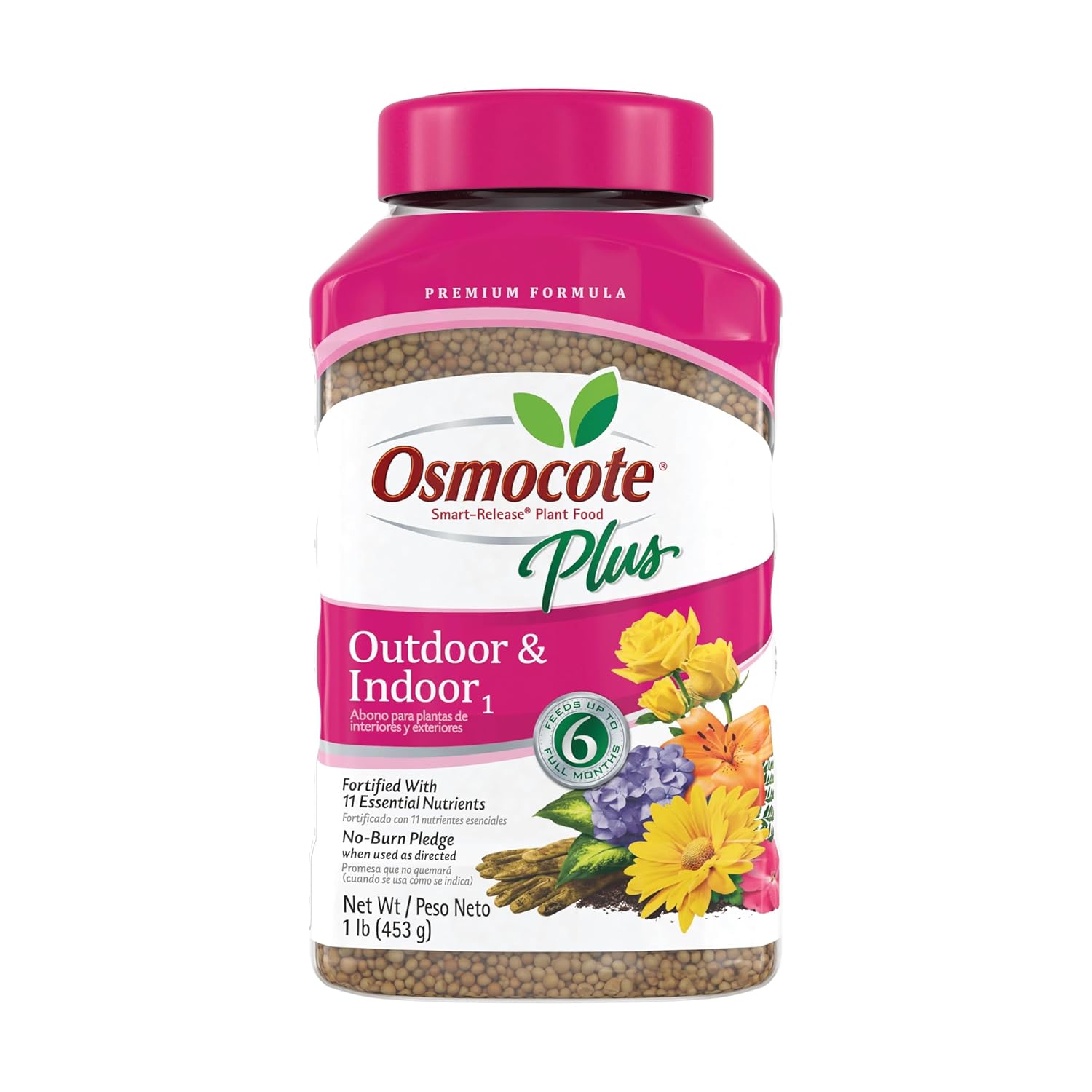
Osmocote Smart-Release Plant Food Plus Outdoor & Indoor, 1 lb
| Item Form | Granules |
|---|---|
| Specific Uses For Product | Plant Food |
| Application Method | sprinkle around the base and work into the soil |
| Unit Count | 16 Ounce |
Osmocote Smart-Release Plant Food Plus is a resin-coated granular fertilizer designed to deliver steady nutrition to a wide range of plants for up to six months from a single application. You apply it by sprinkling the recommended scoop into the top inch or so of potting mix for containers or around plants in garden beds, then watering to activate the coating. The product contains 11 essential nutrients and is formulated to release based on soil temperature, which helps reduce overfeeding and supports consistent bloom and foliage performance in hanging baskets. Its no-burn pledge makes it easy to use at the recommended rates for mixed annuals, trailing plants, and container veggies. Limitations are that coverage is modest from a 1 lb. container so frequent use on many large baskets will require buying more, and release timing still depends on temperature so plants in cool, shaded spots may receive nutrients more slowly than those in warm sun.
Best for: Gardeners who prioritize steady, low-maintenance feeding for hanging baskets and containers and want consistent bloom and foliage without frequent fertilizing.
Less Ideal for: Those who need immediate, short-term nutrient boosts or precise liquid feeding schedules for plants that demand fast correction.
- Resin-coated granules provide controlled release of nutrients for up to six months
- Formulated with 11 essential nutrients suitable for a wide variety of plants
- No-burn pledge when used as directed reduces risk of damaging roots in containers
- Simple sprinkle-and-water application works well for hanging baskets and pots
- 1 lb container covers a limited area so multiple baskets will need additional product
- Release rate depends on temperature so nutrient delivery can be slower in cool conditions
Verdict: An easy, low-maintenance slow-release fertilizer that keeps hanging baskets fed for months with minimal effort.
Grow More Cactus Juice 1-7-6 Liquid Succulent Fertilizer, 16 oz

| Item Form | Liquid |
|---|---|
| Specific Uses For Product | Plant Growth |
| Target Species | Cactus |
| Mixing Ratio | 1 teaspoon per gallon |
Grow More Cactus Juice is a water-soluble liquid fertilizer designed for cacti, succulents and similar houseplants. You mix the concentrate at the listed ratio and apply during the growing season to encourage root development and leaf health. The 1-7-6 NPK emphasizes phosphorus and potassium, which helps flowering and sturdier growth rather than leafy nitrogen-driven shoots. The formula is calcium-rich and includes micronutrients that support metabolic processes and stronger roots, useful after repotting or when plants look sluggish. Because it is liquid, dosing is fast and distributes evenly through potting mixes or containers. Limitations: the low nitrogen means it will not produce rapid leafy growth if that is your goal, and frequent careful dilution is required to avoid overfeeding small pots. For outdoor fruiting trees like dragon fruit, this product can be used as a supplemental phosphorous/potassium boost but is not a complete, tree-formulated fertilizer for heavy-feeding fruiting stages.
Best for: Buyers who prioritize a reliable, easy-to-mix succulent fertilizer for steady root and bloom support in potted cacti and succulents. Ideal for gardeners who prefer predictable, low-maintenance feeding routines.
Less Ideal for: Gardeners seeking a single complete fertilizer for established, fruiting trees or heavy-feeding tropical fruit like dragon fruit should consider tree-specific formulations or balanced NPK blends instead.
- Liquid concentrate mixes quickly for even feeding and easy application.
- Higher phosphorus and potassium ratio supports flowering, fruit set, and root development.
- Includes calcium and micronutrients to strengthen cell structure and metabolic activity.
- Low nitrogen content makes it a poor choice when vigorous leaf growth is desired.
- Packaged as a general succulent formula rather than tailored for larger fruit trees' full nutrient needs.
Verdict: Choose Grow More Cactus Juice when you want a dependable, calcium-enriched liquid feed that supports root health and flowering in cacti and succulents.
Farmer's Secret Fruit & Bloom Booster Liquid Fertilizer (8 oz)

| Item Form | Liquid |
|---|---|
| Liquid Volume | 8 fluid ounces |
| Mixing Ratio | 1 teaspoon : 2 gallons |
| Application Method | dilute with water and pour or spray |
Farmer's Secret Fruit & Bloom Booster is a concentrated liquid plant food designed for mid-to-late season use when plants begin to bud and set fruit. You dilute a small amount (1 teaspoon per 2 gallons) and apply it either to the soil with your watering can or as a foliar spray, repeating every 1 to 2 weeks. The formula emphasizes phosphorus and potassium alongside trace minerals to promote root development, flowering and fruit set, which is the kind of nutrient profile banana growers look for during fruiting. Because it is liquid and already mixed, nutrients are immediately available and it is easy to integrate with irrigation or regular watering. The bottle is small but very concentrated, so a little goes a long way. A practical limitation is that the 8 ounce size supplies only a limited number of applications for larger banana plants or multiple trees, so you will need to plan purchases for season-long feeding. Follow dilution directions carefully to avoid overapplication.
Best for: Gardeners who prefer a proven, easy-to-use liquid feed to encourage blooms and fruit and who want straightforward instructions and predictable results.
Less Ideal for: Growers with large banana groves or multiple mature plants who need bulk or long-term feeding should consider larger-volume fertilizers or granular options.
- High phosphorus and potassium formulation supports flowering and fruit set
- Liquid concentrate delivers nutrients immediately and is usable as soil or foliar feed
- Simple, low-strength mixing ratio makes it easy for beginners to apply safely
- Contains additional trace minerals (iron, zinc, calcium) that support overall plant health
- Small 8 oz bottle provides relatively few applications for mature banana plants or multiple trees
Verdict: A highly concentrated, easy-to-use liquid booster that quickly delivers flowering and fruiting nutrients for backyard banana plants and other fruiting ornamentals.
TPS NUTRIENTS Dragon Fruit Fertilizer Liquid Plant Food, 8 oz

| Item Form | Liquid |
|---|---|
| Specific Uses For Product | Plant Growth |
| Target Species | Dragon Fruit |
| Liquid Volume | 8 fluid ounces |
| Mixing Ratio | 1:0:0 |
This 8 oz liquid fertilizer from TPS Nutrients is formulated specifically for dragon fruit, combining nutrients aimed at encouraging blooms and reliable fruit development without promoting excessive leafy growth. You mix a small amount into water according to the product ratio and apply during the active growing season to container plants, trellised vines, or ground-planted specimens. Notable features include a cactus-friendly balance intended to support root development and flowering rather than vegetative shoot growth, and a small low-coverage bottle that is easy to store. In practice it is convenient for hobbyists and small-scale growers who feed regularly and want a targeted formula for dragon fruit. The concentrated liquid means a little goes a long way but also requires careful measuring and dilution. The bottle size and low coverage make it less suitable for large plantings where bulk supply or less frequent feeding is preferred, and users should follow safety directions to avoid contact or drift when applying.
Best for: Home gardeners and small-scale growers who want a dragon-fruit-specific feed to encourage blooms and steady fruit production and who are comfortable with regular, measured liquid feeding.
Less Ideal for: Gardeners managing large acreages or many plants who need high-coverage or bulk fertilizer options and those who prefer slow-release granular feeds requiring less frequent application.
- Formulation targeted to encourage flowering and fruit set in dragon fruit
- Liquid concentrate mixes easily for precise feeding
- Designed to support root development while avoiding excessive leafy growth
- Suitable for indoor container plants and trellised or vertical outdoor plantings
- Small 8 oz bottle provides low coverage and may not suit larger plantings
- Requires careful measuring and dilution to avoid overapplication
Verdict: A concentrated, dragon-fruit-specific liquid feed that helps boost flowering and fruit set for small-scale and container growers.
Choosing the Right Fertilizer for Dragon Fruit Tree: Key Factors to Consider
Nutrient Ratio and Micronutrients
Dragon fruit benefits from a balanced nutrient profile that supports both vegetative growth and flowering. Look for fertilizer ratios that do not push excessive nitrogen at the expense of phosphorus and potassium, especially during the bloom and fruiting periods. Micronutrients such as magnesium, calcium, iron, and trace elements help prevent blossom drop and support fruit development.
Too much nitrogen during flowering can produce lush stems but few flowers and fruits. Conversely, phosphorus and potassium help with bud set and fruit quality. A product that lists guaranteed micronutrient levels or includes a chelated micronutrient package gives you extra insurance against common deficiencies in potting mixes or poor soils.
Fertilizer Form and Release Pattern
Granular, slow-release, and soluble liquid fertilizers each behave differently around dragon fruit roots. Slow-release granules provide a steady supply and reduce the chance of rapid nutrient spikes but may be less flexible when you need to correct a deficiency. Liquid feeds act quickly and are useful for stimulating blooms or correcting problems, but they require more frequent application and careful dosing.
Consider climate and watering frequency when choosing a release pattern. In hot, frequently watered conditions liquid or water-soluble feeding may be preferable for precise control. In less-visited plantings or for gardeners who prefer low-maintenance care, a reputable slow-release formula can deliver consistent nutrition over weeks to months.
Salt Index and Root Health
Dragon fruit can be sensitive to salt buildup, especially in containers. High-salt fertilizers or frequent strong applications can damage feeder roots and reduce overall vigor. Check product labeling for salt index guidance or recommendations for leaching.
If you use concentrated liquid feeds, flush pots occasionally with fresh water to prevent accumulation. In-ground plantings are more forgiving, but heavy fertilizing near root zones can still concentrate salts. Choosing a formulation with a moderate salt load or using controlled-release forms lowers the risk of root stress and makes feeding safer for young plants.
Container Versus In-ground Use
Many dragon fruit are grown in large pots, so fertilizer choice should reflect container dynamics. Containers dry and leach nutrients differently than garden beds, requiring more frequent, smaller applications for soluble feeds. Slow-release granules formulated for container plants or water-soluble feeds with clear low-dose instructions work best for potted dragon fruit.
In-ground plants benefit from deeper root exploration and may tolerate less frequent, higher-dose applications. Determine the planting situation before choosing a product to ensure the feeding schedule and formulation match the root environment.
Feeding Schedule and Grower Effort
Consider how much time you want to spend on feeding. Liquid fertilizers typically require weekly to biweekly applications during the active season, while slow-release options can stretch to several months between top-ups. Your willingness to monitor plant response, flush containers, and adjust rates should influence whether you pick a hands-on liquid feed or a lower-maintenance granular product.
Also factor in seasonal changes. Many growers reduce or stop feeding in cool months when growth slows. A fertilizer that allows easy rate adjustment helps modulate plant response across seasons without risking nutrient burn.
Environmental and Organic Preferences
If you follow organic gardening practices, choose fertilizers certified for organic use or based on natural ingredients such as composted manures, bone meal, or seaweed extracts. Organic feeds often release nutrients more slowly and improve soil biology, which benefits long-term soil structure and root health.
Synthetic fertilizers provide precise nutrient ratios and quicker correction of deficiencies, but they require careful dosing. Consider runoff risk and local regulations if you garden near waterways, and select formulations that align with your environmental priorities.
Timing Fertilizer Applications for Flowering and Fruit Set
Dragon fruit has distinct growth phases where nutrient needs change. During active vegetative growth a slightly higher nitrogen level supports new stem extension, but as buds form you want to shift toward phosphorus and potassium to encourage blooms and fruit development. Plan to reduce or stop nitrogen-heavy feeding as flowering ramps up.
For many gardeners a regime that increases phosphorus and potassium in the weeks before expected bloom helps promote better bud set. Apply feeds early in the morning or late in the day and avoid heavy feeding close to hot, dry spells to reduce stress.
- Start regular feeding when new growth appears in spring or when plants become active.
- Shift to bloom-supportive feeding 3 to 6 weeks before anticipated flowering.
- Pause or reduce inputs during cooler months when growth slows.
Soil and Potting Mix Prep Before Fertilizing
Healthy roots respond better to fertilizer when the growing medium drains well and contains organic matter. Amend heavy soils with coarse sand or grit to improve drainage for dragon fruit grown in the ground. For containers use a free-draining potting mix with added perlite or pumice to keep roots aerated.
Incorporating a slow-release base fertilizer or well-rotted compost at planting gives young plants a stable nutrient foundation and reduces the need for early corrective feeding.
- Ensure potting mixes are light and well-draining.
- Add organic matter for microbial health and steady nutrient release.
- Avoid compacted soils that hold water around roots.
Adjusting Feed Rates for Climate and Watering
Hot, sunny conditions and frequent irrigation increase nutrient uptake and may require more frequent feeding. In cooler or drier climates reduce application frequency and strength to avoid salt buildup and root stress. Observe plant vigor: pale new growth or weak stems can signal underfeeding, while browned leaf margins or stalled root growth often indicate overfeeding.
For container-grown dragon fruit, leach pots periodically after heavy feeding to prevent salts from concentrating. In-ground plants with deeper roots tolerate higher nutrient doses but still benefit from monitoring.
- Increase feed frequency during active growth in warm weather.
- Reduce rates during dormancy or slow growth periods.
- Flush containers after a series of heavier feeds to prevent salt buildup.
Using Organic Amendments and Supplements
Organic options such as compost, well-rotted manure, fish emulsion, and kelp extracts can support soil life and provide a broad mix of nutrients. These amendments release nutrients more slowly and improve soil structure, which helps long-term plant health. Organic foliar feeds can also supply micronutrients quickly without disturbing root conditions.
Combine an organic base with occasional targeted mineral feeds if you need to correct a specific deficiency, such as magnesium or iron. Test or observe plant symptoms before adding specialized supplements to avoid unnecessary inputs.
- Topdress with compost in spring to build soil biology.
- Use liquid organic supplements sparingly for quick corrections.
- Match supplements to observed deficiencies rather than routine use.
Common Feeding Mistakes to Avoid
Overfeeding is a frequent error that causes weak, succulent growth prone to pest problems and poor flowering. Always follow label rates and start at the lower end if you are unsure. Another common mistake is relying solely on a single feed type year-round. Dragon fruit benefits from changing nutrient emphasis between growth and bloom phases.
Failing to consider the planting environment also leads to problems. Container plants need different schedules than those in the ground, and heavy applications before hot, dry weather can stress roots. Regular observation and small adjustments prevent many feeding issues.
- Do not exceed recommended rates on labels.
- Avoid using only high-nitrogen feeds during flowering.
- Adjust feeding based on plant response rather than fixed schedules.
How We Chose the Best Fertilizer for Dragon Fruit Tree
We selected fertilizers that fit the specific nutritional needs and growth habit of dragon fruit. Key evaluation criteria included nutrient profile, with attention to balanced N-P-K ratios and micronutrient content that support flowering and fruit development; fertilizer form and application method, because granular, liquid, and slow-release products behave differently in pots and in-ground plantings; and release pattern and feeding frequency, which affect how often a gardener must reapply and how likely salts are to build up. We also weighed formulation stability and suitability for container versus in-ground dragon fruit, checking for products that work across common potting mixes without causing root stress. Ease of use and clear dosing guidance were important, since overfeeding is a common problem for new growers. Environmental safety and compatibility with organic gardening practices were considered as additional filters. Excluded from this list were specialty turf or vegetable-only fertilizers that lack appropriate bloom support, and any formulations designed exclusively for indoor houseplants with minimal nutrient levels. We focused on products that gardeners can reasonably use on climbing cacti in a range of climates and planting situations.
FAQ
How often should I feed my dragon fruit tree?
Feeding frequency depends on the fertilizer form and planting. Liquid feeds are usually applied every one to four weeks during the active season, while slow-release granules can last several months. Reduce or stop feeding during cool periods when growth slows.
What N-P-K ratio is best for flowering and fruiting?
A balanced N-P-K that shifts toward higher phosphorus and potassium during bloom tends to work well. Avoid very high nitrogen formulas during flowering, and choose a feed that includes micronutrients to support bud set and fruit development.
Can I use general-purpose houseplant fertilizer on dragon fruit?
General-purpose feeds can be used in a pinch, but many are formulated for leafy indoor plants and may be too low in phosphorus and potassium for good flowering. If you use one, adjust application and consider supplementing with a bloom-supporting feed.
How do I prevent fertilizer burn in containers?
Prevent burn by following label rates, using diluted liquid feeds, and flushing pots occasionally with fresh water to leach accumulated salts. Choose formulations with moderate salt indices and avoid concentrated applications when pots are dry and temperatures are high.
Are organic fertilizers effective for dragon fruit?
Organic fertilizers can be very effective and improve long-term soil health, but they often release nutrients more slowly. They work well as a regular base feed or in combination with targeted mineral supplements for quick corrections.
Final Verdict
Choose a fertilizer that matches how you grow dragon fruit and how much time you want to spend feeding. Prioritize a nutrient profile that supports flowering and fruit set rather than excessive nitrogen, and pick a release pattern suited to your containers or in-ground beds. Balance convenience and precision by combining a steady base feed with occasional targeted applications during bloom. Monitor plant response, adjust rates for climate and watering, and focus on preventing salt buildup for consistently healthy plants.
