

Note: This article contains affiliate links. If you click on these links and make a purchase, I may earn a small commission at no extra cost to you. This helps support my research and content. Read my full affiliate disclosure here.
If you grow coconut trees you know they respond to steady, nutrient-rich feeding and healthy soil biology. Choosing the right natural fertilizer for coconut tree affects root vigor, leaf color, and long-term fruit production, especially in sandy coastal soils or container palms. This guide shortlists five top natural options suited for coconut tree care and explains how we judged them by nutrient profile, ease of application, and effects on soil health. Read on to learn which types of organic fertilizers match your soil, climate, and maintenance style before the product list.
Top Picks at a Glance
| Best Overall The best all-around choice for most situations | Down To Earth Organic Palm Tree Fertilizer 6-2-8, 5 lb |  |
| Best Value The sweet spot between price and what you get | Espoma Organic Palm-Tone 4-1-5 Organic Fertilizer for Palms, Hibiscus & Tropical Plants, 4 lb. |  |
| Best Budget The cheapest option that still gets the job done reliably | Down To Earth Organic Kelp Meal 1-0.1-2, 8 oz |  |
| Highest Rated A top-rated pick with lots of positive feedback | MicroLife Palms & Tropical Granular Organic Fertilizer (4-2-4), 7 lb |  |
| Best Seller A high-volume bestseller chosen again and again | Jobe's Organics Granular Palm Tree Fertilizer, 4 lb |  |
Down To Earth Organic Palm Tree Fertilizer 6-2-8, 5 lb

| Item Form | Granules |
|---|---|
| Target Species | palms and cycads |
| Specific Uses For Product | Plant Growth |
| Mixing Ratio | 6-2-8 |
This Down To Earth granular fertilizer is designed to feed palm-type and tropical trees by supplying a higher potassium formulation balanced with nitrogen and lower phosphorus to encourage frond development and root health. It is intended for broadcast or hand application to the soil surface and should be lightly scratched in or covered with compost or mulch, then watered in. Notable features include an OMRI-friendly all-natural ingredient blend and added micronutrients such as calcium and magnesium that support overall palm vigor. Because it is a dry, soil-applied organic mix rather than a soluble feed, benefits build gradually as soil biology breaks down the granules, which suits long-term health and reduces the need for frequent reapplication. Limitations are that it is not instantly water-soluble for rapid correction of deficiencies and that results depend on soil conditions and microbial activity, so gardeners in very poor soils may need soil amendments or repeated applications to see quick change. Shelf stable packaging and clear application guidance make it straightforward for routine maintenance of coconut and other palm trees.
Best for: Gardeners who want a balanced, organic maintenance fertilizer for coconut trees and other palms and prefer a slow-building soil feed to support long-term vigor and frond development.
Less Ideal for: People needing a fast corrective feed for acute nutrient deficiencies or those who prefer liquid foliar feeds for immediate results.
- Organic OMRI-listed formula with natural ingredients suitable for certified organic gardens
- 6-2-8 NPK mix tailored to encourage palm frond growth and root strength
- Contains calcium, magnesium, and trace minerals for more complete nutrition
- Granular form is easy to broadcast or hand-apply and stores without expiring
- Not water soluble so it will not provide immediate nutrient correction
- Effectiveness depends on soil biology and may be slower in poor or inactive soils
Verdict: A reliable organic granular fertilizer that steadily builds palm health and frond development for coconut trees through a palm-focused 6-2-8 nutrient mix.
Espoma Organic Palm-Tone 4-1-5 Organic Fertilizer for Palms, Hibiscus & Tropical Plants, 4 lb.

| Item Form | Granules |
|---|---|
| Specific Uses For Product | Plant Food |
| Coverage | Palm, hibiscus, and tropical plants |
| Mixing Ratio | 4:1:5 |
Espoma Palm-Tone is a ready-to-use granular organic fertilizer designed for palms, hibiscus, and other tropical plants. You apply it by sprinkling the granules around the plant drip line and watering in; recommended frequency is roughly every three months for established palms and monthly for tropicals during the growing season. The 4-1-5 N-P-K profile with 5% calcium and Espoma’s Bio-tone microbial formula aims to support steady growth, stronger stems, and improved flowering without synthetic additives. Its organic composition and certification for organic gardening make it a good match for container growers who prefer natural inputs. Limitations to note are that it is a moderate-release granular product rather than a fast-acting soluble feed, so visual changes take a few weeks, and application rates must be followed to avoid overfeeding in small pots. For potted palms, pairing this granular feed with regular watering and occasional soluble supplements can keep plants vigorous throughout the season.
Best for: Potted palm and tropical growers who prioritize steady, organic nutrition and want an easy-to-apply granular fertilizer that supports long-term plant health.
Less Ideal for: Growers seeking immediate correction of nutrient deficiencies or those who prefer liquid feeds for frequent, precise dosing should consider a soluble fertilizer instead.
- Formulated specifically for palms and tropicals with a 4-1-5 N-P-K ratio
- Contains 5% calcium to support cell wall strength and reduce tip burn
- Organic granular formula approved for organic gardening and contains microbial Bio-tone enhancement
- Ready-to-use granules that are easy to apply around the root zone
- Granular, moderate-release formula is slower to correct acute nutrient deficiencies than soluble feeds
- Application rates for small pots require care to avoid overfeeding
Verdict: Choose Espoma Palm-Tone when you want a reliable, organic granular fertilizer that delivers steady, palm-focused nutrition for potted tropicals.
Down To Earth Organic Kelp Meal 1-0.1-2, 8 oz

| Item Form | Granules |
|---|---|
| Specific Uses For Product | Plant Growth |
| Coverage | Source of potash and nutrient supplement |
| Target Species | Vegetables, herbs, flowers and perennials |
| Mixing Ratio | 1:1 |
Down To Earth Kelp Meal is a granular, plant-based fertilizer made from seaweed that delivers mild, slow-release nitrogen and a natural source of potash plus trace minerals and growth hormones. It is typically sprinkled into garden beds, worked lightly into potting mixes, or added around tree drip lines and then watered in; the product is also suitable for top-dressing containers and compost piles. Notable features include its OMRI listing for organic use, a gentle 1-0.1-2 N-P-K profile that reduces burn risk, and a fine granular form that is easy to measure and spread. For coconut trees it supports rooting and flowering over time rather than forcing rapid leafy growth, and the micronutrients can help long-term soil biology. The main limitation is that kelp meal is low in phosphorus and overall N-P-K strength, so it works best as a supplement to a balanced feeding plan rather than the sole source of macronutrients for heavy-feeding trees. Small unit sizes make it convenient for trial use but mean frequent replenishment for large trees or acres.
Best for: Home gardeners or small-plot growers who want an affordable organic supplement to improve soil biology and support coconut tree rooting and flowering without risking fertilizer burn.
Less Ideal for: Large-scale growers or anyone looking for a high-N or high-P primary fertilizer for rapid, heavy feeding of mature coconut trees.
- OMRI listed and plant-based, suitable for organic gardening
- Gentle, slow-release 1-0.1-2 formula that minimizes risk of burning roots
- Provides potassium, trace minerals and natural growth hormones that support rooting and flowering
- Granular form is easy to measure, apply around tree drip lines, or mix into potting soil
- Low in phosphorus and overall macronutrient concentration so not sufficient as a lone feed for heavy feeders
- Small 8 oz unit requires frequent reapplication for large trees like coconuts
Verdict: A gentle, OMRI-listed kelp meal that is an inexpensive organic supplement to improve rooting and long-term soil health for coconut trees when used alongside a balanced feeding program.
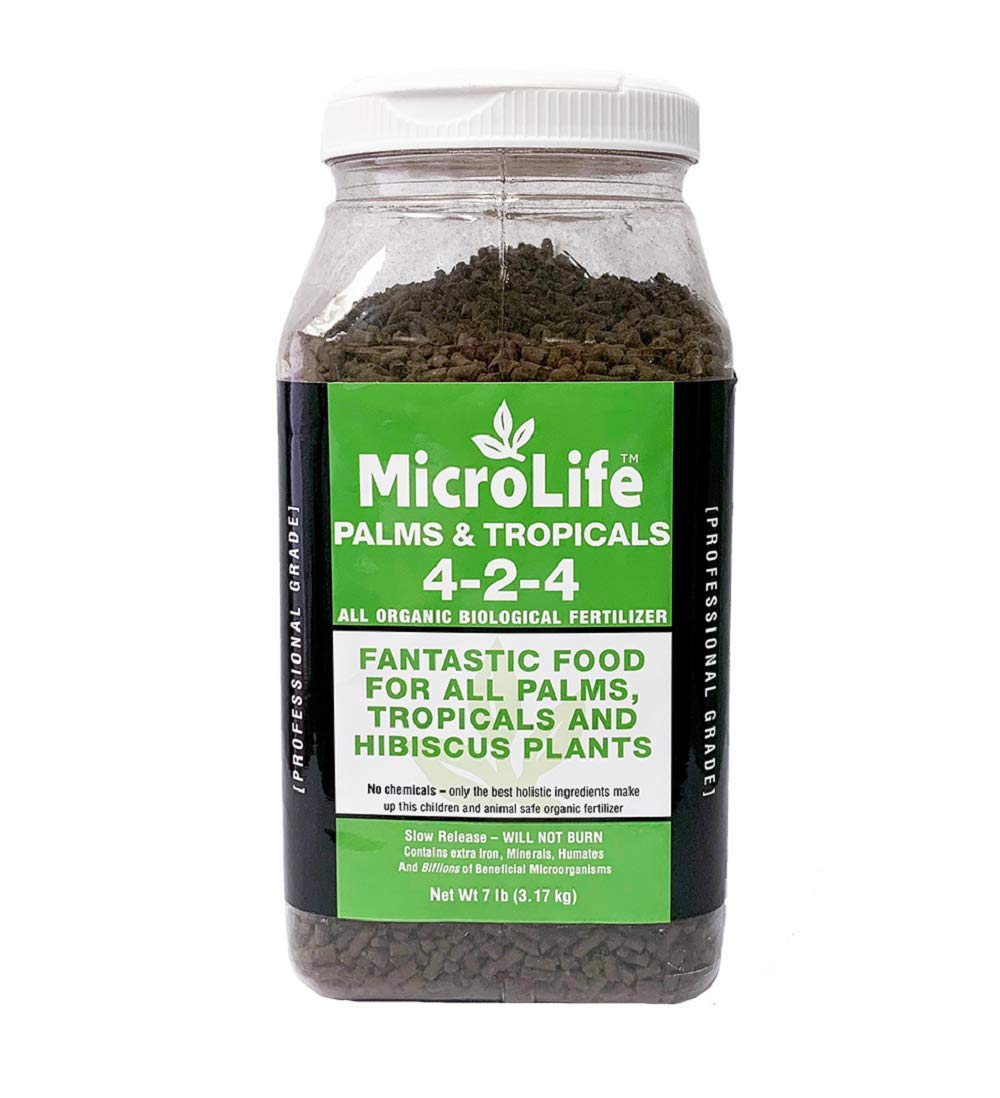
MicroLife Palms & Tropical Granular Organic Fertilizer (4-2-4), 7 lb
| Item Form | Granules |
|---|---|
| Specific Uses For Product | Organic |
| Target Species | Palms, tropicals & hibiscus |
| Mixing Ratio | 1:1:1 |
This granular formula delivers steady nutrition with a 100 percent slow-release profile designed to avoid burning sensitive tropical plants. You apply it to soil around the base of new plantings and as part of annual maintenance; the slow-release granules feed over time so you do not need frequent reapplication. The product includes extra potassium, magnesium, manganese, and iron, which support strong foliage color and stress tolerance in nutrient-hungry tropicals. Its professional-grade concentration means you can expect robust, gradual growth and improved plant resilience rather than a short burst of lush but weak growth. On the downside it is a specialty palm/tropical blend so it is not tailored for every fruiting crop and directions must be followed to get the intended slow-release benefit. Also the granular form requires spreading or incorporation into soil, so it is less convenient than a liquid feed for foliar applications. For gardeners focused on steady, dependable nutrition this fertilizer simplifies seasonal feeding for tropical and hibiscus plantings.
Best for: Buyers who prioritize dependable, low-maintenance nutrition for tropical plants and want a slow, steady feeding program rather than frequent dosing.
Less Ideal for: Growers seeking a fertilizer optimized specifically for pineapple fruit production or those who prefer liquid or foliar feeds for quick correction.
- 100% slow-release granules reduce risk of fertilizer burn and provide sustained feeding
- Includes added potassium, magnesium, manganese and iron to support foliage health and stress tolerance
- Professional-strength formula suited for new plantings and annual maintenance
- Formulated specifically for palms and tropicals so nutrient balance may not match all fruiting crops
- Granular form requires soil application and is not suitable for quick foliar feeding
Verdict: Choose this slow-release tropical fertilizer when you want reliable, low-risk seasonal feeding to maintain healthy foliage and steady growth.
Jobe's Organics Granular Palm Tree Fertilizer, 4 lb

| NPK | 4-2-4 |
|---|---|
| Item Form | Granules |
| Unit Count | 64 Ounce |
| Target Species | palm trees and plants |
This granular palm fertilizer is designed to feed palms and similar house or landscape plants on a slow-release schedule. It is OMRI listed and made from organic sources such as feather meal and bone meal, so you can apply it around ornamentals, indoor palms, and planted containers without synthetic chemicals. Typical use is straightforward: broadcast or sprinkle the granules around the root zone every 2 to 3 months during the growing season and water in. The 4-2-4 NPK plus added calcium and magnesium supplies steady nitrogen and potash for leaf development while supporting root health. Practical benefits include low risk of burn when used as directed, easy measuring, and longer-lasting effects compared with quick-release feeds. Limitations are that a 4 lb bag covers a moderate area only, so larger landscapes will need multiple bags, and nutrient release is slower so you will not see immediate greening after a single application.
Best for: Gardeners looking for an affordable, organic palm fertilizer they can apply infrequently and safely around ornamental palms and potted specimens.
Less Ideal for: People who need rapid greening or who manage large acreages of palms and want a high-volume commercial option.
- OMRI listed organic formula safe for use around ornamentals, children, and pets when used as directed
- Balanced 4-2-4 NPK with added calcium and magnesium supports foliage and root development
- Slow-release granular form provides longer-lasting feeding and lower burn risk
- Simple application schedule of every 2 to 3 months makes maintenance easy
- 4 lb bag provides only medium coverage so multiple purchases may be needed for larger plantings
- Slow-release formula delays visible results compared with fast-release fertilizers
Verdict: A budget-friendly organic granular fertilizer that gives steady, low-risk nutrition to palms with easy, infrequent applications.
Choosing the Right Natural Fertilizer for Coconut Tree: Key Factors to Consider
Nutrient Profile Focused on Potassium and Magnesium
Coconut trees have specific nutrient tendencies: they benefit from higher potassium and adequate magnesium to support fruit set, fiber strength, and leaf health. When choosing a natural fertilizer, check whether the ingredients supply these elements in plant-available forms. Natural sources like wood ash, kelp, and greensand can supply potassium and trace minerals, while dolomitic lime or magnesium-rich amendments address magnesium deficiency.
A balanced profile matters because palms are less able to tolerate prolonged nitrogen dominance without parallel potassium. Excessive quick-release nitrogen can produce lush leaves at the expense of flowering and fruit production. Aim for natural options that deliver steady potassium and magnesium along with moderate nitrogen to keep palms productive without excessive vegetative growth.
Soil Organic Matter and Microbial Support
Natural fertilizers often do more than feed plants directly; they feed the soil food web. Compost, composted manures, and well-aged plant-based meals add carbon and diverse microbes that improve soil structure, moisture retention, and nutrient cycling. For coconut trees planted in sandy soils, building organic matter is especially important because it increases water-holding capacity and keeps nutrients available between applications.
Products that include composted components or mycorrhizal-friendly materials will support root exploration and long-term resilience. Avoid raw manures or undercomposted materials that might burn roots or introduce salts. Look for descriptions that note stabilized organic matter and active microbial communities when possible.
Salt Index and Risk of Root or Foliar Burn
Many gardeners choose natural fertilizers to avoid salt-related damage. Some organic amendments still carry a moderate salt load or release soluble salts as they break down. Coconut trees are sensitive to high salt around the root zone and to foliar burn if soluble materials contact leaves in hot sun. Choose low-salt natural options or apply granular and dry materials to the soil surface and water them in thoroughly.
If you garden in coastal or arid regions, prioritize products labeled low-salt or slow-release. Testing irrigation water and checking the fertilizer's salt characteristics helps prevent cumulative buildup, which can reduce root function and limit water uptake.
Application Method and Frequency
Natural fertilizers come as composts, granular blends, pellets, liquids, or teas. Each form affects how often you need to apply and how labor-intensive feeding will be. Compost and slow-release granules usually require fewer applications per year, while liquid extracts or teas provide quicker nutrient availability and may be used for periodic boosts during active growth or flowering.
Consider your maintenance routine and whether you can manage monthly liquid feeds or prefer a twice-yearly granular top-dress. For container-grown palms, light, frequent feeding with diluted liquids is often better than heavy granular top-dresses that can affect pot drainage.
pH Influence and Secondary Nutrient Availability
Soil pH affects the availability of many nutrients palms need, including iron and manganese. Some natural fertilizers alter pH slightly; lime- or wood-ash-based products raise pH, while sulfur-containing amendments lower it. Choose amendments with awareness of your soil's current pH and the secondary nutrient needs of coconut trees in your area.
A small soil test before major amendment helps you select materials that correct specific deficiencies rather than applying broad-spectrum mixes that shift pH unpredictably. Natural does not always mean neutral in pH effect, so match the fertilizer's influence to your soil test results.
Material Source and Weed or Pathogen Risk
The origin and processing of organic materials matter. Well-composted plant matter is safer than raw biosolids or animal manures that have not been heat-stabilized. Raw materials can contain weed seeds, pathogens, or imbalanced nutrient concentrations. Choose products that state their composting process or quality control, especially for urban gardeners concerned about contaminants.
For home gardens, certified or clearly described processing methods reduce the risk of introducing unwanted organisms. If using locally sourced compost, inspect for uniform texture and earthy smell; sharp ammonia odors or visible undecomposed material indicate incomplete composting.
When to Feed Coconut Trees
Timing feeds to the palm's growth cycle gets the best return. Apply slower-release natural fertilizers at the start of the active growing season and again midseason if needed. For tropical climates with year-round growth, plan quarterly light applications or steady top-dressing to maintain available nutrients.
Avoid heavy feeding just before dry, hot spells without adequate irrigation because stressed palms cannot use nutrients efficiently. For container palms, feed more frequently with diluted formulas because pots lose nutrients faster than in-ground plantings.
- Apply granular top-dress after rain or water in well
- Use liquid feeds during spike growth or flowering
- Reduce feeding during dormancy or extreme drought
How to Apply Natural Fertilizers Around a Palm
Spread granular or compost materials in a broad ring under the canopy rather than concentrating them at the trunk. Coconut tree roots extend well beyond the visible leaf dripline, so spreading amendment over a larger area improves uptake and reduces trunk burn risk.
When using liquids or teas, drench the soil thoroughly and avoid splashing concentrated material on the fronds. For container palms, apply fertilizing solutions at a lower concentration and flush pots occasionally to prevent salt buildup.
- Keep amendments 6 to 12 inches from the trunk base
- Work compost gently into the topsoil without damaging shallow roots
- Water deeply after application to move nutrients into the root zone
Correcting Common Nutrient Deficiencies
Yellowing or frayed leaf tips often point to potassium or magnesium shortages in palms. For potassium, consider low-salt kelp or wood-ash-based inputs applied carefully. Magnesium deficiency responds to magnesium sulfate or dolomitic lime depending on soil pH and the chosen natural source.
Conduct a leaf tissue test where possible to confirm which secondary nutrients are lacking. Spot treatments with targeted natural amendments are safer than blanket applications and help avoid creating imbalances that can trigger other deficiencies.
- Potassium: kelp, greensand, wood ash in moderation
- Magnesium: dolomite or Epsom salts depending on pH
- Iron: chelated iron or compost teas on high-pH soils
Compost and Mulch Strategies for Long-Term Health
Regular top-dressing with high-quality compost builds a palm-friendly soil that retains moisture and feeds microbes. Mulching with organic materials like shredded bark or leaf mold conserves moisture and moderates soil temperature, but avoid thick, wet layers that trap pests against the trunk.
Refresh mulch annually and replenish a light compost top-dress to maintain a steady nutrient supply. For sandy sites, aim to gradually increase organic matter content to improve water and nutrient retention over several seasons.
- Apply 2 to 4 inches of mulch, keeping it away from direct trunk contact
- Use compost as a light top-dress every 6 to 12 months
- Combine mulch with periodic liquid feeds for fast uptake
Safe Practices for Coastal and Saline Conditions
Coconut trees are often grown in coastal settings where saline spray and high soil salts complicate fertilization. Prioritize low-salt natural materials and use frequent light waterings to leach salts from the root zone. Avoid repeated applications of wood ash or unwashed seaweed in high-salt contexts unless you can rinse and manage salt accumulation.
Regular soil and leaf testing helps detect salt buildup early. Where desalting is needed, incorporate organic matter and encourage drainage rather than relying solely on chemical fixes.
- Choose low-salt kelp extracts rather than raw seaweed in saline sites
- Rinse leaves and fronds if heavy salt spray occurs
- Monitor soil electrical conductivity if salinity is a suspected problem
How We Chose the Best Natural Fertilizer for Coconut Tree
We focused on products that deliver fertility without harsh salts or synthetic nitrogen spikes, prioritizing slow-release nutrient sources and ingredients that build soil structure. Evaluation criteria included nutrient balance relevant to palms, especially potassium and magnesium availability; contribution to soil organic matter and microbial activity; ease and frequency of application for typical yard or container use; and salt index or risk of foliar burn when applied in warm climates. We also considered material form and handling safety for home gardeners, such as granules, pellets, or compostable blends. Exclusions: we excluded formulations that rely primarily on synthetic salts, high-solubility chemical mixes, or those designed only for turf and not for palms. Products that posed clear application risks for root scorch or contained questionable additives were not considered. The goal was to highlight natural fertilizers that support steady growth, fruiting, and resilient root systems while fitting common home garden routines.
FAQ
How often should I apply natural fertilizer to an established coconut tree?
Established coconut trees typically do well with two to four slow-release organic applications per year, depending on climate and soil. In containers or sandy soils you may need lighter, more frequent feedings.
Can I use compost alone as the only fertilizer for my coconut tree?
High-quality compost supplies many nutrients and builds soil life, but it may be low in potassium or magnesium. Supplement compost with targeted natural amendments when tissue tests show deficiencies.
Is seaweed kelp safe to use on coconut trees near the coast?
Kelp products are a good source of potassium and trace elements, but raw seaweed can add salt. Use processed kelp extracts or washed seaweed and apply sparingly in already saline sites.
How can I tell if my palm needs magnesium or potassium?
Magnesium deficiency often shows as yellowing between leaf veins on older fronds, while potassium issues cause brown tips and frayed margins. A leaf tissue test is the most reliable way to confirm which nutrient is lacking.
Are there natural ways to increase fruiting on coconut trees?
Steady, balanced feeding with adequate potassium and maintenance of soil organic matter supports flowering and fruit set. Avoid heavy quick-release nitrogen that encourages leaf growth at the expense of blooms.
Can I apply natural fertilizer directly against the trunk?
No. Keep granular or concentrated materials several inches away from the trunk to protect the trunk base and shallow roots. Spread amendments in a wide band under the canopy and water them in.
Final Verdict
Choosing a natural fertilizer for coconut tree care means balancing steady nutrient supply with long-term soil health. Prioritize materials that supply potassium and magnesium in usable forms, build organic matter, and have a low salt impact. Match the product form to your maintenance rhythm: slow-release top-dresses for low-effort gardens, and diluted liquids or teas for quicker uptake in pots or during flowering. The right natural approach will support healthier fronds, better fruiting, and stronger root systems. Focus on nutrient balance, soil-building capacity, and safe application practices to choose confidently among natural fertilizer options for coconut trees.
