

Note: This article contains affiliate links. If you click on these links and make a purchase, I may earn a small commission at no extra cost to you. This helps support my research and content. Read my full affiliate disclosure here.
Growing garlic well starts with giving bulbs what they need at the right time. The right natural fertilizer improves soil biology, feeds developing cloves, and reduces the need for synthetic inputs. In this guide we shortlisted seven top natural fertilizers for garlic that perform reliably in gardens and raised beds. Each pick is evaluated for nutrient balance, ease of use, and how it interacts with common soil types so you can match a product to your planting plan. Read on to see the criteria we used and practical notes to help you choose.
Top Picks at a Glance
| Best Overall The best all-around choice for most situations | Old Cobblers Farm Wicked Growth Garlic & Onion Fertilizer (5 lb) |  |
| Best Quality Built to a higher standard if you want something more solid | Down To Earth Bone Meal Organic Fertilizer, 3-15-0, 5 lb |  |
| Best Value The sweet spot between price and what you get | Brut Organic Worm Castings, 5 lb |  |
| Best Budget The cheapest option that still gets the job done reliably | Dr. Earth Organic Tomato, Vegetable & Herb Fertilizer (64 oz) |  |
| Highest Rated A top-rated pick with lots of positive feedback | Gardenera Liquid Power Garlic Fertilizer Concentrate, 8 oz |  |
| Most Popular A crowd favorite that many people choose with confidence | TPS NUTRIENTS Garlic Fertilizer Liquid Plant Food, 8 oz |  |
| Best Seller A high-volume bestseller chosen again and again | Burpee Bone Meal Fertilizer, 3 lb |  |
Old Cobblers Farm Wicked Growth Garlic & Onion Fertilizer (5 lb)

| Item Form | Granules |
|---|---|
| Application Method | Granular |
| Target Species | Garlic and Onion |
| Unit Count | 16 Ounce |
This granular fertilizer is designed specifically for allium crops and is used as both a pre-plant soil amendment and as a repeat side-dress during the growing season. The guaranteed analysis (roughly 5-10-10 with added sulfur and calcium) supplies balanced nitrogen, phosphorus and potassium while the gypsum and elemental sulfur target the sulfur needs that drive garlic and onion flavor and bulb development. Directions show mixing into soil before planting and side-dressing when tops reach 4 to 6 inches, with reapplications every 4 to 6 weeks and a final stop 2 to 3 weeks before harvest. Practical benefits include targeted nutrition for firmer, better-storing bulbs and trace boron and zinc to support even bulb set. Because it is granular you must water it in after application and take care to keep granules off foliage and bulb shoulders to avoid burn. It is intended for conventional use and is best paired with a soil test so you avoid unnecessary applications of nutrients you do not need.
Best for: Gardeners focused on maximizing bulb size, flavor and storability for garlic and onions who plan applications based on a programmatic pre-plant and side-dress schedule.
Less Ideal for: Growers seeking organic-only amendments or those who prefer liquid fertigation or foliar feeds should consider alternatives better matched to those methods.
- Formulated for alliums with added sulfur to support garlic and onion flavor compounds
- Balanced NPK that supports bulb growth and storage quality
- Contains calcium plus boron and zinc to help bulb formation and even development
- Granular form works for pre-plant incorporation and timed side-dressing applications
- Not calibrated to soil test results so could supply unneeded nutrients if used without testing
- Granules must be kept off foliage and bulb shoulders and require watering in after application
Verdict: Choose this granular, sulfur-enriched formula when you want a purpose-built feed that boosts flavor and bulb development in garlic and onions.
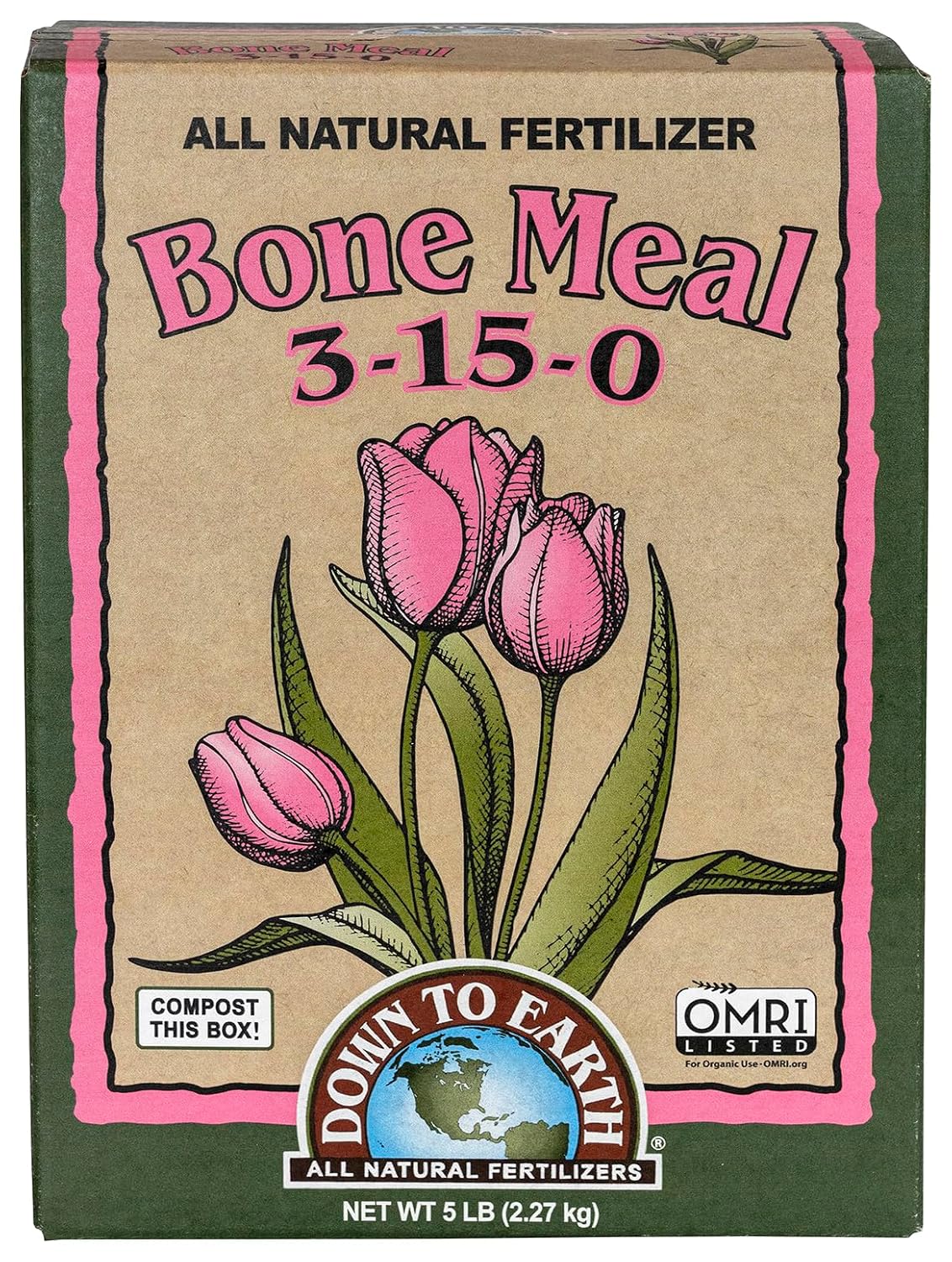
Down To Earth Bone Meal Organic Fertilizer, 3-15-0, 5 lb
| Item Form | Granules |
|---|---|
| Specific Uses For Product | Plant Growth, Soil Conditioning |
| Coverage | Medium |
| Target Species | flowering plants, trees, ornamentals, bulbs |
| Mixing Ratio | 3:15:0 |
This Down To Earth bone meal is a straightforward organic source of phosphorus and calcium supplied as granules with a 3-15-0 analysis. It is typically worked into planting holes or incorporated into soil before planting garlic, bulbs, and other flowering crops to encourage strong root set and earlier growth. The product is OMRI-listed and made from bone meal only, so it fits an organic fertility program and pairs well with balanced nitrogen feeds. Practical benefits include promoting root development that helps young garlic cloves establish and potentially supports better scape and bulb development later in the season. Application is simple: mix into the planting row or side dress as directed and water in. Limitations are that bone meal provides almost no nitrogen or potassium, so it should be used as part of a feeding plan rather than as a complete fertilizer, and it releases nutrients relatively slowly compared with soluble fertilizers. Protective handling is advised because it is an animal-derived product and should be kept away from pets and children.
Best for: Garlic growers focused on organic, performance-driven root and bulb development who plan nutrient programs around targeted phosphorus supplementation.
Less Ideal for: Growers seeking a complete, fast-acting all-in-one fertilizer or those who want immediate soluble nutrient availability.
- High phosphorus content (3-15-0) to support root and bulb development
- OMRI-listed for certified organic use
- Granular form that is easy to work into soil or apply as a side dressing
- No significant nitrogen or potassium so it is not a complete fertilizer
- Slow-release nature means effects are gradual rather than immediate
Verdict: Choose this bone meal when you want an OMRI-listed organic source of phosphorus and calcium to strengthen root and bulb development in garlic and other bulbs.
Brut Organic Worm Castings, 5 lb

| Item Form | Granules |
|---|---|
| Specific Uses For Product | Gardening,Organic |
| Target Species | All plants |
| Mixing Ratio | 1:5 |
Brut Organic Worm Castings function as a concentrated, natural soil amendment you mix into potting mixes or top-dress garden beds and raised beds. Typical use is mixing at the recommended 1:5 ratio for new indoor plants, sprinkling a cup around established houseplants, or working into outdoor planting holes and beds according to the brand directions. The product is OMRI/CDFA listed and produced in controlled conditions, which supports consistent nutrient content and beneficial microbial life that help roots establish, improve soil structure, and increase moisture retention without burning plants. Practical benefits for raised garden beds include improved aeration, slow-release nutrients, and a boost in microbial activity that supports long-term fertility. Limitations are that it is not a complete NPK fertilizer for immediate heavy feeding needs and larger beds require significant quantities to hit the suggested per-square-foot rates, so frequent applications or bulk purchases may be needed for big projects.
Best for: Gardeners who prioritize dependable, organic soil improvement for raised beds and container gardens and prefer predictable, low-risk amendments that support long-term soil health.
Less Ideal for: Those needing immediate, high-NPK feeding for heavy-feeding crops or gardeners who want to amend very large beds without buying supplemental bulk material.
- Certified organic and produced indoors for consistent purity
- Rich in beneficial microbes that improve soil structure and plant vigor
- Easy-to-use granular form suitable for mixing or top-dressing
- Not a standalone high-NPK fertilizer for rapid nutrient correction
- Five-pound bag may be small for large raised beds and repeated seasonal use
Verdict: Use this OMRI/CDFA-listed worm castings product to reliably build long-term fertility and microbial health in raised beds and containers.
Dr. Earth Organic Tomato, Vegetable & Herb Fertilizer (64 oz)

| Unit Count | 64 Ounce |
|---|---|
| Item Form | Granules |
| Specific Uses For Product | Organic |
| Target Species | Herb |
| Coverage | Medium |
This granular organic fertilizer is designed to boost vegetable and herb production by supplying balanced nutrients and soil biology support. It is typically broadcast into beds, mixed into potting mixes, or applied at planting and midseason for a nutritional lift; the manufacturer recommends reapplying every six weeks for containers. Notable features include a fully organic ingredient list, fast but sustained nutrient release, and a blend of probiotic microbes plus ecto and endo mycorrhizae intended to improve nutrient uptake and drought tolerance. In practice that means healthier root systems and potentially better yields and flavor in crops like cucumbers when used as part of an organic program. Limitations are that it is a medium coverage product in a 64 ounce bag so larger plots will need more frequent purchases, and it contains phosphorus so local runoff rules should be checked before use. Follow the directions for pH and application timing to avoid overapplication in small containers.
Best for: Gardeners who prioritize organic soil health and want a single, biology‑focused fertilizer to support vegetables like cucumbers in beds or containers.
Less Ideal for: Large‑scale growers seeking a bulk, high‑coverage fertilizer or those who must avoid phosphorus due to local regulations should consider other options.
- 100 percent organic formula suitable for certified organic gardens
- Contains beneficial microbes and eight strains of mycorrhizae to support root health and nutrient uptake
- Granular form releases nutrients quickly and continues feeding for several months
- Works for beds, raised planters and containers and can be used at planting, transplanting or midseason
- Bag is medium coverage so not economical for very large vegetable plots
- Includes phosphorus which may be restricted in some local jurisdictions
Verdict: Choose this product if you want an organic, microbe‑rich granular fertilizer that supports root health and steady feeding for cucumber and other vegetable plantings.
Gardenera Liquid Power Garlic Fertilizer Concentrate, 8 oz

| Item Form | Liquid |
|---|---|
| Application Method | root drench, hose sprayer, or foliar mist |
| Coverage | Low |
| Target Species | Garlic |
| Liquid Volume | 8 fluid ounces |
Gardenera Liquid Power is a focused liquid fertilizer made specifically for garlic, offered as an 8 ounce concentrate for root drenches, hose sprayers, or foliar misting. In practice you dilute and apply it during key growth stages to encourage vigorous tops, bigger cloves, and stronger root systems. The formula combines NPK with chelated micronutrients and an acidic profile to free locked-up elements in alkaline soils, which can help correct common nutrient deficiencies and improve flavor development. Its small concentrated bottle is convenient for hobby beds, containers, or small plots and makes targeted feeding straightforward. Because coverage is listed as low, this product is best for seasonal applications or for growers who treat specific plants rather than wide-area feeding. The low pH and concentrated nutrition mean you should follow dilution guidance to avoid overfeeding or foliar burn, and the 8 ounce volume may require multiple purchases for larger gardens. For growers seeking a garlic-tailored feed that acts quickly and supports bulb quality, this is a practical, reliable option.
Best for: Gardeners who prioritize predictable, crop-specific feeding for garlic beds and value a product engineered to support bulb size and flavor in small plots or containers.
Less Ideal for: Large-scale growers or those who need broad coverage from a single purchase should consider bulk or landscape-grade fertilizers instead.
- Formulated specifically for garlic with a balanced NPK and chelated micronutrients
- Multiple application methods: root drench, hose sprayer, or foliar mist
- Acidic formula helps unlock micronutrients in alkaline soils
- Concentrated 8 oz bottle is easy to store and transport
- Coverage rated as low so not suited for treating large areas in a single bottle
- Very acidic pH requires careful dilution to avoid plant or foliar damage
Verdict: Buy this if you want a garlic-specific, fast-acting concentrate that reliably promotes bigger bulbs and stronger roots in small-scale gardens.
TPS NUTRIENTS Garlic Fertilizer Liquid Plant Food, 8 oz

| Item Form | Liquid |
|---|---|
| Specific Uses For Product | Plant Growth |
| Coverage | garlic and allium varieties |
| Target Species | garlic and allium varieties |
| Unit Count | 8 Fluid Ounces |
This 8 oz liquid garlic fertilizer is formulated to encourage tight bulb formation and strong green tops without overstimulating leafy growth. You apply it to garden beds, raised rows, or container-grown garlic as a periodic feed during the growing season; dosing instructions are included. The formula highlights calcium, magnesium, kelp, and a gentle nitrate balance, which in practice helps plants develop firm bulbs and maintain vigor through the season. The liquid form makes it easy to measure and mix for targeted applications and works well for small plots or trial beds where you want controlled feeding. Practical downsides are the small 8 oz volume, which means you will need multiple bottles for larger plantings, and the product requires careful handling and protective gear per the safety guidance. For growers who prefer a garlic-specific feed and want predictable, modest results, this fertilizer delivers focused nutrition without pushing excessive foliage.
Best for: Gardeners growing garlic in backyard beds or raised rows who want a dedicated, garlic-focused feed and prefer products with clear ingredient cues and user feedback.
Less Ideal for: Those managing large-scale plantings or commercial plots who need bulk fertilizer solutions or want an all-purpose fertilizer for many crop types.
- Formulated specifically for garlic and allium varieties to support bulb development
- Includes calcium, magnesium and kelp to bolster plant strength and root health
- Liquid concentrate is easy to measure and mix for targeted applications
- Gentle nitrate balance designed to feed bulbs without excessive leafy growth
- Small 8 oz bottle may be insufficient for larger beds or multiple plantings
- Requires safety precautions when handling due to concentrated ingredients
Verdict: Choose this product if you want a small-batch, garlic-specific liquid feed that encourages firm bulbs and controlled top growth.
Burpee Bone Meal Fertilizer, 3 lb

| Item Form | Powder |
|---|---|
| Specific Uses For Product | Plant Growth, Root Development |
| Coverage | 240 Sqaure Feet |
| Target Species | tomatoes, peppers, and bulbs |
Burpee Bone Meal is a slow-release granular fertilizer designed to boost early root development and flowering in root and bulb crops. Gardeners typically work it into planting holes for bulbs or mix it into soil and potting media when starting seeds or transplanting vegetables like carrots, beets, and onions. The product is OMRI listed for organic gardening and provides phosphorus and calcium that support stronger root systems and better early-season growth. Its fine granular texture makes it easy to apply evenly, and because it breaks down slowly it feeds plants over the season without burning them. Practical benefits include targeted support for root vegetables and an easy application method for beds and containers. Limitations are that it supplies mainly phosphorus and calcium rather than a balanced NPK profile, so it is best used alongside a nitrogen source if foliage development is needed, and results are gradual rather than immediate because of the slow-release nature.
Best for: Gardeners focused on improving root development and bulb planting who prefer organic inputs and want a simple amendment to add at planting or during bed preparation.
Less Ideal for: Growers seeking an all-in-one balanced fertilizer for both foliage and root development or those who need fast-acting, soluble nutrients for immediate correction.
- OMRI listed for organic gardening, suitable for certified organic beds
- Fine granular form that is easy to spread and incorporate
- Provides phosphorus and calcium to encourage strong root and bulb development
- Slow-release action reduces risk of burning plants and supplies season-long support
- Not a complete fertilizer profile so additional nitrogen may be needed for leafy growth
Verdict: A reliable organic bone meal to strengthen roots and jump-start bulbs and root vegetables when added at planting.
Choosing the Right Natural Fertilizer for Garlic: Key Factors to Consider
Nutrient Balance for Bulb Development
Garlic needs a different nutrient emphasis at different stages. Early in the season, moderate nitrogen supports leaf growth that builds energy for the bulbs, but excessive nitrogen late in the season can produce lush tops and small cloves. Phosphorus and potassium are especially important for root establishment and bulb size, so a natural fertilizer with a clear ratio that favors those elements or supplies them through bone meal, rock phosphate, or wood ash can be helpful.
Understanding the guaranteed analysis matters because many natural inputs release nutrients slowly and testing your soil will tell you what to top up. Overapplying any nutrient can harm soil biology or cause imbalanced growth, so aim for amendments that complement your soil test rather than blanket feeding.
Release Rate and Timing
Natural fertilizers vary widely in how fast they make nutrients available. Compost and well-aged manures release nutrients gradually over weeks to months, which suits garlic planted in fall or early spring. Mineral sources like rock phosphate or greensand are very slow but supply long-term phosphorus and potassium.
For quicker corrections, soluble natural options such as fish emulsion give fast nitrogen but can be too stimulating if used late in the season. Match the release profile to when garlic needs the nutrients: steady-release products for overall season support and targeted, mild feeds for early growth phases.
Soil Texture and Chemistry
How a fertilizer behaves depends on your soil. Sandy soils drain rapidly and can lose soluble nutrients to leaching, so using slow-release organics or combining with organic matter helps retain nutrients. Clay soils hold nutrients but may lock up phosphorus; adding compost and using bioavailable phosphorus sources can improve uptake.
Soil pH influences nutrient availability. Many mineral-based natural fertilizers perform best in slightly acidic to neutral soils. If your garden pH is outside that range, correct pH first or choose amendments that also help adjust it, such as lime for very acidic soils or sulfur for alkaline soils.
Form and Application Method
Natural fertilizers come as granular, powdered, or liquid forms, and each fits different gardening styles. Granular amendments are easy to incorporate at planting or use as top-dressings, while liquids allow quick foliar or soil drench feeding but may require more frequent applications. Pelleted or bagged organics are often simpler to measure for home gardeners.
Consider how you plant garlic: if you are setting cloves in beds, choose a fertilizer that can be worked into the soil before planting or applied as a band beneath the cloves. For established beds, top-dress options that slowly release nutrients are less disruptive.
Compatibility with Organic Practices
If you follow organic or low-input practices, ingredient transparency and source matter. Certified organic products or those made from clearly identifiable natural materials reduce the risk of unwanted synthetic additives. Raw manures may be nutrient-rich but need proper composting to avoid pathogens and weed seeds.
Also consider interactions with soil life. Products that feed microbes and earthworms help build structure and long-term fertility, while some concentrated mineral amendments can temporarily suppress microbial activity if overused.
Environmental Impact and Safety
Natural does not automatically mean low-impact. High-solubility natural fertilizers can still leach and affect nearby waterways. Choosing amendments with lower leaching risk and following recommended application rates reduces runoff concerns.
Safety for gardeners and pets matters too. Some organic amendments have strong odors or can cause skin irritation, so read handling guidance and store products safely. Prefer fertilizers with clear safety instructions and known behavior in garden settings.
When to Feed Garlic
Timing feeding to garlic growth stages improves bulb formation. For fall-planted garlic, a pre-plant soil amendment provides nutrients for root establishment, while a light feed the following spring supports active leaf growth. Avoid heavy nitrogen applications late in the season as bulbs swell; late excess nitrogen tends to favor foliage instead.
For spring-planted garlic, apply a balanced slow-release amendment at planting and monitor growth with a soil test or tissue check. If leaves look pale early, a mild nitrogen-rich liquid can correct deficiency, but use it sparingly.
- Pre-plant: incorporate compost or balanced granular amendments
- Early season: light, steady feeding to build foliage
- Late season: avoid high-nitrogen feeds to encourage bulb maturation
Matching Fertilizer Form to Your Garden Routine
Choose a form that fits how you manage beds. Granular and pelleted organics are convenient for bed preparation and top-dressing, while liquid concentrates are easier for foliar feeding or quick corrections. Powdered mineral amendments often need incorporation and are best applied before planting.
If you garden at scale, bulk organics and easy-measure pellets reduce labor. For container garlic or small raised beds, soluble feeds and small bags are more practical.
- Granular: good for incorporation and slow release
- Liquid: fast uptake, more frequent use
- Powdered minerals: slow, long-term correction
Working with Soil Tests and Local Conditions
A soil test is the fastest way to choose the right natural fertilizer for garlic. Tests reveal phosphorus, potassium, and pH levels so you can focus on the missing elements rather than guessing. Local extension services often provide regional guidance for garlic nutrient targets.
Consider microclimate and rainfall. Heavy rains increase leaching risk in lighter soils, so favor slower-release organics in wet climates. In arid sites, lighter, more frequent feeds may be necessary to keep nutrients available in the root zone.
- Test soil before major amendments
- Adjust fertilizer choice based on drainage and rainfall
- Use localized application to reduce waste and runoff
Combining Compost and Mineral Amendments
Compost supplies a broad array of nutrients and improves soil structure, making it an excellent baseline amendment for garlic beds. When compost alone does not meet specific phosphorus or potassium needs, pairing it with targeted mineral sources like rock phosphate or kelp meal fills gaps without overdoing nitrogen.
Use compost to build biological activity and apply mineral amendments sparingly to correct specific deficiencies. This combination supports both immediate crop needs and long-term soil health.
- Use compost as a base amendment
- Add mineral sources only to address tested deficiencies
- Avoid layering high-nitrogen manures late in the season
Practical Application Tips
Measure carefully and follow recommended application rates. Excessive natural fertilizer still causes nutrient imbalances and can harm soil life. When applying granular amendments, work them into the top few inches of soil before setting cloves or apply as a shallow band to avoid direct contact with seeds and seedlings.
Keep records of rates and timing so you can refine your approach season to season. Observe plant vigor and bulb development and adjust future applications based on results rather than routine heavy feeding.
- Incorporate amendments before planting where possible
- Avoid direct contact between concentrated fertilizer and cloves
- Record applications and monitor results each season
How We Chose the Best Natural Fertilizer for Garlic
We focused on products that work specifically for garlic physiology and common garden conditions. Evaluation emphasized nutrient profile balance appropriate for bulb crops, particularly phosphorus and potassium for bulb development and moderate, controllable nitrogen to avoid excessive top growth. We tested suitability across soil textures – sandy, loam, and clay – by reviewing recommended application rates and solubility to ensure predictable results. Practical handling mattered: ease of measuring and applying granular or liquid forms, compatibility with top-dressing or soil incorporation, and odor or mess during use. We also considered organic certification or clearly natural ingredient lists for gardeners prioritizing minimal synthetic inputs. Environmental behavior was assessed by looking at leaching risk and slow-release characteristics to favor steady feeding rather than quick spikes. Exclusions included products that are primarily turf fertilizers, homeopathic blends without clear nutrient content, or formulations designed only for container ornamentals. We excluded any fertilizer lacking transparent nutrient data or application guidance for bulb crops. The final selections reflect these concrete filters: nutrient suitability for bulbs, soil compatibility, application practicality, and clear ingredient transparency.
FAQ
Can I use compost alone to fertilize garlic?
Often compost provides a good nutrient base and improves soil structure, but its nutrient levels vary. A soil test will tell you if additional phosphorus or potassium is needed for optimal bulb size.
When should I apply phosphorus for bulb development?
Apply phosphorus at or before planting so roots can access it during early growth. Slow-release mineral sources work well because they remain available as bulbs develop.
Is fish emulsion safe for garlic?
Fish emulsion is a natural source of quick-release nitrogen and can correct early pale growth. Use it lightly and avoid late-season applications to prevent excessive top growth that reduces bulb size.
How much nitrogen does garlic actually need?
Garlic needs moderate nitrogen early to build leaf area, but less as bulbs swell. Exact amounts depend on soil fertility and should be guided by soil tests or regional extension recommendations.
Are wood ash and lime interchangeable for garlic beds?
They are not the same. Wood ash supplies potassium and raises pH while lime primarily raises pH and supplies calcium. Use wood ash sparingly and only after confirming a need for potassium and when soil pH adjustments are appropriate.
Can natural fertilizers cause odor or attract animals?
Some natural feeds, like raw manure or fish-based liquids, have strong odors that can attract wildlife. Proper composting and applying in line with handling instructions reduces odor and lowers attraction risk.
Final Verdict
Pick a natural fertilizer that aligns with your soil test and the growth stage of your garlic. Prioritize products that supply the right balance of phosphorus and potassium for bulb formation while providing moderate, controllable nitrogen early in the season. Consider release rate, form, and how the amendment interacts with your soil texture and pH. The best choice balances short-term crop needs with long-term soil health. Match feeding timing and product form to your planting routine and local conditions to get the most consistent bulb growth.
