

Note: This article contains affiliate links. If you click on these links and make a purchase, I may earn a small commission at no extra cost to you. This helps support my research and content. Read my full affiliate disclosure here.
Gardenias reward attention with glossy leaves and fragrant blossoms, but they can be fussy about soil and nutrition. Choosing the right natural fertilizer for gardenias matters because these shrubs need both steady nutrients and the correct soil acidity to set flowers reliably. In this guide we shortlisted seven top natural options suited for gardenias and similar acid-loving shrubs. Each pick was evaluated for feeding profile, effect on soil pH, application ease, and long-term soil health. Read on to understand the tradeoffs between quick green-up and slow-release feeding so you can pick the right approach for your planting situation.
Top Picks at a Glance
| Best Overall The best all-around choice for most situations | Espoma Organic Azalea-Tone 4-3-4 Natural & Organic Fertilizer, 4 lb |  |
| Best Quality Built to a higher standard if you want something more solid | Espoma Organic Holly-Tone 4-3-4 Evergreen & Acid-Loving Plant Food, 4 lb. Bag (Pack of 2) |  |
| Best Value The sweet spot between price and what you get | FOLLOWIN Gardenia Liquid Fertilizer 3-1-2, 21 fl oz |  |
| Best Budget The cheapest option that still gets the job done reliably | Down To Earth Acid Mix Organic Fertilizer 4-3-6, 1 lb |  |
| Highest Rated A top-rated pick with lots of positive feedback | Espoma Organic Azalea-tone 4-3-4 Fertilizer for Flowering Evergreens, 18 lb |  |
| Most Popular A crowd favorite that many people choose with confidence | TPS Nutrients Gardenia Liquid Fertilizer, 8 oz |  |
| Best Seller A high-volume bestseller chosen again and again | Jobe's Organics Azalea, Camellia & Rhododendron Fertilizer Spikes, 10 Count |  |
Espoma Organic Azalea-Tone 4-3-4 Natural & Organic Fertilizer, 4 lb

| N-P-K | 4-3-4 |
|---|---|
| Organic approval | Registered Organic Input Material |
| Sulfur content | 5% Sulfur |
| Use timing | Spring and Fall |
Espoma Organic Azalea-Tone is a ready-to-apply granular fertilizer designed specifically for acid-loving flowering evergreens, making it a sensible choice for gardenias. The 4-3-4 analysis supplies a balanced ratio of nitrogen, phosphorus and potassium while added sulfur helps support the slightly acidic soil preferences of gardenias. It is made from natural and organic ingredients and carries Espoma's Bio-tone enhancement, so you are feeding plants with slow-release nutrients rather than quick salts. Typical use is to broadcast or apply around the root zone in spring and again in fall to promote steady growth and better blooming. Because it is approved for organic gardening and contains no fillers, it fits into eco-conscious garden plans and integrates easily with mulch and regular watering. Limitations are that it is a general-use product for acid-loving shrubs rather than a specialty bloom-boost formula, so you may want to supplement with foliar feeds for rapid corrective responses.
Best for: Gardeners who want an easy, organic granular fertilizer to maintain healthy growth and regular blooms on gardenias and other acid-loving shrubs.
Less Ideal for: Growers seeking an immediate, high-phosphorus bloom stimulant or a single large-season supply for many plants should consider other specialized or bulk options.
- Formulated for acid-loving flowering evergreens including gardenias
- Organic, slow-release nutrients with Bio-tone for steady feeding
- Contains sulfur to help maintain slightly acidic soil conditions
- Ready to use with no mixing required and suitable for spring and fall applications
- Not a targeted bloom booster for rapid flowering responses
- Comes in a small 4 lb bag that may require multiple purchases for larger gardens
Verdict: A convenient organic granular fertilizer that supports steady growth and blooming for gardenias and other acid-loving evergreens.
Espoma Organic Holly-Tone 4-3-4 Evergreen & Acid-Loving Plant Food, 4 lb. Bag (Pack of 2)

| Item Form | Powder |
|---|---|
| Specific Uses For Product | Organic,Plant Food |
| Application Method | Sprinkle over the root zone and water in |
| Coverage | Medium |
| Target Species | Acid-loving Plants |
Espoma Holly-Tone is a ready-to-use organic fertilizer made for acid-loving plants such as blueberries and raspberries. Supplied as a powder/granular form with an N-P-K of 4-3-4 and added sulfur, it is intended to be sprinkled around the root zone and watered in, providing a slow-release nutrient reservoir that supports blooms and fruiting over the growing season. Its organic ingredients and Bio-tone inoculant are designed to feed plants while improving soil biology, which suits gardeners who prefer low-chemical approaches. Practical benefits include simple application with no mixing, suitability for spring and fall feedings, and certification for organic gardening. Limitations are that it delivers modest nutrient levels per application, so heavy-feeding situations may need more frequent use or supplementary fertilizer, and the medium coverage means larger plantings require multiple bags. For cautious gardeners wanting predictable, organic nutrition for blueberries and raspberries, Holly-Tone offers a reliable, low-risk option that integrates easily into standard care routines.
Best for: Gardeners who prioritize organic, low-risk feeding for acid-loving fruit shrubs and want a simple, no-mix fertilizer to maintain soil health and steady fruiting.
Less Ideal for: Growers managing large commercial patches or plants that need high immediate nutrient boosts should consider higher-analysis or concentrated products instead.
- Organic formula with Bio-tone to support soil biology and gradual nutrient release
- Formulated specifically for acid-loving plants like blueberries and raspberries
- Ready-to-use granular powder that requires no mixing and is simple to apply
- Contains sulfur to help maintain acidic soil conditions favored by target plants
- Low N-P-K ratio means heavier feeders may need additional applications or supplements
- Medium coverage requires multiple bags for larger patches or rows
Verdict: A dependable organic, ready-to-use fertilizer that makes feeding blueberries and raspberries simple while supporting soil biology.
FOLLOWIN Gardenia Liquid Fertilizer 3-1-2, 21 fl oz

| Item Form | Liquid |
|---|---|
| Target Species | Gardenia |
| Unit Count | 21 Fluid Ounces |
| Mixing Ratio | 1:100 to 1:300 |
This FOLLOWIN liquid fertilizer is aimed at improving foliage color and bloom set in gardenias by delivering a 3-1-2 NPK blend plus seven EDTA-chelated micronutrients. It is used as a root-zone drench rather than a foliar spray: measure one capful per 1.6 gallons (recommended dilution 1:100 to 1:300), mix, and pour onto the soil every other watering during the growing season. The calibrated cap and quick-dissolve formula make dosing consistent and easy, and the chelated iron, magnesium and other elements help correct common nutrient deficiencies in acidic soils. Practical benefits include low odor for indoor use, clear mixing with no residue, and enough concentrate to make roughly 48 gallons of feed. Important limitations are that it is a concentrated liquid so improper dilution can harm roots and it is targeted to acid-loving species rather than general-use feeding for all ornamentals.
Best for: Gardeners who prioritize measurable performance and predictable results for gardenias or other acid-loving shrubs and want a concentrated, easy-to-dose feed to correct nutrient deficiencies and boost blooms.
Less Ideal for: Casual plant owners who prefer an all-purpose fertilizer for mixed beds or those who do not want to measure and dilute a concentrate for each application.
- 3-1-2 NPK ratio tailored to gardenias for improved leaf color and bud formation
- Seven EDTA-chelated micronutrients (including iron and magnesium) remain plant-available in acidic soils
- Calibrated integrated cap simplifies repeatable dosing without extra measuring tools
- Quick-dissolve, low-odor liquid mixes clear and distributes evenly through the root zone
- One 21 fl oz bottle yields about 48 gallons of solution for multiple seasons of feeding
- Concentrated formula requires careful dilution to avoid root burn
- Designed specifically for acid-loving plants so it is less appropriate for neutral or alkaline-loving species
Verdict: Choose this concentrated 3-1-2 liquid fertilizer when you want a performance-focused, easy-to-dose feed that corrects micronutrient deficiencies and promotes richer foliage and better bud set in gardenias.
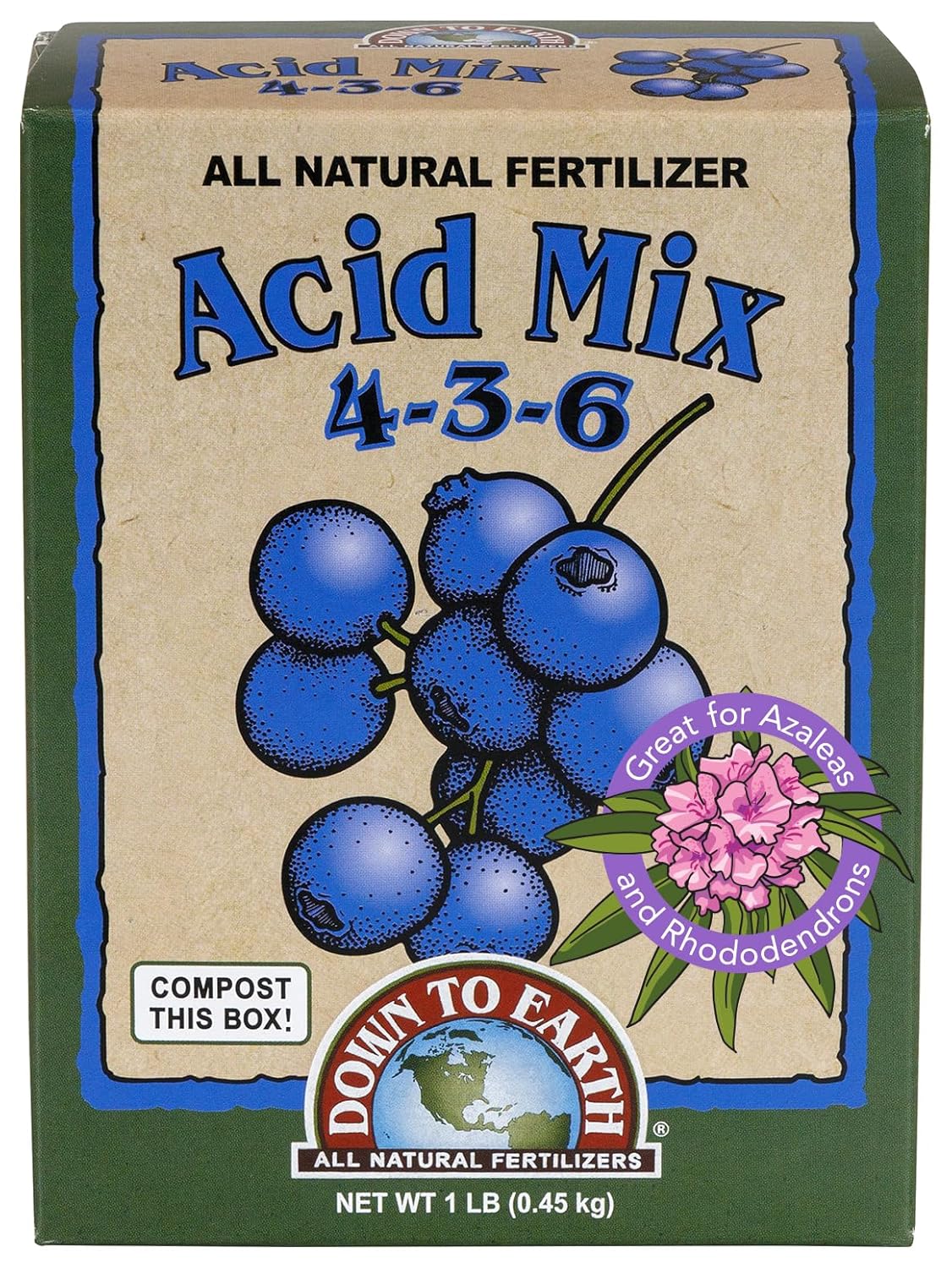
Down To Earth Acid Mix Organic Fertilizer 4-3-6, 1 lb
| Item Form | Granules |
|---|---|
| Specific Uses For Product | Acid-loving plants |
| Target Species | rhododendrons, azaleas, hydrangeas, evergreen trees and shrubs, blueberries, raspberries |
| Mixing Ratio | 4:3:6 |
Down To Earth Acid Mix is an organic granular fertilizer designed to feed acid-loving plants such as blueberries, azaleas, rhododendrons and other shrubs. You can broadcast it on the soil surface or mix it into planting holes, then water it in; the manufacturer recommends applications in early spring, at bloom and again in fall to support vegetative growth, flowering and root development. The 4-3-6 formula delivers a higher potassium ratio to help fruiting and overall plant vigor, while slow-release materials like feather meal, fish bone meal and kelp provide longer-lasting nutrition so you do not need to feed frequently. It is shelf stable and OMRI-listed ingredients support organic gardening practices. Limitations to note are the small 1 lb unit size, which means frequent repurchase for larger beds, and that this product is a fertilizer rather than a soil pH fixer so you will still need sulfur or lime to significantly change soil acidity. For gardeners feeding a few blueberry plants or refreshening planting holes, it is an effective, low-fuss organic option.
Best for: Gardeners with a few blueberry plants or small acid-loving beds who want an easy-to-use organic fertilizer and prefer low-maintenance, sustained feeding.
Less Ideal for: Large-scale blueberry plantings or growers who need to change soil pH significantly without using separate amendments.
- Formulated specifically for acid-loving plants including blueberries and azaleas
- Slow-release organic ingredients provide sustained feeding and reduce application frequency
- Can be applied on the soil surface or mixed into planting holes for flexible use
- OMRI-friendly ingredient sources support organic gardening practices
- Small 1 lb package limits coverage for larger beds or multiple bushes
Verdict: A compact, slow-release organic fertilizer tailored for small blueberry plantings and other acid-loving plants to provide steady, low-maintenance nutrition.
Espoma Organic Azalea-tone 4-3-4 Fertilizer for Flowering Evergreens, 18 lb

| Item Form | Granules |
|---|---|
| Specific Uses For Product | Feeding Azaleas, Rhododendrons, and Flowering Evergreens |
| Coverage | Medium |
| Mixing Ratio | 4:3:4 |
Espoma Azalea-tone is an organic granular fertilizer with a 4-3-4 N-P-K formulated for feeding established flowering evergreens such as azaleas, rhododendrons and gardenias. It combines feather meal, bone meal, alfalfa meal, greensand and elemental sulfur plus Espoma’s Bio-tone to supply slow-release nutrients and beneficial microbes. In practice you sprinkle the granules around the root zone in spring and fall as directed; the formulation is ready to use and needs no mixing. The product supports steady growth, richer foliage color from the added sulfur, and encourages prolonged blooming without a sudden flush of soft growth. Because it is organic and approved for organic gardening, it fits into low-chemical or natural gardening plans and improves soil biology over time. Limitations are that nutrient release is slower than soluble synthetics so results take longer to appear, and an 18 lb bag is aimed at small to medium beds rather than very large plantings. Follow safety directions to avoid contact with skin and eyes.
Best for: Buyers who prioritize reliable, natural feeding routines for established flowering evergreens and want a product that improves soil health over time through steady nutrient release.
Less Ideal for: Gardeners seeking rapid green-up or instant corrective feeding for severely deficient plants or those managing very large commercial plantings should consider faster-acting or higher-volume options.
- Organic, slow-release nutrient sources that build soil biology over time
- Formulated specifically for flowering evergreens including azaleas, rhododendrons and gardenias
- Ready-to-use granular form requires no mixing and is simple to apply in spring and fall
- Includes sulfur to help deepen leaf color and correct mild soil sulfur deficiencies
- Slower nutrient release than synthetic fertilizers so effects appear more gradually
- Not formulated for immediate correction of severe nutrient deficiencies
Verdict: Choose this product when you want a dependable organic fertilizer that steadily feeds and improves soil for flowering evergreens like gardenias.
TPS Nutrients Gardenia Liquid Fertilizer, 8 oz

| Item Form | Liquid |
|---|---|
| Specific Uses For Product | Plant Food |
| Coverage | Medium |
| Target Species | Gardenia, Camellia, Rhododendron |
This 8 oz liquid fertilizer from TPS Nutrients is formulated specifically for gardenias, camellias, and rhododendrons and is meant to be mixed and applied to container or in-ground plants. It supplies balanced nutrition suited for acid-loving shrubs, which helps reduce leaf yellowing, promote glossy foliage, and encourage more abundant blooms when used as directed. The liquid form makes dosing and foliar feeding straightforward for small gardens or patio containers, and the product description emphasizes root health to improve water and nutrient uptake. Practical benefits include easy mixing for spot treatments and suitability for both outdoor beds and potted specimens. Limitations are the small 8 oz bottle size, which means frequent repurchase or multiple bottles are necessary for larger plantings, and the need to follow safety guidance to avoid skin or eye contact when handling concentrated solution. For gardeners who prefer targeted, plant-specific feeding, this fertilizer is convenient and focused, but those managing many shrubs may prefer a larger-volume option.
Best for: Gardeners growing gardenias in containers or small beds who want a targeted, plant-specific fertilizer and prefer a liquid feed they can control precisely.
Less Ideal for: People managing large landscapes or many shrubs who need bulk or slower-release feeding options.
- Formulated specifically for gardenias and other acid-loving shrubs
- Liquid concentrate is easy to mix and apply to containers or beds
- Claims to reduce leaf yellowing and promote glossy foliage
- Supports root development to improve water and nutrient uptake
- Small 8 oz bottle may not be economical for larger gardens
- Requires careful handling to avoid skin and eye contact
Verdict: A small, easy-to-use liquid fertilizer tailored to gardenias that delivers targeted nutrition for healthier foliage and better blooms.
Jobe's Organics Azalea, Camellia & Rhododendron Fertilizer Spikes, 10 Count

| Item Form | Sticks |
|---|---|
| Application Method | Spikes |
| Specific Uses For Product | Plant Growth, Root Development, Soil Conditioning |
| Target Species | Azalea, Camellia, Rhododendron |
| Mixing Ratio | 9-8-7 |
These Jobe's Organics spikes are designed to feed acid-loving shrubs like azaleas, camellias, rhododendrons and other similar plants by inserting premeasured sticks into the root zone. Each spike contains a 9-8-7 NPK mix that releases nutrients slowly, which reduces surface runoff and the need for frequent granular or liquid feeding. They are simple to use: push the spikes into the soil around shrubs every 4 to 6 weeks during the growing season, and the waterproof resealable pouch keeps unused spikes dry. Practical benefits include mess-free application, reduced risk of overfertilizing because each spike is portioned, and targeted root delivery that supports bloom production. Limitations are that spikes cover a medium area so larger or densely planted shrubs may need several spikes per plant, and they are specific to acid-loving species so they are not a one-stop fertilizer for mixed beds. Also the spike format is less flexible than a granular or soluble feed if you prefer custom dosing or foliar feeding.
Best for: Ideal for gardeners who want a low-effort, no-mess way to maintain flowering acid-loving shrubs and prefer straightforward, premeasured applications.
Less Ideal for: Not a good fit for gardeners needing a single fertilizer for mixed plantings or those who want precise custom dosing or foliar/soil drench applications.
- Premeasured spikes reduce mess and make dosing straightforward
- Slow-release 9-8-7 NPK delivers nutrients at the roots to support blooms
- Waterproof resealable pouch preserves unused spikes
- Formulated specifically for acid-loving shrubs to match nutrient needs
- Medium coverage per spike means multiple spikes needed for large shrubs
Verdict: A simple, low-mess slow-release spike feed that makes keeping holly and other acid-loving shrubs blooming easy for budget-minded gardeners.
Choosing the Right Natural Fertilizer for Gardenias: Key Factors to Consider
Nutrient Balance and Ratio
Gardenias need a blend of nutrients to support both leafy growth and abundant flowering. A fertilizer that supplies a steady source of nitrogen will keep leaves glossy and green, while available phosphorus and potassium support bud set and bloom retention. Too much nitrogen relative to phosphorus can encourage foliage at the expense of flowers, so look for a balanced product or one formulated specifically for flowering acid-loving shrubs.
Beyond N-P-K, trace elements like iron, magnesium, and manganese are important because gardenias often show leaf chlorosis when those micronutrients are lacking. Choosing a natural fertilizer with a known micronutrient profile or combining a base organic feed with targeted supplements helps prevent deficiency-related yellowing without overfertilizing.
Effect on Soil Acidity
Gardenias prefer slightly acidic soil and will struggle if the root zone becomes neutral or alkaline. Some natural fertilizers are acidifying or at least pH-neutral, while others such as lime-based or high-ash materials can raise pH. Knowing how a material affects soil acidity matters for bloom performance and nutrient uptake.
If your gardenia sits in a container or in clay-heavy soil that trends alkaline, favor materials that help maintain acidity or pair feeding with regular pH checks and corrective amendments like sulfur if needed. For acid soils, choose a fertilizer that supplies nutrients without counteracting the existing acidity.
Release Profile and Timing
Natural fertilizers range from fast-acting liquid feeds to slow-release granular or organic materials that release nutrients over weeks or months. Fast feeds can quickly correct visible deficiencies and green up foliage, which is useful in the bud-forming season. Slow-release options feed over a longer period and reduce the risk of nutrient spikes or root burn.
Consider your maintenance routine: frequent light feedings with a soluble organic tea may suit container-grown gardenias, while a single granular application in spring and early summer might be better for a planted shrub bed. Match the product's release profile to how often you want to work in the garden.
Impact on Soil Structure and Microbes
A good natural fertilizer should do more than feed plants briefly; it should support soil life and structure. Organic materials like compost, fish-based meals, or kelp add organic matter that improves water retention, aeration, and microbial activity. Those improvements translate to healthier roots and more resilient plants through heat and drought.
Conversely, mineral-only supplements may supply nutrients without contributing organic matter. When choosing a product, weigh the benefits of added soil-building inputs against immediate nutrient needs, and consider combining a feeding program with yearly organic matter top-dressings.
Application Practicality
How you apply fertilizer affects how often you will do it and where you can use it. Granules and slow-release granules are easy to broadcast around a shrub and require less frequent attention. Liquid concentrates and water-soluble organic feeds allow rapid correction but require mixing and more frequent applications. Pelleted or cake-style organics might be more appropriate for beds than containers because they can be worked into the root zone.
Also consider odor, storage needs, and messy residues. If gardenias sit near patios or windows, choose a low-odor option. For containers or small beds, measured liquid feeds can give precise dosing with minimal mess.
Safety and Environmental Considerations
Natural materials are often safer for pets, children, and nearby wildlife than harsh synthetic salts, but not all natural products are equal. Some organics can attract pests or produce strong odors when wet. Others may contain marine-derived ingredients that affect local ecosystems if used in large quantities near waterways.
Check labels for heavy metal testing, sourcing statements, and any application warnings. Use recommended rates to avoid nutrient runoff and incorporate practices like mulching and proper irrigation to keep nutrients in the root zone where gardenias can use them.
When to Feed Gardenias During the Season
The feeding schedule should align with the plant's active growth and bloom cycles. Start light applications in early spring as new growth begins, increase slightly just before bud set, and taper feeding after the main flush of blooms to avoid stimulating late soft growth that risks winter damage.
For container-grown gardenias, more frequent, lighter feedings are usually better because potting mixes leach nutrients faster. In-ground plants can handle fewer applications of a slow-release product. Always follow label guidance for frequency and avoid fertilizing during stress periods such as extreme heat or drought.
- Begin feeding when new growth appears in spring
- Increase slightly before and during bud formation
- Reduce or pause feeding after the main bloom flush
- Adjust frequency for containers versus in-ground plantings
Testing and Correcting Soil pH
A soil test is the most reliable way to know if your gardenia needs an acidifying feed. Test kits or lab tests show current pH and nutrient levels so you can choose a fertilizer that complements the existing soil chemistry.
If pH is higher than optimal, pair feeding with targeted pH-lowering amendments rather than relying on a fertilizer alone. Small, incremental changes are safer than large swings, and repeated testing after amendment helps you avoid overcorrecting.
- Test pH before choosing an acidifying product
- Make small adjustments and retest after a few months
- Combine pH correction with organic amendment for lasting change
Using Natural Fertilizers in Containers
Containers require special attention because their soil volume is limited and nutrients leach quickly with each watering. Choose concentrated liquid or water-soluble organics for fine control, or use measured slow-release granules designed for container use.
Re-potting every few years to refresh the potting medium and add compost or fresh organic matter is an important companion practice. When applying concentrated feeds, flush containers periodically to prevent salt buildup and monitor plant reaction to avoid overfeeding.
- Prefer soluble feeds for precise dosing in pots
- Refresh potting mix periodically with organic matter
- Flush containers occasionally to prevent buildup
Pairing Fertilizer with Mulch and Watering
Mulch helps conserve moisture and moderates soil temperature around gardenias, which supports steady nutrient uptake. Organic mulches also break down slowly and add surface organic matter that complements fertilizer inputs.
Apply fertilizer to slightly moist soil and water it in to move nutrients into the root zone. Avoid heavy doses on dry roots, which can stress plants. Consistent, even moisture helps gardenias utilize nutrients efficiently and reduces the risk of tip burn or leaf drop.
- Use organic mulch to support soil health and moisture
- Water in fertilizer to move nutrients to roots
- Avoid heavy fertilizing on overly dry soil
Addressing Common Nutrient Deficiencies
Yellowing between leaf veins often indicates iron or magnesium deficiency in acid-loving plants. A targeted chelated iron treatment or a magnesium supplement can correct this more quickly than general-purpose feeds.
Slow, persistent yellowing across the entire leaf may point to nitrogen deficiency or poor root function. Address by choosing a fertilizer with appropriate nitrogen content and improving soil drainage or root conditions if needed.
- Interveinal chlorosis often responds to iron or magnesium supplements
- General yellowing can indicate low nitrogen or root stress
- Diagnose with a soil test before applying targeted corrections
How We Chose the Best Natural Fertilizer for Gardenias
We focused on attributes that matter most when feeding acid-loving shrubs like gardenias. First, nutrient balance was essential: we looked for products providing accessible nitrogen for foliage plus phosphorus and potassium levels supportive of bloom production without excessive salt buildup. Second, soil acidity influence was weighed, favoring materials that either maintain or gently lower pH rather than strongly raising alkalinity. Third, release profile and longevity were considered so gardeners can match monthly maintenance windows or low-intervention schedules. Fourth, ingredient transparency and organic sourcing were assessed so users know if a material is compost-derived, kelp-based, or mineral supplements. Fifth, ease of application and odor were taken into account for use in small beds, containers, and near entryways. We excluded synthetic fertilizers, blends with unclear ingredient lists, and products intended mainly for lawns or non-acid-loving plants. The resulting shortlist emphasizes predictable nutrient delivery, soil-friendly acidity effects, and practical application for home gardeners.
FAQ
How often should I fertilize gardenias with a natural product?
It depends on the product. Slow-release granules typically need one to two applications per growing season, while liquid organics are often applied every 2 to 6 weeks. Adjust frequency for containers and for plants showing deficiency signs.
Can natural fertilizers change soil pH enough to help gardenias?
Some natural materials influence pH slightly, but most offer only modest acidifying effect. If soil pH is significantly off, use dedicated pH amendments alongside natural fertilizer and retest periodically.
Are marine-derived fertilizers safe near garden beds and wildlife?
Marine-derived ingredients like kelp can be excellent nutrient sources and microbial stimulants. Use them responsibly and avoid overapplication near water features, since concentrated runoff can affect aquatic systems.
Will organic fertilizers prevent pests and diseases on gardenias?
Organic fertilizers support overall plant health and soil microbial life, which can improve resilience, but they do not directly prevent pests or diseases. Integrated practices such as proper pruning, sanitation, and monitoring are still necessary.
What is the best feeding method for potted gardenias?
Potted gardenias often do best with more frequent, diluted liquid feedings or measured soluble organics because pots lose nutrients faster. Combine with periodic potting-medium refreshes to maintain long-term vigor.
Can I combine compost top-dressing with a natural fertilizer?
Yes. A compost top-dress adds organic matter and supports microbes while a natural fertilizer supplies targeted nutrients. Apply compost lightly and time fertilizer applications so they do not overlap into excessive feeding.
Final Verdict
When choosing a natural fertilizer for gardenias, prioritize nutrient ratios that support both foliage and flowering and consider how the product will affect soil acidity. Match release profile to your maintenance habits and the plant's container or in-ground status, and favor materials that contribute organic matter and microbial activity when possible. Balance short-term bloom needs with long-term soil health to keep gardenias productive and fragrant season after season.
