

Note: This article contains affiliate links. If you click on these links and make a purchase, I may earn a small commission at no extra cost to you. This helps support my research and content. Read my full affiliate disclosure here.
Picking the right natural fertilizer for hibiscus matters because these shrubs need steady nutrients to set abundant flowers and keep glossy foliage. In the landscape, patio pot, or mixed border, the wrong feed can mean leggy growth, fewer blooms, or nutrient lockup in heavy soils. This guide shortlists the top natural fertilizer options for hibiscus and explains how each type behaves in real garden conditions. We evaluate products on nutrient balance, release pattern, soil and root friendliness, and ease of application so you can match a feed to your planting situation. Read on to understand the practical tradeoffs before you choose.
Top Picks at a Glance
| Best Overall The best all-around choice for most situations | Nelson Plant Food NutriStar Hibiscus Granular Fertilizer (10-4-12) |  |
| Best Quality Built to a higher standard if you want something more solid | BUILD A SOIL Vegan Bloom Booster Powder Fertilizer, 1 lb |  |
| Best Value The sweet spot between price and what you get | Jobe's Organics Granular Rose & Flower Fertilizer, 4 lb |  |
| Best Budget The cheapest option that still gets the job done reliably | Dr. Earth Organic Exotic Blend Palm, Tropical & Hibiscus Fertilizer (1 lb) |  |
| Highest Rated A top-rated pick with lots of positive feedback | MicroLife Palms & Tropical Granular Organic Fertilizer (4-2-4), 7 lb |  |
| Most Popular A crowd favorite that many people choose with confidence | Nelson Plumeria & Tropical Plant Food Granular Fertilizer NutriStar 5-30-5 (4 lb) |  |
| Best Seller A high-volume bestseller chosen again and again | Cz Garden BloomBiscus Hibiscus Plant Food 10-4-12 (4 lb) |  |
Nelson Plant Food NutriStar Hibiscus Granular Fertilizer (10-4-12)

| Item Form | Granules |
|---|---|
| Application Method | Sprinkle granules around the base of the plant |
| Target Species | Hibiscus |
| Mixing Ratio | 10-4-12 |
Nelson NutriStar Hibiscus is a granular, slow‑release plant food designed for monthly feeding of hibiscus and other tropical flowering plants both indoors and out. It is applied by sprinkling granules around the plant base and works with soil biology to release nutrients over time, reducing the need for frequent liquid feeding. The 10-4-12 N‑P‑K mix, fortified with calcium, iron, and magnesium, targets stronger roots, better foliage and more abundant blooms, and the higher potassium helps flower production. Its consistency makes it easy to use in hanging baskets, pots, and garden beds. Because it is medium coverage and slow release, you get sustained nutrition rather than quick bursts, but that also means it is not a fast corrective for severe nutrient deficiencies. The product is straightforward to use for routine maintenance and best suited to growers who want a low‑maintenance monthly feed to keep tropical flowering plants healthy and blooming through the season.
Best for: Buyers who want a low‑maintenance, month‑to‑month fertilizer to encourage bigger blooms and healthier tropical plants without frequent liquid feeding.
Less Ideal for: Growers needing an immediate corrective treatment for nutrient deficiencies or those managing very large landscapes who need bulk coverage planning.
- Slow‑release granular formula for once‑a‑month feeding
- 10-4-12 N‑P‑K balance with added calcium, iron, and magnesium
- Suitable for indoor and outdoor use including hanging baskets and potted plants
- Easy granular application that works with soil biology for extended feeding
- Not formulated for rapid correction of acute nutrient deficiencies
- Coverage described as medium so larger plantings may need multiple applications or larger package sizes
Verdict: Use this slow‑release granular formula for simple, monthly maintenance that boosts blooms and root health in hibiscus and other tropical flowering plants.
BUILD A SOIL Vegan Bloom Booster Powder Fertilizer, 1 lb

| Item Form | Powder |
|---|---|
| Specific Uses For Product | Plant Growth |
| Target Species | Flowers |
| Mixing Ratio | 1 tsp/gal (living soil); 1-2 tbsp/gal (soilless/hydro) |
Build A Soil Vegan Bloom Booster is a powdered, organic-focused fertilizer designed to push flowering performance on hydrangeas, roses, hibiscus and other ornamentals. It is mixed into water (very low rates for living soil, higher for soilless or hydroponics) and applied as a feed to encourage fuller bud set, richer color and extended bloom periods. Notable features include a high-phosphorus leaning formula described as low in nitrogen, a powdered form that stores easily and manufacturer mixing guidelines for a range of uses from container plants to acreage. In practice this product benefits flowering shrubs and container hydrangeas by directing nutrition toward blooms rather than excessive leaf growth, and the powder format makes measuring and customizing strength straightforward. Important limitations are a need to follow protective handling advice when mixing and the requirement to adjust concentration depending on whether you use living soil or soilless media, which adds a small learning step for new users.
Best for: Gardeners who prioritize bloom performance and want a targeted feed to increase flower size and color on Endless Summer hydrangeas and other ornamentals, especially those willing to adjust feed strength by media type.
Less Ideal for: Beginners who prefer one-step granular fertilizers or those looking for an all-purpose feed for foliage-dominant growth rather than bloom-focused results.
- Formulated to boost flowering with a nutrient balance that favors bud formation and color
- Powder form stores compactly and allows precise mixing for different growing systems
- Clear mixing ratios provided for living soil, soilless, hydroponic and acreage applications
- Marketed as vegan and organic-focused, suitable for gardeners avoiding animal-derived inputs
- Requires careful dilution and different rates by growing method, which can be confusing initially
- Contains handling precautions such as avoiding skin and eye contact during mixing
Verdict: Choose this bloom booster when you want a focused, vegan powder fertilizer that pushes fuller, more colorful blooms on Endless Summer hydrangeas.
Jobe's Organics Granular Rose & Flower Fertilizer, 4 lb

| Item Form | Granules |
|---|---|
| Specific Uses For Product | Plant Growth,Root Development,Seed Developmen,tSoil Conditioning |
| Target Species | roses, hydrangeas, hibiscus, azaleas, and other flowering shrubs |
| Mixing Ratio | 3-5-3 |
| Unit Count | 64 Ounce |
This granular organic fertilizer is designed for roses, hydrangeas and other flowering shrubs and supplies balanced nutrients in a 3-5-3 NPK formula. It is OMRI listed so it can be used in organic gardens and is supplied as easy-to-scatter granules that you work into the soil or apply around the drip line every six weeks during the blooming season. Key ingredients listed include nitrogen, phosphate, potash and essential secondary nutrients like calcium and magnesium, which help blooms and overall plant vigor. The packaging size and medium coverage make it practical for small to medium beds or several container hydrangeas, and the granular form reduces mess and runoff compared with liquid feeds. Limitations are that the bag is only 4 pounds so larger hydrangea plantings will require frequent repurchase, and the fixed 3-5-3 ratio may not match specialty needs for acid-loving hydrangea color manipulation. Follow the product directions and wear gloves when handling.
Best for: Gardeners who want a straightforward, organically approved granular feed for hydrangeas and other flowering shrubs and prefer simple, scheduled applications during the bloom season.
Less Ideal for: Growers managing large beds or commercial plantings who need bulk fertilizer or gardeners seeking a product specifically formulated to alter hydrangea flower color.
- OMRI listed and suitable for certified organic gardening
- Balanced 3-5-3 NPK tailored to promote flowering and root development
- Granular form is easy to measure and apply with reduced runoff and mess
- Contains secondary nutrients like calcium and magnesium to support plant vigor
- 4 lb bag provides limited coverage for larger gardens
- Fixed NPK ratio limits flexibility for gardeners who need different nutrient balances
Verdict: A small, OMRI-listed granular fertilizer that reliably feeds hydrangeas and other flowering shrubs with a bloom-focused 3-5-3 formula for easy, organic seasonal applications.
Dr. Earth Organic Exotic Blend Palm, Tropical & Hibiscus Fertilizer (1 lb)

| Item Form | Powder |
|---|---|
| Specific Uses For Product | Organic |
| Coverage | Medium |
| Target Species | palms, hibiscus, bougainvillea, succulents, plumerias, and all other tropicals |
| Mixing Ratio | 5:5:2 |
This Dr. Earth Exotic Blend is an organic powder fertilizer made specifically for palms, hibiscus, bougainvillea, succulents, plumerias and similar tropicals. You mix it according to the 5:5:2 ratio and apply it around the root zone to feed plants for about two months, with each pound covering roughly 15 sq. ft. Its formulation emphasizes natural ingredients, trace minerals and humic acids and is certified by multiple organic programs, so it is suited to gardeners who prefer nonsynthetic options. In practice it encourages fuller blooms and healthier foliage on hibiscus when used as part of a regular feeding schedule, and it is safe around people and pets when applied as directed. Limitations are that a 1 lb unit only treats a modest area and requires repeat applications through a season, and granular powders need mixing or careful broadcast to avoid uneven distribution. For gardeners prioritizing organic inputs and predictable bloom support, this product is an easy-to-use choice.
Best for: Hobbyist gardeners who want an organic, pet-safe fertilizer to encourage bigger blooms on hibiscus and other tropicals without using synthetic chemicals.
Less Ideal for: Large-scale growers or anyone needing a long‑term, low-maintenance solution who would prefer a bulk or slow-release option that treats many plants at once.
- Formulated specifically for hibiscus and other tropical species
- Certified organic and Non-GMO Project Verified for transparency
- Feeds plants for up to two months per application
- Includes humic acids and trace minerals to support soil health
- 1 lb covers only about 15 square feet so larger gardens need frequent repurchasing
- Powder form requires mixing or careful application to avoid uneven coverage
Verdict: A compact, certified-organic fertilizer designed to boost blooms and foliage on hibiscus and other tropicals for gardeners who prioritize natural, pet-safe inputs.
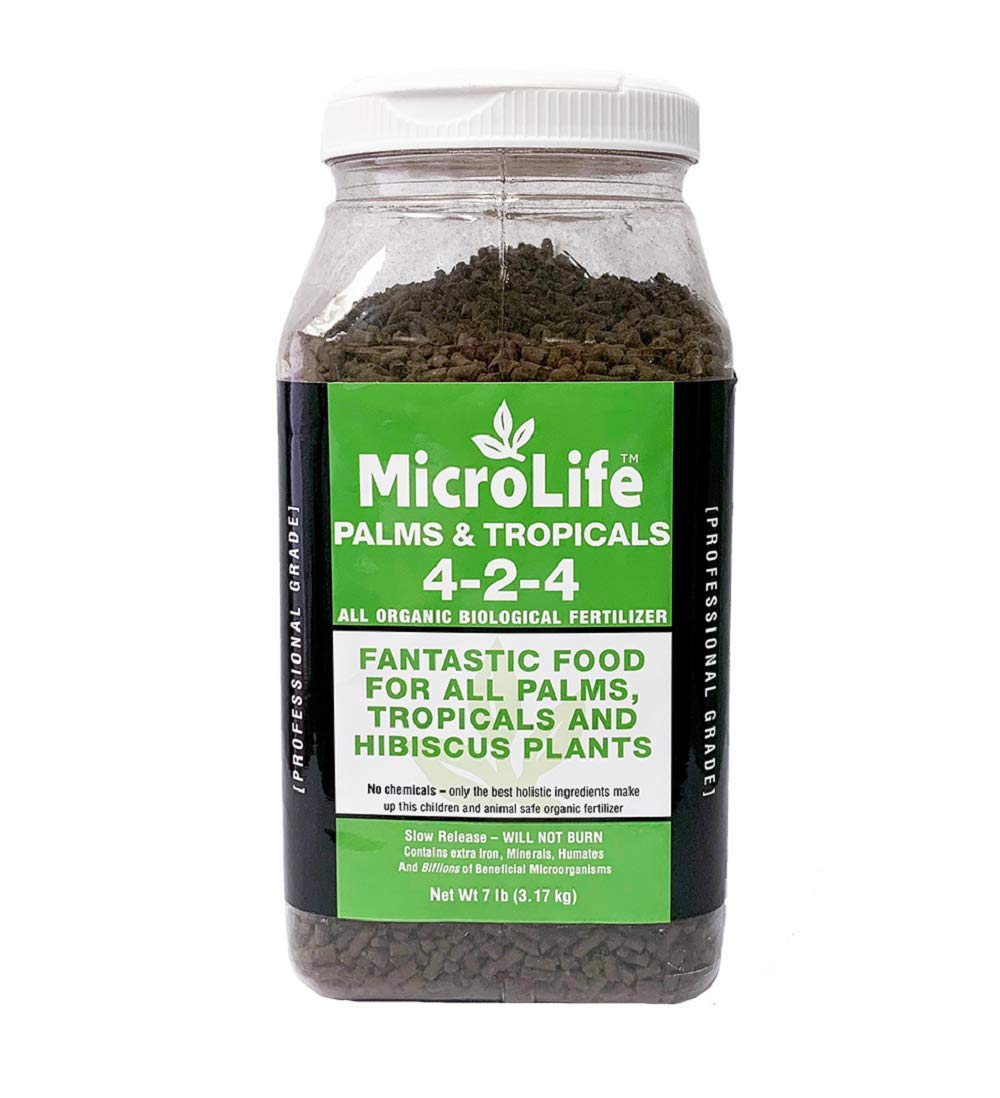
MicroLife Palms & Tropical Granular Organic Fertilizer (4-2-4), 7 lb
| Item Form | Granules |
|---|---|
| Specific Uses For Product | Organic |
| Target Species | Palms, tropicals & hibiscus |
| Mixing Ratio | 1:1:1 |
This granular formula delivers steady nutrition with a 100 percent slow-release profile designed to avoid burning sensitive tropical plants. You apply it to soil around the base of new plantings and as part of annual maintenance; the slow-release granules feed over time so you do not need frequent reapplication. The product includes extra potassium, magnesium, manganese, and iron, which support strong foliage color and stress tolerance in nutrient-hungry tropicals. Its professional-grade concentration means you can expect robust, gradual growth and improved plant resilience rather than a short burst of lush but weak growth. On the downside it is a specialty palm/tropical blend so it is not tailored for every fruiting crop and directions must be followed to get the intended slow-release benefit. Also the granular form requires spreading or incorporation into soil, so it is less convenient than a liquid feed for foliar applications. For gardeners focused on steady, dependable nutrition this fertilizer simplifies seasonal feeding for tropical and hibiscus plantings.
Best for: Buyers who prioritize dependable, low-maintenance nutrition for tropical plants and want a slow, steady feeding program rather than frequent dosing.
Less Ideal for: Growers seeking a fertilizer optimized specifically for pineapple fruit production or those who prefer liquid or foliar feeds for quick correction.
- 100% slow-release granules reduce risk of fertilizer burn and provide sustained feeding
- Includes added potassium, magnesium, manganese and iron to support foliage health and stress tolerance
- Professional-strength formula suited for new plantings and annual maintenance
- Formulated specifically for palms and tropicals so nutrient balance may not match all fruiting crops
- Granular form requires soil application and is not suitable for quick foliar feeding
Verdict: Choose this slow-release tropical fertilizer when you want reliable, low-risk seasonal feeding to maintain healthy foliage and steady growth.
Nelson Plumeria & Tropical Plant Food Granular Fertilizer NutriStar 5-30-5 (4 lb)

| Item Form | Granules |
|---|---|
| Specific Uses For Product | Plant Food |
| Target Species | Fern |
| Mixing Ratio | 5:30:5 |
| Directions | Apply every 14 days during the growing season |
This granular Nelson Plumeria and Tropical Plant Food (5-30-5) is designed to boost blooms and overall plant vigor for flowering tropicals used in containers or in-ground. You broadcast or top-dress the granules around the root zone and water them in; the manufacturer recommends applying every 14 days during the growing season. The high phosphorus ratio and added micronutrients make it suited to push flowering and regrowth after pruning, while multiple nitrogen sources provide a steady feed rather than a short spike. It is easy to use, stores as dry granules, and works with soil biology to deliver both an immediate boost and ongoing feeding. Important practical limits are its specific formulation for bloom promotion rather than balanced all-season feeding and the need to follow safety directions like keeping it away from children and pets and wearing protection during application. For users wanting very slow release or a low-phosphorus general fertilizer, this product may not be the best match.
Best for: For gardeners who prioritize bigger, more frequent blooms on tropical flowering plants and want an easy granular feed that gives predictable two-week results.
Less Ideal for: Not the best choice for growers seeking a low-phosphorus all-purpose fertilizer or those who prefer a single-season slow-release product.
- High phosphorus (30%) profile promotes heavier and more frequent blooms.
- Granular formula feeds for about two weeks per application for low-maintenance intervals.
- Multiple nitrogen sources and added micronutrients support regrowth and overall plant health.
- Works for both container and in-ground tropicals, including indoor use when appropriate.
- Formulation is bloom-focused and may be too high in phosphorus for plants that need balanced maintenance feeding.
- Requires regular fortnightly application during the growing season rather than a long-term slow-release schedule.
Verdict: Choose this granular 5-30-5 formula when you want an easy, two-week feeding that reliably increases blooms on tropical flowering plants.
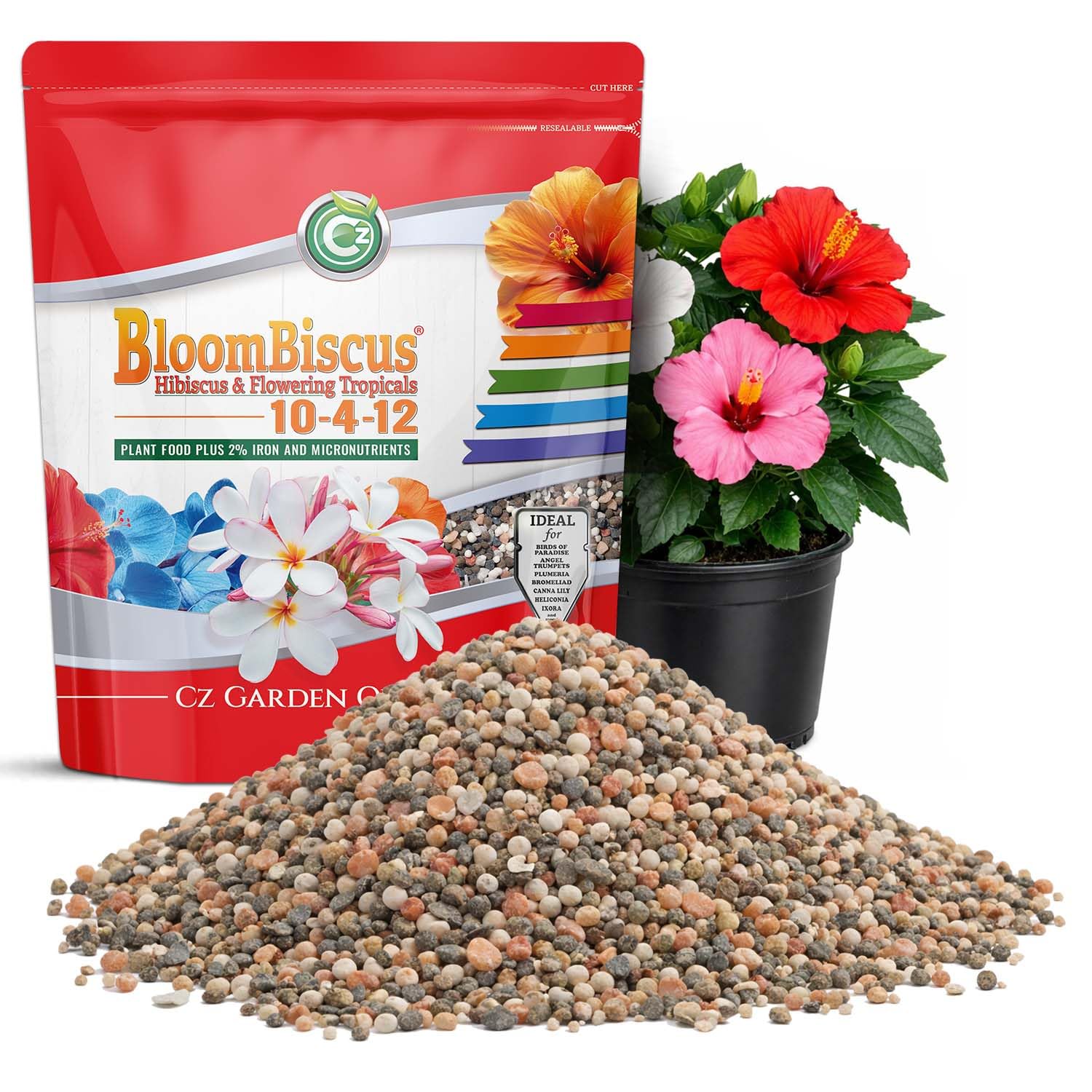
Cz Garden BloomBiscus Hibiscus Plant Food 10-4-12 (4 lb)
| Item Form | Granules |
|---|---|
| Specific Uses For Product | Plant Growth, Root Development, Seed Development, Soil Conditioning |
| Target Species | Flowering Tropicals |
| Unit Count | 64 Ounce |
| Mixing Ratio | 10-4-12 |
This granular BloomBiscus formula is designed to boost blooms and overall vigor in hibiscus and similar tropical flowering plants. It is typically worked into potting mix or applied around the root zone and watered in according to package directions. The 10-4-12 NPK delivers higher potassium for flowering and fruiting while the modest nitrogen supports leaf growth without excessive lushness that can reduce blooms. The added 2% iron and micronutrients help correct common deficiencies that dull flower color. Packaging comes in a resealable pouch for easy pouring and storage. Practical benefits include targeted nutrition for bloom production, broad suitability across many tropical species, and US-made ingredient sourcing. Limitations are that the product is a general granular feed rather than a slow-release or time-release formula so it may require regular reapplication and careful dosing for container-grown plants. Directions are brief on the label so growers who want a feeding schedule may need to follow common hibiscus fertilizing guidelines or consult extension recommendations.
Best for: A gardener focused on getting bigger, more consistent blooms from hibiscus and other tropical flowering plants who prefers a targeted, performance-oriented fertilizer.
Less Ideal for: Those who want a long-term slow-release feed or a liquid program for weekly foliar feeding should consider alternative formulations.
- NPK ratio (10-4-12) concentrated toward flowering and fruiting
- Includes 2% iron plus micronutrients to address common deficiencies
- Resealable heavy-duty pouch for easy pouring and storage
- Formulated specifically for hibiscus and other flowering tropicals
- Not specified as slow-release so it may need more frequent reapplication
Verdict: Choose this 10-4-12 granular with 2% iron when your main goal is stronger, more reliable hibiscus blooms.
Choosing the Right Natural Fertilizer for Hibiscus: Key Factors to Consider
Nutrient Ratio and Micronutrients
Hibiscus need a balanced supply of nitrogen, phosphorus, and potassium to produce vigorous growth and abundant flowers. Too much nitrogen encourages leafy growth at the expense of blooms, while too little phosphorus can limit flower setting. Look for natural fertilizers that supply a moderate nitrogen level with adequate phosphorus and potassium plus essential micronutrients such as iron, magnesium, and boron. Micronutrients help prevent chlorosis and support the biochemical pathways hibiscus use for flower production.
Natural sources like composted manures, bone meal, or kelp provide a broader nutrient profile than single-nutrient inputs. When choosing a product, consider how the listed nutrient ratio will interact with your soil test results so you avoid overapplication or imbalances that can stress the plant.
Release Pattern and Feeding Frequency
How quickly nutrients become available matters for hibiscus because they respond poorly to sudden salt spikes and too-rapid flushes of growth. Slow-release natural fertilizers and organic amendments that break down gradually feed the plant over weeks to months, reducing burn risk and supporting steady bloom production. Fast-release materials can be useful for a quick correction but are not ideal as a sole long-term feed.
Plan feeds to match the growing season and planting situation. Container-grown hibiscus typically need more frequent, lighter feedings because potting mixes lose nutrients faster. In-ground plants benefit from seasonal applications of longer-lasting amendments that build soil fertility over time.
Soil Structure and Microbial Support
Natural fertilizers often do more than supply nutrients; they can improve soil structure and support the microbial life that helps hibiscus access those nutrients. Organic matter from composts and well-composted manures increases water retention and aeration in sandy or heavy soils, which helps roots stay healthy. Microbial inoculants or biologically active feeds can speed decomposition of organic matter and make nutrients more plant-available.
Avoid products that leave residues that compact soil or raise soluble salts. For container plants, choose mixes and fertilizers that maintain good drainage and do not impede root oxygenation.
pH Influence and Nutrient Availability
Soil pH affects how easily hibiscus can take up nutrients. Many natural fertilizers have neutral to slightly acidic effects, but some amendments like lime or high-ash materials can raise pH over time. If your soil is already alkaline or acidic, choose fertilizers that do not exacerbate pH extremes. Iron deficiency is a common issue in high-pH soils and can reduce flowering even when other nutrients are present.
Conduct a simple soil test before committing to a regular feeding plan. Matching fertilizer choice to current pH and nutrient levels reduces wasted applications and keeps hibiscus foliage healthy and vibrant.
Application Method and Convenience
Different natural fertilizers require different handling: granular soil-applied amendments, top-dress composts, liquid seaweed or fish emulsions, and slow-release pellets each fit different gardener routines. Consider how much effort you want to spend on mixing, applying, and reapplying. Container gardeners often prefer liquid or water-soluble organic feeds for quick, even distribution, while in-ground plantings benefit from a top-dress of compost or a spring granular application.
Also consider odor, safety around pets, and how easy doses are to measure. A convenient product reduces the chance of missed feedings or incorrect application rates, which can directly affect bloom performance.
Suitability for Containers Versus In-Ground
Hibiscus grown in pots have different nutrient dynamics than those planted in beds. Pots hold smaller volumes of soil that warm and dry faster and lose nutrients through leaching. Choose fertilizers formulated or suitable for container use if your hibiscus live on a patio or balcony. In-ground hibiscus benefit more from bulk organic matter and longer-term soil amendments that build fertility over multiple seasons.
When selecting a product, check that its release characteristics and recommended rates are appropriate for the planting situation so you can avoid overfeeding containers or underfeeding beds.
When to Start Feeding Hibiscus
Begin routine fertilizing in spring after new growth appears and risk of frost has passed. Early feeding supports active shoot development and sets the stage for flower production later in the season. If you planted new hibiscus in the last few months, wait until the root system shows some establishment before applying a full-strength feed.
Reduce or stop regular feeding in late fall as growth slows and the plant shifts into a rest phase. In warm climates with year-round growth, adopt a lighter winter feeding schedule to avoid overly tender growth during cooler, wetter months.
- Start feeding when new growth is visible in spring
- Avoid heavy late-season feeding before dormancy or cooler weather
- Container plants may need lighter but more frequent applications
Liquid Versus Granular Natural Feeds
Liquid organic feeds like seaweed extracts and compost teas provide quick nutrient uptake and are useful for correcting minor deficiencies or giving a bloom boost. They penetrate the root zone quickly and are easy to apply uniformly, which is handy for container-grown hibiscus.
Granular and slow-release organic amendments offer long-term nutrient supply and improve soil structure. They are ideal for in-ground plants where you want continued feeding without frequent reapplication. Choose a granular product with a clear release profile so you can time applications correctly.
- Liquids give a faster, shorter-term lift
- Granulars feed over a longer period and build soil
- Match feed type to how often you want to apply
Supplements to Improve Flowering
Some natural amendments are especially helpful to encourage blooms. Organic sources of phosphorus such as bone meal can support bud set, while kelp and seaweed extracts provide growth regulators and micronutrients that promote flowering and stress tolerance. Use these supplements sparingly and in response to observed plant needs rather than routinely.
If flowers are sparse despite healthy foliage, check light exposure, water regime, and pruning practices first. Fertilizer-only fixes rarely solve flowering problems caused by shade or improper pruning.
- Bone meal or rock phosphate for phosphorus support
- Kelp and seaweed for micronutrients and bloom stimulation
- Investigate cultural causes before adding more fertilizer
Adjusting Feed for Climate and Season
Warmer climates often allow longer feeding seasons, while cooler regions should concentrate fertilizing during the active growth months. In hot, dry weather, reduce nitrogen-heavy applications that could stress the plant and increase watering to prevent salt buildup in pots. In humid climates, prefer feeds that do not encourage lush, disease-susceptible foliage.
Monitor plants after application and adjust frequency by observing leaf color, growth rate, and bloom performance rather than sticking rigidly to a calendar.
- Feed longer in warm climates, shorter in cool ones
- Reduce heavy nitrogen in hot, dry periods
- Watch plant response to fine-tune schedule
Combining Fertilizers with Good Cultural Practices
Fertilizer is only one part of healthy hibiscus care. Proper light, consistent moisture, correct pruning, and pest control are all necessary for strong blooms. Even the best natural fertilizer will not compensate for chronic water stress, too little sun, or recurrent pests.
Integrate fertilizing with mulching, regular soil checks, and periodic repotting for container plants. These cultural practices maximize fertilizer effectiveness and promote long-term plant vigor.
- Use mulch to moderate soil temperature and retain moisture
- Repot containers every few years to refresh growing media
- Prune to shape and remove spent blooms for continued flowering
How We Chose the Best Natural Fertilizer for Hibiscus
We focused on criteria that matter to hibiscus growers in the garden and in containers. First, nutrient balance dominated selection: hibiscus benefit from a steady ratio of nitrogen, phosphorus, and potassium plus trace micronutrients that support flowering and leaf health. Second, release pattern was important because hibiscus prefer a steady supply rather than a one-time salt surge; we emphasized slow-release and biologically active options. Third, soil and root friendliness covered salt index, pH influence, and whether the fertilizer supports beneficial microbes. Fourth, application flexibility and clarity mattered for gardeners who grow hibiscus in-ground or in pots and need predictable dosing. We also considered odor and handling for those using fertilizers near patios or indoor sunrooms. We excluded purely synthetic, high-salt formulations and any fertilizer that relies solely on a single nutrient without micronutrients. Products were evaluated for their suitability across common hibiscus scenarios: established shrubs, newly planted specimens, and container-grown plants. The final shortlist reflects options that balance bloom support with plant health and practical use in real gardens.
FAQ
How often should I feed hibiscus with a natural fertilizer?
It depends on the product and planting situation. Slow-release organic amendments typically only need seasonal application, while liquid feeds for containers may be applied every 2 to 4 weeks during active growth.
Can natural fertilizers cause fertilizer burn on hibiscus?
Yes, concentrated natural materials or overapplication can raise soluble salts and harm roots. Follow label or package guidance, dilute liquids as recommended, and avoid heavy feeding in hot, dry conditions.
Is compost alone enough to feed hibiscus?
Compost supplies a broad range of nutrients and improves soil structure, but it may not meet flowering plants' phosphorus needs for bud set. Use compost as a base and supplement with targeted natural amendments when necessary.
Are seaweed and kelp really helpful for blooming?
Often yes. Seaweed and kelp provide micronutrients, trace minerals, and natural growth compounds that support stress tolerance and can improve bloom production when used as part of a balanced feeding plan.
Should container hibiscus get different fertilizer than in-ground plants?
Usually. Containers lose nutrients faster and dry out more quickly, so container hibiscus often need lighter, more frequent feedings and products formulated for pot use to avoid salt buildup.
What signs indicate my hibiscus needs a different fertilizer?
Look for persistent pale leaves, slowed growth, or poor flowering despite proper light and water. Those signs can indicate nutrient imbalance or deficiency and may signal a need to adjust the fertilizer type or application frequency.
Final Verdict
Choose a natural fertilizer for hibiscus by prioritizing a balanced nutrient profile, a gentle release pattern, and compatibility with your planting situation. For containers, favor lighter, more frequent feeds or water-soluble organics; for in-ground shrubs, select longer-lasting amendments and soil-building materials. Pay attention to pH and micronutrient needs, and address cultural factors like light and water first. With appropriate feeding and good care, you will see healthier foliage and more consistent blooms across the growing season.
