

Note: This article contains affiliate links. If you click on these links and make a purchase, I may earn a small commission at no extra cost to you. This helps support my research and content. Read my full affiliate disclosure here.
Choosing the right natural fertilizer for grape vines makes a practical difference in vine vigor, fruit quality, and long-term soil health. Vines respond to nutrients differently across stages: rapid shoot growth in spring, fruit set and berry development in summer, and carbohydrate storage heading into dormancy. The right natural fertilizer helps you feed those needs without upsetting soil biology or salt balance. This guide looks at six top natural fertilizer options suited for grape vines. We shortlisted products that match common vineyard and backyard grape growing scenarios and evaluated them on nutrient balance, soil compatibility, and ease of use so you can pick an option that fits your pruning, trellising, and harvest goals.
Top Picks at a Glance
| Best Overall The best all-around choice for most situations | Wiggle Worm Pure Worm Castings Organic Fertilizer, 15 lb |  |
| Best Quality Built to a higher standard if you want something more solid | Soil Seed & Water Bacchus Organic Fertilizer for Grapevines |  |
| Best Value The sweet spot between price and what you get | Dr. Earth Natural Wonder Organic Fruit Tree Fertilizer 5-5-2, 4 lb |  |
| Best Budget The cheapest option that still gets the job done reliably | Fairhaven Vitis-Max Grape Vine Fertilizer, 1 lb |  |
| Highest Rated A top-rated pick with lots of positive feedback | BRIRILINE Fruit, Berry & Vine Food 7-3-3, 64 fl oz |  |
| Best Seller A high-volume bestseller chosen again and again | EB Stone Organics Fruit, Berry & Vine Food 7-3-3, 15 lb |  |
Wiggle Worm Pure Worm Castings Organic Fertilizer, 15 lb

| Item Form | Pure earthworm castings |
|---|---|
| Specific Uses For Product | Soil Conditioning |
| Unit Count | 240 Ounce |
| OMRI Listed | Yes |
Wiggle Worm Pure Worm Castings is a straightforward organic soil amendment that supplies water-soluble nutrients and a boost of beneficial microbes to garden beds, containers, and lawns. It is used by mixing a portion into potting mixes, adding a thin top dressing to established plants, working into planting holes for transplants, or brewing into a quick casting tea for fast uptake. Notable features include its pure castings formulation with screening to remove debris and worm eggs and an OMRI listing that makes it suitable for organic gardens. Practical benefits are improved soil aeration and water retention, enhanced root development, and slow-release nutrition that reduces the need for frequent feeding. The product is non-burning and odorless, so it is safe for use around seedlings and mature plants. Limitations are that a single 15 lb bag covers a modest area so larger lawns or multiple raised beds will require multiple bags, and because it is an amendment rather than a complete fertilizer you may still need to supplement specific nutrients depending on soil test results.
Best for: Gardeners seeking an all-purpose organic soil builder to improve soil health and root development across flower beds, vegetables, and containers who prefer low-risk, easy-to-use amendments.
Less Ideal for: People who need large-scale bulk fertilizer for extensive lawns or those looking for a single product to meet precise N-P-K requirements without soil testing.
- 100% pure worm castings that add beneficial microbes and plant-ready nutrients
- OMRI listed for organic use and safe around seedlings due to non-burning formula
- Versatile application methods: top dressing, soil mix-in, planting hole amendment, or tea
- Improves soil aeration and water retention to support stronger root growth
- 15 lb bag provides only modest coverage for larger gardens or lawns
- Not a complete fertilizer so specific nutrient gaps may still require testing and supplementation
Verdict: A safe, OMRI-listed organic soil amendment that reliably improves soil structure and root health for gardeners who want an easy, low-risk way to boost plant vigor.
Soil Seed & Water Bacchus Organic Fertilizer for Grapevines

| Item Form | Granules |
|---|---|
| Specific Uses For Product | Vineyard Soil Enrichment |
| Application Method | Top-dress and mix into soil |
| Target Species | grapevines |
| Mixing Ratio | 1:4 |
Bacchus Blend is an organic, granulated soil amendment designed specifically for vineyards and grape production. It mixes dairy compost, worm castings and mineral supplements to build soil organic matter, improve water retention and feed vines through the root zone. Typical use is mixing one part Bacchus with four parts existing soil for new plantings or top-dressing established vines with a half-inch layer in early spring, then lightly incorporating and watering in. Notable features include an OMRI-listed organic formulation, an odorless granule form that is easy to spread, and clear application guidance for both home and commercial vineyards. Practical benefits are improved soil structure, increased microbial activity from compost and castings, and an easy way to deliver micronutrients like zinc and iron. Limitations are that it is a soil amendment rather than a complete granular NPK fertilizer so growers seeking rapid high-nitrogen responses may need to supplement, and recommended per-vine rates mean a single bag is modest for large plantings. Overall it is a good maintenance and soil-building product for grape growers focused on long-term vine health and fruit quality.
Best for: Grape growers who prioritize long-term soil health and fruit quality and who apply targeted organic amendments as part of a planned vineyard fertility program.
Less Ideal for: Growers who need fast-acting high-nitrogen feeding for rapid vegetative growth or those managing large commercial acreage who require bulk coverage from a single purchase.
- Formulated for grapevines with compost and worm castings to build soil biology
- OMRI-listed organic ingredients suitable for organic viticulture
- Clear instructions for new plantings and top-dressing established vines
- Granular, odorless form that is easy to spread and incorporate
- Not a balanced high-N fertilizer so may need supplemental nutrient sources for quick canopy pushes
- A single 9 lb unit is a limited coverage option for commercial-scale vineyards
Verdict: Choose Bacchus Blend if you want a certified organic soil-building amendment that improves vineyard soil biology and supports long-term grape quality.
Dr. Earth Natural Wonder Organic Fruit Tree Fertilizer 5-5-2, 4 lb

| Item Form | Granules |
|---|---|
| Specific Uses For Product | Root Development |
| Coverage | Medium |
| Mixing Ratio | 5:5:2 |
Dr. Earth Natural Wonder is a 100% organic granular fertilizer designed specifically for fruit trees, berries and fruiting vines in both containers and backyard soil. It is typically applied at planting, transplanting, or mid-season to boost root development and fruit set, and for containers it can be fed every six weeks. The formula includes fish and bone meal, mined minerals, beneficial soil microbes and mycorrhizae to help break down organic nutrients and improve nutrient uptake and drought tolerance. Practical benefits are stronger root systems, improved nutrient availability over time, and suitability for organic gardeners who want a handcrafted blend without synthetic inputs. Because it is a granular, slower-release product it is not an instant fix for acute nutrient deficiencies and it contains phosphorus so local regulations on P application to turf may apply. The 4 pound bag is convenient for small orchards or several container specimens but heavier feeders or larger plantings will need larger quantities or more frequent reapplication.
Best for: Gardeners focused on maximizing long-term tree performance and fruit production who prefer an all-organic, microbe-enhanced fertilizer for small orchards, backyard trees or container fruiting plants.
Less Ideal for: Large-scale commercial growers or those needing a rapid corrective feed for acute nutrient deficiencies should consider higher‑volume or faster‑acting products.
- 100% organic formula with fish, bone meal, mined minerals, beneficial microbes and mycorrhizae
- Formulated to support root development and improve nutrient availability and drought tolerance
- Suitable for use at planting, transplanting, mid-season and in containers with a six-week feeding schedule
- Granular slow-release form provides steady nutrient supply rather than a quick flush
- Small 4 lb bag may be insufficient for larger orchards or multiple mature trees
- Contains phosphorus which may be restricted for some non-agricultural turf applications
Verdict: A performance-focused organic fertilizer that builds stronger roots and supports better fruiting through microbes and slow-release organic nutrients.
Fairhaven Vitis-Max Grape Vine Fertilizer, 1 lb

| Item Form | Granules |
|---|---|
| Specific Uses For Product | Organic |
| Application Method | top dress |
| Target Species | grape |
| Unit Count | 16 Fluid Ounces |
Fairhaven Vitis-Max is a granular, controlled-release fertilizer made for grape culture and intended as a single-season top-dress. The resin-coated prills open when soil is wet and close when dry, which helps deliver steady nutrition without burning vines. The maker recommends about 2 ounces per vine and says one pound treats roughly eight vines, so a single 1 lb container covers a small planting or a few established vines. It is sold as an organic formulation with a full range of grape-targeted nutrients and is straightforward to apply to the soil surface or mixed into planting medium. Practical benefits include easy, infrequent feeding and reduced risk of overfertilizing compared with soluble feedings. Limitations are coverage and longevity for larger vineyards since the package is small and it is designed for one-season use; heavier-feeding vines or larger blocks will need more product or repeated purchases. For gardeners on a budget this product can be cost-effective for small plantings but will require calculating per-vine cost for larger needs.
Best for: Home gardeners with a few grapevines who want a simple, low-maintenance, organic seasonal feed and prioritize straightforward application over bulk coverage.
Less Ideal for: Owners of larger vineyards or those who need long-term bulk supply should consider larger-capacity or multi-season products to lower per-vine cost and reduce repeat purchases.
- Resin-coated granules provide controlled, moisture-triggered release to reduce burn risk
- Formulated specifically for grape vines rather than a generic fertilizer
- Simple top-dress application or mixing at planting makes it easy to use
- Organic labeled formulation for growers avoiding synthetic feeds
- Small 1 lb package only covers about eight vines so not efficient for larger plantings
- Single-season formulation means repeat purchases for multi-year feeding plans
Verdict: A small, grape-specific controlled-release fertilizer that delivers easy, low-risk seasonal feeding ideal for small home plantings.
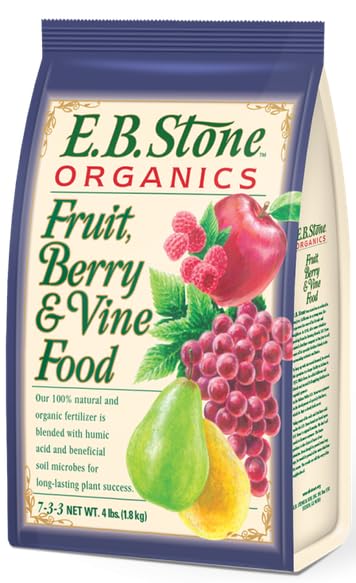
BRIRILINE Fruit, Berry & Vine Food 7-3-3, 64 fl oz
| Item Form | Granules |
|---|---|
| Specific Uses For Product | fruit trees, berries, and fruiting vines |
| Coverage | Organic |
| Liquid Volume | 64 fluid ounces |
| Mixing Ratio | 7:3:3 |
This organic 7-3-3 fertilizer is designed to supply steady, balanced nutrients to fruiting plants such as grapevines. Supplied as granules in a 64 fl oz container, it is applied by spreading around the root zone and watering in or mixing per the 7:3:3 directions, which makes it suitable for routine seasonal feedings. The blend emphasizes nitrogen for leafy growth while providing phosphate and potash to support flowering and fruit set, so it helps develop healthy canopies and promote crop production on grape vines. As an organic product it is appropriate for growers avoiding synthetic fertilizers, and the granular form is easy to store and measure for repeatable applications. Limitations are that nutrient analysis is modest compared with concentrated synthetic options and specific application rates are left to the label, so you may need to calculate amounts for mature vineyards or correct specific deficiencies with targeted amendments.
Best for: Home gardeners and small-scale growers who want a reliable organic feed to maintain healthy grapevines and improve fruit set through regular seasonal applications.
Less Ideal for: Commercial vineyard operators or growers needing rapid correction of specific nutrient deficiencies should consider higher‑analysis or targeted products instead.
- Organic formula suitable for growers avoiding synthetic fertilizers
- Balanced 7-3-3 N-P-K tailored for fruiting vines and berry crops
- Granular form that is easy to apply and store
- Supports leafy growth and fruit development with nitrogen, phosphate, and potash
- Lower nutrient concentrations than concentrated synthetic fertilizers so larger volumes may be required
- Label gives general directions but specific per-vine application rates are not detailed in the product data
Verdict: A dependable organic granular feed that provides balanced 7-3-3 nutrition to keep home grapevines healthy and productive.
EB Stone Organics Fruit, Berry & Vine Food 7-3-3, 15 lb

| Item Form | Granules |
|---|---|
| Target Species | fruit trees, berries and fruiting vines |
| Coverage | Medium |
| Mixing Ratio | 7:3:3 |
| Unit Count | 240 Ounce |
This EB Stone Organics 7-3-3 fruit, berry and vine fertilizer is a slow-release granular feed aimed at improving fruit set, flavor, and yield on grapevines and other fruiting plants. You spread it at the base of established vines or work it lightly into the soil according to package directions; the blend is designed to feed for about 6 to 8 weeks so you do not need to reapply constantly. The high potassium relative to nitrogen and phosphorus supports fruit development, while the 100% natural ingredients lower the risk of burn compared with synthetic quick-release formulas. Practical benefits include steady nutrient release, suitability for home vineyards and berry patches, and simple application for seasonal maintenance. Limitations are that it is a general-purpose orchard formula rather than a grapevine-specific program, so heavy-feeding situations or precise nutrient correction will still require soil testing and supplemental amendments. Also it ships as a bagged granular product so you will need to measure and store it properly to keep it dry and effective.
Best for: Home vineyard owners and gardeners who want a low-maintenance organic feed to improve fruit set and flavor without frequent applications.
Less Ideal for: Commercial growers or growers needing precise nutrient correction or high-rate fertilization should choose a vineyard-specific program guided by soil and tissue tests.
- 7-3-3 N-P-K ratio with higher potassium to support fruit development
- Slow-release granular formula feeds for about 6–8 weeks
- Made from 100% natural organic ingredients, reducing burn risk
- Easy to apply at the base of vines for routine seasonal feeding
- Not tailored specifically to grapevine micronutrient needs or corrective feeding
- Requires dry storage and measuring for repeated seasonal use
Verdict: A simple, organic slow‑release fertilizer that delivers higher potassium to help backyard grapevines produce sweeter, more abundant fruit with minimal fuss.
Choosing the Right Natural Fertilizer for Grape Vines: Key Factors to Consider
Nutrient Balance and Ratios
Grape vines require variable nutrient proportions through the season. Early spring growth benefits from moderate nitrogen to drive shoot development, while bloom and berry set need adequate phosphorus and potassium to support flowering and fruit quality. A fertilizer with labeled N-P-K ratios that match your vine's growth stage reduces the risk of excessive vegetative growth at the expense of fruit.
Look for products that provide usable forms of nutrients rather than vague guarantees. Slow-release or organic sources that mineralize over time give a steadier supply and lower the chance of nutrient spikes that can burn roots or unbalance soil chemistry.
Release Profile and Timing
How quickly a fertilizer releases its nutrients determines when vines will access them. Fast-release inputs can correct a short-term deficiency but risk nutrient leaching and salt stress, especially in containers or sandy soils. Slow-release natural fertilizers feed vines gradually, aligning nutrient availability with the plant's uptake curve.
Consider the vineyard calendar: apply nitrogen earlier in the season to support canopy growth, then favor potassium-rich inputs before and during berry development. Matching release timing to vine phenology helps optimize fruit size, sugar accumulation, and overall vine resilience.
Soil Compatibility and Salt Load
Soil texture and existing fertility strongly influence fertilizer choice. Sandy soils leach nutrients quickly and benefit from more frequent, lower-dose applications, while clay soils hold nutrients and may need less frequent feeding. Salt load matters because high-soluble-salt fertilizers can damage roots and reduce beneficial microbial activity. Natural fertilizers with low soluble salt levels are safer for long-term soil health and for vines grown in containers or raised beds.
Test your soil before making major changes. Knowing pH, organic matter, and basic nutrient levels helps you select a fertilizer that complements rather than conflicts with your existing soil conditions.
Support for Soil Biology
Healthy vineyard soils rely on microbial life to cycle nutrients and maintain structure. Natural fertilizers that include organic matter, composted inputs, or microbial stimulants support beneficial fungi and bacteria. These biological allies improve root access to immobile nutrients like phosphorus and enhance drought resilience, both valuable for quality grape production.
Avoid repeated use of products that feed plants but starve microbes. Over time, a biologically active soil reduces the need for heavy nutrient inputs and improves vine health.
Application Method and Labor
Consider how you will apply fertilizer across your vines. Granular spreads, top-dressings, and slow-release spikes suit larger beds and field plantings where uniform distribution is possible. Liquid or water-soluble natural extracts work well for targeted foliar feed or for container-grown vines where quick uptake is needed. The labor required to apply and reapply should match the scale of your planting and your available time.
Also factor in safety and cleanup. Dusty or odorous materials may be less suitable for patio growers. Choose a form and package size that aligns with your workflow and storage options.
Trace Elements and Secondary Nutrients
Beyond N, P, and K, vines need secondary nutrients like calcium, magnesium, and sulfur, plus trace elements such as iron, manganese, zinc, and boron. Deficiencies in these can show up as leaf chlorosis, poor fruit set, or uneven ripening. Natural fertilizers vary in how comprehensively they address these needs. Some organic sources naturally supply a broad spectrum of micronutrients, while others focus on macronutrients only.
If your soil test indicates a deficiency, prioritize an input that corrects that specific lack or plan a supplemental application rather than relying on a general-purpose product.
Feeding Schedule for Different Vine Stages
Vine nutrient needs change through the growing season, so plan feeds around phenological stages. Early season applications should support bud break and shoot growth without encouraging excessive vigor that shades clusters.
Around bloom and fruit set, reduce high-nitrogen inputs and increase potassium to support berry development and sugar accumulation. Late season applications should be conservative to avoid stimulating new growth before dormant season.
- Prebud to bud break: low to moderate nitrogen, focus on soil warming and moisture
- Flowering to fruit set: lower nitrogen, higher phosphorus and potassium
- Ripening: support potassium intake, avoid late nitrogen spikes
- Postharvest: light feeding to aid carbohydrate storage, prioritize soil organic matter
Applying Natural Fertilizers in Containers and Small Patios
Containers magnify salt and nutrient fluctuations because of limited soil volume. Choose low-salt natural fertilizers and smaller, more frequent applications. Incorporate organic matter into potting mixes to buffer nutrient swings and maintain moisture.
- Use diluted liquid feeds during active growth periods for quick uptake
- Top-dress with compost or well-rotted organic matter in spring
- Flush containers occasionally to avoid salt buildup
Balancing Organic Matter and Mineral Nutrients
Natural fertilizers often supply both nutrients and organic matter. Compost and well-composted manures add structure and feed microbes, while mineral-rich rock powders supply slow-release elements. Combining these approaches improves both immediate nutrient availability and long-term soil fertility.
- Add compost annually to maintain soil structure and microbial life
- Use concentrated organic fertilizers sparingly and monitor vine response
- Match amendments to soil test results rather than applying all inputs uniformly
Common Deficiency Symptoms and Quick Remedies
Recognizing deficiency symptoms helps you respond with a targeted amendment. Nitrogen deficiency shows as overall pale foliage and stunted growth. Potassium deficiency often appears as marginal leaf scorch and poor fruit development. Micronutrient shortages cause more specific leaf patterning such as interveinal chlorosis or distorted growth.
Soil testing is the most reliable diagnostic, but foliar checks and visual monitoring during key stages can indicate when a corrective, targeted feed is needed.
- Nitrogen: apply modest, quick-acting organic nitrogen or compost tea
- Potassium: use potassium-rich mineral or organic sources before ripening
- Micronutrients: correct with foliar feeds targeted to the missing element
Integrating Fertilizer with Watering and Pruning
Fertilizer effectiveness is closely tied to water management and pruning. Overwatering can leach nutrients, while drought limits uptake. Schedule feeds when soil moisture is adequate but not waterlogged. Pruning changes the vine's sink demands; heavier pruning reduces the plant's nutrient requirement in the following season.
Coordinate feed timing after major pruning sessions and before critical growth phases to align nutrient supply with the vine's demand curve.
- Apply granular or top-dress fertilizer with even soil moisture to promote mineralization
- Avoid heavy feeding immediately after severe pruning
- Use targeted foliar feeds when root uptake is compromised by drought or compacted soil
How We Chose the Best Natural Fertilizer for Grape Vines
We focused on practical, garden-tested attributes that influence how a natural fertilizer performs for grape vines. Primary criteria included nutrient balance and release profile, because grape vines need different ratios of nitrogen, phosphorus, and potassium at distinct growth stages. Soil compatibility and salt load were measured to avoid products that can harm root health or reduce microbial activity. Application method and timing were evaluated for real-world ease of use in home vineyards and container vines. We also considered organic certification or ingredient transparency where available, plus supply form and concentration to estimate how often gardeners will need to reapply. Excluded from the list were synthetic blends, high-salt chemical fertilizers, and products designed only for lawns or nonfruiting ornamentals. We filtered out items with unclear labeling or missing nutrient information. The final selections emphasize steady nutrient release, low soluble salt levels, and inputs that support soil life, aligning with the scoring criteria used throughout the guide.
FAQ
How often should I fertilize grape vines with a natural product?
Frequency depends on product type and soil. Slow-release organics often need one or two applications per season, while lighter liquid feeds may be applied every 3 to 6 weeks during active growth. Always adjust based on vine vigor and soil test results.
Can I use compost alone as a fertilizer for grape vines?
Compost supplies organic matter and a broad mix of nutrients but can be low in specific macronutrients for high-yielding vines. Compost is excellent for building soil health, but you may need supplemental inputs for targeted nitrogen or potassium needs identified by a soil test.
Are foliar feeds useful for correcting micronutrient deficiencies?
Foliar feeds can correct some micronutrient shortages quickly because leaves absorb certain elements faster than roots can access soil-bound nutrients. They are usually a short-term fix and should be paired with soil amendments to address underlying imbalances.
Will natural fertilizers attract pests or cause odors in the garden?
Some organic inputs, particularly fresh manures or fish-based products, can be odorous and may attract animals if not well composted. Choosing well-composted or pelleted forms reduces odor and pest attraction while still delivering nutrients.
How important is a soil test before choosing a fertilizer?
A soil test is highly useful because it reveals pH, nutrient levels, and deficiencies so you can choose the most appropriate natural fertilizer. Testing prevents unnecessary applications and helps target specific nutrient gaps.
Can I switch fertilizer approaches midseason if vines look weak?
You can adjust your approach midseason, but avoid heavy nitrogen inputs late in the season. Use quick-acting, low-dose corrections for obvious deficiencies and prioritize balancing soil health to prevent repeat problems.
Final Verdict
Choosing the right natural fertilizer for grape vines means balancing immediate nutrient needs with long-term soil health. Prioritize a product whose nutrient ratios and release timing match vine growth stages, and consider soil compatibility and microbial support to sustain root function and fruit quality. Tradeoffs include frequency of application versus nutrient concentration and the relative speed of correction versus the benefit to soil life. Focus on diagnosing real needs with a soil test, then pick an approach that aligns with your scale and labor. With the right balance of nutrients, consistent moisture management, and attention to soil biology, you can improve vine vigor and harvests while keeping your soil productive season after season.
