

Note: This article contains affiliate links. If you click on these links and make a purchase, I may earn a small commission at no extra cost to you. This helps support my research and content. Read my full affiliate disclosure here.
Choosing the right potting medium for anthuriums changes how well they grow, flower, and resist root problems. These tropical epiphytes need a balance of free airflow around the roots and steady moisture retention – too dense and roots suffocate, too open and the crown dries out. This guide presents seven shortlisted soils and mixes suited to anthurium growing situations. We evaluated each option for drainage, water-holding capacity, and nutrient support so you can pick a medium that fits your growing style and container setup. Read on for the factors we used and practical tips for potting and care.
Top Picks at a Glance
| Best Overall The best all-around choice for most situations | Rosy Soil Aroid Potting Mix, Chunky Biochar Soil, 4 Quarts |  |
| Best Quality Built to a higher standard if you want something more solid | Molly's Aroid Potting Mix (5 Dry Quarts) |  |
| Best Value The sweet spot between price and what you get | Grow Queen Craft Aroid Potting Mix, Chunky Monstera & Tropical Plant Soil, 2 qt |  |
| Best Budget The cheapest option that still gets the job done reliably | Doter Anthurium & Indoor Plant Potting Soil Mix (1 qt) |  |
| Highest Rated A top-rated pick with lots of positive feedback | Top Tier Genetics AROID Potting Mix for Monstera and Aroids (4 qts) |  |
| Most Popular A crowd favorite that many people choose with confidence | Grow Queen Craft Aroid Potting Mix, Chunky Soil for Monstera, Alocasia & Tropical Houseplants, Peat-Free, 4 qt |  |
| Best Seller A high-volume bestseller chosen again and again | Back to the Roots Organic Indoor Potting Mix, 6 Quart |  |
Rosy Soil Aroid Potting Mix, Chunky Biochar Soil, 4 Quarts

| Unit Count | 128 Ounce |
|---|---|
| Volume | 4 quarts |
| Item Highlight | Peat-Free, Microbially Active, Superior Aeration & Drainage |
| Style Name | Aroid Soil |
Rosy Soil Aroid Potting Mix is designed specifically for Monsteras, philodendrons, anthuriums and other tropical aroids that need fast-draining, airy media. The mix combines pine bark fines, pumice and biochar to give a chunky structure that resists compaction and lets roots breathe while water moves through quickly. It is also enriched with worm castings, mycorrhizae and compost to create a microbially active medium that supports nutrient uptake and root vigor over time. Because it is peat-free and formulated to be carbon negative, it is a good choice for growers who want an environmentally friendlier alternative to peat-based mixes. In practical use the mix fills multiple small pots from a 4-quart bag, comes in a resealable bag to stay fresh, and is well-suited for repotting and top-ups where drainage and aeration are priorities. Limitations are the small package size for larger collections and the chunky texture may dry faster than peat blends, requiring more frequent watering for some indoor conditions.
Best for: Buyers who prioritize plant performance and root health for Monsteras and other tropical aroids and who want a fast-draining, microbially active soil that keeps roots airy.
Less Ideal for: Casual plant owners who prefer low-maintenance, moisture-retentive peat blends or who need large volumes for many pots should consider other options.
- Chunky mix with pine bark and pumice provides excellent drainage and prevents compaction
- Includes biochar and beneficial microbes to boost nutrient availability and root health
- Peat-free, designed to reduce carbon impact compared with traditional peat mixes
- Resealable bag and 4-quart volume convenient for repotting multiple small houseplants
- 4-quart bag is small for larger collections or multiple repots
- Chunky texture dries faster than peat-based mixes and may require more frequent watering
Verdict: Choose this mix if you want a high-performance, chunky potting medium that gives Monsteras and other aroids superior drainage, aeration, and microbial support.
Molly's Aroid Potting Mix (5 Dry Quarts)

| Volume | 5.5 liters |
|---|---|
| Ingredients | Coir fiber, perlite, expanded clay, coir chips, charcoal, orchid bark, worm castings, mycorrhizae, rhizobacteria |
| Style Name | Houseplants & Aroids |
Molly's Aroid Potting Mix is a chunky, soilless blend designed to keep roots airy and reduce overwatering for tropical container plants. It combines coco coir, orchid bark, perlite, expanded clay and charcoal to create a fast-draining structure, with added worm castings and beneficial microbes including mycorrhizae and rhizobacteria to support nutrient uptake. The mix is typically used for repotting Monstera, Philodendron and other aroids but also works when you need a light, well-aerated medium for plants that dislike soggy conditions. The resealable, heat-sealed bag helps keep the mix fresh between uses and the absence of garden soil makes it cleaner to handle indoors. Limitations include smaller bag volume for larger pots and the soilless formula means you may need to supplement nutrients for long-term feeding of heavy feeders. Expect quicker drying than soil-based mixes, which is an advantage for drainage but requires slightly more frequent watering for plants that prefer consistent moisture.
Best for: Buyers who want a reliable, low-compaction potting mix for tropical houseplants and prioritize drainage and root health over raw soil volume.
Less Ideal for: Not the best choice for gardeners who prefer traditional garden soil textures or need a single large-volume bag for outdoor beds or large specimen plants.
- Chunky, fast-draining structure reduces risk of overwatering
- Includes mycorrhizal fungi and beneficial bacteria to aid root nutrient uptake
- Clean, soilless mix that is lighter and easier to handle indoors
- Contains organic inputs like worm castings for some built-in fertility
- Small 5.5 liter bag may require multiple bags for larger plants or multiple repots
- Soilless formula will need supplemental fertilization for long-term heavy feeding
Verdict: Choose this mix when you need a clean, chunky, fast-draining medium to keep pineapple-family and other tropical container plants healthy and avoid overwatering.
Grow Queen Craft Aroid Potting Mix, Chunky Monstera & Tropical Plant Soil, 2 qt

| Brand | Grow Queen |
|---|---|
| Volume | 2 quarts |
| Ingredients | Tree fern fiber, earthworm castings, lava rock, biochar, coco coir, gypsum, alfalfa meal |
| Designed for | Monstera, Alocasia, Philodendron, Anthurium and tropical houseplants |
This Grow Queen Craft Aroid Mix is a ready-to-use, chunky potting soil built to replicate a rainforest floor for Monsteras, Alocasias and similar tropical houseplants. The blend combines large bark pieces, pumice and lava rock for fast drainage and aeration, while coco coir and charged biochar retain modest moisture so the mix does not go bone dry between waterings. It also includes earthworm castings, alfalfa meal and gypsum to support beneficial microbes and provide gentle nutrition out of the bag. The mix arrives pre‑moistened and is straightforward for repotting, especially when you want to reduce compaction and lower the risk of overwatering. Notable limitations are the small 2 quart bag size for larger repotting jobs and the absence of perlite if you prefer that specific amendment. This is a practical, botanist‑informed option for people who want a sustainable, peat‑free alternative tailored to aroids and other chunky‑soil‑loving houseplants.
Best for: Buyers who want a ready-made, sustainable potting mix that mimics tropical forest soil for Monsteras and other aroids and who value drainage with living amendments over DIY mixing.
Less Ideal for: Growers repotting many large plants at once or those who prefer to fully customize their own soil recipe with specific additives like perlite or added fertilizer concentrates.
- Chunky, well aerated formula with bark, pumice and lava rock to improve drainage and prevent compaction
- Includes charged biochar and earthworm castings to support microbes and provide starter nutrients
- Peat free and perlite free, using coco coir and natural porous aggregates for sustainability
- Pre‑moistened and ready to use straight from the bag for easy repotting
- Small 2 quart volume may be impractical for repotting multiple or large plants
- Does not contain perlite, which some growers prefer for a lighter texture
Verdict: Choose this mix if you want a peat‑free, botanist‑designed chunky soil that gives Monsteras and other aroids the fast drainage and living nutrition they need straight from the bag.
Doter Anthurium & Indoor Plant Potting Soil Mix (1 qt)

| Unit Count | 32 Ounce |
|---|---|
| Brand Name | Doter |
| Volume | 10 centiliters |
| Style Name | Custom |
This Doter potting mix is built specifically for anthuriums and similar tropical houseplants, combining peat moss, pine bark, horticultural charcoal, perlite, coarse sand, and dolomite lime to balance moisture and aeration. In practice it works well for repotting: the bark and perlite create air pockets that speed drainage and reduce waterlogging while peat holds reserve moisture so roots do not dry out between waterings. The included charcoal helps stabilize pH and limits mold in damp containers. The mix is easy to use straight from the bag for beginners or hobbyists and is marketed as longer lasting than generic mixes because coarse particles resist compaction. Be aware the bag is small (1 quart option available) so larger plants or multiple repots will need multiple purchases, and the peat content means it can be dusty so handle in ventilation or wear a mask if you are sensitive. For anthuriums this provides a near-ready substrate that reduces the need to blend separate additives yourself.
Best for: Buyers who want an affordable, ready-made substrate for anthuriums or tropical houseplants and prefer not to mix multiple additives themselves.
Less Ideal for: Growers who need large-volume commercial quantities or those who avoid peat-based products for environmental reasons should consider alternatives.
- Formulated components (peat, pine bark, perlite, charcoal) balance moisture retention with fast drainage
- Charcoal and lime help stabilize pH and reduce mold risk in humid indoor pots
- Coarse particle mix resists compaction and maintains aeration longer than typical potting soils
- Ready-to-use blend suitable for straightforward repotting of anthuriums and other tropicals
- Small volume options mean frequent repurchasing for larger plants or multiple pots
- Contains peat dust that can irritate skin or eyes and should be handled with ventilation
Verdict: A budget-friendly, ready-to-use soil mix that gives anthuriums improved drainage and long-lasting aeration without needing to blend separate amendments.
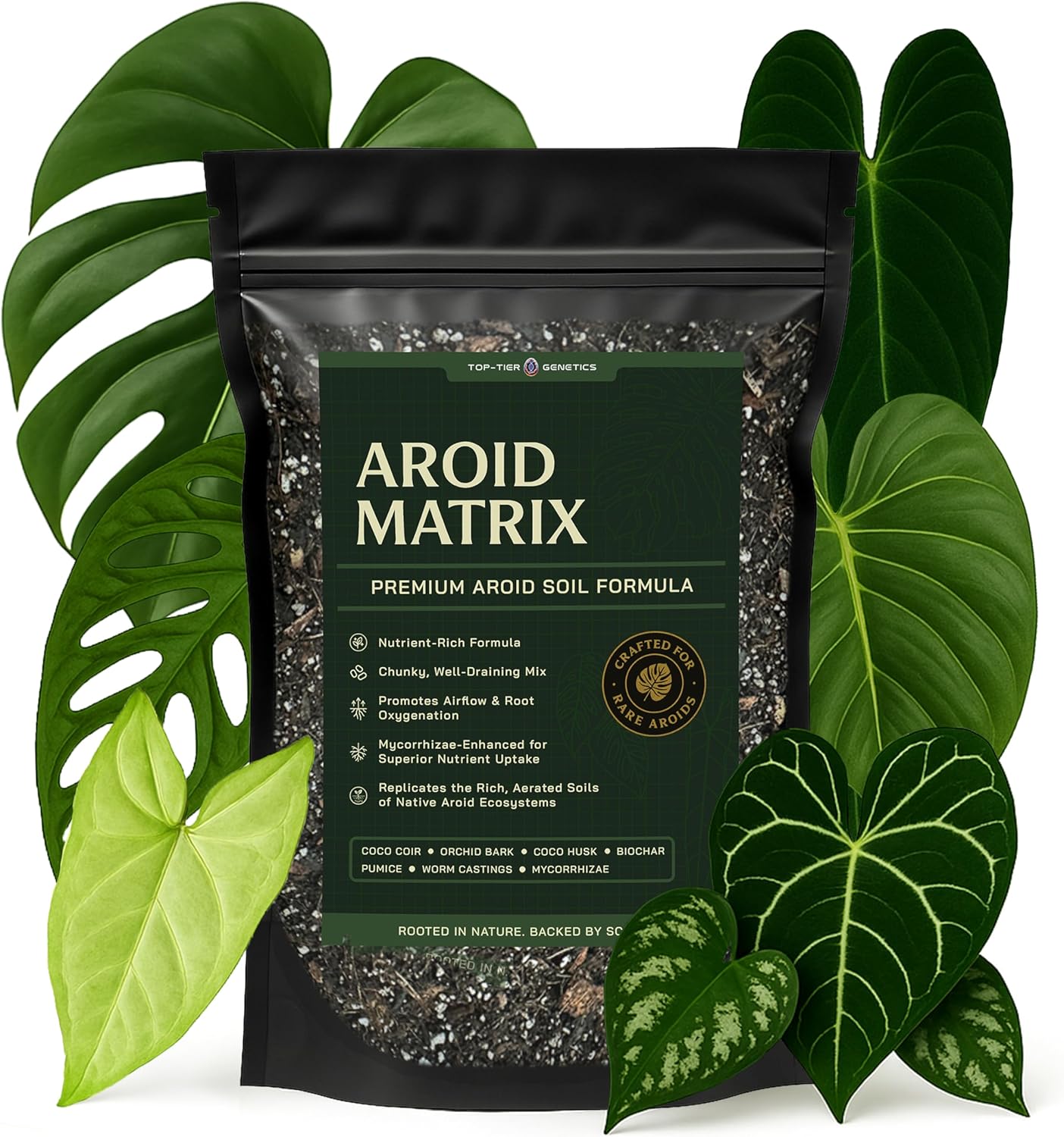
Top Tier Genetics AROID Potting Mix for Monstera and Aroids (4 qts)
| Brand | Top Tier Genetics |
|---|---|
| Unit Count | 128 Ounce |
| Ingredients | Orchid bark; Coco coir; Pumice; Coco husk; Worm castings; Biochar; Mycorrhizae |
| Volume | 4 quarts |
This AROID potting mix is formulated specifically for monsteras and other aroids and is ready to use straight from the bag. The chunky texture from orchid bark, coco husk, and pumice gives strong drainage and aeration, which helps prevent waterlogged roots and encourages fibrous root growth in large-leaved tropicals. Coco coir provides moisture retention without compaction, while worm castings and mycorrhizae supply a gentle, ongoing nutrient and microbial boost for healthier foliage. Biochar adds longer-term soil health benefits by improving nutrient retention and supporting microbial life. It is practical for repotting and regular refreshes of Monstera deliciosa because you do not need to mix components yourself. The main limitation is the small 4 quart volume, which makes it best for individual plant repots or top-ups rather than filling large containers or multiple plants at once. Shoppers who want a dependable, aroid-focused medium will appreciate the balanced moisture control and built-in biological amendments.
Best for: Buyers who want a reliable, ready-made potting medium tailored to Monstera and other aroids and prefer a mix that minimizes setup and reduces repotting risk.
Less Ideal for: Gardeners needing large volumes for many plants or big container fills who should look for bulk mixes or larger bags.
- Chunky mix (orchid bark, coco husk, pumice) provides excellent drainage and root aeration
- Contains worm castings and mycorrhizae to support steady nutrient availability and root health
- Coco coir balances moisture retention without promoting compaction
- Includes biochar to improve long-term soil microbial activity and nutrient holding capacity
- Small 4 quart bag size is insufficient for large pots or multiple repots
Verdict: A convenient, aroid-focused potting mix that delivers reliable drainage, moisture balance, and microbial support for healthy Monstera growth.
Grow Queen Craft Aroid Potting Mix, Chunky Soil for Monstera, Alocasia & Tropical Houseplants, Peat-Free, 4 qt

| Brand Name | Grow Queen |
|---|---|
| Item Type Name | Potting Mix |
| Volume | 4 quarts |
| Ingredients | Coco Coir, Pumice, Lava Rock, Earthworm Castings, Alfalfa Meal, Gypsum, Tree Fern Fiber, Fir Bark |
This Grow Queen Craft Aroid Mix is a ready-to-use, chunky potting soil made for aroids and other tropical houseplants such as Anthurium. The blend uses fir bark, pumice, lava rock and tree fern fiber to create large pore spaces so water drains quickly and roots get oxygen, while coco coir and charged biochar hold modest moisture between waterings. It also contains earthworm castings, alfalfa meal and gypsum to support soil biology and gentle feeding. In practice the mix makes overwatering less likely and is easy to work with when repotting smaller collectors or standard houseplants. Because it arrives pre-moistened you can pot right away, and the manufacturer notes the pH is tuned toward slightly acidic conditions favored by many aroids. Limitations are the small 4 quart volume for larger plants or multiple repots and the absence of perlite if you prefer that specific material. For someone wanting a sustainable, peat-free alternative that mimics a tropical forest substrate, this mix performs as advertised.
Best for: Buyers who want an easy, botanist-crafted potting mix for Anthurium and other tropical houseplants that reduces the risk of overwatering while supporting soil life.
Less Ideal for: Growers repotting large specimens or outfitting many plants at once who need bulk volumes or a heavier, moisture-retentive substrate.
- Chunky blend of fir bark, pumice and lava rock for excellent drainage and aeration
- Includes charged biochar and earthworm castings to support microbes and provide starter nutrition
- Peat-free, perlite-free formula using washed coco coir and tree fern fiber for more sustainable sourcing
- Pre-moistened and pH balanced toward slightly acidic conditions favored by aroids
- Small 4 quart volume so multiple bags are needed for larger plants or several repots
- Does not contain perlite, which some growers prefer for specific drainage characteristics
Verdict: A peat-free, chunky aroid mix that gives Anthurium and similar tropical houseplants excellent drainage and living soil nutrition in an easy, ready-to-use bag.
Back to the Roots Organic Indoor Potting Mix, 6 Quart

| Unit Count | 192 Fluid Ounces |
|---|---|
| Item Type Name | Indoor Potting Mix 6qt |
| Item Highlight | Peat-free, 100% organic, made in the USA |
| Ingredients | Coconut Coir, Yucca, Mycorrhizae, Perlite, Horticultural Sand |
This Back to the Roots indoor potting mix is a ready-to-use, 6-quart blend designed for common houseplants such as pothos, monstera and ferns. It combines coconut coir, yucca extract, mycorrhizae, perlite and horticultural sand to improve moisture retention, drainage and root development without peat. In practice it feels light and friable, so it is easy to pot seedlings or repot mature plants and it reduces compaction that can suffocate roots. The added mycorrhizae helps young roots establish and take up nutrients more efficiently while yucca extract helps the mix hold water between waterings, which is convenient for forgetful or busy plant owners. Because it is peat-free and made in the USA, it is a more sustainable choice versus traditional peat-based mixes. Limitations are the small 6-quart size, which means frequent repurchasing for larger collections, and the bag does not include fertilizer so you will need to feed plants separately as they grow.
Best for: Buyers who prioritize low-risk, easy-care houseplant solutions and want an organic, ready-to-use potting mix that reduces watering hassles and supports healthy root growth.
Less Ideal for: Not ideal for gardeners who need large-volume soil for many pots or for those expecting a mix that includes built-in fertilizer for long-term feeding.
- Peat-free organic formula that reduces environmental impact
- Yucca extract improves moisture retention between waterings
- Contains mycorrhizae to support root development and nutrient uptake
- Light, well-draining texture suitable for repotting seedlings and houseplants
- Small 6-quart volume may require frequent repurchasing for larger plant collections
- Does not include fertilizer so additional feeding is necessary
Verdict: A compact, peat-free potting mix that simplifies indoor plant care by holding moisture and boosting root establishment.
Choosing the Right Anthurium Plant Soil: Key Factors to Consider
Drainage and Root Oxygenation
Anthuriums are epiphytic by nature and need a medium that allows air to reach the roots. A fast-draining structure reduces the risk of root rot and fungal issues.
Look for mixes with coarse particles such as orchid bark or pumice. These components create macropores that let water pass while preserving spaces for oxygen. The particle distribution also affects how quickly the medium dries on the surface versus deeper in the pot, which influences watering frequency and root health.
Moisture Retention Balance
While good drainage matters, anthuriums also require consistent moisture between waterings to support leaf turgor and flower production.
Components like coconut coir or well-aged compost can hold water in the fine pore spaces without turning the whole mix into a waterlogged mass. The ideal soil holds enough moisture to last several days for indoor conditions but still releases excess water quickly when you water heavily.
Organic Nutrient Availability
Anthuriums respond to a steady supply of nutrients rather than a single heavy dose. Organic matter supplies slow-release nutrients and supports beneficial microbes in the root zone.
Choose mixes with some composted bark, leaf mold, or well-rotted compost to provide gentle fertility. Avoid mixes overloaded with fresh, high-nitrogen amendments that can burn roots or create erratic growth. The presence of long-lasting organic components reduces the need for frequent feeding.
Physical Structure and Longevity
A stable physical structure prevents compaction over time, keeping pores open for water flow and air. Fine organic-only mixes tend to compress after repeated watering and root growth, which reduces drainage.
Durable ingredients such as chunked bark, pumice, or coarse perlite keep the mix light and resilient. Consider how often you want to repot; a longer-lasting structure means less frequent repotting and fewer root disturbances.
pH and Mineral Content
Anthuriums prefer a slightly acidic to neutral pH and do poorly in very alkaline or saline substrates. The pH and soluble salts in a mix influence nutrient uptake and overall plant vigor.
Check labels or component histories; coconut coir tends to be near neutral, while some composts can be slightly alkaline depending on source material. Avoid mixes with high residual salts or unwashed amendments that can stress roots.
Container Compatibility and Weight
The pot and its drainage system interact with the soil to create the root environment. Heavy, dense mixes are harder to use in hanging baskets or lightweight containers, while very loose mixes may shift in tall, narrow pots.
Match the mix density to the container size and material. Lighter mixes are easier to hang or use in decorative ceramic pots, while heavier mixes can stabilize top-heavy plants. Consider how the mix will behave when watering in the specific containers you use.
Custom Mixing Tips for Anthuriums
Making your own mix lets you tailor drainage and moisture to your indoor conditions. A common starting point is a chunky orchid bark base with added coconut coir for water retention and a small portion of perlite or pumice to increase aeration. Adjust proportions seasonally – slightly more water retention in winter if indoor air is dry, and more drainage during warm, humid months.
- Aim for visible chunks in the mix so you can see the air spaces.
- Sift out fines from bark or compost to prevent unexpected compaction.
- Pre-soak coconut coir to expand it and remove any dust before mixing.
Repotting and Root Care Practices
Repotting aroids like anthuriums is a good opportunity to refresh the medium and inspect roots. Gently tease out the old soil and trim only clearly dead roots. Use a pot that leaves room for one growing season of root expansion rather than an oversized container that holds excess moisture. When transplanting, settle the plant so the crown sits slightly above the mix surface to reduce crown rot risk. Water lightly after repotting to help the medium settle, then return to your normal watering rhythm once new growth appears.
- Repot in spring or early summer for best recovery.
- Use a container with drainage holes and consider adding a mesh at the hole to keep mix components from washing out.
Adjusting Watering for Your Mix
Watering frequency depends on mix composition, pot size, and indoor conditions. With a chunky, well-draining mix, you may water less often but more thoroughly so that water reaches the root mass. In a coir-heavier mix you may water slightly less volume but more frequently to keep the root zone evenly moist. Train yourself to check moisture by finger testing or a moisture meter and watch foliage for signs of under- or over-watering. Leaves that are limp or yellowing can indicate water imbalance rather than nutrient problems.
- Water until some runs from the drainage hole, then allow the top layer to dry moderately before the next watering.
- Reduce watering in cooler months when growth slows.
Fertilizing and Long-Term Feeding Strategy
Because anthurium mixes often contain slow-release organics, avoid heavy granular feeding immediately after repotting. Use a diluted, balanced liquid fertilizer during the growing season to supplement the mix's nutrient supply. Slow-release organic pellets can be added sparingly for low-maintenance growers. Flush containers occasionally to prevent salt buildup if you use regular liquid feeds. Monitor leaf color and flowering as guides for adjusting feeding frequency rather than following a rigid schedule.
- Feed at half strength every two to four weeks during active growth for indoor plants.
- Stop or cut feeding in half during dormancy or slow growth periods.
Managing Pests and Pathogens Through Soil Choice
A clean, well-draining mix reduces the chance of soil-borne fungal diseases. Avoid mixes made from fresh green material or uncomposted manures that can introduce pests or pathogens. Sterile components such as pumice or perlite do not host microbes and can dilute pathogen load. If you suspect disease, repot in fresh mix and trim compromised roots. Consider using a short quarantine for new plants and avoid sharing potting material between sick and healthy plants.
- Sterilize recycled pots before reuse.
- Quarantine new plants for several weeks to observe root and foliar health.
How We Chose the Best Anthurium Plant Soil
We focused on characteristics that directly affect anthurium root health and flowering performance. Key evaluation criteria were drainage and aeration to prevent root rot; water retention to supply consistent moisture between waterings; organic nutrient content and slow-release feeding capacity to support sustained growth; and physical stability so the mix does not compact over time. Texture and particle size were considered because anthuriums benefit from chunky, chunky-but-fine blends that mimic epiphytic conditions. We tested descriptions and ingredient lists for common mix components such as orchid bark, coconut coir, perlite, and composted bark, giving higher weight to mixes that combine chunky bark with moisture-retaining organics. We excluded blends designed for general houseplants that rely on fine peat alone or that are overly heavy with clay or compost, since those tend to hold too much water for anthuriums. Also excluded were outdoor garden soils and mixes formulated for succulents or cacti because they do not meet anthurium humidity and nutrient needs. Practical handling, availability of common components for custom mixing, and compatibility with common container types were additional filters. The resulting shortlist balances root oxygenation, moisture buffering, and a stable structure that lasts through repeated watering cycles.
FAQ
How often should I repot anthurium plants?
Usually every 1 to 2 years depending on growth rate and how compacted the mix becomes. Repot when roots fill the pot, the mix shows poor drainage, or plant growth slows despite good light.
Can I use regular houseplant soil for anthuriums?
Regular houseplant soil is often too fine and moisture-retentive for anthuriums and can lead to slow drainage and root issues. If you must use it, amend with chunky bark, perlite, or pumice to increase aeration.
Is coconut coir a good base for anthurium soil?
Coconut coir is a good moisture-retaining component and is near neutral pH. It works well when balanced with chunky ingredients to maintain airflow and structure.
What particle size is best in a mix for anthuriums?
A mix with visibly chunky particles about pea to thumb-sized for bark and small granules for perlite or pumice creates the air spaces anthurium roots need while still holding moisture between particles.
Should I add fertilizer directly into the potting mix?
Small amounts of slow-release organic matter can be included in the mix, but heavy fertilizing materials should be avoided at potting time. Supplement with diluted liquid feed during the growing season for predictable nutrient supply.
How can I tell if my mix is too wet or too dry for anthuriums?
Too wet mixes show yellowing leaves, root softening, or foul odors. Too dry mixes cause wilting without soft roots and brown leaf edges. Use finger checks and observe how the plant responds after watering to calibrate moisture levels.
Final Verdict
Prioritize a medium that balances chunky drainage with enough fine pore space to hold moisture. Focus on mixes that include orchid bark or similar chunky components, paired with coconut coir or aged organics for steady nutrients. Tradeoffs are inevitable: mixes that drain best often require more frequent watering, while wetter blends may need more careful repotting and monitoring. Choose a mix that matches your container type and watering routine, and be prepared to adjust components seasonally or when moving plants between light and humidity conditions. With the right soil structure and a modest feeding plan, anthuriums will reward you with healthier foliage and more reliable blooms.
