

Note: This article contains affiliate links. If you click on these links and make a purchase, I may earn a small commission at no extra cost to you. This helps support my research and content. Read my full affiliate disclosure here.
When mice turn up in a pantry, garage, or attic, you want a solution that removes the pest cleanly and limits contact with the carcass. The right kill-and-contain mouse trap balances quick dispatch with a containment design that minimizes bloody mess, scent transfer, and handling during disposal. This guide shortlists six top options that suit apartments, family homes, and outbuildings and explains the tradeoffs you should weigh. We evaluated devices for dispatch effectiveness, containment performance, user safety, and ease of cleanup. Read on to see the reasons these models made the list and which features matter most for your situation.
Top Picks at a Glance
| Best Overall The best all-around choice for most situations | Victor M250BSR-2 Indoor Electronic Mouse Trap, 2-Pack |  |
| Best Quality Built to a higher standard if you want something more solid | OWLTRA OW-2 Indoor Electric Mouse Trap, 2-Pack |  |
| Best Value The sweet spot between price and what you get | Victor Quick-Kill Mouse Traps, 6-Pack |  |
| Best Budget The cheapest option that still gets the job done reliably | Tomcat Spin Trap for Mice (2 pack) |  |
| Highest Rated A top-rated pick with lots of positive feedback | DoomBox Enclosed Mouse Trap, 10-Pack |  |
| Most Popular A crowd favorite that many people choose with confidence | Tomcat Kill & Contain Mouse Trap, 2-Pack |  |
Victor M250BSR-2 Indoor Electronic Mouse Trap, 2-Pack

| Target Species | Mouse |
|---|---|
| Power Source | Battery Powered |
| Unit Count | 2 Count |
| Recommended Uses For Product | Indoor |
| Material Type | Plastic |
The Victor M250BSR-2 is a two-pack of indoor electronic mouse traps designed for quick, hygienic rodent removal. Each unit uses a tunnel design with beveled columns to hold a mouse over the trigger plate, delivering a high-voltage shock when the smart circuit detects activity. The covered housing conceals the catch and the no-touch disposal mechanism lets you remove the spent rodent without handling it directly. Integrated LED lights show green for a successful catch and red when batteries are low, reducing the need for frequent manual checks. Battery-powered operation gives flexible placement along walls where mice travel, and the housing includes safety features intended to limit access by children and pets when used as directed. Limitations to note are that these are for indoor use only and require fresh batteries to keep the electronics reliable; the units also do not provide live-capture or reusable bait containers for non-lethal options. For commercial settings you may need multiple units to cover large spaces and to keep rotations for continuous coverage.
Best for: Buyers who prioritize reliable, sanitary mouse control and want compact, easy-to-check traps that work without daily inspection. Good for facility managers or homeowners who value straightforward electronic solutions backed by established pest-control design.
Less Ideal for: Not a fit for people seeking humane live-capture or for outdoor pest control needs; also not ideal if you need a single unit to cover very large commercial spaces without deploying multiples.
- Two traps per pack for broader coverage without buying multiples
- Covered tunnel and no-touch disposal for hygienic, discreet removal
- LED indicator lights for catch status and low-battery alerts
- Battery-powered cordless design for flexible placement along walls
- Beveled columns and smart circuit reduce escape chances and improve kill reliability
- Intended for indoor use only so not suited to exterior or outbuilding deployment
- Requires batteries and periodic replacement to maintain effectiveness
Verdict: Choose the Victor 2‑pack when you need compact, hygienic electronic traps that give reliable no‑touch elimination and quick status feedback for indoor rodent control.
OWLTRA OW-2 Indoor Electric Mouse Trap, 2-Pack

| Target Species | Mouse, Rat |
|---|---|
| Power Source | Battery Powered |
| Number of Pieces | 2 |
| Recommended Uses For Product | Indoor |
| Material Type | Plastic |
The OWLTRA OW-2 is a two-pack of battery-powered indoor electric traps designed to detect and kill mice or small rats quickly. Each unit uses dual infrared sensors to activate only when a rodent is fully inside, reducing accidental discharges and false triggers. The trap applies a high-voltage shock and holds the animal in a no-escape chamber so disposal is contained. Magnetic latches let you remove the lid and drop the contents into the trash without touching the carcass, and the unit automatically deactivates when opened for safer cleaning. Typical use is placing the traps along rodent runways indoors on dry surfaces, baiting the entrance, and swapping batteries as needed. Important limitations are that these units are for indoor, dry locations only and must be handled carefully because they deliver high voltage; they are not suited for wet, dusty, or outdoor spots and require keeping out of reach of children and pets when placed. They are plastic-bodied and run on AA batteries, so ongoing battery replacement is a maintenance consideration.
Best for: Buyers who want a quick, contained electric solution for indoor mice or small rats and who prioritize sensor safety and sanitary disposal backed by broad user adoption.
Less Ideal for: People who need outdoor or weather-resistant control, those who prefer reusable electric traps with wired power, or households that cannot safely keep battery-powered high-voltage devices away from children and pets.
- Dual infrared sensors reduce false activations and help protect children and small pets
- Magnetic lid and no-touch disposal make cleaning sanitary and simple
- Battery-powered operation lets you place traps without cords
- Designed chamber and no-escape geometry contain the rodent until disposal
- Intended for indoor dry use only and not weatherproof
- Requires periodic AA battery replacement which adds ongoing cost
Verdict: Choose the OWLTRA OW-2 if you want a compact, sensor-activated indoor electric trap that prioritizes hands-free disposal and reduced false activations.
Victor Quick-Kill Mouse Traps, 6-Pack
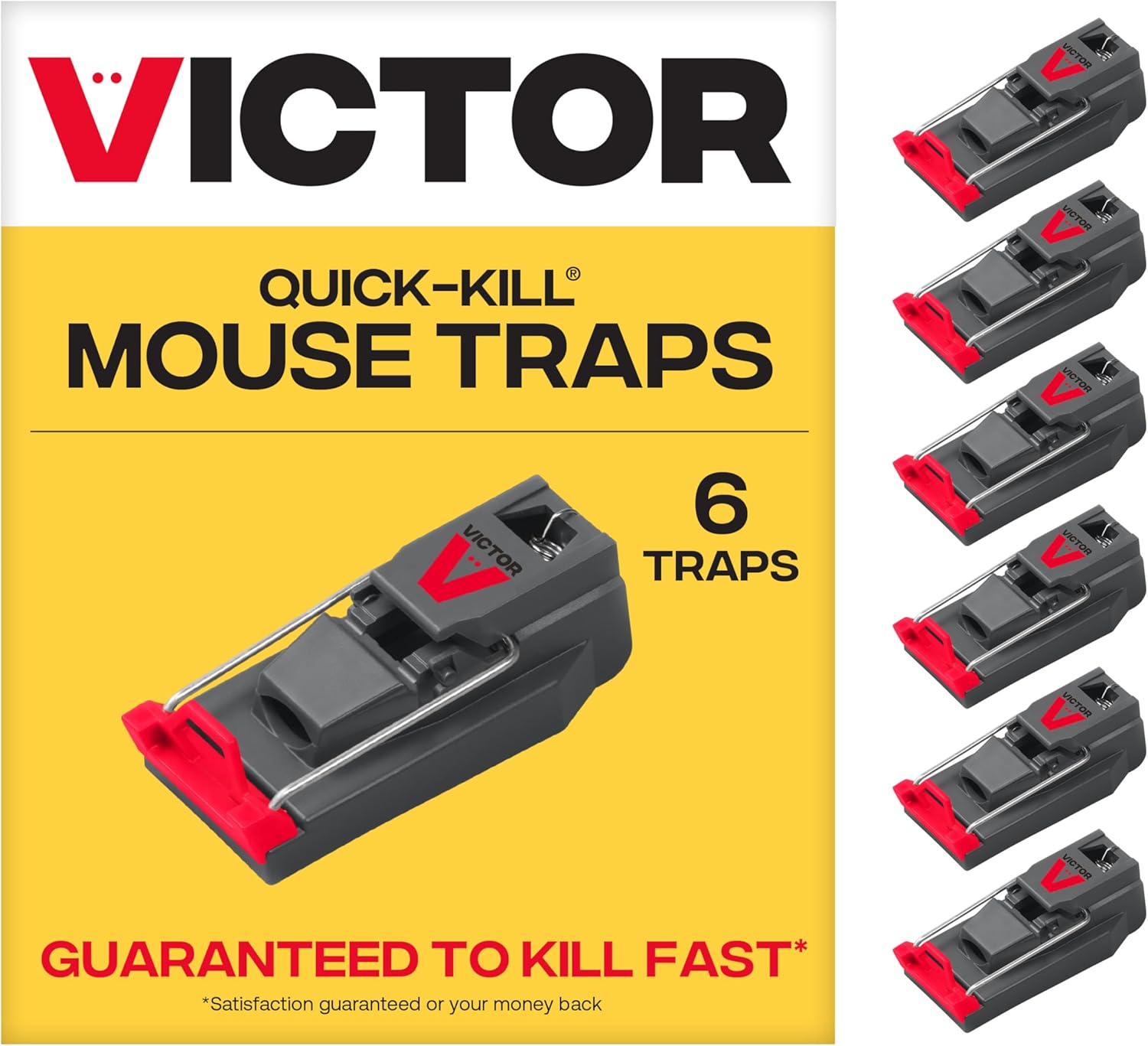
| Unit Count | 6 Count |
|---|---|
| Target Species | Mouse |
| Power Source | Manual |
| Material Type | Plastic |
The Victor Quick-Kill Mouse Traps are compact, reusable spring traps designed for fast home rodent control. You set each trap with a single click, load bait into the built-in covered bait cup, and place it along walls or where you see mouse activity. The covered bait area prevents bait theft and helps ensure the rodent triggers the high-impact kill bar at the correct point for a quick, humane kill. Traps are made of plastic, come in a six-pack, and include a release mechanism that opens the trap for no-touch disposal of caught rodents. Practical benefits include straightforward one-handed setting, clear bait placement, and the ability to reuse traps rather than replace them after each catch. Limitations are that the traps are manual so they require occasional inspection and disposal by the homeowner and the plastic body may be less durable than metal alternatives in heavy-use situations.
Best for: Homeowners who want an efficient, low-chemical method to control occasional mouse problems and prefer reusable, easy-to-set traps they can manage themselves.
Less Ideal for: People seeking a fully hands-off or high-capacity commercial solution should consider electronic or professional traps and services instead.
- One-click setting makes deployment quick and easy
- Covered bait cup prevents bait theft and guides proper placement
- Reusable design with a release mechanism enables no-touch disposal
- Precision Strike Technology targets a quick, humane kill
- Plastic construction may wear faster than metal with heavy repeated use
- Requires manual checking and disposal which may not suit users who want hands-off solutions
Verdict: A simple, reusable six-pack of manually set traps that delivers a quick, low-chemical solution for routine household mouse control.
Tomcat Spin Trap for Mice (2 pack)

| Target Species | Mouse |
|---|---|
| Power Source | manual |
| Unit Count | 2 Count |
| Material Type | Plastic |
The Tomcat Spin Trap is a simple, disposable mouse trap designed for indoor use where you want to avoid direct contact with rodents. It sets with a one‑touch pull and has a removable bait cup so you can use attractant gel or peanut butter to lure mice. The fully enclosed capture chamber hides the rodent and a clear catch indicator reads "CAUGHT" when triggered, which makes checking and disposal straightforward. Dual entry and a flat entry panel let you place the trap flush against walls or in corners where mice travel. Because the traps are single‑use plastic units, they are low maintenance and convenient for quick, targeted control rather than long‑term monitoring. Limitations are that each unit is disposable and may not be the cheapest option per capture for heavy infestations, and attractant is sold separately. The design is best for homeowners wanting an easy, hygienic solution for occasional indoor mouse problems.
Best for: Buyers who want a hygienic, easy-to-use indoor mouse solution for occasional sightings and who prioritize simple setup and disposal over reusable systems.
Less Ideal for: People dealing with large or persistent infestations who need long‑term monitoring or the lowest cost per catch should consider reusable traps or integrated control plans.
- Fully enclosed capture area hides the rodent for no‑touch disposal
- Clear "CAUGHT" indicator so you know when a trap has triggered
- Dual‑entry, flat panel design allows placement against walls and in corners
- Removable bait cup makes baiting cleaner and compatible with attractant gel
- Single‑use plastic construction means recurring replacement costs for ongoing problems
- Bait or attractant is not included in the package
Verdict: Buy this if you want a quick, hygienic, no‑touch disposable mouse trap that is easy to set and place in corners.
DoomBox Enclosed Mouse Trap, 10-Pack

| Target Species | Mouse |
|---|---|
| Unit Count | 10 Count |
| Material Type | Plastic |
| Power Source | no |
The DoomBox enclosed mouse trap is a snap-style, see-through plastic container that kills and contains mice while keeping the carcass enclosed for easier, more sanitary disposal. You set the oversized trip panel and high-impact strike bar with a single click; the transparent housing lets you confirm a catch without opening the unit. Its rib-reinforced walls are intended to hold the trap closed after impact and reduce accidental popping, and the patented Click-It closure is designed to keep curious children and pets from gaining access. The in-line entry guides rodents into the trap, which helps with placement in runways or along walls. Because these are single-use snap-style units made of plastic, they are lightweight and disposable rather than reusable, and the rigid design may not be suitable for larger rodents. The product comes in a 10-pack for tackling multiple hotspots or replacing traps over time.
Best for: Buyers who prioritize reliable, sanitary capture and quick confirmation of catches and who want a child- and pet-resistant option for indoor runways and basements.
Less Ideal for: People who prefer reusable metal traps, those targeting larger rodents, or users who want a live-capture solution.
- Enclosed plastic housing contains the dead mouse for cleaner disposal
- Transparent design lets you check catches without opening the trap
- Click-It closure adds child and pet resistance
- Rib-reinforced walls increase structural stability and reduce accidental openings
- Oversized trip panel and high-impact strike bar for decisive kills
- Single-use plastic design rather than a reusable trap
- May be undersized for larger rodents or non-target animals
Verdict: A dependable enclosed snap trap that kills and contains mice while minimizing handling and exposure, ideal for buyers who want a hygienic, child-resistant solution.
Tomcat Kill & Contain Mouse Trap, 2-Pack

| Unit Count | 2 Count |
|---|---|
| Target Species | Mouse |
| Power Source | manual |
| Material Type | Plastic |
The Tomcat Kill & Contain Mouse Trap is a disposable, enclosed snap trap designed for indoor use where you want to avoid handling rodents. You bait the trap through a rear bait door, set it with a single press of the side arm, and the covered design both kills and locks the mouse inside so you do not see or touch the carcass. An easy-view indicator shows when a mouse has been caught and a grab tab lets you discard the whole unit. Its compact shape makes it practical for tight spaces like behind appliances, along baseboards, and near pantry areas. Because the trap is plastic and disposable, it removes the need to clean or reset reusable devices, but it does create regular waste and requires replacing after each catch. The trap is manual so it works without power or electronics, but it only targets mice and comes as a 2-pack which may not be enough for larger infestations. For households with pets, the enclosed design reduces accidental access but you should still place traps out of reach of curious animals.
Best for: A buyer who prioritizes hygienic, low-contact rodent control in a pet household and wants a simple, no-fuss solution for indoor mice.
Less Ideal for: Homeowners facing large or ongoing infestations who prefer reusable traps or a multi-trap long-term strategy should consider higher-capacity or reusable options.
- Enclosed design kills and contains rodent for no-touch disposal
- Single-touch set and easy-view catch indicator for straightforward monitoring
- Compact shape suitable for tight indoor spaces like behind appliances
- Disposable unit removes need to clean or handle reusable parts
- Disposable plastic construction generates waste and requires replacement after each catch
- Sold as a 2-pack which may be insufficient for heavy infestations
Verdict: Buy this if you want a simple, hygienic, no-touch disposable mouse trap that is easy to set and safe to keep away from pets.
Choosing the Right Kill and Contain Mouse Trap: Key Factors to Consider
Dispatch Mechanism and Effectiveness
How a trap kills a mouse affects both the speed of dispatch and the chance of a failed attempt that leaves an injured animal. Snap mechanisms that deliver a decisive strike to the skull are typically faster than slow-crush designs, reducing suffering and the chance the mouse escapes injured. Electric units can be effective but require a reliable power source and safe insulation if used in damp spaces.
Consider whether the mechanism consistently triggers for varied mouse sizes and how often misfires occur. Frequent failed strikes increase the chance of a live, injured mouse hiding in walls or ceilings, which can complicate removal and sanitation.
Containment Design and Sanitation
A core reason gardeners and homeowners choose kill-and-contain traps is to limit exposure to bodily fluids and odor. Look for a fully enclosed chamber that keeps the carcass isolated from contact and contains blood or fluids. Sealed or one-way access ports and disposable liners help prevent leakage during transport to a trash receptacle.
Pay attention to how easy it is to remove a trapped mouse without touching it. Some designs allow the user to slide a disposable cover or eject a sealed bag, while others require manual handling. Venting that reduces smells without letting insects in is also a practical plus, especially in warm climates.
User Safety and Ease of Setting
Setting and checking traps should be safe for people who are not mechanically inclined. Traps with clear setting instructions, mechanisms that do not require fingers near the strike zone, and visible indicators that show a successful catch reduce accidental injury. Consider whether the trap can be placed and retrieved with a gloved hand or a simple tool.
Also evaluate how a trap performs in areas children or pets could reach. Designs that lock closed or fit into tamper-resistant housings lower accidental exposure risk and provide peace of mind in family households.
Durability and Suitability for Location
Material quality determines how long a trap will last in different garden and outbuilding environments. Plastic housings can be light and inexpensive but may crack if left in freezing conditions or chewed by rodents. Metal or thicker ABS casings stand up better to repeated use, humidity, and temperature swings.
Think about where you will place traps. In damp basements or unheated sheds choose corrosion-resistant materials. For frequent outdoor use in sheltered spots, prioritize robust construction and weather-tolerant finishes to avoid degradation between uses.
Baiting, Maintenance, and Ongoing Costs
Some traps need fresh bait frequently or use disposable liners that add recurring expense. Others are designed to work with simple pantry baits that last longer. Maintenance requirements such as occasional deep cleaning, battery replacement, or liner restocking affect long-term convenience.
Estimate how often you are willing to check and service traps. If ongoing maintenance is a burden, prefer low-upkeep designs that still provide reliable catches and easy disposal without specialized consumables.
Where to Place Kill-and-Contain Traps
Successful placement is more important than trap type in many cases. Place traps along walls, behind appliances, and near food sources where mice travel. They tend to run along edges and avoid open spaces, so align the trap opening with the expected traffic path.
Avoid high-humidity sites and spot locations where pets can knock the trap over. In multiroom infestations, distribute traps across likely entry points and high-activity zones instead of clustering them all in one area.
- Position traps perpendicular to the wall with the opening facing the wall.
- Use multiple traps spaced several feet apart in larger rooms.
- Check high-activity areas daily for the first week, then every few days.
Cleaning and Disposal Best Practices
Even with containment designs, assume some contamination risk when handling traps. Wear disposable gloves, and avoid direct hand contact with the capture chamber. If the trap includes a disposable liner or sealed cartridge, follow the unit's disposal procedure while keeping the carcass contained.
For reusable traps that require cleaning, rinse outdoors or in a utility sink using hot water and a disinfectant compatible with the trap materials. Let the trap air-dry fully before reuse to prevent moisture-related damage and odors.
- Seal caught rodents in an outdoor trash bag before placing in regular waste if required by local ordinances.
- Disinfect hands and tools after disposal even when gloves were used.
- Store unused traps in a dry, ventilated area to prevent mold and material degradation.
Managing Odor and Secondary Pests
Contained traps reduce, but do not eliminate, the chance of odor attracting flies or other scavengers. Rapid removal of carcasses and proper sealing during disposal reduce fly activity. In warm weather check traps more frequently to prevent decomposition-related smells.
If odor is a recurring problem, consider placing traps in sealed bait stations or more enclosed housings and inspect them more often. Containment designs with activated carbon filters or small venting membranes can limit smells without exposing remains.
- Inspect traps at least once per day during warm weather.
- Use tightly sealed disposal bags and double-bag if necessary.
- Combine traps with exclusion work to reduce reinfestation sources.
Using Traps Safely Around Children and Pets
Select traps that have tamper-resistant housings or that fit inside a lockable station when children or pets are present. A model that allows hands-free disposal reduces the chance that curious pets will be exposed to a carcass or that small children will trigger the device.
Always place traps where pets and toddlers cannot easily reach them. Consider mounting traps behind appliances, inside cabinets, or under shelving where access is limited but rodent traffic remains high.
- Avoid bait types that attract pets, such as peanut butter left in kitchen-height stations.
- Use low-profile housings that slide under appliances but prevent paw access.
- Teach household members not to handle traps and post simple instructions near placement areas if needed.
Combining Traps with Long-Term Exclusion
Trapping handles immediate infestations, but long-term control requires removing attractants and sealing entry points. Inspect foundations, trim vegetation away from walls, store food in sealed containers, and repair gaps around pipes and vents.
Once traps reduce the active population, perform a thorough check of potential entryways and address structural vulnerabilities to prevent future incursions.
- Seal holes larger than a quarter inch with metal mesh or durable fillers.
- Keep compost bins and bird feeders away from house exteriors to reduce attractants.
- Repair door sweeps and weather stripping to deny easy access.
How We Chose the Best Kill and Contain Mouse Trap
We shortlisted traps based on repeatable, gardener- and homeowner-focused criteria that affect real-world use and sanitation. Primary evaluation dimensions included the device's dispatch mechanism and its reliability at producing a quick kill, the integrity of the containment system to prevent leakage and odors, and the ease and safety of setting, checking, and disposing of the trap. We also considered materials and durability for repeated use in garages, basements, or seasonal outbuildings, plus how intuitive the trigger and baiting systems are for nontechnical users. Sanitation features such as sealed chambers, disposable liners, or designs that isolate the carcass from hands were given extra weight. Traps that required risky handling, left remains exposed, or had a high rate of failed dispatchs were excluded. We did not include live-capture-only devices or methods that depend solely on poisons; the focus here is on mechanical kill-and-contain solutions that reduce cleanup and exposure risk.
FAQ
How quickly do kill-and-contain traps typically dispatch a mouse?
Dispatch speed varies by mechanism. Snap-style devices usually kill instantly when properly triggered, while other mechanical methods can take longer. Frequent misfires or poor placement can result in nonfatal captures, so placement and trigger reliability are important.
Can I reuse a kill-and-contain trap after removing a carcass?
Many models are reusable if you follow proper cleaning and disinfecting steps, but check for damage to the housing or mechanism. Some traps use disposable liners or cartridges that make reuse simpler by limiting direct contact and cleanup.
Are electric kill-and-contain traps safer than spring-loaded traps?
Electric traps can deliver a quick, controlled shock but depend on a reliable power source and safe insulation. Spring-loaded designs do not require batteries and can be very effective, but they present a higher risk of accidental finger contact when setting if not handled correctly.
Will these traps attract other pests or predators?
If a carcass is left in the open, odors can attract flies, beetles, or neighborhood scavengers. Containment reduces this risk, but regular checking and prompt disposal remain important to prevent secondary pest issues.
Do I need special bait for kill-and-contain traps?
Most traps work with common pantry baits like nut butters, seeds, or small pieces of food. Some designs are more sensitive to dry versus sticky baits, so choose bait that matches the trigger mechanism and local mouse preferences.
Can these traps be used outdoors in sheds or garages?
They can be effective in dry, sheltered outdoor locations, but exposure to moisture and freezing temperatures can damage some housings and mechanisms. Use weather-resistant materials or place traps under cover to prolong lifespan.
Final Verdict
Choosing the right kill-and-contain mouse trap means balancing rapid dispatch with a containment design that minimizes handling and odor. Prioritize dispatch reliability and strong containment if sanitation and safety are your main concerns. If children, pets, or frequent reuse are factors, select devices with tamper-resistant housings and straightforward disposal features. Ultimately, pair your trap choice with thoughtful placement, regular checks, and exclusion work to reduce reinfestation. Focus on the tradeoffs described here to match a trap's mechanism and features to the conditions in your home or outbuilding.
