

Note: This article contains affiliate links. If you click on these links and make a purchase, I may earn a small commission at no extra cost to you. This helps support my research and content. Read my full affiliate disclosure here.
Picking the right Black Bark mulch makes a visible difference in beds, borders, and containers. The right mulch deepens soil color, suppresses weeds, and moderates moisture and temperature around roots. In this guide we shortlist the top options for Best Black Bark Mulch and explain how each was evaluated for color retention, breakdown rate, and garden performance. Use this guide to match mulch characteristics to your landscape goals and planting needs.
Top Picks at a Glance
| Best Overall The best all-around choice for most situations | Generic Cedar Bark and Wood Fiber Mulch, 3.0 Cu. Ft. |  |
| Best Quality Built to a higher standard if you want something more solid | CountryMax Midnite Black Hardwood Mulch, 2 cu ft |  |
| Best Value The sweet spot between price and what you get | Home And Country USA Triple Shredded Black Hardwood Mulch, 2 cu ft Bag |  |
| Best Budget The cheapest option that still gets the job done reliably | Gardenera Black Mulch Cover, 3 Quarts |  |
| Highest Rated A top-rated pick with lots of positive feedback | Black Wood Shredded Mulch, 2 cu ft bag (35 bags half pallet) |  |
| Best Seller A high-volume bestseller chosen again and again | GARDENWISE Premium Black Wood Mulch, 1.3 cu ft |  |
Generic Cedar Bark and Wood Fiber Mulch, 3.0 Cu. Ft.
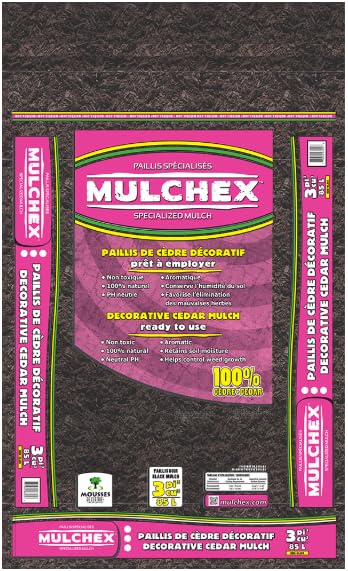
| Material | 100% cedar bark and cedar wood fiber |
|---|---|
| Bag volume | 3.0 Cu. Ft. |
| Intended use | Landscaping, gardens, potted plants |
This cedar mulch is a simple, aromatic option for dressing beds and paths. Made from 100% cedar bark and cedar wood fiber, it provides a natural source of slow-release nitrogen as it breaks down and a pleasant cedar scent while you work. The coarser bark and fiber textures help suppress weeds, retain soil moisture, and give beds a uniform dark appearance that complements many landscapes. It is best used as a 2 to 3 inch top dressing around ornamentals, trees, and shrubs or as a decorative layer in containers. Because cedar decomposes more slowly than softer mulches, you will need to replenish it less often, though it will not add nutrients as quickly as compost. The bag size suits small to medium jobs or touch-ups but requires multiple bags for larger areas. If you want an aromatic, longer-lasting bark mulch to improve soil moisture retention and curb appeal, this product does that reliably; if you need fast nutrient addition or a bulk commercial supply, consider other options.
Best for: Gardeners who want an attractive, longer-lasting bark mulch for small to medium beds and container projects and who value a natural aromatic product over rapid soil amendment.
Less Ideal for: People needing rapid nutrient-rich soil amendment or those covering large commercial areas where buying in bulk is the priority.
- 100% cedar bark and wood fiber for natural mulch benefits
- Aromatic cedar scent that makes handling more pleasant
- Slower decomposition means longer-lasting coverage and less frequent replenishment
- Helps retain soil moisture and suppress weeds with coarse texture
- 3.0 cu. ft. bag is small for large landscapes and requires many bags for full yard coverage
Verdict: Aromatic, longer-lasting cedar bark mulch that enhances bed appearance and conserves moisture for small to medium landscaping projects.
CountryMax Midnite Black Hardwood Mulch, 2 cu ft

| Manufacturer | CountryMax |
|---|---|
| Product type | Hardwood mulch |
| Volume per bag | 2 cu ft |
| Color | Midnite black |
CountryMax Midnite Black is a shredded hardwood mulch intended for flower beds, borders, trees, shrubs, and pathways where a dark, finished look is wanted. You spread it like any bagged mulch to create a 2 to 3 inch protective layer that helps retain soil moisture, moderate soil temperature, and suppress weeds. The rich black color provides strong visual contrast that highlights plants and makes beds look tidy. Being natural hardwood, it breaks down over time and adds organic matter to the soil rather than lasting as long as hardwood nuggets or rubber alternatives. This product is straightforward to use, available in portable 2 cu ft bags, and suitable for routine top-dressing or seasonal refreshes. Expect to replenish it periodically as pieces decompose and thin out; it is not a long-term permanent ground cover. Overall it delivers the look and basic performance most gardeners expect from a premium black hardwood mulch.
Best for: Gardeners who prioritize a reliable, attractive finish and straightforward performance for regular bed maintenance and seasonal refreshes.
Less Ideal for: People looking for a near-permanent ground cover or who need bulk quantities for large commercial projects should consider longer-lasting or bulk alternatives.
- Deep, consistent black color for strong visual contrast in beds
- Shredded hardwood texture that helps retain moisture and allow airflow
- Multipurpose for beds, borders, trees, shrubs and pathways
- Adds organic matter as it decomposes, improving soil over time
- Breaks down over time so requires periodic replenishing
- Sold in 2 cu ft bags which may be less convenient for large projects
Verdict: Choose this shredded midnite black hardwood mulch when you want a dependable, garden-ready black mulch that provides immediate curb appeal and basic moisture and weed control.
Home And Country USA Triple Shredded Black Hardwood Mulch, 2 cu ft Bag

| Material | Hardwood mulch |
|---|---|
| Bag volume | 2 cu ft |
| Origin | USA-sourced |
| Type | Triple shredded |
This triple-shredded black hardwood mulch is a straightforward choice for homeowners wanting a neat, low-maintenance finish in beds, borders and pathways. Sold in 2 cubic-foot bags, the product lays down evenly and provides good coverage for defining planting areas and pathways. The mulch is organic and USA-sourced, so it will gradually break down and contribute nutrients to the soil while helping retain moisture and reducing watering frequency. Its dark color gives a polished, high-contrast look that highlights plants and hides soil between refreshes. Practical benefits include weed suppression through light blockage and a texture that resists wind displacement better than very coarse mulches. Expect to refresh the top layer annually as it decomposes and to stir or rake to maintain an even appearance; color will fade over time like most natural mulches. This is a no-frills, garden-focused product that does what mulch is meant to do without added chemicals or gimmicks.
Best for: Homeowners who want a durable, low-maintenance black mulch to tidy beds and reduce watering and weed work while improving landscape appearance.
Less Ideal for: Gardeners seeking a permanent inorganic groundcover or instant color that will not change over time should consider alternatives like rubber mulch or colored landscape fabric.
- Triple-shredded texture spreads and settles evenly for tidy beds and clean edges
- Made from 100% natural, USA-sourced hardwood that contributes organic matter as it decomposes
- Helps retain soil moisture to reduce watering frequency
- Dark color provides strong visual contrast to plants and improves curb appeal
- Color will gradually fade and requires periodic refreshing to maintain intensity
Verdict: Choose this triple-shredded black hardwood mulch for reliable moisture retention and a clean, high-contrast look that simplifies bed maintenance.
Gardenera Black Mulch Cover, 3 Quarts

| Brand Name | Gardenera |
|---|---|
| Item Type Name | Black Mulch Cover |
| Volume | 3 quarts |
Gardenera Black Mulch Cover is a 3-quart decorative mulch meant for topping soil in garden beds, planters, and small landscape areas. It is applied by spreading a thin, even layer around plant bases to help retain soil moisture, moderate temperature, and reduce weed germination. The product emphasizes a clean, debris-free appearance and long-lasting black color to boost curb appeal. For small projects or touch-ups it is convenient and easy to handle, and it can be used indoors in containers as well as outdoors. The limited volume means multiple bags are required for larger beds, so it is best suited to patching or accenting rather than covering broad areas. Because the listing highlights natural materials and basic insulating benefits, buyers should expect standard organic mulch performance rather than engineered moisture- or nutrient-enhancing features. If you need a compact, visually neat mulch for small-scale work, this delivers; for full-yard covering expect higher cost and more frequent purchases.
Best for: Gardeners looking to refresh small beds, containers, or accent areas on a tight budget who prioritize appearance and simple moisture retention.
Less Ideal for: Landscapers or homeowners needing to cover large areas or seeking a nutrient-rich soil amendment should choose bulk mulch or larger bags instead.
- Clean, debris-free appearance ideal for decorative use in beds and containers
- Helps retain soil moisture and moderates soil temperature around plants
- Suppresses weed growth by forming a physical barrier
- Compact 3-quart size makes it easy to apply and store for small jobs
- Only 3 quarts per bag so not cost-effective for large beds
- Product description emphasizes appearance more than enhanced soil nutrients or long-term bulk
Verdict: A convenient small-format black mulch that works well for budget-friendly touch-ups and container or accent planting areas.
Black Wood Shredded Mulch, 2 cu ft bag (35 bags half pallet)

| Coverage | 8 sq. ft. at 3 in. D per bag |
|---|---|
| Bag volume | 2 cu. ft. |
| Finish | Black shredded wood |
This black shredded wood mulch is sold in 2 cubic foot bags and is intended for standard landscape uses like flower beds, walkways, and around shrubs. It provides an even, dark finish that boosts curb appeal and helps conserve soil moisture and moderate surface temperatures. The product is easy to handle in pre-bagged form, making staging and spreading simpler for homeowners or small crews. At roughly 8 square feet coverage per bag at a 3 inch depth, you can estimate quantities quickly for routine refreshes. Limitations include the typical lifespan of wood mulch compared with dyed engineered options and the need to replenish annually or biannually depending on exposure and decomposition. This mulch is not a soil amendment, so gardeners should plan to use it solely as a surface dressing rather than a source of nutrients.
Best for: Homeowners or maintenance-minded landscapers who want a low-effort, attractive surface mulch that reliably reduces evaporation and hides bare soil.
Less Ideal for: People seeking a long-term non-decomposing ground cover or a product that adds nutrients to the soil should consider alternatives.
- Consistent deep black color for improved curb appeal
- Bagged 2 cu ft packaging for easier transport and staging
- Helps retain soil moisture and suppress weed seed germination
- Covers about 8 sq ft at a 3 inch depth per bag for straightforward planning
- Will break down over time and requires periodic replenishing
Verdict: A convenient bagged black shredded mulch that reliably improves appearance while conserving soil moisture and making quantity planning simple.
GARDENWISE Premium Black Wood Mulch, 1.3 cu ft

| Brand | GARDENWISE |
|---|---|
| Item Type Name | Mulch |
| Volume | 1.3 cubic feet |
| Included Components | Black Wood Mulch |
GARDENWISE Premium Black Wood Mulch is a small, bagged mulch aimed at adding a finished look to beds and pots while helping with moisture retention and weed suppression. It is typically used as a top dressing for garden beds, around shrubs and trees, or as a decorative layer in containers and on pathways. The product comes in a 1.3 cubic foot bag that makes it convenient for spot projects or for gardeners who prefer to top up beds gradually. Practical benefits include improved soil moisture conservation, reduced weeds, and a uniform dark appearance that highlights plants. Because it is a bagged, processed wood mulch it is easy to spread without special equipment and is suitable for year-round use to help moderate soil temperatures. Limitations are the small bag volume for larger landscapes and the basic composition as wood mulch, which offers fewer long-term soil-amendment benefits than composted organic mulches or bark nuggets designed to last longer.
Best for: Gardeners who want an easy, tidy way to refresh beds, highlight plantings, or top up containers without buying bulk delivery; good for weekend DIYers and homeowners optimizing routine maintenance.
Less Ideal for: Large-property owners or landscapers who need to cover many beds quickly should choose bulk mulch options instead.
- Bagged 1.3 cu ft size is convenient for small projects and easy storage
- Dark black color provides consistent, polished appearance that contrasts plants
- Helps retain soil moisture and reduces frequency of watering
- Suppresses weed growth when applied at recommended depth
- Small bag size makes it inefficient for large landscapes
- Wood-only mulch provides limited long-term soil enrichment compared with composted options
Verdict: A handy, small-bag black wood mulch for homeowners who want a quick, low-effort way to refresh beds and containers with a clean, moisture-saving top layer.
Choosing the Right Black Bark Mulch: Key Factors to Consider
Material Composition
Black bark mulches can be made from whole bark, hardwood chips, pine, or mixed wood sources. Composition matters because hardwood bark tends to hold color longer and break down more slowly than softwood or finely shredded mixes. The source also affects pH interactions and the presence of natural oils that can influence plant roots. Knowing the base material helps you predict longevity and whether the mulch will need topping up more often.
For gardeners concerned about soil nutrition, pure bark adds little in the way of nitrogen as it decomposes compared with composted organic amendments. If you plan heavy mulching and want to avoid temporary nitrogen drawdown, choose coarser bark and apply a modest layer rather than incorporating fresh fines into the soil.
Color and Dye Stability
Black bark is often enhanced with colorants to achieve a deep black finish. Color stability varies with the dye method and the particle surface area. Coarse bark with intact pieces tends to retain dye better than fine, shredded material because there is less surface area for UV and rain to strip away pigments. Consider whether you prefer an intense instant look or a more natural, gradually mellowing appearance.
If maintaining a dark landscape palette is important to you, look for information about UV-stable treatments and whether the supplier tests for colorfastness. Remember that constant sun exposure and heavy rainfall will accelerate fading regardless of the dye used.
Particle Size and Texture
Particle size affects both aesthetics and function. Larger chunks create a rustic, textured look and allow good airflow to the soil surface, reducing compaction and mold risk. Finer grind produces a smoother, uniform bed but can compact and form a crust that sheds water less effectively. Particle uniformity also determines how easily you can rake and refresh beds without disturbing plants.
Think about the planting style: use chunkier bark around trees and shrubs where longer life and better airflow matter; choose finer bark for tight borders or container top-dressing where a neat appearance is preferred.
Decomposition and Maintenance Cycle
How fast mulch breaks down dictates how often you need to add more. Faster decomposition returns organic matter to the soil sooner but increases maintenance and can require topping up every season. Slow-decomposing bark reduces labor and cost over time but delays any soil-building benefits. The decomposition rate is influenced by particle size, moisture exposure, and local climate. In damp, cool climates, expect faster breakdown than in hot, dry ones.
Plan maintenance timing around spring or fall refreshes. If you want low-effort beds, choose coarser, denser bark and apply a deeper layer; if you want to boost soil organic matter, select a finer grade and accept more frequent replacements.
Moisture and Temperature Regulation
Mulch moderates soil moisture and temperature, protecting roots from extremes. Thick layers of coarse bark reduce evaporation and buffer daily temperature swings, which benefits established shrubs and trees. However, very fine mulch can hold surface moisture and increase the risk of fungal growth or collar rot in susceptible species. Consider how the mulch interacts with irrigation practices-mulch that sheds water lets light rain penetrate, while compacted fines may require deeper watering to reach roots.
Match mulch depth to plant needs. A typical ornamental bed benefits from a 2 to 3 inch layer; tree rings and larger shrubs can tolerate 3 to 4 inches. Avoid piling mulch directly against trunks or stems.
Application Practicalities
Ease of spreading, how well a mulch stays in place on slopes, and whether it stains walkways are important practical concerns. Chunkier bark is easier to keep in place on slight slopes and resists wind better. Fine mulches may migrate and create clean-up work around paths. Also consider whether the mulch comes in loose bulk, bagged format, or compressed bales; each format changes handling time and storage needs.
If staining of patios or pavers is a concern, test a small amount in an inconspicuous area or choose products noted for minimal wash-off. Think through access to the bed and how much raking and re-leveling you are willing to do each season.
How Mulch Affects Soil Life and Plant Health
Black bark mulch is not just decorative. As it weathers, it modifies the microclimate at the soil surface and influences microbial activity. Coarse bark preserves air space and supports a healthy balance of beneficial fungi and bacteria, while very fine mulch can compact and favor surface fungal growth.
Consider the types of plants in the bed when choosing mulch. Shallow-rooted perennials and vegetables typically prefer thinner, more breathable coverings. Woody ornamentals and trees tolerate thicker layers that conserve moisture and suppress weeds more effectively.
- Coarse bark improves aeration and reduces compaction.
- Finer mulch can speed up soil amendment but may require more upkeep.
- Mulch depth should vary with plant type and root depth.
Reducing Weed Pressure Without Excess Layering
Mulch suppresses weeds by blocking light and creating a physical barrier. A couple of inches of well-placed black bark will cut most annual weed germination while allowing water to penetrate. Overly thick layers can create anaerobic pockets and hide perennial weeds that will reemerge from roots.
For weed-prone areas, combine a modest application of bark with seasonal hand removal and targeted spot treatments. Mechanical weed removal before laying mulch improves outcomes and reduces the need for thick coverage.
- Apply 2 to 3 inches for beds, 3 to 4 inches for tree rings.
- Clear existing weeds before mulching to prevent entrapment.
- Refresh thin spots annually rather than layering excessively.
Winter and Seasonal Considerations
In cold climates, mulch insulates roots and prevents freeze-thaw heaving. Choose a mulch that maintains structure through winter so it does not compact into a mat that locks out oxygen. In wet climates, avoid very fine mulches that stay saturated for long periods.
Plan to check mulch in spring for compaction and signs of excess moisture. Raking to loosen the layer and adding fresh material only where needed keeps beds healthy and attractive through seasonal cycles.
- Mulch helps prevent frost heaving around perennials and small shrubs.
- Inspect for compaction and excess moisture in spring.
- Top up shallow areas after winter weather and erosion.
Environmental and Sourcing Notes
Where the bark comes from affects sustainability and consistency. Reclaimed or responsibly harvested bark reduces pressure on forests, while some bark byproducts can vary widely in particle size and contaminants. If environmental impact matters to you, ask about sourcing and whether the product is a byproduct of local milling operations.
Avoid mulches that contain construction debris, excessive fines, or non-wood fillers. Such contaminants reduce the horticultural benefits and can introduce unwanted chemicals into garden soils.
- Look for clear sourcing information and minimal contamination.
- Local materials reduce transport impact and often match regional needs.
- Avoid mixes that contain non-organic fillers or trash.
How We Chose the Best Black Bark Mulch
We focused on practical garden performance when selecting the shortlist for Best Black Bark Mulch. Our editorial filters prioritized material composition, long-term color retention, and decomposition rate because these determine how the mulch looks and behaves over a season. We evaluated particle size and consistency since chunkier bark resists compaction and sheds water differently than fine grind. We checked expected impacts on soil moisture and airflow to gauge how each option supports plant health. Application and maintenance considerations were included, such as ease of spreading and likelihood of staining hardscape. We excluded mixes that are heavily dyed or that combine large amounts of non-wood fillers, and we filtered out products intended only for playgrounds or erosion control rather than ornamental landscaping. The resulting criteria reflect what gardeners need to know: how the mulch will look, how long it will last, what it does to soil conditions, and how easy it is to manage in real garden settings.
FAQ
How deep should I apply Black Bark mulch around shrubs and perennials?
A general recommendation is 2 to 3 inches for flower beds and 3 to 4 inches around trees and larger shrubs. Thinner layers allow better air exchange for shallow-rooted plants, while slightly deeper layers conserve moisture around woody plants. Avoid piling mulch against stems or trunks to prevent rot.
Will black dye harm my plants or soil?
Dyes used in landscape mulches are typically colorants bonded to wood particles and do not usually harm plants when products are intended for landscaping. That said, heavily applied fresh dye can stain hard surfaces and may wash off initially. If you are concerned, choose undyed bark or test a small area before wide application.
How often will I need to replenish bark mulch?
Replenishment depends on particle size and climate. Coarser bark often lasts multiple seasons before needing top-up, while finer shredded mulch may require annual refreshes. Inspect beds each spring and add material to maintain recommended depths and replace areas that have decomposed.
Can I use Black Bark mulch in vegetable gardens or only ornamental beds?
Black bark mulch can be used in vegetable gardens for permanent perennial beds and paths, but for annual vegetable rows it is better to use mulches that do not risk nitrogen drawdown or that are easier to incorporate at season end. If you use bark in food gardens, leave a small gap at stems and supplement soil with compost to balance nutrients.
Does Black Bark mulch attract pests or rodents?
Bark can provide cover that some small animals use, but it does not inherently attract pests. Avoid piling mulch against building foundations or directly against plant stems, and keep compost and food waste separate to reduce pest shelter. Regular inspection and appropriate mulch depth reduce pest-harboring opportunities.
Final Verdict
Choosing the best Black Bark mulch means balancing appearance with function. Prioritize particle size and decomposition rate according to how much maintenance you want to do, and select a product with dye stability if a long-lasting dark bed is important. Match mulch depth to plant type and keep mulch away from stems and trunks. With those tradeoffs in mind, you can pick a bark mulch that delivers the color and soil benefits your landscape needs while keeping upkeep manageable.
