

Note: This article contains affiliate links. If you click on these links and make a purchase, I may earn a small commission at no extra cost to you. This helps support my research and content. Read my full affiliate disclosure here.
If you care about tidy beds, steady moisture, and faster soil improvement, choosing the right finely shredded mulch matters. Finely shredded mulch behaves differently than chunkier bark: it mats faster, settles closer to stems, and integrates into the topsoil more readily. That makes it a good choice for annual flower beds, vegetable plots, and situations where you want quicker organic matter incorporation. This guide shortlists the top finely shredded mulches for those garden goals. We evaluated options on key practical grounds gardeners notice most-durability in place, effect on soil biology, and ease of application-so you can pick a mulch that fits your bed habits and maintenance rhythm. Read on for the selection criteria and factors to weigh before you spread.
Top Picks at a Glance
| Best Overall The best all-around choice for most situations | CountryMax Natural Shredded Hardwood Mulch, 2 cu ft |  |
| Best Quality Built to a higher standard if you want something more solid | Home & Country USA Premium Triple Shredded Hardwood Mulch (2 cu ft) |  |
| Best Value The sweet spot between price and what you get | BRUT Worm Farms Organic Aspen Mulch, 10 Quart |  |
| Best Budget The cheapest option that still gets the job done reliably | GARDENWISE Premium Brown Wood Mulch (0.2 cu ft) |  |
| Most Popular A crowd favorite that many people choose with confidence | Back to the Roots Organic Mulch, 1 Cubic Foot |  |
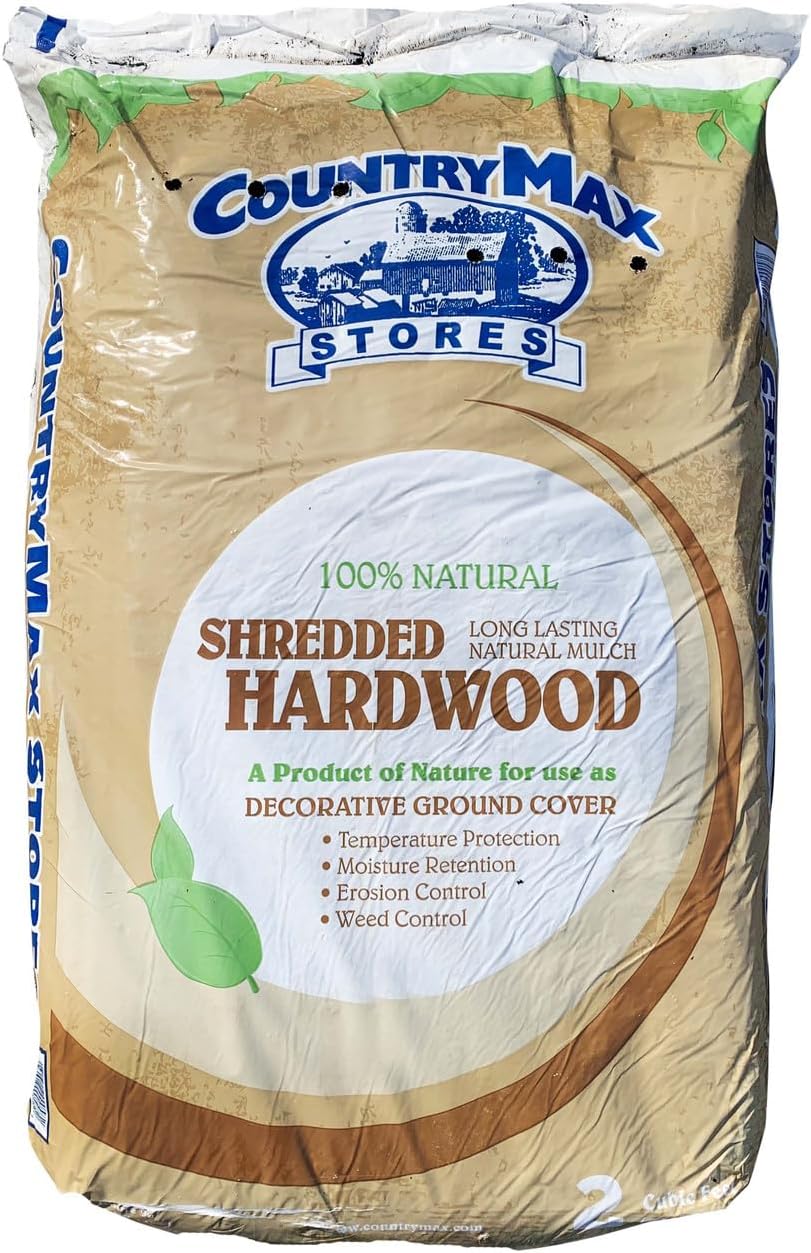
CountryMax Natural Shredded Hardwood Mulch, 2 cu ft
| Manufacturer | CountryMax |
|---|---|
| ASIN | B072YXFMCW |
| Product description | Natural Shredded Hardwood Mulch, 2 Cu. Ft. |
CountryMax Natural Shredded Hardwood Mulch is a basic, no-frills shredded hardwood product sold in 2 cubic foot bags for use around beds, borders, trees, shrubs, and pathways. In practice it lays down easily, provides an attractive natural wood look, and helps retain soil moisture and moderate soil temperature. The shredded texture packs reasonably well to form a protective layer that suppresses many weeds and reduces evaporative loss. Because it is plain hardwood without dyes or added ingredients, it is a straightforward choice for buyers who prefer simple, natural materials. Limitations for playground use include lack of engineered impact absorption and variable particle sizes typical of shredded hardwood, so it is not a replacement for certified playground safety surfacing. Also the 2 cu ft bags require multiple bags to cover larger areas and will need occasional replenishing as it decomposes over time.
Best for: Buyers who want a simple, natural hardwood mulch for garden beds and landscape borders and who prioritize predictable, conventional materials over specialty or certified playground surfacing.
Less Ideal for: People looking for certified playground safety surfacing or high-impact playground cushioning should choose purpose-made mobility and fall-attenuating materials instead.
- Natural hardwood composition with no dyes or additives
- Shredded texture sheds water and helps retain soil moisture
- Attractive natural wood tones that blend with landscaping
- Packaged in 2 cu ft bags for manageable handling
- Not engineered for impact attenuation or playground safety standards
- Bag size means many bags are required for larger coverage
- Will decompose over time and require periodic top-up
Verdict: A straightforward natural shredded hardwood mulch best for general landscaping where a simple, dye-free material is desired rather than a certified playground surface.
Home & Country USA Premium Triple Shredded Hardwood Mulch (2 cu ft)

| Volume | 2 cubic feet |
|---|---|
| Unit Count | 1 Count |
| Item Type Name | Mulch |
| Manufacturer | Home and Country USA |
This premium triple-shredded hardwood mulch is designed for homeowners and landscapers who want durable, long-lasting coverage with a natural look. It is typically spread 2 to 3 inches deep around flower beds, trees, and garden borders to suppress weeds, conserve soil moisture, and moderate soil temperature. The triple shredding gives good coverage and a tidy finished appearance while breaking down gradually to add organic matter to soil. Because it is made from 100% USA-grown organic hardwood, it supports soil biology as it decomposes and helps retain water in hot, dry spells. Practical benefits include easier maintenance due to fewer weeds and reduced watering frequency, plus a consistent texture that lays flat and resists blowing. Limitations are that color will fade over time and the product will decompose slowly so annual top-ups are likely for peak appearance and performance; also small packaging volume means multiple bags are needed for larger projects.
Best for: Buyers focused on landscape performance who want a durable, natural hardwood mulch that improves soil health, reduces watering, and cuts weed maintenance.
Less Ideal for: Those needing a single bulk delivery for very large projects or buyers who want a permanently colored decorative mulch should look elsewhere.
- Triple-shredded texture provides even coverage and a clean finished look
- Made from 100% USA-grown organic hardwood that contributes organic matter as it decomposes
- Helps retain soil moisture and reduce watering needs
- Suppresses weed germination by creating a light-blocking barrier
- Small 2 cubic foot volume means multiple bags required for large areas
- Color will naturally fade and requires occasional refresh to maintain appearance
Verdict: Choose this triple-shredded hardwood mulch when you want a performance-oriented, natural mulch that improves soil health while suppressing weeds and conserving moisture.
BRUT Worm Farms Organic Aspen Mulch, 10 Quart

| Unit Count | 192 Ounce |
|---|---|
| Volume | 10 quarts |
| Style Name | Moisture-retaining |
| Certified Organic | OMRI-listed |
BRUT Organic Aspen Mulch is a fine-texture aspen bark mulch formulated to hold moisture, reduce weed pressure, and slowly add organic carbon to soil. It is applied as a top dressing around garden beds, pathways, or potted plants where you spread a thin layer to protect soil and conserve water. The product is OMRI-listed and described as odor-free and lightweight, which makes it convenient for indoor containers as well as outdoor borders. Its 30% carbon content supports beneficial microbes without drawing down nitrogen, so it helps long-term soil structure while decomposing slowly. Practical benefits include reduced watering frequency, a neater bed appearance, and gentle nutrient contribution that complements regular fertilizing. Important limitations are the small 10 quart volume per bag, which means multiple bags are needed for larger beds, and that it is primarily a surface mulch so it does not replace nutrient-rich soil amendments for heavy feeding tasks.
Best for: Gardeners who want a low-maintenance, organic mulch to conserve water, tidy beds, and slowly improve soil structure in small to medium beds or containers.
Less Ideal for: Large-scale landscapers or gardeners needing bulk mulch coverage or immediate high-nutrient soil amendments should consider larger-volume or nutrient-dense products.
- Odor-free fine aspen bark suitable for indoor and outdoor use
- High moisture retention reduces watering frequency
- OMRI-listed organic material that adds carbon to soil
- Lightweight and easy to spread for quick top-dressing
- Small 10 quart unit is insufficient for large beds without buying multiple bags
- Provides mainly carbon-rich mulch rather than concentrated nutrients
Verdict: A tidy, odor-free organic aspen mulch that conserves water and improves soil health best for small to medium garden beds and containers.
GARDENWISE Premium Brown Wood Mulch (0.2 cu ft)
| Brand | GARDENWISE |
|---|---|
| Included Components | Brown Wood Mulch |
| Volume | 0.2 cubic feet |
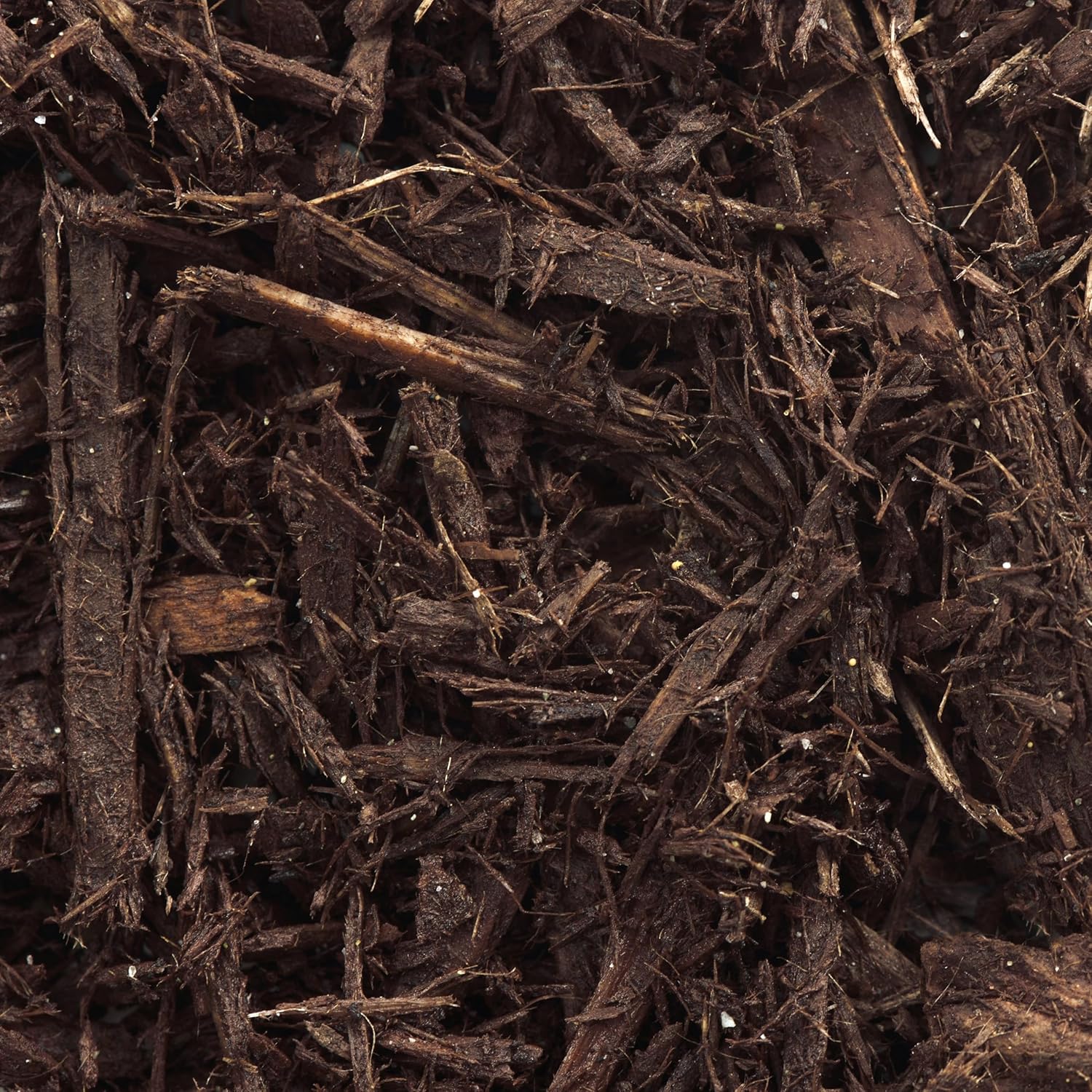
GARDENWISE Premium Brown Wood Mulch is a compact 0.2 cubic foot bag of shredded wood designed for use in garden beds, around shrubs, and in planters. It functions as a decorative top layer that reduces weed growth, helps the soil retain moisture, and moderates soil temperature for plant roots. Typical use is applying a 1 to 2 inch layer over soil after planting or around established plants; the small bag size makes it convenient for spot repairs, container gardening, or sampling before committing to larger quantities. The product’s main benefits are its neat brown appearance and versatility for indoor and outdoor use. Because the package is small, it is easy to handle and store but requires many bags to cover even a modest bed, so it works best for small projects rather than large landscapes. There is no technical specification about wood type or longevity, so expect typical shredded wood decomposition and occasional replenishment over a season or two.
Best for: Buyers looking for an inexpensive, easy-to-handle mulch for small garden projects, container plants, or touch-ups who prioritize convenience and low upfront cost.
Less Ideal for: People planning to mulch large beds or whole-yard projects who prefer to cover wide areas with a single purchase.
- Small 0.2 cu ft bag is easy to carry and store for spot jobs and containers
- Helps suppress weeds and retain soil moisture when applied as a top layer
- Attractive brown color provides a natural, finished look for beds and pots
- Suitable for indoor and outdoor use, including potted plants
- Very small volume means multiple bags are needed for larger areas
- No detailed information on wood type or expected longevity
Verdict: A budget-friendly small bag of shredded brown wood mulch best suited for spot treatments, containers, and small garden projects.
Back to the Roots Organic Mulch, 1 Cubic Foot

| Brand Name | Back to the Roots |
|---|---|
| Item Highlight | Premium organic garden mulch; peat-free; 25.7 quart bag |
| Unit Count | 16 Ounce |
| Volume | 23 cubic centimeters |
This organic mulch from Back to the Roots is a peat-free, upcycled plant-matter blend intended for beds, containers, and around shrubs and trees. It includes dolomitic limestone to help balance pH, yucca extract to improve moisture control, and gypsum to aid water absorption, so it both conserves moisture around root zones and contributes modest nutrients. Typical use is spreading a 2–3 inch layer around bushes, avoiding direct trunk contact, or mixing into the topsoil when planting. Its organic base and added plant food make it a good choice for supporting healthy growth and reducing watering frequency. Limitations to keep in mind are the bag size and volume relative to larger beds and that it is formulated as a general mulch rather than a heavy-duty long-lasting bark product, so it may break down faster and need replenishing more often.
Best for: Gardeners who want an eco-conscious, peat-free mulch that improves moisture retention and supports plant health around bushes and in raised beds.
Less Ideal for: People looking for a coarse, long-lasting decorative bark mulch or a single large bag solution for extensive shrub beds.
- Peat-free organic blend made from upcycled plant matter and wood fines
- Contains yucca extract for improved moisture retention and gypsum for better water absorption
- Includes dolomitic limestone to help adjust and stabilize soil pH
- Formulated with all-purpose plant food to support growth of vegetables, herbs, and shrubs
- Bag volume is relatively small for large or multiple bush beds so more bags may be needed
- Breaks down faster than coarse bark mulches and will require periodic replenishment
Verdict: Choose this peat-free organic mulch when you want an eco-friendly, moisture-saving soil cover that also supplies mild nutrients to bushes and raised beds.
Choosing the Right Finely Shredded Mulch: Key Factors to Consider
Particle Size and Consistency
How uniformly the mulch is shredded affects both appearance and function. Finer particles settle and pack more closely against stems and soil, which helps retain moisture but raises the risk of matting. A consistent fine texture spreads evenly and avoids pockets that trap air or hold excess water.
Gardeners should check for mixed fractions. A well-processed finely shredded mulch will have predictable decomposition and will be easier to rake or top up without leaving large chunks that break the bed profile.
Decomposition Rate and Soil Building
Finely shredded materials break down faster than coarse bark, contributing organic matter to the topsoil. That accelerates nutrient cycling and improves tilth but means you will need to replenish mulch more often. Faster decomposition is useful in vegetable beds or annual flower areas where gardeners want quick soil improvement.
Consider how often you want to reapply mulch. If you prefer a low-maintenance layer that lasts several seasons, a slower-breaking product or a mixed-size mulch might be a better fit than the finest shredded options.
Moisture Management
One of the main reasons gardeners choose finely shredded mulch is water conservation. Fine particles form a closer cover that reduces surface evaporation and evens soil temperature. At the same time, very fine mulches can compact and reduce surface permeability if applied too heavily.
Aim for a balance: enough depth to shade soil and slow evaporation but not so much that water ponding or poor gas exchange occurs. How you water-drip, soak, or overhead-also affects how a fine mulch performs between irrigation cycles.
Weed Seed and Contaminant Control
Quality control during processing matters because fines can include weed seeds, small sticks, or foreign matter. A cleaner, screened product reduces the chance of introducing new weeds to beds and minimizes messy bits that interfere with planting or seedling emergence.
Inspect product documentation or ask about screening practices when possible. For sensitive areas such as vegetable gardens, choose mulches that are known to be low in seed content and free of treated wood or contaminants.
Application and Maintenance Practicality
Finer mulches are lighter and easier to spread by hand or with a blower, but they also produce more dust during handling and can wash away more readily on slopes. Consider how you will transport, spread, and maintain the mulch through rain, wind, and seasonal chores.
Think about edge maintenance too. Fine mulch is easier to pull back for weeding and planting but may require more frequent topping-up. If you use a tiller or hoe nearby, plan for migration of fines into adjacent beds and pathways.
Compatibility With Plants and Beds
Some plants prefer drier, coarser mulches while others benefit from the close contact and faster nutrient return of fine mulch. Finely shredded mulch works well around annuals, perennials that tolerate close crowns, and vegetable beds, but it can be problematic for plants prone to crown rot if piled against stems.
Maintain a planting buffer around trunks and crowns and monitor moisture around susceptible species. Choose a mulch depth and renewal cadence that suits the plants and microclimate of your beds.
How Finely Shredded Mulch Affects Soil Biology
Finely shredded organic matter feeds microbes more quickly than coarse material. As microorganisms break down the small particles, they release nutrients and help build a loose, crumbly surface layer that encourages root growth. That microbial activity also improves soil structure and water infiltration over time.
Because decomposition is active near the soil surface, gardeners may notice a short-term drawdown of nitrogen in heavy applications. That effect is usually minor in balanced soils but can be mitigated by applying moderate mulch depths and adding a light sidedressing of compost or balanced fertilizer when planting heavy feeders.
- Speeds incorporation of organic matter into the top few inches of soil
- Promotes microbial activity useful for vegetable and annual beds
- May require occasional nutrient top-up for nitrogen-hungry plantings
Best Depths and Application Techniques
For most finely shredded mulches, 1 to 2 inches provides moisture benefits without excessive matting. Apply thinner layers in areas with poor drainage and slightly deeper where the soil dries quickly. Avoid piling mulch directly against stems and trunks to reduce rot risk.
Spread mulch in a single even layer using a rake or gloved hands, then water lightly to settle it. Reapply small amounts each season rather than a very deep initial layer to limit compaction and maintain airflow.
- 1 to 2 inches for flower beds and vegetable rows
- Leave a 1- to 2-inch mulch-free collar at stems and trunks
- Top up annually rather than applying very deep layers at once
Managing Fine Mulch on Slopes and High-Rain Sites
Fine particles can move downhill during heavy rain unless anchored by plants or biodegradable mesh. In sloped beds, combine fine mulch with larger particles near the surface or use terracing and plant mats to reduce runoff. Dense plantings also help hold fines in place as roots develop.
On very wet sites, choose mulches that allow quick drainage or reduce application depth. Where erosion is a significant concern, consider integrating straw or coir netting temporarily until roots establish.
- Use mixed-size layers or anchoring methods on slopes
- Reduce depth in high-runoff areas to prevent washout
- Plant groundcovers to stabilize fine mulch once rooted
Timing Mulch Application With Seasonal Tasks
Apply finely shredded mulch after beds are weeded and soil temperatures begin to moderate. Early spring application helps conserve moisture for seedlings but wait until the soil has warmed enough for new roots. Late fall mulching can protect soil structure over winter but apply a lighter layer to avoid winter crusting.
Coordinate mulch renewal with compost topdressing or planting schedules to minimize disturbance. A light spring top-up after soil-thaw often provides the best balance for many temperate gardens.
- Spring and early fall are ideal for most applications
- Avoid heavy winter layering where freeze-thaw could form crusts
- Top up after planting rather than before to avoid smothering seedlings
Common Mistakes to Avoid
Applying too deep a layer is the most frequent problem with finely shredded mulch. Depths greater than about 3 inches increase matting and can limit oxygen exchange at the soil surface. Another common mistake is leaving mulch piled against plant stems, which increases disease risk.
Using contaminated or untreated industrial wood waste can introduce chemicals or persistent debris into beds. Choose mulches intended for garden use and follow best practices for storage and handling to reduce dust and seed contamination.
- Do not exceed recommended depths for the site
- Keep mulch away from crowns and trunks
- Avoid unvetted construction or demolition wood as garden mulch
How We Chose the Best Finely Shredded Mulch
We focused on attributes gardeners will see in the first season and over the long term. Our selection filtered for mulches formulated or processed to a uniformly fine texture to ensure consistent performance close to plant crowns. We prioritized mulches that maintain moisture without forming an impermeable crust, integrate into soil at a predictable rate, and show minimal contamination from sticks, weed seeds, or fines that cause matting. Evaluation criteria included particle consistency and persistence, ability to retain moisture while allowing air exchange, impact on soil biology and nutrient cycling, and application practicality including dust and mess during spread. We excluded materials that are primarily decorative chips or large bark pieces, and any mulch types intended mainly for erosion control rather than bed health. Safety and common gardening compatibility were also considered, so we did not include mulches known to carry high pathogen or invasive seed risk. Those filters guide the picks and align with the scoring metrics used across each option.
FAQ
How deep should I apply finely shredded mulch in a vegetable bed?
Usually 1 to 2 inches is sufficient for vegetable beds. That depth conserves moisture and weeds while avoiding excessive matting that can hinder seedlings and slow water penetration.
Will finely shredded mulch make my soil soggy?
Fine mulch can increase surface moisture retention but may reduce surface permeability if applied too thickly. Maintain recommended depths and ensure good soil drainage to avoid waterlogging.
How often will I need to top up finely shredded mulch?
Expect to refresh finely shredded mulch annually in many gardens because it decomposes faster than coarse bark. The actual frequency depends on the material and your soil biology.
Is finely shredded mulch safe around tree trunks?
Keep a mulch-free collar of an inch or two around tree trunks. Finely shredded mulch placed directly against trunks can hold moisture and increase the risk of bark decay and pests.
Can I use finely shredded mulch on slopes?
You can, but take precautions. Use mixed particle sizes, terracing, or temporary netting to reduce washout on steep sites and avoid very deep applications that are prone to movement.
Will finely shredded mulch add nutrients to my soil?
Yes, as it breaks down it contributes organic matter and nutrients. Decomposition is faster with fine mulch, so it is a useful tool for building topsoil but may require periodic nutrient supplementation for heavy-feeding crops.
Final Verdict
Finely shredded mulch is a practical choice when you want faster soil improvement, close moisture control, and a tidy bed appearance. Prioritize a product with consistent particle size, moderate decomposition rate, and low contamination to avoid common issues like matting and weed introduction. Balance depth and renewal frequency against your plants and site conditions: apply thin, even layers, leave space at crowns, and plan for annual top-ups in many beds. With those tradeoffs in mind, you can choose a finely shredded mulch that improves soil and reduces maintenance without creating new problems.
