

Note: This article contains affiliate links. If you click on these links and make a purchase, I may earn a small commission at no extra cost to you. This helps support my research and content. Read my full affiliate disclosure here.
If you want a plant-based topical that can soothe irritated skin, reduce visible redness, or support a clearer complexion, choosing the right organic neem oil matters. Oils marketed for skin vary widely in how they are processed, how pure they are, and whether they are suitable for direct application or require dilution. This guide covers the top shortlisted options for Organic Neem Oil for Skin and explains the practical differences that matter in a home skincare routine. We evaluate each choice on safety for topical use, purity of extraction, and how easy the oil is to blend into skincare formulations.
Top Picks at a Glance
| Best Overall The best all-around choice for most situations | Gya Labs USDA Organic Neem Oil, 3.4 fl oz |  |
| Best Quality Built to a higher standard if you want something more solid | Verdana Organic Neem Oil, 32 fl oz — Cold-Pressed 100% Pure Neem Seed Oil |  |
| Best Budget The cheapest option that still gets the job done reliably | The Organic Forest 100% Pure Cold-Pressed Neem Oil |  |
| Highest Rated A top-rated pick with lots of positive feedback | SVA Organics Neem Seed Carrier Oil, 32 fl oz (Cold-Pressed Organic) |  |
| Most Popular A crowd favorite that many people choose with confidence | Kate Blanc Cosmetics Organic Neem Oil (4 oz) |  |
Gya Labs USDA Organic Neem Oil, 3.4 fl oz

| Volume | 3.4 fl oz |
|---|---|
| Ingredient | Neem Oil |
| Manufacturer | Gya Labs |
This bottle of USDA Organic Neem Oil is a single-ingredient carrier oil intended for topical use on skin, hair, scalp, and nails. In practice it is used sparingly: a few drops massaged into dry patches, worked into mid-lengths and ends for frizz control, or applied to the scalp a couple evenings a week to condition and reduce flaking. The product is unrefined so it has a noticeable earthy aroma that fades as the oil absorbs. Being cold-pressed and pure makes it suitable for diluting essential oils or adding to creams and balms as a base. Practical benefits include concentrated moisturization without a heavy film when used in small amounts and versatility across skincare and haircare routines. Important limits are that neem oil is potent so it should be patch-tested first and it is not formulated for ingestion; some people with sensitive skin or during pregnancy should check with a clinician. Bottle size and drop control are adequate for home use but careful dosing is needed to avoid greasiness.
Best for: Buyers who want an organic, multiuse carrier oil to add targeted hydration to dry skin and to condition hair and scalp while also serving as a base for DIY blends and treatments.
Less Ideal for: People seeking a fragrance-free cosmetic or a pre-formulated skincare product with added actives should look for tailored serums or lotions instead.
- USDA Organic, single-ingredient neem seed oil suitable as a carrier oil
- Cold-pressed unrefined formulation retains natural constituents for skin and hair care
- Versatile: can be used on face, body, scalp, hair, nails, or mixed into creams and blends
- Concentrated moisturizing effect when used sparingly prevents a heavy residue
- Strong earthy scent that some users may find off-putting
- Potent oil that requires patch testing and dilution for sensitive skin
Verdict: A versatile USDA organic neem seed carrier oil that gives concentrated, natural hydration for skin and hair and doubles as a reliable base for DIY blends.
Verdana Organic Neem Oil, 32 fl oz — Cold-Pressed 100% Pure Neem Seed Oil

| Volume | 32 fl oz |
|---|---|
| Processing | Cold pressed |
| Purity | 100% pure neem seed oil |
| Certification | USDA Certified Organic |
Verdana Organic Neem Oil is a cold-pressed, unrefined neem seed oil sold as a concentrated, multi-purpose carrier oil for skin, hair, pet care, and garden use when diluted. For plant applications you mix a small measured amount with water and mild soap to make a foliar spray that wets both leaf surfaces; the concentrate means a little product treats many gallons. The oil’s cold-pressed processing preserves natural constituents and aroma, which is useful when you want an untreated botanical rather than an extracted solvent product. Practical benefits include versatility across cosmetic and horticultural tasks, USDA organic sourcing, and availability in a larger 32 oz size for repeated garden treatments. Important limitations are that it must be diluted before applying to plants or pets and its strong scent may be noticeable when used indoors; users should follow dilution ratios and test a small area first. The package is straightforward and concentrated dosing rewards careful measuring rather than freehand pouring.
Best for: Gardeners and plant hobbyists who prioritize an organic, high‑potency botanical treatment and want a product that doubles for personal-care formulations.
Less Ideal for: People who need a ready-to-use spray or want a fragrance-free option out of the bottle should consider pre-diluted products or odor-masked alternatives.
- Cold-pressed and unrefined preserving natural neem constituents
- USDA certified organic, no additives or solvents listed
- Concentrated formulation so small amounts treat large volumes
- Versatile for plants, skin, hair, and pet shampoo dilution
- Strong natural odor that can be noticeable indoors
- Requires dilution and precise measuring before plant or topical use
Verdict: Choose this concentrated cold-pressed neem oil if you want an organic, high-strength botanical that stretches across garden and personal-care uses.
The Organic Forest 100% Pure Cold-Pressed Neem Oil

| Ingredients | 100% Pure Neem Oil |
|---|---|
| Directions | Apply a few drops to hair and scalp, leave 30 minutes before washing |
| Manufacturer | The Organic Forest |
This bottle of cold-pressed neem oil is a straightforward, multiuse carrier oil for skin and hair care that can also be applied to plants as a natural pest deterrent. In practice it is used sparingly—few drops diluted into a carrier or mixed into creams, masks, or scalp treatments—to take advantage of neem's nourishing and conditioning properties. The product is presented as pure neem oil with vegan and non-GMO claims and comes with simple directions for topical hair use. For skin and hair routines it provides concentrated nourishment and can be blended with other oils or cosmetics; for plant care it offers a chemical-free option to help repel insects. Limitations to expect are the strong natural scent and the need to dilute before widespread skin application to avoid irritation, and the small bottle size means frequent buyers will need replacements. Overall it is a practical, no-frills neem oil for someone looking to add an organic, multipurpose oil to basic personal care and garden toolkits.
Best for: Buyers who want an affordable, single-ingredient organic neem oil to try in simple skin and hair routines or as a natural plant care option without complex ingredient lists.
Less Ideal for: Those seeking a ready-to-use skincare product with fragrance masking or formulated dilutions should look for finished lotions or blends instead.
- 100% pure cold-pressed neem oil suitable as a carrier oil for skin and hair
- Vegan and non-GMO labeling supports clean beauty preferences
- Multiuse: can be added to skincare, hair masks, or used as a natural plant pest deterrent
- Strong natural odor that some users may find unpleasant
- Small bottle size means frequent replacement for regular users
Verdict: A simple, organic cold-pressed neem oil that lets budget-minded buyers add a versatile natural carrier oil to basic skin, hair, and plant care routines.
SVA Organics Neem Seed Carrier Oil, 32 fl oz (Cold-Pressed Organic)
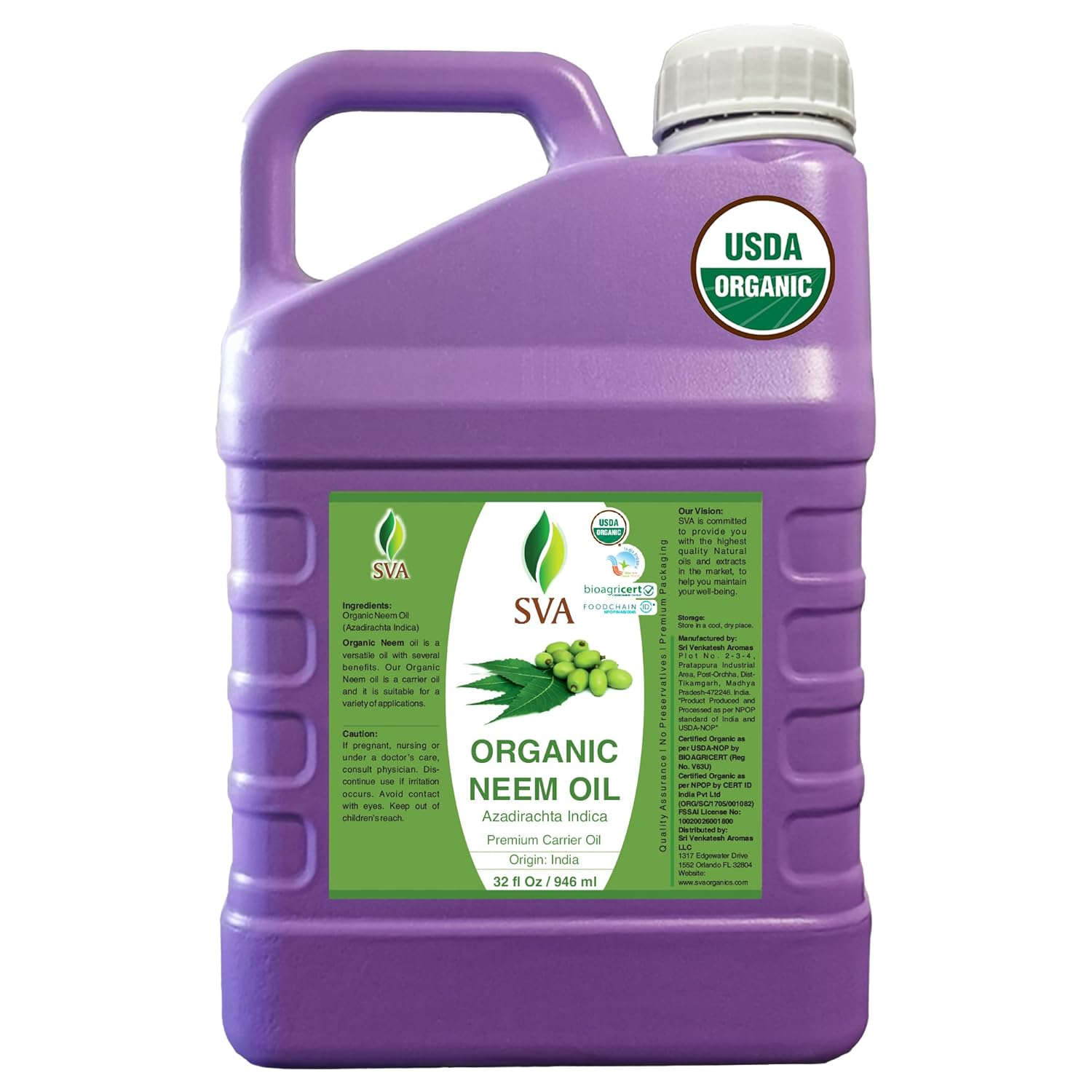
| Capacity | 32 Fluid Ounces |
|---|---|
| Extraction | Cold-pressed |
| Intended use | Skin, hair & body |
| Preservatives | None |
This 32 fl oz bottle of SVA Organics Neem Seed carrier oil is a cold-pressed, organic option for skin, hair, and bodycare routines or for blending with essential oils. It is typically used by applying a few drops to the palm and massaging into the scalp, face, or body, or by diluting into lotions and massage blends. The oil’s strong, herbaceous aroma is natural for neem and signals unrefined processing; buyers get a preservative-free product meant for topical use only. Practical benefits include a large volume that reduces the need for frequent repurchase and the flexibility to use it neat for targeted treatments or mixed as a carrier for essential oils. Important limitations are the pronounced natural odor that some will find off-putting and the need to patch-test because neem can irritate sensitive skin; instructions advise consulting a physician if pregnant or nursing. The bottle does not list an included dropper or pump, so decanting into smaller dispensers is useful for daily application.
Best for: For buyers who prioritize a reliable, unrefined organic carrier oil they can use regularly for skin and hair routines or to mix with essential oils and massage blends.
Less Ideal for: Not a good fit for users seeking a fragrance-free or lightly scented cosmetic oil or those who prefer ready-to-use dispensing (pump or dropper) in small daily-use sizes.
- Cold-pressed organic neem seed oil suitable for topical use and blending with essential oils
- Large 32 fl oz volume reduces refill frequency for regular users
- Preservative-free formulation and not tested on animals
- Versatile for scalp, hair, skin, massage, and DIY body-care formulations
- Strong natural herbaceous odor that many users may find unpleasant
- No built-in dropper or pump in the listing which makes precise dispensing harder
Verdict: Buy this if you want a large-quantity, cold-pressed organic neem carrier oil for dependable everyday skin, hair, and DIY blend use.
Kate Blanc Cosmetics Organic Neem Oil (4 oz)

| Net volume | 4 oz |
|---|---|
| Certification | USDA Organic |
| Processing | Hexane free |
This 4 oz bottle of Kate Blanc Cosmetics neem oil is a multipurpose organic concentrate intended for topical, hair, and plant care. The product is USDA certified organic and hexane free, which matters if you prioritize minimal processing and clean sourcing. In practice you can dilute small amounts into carrier oils or creams for skin and hair treatments or mix with water and mild soap for an indoor plant spray. Expect a pronounced earthy, garlic-like odor and possible pastiness in cold weather that will liquefy at room temperature. Its nutrient profile makes it useful for soothing dry, irritated skin and adding shine to hair when used sparingly. The bottle size is convenient for trialing neem without committing to a large supply, but you will need to patch test for sensitivity and dilute it for facial use to avoid irritation. The product is straightforward for gardeners to mix for occasional indoor plant applications, though the scent can linger after use.
Best for: Buyers who want a certified organic, minimally processed neem oil to test for skincare and occasional indoor plant use and who value third-party certification and ingredient transparency.
Less Ideal for: People who need an odorless topical oil, who prefer ready-to-use diluted sprays, or who require large-volume supplies for extensive outdoor gardening.
- USDA organic certified and hexane free processing
- Versatile for skin, hair, and indoor plant applications
- Concentrated formula lets you dilute to suit different uses
- Strong natural odor that some users find unpleasant
- Solidifies or becomes pasty in cold temperatures requiring warming before use
Verdict: Choose this organic neem oil if you want a small, certified, pure concentrate to try for skin, hair, and indoor plant care.
Choosing the Right Organic Neem Oil for Skin: Key Factors to Consider
Extraction Method and Purity
How the oil is extracted affects both its safety and skin-friendly profile. Cold-pressed neem oil retains more of the plant's natural compounds without introducing solvent residues, which is important when the oil will be applied to skin. Solvent-extracted products may carry traces of processing chemicals and can also alter scent and color.
Labels that specify organic certification or describe solvent-free processing give more confidence for topical use. Purity also influences how the oil performs in blends and how likely it is to cause irritation when diluted appropriately.
Topical Safety and Label Guidance
Products intended for skin should include clear labeling about dilution ratios, patch test recommendations, and contraindications. Neem oil contains concentrated botanical compounds that can irritate sensitive skin when used neat. A product that offers explicit guidance on safe use for adults, baby-safe guidance where applicable, and allergy warnings helps you integrate it confidently into your routine.
Check for directions that mention carrier oils, suggested concentrations for acne or eczema care, and whether the manufacturer recommends professional consultation for pregnant or nursing users.
Aroma, Sensory Profile, and User Comfort
Neem oil has a characteristic bitter, herbal scent that some people find strong. For facial or body applications, the intensity and persistence of the aroma matter because they affect daily wearability. Oils that are lighter in odor or that blend smoothly with common carrier oils will be easier to accept in a skincare regimen.
Texture also affects application. Some neem oils are thick and tacky, requiring more dilution to avoid a greasy finish. Consider how the oil will feel when mixed into serums, creams, or massage oils and whether you prefer fast-absorbing blends.
Formulation Compatibility and Blending
You will often use neem oil mixed into carrier oils, creams, or formulations rather than full-strength. Look for oils that state compatibility with commonly used carriers like jojoba, sweet almond, or fractionated coconut oil, and that provide recommended blend ratios. Compatibility affects stability, spreadability, and how the active compounds interact with other ingredients.
If you plan to make custom serums or spot treatments, choose an oil that is easy to measure and blends homogeneously without separating over time.
Packaging, Storage, and Shelf Life
Botanical oils are sensitive to light and oxygen. For skincare use, packaging that protects the oil from oxidation extends shelf life and preserves beneficial compounds. Dark glass bottles, tight caps, and small sizes that match your usage rate are practical choices.
Storage instructions and a clear best-by date are helpful indicators of product reliability. An oil that arrives already oxidized or in clear plastic packaging may have reduced effectiveness and a stronger, unpleasant odor.
Label Transparency and Sourcing
Knowing where the neem was grown and how it was processed provides insight into consistency and quality. Transparent labels that list the botanical name, country of origin, and whether the plants were organically grown allow you to assess risk factors like pesticide residues or inconsistent chemical profiles.
Sourcing information also helps you evaluate ethical or ecological concerns. If sustainability or smallholder farming matters to you, prioritize products that disclose sourcing or cooperative relationships.
How to Use Neem Oil Safely on Skin
Start with a patch test on a small area of inner forearm and wait 24 to 48 hours to check for sensitivity. If no reaction appears, proceed with diluted applications only. Typical dilution ranges from 0.5 to 5 percent for facial use depending on sensitivity and treatment purpose.
For spot treatments, mix a few drops of neem oil into a teaspoon of a mild carrier oil. For daily serums, prepare a clearly labeled blend and store it in a dark glass bottle. Avoid using neem oil on broken skin without guidance from a healthcare professional.
- Patch test before first full application
- Use conservative dilutions for sensitive or facial skin
- Avoid applying undiluted to large body areas
Blending Recipes and Carrier Oil Choices
The carrier oil you choose changes absorption, finish, and suitability for different skin types. Lighter carriers like fractionated coconut oil or jojoba suit oily to combination skin, while richer carriers like sweet almond or avocado oil are better for dry skin.
Begin with low concentrations of neem oil and gradually adjust based on results. Keep blends simple at first: one carrier oil plus neem oil, then add small amounts of other botanical actives only after confirming tolerance.
- Oily skin: choose light, fast-absorbing carriers
- Dry skin: use richer carriers and slightly higher emollient blends
- Label blends with date and ratio to avoid confusion
Scent Management and Masking Strategies
If neem oil scent is a barrier, counter it with small amounts of skin-safe essential oils, such as lavender or chamomile, used within safe dilution limits. Always check compatibility and avoid scented blends for sensitive or reactive skin types.
If you prefer unscented routines, choose neem oil with a milder sensory profile or use minimal concentrations where the scent is less noticeable. Allow blended products to rest overnight so scent components can integrate before first use.
- Use essential oils sparingly and within recommended dilution rates
- Allow blends to settle to reduce sharpness of aroma
- Avoid masking scents when treating sensitive or inflamed skin
Storing and Extending Shelf Life
Keep neem oil in a cool, dark place away from direct sunlight and heat sources. Transfer any bulk purchases into smaller dark bottles if you do not plan to use them quickly, as repeated opening and exposure accelerates oxidation.
If the oil develops a rancid smell or visible cloudiness, discard it. Fresh, well-stored neem oil should retain a consistent color and an expected herbal scent without sharp chemical notes.
- Store in dark glass away from heat
- Use within recommended shelf life and monitor scent
- Divide bulk quantities into smaller bottles for daily use
Who Should Avoid Using Neem Oil
People with known allergies to tree nuts or to plants in the same botanical family should exercise caution and consult a healthcare professional before topical use. Pregnant or breastfeeding people should check with their provider because concentrated botanical actives may not be recommended.
If you have active dermatitis, open wounds, or inflamed eczema, avoid using neem oil without medical advice. When in doubt, seek a patch-tested, low-concentration approach supervised by a clinician.
- Avoid if you have known botanical allergies
- Consult a clinician for pregnancy, breastfeeding, or serious skin conditions
- Do not use on broken or heavily inflamed skin without advice
How We Chose the Best Organic Neem Oil for Skin
We prioritized products that fit the specific use case of topical skincare and applied concrete, repeatable filters. First, purity and extraction method were essential: we looked for cold-pressed or solvent-free extraction notes and checks for organic certification or equivalent sourcing transparency. Second, topical safety mattered: we evaluated typical azadirachtin and neem-associated compound levels as reported, presence of residual solvents, and indications for cosmetic rather than agricultural use. Third, formulation friendliness guided selection: viscosity, scent intensity, and how easily the oil blends with carrier oils and lotions were considered. Fourth, packaging and stability were part of the decision: dark glass bottles, airtight closures, and recommended shelf life were favored because they affect oxidation and user experience. Finally, practical labeling and usage guidance such as recommended dilution ratios and allergy warnings were used as editorial filters. We excluded products intended exclusively for agricultural pest control or that lacked any safety guidance for topical use. Items with unclear sourcing or solvent-based extraction were also removed from consideration. The final shortlist favors items that meet skincare-focused criteria and provide clear instructions for safe home use.
FAQ
Can I apply organic neem oil directly to facial acne?
Usually you should dilute neem oil before applying to acne-prone facial skin. Start with a low-concentration spot treatment mixed into a carrier oil and perform a patch test. If your skin tolerates the blend, you can use it sparingly on affected areas.
How often can I use neem oil on my skin?
Frequency depends on concentration and skin sensitivity. Low-concentration blends may be used once daily or every other day, while spot treatments can be applied more frequently as tolerated. Always monitor for irritation and reduce use if redness or stinging appears.
Is organic neem oil safe for sensitive or reactive skin?
Sensitive skin can react to neem oil, so conservative dilutions and patch testing are important. Choose products with clear topical guidance and consider mixing with calming carriers like calendula or jojoba to reduce the likelihood of irritation.
Will neem oil stain clothing or linens?
Concentrated botanical oils can leave oily marks on fabric. Allow topical blends to fully absorb before dressing and avoid applying too close to clothing seams. Use small amounts and test on older fabric if needed.
How should I dilute neem oil for body use?
Body dilutions are typically higher than for facial use. A common starting point is 1 to 3 percent neem oil in a carrier for larger areas. Adjust concentration based on skin response and the carrier oil used.
Final Verdict
Prioritize safety, purity, and formulation compatibility when choosing Organic Neem Oil for Skin. Extraction method, clear topical instructions, and protective packaging are the factors that most directly affect how an oil will perform in your skincare routine. Tradeoffs often involve scent intensity versus efficacy and dilution needs versus convenience. Focus on straightforward labeling, conservative initial dilutions, and proper storage to get reliable results. With attention to those priorities, you can select a neem oil that fits your routine and adjust blends confidently based on how your skin responds.
