

Note: This article contains affiliate links. If you click on these links and make a purchase, I may earn a small commission at no extra cost to you. This helps support my research and content. Read my full affiliate disclosure here.
If you grow vegetables, ornamentals, or container plants, choosing the right neem oil matters because it determines how well you control pests and diseases without harming beneficial insects or foliage. This guide looks at seven shortlisted neem oil options selected for garden use and explains how they behave in real outdoor and container settings. You will find practical notes about concentration, formulation, and how easy each product is to mix and apply. We evaluated each option on spray compatibility, pest and disease control potential, and gardener safety to help you pick a neem oil suited to your planting situation. Read on for application tips and the factors we used to choose these top garden-friendly picks.
Top Picks at a Glance
| Best Overall The best all-around choice for most situations | Bonide Captain Jack's NeemMax Concentrated Cold Pressed Neem Oil, 16 oz |  |
| Best Quality Built to a higher standard if you want something more solid | Verdana Organic Neem Oil, 32 fl oz — Cold-Pressed 100% Pure Neem Seed Oil |  |
| Best Value The sweet spot between price and what you get | Garden Safe Fungicide3 with Neem Oil, Ready‑to‑Use Spray (32 oz) |  |
| Best Budget The cheapest option that still gets the job done reliably | BioAdvanced Organics Neem Oil Spray, Ready-to-Use, 24 fl oz |  |
| Highest Rated A top-rated pick with lots of positive feedback | Southern Ag Neem Oil 8 fl oz |  |
| Most Popular A crowd favorite that many people choose with confidence | Natria Neem Oil Ready-to-Use Spray, 24 oz |  |
| Best Seller A high-volume bestseller chosen again and again | Best Naturals 100% Pure Cold-Pressed Neem Oil, 16 oz |  |
Bonide Captain Jack's NeemMax Concentrated Cold Pressed Neem Oil, 16 oz

| Item Form | Concentrate |
|---|---|
| Target Species | Multi-Purpose |
| Liquid Volume | 16 fluid ounces |
| Active Ingredients | Cold Pressed Neem |
Bonide Captain Jack's NeemMax is a concentrated neem oil designed for gardeners who want a single, plant-based product to tackle insects, fungal diseases, mites, and nematodes. Supplied as a concentrate, it is mixed into water and applied as a foliar spray for pests and diseases or as a soil drench to reduce nematode pressure. The formula includes a built-in surfactant so it disperses evenly and does not require adding dish soap. In practice NeemMax treats eggs through adults, helps prevent powdery mildew and botrytis, and can be used across ornamentals, vegetables, herbs and houseplants. Practical benefits include organic-compatible active ingredient, multi-target control, and flexibility of spray or drench applications. Limitations are that it must be mixed correctly and applied according to label directions, repeat treatments are typically needed for heavy infestations, and it is less selective than some insecticidal soaps so care around beneficial insects is advisable.
Best for: Gardeners who prioritize a practical, all-purpose organic treatment and want one concentrated product to manage multiple pest and disease problems across ornamentals and edibles.
Less Ideal for: Those seeking a single-application, fast-acting synthetic pesticide or growers who need products that spare beneficial insects in integrated pest management programs.
- Concentrated cold-pressed neem provides broad-spectrum botanical control of insects, fungi, mites, and nematodes.
- Built-in surfactant improves dispersal so it mixes and sprays evenly without adding soap.
- Can be applied as spray or soil drench for above- and below-ground pest control.
- Suitable for use on a wide range of plants including vegetables, ornamentals, and houseplants.
- Requires correct mixing and regular reapplication for effective control in heavy infestations.
- Non-selective action can impact beneficial insects if applied indiscriminately.
Verdict: Buy this if you want a single concentrated, cold-pressed neem product that handles insects, fungi, mites, and nematodes for organic gardening.
Verdana Organic Neem Oil, 32 fl oz — Cold-Pressed 100% Pure Neem Seed Oil

| Volume | 32 fl oz |
|---|---|
| Processing | Cold pressed |
| Purity | 100% pure neem seed oil |
| Certification | USDA Certified Organic |
Verdana Organic Neem Oil is a cold-pressed, unrefined neem seed oil sold as a concentrated, multi-purpose carrier oil for skin, hair, pet care, and garden use when diluted. For plant applications you mix a small measured amount with water and mild soap to make a foliar spray that wets both leaf surfaces; the concentrate means a little product treats many gallons. The oil’s cold-pressed processing preserves natural constituents and aroma, which is useful when you want an untreated botanical rather than an extracted solvent product. Practical benefits include versatility across cosmetic and horticultural tasks, USDA organic sourcing, and availability in a larger 32 oz size for repeated garden treatments. Important limitations are that it must be diluted before applying to plants or pets and its strong scent may be noticeable when used indoors; users should follow dilution ratios and test a small area first. The package is straightforward and concentrated dosing rewards careful measuring rather than freehand pouring.
Best for: Gardeners and plant hobbyists who prioritize an organic, high‑potency botanical treatment and want a product that doubles for personal-care formulations.
Less Ideal for: People who need a ready-to-use spray or want a fragrance-free option out of the bottle should consider pre-diluted products or odor-masked alternatives.
- Cold-pressed and unrefined preserving natural neem constituents
- USDA certified organic, no additives or solvents listed
- Concentrated formulation so small amounts treat large volumes
- Versatile for plants, skin, hair, and pet shampoo dilution
- Strong natural odor that can be noticeable indoors
- Requires dilution and precise measuring before plant or topical use
Verdict: Choose this concentrated cold-pressed neem oil if you want an organic, high-strength botanical that stretches across garden and personal-care uses.
Garden Safe Fungicide3 with Neem Oil, Ready‑to‑Use Spray (32 oz)

| Item Form | Spray |
|---|---|
| Target Species | Fungus |
| Liquid Volume | 32 fluid ounces |
| Active Ingredients | Neem Oil Extract |
Garden Safe Fungicide3 with Neem Oil is a ready-to-use spray that combines fungicidal, insecticidal and miticidal action for use on houseplants, ornamentals and edible garden plants. You spray for full coverage of leaves and stems, preferably in the early morning or late evening to reduce the chance of leaf burn from the oil base. The active clarified neem oil extract helps control common fungal problems such as black spot, rust and powdery mildew while also targeting soft-bodied pests like aphids, whiteflies and spider mites at egg, larval and adult stages. For houseplant use it is convenient because it needs no mixing and can be applied as a preventative or at first signs of disease or infestation. Limitations to keep in mind are that oil-based sprays can cause phytotoxicity on sensitive foliage if applied in hot sun or too frequently, and this product is a broad botanical rather than a fast-acting synthetic, so pests may take longer to clear. Follow label directions carefully for dilution and reapplication intervals when treating indoor plants.
Best for: For plant owners who prioritize a dependable, low-prep treatment that controls both fungal diseases and common soft-bodied pests on houseplants and nearby ornamentals.
Less Ideal for: Not the best choice for growers wanting an immediate knockdown chemical for severe infestations or for those who prefer non-oil contact products for very sensitive foliage.
- Three-in-one action: fungicide, insecticide and miticide in one ready-to-use spray.
- Contains clarified neem oil extract, a botanical active ingredient suitable for organic gardening.
- Ready-to-use spray form requires no mixing and is easy to apply to houseplants and containerized ornamentals.
- Targets multiple life stages of pests including eggs and larvae, improving control over repeat infestations.
- Oil-based formula can cause leaf burn if applied in direct sun or at the wrong time of day.
- Not a fast-acting contact poison for all pests so multiple applications may be required for heavy infestations.
Verdict: Choose this ready-to-use neem oil spray when you want a reliable, multi-purpose botanical solution to prevent and manage common fungal diseases and soft-bodied pests on houseplants.
BioAdvanced Organics Neem Oil Spray, Ready-to-Use, 24 fl oz

| Unit Count | 24 Fluid Ounces |
|---|---|
| Item Form | Oil |
| Target Species | Spider |
| Specification Met | OMRI |
| Active Ingredients | Clarified Hydrophobic Extract of Neem Oil 0.9% |
This BioAdvanced Organics Neem Oil spray is a ready-to-use 3-in-1 treatment for home gardeners who need broad protection from both pests and common fungal diseases. The trigger bottle applies neem oil in a clarified hydrophobic extract formulation that kills eggs, larvae, and adults of listed insects such as aphids, whiteflies, and spider mites on contact while also helping prevent and control fungal problems like black spot, powdery mildew, and rust when used on a 7 to 14 day schedule. It is labeled for roses, flowers, vegetables, fruits and shrubs and can be used up to the day of harvest, making it suitable for edible gardens. Practical benefits include convenience of a pre-mixed spray, multi-target control in one treatment, and OMRI recognition for organic gardening. Limits to expect are that it is a contact-based product so full coverage is required for effectiveness and repeated applications are needed for prevention, and results can be slower than synthetic pesticides for heavy infestations. The bottle is best for small to medium gardens and spot treatments rather than large-scale applications.
Best for: Gardeners who want a single, organic-friendly spray to manage common insects and fungal issues on roses, ornamentals, and edible plants without mixing concentrates.
Less Ideal for: Those managing very large beds or commercial plantings who need high-volume coverage or fast knockdown from systemic synthetic products should consider concentrate or professional options.
- Ready-to-use trigger spray for easy application
- Combines insecticide, miticide, and fungicide action in one product
- Labeled for use on edible plants and permitted up to day of harvest
- OMRI listed formulation suitable for organic gardening
- Effectiveness depends on thorough coverage because it works primarily on contact
- Requires repeated applications on a regular schedule for disease prevention
Verdict: A convenient ready-to-use organic neem spray that gives home gardeners broad, multi-purpose protection against common insects and fungal diseases.
Southern Ag Neem Oil 8 fl oz

| Item Form | Oil, Spray |
|---|---|
| Target Species | Spider |
| Liquid Volume | 8 fluid ounces |
Southern Ag Neem Oil is a ready-to-mix neem oil concentrate designed for broad garden use. It is applied as a spray to foliage to prevent and control powdery mildew and black spot and to manage pests such as aphids, spider mites, scale, whiteflies and beetles. The product kills eggs, larvae and adults and is labelled for use on fruits, nuts, vegetables, herbs and ornamentals, so it works across vegetable beds and ornamental plantings. As an oil-based, contact and residual treatment it can reduce reliance on harsher insecticides and help with integrated pest management. Users should follow dilution and timing instructions to avoid plant burn, and repeat applications are typically required for persistent infestations. It is not a systemic product, so protection comes from regular coverage rather than uptake into the plant. For gardeners seeking a reliable, multi-purpose botanical option for routine preventive and curative treatments, this is a practical choice.
Best for: Gardeners who prioritize dependable, proven botanical controls and want a single product they can use across edible and ornamental plantings for routine preventive and curative treatments.
Less Ideal for: Users who need a systemic systemic insecticide or a one-time, long‑lasting cure for severe infestations should consider other chemistries or professional options.
- Effective against a wide range of common pests and fungal issues
- Labelled for use on fruits, vegetables, herbs and ornamentals for versatile garden coverage
- Kills multiple life stages including eggs, larvae and adults
- Oil formulation provides contact and residual activity
- Requires proper dilution and coverage to avoid phytotoxicity
- Not systemic so repeat applications are needed for ongoing protection
Verdict: A versatile, reliable neem oil concentrate for gardeners who want a botanical spray they can use across edible and ornamental plants.
Natria Neem Oil Ready-to-Use Spray, 24 oz

| Unit Count | 24 Fluid Ounces |
|---|---|
| Item Form | Spray |
| Target Species | Insects |
| Active Ingredients | Clarified Hydrophobic Extract of Neem Oil – 0.9% |
Natria Neem Oil Spray is a 24 oz ready-to-use botanical spray formulated to kill common pests like aphids, whiteflies, spider mites and to suppress fungal diseases such as powdery mildew and black spot. You simply point and spray for spot treatments or broader coverage on roses, vegetables, ornamentals and houseplants without measuring or mixing. The product’s active ingredient is a clarified neem oil extract (0.9%) and the label allows use up to the day of harvest, which makes it practical for vegetable gardens and edible container crops. The spray combines insecticidal and fungicidal action, so it can reduce the number of separate products you need to keep on hand. Limitations to expect are that it is a contact product, so thorough coverage and repeat applications are required for good control, and it will be less effective against pests hidden in dense foliage or inside buds. For gardeners who prefer a low-toxicity botanical option and want a convenient ready-to-use format, this is an easy-to-use, multi-purpose choice.
Best for: Gardeners who want a low-toxicity, all-purpose spray they can use on vegetables, ornamentals and houseplants without mixing or juggling multiple products.
Less Ideal for: Growers needing a systemic or long-residual insecticide or those managing severe, established infestations that require professional-strength treatments.
- Ready-to-use trigger spray requires no mixing for quick application
- Controls both listed insects and several fungal diseases with a single product
- Label allows use up to the day of harvest, so safe for many edible crops when used as directed
- Active ingredient concentration is relatively low, so repeated applications may be needed for heavy infestations
- Effectiveness depends on thorough contact coverage and will be limited against hidden or systemic pests
Verdict: A convenient ready-to-use neem spray that delivers combined insect and fungal control for gardeners who want a low-toxicity, easy application.
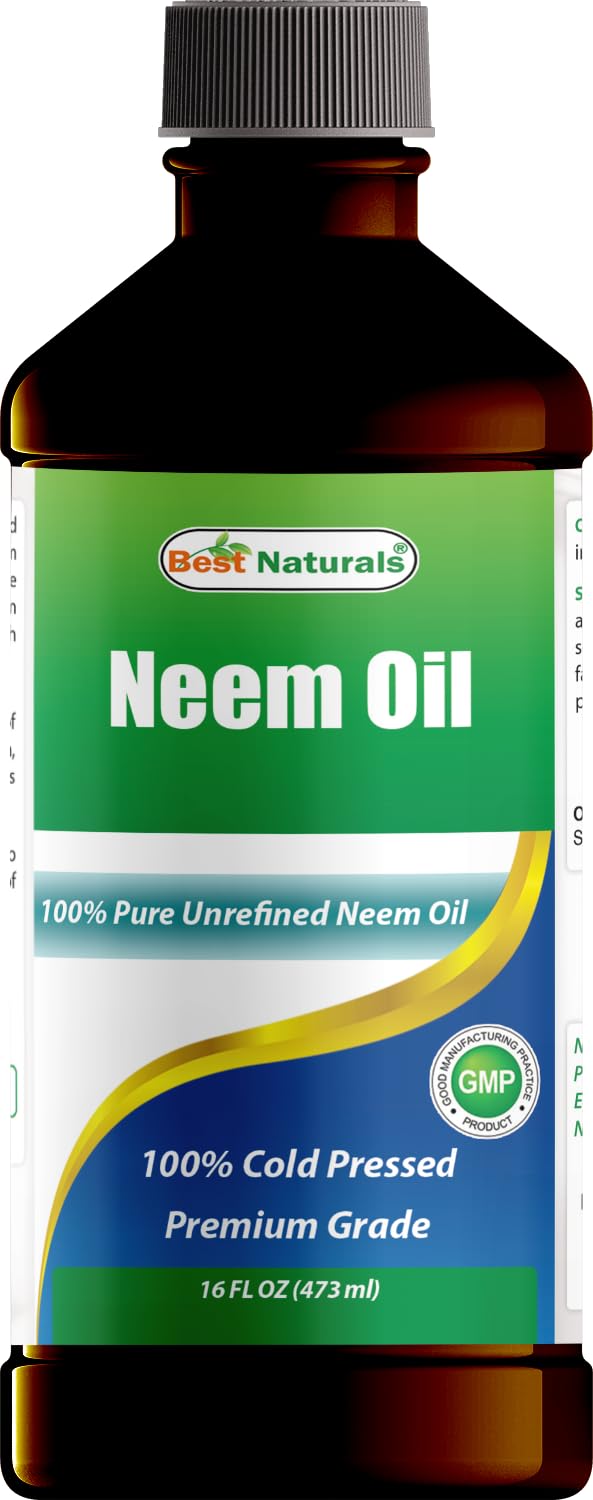
Best Naturals 100% Pure Cold-Pressed Neem Oil, 16 oz
| Ingredients | 100% Pure Neem Oil |
|---|---|
| Extraction | Cold Pressed |
| Form | Unrefined oil |
| Application | Gardening |
Best Naturals 100% Pure Neem Oil is a cold-pressed, unrefined botanical oil sold in a 16-ounce bottle and commonly used as a garden treatment or topical ingredient. For plants it is typically diluted in water with an emulsifier and applied as a foliar spray or soil drench to help manage common pests and fungal issues. The product is single-ingredient neem oil, which keeps the formulation simple and predictable for mixing and routine applications. Practical benefits include a large 16 oz supply that reduces the need for frequent repurchase and an unrefined extraction that preserves the oil’s active components. Important limitations are that it must be mixed correctly before use, can leave an odor, and may irritate skin or sensitive plants if used undiluted; the label advises patch testing and keeping out of reach of children. Overall this is a straightforward, no-frills neem oil for gardeners who want a pure source to dilute and apply themselves rather than a pre-mixed concentrate or multi-ingredient spray.
Best for: Gardeners who prefer a simple, pure botanical product to mix and apply themselves and who prioritize predictable ingredient lists and safety instructions.
Less Ideal for: Users who want ready-to-use sprays, scent-sensitive gardeners, or people unwilling to follow dilution and safety precautions should consider pre-mixed alternatives.
- 100% pure, single-ingredient neem oil makes dilution and mixing predictable
- Cold-pressed and unrefined to retain natural active compounds
- Generous 16 oz volume suitable for multiple garden treatments
- Labeled for gardening application so intended use is clear
- Requires correct dilution and emulsifier before spraying
- Strong natural odor that some users may find unpleasant
- Can cause skin irritation if handled without gloves
Verdict: A pure, cold-pressed neem oil in a 16 oz bottle that gives cautious gardeners a dependable base to dilute and use for pest and fungal control.
Choosing the Right Neem Oil for Garden: Key Factors to Consider
Active Concentration
Concentration of active limonoids determines how much product you need per gallon of spray and how effective treatments will be against insects and fungal issues. Higher concentrations can be more effective at lower application rates but usually require more careful dilution to avoid plant burn.
Knowing the active concentration helps you calculate cost-per-treatment and plan reapplication intervals. It also affects whether a product is suitable for foliar sprays on tender seedlings or better reserved for sturdier shrubs and established vegetables.
Formulation Type
Neem oils come as cold-pressed oils, clarified concentrates, and emulsifiable concentrates, and each behaves differently when mixed with water. Cold-pressed or horticultural-grade oils may need a wetting agent to mix and can separate in spray tanks. Emulsifiable concentrates are formulated to mix readily and give more uniform coverage.
Formulation affects nozzle choice and whether you will need to strain the mixture before use. It also changes storage behavior; some formulations settle or require shaking before use, which is important when you want consistent application across repeated garden treatments.
Application Method and Equipment Compatibility
Consider whether you will use a handheld pump sprayer, a backpack sprayer, or a hose-end sprayer. Some neem oil formulations can clog fine nozzles or need pre-mixing with a surfactant. Choose a product whose instructions match the equipment you already own to avoid extra setup or a wasted application.
Compatibility also influences coverage. Finer sprays give better underside-of-leaf coverage where many pests hide, but they can increase drift. Coarser sprays reduce drift and waste but may not reach small crevices. Read label guidance to match droplet size recommendations with your sprayer type.
Phytotoxicity and Timing
Neem oil can cause leaf burn if applied in high concentrations, during hot, sunny weather, or on water-stressed plants. Check product guidance for dilution rates and test on a small area before broad application. Application at cooler times of day, like early morning or late evening, reduces risk to sensitive foliage.
Frequency and timing also matter for pollinator safety. Avoid spraying flowering plants when bees are active and aim for evening sprays after pollinator activity has ended. Consider whether a formulation is labeled for use on edible plants and allowed up to harvest intervals you are comfortable with.
Pest and Disease Targets
Different neem products are more effective at deterring certain pests and managing specific fungal diseases. Neem acts as an insect growth regulator and repellant and has fungicidal or fungistatic activity in some formulations. Match the product's listed targets to the pests and diseases you actually face in your garden to get predictable results.
Knowing whether a product offers broader or narrower control helps set expectations for results and whether supplemental controls will be needed for severe infestations or persistent pathogens.
Storage, Shelf Life, and Packaging
Concentrates stored in direct sunlight or high heat can degrade, reducing effectiveness. Look for opaque containers, tight seals, and reasonable shelf-life guidance. Smaller bottles are easier to use without waste for occasional gardeners, while larger refill containers can be economical for large yards but require proper storage.
Consider whether the packaging includes measured pour caps or clear dilution instructions. Practical packaging reduces the chance of over- or under-diluting and makes repeated seasonal use simpler.
Mixing and Application Best Practices
Mix neem oil according to label rates and use a recommended surfactant or emulsifier when instructed. Start by mixing the oil with a small volume of warm water and surfactant, then add that concentrate to the spray tank while agitating to form a uniform suspension.
Apply sprays in the cooler parts of the day to avoid leaf scorch and to reduce exposure to pollinators. Spray the undersides of leaves and the growing tips where many sucking insects and early fungal growths start. Reapply on the schedule recommended for the product and the pest pressure you observe.
- Always shake or invert concentrates that separate before measuring.
- Test a small area for phytotoxicity if using on tender plants.
- Avoid spraying during peak pollinator activity and high temperatures.
Safe Use Around Edibles and Pollinators
Many neem oil products are labeled for use on edible crops but include harvest interval guidance. Follow label wait times before harvesting vegetables and herbs to avoid off-taste or residue concerns.
To protect pollinators, avoid spraying flowering parts while blooms are open. Apply treatments in the evening or early morning when bees and other beneficial insects are less active, and target nonflowering growth when possible.
- Wipe equipment thoroughly after applying to edible beds to avoid cross-contamination.
- Choose formulations with clear instructions for edible plant use if you plan to spray vegetables and fruits.
Troubleshooting Common Application Problems
If your sprayer clogs, strain the mixed solution through a fine mesh and adjust nozzle size to a coarser tip. Persistent clogging often means the formulation needs pre-mixing with a stronger emulsifier or that agitation in the tank is insufficient.
If you see leaf burn after application, reduce concentration and avoid spraying during hot afternoons. Conduct a small patch test before widespread application and keep records of weather and dilution for future reference.
- Clogging: check nozzle, strain solution, increase agitation.
- Leaf burn: reduce rate, spray in cooler hours, retest on a small branch.
- Poor control: confirm target pest on label and consider re-timing applications to pest life cycle.
Integrating Neem Into an IPM Program
Neem oil works best as one tool in an integrated pest management approach. Use regular scouting to detect early infestations, apply neem when pest populations are low to moderate, and combine with cultural controls like sanitation, resistant varieties, and beneficial insect habitat.
Rotate treatments and avoid overreliance on a single method to limit pest resistance. Neem often affects immature stages of insects, so timing applications to target larvae or newly hatched stages improves success.
- Scout weekly during peak pest seasons.
- Combine with biological controls and cultural practices for lasting results.
How We Chose the Best Neem Oil for Garden
We shortlisted neem oil options that match real garden needs, focusing on measurable, garden-relevant attributes. Primary evaluation criteria included active-concentration clarity because the percentage of azadirachtin and related limonoids affects how strong a product is and how it should be diluted. We also prioritized formulation type since cold-pressed oil, clarified concentrates, and emulsifiable concentrates perform differently when mixed into water and sprayed through common garden sprayers. Application compatibility was another key filter. We tested labels and technical info for instructions on emulsification, recommended surfactants, and sprayer recommendations to avoid clogging and ensure even coverage. Safety and phytotoxicity guidance were assessed to reduce the risk of leaf burn, especially on sensitive annuals and greenhouse-grown seedlings. Packaging and concentrate volume were considered for repeated seasonal use versus occasional spot treatments. Products were excluded if technical data was unclear about active concentration, if the formulation required special industrial equipment to apply, or if the label lacked basic garden safety directions. Final selections favored clear dilution guidance, gardener-friendly formulations, and documented compatibility with common spray equipment and tank-mix partners.
FAQ
Is neem oil safe to use on vegetables and herbs?
Many neem oil formulations are labeled for culinary crops and can be used on vegetables and herbs when label harvest intervals are followed. Safety depends on proper dilution and timing; avoid spraying close to harvest and test on a small area if unsure.
How often should I apply neem oil to control aphids and mites?
Application frequency often depends on pest pressure and product concentration, but treatments every 7 to 14 days are common until control is achieved. Reapply after heavy rain and follow the label for maximum weekly or seasonal application limits.
Can I mix neem oil with other garden sprays?
Neem oil can be tank-mixed with some insecticidal soaps and certain fungicides, but compatibility varies by formulation. Always perform a small jar test and check label directions for recommended tank-mix partners before broad use.
Will neem oil harm beneficial insects in my garden?
Neem is less harmful to many beneficials than broad-spectrum insecticides when applied carefully, but direct contact can still impact beneficial insects. Minimize risk by avoiding sprays on open flowers and applying in evening when pollinator activity is low.
What should I do if my plants show signs of leaf burn after using neem oil?
Stop applications, rinse foliage gently with water if recent, and reduce future dilution rates. Avoid spraying during hot, sunny periods and test lower concentrations on a small plant area before full application.
Final Verdict
Choose a neem oil that matches your garden scale, sprayer type, and sensitivity of the plants you grow. Prioritize clear active-concentration labeling, an easy-to-mix formulation, and explicit guidance for edible crops to reduce risk and improve results. Balance application timing and concentration against the pest or disease you are targeting to get the best outcomes while protecting beneficial insects.
