

Note: This article contains affiliate links. If you click on these links and make a purchase, I may earn a small commission at no extra cost to you. This helps support my research and content. Read my full affiliate disclosure here.
Dealing with roaches requires a product that stops activity quickly and keeps insects from returning. The right roach insecticide spray behaves predictably in real homes and outdoor perimeter zones, killing on contact while leaving a residual barrier where allowed. This guide shortlists seven top options that work well for typical household and perimeter infestations. We evaluated sprays for kill speed, how long residues remain effective, and how easy they are to apply and integrate with nonchemical steps. Read on to understand the practical tradeoffs and which product features matter for the areas you need to treat.
Top Picks at a Glance
| Best Overall The best all-around choice for most situations | Bengal Gold Dry Roach Spray, 11 oz (2 Pack) |  |
| Best Quality Built to a higher standard if you want something more solid | Demon Max Insecticide 16 oz |  |
| Best Value The sweet spot between price and what you get | Raid Ant & Roach Killer Spray, Outdoor Fresh Scent, 17.5 oz |  |
| Best Budget The cheapest option that still gets the job done reliably | Raid Ant & Roach Killer, Fragrance Free, 17.5 oz |  |
| Highest Rated A top-rated pick with lots of positive feedback | Raid Ant & Roach Killer Aerosol Spray, Lavender Scent, 17.5 oz (Pack of 6) |  |
| Most Popular A crowd favorite that many people choose with confidence | Ortho Home Defense Insect Killer for Indoor & Perimeter, 1.33 gal (Comfort Wand) |  |
| Best Seller A high-volume bestseller chosen again and again | Atticus Talak 7.9% Bifenthrin Indoor/Outdoor Insecticide Concentrate (32 oz) |  |
Bengal Gold Dry Roach Spray, 11 oz (2 Pack)

| Size | 11 oz |
|---|---|
| Indoor or Outdoor Use | Indoor |
| Manufacturer | Bengal Products Inc |
| Product type | Dry aerosol roach spray |
Bengal Gold Dry Roach Spray is an indoor aerosol designed to flush roaches from cracks and voids and kill them on contact while interrupting the roach life cycle. You use the product with the included extension tube to target baseboards, cabinet gaps, appliance perimeters and plumbing openings where roaches hide. Its dry penetrating formula carries the active ingredient deep into crevices without leaving a greasy residue or stain, and it is described as odorless which makes it easier to apply inside kitchens and living spaces. The spray also lists control of ants, spiders and crickets, so it can handle multiple crawling pests around the home. Important limitations are that it is an aerosol intended for localized treatments rather than a long‑term perimeter barrier, and repeated applications or complementary baiting may be needed for heavy infestations or eggs in inaccessible areas. Follow label safety instructions when applying near food prep surfaces and keep pets and people away until surfaces are dry.
Best for: Homeowners or renters who want a targeted indoor solution to flush and kill roaches hiding in cracks and around appliances and who prefer a low‑odor, nonstaining spray for kitchens and living areas.
Less Ideal for: People needing a long‑term outdoor perimeter treatment or a single-solution fix for severe, established infestations should consider professional services or additional products.
- Dry aerosol formula penetrates cracks and voids without leaving oily residue
- Includes extension tube for precise targeting of hiding spots
- Odorless and described as non‑staining for indoor use
- Kills multiple listed crawling pests in addition to roaches
- Aerosol provides spot treatment rather than a long‑lasting perimeter barrier
- May require repeat applications or complementary baits for large infestations
Verdict: A dry, low‑odor aerosol that lets you target and flush roaches from cracks and crevices for fast indoor knockdown.
Demon Max Insecticide 16 oz
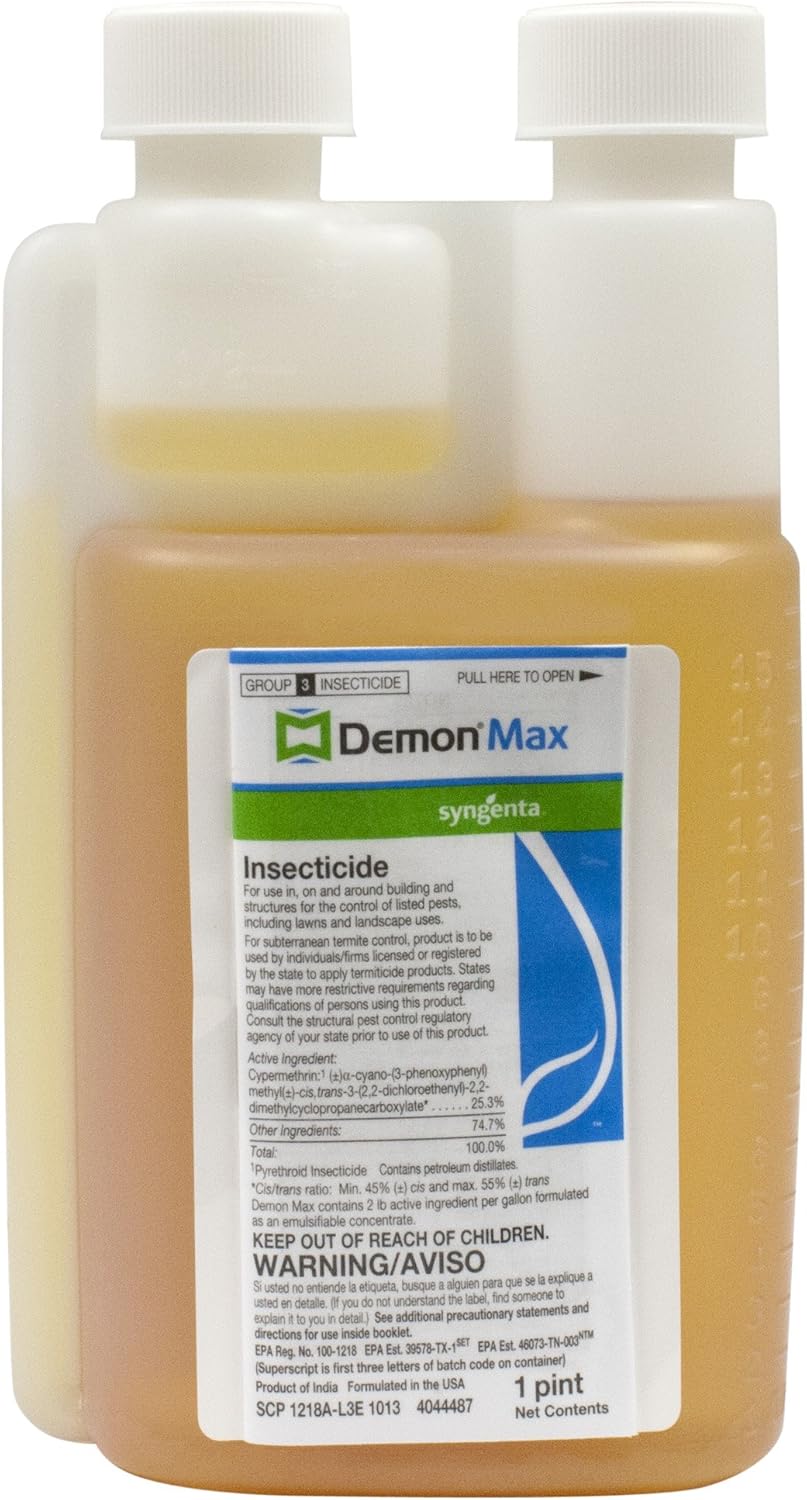
| Unit Count | 16 Ounce |
|---|---|
| Item Form | Liquid |
| Target Species | Insects |
| Active Ingredients | Cypermethrin |
Demon Max is a concentrated 16 ounce liquid insecticide designed for both quick knockdown and lasting residual control of more than 30 insect pests, making it suitable for spot, crack-and-crevice, and perimeter treatments. It is typically mixed in a hand-pump or compressed sprayer and applied around foundations, on lawns and vegetation, and in and around structures where pest activity is observed. The product lists cypermethrin as the active ingredient, which delivers fast contact mortality and residual protection when applied according to label directions. Practical benefits include flexible application options across multiple surfaces and economical coverage from a small concentrate. Important limitations are the need to measure and mix correctly for the treatment area and to follow safety precautions, including keeping it away from children and avoiding application on unintended plants or areas. This is a professional-strength, pesticide-focused option for users who want effective, long-lasting roach and general insect control when applied responsibly.
Best for: Buyers who prioritize strong, long-lasting pest control results and are comfortable mixing and applying a concentrated insecticide for targeted indoor and outdoor treatments.
Less Ideal for: Casual users seeking ready-to-use sprays or nonchemical options should consider simpler consumer products or mechanical controls instead.
- Fast knockdown and residual control against a wide range of insect pests
- Versatile use for crack-and-crevice, spot treatments, lawns, vegetation, and building perimeters
- Concentrated liquid formula that can be mixed to cover varied square footage
- Contains cypermethrin, a proven synthetic pyrethroid active ingredient
- Requires careful measuring and mixing for correct coverage and safety
- Labeled for professional-style applications and may need precautions for use near ornamentals and non-target areas
Verdict: Choose Demon Max when you need a concentrated, professional-strength liquid that delivers fast knockdown and lasting residual control of roaches and other insects.
Raid Ant & Roach Killer Spray, Outdoor Fresh Scent, 17.5 oz

| Item Form | Aerosol |
|---|---|
| Target Species | Insects |
| Liquid Volume | 17.5 |
| Active Ingredients | Imiprothrin 0.060% , Cypermethrin 0.100% |
Raid Ant & Roach Killer is an aerosol spray designed for spot and perimeter treatment of indoor surfaces where ants, roaches and similar pests appear. You use it by shaking and spraying targeted areas such as baseboards, under sinks, garbage cans and garages from about 18 inches until surfaces are wet. The formula contains active pyrethroids and kills on contact while leaving a residual effect the manufacturer says can last up to 13 weeks when applied as directed. Practical strengths are its broad effectiveness against many species and the convenience of a familiar spray can for quick treatments and follow-up. Important limitations are that it is flammable and contains petroleum distillates so it requires careful handling, avoidance of food-contact surfaces, and good ventilation. It is not a one-time structural fix for heavy infestations where baits or professional control may be more appropriate. Follow label safety and retreat intervals for sustained control.
Best for: Buyers who want a straightforward, fast method to treat visible ant and roach activity and maintain perimeter protection with occasional reapplication. Ideal for homeowners who prioritize ease of use and broad-spectrum control for routine indoor maintenance.
Less Ideal for: People facing large, established infestations that need targeted baiting, traps, or professional treatment, and those who require pesticide-free or non-chemical control methods.
- Kills a wide range of household insects on contact including ants and roaches
- Provides residual control for up to 13 weeks when applied to recommended areas
- Easy to apply aerosol format for spot treatments and perimeter protection
- Contains flammable solvents and should not be used near food or open flames
- Not intended as a full-structure solution for severe infestations where baits or pro services may be needed
Verdict: A quick, effective aerosol for treating visible ants and roaches and maintaining indoor perimeter control with minimal fuss.
Raid Ant & Roach Killer, Fragrance Free, 17.5 oz
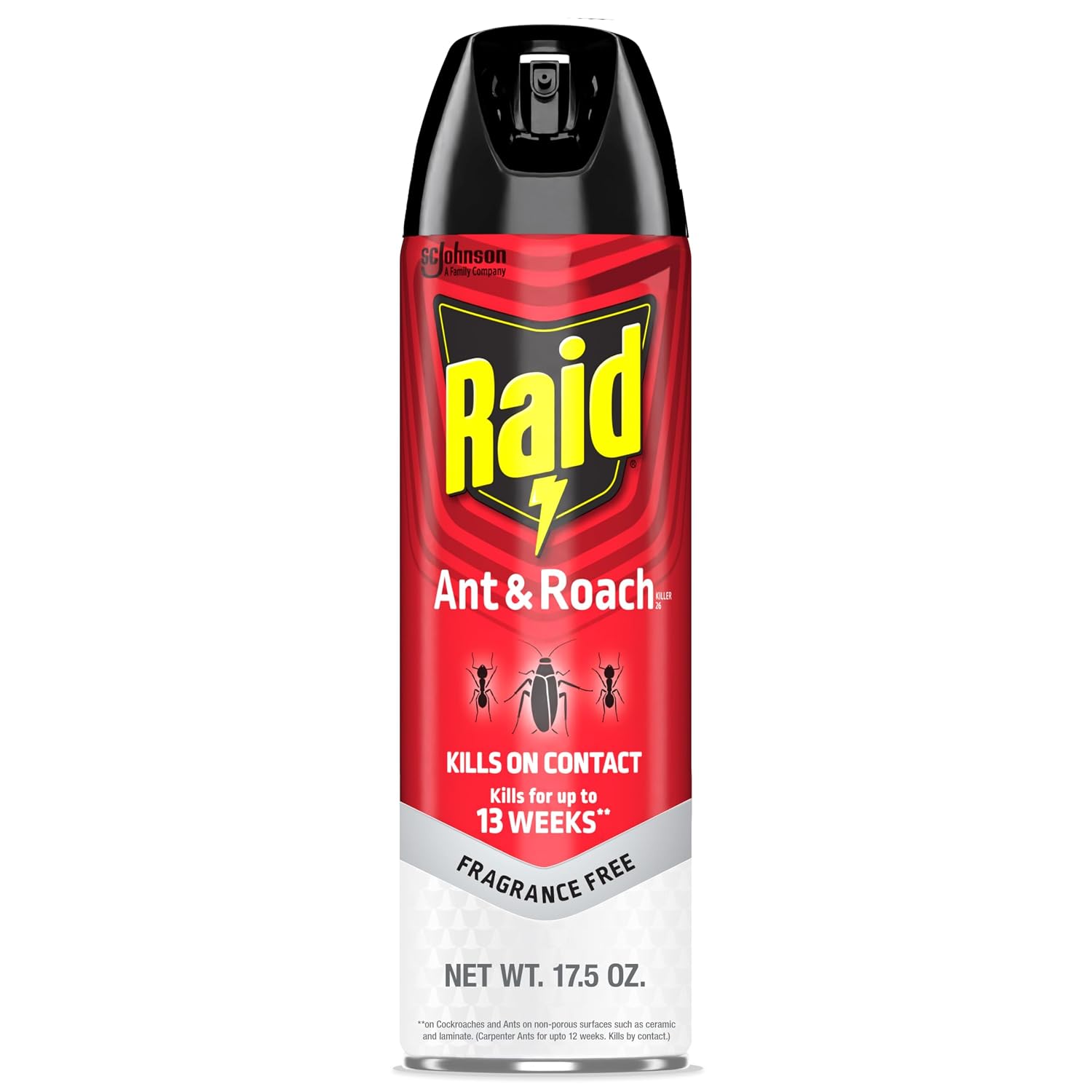
| Unit Count | 17.5 Ounce |
|---|---|
| Item Form | LIQUID |
| Target Species | Insects |
| Liquid Volume | 1 deciliters |
Raid Ant & Roach Killer is a straightforward aerosol insecticide for indoor use that kills a wide range of crawling insects on contact and provides weeks of residual protection. You use it by shaking the can and applying to floors, baseboards, under sinks, garbage cans and other infestation points; the product is designed for spot and perimeter treatments rather than blanket application. Notable features are the fragrance-free formulation and a label claim of residual activity up to 13 weeks, which helps reduce repeat treatments when used as directed. Practical benefits include broad-spectrum effectiveness against ants, roaches, silverfish, crickets and other common household pests and a no-odor formula that is less intrusive inside living spaces. Important limitations are that it is a pressurized, flammable aerosol so it must be stored and used carefully, and it is intended for surface application rather than crack-and-crevice or baiting strategies that can be better for heavy infestations. For budget-conscious buyers this delivers reliable, multipurpose control in a familiar, easy-to-use format.
Best for: Buyers who want an affordable, general-purpose indoor spray to handle occasional or moderate crawling insect problems and prefer a no-odor product that reduces follow-up treatments.
Less Ideal for: Users facing severe, persistent infestations that require targeted baiting, professional-grade products, or non-aerosol delivery methods should consider alternative solutions.
- Kills a wide variety of crawling insects on contact including ants, roaches, silverfish and crickets
- Label claim of residual control for up to 13 weeks reduces how often you need to reapply
- Fragrance-free formula avoids lingering chemical odor indoors
- Easy aerosol application for spot and perimeter treatments
- Pressurized and flammable, requiring careful storage and use
- Not a targeted crack-and-crevice applicator or bait, so heavy infestations may need complementary methods
Verdict: A cost-effective, fragrance-free aerosol that delivers broad indoor control and weeks-long residual protection for common crawling pests.
Raid Ant & Roach Killer Aerosol Spray, Lavender Scent, 17.5 oz (Pack of 6)

| Unit Count | 105 Ounce |
|---|---|
| Item Form | Spray |
| Brand | Raid |
This Raid Ant & Roach aerosol is designed for routine indoor surface treatments to control ants, cockroaches and other crawling insects. It delivers a contact kill and leaves a residual that the manufacturer states continues to work for weeks after application, so typical use is to spray along baseboards, entry points and known infestation sites and retreat on a regular schedule. The lavender scent reduces harsh chemical odor compared with unscented options, which can make indoor application more tolerable. As an aerosol, it is convenient for spot treatments and hard-to-reach crevices, but the spray format means care is needed around food, pets and exposed plants. The pack configuration supplies multiple cans for repeated treatments or covering a larger home. Limitations include the need to reapply periodically for continued control and that aerosols cover surfaces rather than treating voids where pests hide, so combining with baits or integrated measures may be necessary for heavy infestations.
Best for: Buyers who prioritize dependable, easy-to-use indoor treatments for occasional to moderate ant and roach problems and who plan scheduled maintenance applications.
Less Ideal for: People facing severe or widespread infestations who need long-term baiting or professional structural treatments should consider other approaches.
- Kills on contact with additional residual activity on treated surfaces
- Aerosol format reaches cracks and crevices for targeted spot treatments
- Lavender scent lessens strong chemical odor during indoor use
- Pack of multiple cans provides supplies for scheduled retreatment
- Residual protection is limited in duration so repeat applications are required
- Aerosol spray is not a complete solution for heavy infestations or hidden nesting sites
Verdict: Choose this Raid aerosol when you want a reliable, easy-to-apply spray that kills on contact and delivers short-term residual control for routine indoor roach and ant management.
Ortho Home Defense Insect Killer for Indoor & Perimeter, 1.33 gal (Comfort Wand)

| Item Form | Spray |
|---|---|
| Target Species | Insects |
| Liquid Volume | 1.33 gallons |
| Active Ingredients | Bifenthrin 0.05%, Zeta-Cypermethrin 0.0125% |
This ready-to-use Ortho Home Defense insect killer is designed for both indoor spot treatments and outdoor perimeter applications. It comes with a battery-powered continuous-spray comfort wand that makes covering baseboards, door frames, and foundation perimeters easier without bending or pumping. The formula lists bifenthrin and zeta-cypermethrin as active ingredients and targets a wide range of pests including ants, cockroaches, spiders, fleas and ticks. In practice you spray a narrow band along problem zones or a wider band around the foundation; the product dries clear and is formulated to have no fumes so people and pets can re-enter once dry. The main practical benefits are the long residual barrier for ants, roaches and spiders when applied indoors and the convenience of the built-in wand for repetitive use. Limitations to note are that it is a chemical insecticide that must be used according to safety directions and it is intended for surfaces and perimeters rather than direct treatment of nests or deep infestations where professional services or baits may be more effective.
Best for: Buyers who want a proven, easy-to-apply spray to reduce visible roaches and other common household insects and who prefer a product with broad user endorsement and clear usage instructions.
Less Ideal for: People looking for non-chemical or organic roach control or those needing products specifically formulated for nest elimination or severe infestations should consider alternatives.
- Ready-to-use spray with battery-powered comfort wand for continuous, fatigue-free application
- Targets a broad list of common household pests including roaches, ants and spiders
- Creates a residual barrier that provides up to 12 months protection on non-porous indoor surfaces
- Dries clear with no fumes so treated areas can be reoccupied after drying
- Chemical insecticide requiring careful adherence to safety directions around children and pets
- Not formulated for treating colonies or deep infestations where baits or professional treatments may work better
Verdict: Choose this spray if you want an easy-to-use, ready-to-apply insecticide that provides a long-lasting indoor barrier against roaches and other common household pests.
Atticus Talak 7.9% Bifenthrin Indoor/Outdoor Insecticide Concentrate (32 oz)

| Liquid Volume | 32 fluid ounces |
|---|---|
| Formulation | Suspension Concentrate |
| Active Ingredients | Bifenthrin |
| Length of Control | Up to three months |
Talak 7.9% is a liquid concentrate that targets more than 75 common pests, including roaches, ants, ticks, mites, and mosquitoes. You mix the concentrate with water to the label rates and apply it as a spray to lawns, landscapes, hardscape perimeters, or indoors around baseboards and cabinets. The water‑based formula dilutes easily, dries clear, and is advertised as odor‑free and nonphytotoxic so it can be used around plants without visible damage. Notable features include a clear dilution table for turf, landscape, and surface treatments and a bottle designed for controlled pouring. In practice this product offers fast knockdown plus up to three months of residual control on treated surfaces, making it useful for perimeter defenses and follow up treatments. Important limitations are that solutions should not be stored and the product is not approved for foggers; also it is restricted from sale in a few states, and users must follow label safety directions for indoor use and pet re‑entry times.
Best for: Buyers who prioritize a conservative, proven approach to household pest control and want a single, label‑directed product for perimeter and indoor spot treatments with clear instructions.
Less Ideal for: People seeking ready‑to‑use sprays or fogger-compatible solutions or shoppers in states where this product is not registered for sale should look elsewhere.
- Broad-spectrum control listed for 75+ indoor and outdoor pests including roaches and ants
- Water-based concentrate that dilutes easily and dries clear with minimal odor
- Flexible use indoors and outdoors for perimeter, turf, landscape, and spot treatments
- Long residual activity up to three months on treated surfaces
- Bottle with pour-friendly design for easier measuring and mixing
- Mixed spray cannot be stored and must be prepared fresh each use
- Not approved for fogger application and unavailable for sale in several states
Verdict: A reliable, water‑based bifenthrin concentrate for homeowners who want a single indoor/outdoor product that delivers fast knockdown and long residual control.
Choosing the Right Roach Insecticide Spray: Key Factors to Consider
Knockdown Speed and Immediate Efficacy
Fast knockdown matters because visible reduction in roach activity quickly reduces contamination risk and homeowner distress. A spray that incapacitates roaches on contact prevents them from dispersing into hidden voids and makes follow-up cleanup easier. Immediate efficacy also reduces the need for repeated spot treatments in high-traffic kitchens and bathrooms.
When assessing knockdown claims, consider that surfaces, temperature, and species affect how fast insects succumb. Expect slower results on porous, dusty, or greasy surfaces; these environments may require targeted surface preparation such as cleaning before application.
Residual Duration on Typical Surfaces
Residual duration determines how long treated areas remain hazardous to roaches after application, which in turn affects treatment frequency. Longer residuals mean fewer repeat applications and better suppression of reinfestation from eggs that hatch later. Residual performance is influenced by the active ingredient chemistry and how it binds to different materials.
Pay attention to labeled surface types. Some sprays maintain efficacy on hard, nonporous surfaces for weeks, while fabrics or mulched soil may degrade residues rapidly. For perimeter treatments, UV exposure and rainfall can shorten residual life, so look for products with documented outdoor persistence if you plan to treat around foundations or landscaping.
Surface Compatibility and Placement Options
A useful spray can be applied in a range of places where roaches hide: cracks and crevices, behind appliances, along baseboards, and the building perimeter. Surface compatibility matters because some formulations can stain, damage finishes, or leave residues on food-contact surfaces that require strict reentry or wiping rules.
Review label guidance for application on painted wood, tile, carpet edges, and landscaping mulch. Products that include instructions for targeted crack-and-crevice use or that pair with a precision nozzle provide more effective placement with less waste and lower risk to non-target plants and surfaces.
Application Method and Ease of Use
How easy a spray is to use affects whether treatments are done correctly. Pump or trigger bottles with good nozzles provide controlled placement, while pressurized or poorly designed sprayers can overspray and waste product. Features like adjustable spray patterns, extension wands, and leak-resistant fittings improve reach into tight spaces without moving heavy appliances.
Also consider preparation and cleanup steps. Formulations that require minimal mixing and offer clear application rates reduce user error. If treating perimeters, look for sprays that allow band treatments without excessive bending or repeated refilling.
Safety, Label Instructions, and Pet Considerations
Safety guidance on the product label is critical for protecting household members, pets, and beneficial insects in the yard. Clear instructions on reentry intervals, ventilation, surface cleanup, and pet exclusion zones help you use a spray effectively without unintended exposure. Low-odor or low-volatility formulations may be preferable indoors to reduce acute discomfort.
Check whether the spray is permitted for use near edible plants or vegetable gardens. If not, plan to treat non-plant surfaces only and follow recommended waiting periods before allowing pets or children back into treated areas.
Compatibility With Nonchemical Control Measures
Insecticide sprays are most effective when integrated with sanitation and exclusion. A spray that works well around bait stations and physical barriers allows a combined approach that reduces overall chemical use. Consider how a chosen spray fits into an IPM strategy: will it complement sticky traps, bait placement, and caulking of entry points?
Products that leave a detectable residue can be used strategically in nonvisible zones to complement baits. Conversely, some sprays may repel roaches from treated areas and make baiting less effective, so check label notes and plan sequence of treatments accordingly.
When to Use Spot Treatments Versus Perimeter Sprays
Spot treatments are best for indoor sightings and limited infestations behind appliances and inside cabinets. These applications focus on cracks and crevices and should use a low-volume, precision spray to avoid residue buildup on food-contact surfaces.
Perimeter sprays create a treated band around the foundation and are useful when roaches are migrating in from outdoors or neighboring structures. Apply perimeter products to concrete, siding, and mulch according to label directions, and avoid broadcast spraying over plants unless the product label authorizes it.
- Reserve spot treatments for targeted indoor hiding places.
- Use perimeter sprays to intercept incoming pests around foundations.
- Adjust method based on surface type and proximity to pets or edible plants.
Preparing Surfaces and Timing Applications
Clean greasy or dusty surfaces before applying a spray, because residues adhere better to clean substrates and deliver more consistent results. Remove food debris, vacuum cracks, and dry wet areas first.
Timing matters: apply perimeter treatments during dry weather and avoid immediate watering or heavy rain if possible. Indoors, treat during low-activity times when people and pets can be kept away for the recommended reentry interval.
- Wipe greasy areas in kitchens prior to application.
- Schedule perimeter sprays for at least 24 hours without rain when feasible.
- Apply spot treatments when roaches are most active, typically at night, for better coverage of hiding places.
Managing Safety Around Plants and Pets
When treating near landscaping, protect desirable plants and avoid spraying blooms to reduce impacts on pollinators. If a product is not labeled for use on edible plants, treat only nonplant surfaces and keep residues away from garden beds.
Establish temporary exclusion zones for pets and children until residues have dried and label-specified reentry times have passed. Store products securely to prevent accidental access by curious pets or children.
- Cover or remove potted edibles before perimeter applications.
- Keep pets indoors or in an untreated area during and after treatments as directed.
- Follow label disposal and storage instructions to minimize household risks.
Integrating Sprays With Sanitation and Exclusion
Insecticide sprays work best as one element of an integrated pest management plan. Seal gaps, fix leaks, remove clutter, and address food sources so sprays suppress rather than temporarily mask infestations.
Use residual sprays to complement baits and traps placed in non-spray zones. Sequence treatments so baits are positioned first where spray residues will not interfere with bait acceptance.
- Caulk gaps and screen vents to reduce entry points.
- Eliminate food and water sources to make baits and sprays more effective.
- Monitor activity after treatment and reapply only when labeled residual protection has lapsed.
Common Application Mistakes to Avoid
Overapplication is a common error that increases exposure risk without improving control. Follow label rates and concentrate on likely hiding spots rather than broadcasting indoors. Excess residue can also damage finishes and increase cleanup burden.
Another mistake is applying sprays directly to baits or in baited areas, which can reduce bait attractiveness and undermine long-term control. Read labels for compatibility notes and segregate chemical treatments and baits as recommended.
- Do not spray food-contact surfaces unless explicitly allowed; wipe when required.
- Avoid treating open blooms or active pollinator areas in landscaping.
- Do not mix products unless label instructions permit combination use.
How We Chose the Best Roach Insecticide Spray
We screened roach insecticide sprays based on performance in realistic home and garden scenarios, then narrowed the list using concrete, gardener-focused criteria. Key evaluation points included knockdown speed against common roach species, residual efficacy on typical indoor and outdoor surfaces, and application flexibility for cracks, baseboards, and perimeter foliage. We also considered user safety features such as low-odor formulations and labeled indoor use, plus nozzle and tank design that affect coverage and drift. Excluded from consideration were aerosols or foggers that do not leave a treatable residual and products labeled only for non-roach pests. We avoided experimental formulations lacking clear label directions for home use. Final selections emphasize consistent, labeled performance, clear directions for safe application around plants and pets, and features that make treatments practical for gardeners and homeowners managing occasional to moderate infestations.
FAQ
How long before I can let pets back into a treated room?
Reentry times vary by formulation and label instructions. Many sprays are safe once residues have dried and adequate ventilation is provided, often within a few hours. Always follow the product label for specific timelines and keep pets out for any longer intervals the label requires.
Will a residual spray prevent roaches from returning forever?
Residual sprays suppress activity for the duration specified on the label but do not guarantee permanent exclusion. Residuals wear off and environmental factors like moisture and sunlight reduce effectiveness, so integrate sanitation and sealing to limit reinfestation.
Can I use the same spray indoors and on my yard perimeter?
Some sprays are labeled for both indoor spot treatments and outdoor perimeter use, but not all. Check the label for permitted sites and application rates. Use products labeled for outdoor use on the perimeter to ensure adequate persistence in weather exposure.
Will sprays interfere with bait stations?
Certain contact sprays can repel roaches and reduce bait effectiveness if applied directly to bait locations. To avoid interference, place baits first in protected spots and apply residual sprays to adjacent nonbaited areas, following label guidance.
Are there low-odor options for treating kitchens and bathrooms?
Yes, formulations designed for indoor use often advertise low odor or low volatility. These reduce immediate discomfort during treatment but still require adherence to label ventilation and reentry instructions to ensure safety.
Final Verdict
Choose a roach insecticide spray based on where you need to treat and how you plan to integrate it with sanitation and exclusion. Prioritize fast knockdown for visible infestations, durable residuals for perimeter and hidden-zone control, and products with clear label instructions that match your surfaces and pet situation. Accept tradeoffs: highly persistent outdoor residues may not be appropriate indoors, and some fast-acting sprays can disrupt bait strategies. Use targeted placement, follow label directions closely, and pair sprays with nonchemical measures for the most reliable, long-term suppression.
