

Note: This article contains affiliate links. If you click on these links and make a purchase, I may earn a small commission at no extra cost to you. This helps support my research and content. Read my full affiliate disclosure here.
If you manage overgrown yards, thick patches of grass, or frequent brush, the thickness of your trimmer line changes how fast and clean the work goes. Thicker weed string trimmer line gives more cutting momentum, stands up better to hits against roots and rocks, and reduces the number of line changes during long jobs. This guide covers the top shortlisted heavy-duty lines suited to dense vegetation situations and explains how we evaluated durability, cut width, and spool compatibility. Below you will find the best options for tough trimming tasks, plus the buying factors that matter for real-world garden use.
Top Picks at a Glance
| Best Overall The best all-around choice for most situations | KAKO Sawtooth .175 Heavy-Duty Trimmer Line, Dual-Core Nylon, 298 ft (3 lb) |  |
| Best Quality Built to a higher standard if you want something more solid | Oregon Magnum Gatorline .130" SuperTwist Trimmer Line, 150 ft (1 lb) |  |
| Best Budget The cheapest option that still gets the job done reliably | XVUCRT 0.155 in x 68 ft Twisted Heavy-Duty Trimmer Line |  |
| Highest Rated A top-rated pick with lots of positive feedback | Supvintor 0.130 in Square Heavy-Duty Trimmer Line — 720 ft |  |
| Most Popular A crowd favorite that many people choose with confidence | ANLEOLIFE .155" Octa-Twist Heavy Duty Trimmer Line, 379 ft (3 lb) |  |
| Best Seller A high-volume bestseller chosen again and again | Oregon Gatorline Trimmer Line .155 in x 266 ft (Square) |  |
KAKO Sawtooth .175 Heavy-Duty Trimmer Line, Dual-Core Nylon, 298 ft (3 lb)

| Item Diameter | 0.17 inches |
|---|---|
| Length | 298 feet |
| Material Type | Nylon |
The KAKO Sawtooth .175 trimmer line is a heavy-duty, dual-core nylon line built for cutting thick grass and tough weeds. It is supplied as a 298-foot coil weighing about 3 pounds and uses a serrated sawtooth profile to keep a sharper cutting edge longer than round line. In practice it is suited to both walk-behind wheeled trimmers and many handheld models from major brands, so you can use it for commercial edging, clearing overgrown areas, or routine yard maintenance. The thicker .175 diameter and dual-core construction give added durability and reduced breakage, while the sawtooth edges increase cutting efficiency so jobs finish faster with less engine drag and vibration. Expect more aggressive cutting and longer life compared with standard round line, but it is heavier and better matched to powerful trimmers rather than lightweight consumer models. Installation and use are straightforward since it behaves like standard nylon line, but confirm your trimmer accepts .175-inch line before winding.
Best for: Gardeners and landscapers who need a robust, long-lasting line for frequent or heavy trimming tasks and prioritize cutting power and durability over ultra-lightweight operation.
Less Ideal for: Casual users with small lawns or older low-powered trimmers who want minimal vibration and the lightest possible line should consider thinner, lower-drag options instead.
- Serrated sawtooth profile maintains a sharper cutting edge for longer than round line
- Dual-core nylon construction increases toughness and reduces breakage
- Thick .175 diameter provides aggressive cutting power for heavy grass and weeds
- Long 298 ft spool reduces how often you need to refill and is suitable for larger jobs
- Best performance requires a more powerful trimmer; may be overkill for lightweight consumer models
- Heavier line can increase fuel load and vibration on some machines
Verdict: Choose this .175 sawtooth dual-core line when you need a durable, high-cutting-power trimmer line for heavy-duty yard and commercial work.
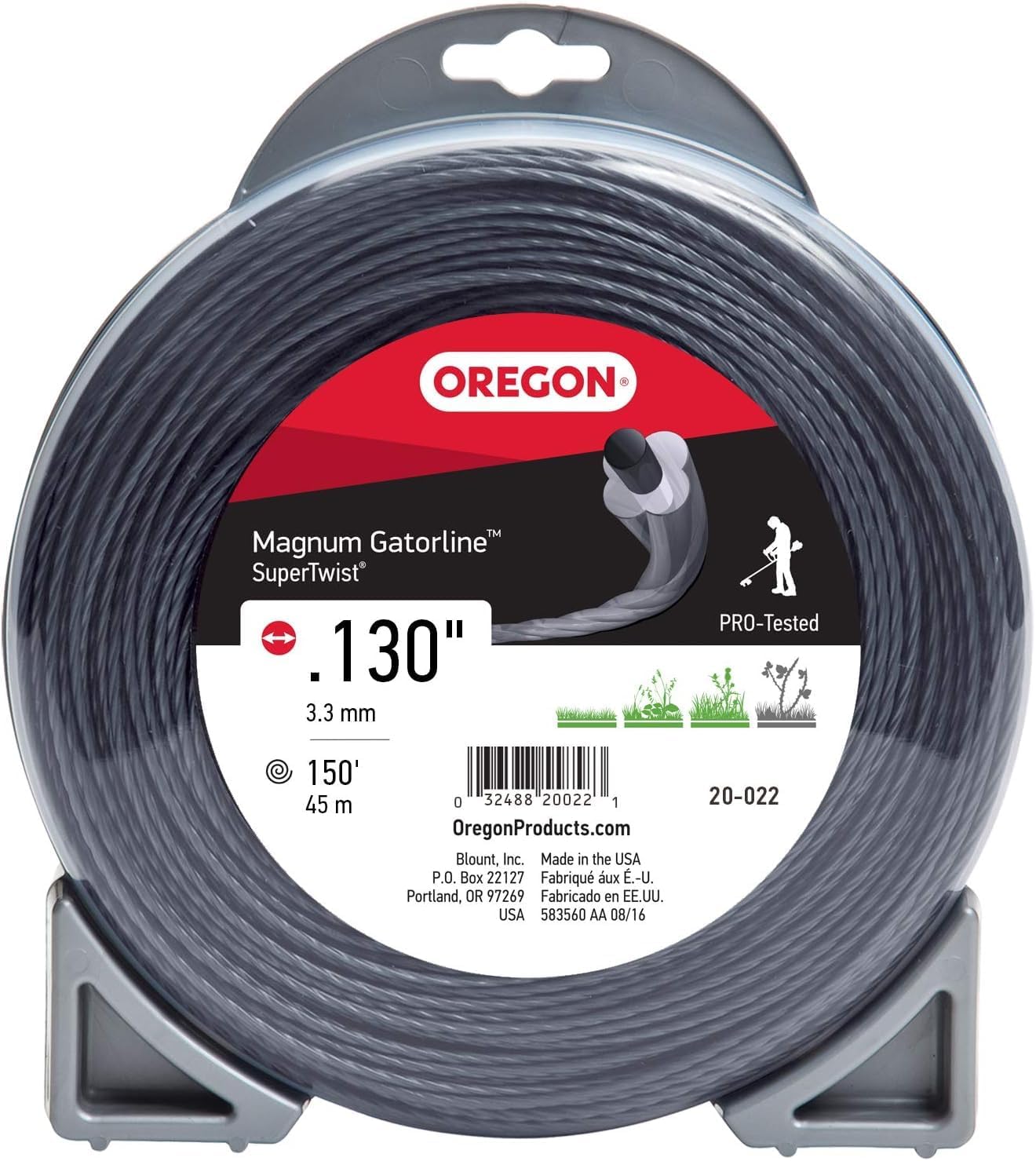
Oregon Magnum Gatorline .130" SuperTwist Trimmer Line, 150 ft (1 lb)
| Cutting width | 0.13 inches |
|---|---|
| Unit Count | 150 Feet |
| Size | 1 lb |
| Power Source | gasoline-powered |
The Oregon Magnum Gatorline .130" SuperTwist is built for heavy-duty trimming where durability and cutting power matter. Designed for gas, electric, and battery trimmers with compatible heads, the twisted shape reduces noise and drag while delivering straighter, cleaner cuts — useful when running a line along chain link fence where precision matters. Its dual-polymer construction pairs a high-strength inner core with a weld-resistant outer skin, so the line resists breakage and fusing during extended use in thick grass, brambles, and weedy borders. The 1-pound donut gives 150 feet, enough for multiple jobs without frequent respooling. Practical limitations are the relatively large .130" gauge: it may not fit every lightweight head and uses more power than thinner lines, so check your trimmer's recommended line size before using. Also, heavier twisted line can wear faster if you frequently hit metal fence posts or chain links, so expect some replacement over time under abusive contact.
Best for: Experienced homeowners or landscapers who prioritize cutting performance and durability for large or overgrown fence-line jobs and need a line that handles heavy vegetation.
Less Ideal for: Owners of smaller, low-power trimmers or those who only do light lawn shaping should choose a thinner line to avoid motor strain and fit issues.
- Thick .130" diameter offers strong cutting power for dense weeds and brambles
- SuperTwist shape reduces noise and improves cutting efficiency for straighter cuts
- High-strength inner core and weld-resistant outer layer reduce breakage and fusing
- Comes on a 1-lb donut with 150 ft so you can refill multiple spools without frequent purchases
- .130" gauge may be incompatible with some lightweight trimmer heads and requires more engine power
- Heavy-duty line will abrade faster if it repeatedly strikes metal such as chain link or posts
Verdict: Choose this Magnum SuperTwist line when you need a durable, high-performance trimmer line that delivers straighter, quieter cuts on heavy vegetation along chain link fence lines.
XVUCRT 0.155 in x 68 ft Twisted Heavy-Duty Trimmer Line

| Diameter | 0.155 inch |
|---|---|
| Length | 68 FT |
| Manufacturer | XVUCRT |
This XVUCRT twisted trimmer line is a straightforward replacement spool made for medium to heavy grass. The 0.155-inch diameter and twisted profile aim to give cleaner cuts, lower noise and better resistance to breakage than plain round lines, while the 68-foot length provides a useful amount of line for several jobs. It is made from a wear‑resistant polymer that tolerates weeds and rocky contacts without fraying quickly, and it fits standard spools on many walk‑behind and universal trimmers including several common brands. Installation is simple since no special tools or spool mods are required. Expect good value for routine lawn maintenance, but note the diameter places it in the mid‑range for thickness so it is not the stiffest option for very heavy woody brush. For buyers prioritizing low cost and dependable everyday performance this line offers a durable, easy-to-use spare; users needing the absolute thickest, most heavy‑duty cutting line should consider larger diameters.
Best for: Homeowners or landscapers who want an economical, reliable replacement line for routine to moderately heavy grass trimming and prefer a lower upfront cost per roll.
Less Ideal for: People who need the thickest, most heavy‑duty line for cutting dense brush or saplings should choose a larger diameter product instead.
- Twisted profile improves cut quality and reduces noise compared with round line
- 0.155-inch diameter suitable for medium to heavy grass tasks
- 68-foot length supplies multiple jobs without frequent rebuys
- High wear‑resistant polymer resists fraying and breakage in normal conditions
- Not as stiff or aggressive as thicker lines for very woody or overgrown brush
- Compatibility claims are broad so confirm fit for uncommon or brand‑specific spools
Verdict: A budget-friendly, twisted 0.155-inch trimmer line that delivers durable, low-noise cutting for everyday medium-to-heavy lawn work.
Supvintor 0.130 in Square Heavy-Duty Trimmer Line — 720 ft

| Diameter | 0.130 inches |
|---|---|
| Length | 720 feet |
| Material | Nylon 66 copolymer |
| Shape | Square |
This Supvintor 0.130-inch square trimmer line is built for heavy cutting tasks around yards or on commercial properties. The tough nylon copolymer construction and square profile improve cutting efficiency, so it slices through thicker grass and coarse weeds more quickly than typical round lines. The 720-foot spool provides many refills, reducing downtime when maintaining large areas. In use it should generate less engine drag and vibration compared with some traditional lines, which helps on gas trimmers and reduces user fatigue during long sessions. The line is marketed as compatible with most gas and electric trimmers, so installation is straightforward for common spool types. Limitations are that the heavier 0.130 diameter is overkill for light edging or fine ornamental work and may wear faster if used against hard surfaces like concrete. Also the square cross-section can increase spool wear on small bump-feed heads not intended for heavy commercial line.
Best for: Gardeners and landscapers who prioritize a dependable, heavy-duty line for frequent trimming of thick grass and overgrown areas and who need a spool that lasts through multiple jobs.
Less Ideal for: Owners who mainly do light edging, fine ornamental trimming, or frequent work along concrete and stone should consider a thinner or round line better suited to precision and lower wear.
- 0.130-inch square profile offers stronger, more efficient cutting of thick grass and tough weeds
- 720-foot spool provides long runtime and multiple refills before replacement
- Nylon 66 copolymer construction increases toughness and resistance to breakage
- Designed to reduce engine drag, vibration, and noise compared with some traditional lines
- Too heavy for delicate trimming or precision edging around plants
- Square line can increase wear on lightweight or incompatible spool heads
Verdict: Choose this 0.130 square trimmer line when you need a durable, high-efficiency spool that handles thick grass and heavy trimming without frequent replacement.
ANLEOLIFE .155" Octa-Twist Heavy Duty Trimmer Line, 379 ft (3 lb)

| Diameter | .155 inch |
|---|---|
| Length | 379 ft |
| Weight | 3 lb |
| Profile | Octa-Twist multi-edge spiral |
This ANLEOLIFE .155" Octa-Twist trimmer line is built for demanding trimming tasks on larger properties and rough vegetation. The octa-twist multi-edge spiral profile gives more cutting surfaces and steadier flight than simple round line, so it slices through thick weeds, brambles, and field edges with fewer passes. The 379-foot, 3-pound spool reduces how often you reload compared with smaller donuts, which is useful for landscapers or homeowners doing extended sessions. It is intended for use in heavy-capacity heads rated for .155 line and lists broad compatibility with common brands, but you should confirm your trimmer head accepts this diameter before buying. Expect aggressive cutting power and slightly heavier spool handling versus thinner lines, and know that heavier gauges may increase fuel draw and wear on some lightweight electric heads. For tough border work and less frequent reloading this line delivers clear, reliable performance.
Best for: Buyers who want a durable, high-capacity cutting line to speed up property cleanup and reduce stops for reloads, especially those maintaining larger lawns, borders, or rural edges.
Less Ideal for: Casual users with small yards or owners of lightweight electric trimmers that are not rated for heavy-diameter line should choose a thinner profile instead.
- Thick .155" diameter provides strong cutting power for large weeds and brambles
- Octa-twist multi-edge profile increases cutting surfaces and stabilizes flight
- 379 ft / 3 lb spool reduces reload frequency during long jobs
- Compatible with many high-capacity .155-rated heads for professional and homeowner use
- Not suitable for trimmers that require thinner line or are not rated for .155 diameter
- Heavier gauge can increase strain on lightweight or low-power trimmer motors
Verdict: Choose this .155" octa-twist spool when you need heavy-duty cutting performance and fewer reloads for large or rough trimming jobs.
Oregon Gatorline Trimmer Line .155 in x 266 ft (Square)

| .155 inch gauge | .155" |
|---|---|
| Length | 266 ft |
| Shape | Square |
| Fits | Standard trimmer heads (fixed, semi-auto, bump-feed) |
This Oregon Gatorline .155" x 266-foot spool is built for tougher yard work where thick weeds, brambles, and overgrown grass are common. The square-profile, premium co-polymer line uses a high-strength inner core and a hard outer skin to resist breakage and "welding" so it keeps cutting longer under heavy use. It fits standard fixed, bump-feed, and automatic trimmer heads, so you can use it with most gas or electric weed eaters. The donut-style spool reduces tangles and makes reloading simpler, and the heavier .155" gauge gives more cutting bite than thinner lines, which reduces pass count on dense patches. Expect a little more vibration and slightly higher power draw than thin line when used on lightweight trimmers, and the thicker material is best suited to homeowners who need occasional heavy-duty cutting rather than continuous commercial mowing. For a buyer who wants durability and fewer interruptions while trimming tough areas, this line delivers reliable, long-lasting performance.
Best for: Homeowners and gardeners who need a dependable, heavy-duty line for cutting thick weeds and overgrown areas and who prioritize durability and fewer reloads.
Less Ideal for: Owners of very lightweight or battery-powered trimmers who prioritize maximum runtime and minimal vibration should consider thinner gauge line instead.
- Thick .155" gauge and square profile cut through dense weeds more effectively than thinner round line
- High-strength inner core and hard outer skin resist breakage and welding for longer life
- Universal fit for fixed, semi-automatic, and bump-feed trimmer heads increases compatibility
- Donut spool packaging reduces tangles and simplifies reloads
- Heavier gauge can cause more vibration and higher power draw on small, low-powered trimmers
Verdict: Choose this .155" Gatorline spool when you need a durable, heavy-gauge line that cuts through thick weeds with fewer interruptions.
Choosing the Right Thickest Weed String Trimmer Line: Key Factors to Consider
Line Diameter and Profile
Diameter is the single most visible attribute when choosing a heavy-duty trimmer line. Thicker diameters carry more mass and transfer greater cutting momentum into stems and tougher grass, reducing the need for repeated passes.
Profile and edge geometry also affect cutting performance. Round lines flex more and are quieter but may push through vegetation less cleanly than twisted or polygonal profiles. Bulleted or serrated profiles can bite into coarse stems and vines, but they may increase wear and generate more vibration. Consider how thick the growth is and whether you need aggressive cutting or a cleaner finish.
Material Composition
Most heavy trimmer lines are made from variants of nylon or copolymers designed to balance flexibility and abrasion resistance. Higher-grade copolymers or reinforced blends resist fraying and snap less often when striking rocks or rooted bases.
Some lines incorporate additives to improve tensile strength or heat resistance, which helps if you run long trimming sessions that warm the head. Materials that are too rigid can become brittle in cold weather, while lines that are too soft wear down quickly. Choose a composition suited to your typical climate and workload.
Impact and Abrasion Resistance
In a work environment with hidden rocks, concrete edges, or roots, the line will take many glancing blows. Impact resistance describes how well the line resists sudden notches or fractures from these hits.
Abrasion resistance measures how quickly the line thins when dragged along rough surfaces. Good heavy-duty lines preserve diameter longer, so you spend less time reloading and more time trimming. For properties with gravel, masonry, or frequent curb encounters, prioritize lines rated for high abrasion and impact tolerance.
Spool Fit and Loading Ease
A line that performs well but is a nightmare to wind or does not seat cleanly in your trimmer head will slow you down. Spool fit covers whether the line diameter is compatible with your trimmer head, whether the spool holds even layers without tangling, and if the line can be loaded without twisting.
Some heavy lines are stiffer and more prone to kinking when wound. Consider pre-cut lengths or lines known for clean winding if you want faster maintenance between jobs. Also check whether a given diameter is accepted by your trimmer head to avoid feed or jamming issues.
Feed Consistency and Balance
Feed consistency is how reliably the trimmer dispenses line during use. Poor feed behavior can lead to uneven cutting, frequent stops to adjust length, or accelerated wear at the feed point.
Balance when spinning matters for vibration and motor stress. Thick, asymmetric lines can introduce wobble if the spool does not wind evenly. Look for lines that maintain their shape and spin true to reduce vibration, improve cut quality, and extend trimmer life.
Cost Per Length and Replacement Frequency
While initial cost is easy to see, the real expense is how often you replace the line. A tougher, thicker line with a higher per-foot cost can be cheaper over a season if it lasts significantly longer than thin alternatives.
Estimate replacement frequency based on the density of the vegetation you trim and the typical abrasiveness of the environment. Account for whether you prefer pre-cut lengths or bulk spools, as that affects waste and loading time.
When to Choose Extra-Thick Line
Extra-thick line makes sense when you encounter persistent thick grass, young saplings, dense briars, or when trim jobs include edging around rough surfaces. The added mass helps the line maintain momentum through cuts that would bog down thinner filament.
If you mainly tidy manicured lawns or delicate beds, a heavy line is overkill and can damage ornamental plants. Reserve the thickest lines for heavy brush-clearing or properties with a lot of coarse growth.
- Best for unmanaged lots, field borders, and bramble removal
- Useful for clearing fence lines and areas near saplings
- Not recommended for trimming close to fragile plants or flower beds
Trimmer Head Types and Compatibility Tips
Different trimmer heads accept different maximum diameters and line profiles. Tap-feed and bump-feed heads often handle thicker lines better than automatic feed systems that rely on smaller diameters. Check your trimmer manual for maximum recommended diameters.
If your trimmer head cannot accept the thickest lines, consider using a slightly smaller diameter with an aggressive profile or a dual-line setup to get comparable cutting power. Always wind the spool neatly to avoid imbalance and feed failures.
- Confirm maximum line diameter for your head before buying
- Stiffer lines may require hand-winding to avoid kinks
- Pre-cut lengths reduce loading frustrations on compact heads
Maintenance Practices to Extend Line Life
Simple habits extend how long heavy-duty line lasts. Avoid striking hard objects when possible by keeping a short, controlled swing and approaching tough spots from multiple angles rather than powering through. Regularly clear debris from the head to prevent rubbing and heat build-up.
Store spools out of direct sunlight and extreme heat to prevent warping or softening. Inspect line frequently and replace sections that show notching before they fail completely. Proper maintenance reduces downtime and keeps cutting performance steady.
- Keep a guard distance from concrete and stone edges
- Wind spools evenly and avoid crossovers
- Rotate between spools to let warm heads cool during long sessions
Handling Vibration and Operator Comfort
Thicker lines can increase vibration, especially if the spool is uneven. Excess vibration fatiguess the operator and can transfer stress to the trimmer gearbox. Use balanced spools and check for proper head seating to minimize wobble.
Choose lines that maintain symmetry when spun and consider reducing RPMs slightly if your trimmer allows it when using very heavy lines. Additionally, using vibration-absorbing gloves and maintaining a solid stance helps reduce user fatigue during extended jobs.
- Even winding reduces vibration
- Check head components for wear that amplifies shake
- Use ergonomic grips and vibration-damping accessories when needed
Environmental and Safety Considerations
Heavier line throws larger clippings and can send debris farther. Be mindful of bystanders, windows, and vehicles when using thick line near homes. Wear eye protection and long clothing to protect from kicked-up fragments.
In sensitive areas, restrict trimming times and keep bystanders well back. Consider trimming in stages to control debris direction and reduce the risk of spraying loose gravel or shards of hard material that a heavy line can dislodge.
- Always wear eye protection and long sleeves
- Clear the work area of people, pets, and fragile items
- Trim in controlled passes to manage debris direction
How We Chose the Best Thickest Weed String Trimmer Line
We selected the six lines on this list by focusing on attributes that matter when you are cutting through heavy vegetation and rough edges. Primary evaluation criteria included line diameter and cut geometry, because larger cross-sections and the right shape determine how aggressively the line slices through stems and thick grass. We also rated material durability, assessing resistance to fraying, snapping, and abrasion from impacts with soil, rock, and wood. Spool compatibility and ease of loading were weighed to ensure the lines work with common trimmer heads and do not tangle during installation. Performance longevity in real-use scenarios was considered by looking at how often lines require replacement under moderate-to-heavy duty workloads. Finally, we considered user handling factors such as feed consistency and whether the line maintains its intended shape while trimming. Lines that failed to meet minimum durability or that were likely to jam or tangle were excluded. We excluded novelty or decorative lines and any options intended only for very light-duty ornamental trimming.
FAQ
How do I know what maximum diameter my trimmer accepts?
Check the trimmer's operator manual or the stamped specification on the head for maximum recommended diameters. If that information is unavailable, measure the inner channel of the head and compare it to the line diameter to ensure a snug but not forced fit.
Will the thickest line damage my trimmer motor?
Using a line much thicker than the trimmer is rated for can overload the motor or increase fuel or battery drain because it raises cutting resistance. Stick to diameters the head and tool are designed to handle to avoid premature motor stress.
Are certain profiles better for cutting weeds versus brush?
Yes. Round profiles are fine for grass and light weeds, while twisted or multi-edge profiles cut through thick stems and small woody growth more aggressively. Choose profile based on the type of vegetation you most often encounter.
Is pre-cut line easier to use than bulk spools for heavy lines?
Pre-cut lengths reduce winding time and often avoid kinks, making them convenient for thick, stiff line. Bulk spools are more economical and let you customize lengths but may be harder to wind neatly if the line is rigid.
How often should I replace heavy-duty line during a season?
Replacement frequency depends on workload and environment. For heavy seasonal use in abrasive conditions, expect to reload multiple times per month. In lighter settings, a spool can last several months. Inspect line condition regularly and replace when notching or fraying appears.
Can I mix line diameters on the same spool?
Mixing diameters is generally not recommended because it can cause imbalance and inconsistent feed. If you need different cutting behavior, use separate spools or replace the line entirely with the preferred diameter and profile.
Final Verdict
Prioritize diameter and material durability when selecting the thickest weed string trimmer line for heavy vegetation. Match the profile to the type of growth you handle, and ensure the diameter is compatible with your trimmer head to avoid feed problems or motor strain. Expect tradeoffs between aggressive cutting power and added vibration or faster debris throw, and adopt proper maintenance to stretch line life. With those tradeoffs in mind, choose the thickest line that fits your tool and the toughness of the jobs you tackle.
