

Note: This article contains affiliate links. If you click on these links and make a purchase, I may earn a small commission at no extra cost to you. This helps support my research and content. Read my full affiliate disclosure here.
If you maintain large lawns, commercial landscapes, or high-traffic property edges, the right professional string trimmer line makes work faster and reduces downtime. Professional string trimmer line is built to resist breakage, maintain a clean cut through tough grass and weeds, and feed consistently under heavy use. This guide highlights the top shortlisted options for heavy-duty trimming and explains the practical differences that matter on the job. We evaluated each option for cut durability, resistance to wear, and ease of feeding and handling so you can pick the line that matches your mowing schedule, vegetation type, and trimmer habits.
Top Picks at a Glance
| Best Overall The best all-around choice for most situations | Oregon Magnum Gatorline .095" SuperTwist Trimmer Line, 1 lb |  |
| Best Quality Built to a higher standard if you want something more solid | Oregon Magnum Gatorline .095" Heavy-Duty Trimmer Line, 685 ft |  |
| Best Value The sweet spot between price and what you get | MaxPower .095-Inch Premium Twisted Trimmer Line — 200 ft |  |
| Best Budget The cheapest option that still gets the job done reliably | Arnold Trimline .080-Inch Twisted Trimmer Line, 140 ft (7 Refills) |  |
| Highest Rated A top-rated pick with lots of positive feedback | Rotary Vortex Trimmer Line .095 in — 3 lb Spool |  |
| Most Popular A crowd favorite that many people choose with confidence | Husqvarna Titanium Force 0.095" String Trimmer Line, 140 ft |  |
| Best Seller A high-volume bestseller chosen again and again | Viabrico .065" Square Heavy-Duty Trimmer Line (820 ft, 1.2 lb) |  |
Oregon Magnum Gatorline .095" SuperTwist Trimmer Line, 1 lb

| Power Source | manual |
|---|---|
| Cutting width | 0.1 inches |
| Pattern | Twisted |
| Recommended Uses For Product | cutting weeds, grass, and thick vegetation; suitable for professional and home use |
The Oregon Magnum Gatorline .095" SuperTwist is built for performance-minded users who need durable, aggressive cutting from their string trimmer. The twisted profile paired with a high‑strength inner core and a weld‑resistant outer skin delivers more cutting power and fewer breaks than standard round line, making it useful for edging, tall grass, and medium to heavy weeds. It comes on a 1‑pound donut that is easy to spool and reduces tangles, and the harder outer sheath resists melting and rejoining in hot or continuous use. In practice the line runs quieter with less drag than some thicker shapes while still providing strong bite into dense vegetation. Expect longer run time between replacements and fewer interruptions on larger jobs. Limitations are that .095" line is thicker than common consumer gauges so you should confirm your trimmer head accepts that diameter and be prepared for slightly increased fuel or battery draw on small, underpowered trimmers.
Best for: Gardeners and pros who prioritize cutting performance and durability for medium to heavy weeding and frequent trimming tasks and want less downtime replacing line.
Less Ideal for: Casual users with lightweight battery trimmers or very small yards who prefer thinner line for longer battery life and lower power consumption.
- Durable dual‑polymer construction with high‑strength inner core reduces breakage
- Twisted SuperTwist profile improves cutting efficiency and lowers noise and drag
- Weld‑resistant outer layer resists melting and line bonding in the head
- Comes on a 1‑pound donut spool that is easy to load and minimizes tangles
- .095" diameter requires compatible trimmer heads and may increase power draw on small trimmers
- Only sold as a 1‑pound unit in this listing which may need frequent replacement on heavy commercial use
Verdict: Choose this Magnum Gatorline if you want a tough, weld‑resistant .095" line that delivers aggressive cutting and fewer breaks for heavy yard work.
Oregon Magnum Gatorline .095" Heavy-Duty Trimmer Line, 685 ft

| Diameter | .095" |
|---|---|
| Profile | Square |
| Spool length | 685 ft |
| Unit weight | 3.1 pounds |
The Oregon Magnum Gatorline .095" is built for performance-focused users who need a durable trimmer line that cuts aggressively and lasts. Its square cross-section delivers sharp, efficient cutting for edging and slicing through thick grass, weeds, and light brush, while the high-strength inner core resists breakage so you spend less time reloading. The line is formulated with a weld-resistant outer skin and a reinforced polymer core, which reduces tangles and line bonding inside the head and helps maintain consistent feed. Supplied on a 3 lb spool (about 685 ft), it fits most curved and straight-shaft gas, electric, and battery trimmers that accept .095" line, making it practical for pro crews or homeowners who demand tougher performance. Expect louder, more aggressive cutting than round line but cleaner passes and fewer replacements during heavy work. The main limitations are that it is a heavier-duty option that may be overkill for very light ornamental trimming and that you should confirm your trimmer accepts .095" line before use.
Best for: Ideal for performance-minded users and professionals who regularly tackle medium to heavy vegetation and want a line that cuts aggressively and reduces reloads.
Less Ideal for: Not the best choice for gardeners doing only light, infrequent trimming or for users whose trimmers require smaller diameter line.
- Square profile provides aggressive, cleaner cutting for thick weeds and edging
- High-strength inner core with reinforced fibers reduces breakage and downtime
- Weld-resistant outer skin minimizes line bonding and tangles in the spool
- Large 685 ft spool supplies extended run time between reloads
- Thicker, heavy-duty line can be louder and may cause more vibration than thinner round line
- Not necessary for light maintenance or delicate ornamental trimming
Verdict: Choose this Magnum Gatorline when you need a rugged, professional-grade .095" line that cuts aggressively and stays intact under heavy use.
MaxPower .095-Inch Premium Twisted Trimmer Line — 200 ft

| Cutting width | 0.1 inches |
|---|---|
| Power Source | Manual |
| Item Type Name | .095-Inch Diameter, 200-Foot Length |
| Made in | USA |
This MaxPower .095-inch twisted trimmer line is built for heavy use and long runs. It is a commercial-grade co-polymer line sold in a 200-foot length and is intended to reduce noise and vibration compared with standard round line. In practice it feeds like a conventional replacement line into most straight-spool and bump-feed heads sized for roughly 0.095 inches, and the twisted profile lowers line drag so the motor feels less strained on long cuts. Benefits you will notice are improved cutting durability on thick grass and weeds, reduced vibration during extended trimming sessions, and a long supply of line before needing to reload. Limitations: the .095-inch diameter is on the thinner side for very coarse brush, so for persistent woody stems a heavier gauge is more effective, and compatibility depends on your trimmer’s line capacity. For gardeners who prioritize quieter, efficient trimming and want a reliable commercial-grade refill, this line performs well; users needing maximum cutting power on dense brush should choose a heavier gauge.
Best for: Best for homeowners and landscapers who want an efficient, quieter replacement line for regular lawn maintenance and long trimming sessions.
Less Ideal for: Not the best choice for clearing dense brush, heavy woody stems, or professional contractors who need thicker, high-impact line for constant heavy-duty cutting.
- Commercial-grade co-polymer construction for longer wear
- Twisted profile reduces line drag and vibration during use
- 200-foot length provides a long supply between reloads
- .095-inch diameter may struggle with thick woody brush or heavy-duty clearing
Verdict: Choose this MaxPower twisted line if you want a quieter, longer-lasting commercial-grade refill that keeps trimming efficient over long sessions.
Arnold Trimline .080-Inch Twisted Trimmer Line, 140 ft (7 Refills)

| Power Source | Gas Powered |
|---|---|
| Cutting width | 0.08 inches |
| Unit Count | 140 Feet |
| Style Name | Twisted |
This Arnold Trimline is a basic, no-frills trimmer line packaged as seven refills that together provide 140 feet of .080-inch twisted line. It is intended as a universal replacement for gas-powered string trimmers and the aerodynamic twisted profile helps maintain cutting efficiency while reducing vibration. Typical use is straightforward: load a refill onto your compatible spool and use it for edging and light-to-medium grass trimming around yards and beds. The bundle format is useful for homeowners who want a ready supply without buying individual spools. Notable features are the heavy unit count and the common .080-inch diameter that fits many consumer trimmers. Expect reliable cutting for routine maintenance, though the product does not advertise specialized materials like reinforced or anti-wear formulations that extend life under heavy use. Also the twisted line profile can wear faster than thicker or polygonal commercial lines when used on dense brush or rocky conditions.
Best for: Practical homeowners and renters who want an affordable, ready-to-use supply of replacement line for routine lawn maintenance and edging.
Less Ideal for: Landscapers or users who regularly cut thick brush, invasive weeds, or work in abrasive conditions should choose a heavy-duty or commercial-grade line instead.
- Large total length with seven refills provides extended runtime between purchases
- Common .080-inch diameter fits most consumer gas trimmers
- Twisted aerodynamic profile offers efficient cutting and reduced vibration
- Sold as replacement line only for easy restocking without buying spools
- No claim of reinforced or long-wear material for heavy brush or abrasive conditions
- Designed for general trimming rather than professional heavy-duty use
Verdict: Buy this for a straightforward, budget-friendly bundle of .080-inch replacement line that keeps consumer trimmers supplied for routine lawn care.
Rotary Vortex Trimmer Line .095 in — 3 lb Spool

| Power Source | Gas Powered |
|---|---|
| Cutting width | 8 inches |
| Size | .095 x 685' |
This Rotary Vortex trimmer line is a large 3 lb spool of .095-inch line intended for commercial or heavy residential use. It is made for gas-powered string trimmers and provides a long 685-foot length so you can reload multiple spools or handle large properties without frequent replacements. The thicker .095 profile offers greater cutting power and durability on tough grass, weeds, and light brush compared with thinner line, while the vortex profile helps with feed consistency and reduces breakage during normal use. Practical benefits include extended runtime between changes and fewer interruptions on big jobs. Limitations are that the .095 diameter is overkill for delicate edging or light ornamental lawns and may not fit compact trimmers that require smaller diameters; you should confirm compatibility with your head before buying. The spool size also requires a trimmer head that accepts larger line capacities and may be bulkier to handle during installation.
Best for: Professional landscapers and homeowners who prioritize durability and long run times on large lawns or commercial properties and need a heavy-duty line that stands up to thick weeds and frequent use.
Less Ideal for: Casual users with small ornamental yards, lightweight electric trimmers, or anyone who needs very fine edging control should consider thinner line options.
- Long 685-foot length reduces the frequency of spool changes for large jobs
- .095-inch diameter provides stronger cutting power and improved durability on thick vegetation
- 3 lb industrial-sized spool suitable for professional or high-use environments
- May be too thick for light-duty trimmers or for precision edging work
- Requires confirmation of compatibility with some trimmer heads due to spool and line diameter
Verdict: Buy this heavy-duty .095-inch 3 lb spool if you need durable, long-running trimmer line for professional or high-volume trimming.
Husqvarna Titanium Force 0.095" String Trimmer Line, 140 ft

| Item Length | 140 feet |
|---|---|
| Size | .095" x 140' |
| Power Source | manual |
| Cutting width | 12 centimeters |
The Husqvarna Titanium Force .095" trimmer line is a 140-foot spool of commercial-grade copolymer line intended as a direct replacement for standard string trimmer heads. It is built with an undulated, dimpled surface and engineered resins that increase abrasion resistance and reduce breakage, so you can expect longer runs between reloads when cutting grass and light weeds. The manufacturer highlights a patented low-noise design that cuts sound output roughly in half, which is helpful for neighborhood or prolonged use. It works with both gas and cordless trimmers that accept .095" line and is typically spooled into single-line heads for routine lawn maintenance, edging, and cleanup. Practical limitations are that the round, relatively thin .095" diameter is best for grass and softer weeds rather than very woody or heavy brush, and power users may prefer thicker line for heavy-duty landscaping. For routine homeowners who want dependable, quieter operation, this line offers a balance of durability and efficiency.
Best for: Homeowners who prioritize reliable, low-noise trimming for regular lawn maintenance and want a durable replacement line that reduces how often they reload.
Less Ideal for: Landscapers or users who routinely cut thick, woody vegetation should choose a heavier gauge line or specialized cutting attachment instead.
- Commercial-grade copolymer construction for higher abrasion resistance and reduced breakage
- Undulated/dimpled surface engineered to run quieter and deliver more precise cutting
- Compatible with standard trimmer heads and with gas or cordless trimmers using .095" line
- .095" diameter is thin for heavy brush or woody stems and not ideal for heavy-duty clearing
Verdict: Choose this spool if you want a quieter, durable .095" copolymer line that reduces breakage for routine lawn trimming.
Viabrico .065" Square Heavy-Duty Trimmer Line (820 ft, 1.2 lb)
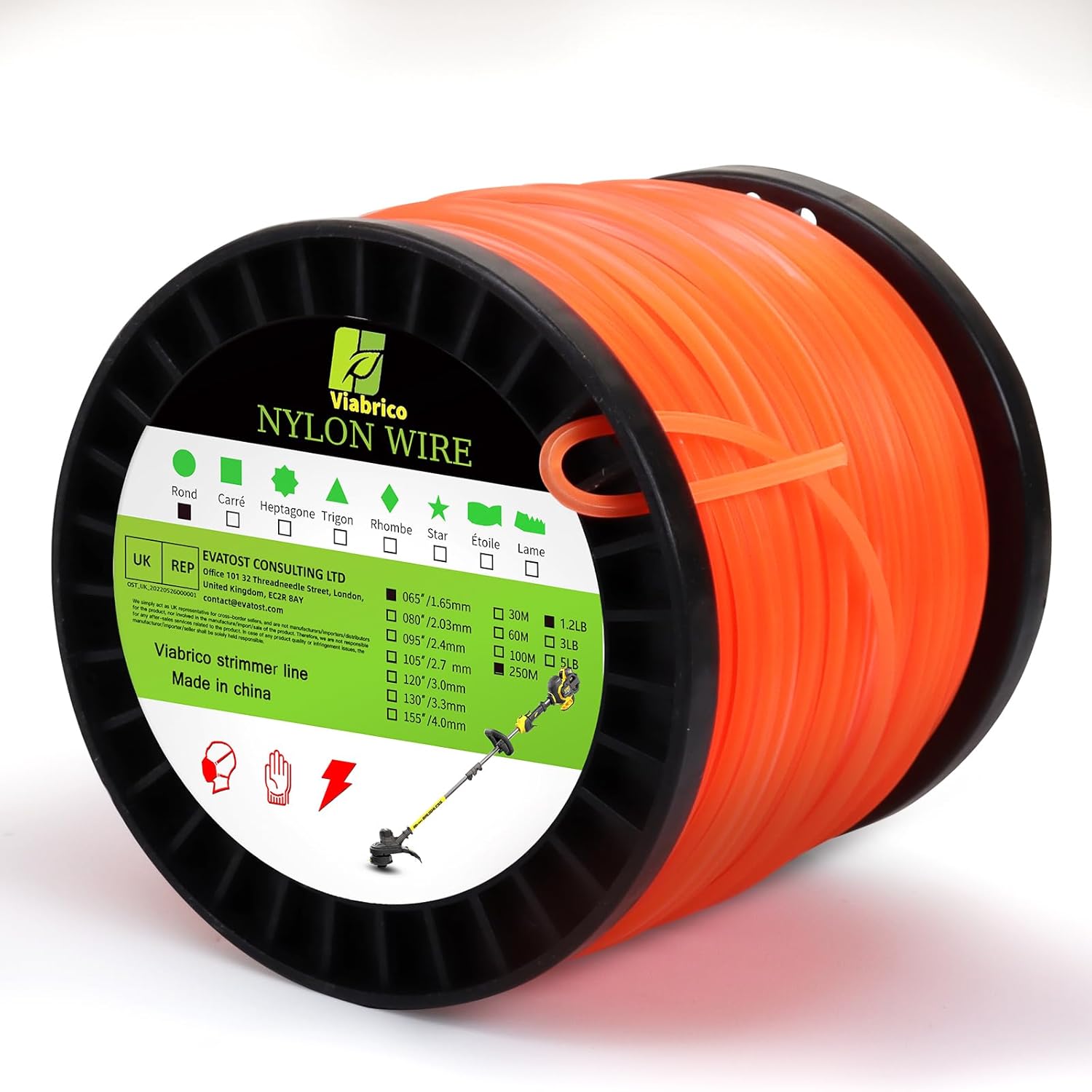
| Line diameter | 0.065 inches |
|---|---|
| Length | 820 ft |
| Weight | 1.2 lb |
| Material | Polyamide |
This Viabrico .065" square trimmer line is built for durability and consistent cutting performance on lawns and overgrown edges. The square and pentagon-cut profile provides sharper cutting edges than round line, which helps deliver cleaner, more even cuts on grass and light brush. It is wound to limit tangles and misfeeds, so you should experience fewer jams and less time reloading. Made from high-strength polyamide, the line is marketed for high tensile strength and abrasion resistance, which makes it better suited to rocky or dusty conditions than thinner, softer lines. Typical use is as a replacement spool for gas, electric, or cordless trimmers that accept 0.065" line, and the long 820 ft roll reduces how often you need to buy or refill. Keep in mind that a stiffer, heavier-duty line can cause slightly higher vibration and may wear cutting heads faster on very small handheld trimmers; it is not intended for cutting large saplings or dense woody brush where thicker line or a brush cutter would be required.
Best for: A homeowner who prioritizes reliability and low maintenance when maintaining lawns and edges and wants a long-lasting replacement line that cuts cleanly with fewer jams.
Less Ideal for: Landscapers who regularly cut heavy woody vegetation or users with very small, low-power trimmers that perform better with ultra-lightweight lines should look elsewhere.
- Square/pentagon profile gives sharper cutting edges than round line for cleaner cuts
- Long 820 ft roll reduces frequent replacements and is convenient for larger yards
- Precision winding minimizes tangles and misfeeds for smoother feeding
- High-strength polyamide construction offers improved abrasion and crack resistance
- Stiffer heavy-duty line can increase vibration on lightweight trimmers and may accelerate spool head wear
- Not suitable for heavy woody brush or small trees where thicker line or a brush cutter is required
Verdict: Choose this Viabrico .065" square trimmer line when you want a long-lasting, low-tangle replacement that delivers sharper, more consistent cuts for routine lawn and edging work.
Choosing the Right Professional String Trimmer Line: Key Factors to Consider
Line Diameter and Cutting Power
Line diameter directly affects cutting force and the type of vegetation you can tackle. Thicker lines generally offer more bite into tall or coarse grasses and can handle tougher weeds without bogging down. That extra thickness also increases wind resistance at high RPMs and can raise fuel load on handheld trimmers, so match diameter to your engine size and the vegetation you encounter.
For mixed mowing routes where you switch between fine turf and patches of thick weeds, consider carrying two diameters and swapping spools as needed. Picking a diameter too thin for the job increases breakage and shortens effective runtime.
Material Formulation
Materials and additives change how the line handles impacts and abrasion. Basic nylon lines are flexible and inexpensive but can wear faster on gritty soil or coarse stems. Reinforced or co-polymer blends add strength and edge-holding capability while resisting heat buildup during continuous high-RPM use.
Some professional lines include lubricants or additives that reduce friction inside the head, improving feed behavior. Others are formulated for low-stretch to keep cutting geometry stable. Understand that material choice affects both cutting efficiency and how often you need to replace the spool.
Profile Shape and Cut Quality
Line profile refers to the cross-section shape: round, square, twisted, serrated, or multi-sided. Round line feeds smoothly and is quiet but often sacrifices cutting sharpness. Multi-sided or serrated profiles increase cutting edges and can produce cleaner cuts through tough stems, which helps plant recovery and gives a crisp finish.
Profile also influences how the line interacts with the trimmer head. Aggressive edges can increase feed resistance or cause more wear on the head. Choose a profile that balances clean cutting with the feed characteristics of your gear.
Feed Compatibility and Spooling
Professional crews need lines that load easily and feed predictably. Some lines spool neatly and advance without tangling, while others bunch up or bind on rewind and under centrifugal force. Compatibility with bump-feed and automatic-feed heads is essential; a line that jams a commercial head causes frustrating downtime.
Consider how the line rewinds on reels or spools you commonly use and whether the line keeps shape during storage and transport. Lines that memory-kink or flatten can lead to poor feeding under field conditions.
Abrasion and Heat Resistance
Trimming along sidewalks, gravel edges, or through abrasive plant material increases wear. Lines with enhanced abrasion resistance last longer by tolerating contact with hard surfaces and gritty debris. Heat resistance matters for long runs or high-RPM trimming because heat can soften or deform line, changing its feeding and cutting characteristics.
Durable formulations reduce the frequency of mid-shift spool changes and preserve consistent cutting diameter over a workday. For routes with a lot of edge contact, prioritize abrasion- and heat-resistant options.
Handling and Storage Practicalities
How a line performs after being stored in a truck or shed affects day-to-day operations. Lines that become brittle in cold weather or that develop memory kinks after sitting on a reel are harder to load and more likely to tangle. Flexible, low-memory formulations are faster to load and easier to carry as backup spools.
Also consider spool size and packaging. Bulk spools that feed into a line-winder save time for crews, while pre-cut lengths or small reels may be better for solo operators. The practicalities of handling influence both speed and convenience on the job.
Matching Line to Trimmer Power and RPM
Powerful commercial trimmers operate at higher RPM and put more strain on line during cutting. Using a line diameter that is too large on a low-powered trimmer can cause bogging and overheating. Conversely, under-dimensioned line on a high-horsepower unit will shear quickly and require frequent replacement.
Check your trimmer head rating and the motor's typical operating range when choosing line diameter and profile. For crews with mixed equipment, standardizing on a couple of compatible sizes reduces confusion and keeps spares interchangeable across machines.
- High RPM units benefit from low-memory, heat-resistant lines
- Match diameter to engine torque, not just head capacity
- Standardize a small set of diameters across fleet for efficiency
Field Techniques That Extend Line Life
How you use and maintain the trimmer affects line longevity as much as the line itself. Avoid dragging the line along hard surfaces when possible, and use edging techniques that lift the cutting plane slightly to reduce abrasive contact. Let the head spool down when moving between dense patches to prevent heat build-up.
Regularly inspect the head for burrs or rough edges that will accelerate wear. Trimming in shorter passes and using a slower feed method in abrasive zones also stretches out spool life.
- Avoid constant contact with gravel and concrete
- Trim in controlled arcs rather than hacking motions
- Keep the head free of serrations or metal burrs that abrade line
Storing and Transporting Professional Line
Store line in a cool, dry place away from direct sunlight to prevent UV degradation and heat distortion. In mobile rigs, keep spools in closed containers or bins to prevent dust and grit from embedding in the line, which increases abrasion when cutting.
When transporting spools, avoid tight bends or compressing them under other gear. Pre-wound reels are convenient but can lock in memory; if you use them, respool occasionally to keep the line supple and ready to feed.
- Store away from heat and sunlight
- Use airtight bins to reduce grit contamination
- Respool or flex bulk line periodically to prevent memory kinks
Environmental and Turf Health Considerations
A clean cut from the trimmer minimizes ragged plant edges that invite disease and slow recovery. Lines that shred rather than slice can stress ornamental plants and create unsightly ragged edges along beds. For trimming near sensitive plantings, choose a profile that produces a neat finish.
Noise and debris generation also matter in residential or sensitive settings. Round or softer-profile lines tend to be quieter and throw less shredded material, which can be important when working near people or delicate plantings.
- Sharper profiles give cleaner plant cuts
- Avoid aggressive shredding near ornamentals
- Consider noise and debris when working in residential areas
Bulk Buying and Crew Logistics
Buying in bulk can reduce the frequency of reordering and keep crews well stocked, but it also requires attention to storage conditions to avoid degradation. Label and rotate stock so older spools are used first and inspect bulk reels occasionally for signs of UV or heat damage.
Organize crew kits with pre-cut lengths or small spools tailored to common tasks to speed field swaps and reduce errors. Train crew members on preferred diameters and profiles so everyone uses compatible line that suits the route.
- Rotate inventory to use older spools first
- Prepare crew kits with pre-cut lengths for speed
- Train teams on preferred diameters and head compatibility
How We Chose the Best Professional String Trimmer Line
We focused on attributes that matter to landscape professionals and serious contractors who need consistent results and minimal interruptions. Key evaluation criteria included abrasion resistance and edge retention because heavy-use trimming wears line quickly; feed system compatibility and anti-tangle behavior so lines load and advance reliably in common commercial trimmers; breakage resistance under load and impact to limit field spool changes; and cut quality against dense grass and coarse weeds to measure how cleanly the line slices vegetation rather than tearing it. Durability tests and user reports helped gauge real-world lifespan rather than relying on nominal diameter alone. We excluded hobby and consumer-grade formulations that are clearly rated for light lawn care or short runtime. We also filtered out specialty decorative or flexible lines that prioritize low noise over cutting force. The remaining picks represent lines designed to stand up to daily or near-daily professional trimming and to work with standard commercial feed systems.
FAQ
What diameter line should I use for commercial trimming?
It depends on your trimmer power and vegetation. Heavier grass and coarse weeds usually need thicker diameters to avoid frequent breakage, while fine turf can be trimmed with thinner line. Match diameter to engine torque and head rating for best results.
Does line profile really affect cut quality?
Yes. Multi-sided or serrated profiles create more cutting edges and typically give a cleaner slice through tough stems. Round line feeds more smoothly and is quieter but may tear rather than cut dense material.
How can I reduce line wear when edging along sidewalks?
Lift the cutting plane slightly and use controlled sweeping motions to limit constant contact with hard surfaces. Choose an abrasion-resistant formulation if your route includes a lot of edging against concrete or gravel.
Are there lines that feed better in automatic heads?
Some formulations have lower memory and spool more evenly, which helps feeding in automatic and bump-feed systems. Lines that resist kinking and keep a round cross-section are less likely to bind during feed cycles.
How should I store bulk spools on a service truck?
Keep spools in closed bins away from direct sun and heat sources to avoid deformation and UV damage. Label spools and rotate stock so older material is used first, and avoid crushing or excessively bending reels during transport.
Will additives in line reduce feeding problems?
Additives that reduce friction or stabilize shape can help feeding by preventing line from sticking to itself and reducing heat buildup. However, handling and spool technique also play a large role, so treat additives as one factor among several.
Final Verdict
For professional trimming, prioritize a line that balances cut durability, abrasion resistance, and predictable feed behavior. Tradeoffs are common: thicker and more aggressive profiles cut tougher vegetation but can increase feed resistance and wear on the head. Match line diameter and material to your equipment and the most common vegetation you manage. Focus on formulations that resist heat and abrasion if you run long shifts or edge frequently, and standardize a small set of diameters across your fleet to simplify logistics. That approach reduces downtime and helps crews work more efficiently while preserving turf and plant health.
