

Note: This article contains affiliate links. If you click on these links and make a purchase, I may earn a small commission at no extra cost to you. This helps support my research and content. Read my full affiliate disclosure here.
If you want to add height, privacy, or a vertical focal point to a patio, balcony, or small yard, climbing plants in containers are an efficient solution. Container climbers behave differently than those planted in the ground: root volume is limited, heat and watering cycles are faster, and support systems must be integrated with the pot and surrounding structure. This guide covers seven top-picked climbing plants for containers that suit a range of light exposures and maintenance levels. We shortlisted options that establish reliably in pots and evaluated them on practical gardener concerns like light tolerance, watering behavior, and support needs. Read on to match a climbing plant to your container space and care routine.
Top Picks at a Glance
| Best Overall The best all-around choice for most situations | MYSHELFIE Purple Honeysuckle (Lonicera japonica 'Purpurea'), Live Vine, 2‑inch Pot, 2-Pack |  |
| Best Quality Built to a higher standard if you want something more solid | Heirloom Roses Eden Climber — Live Own-Root Climbing Rose |  |
| Best Value The sweet spot between price and what you get | Plants by Mail Star Jasmine 'Large Leaf' (2.5 Quart) – Evergreen Climbing Vine |  |
| Best Budget The cheapest option that still gets the job done reliably | Carpet Creeping Mixed Clematis Vine Seeds (Heirloom, Non-GMO) |  |
| Highest Rated A top-rated pick with lots of positive feedback | Plant Nook Coral Vine Live Plant 2-Pack (6–8 in) |  |
| Most Popular A crowd favorite that many people choose with confidence | Perfect Plants Confederate Jasmine (2-Pack), Star Vine, 1 Gal |  |
| Best Seller A high-volume bestseller chosen again and again | KVITER Moonflower (Ipomoea alba) Heirloom Seed Packets, 50 Count |  |
MYSHELFIE Purple Honeysuckle (Lonicera japonica 'Purpurea'), Live Vine, 2‑inch Pot, 2-Pack

| Sunlight Exposure | Full Sun To Partial Shade |
|---|---|
| USDA Hardiness Zone | 7-11 |
| Expected Blooming Period | Spring to Fall |
| Soil Type | Well-draining, Fertile Soil |
| Moisture Needs | Moderate, Water Regularly But Allow Soil To Dry Between Waterings |
This purple honeysuckle arrives as healthy starter plants in 2‑inch pots and is intended for outdoor planting on containers, trellises, fences, or arbors. It is appreciated for its purple foliage and fragrant spring-to-fall blooms and is marketed as a fast-growing, hardy climber that attracts pollinators. Use it in a container with a sturdy support or a trellis; plant in well-draining fertile soil, water moderately while allowing the soil to dry between waterings, and prune to control shape and vigor. The plant is adaptable to full sun or partial shade and is rated for USDA zones 7 to 11, making it suitable for many mild climates. Because these are small starter pots, expect several weeks of establishment before vigorous climbing and flowering; regular fertilizing during the growing season helps fill out the vine in containers. This is a sensible pick if you want an eye-catching, fragrant climber that needs minimal fuss, though it will require periodic pruning to prevent overly aggressive spread where that matters.
Best for: Gardeners who want a colorful, fragrant climbing vine for containers or small supports and prefer a low-maintenance plant that establishes quickly and attracts pollinators.
Less Ideal for: Those needing an immediate, full-size privacy screen or gardeners in colder zones below USDA 7 should consider sturdier or hardier alternatives.
- Fast-growing climber that establishes quickly when planted
- Attractive purple foliage plus fragrant blooms that attract pollinators
- Low-maintenance care: tolerates full sun to partial shade and moderate watering
- Suitable for containers and trained on trellises, fences, or arbors
- Ships as a small 2‑inch starter pot so it needs time and attention to reach full size
- Hardiness limited to USDA zones 7–11, not suitable for colder climates
Verdict: A low-maintenance, fast-climbing purple honeysuckle that adds fragrant blooms and striking foliage to container trellises in mild climates.
Heirloom Roses Eden Climber — Live Own-Root Climbing Rose

| Indoor Outdoor Usage | Outdoor |
|---|---|
| Expected Blooming Period | Spring to Fall |
| Sunlight Exposure | Full Sun |
| USDA Hardiness Zone | 9 |
| Moisture Needs | Moderate Watering |
The Heirloom Roses Eden Climber is a live own-root climbing rose designed to produce repeat flushes of lightly fragrant, full-petaled blooms across the growing season. Typically sold in a 1-gallon container, the plant arrives about 12–15 inches tall and is meant to be trained on a trellis, fence, or in a large container where its mature spread can be managed. Notable features include its own-root propagation, which can give longer-term vigor and winter hardiness, an extended bloom period from spring to fall, and suitability for full sun and loam soils with moderate watering. In container use it rewards regular feeding and pruning to focus growth and encourage repeat flowering. Limitations to consider are its eventual mature size, which can reach large proportions and will need substantial support or a very large container, and the requirement for consistent sun and moderate water to perform well. For gardeners focused on season-long performance, it delivers impressive bloom continuity when properly trained and maintained.
Best for: Gardeners who prioritize continuous flowering performance and want a vigorous climbing rose to train on a trellis or in a large container for season-long display.
Less Ideal for: People with only small pots, limited sun, or who want a low-maintenance, compact flowering plant without training and pruning needs.
- Own-root planting for natural vigor and true-to-type growth
- Repeating blooms from spring through fall for long season interest
- Light fragrance adds sensory appeal without overpowering
- Suitable for full sun and moderate watering, making care straightforward
- Mature climbing habit becomes large and requires strong support or a very big container
- Hardiness listed for zone 9 in product details could limit success in colder microclimates without protection
Verdict: Choose this own-root climber if you want a vigorous, repeat-blooming rose you can train for strong, season-long performance in a container or on a trellis.
Plants by Mail Star Jasmine 'Large Leaf' (2.5 Quart) – Evergreen Climbing Vine

| Expected Blooming Period | Spring to Summer |
|---|---|
| Sunlight Exposure | sun to partial shade |
| USDA Hardiness Zone | 9 |
| Moisture Needs | Moderate Watering |
| Soil Type | Loam Soil |
This large-leaf Star Jasmine is a versatile, fast-growing evergreen vine that is typically used on trellises, arbors, fences, or as a groundcover. It produces clusters of fragrant white, star-shaped flowers in late spring through summer and can be trained to reach tall supports where it will twine and fill in quickly. The plant prefers full sun but tolerates partial shade and benefits from regular watering during its first seasons to establish strong roots. Practical features include vigorous twining habit that makes it easy to train on a trellis and glossy leathery leaves that provide year-round greenery. Expect steady vertical coverage and strong fragrance that attracts pollinators. Limitations to consider are its USDA zone preference (best in warmer climates) and the need for routine watering and occasional pruning after flowering to keep it neat and encourage denser growth. For gardeners wanting a reliable, fragrant climber for sunny trellis sites, this jasmine is a straightforward choice.
Best for: Gardeners who want a reliable, fragrant climber to quickly cover a sunny trellis or fence and value year-round evergreen screening with seasonal blooms.
Less Ideal for: Those in consistently cold climates or gardeners seeking a low-water, drought-tolerant climber should consider alternative species better adapted to cooler or xeric conditions.
- Fast-growing twining habit that quickly covers trellises and fences
- Fragrant clusters of white star-shaped flowers in spring and summer
- Evergreen glossy foliage provides year-round screening
- Tolerates full sun to partial shade and attracts pollinators
- Best suited to warmer USDA zones so may not survive cold winters without protection
- Requires regular watering and occasional pruning to maintain shape and vigor
Verdict: Choose this Star Jasmine when you need a fast, fragrant evergreen climber to quickly fill a full-sun trellis and provide seasonal white blooms.
Carpet Creeping Mixed Clematis Vine Seeds (Heirloom, Non-GMO)

| Indoor Outdoor Usage | Outdoor |
|---|---|
| Expected Blooming Period | Spring to Fall |
| Sunlight Exposure | Full Sun |
| Material Features | GMO Free, Heirloom |
| Unit Count | 1000 Count |
This seed mix supplies a variety of clematis species and cultivars intended for training on trellises, arbors, fences and pergolas to add vertical color from spring through fall. The packet is heirloom and non-GMO and includes hundreds of seeds, but growing from seed requires patience: seeds need cold stratification for 8 to 12 weeks and germination can take weeks to months. Once established the vines climb naturally by twining leaf stalks and can provide 6–12 feet of coverage, attract pollinators, and tolerate moderate drought. Practical benefits for full-sun trellis projects are plentiful: long bloom windows, disease resistance, and deer resistance reduce maintenance and replacement. Limitations are the time and skill needed to start seeds and the unpredictability of mixed-seed results compared with named cultivars, so expect variable flower colors and a one- to three-year wait before reliable flowering from seed-grown plants.
Best for: Gardeners working to add affordable, long-blooming climbers to full-sun trellises who are willing to start plants from seed and wait for established growth.
Less Ideal for: Growers who want instant mature vines, guaranteed specific cultivars, or a fast-season display should choose container-grown or named-variety clematis instead.
- Large quantity of seeds for multiple trellises or repeat sowings
- Heirloom and non-GMO seeds suitable for traditional gardening
- Extended bloom period that can provide seasonal color from spring to fall
- Attracts pollinators and is reported to be deer resistant
- Requires cold stratification and patience; germination can take weeks to months
- Mixed-seed packet yields variable, unpredictable flower types and timings
Verdict: If you want an inexpensive way to fill full-sun trellises with long‑blooming vines and you can start plants from seed, this mixed clematis pack gives plenty of material to plant and experiment with.
Plant Nook Coral Vine Live Plant 2-Pack (6–8 in)

| Indoor Outdoor Usage | Outdoor |
|---|---|
| Expected Blooming Period | Summer to Fall |
| Sunlight Exposure | Full Sun |
| USDA Hardiness Zone | 7-9 |
| Moisture Needs | Moderate Watering |
This two-pack of Coral Vine arrives as live, rooted plants intended for outdoor planting where they get full sun and moderate watering. Gardeners typically train the fast-growing vines onto a trellis, fence, or container-mounted support where they quickly produce long sprays of bright pink flowers in summer and fall. Notable features include nursery inspection and protective packaging for shipping and a plant care profile that calls for six or more hours of direct sun and watering only when the top inch of soil is dry. In containers the vine performs well if given a sturdy support and regular drainage; the plants are marketed at 6 to 8 inches at delivery, which makes them easy to transplant and establish. Limitations to consider are its need for consistent full sun and moderate moisture and that it is hardy only to USDA zones 7 to 9, so colder climates or heavily shaded sites are not suitable without additional protection or indoor overwintering.
Best for: Buyers who want a reliable, fast-establishing climbing plant for sunny container displays and are focused on low-maintenance, predictably flowering vines for summer and fall interest.
Less Ideal for: People looking for shade-tolerant climbers, growers in colder-than-zone-7 climates, or those who cannot provide a sturdy support structure for vigorous vines.
- Fast-climbing habit that quickly covers trellises, fences, or container supports
- Produces abundant bright pink flowers in summer and fall when grown in full sun
- Shipped as rooted, hand-inspected plants with protective packaging for safer arrival
- Low maintenance watering needs when grown in well-draining soil
- Suitable only for USDA hardiness zones 7 to 9, limiting use in colder regions
- Requires six or more hours of direct sun so it does poorly in shade
Verdict: A dependable, fast-climbing coral vine for sunny container setups that reliably produces showy pink blooms with minimal weekly care.
Perfect Plants Confederate Jasmine (2-Pack), Star Vine, 1 Gal
| Indoor Outdoor Usage | Outdoor |
|---|---|
| Expected Blooming Period | Spring |
| Sunlight Exposure | Full Sun, Partial Shade |
| Moisture Needs | Moderate Watering |
| Unit Count | 1 Count |
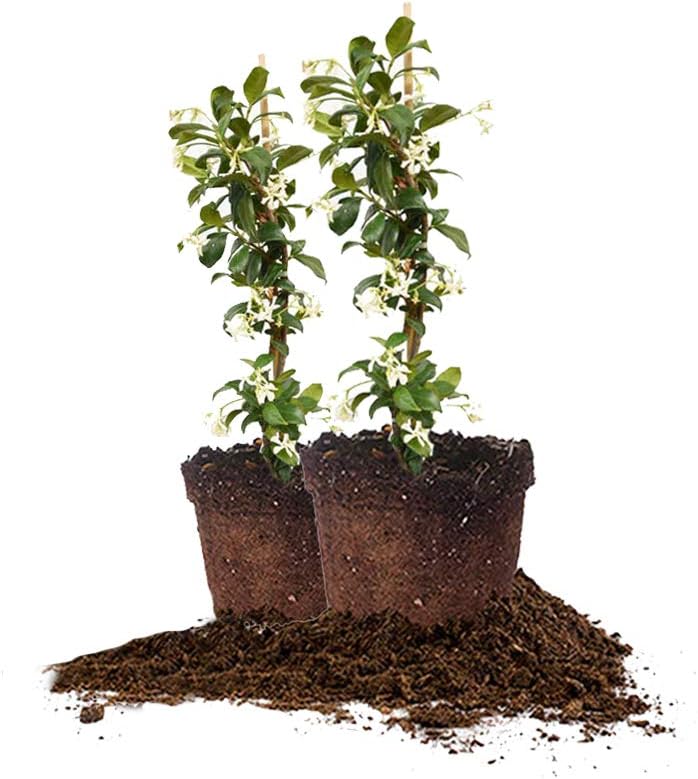
These two Confederate jasmine vines arrive in individual 1‑gallon nursery pots and are meant to be trained on fences, trellises, railings or other supports to form a fragrant, evergreen screen. They perform best in full sun to part shade and are rated for USDA zones 7–11, so on a shaded porch they will tolerate lower light but bloom most reliably where they get some sun. The plants are described as easy to establish; new arrivals need deep watering every day or two for the first two weeks and can drop some leaves while roots settle. Notable features are the glossy evergreen foliage, sweet white pinwheel flowers in spring and early summer, and organic plant material. Limitations include that each order contains small 1‑gallon pots so expect a period of growth before reaching the listed mature height, and some variability between the two plants. Buyers should plan to provide a structure and basic training to get a neat coverage and to monitor moisture while the plants establish.
Best for: Gardners who want a fragrant, evergreen climbing vine to train on a porch trellis or railing and who prefer a low‑maintenance plant that establishes quickly with basic watering.
Less Ideal for: Those seeking instant privacy or mature coverage right away or gardeners unwilling to train or support vines as they grow.
- Two evergreen vines per order for quicker coverage when planted together
- Fragrant white spring blooms that add scent to a porch area
- Tolerates full sun to partial shade, making it adaptable to sheltered porches
- Ships in 1‑gallon nursery pots so plants are ready to plant immediately
- Described as easy to establish with straightforward watering guidance
- Plants are small 1‑gallon specimens so visual impact takes time as they grow to mature height
- Some leaf drop and minor shipping damage to stems is possible during establishment
Verdict: A practical choice for porch gardeners who want a fragrant, adaptable evergreen vine they can train for seasonal blooms and long‑term screening.
KVITER Moonflower (Ipomoea alba) Heirloom Seed Packets, 50 Count

| Unit Count | 50 Count |
|---|---|
| USDA Hardiness Zone | 5-11 |
| Expected Blooming Period | Summer to Fall |
| Sunlight Exposure | Full Sun |
| Material Features | GMO Free, Heirloom |
These KVITER moonflower seeds are heirloom, non-GMO seeds packaged with a step-by-step growing guide to help gardeners get reliable results. They grow into vigorous climbing vines that can reach 15 to 20 feet, making them useful for containers with a trellis, hanging baskets with support, or fences and pergolas. The flowers open at night and are highly fragrant, ideal for a moon garden or evening patio. The packet is labeled for USDA zones 5 to 11, blooms from summer to fall, and calls for full sun, loam soil, and moderate watering. Practical benefits include a clear planting guide on each packet, high seed count for multiple containers or retries, and low maintenance once established. Limitations to consider are that these are typically treated as annuals in cooler zones, they need a support structure and sufficient container depth for strong vines, and germination can be improved by soaking or nicking seeds before sowing, which adds a small extra step for cautious growers.
Best for: A cautious gardener who wants an easy-to-follow seed option for adding dramatic, fragrant climbing flowers to patios and containers and prefers seeds with clear instructions and a high success rate.
Less Ideal for: Gardeners who need low-growing or strictly perennial container plants or those unwilling to provide a trellis and occasional pre-sowing seed treatment.
- High seed count (50) allows multiple plantings or replacements for container setups
- Non-GMO heirloom seeds with a detailed growing guide included on each packet
- Produces vigorous, fragrant night-blooming vines well suited to trellises and container supports
- Suitable for a wide range of USDA zones (5–11) and blooms from summer through fall
- Requires a sturdy support and deep enough container for the long climbing vines
- Usually grown as an annual in cooler climates, not a reliable perennial outside warm zones
- Germination benefits from pre-treatment (soaking or nicking) which adds an extra step
Verdict: If you want a dependable, fragrant climbing flower for evening patios and container trellises, these heirloom moonflower seeds deliver large, fast-growing vines with clear instructions for reliable results.
Choosing the Right Climbing Plants for Containers: Key Factors to Consider
Light Exposure
Light exposure determines which climbing plants will thrive in a container and how much bloom or foliage density you can expect. Full-sun climbers produce the best flowering in six or more hours of direct sun but will need larger containers, more frequent irrigation, and heat-mitigation strategies on hot patios.
Part-shade and shade-tolerant climbers survive with fewer hours of direct sun but usually grow more slowly and may produce less prolific flowers. Assess the orientation of your balcony or patio at different times of the day to match plants to realistic light conditions.
Container Size and Root Space
Limited root volume in containers restricts how large a climbing plant can grow and how vigorously it will put on top growth. Choose a pot with enough depth and width for the species' root system; vines that normally develop extensive root balls in the ground often become root-bound and decline in small pots.
Larger containers buffer moisture swings and support heavier supports anchored into the soil. If space is tight, select naturally compact climbers or varieties labeled for container culture to avoid repeated repotting.
Support Structure and Attachment Method
Climbers use tendrils, twining stems, adhesive pads, or leaf petioles to attach. In containers you need a support that matches that attachment style and is stable enough to handle wind and weight. Lightweight trellises, obelisks, or wall-mounted wires work for many species, while heavier climbers may need a sturdier frame secured through the pot base.
Think about how the support integrates with the container and how easy it will be to train and prune the plant without destabilizing the setup. Removable supports simplify repotting and winter storage.
Watering Needs and Drought Tolerance
Container-grown climbers dry out faster than those in the ground, so understanding a plant's watering needs is essential. Some climbers tolerate intermittent drying and perform well in shallow planters, while others require consistently moist soil and larger pots to avoid stress.
Consider the microclimate of your container site: exposed balconies and black pots heat up quickly and increase evapotranspiration. Choose plants with compatible drought tolerance and plan for drip irrigation, saucers, or mulch to reduce watering frequency.
Growth Rate and Pruning Requirements
Growth rate affects how quickly a climbing plant will cover a trellis or provide screening. Fast growers offer quick payoff but require more regular pruning, training, and support reinforcement. Slower growers require less maintenance but need patience to reach the desired height and coverage.
Understand a plant's pruning window and whether flowering occurs on new or old wood; this influences when to prune to protect bloom potential and maintain a tidy container form.
Winter Hardiness and Overwintering Strategy
Cold tolerance determines whether a climbing plant can remain in an outdoor container through winter or needs protection. Potted plants experience colder root conditions than in-ground plantings and may be more vulnerable to freeze damage. For marginally hardy species, moveable containers enable relocation to sheltered spots or insulating wraps.
If you plan to keep plants in place year-round, prioritize hardiness and reduced root exposure. For tender climbers, develop a clear overwintering plan such as bringing pots indoors, using frost cloths, or temporarily sinking containers into the ground.
Best Support Systems for Container Climbers
Choosing the right support does more than guide growth; it protects the pot and plant from wind and prevents rootball tipping. For lightweight vines with tendrils, a bamboo trellis or slim metal grid inserted into the pot works well. For heavier climbers, use a freestanding obelisk whose base sits inside a deep pot or a wall-mounted frame anchored to the building behind the container.
- Match support style to attachment method: trellises for tendrils, wires for twining stems, and stakes for single-stem climbers.
- Secure tall supports by bolting to a decking rail or running through a weighted base inside the pot to prevent tipping.
- Consider removable supports that allow easy repotting and winter storage.
Potting Mixes and Feeding for Vigorous Container Climbers
A well-draining, moisture-retentive potting mix balances aeration with water-holding capacity. Mixes with composted bark or coco coir retain moisture while perlite or grit improves drainage. Avoid heavy garden soil that compacts and suffocates roots in containers. Climbers in pots benefit from a regular feeding schedule since nutrients leach quickly with frequent watering. Use a balanced slow-release granular fertilizer at planting and supplement with diluted liquid feed during the growing season for sustained bloom and leaf production.
- Topdress with organic compost each spring to refresh nutrients.
- Use a water-soluble fertilizer during peak growth months for extra bloom power.
- Mulch the surface to reduce evaporation and moderate soil temperature.
Training Techniques to Shape Growth and Maximize Coverage
Start training when young stems are flexible; gently tie new shoots to the support using soft ties to avoid damaging stems. Guide branches outward from the central leader to create even coverage on a trellis or obelisk. Remove inward-facing or crossing shoots to improve air circulation and reduce disease risk. For screening, plant multiple containers in a row and train each vine to overlap its neighbor. Regular light pruning encourages bushier growth and more flowering on many container-suitable climbers.
- Use soft, wide ties and retie as stems thicken.
- Pinch tip growth on young vines to promote lateral branching.
- Rotate pots periodically to ensure even light exposure and symmetrical growth.
Managing Pests and Diseases in Container Setups
Containers create a concentrated environment where pests can quickly build up. Inspect foliage regularly for common issues like aphids, spider mites, and powdery mildew. Good airflow, proper spacing, and watering at the pot base reduce disease pressure. Use targeted cultural controls first: blast pests with a water jet, prune affected growth, and introduce beneficial insects in sheltered settings. For persistent problems choose appropriate organic or chemical controls following label guidance and local recommendations.
- Avoid overhead watering to reduce fungal issues.
- Sanitize tools between plants to limit pathogen spread.
- Replace the top inch of potting mix annually to reduce soil-borne pests.
Design Ideas Using Container Climbers
Climbing plants can transform narrow spaces: use a single tall container at a corner to frame a doorway, or create a living screen with a row of mid-height planters and matching trellises. Mix a flowering climber with a trailing annual in the same pot for season-long interest at different levels. Consider contrast in foliage texture and color to make blooms pop. For small balconies, lightweight supports and compact climbers deliver vertical impact without overwhelming the space.
- Pair a flowering climber with a low-growing evergreen for year-round structure.
- Use matching pots and coordinated supports for a cohesive look.
- Choose scent-forward climbers near seating areas to enhance the sensory experience.
How We Chose the Best Climbing Plants for Containers
We focused on traits that matter when growing climbing plants in confined soil volumes and on patios or balconies. Selection prioritized species and cultivars known to establish in containers, with predictable growth habits and manageable root systems. We evaluated six concrete dimensions: light tolerance, root and pot vigor, watering and drought response, support and training needs, seasonal interest including bloom or foliage, and cold tolerance for cooler climates. Plants that typically require deep or unrestricted soil were excluded, as were cultivars known for invasive root or scrambling behavior that overwhelms containers. We also filtered out types that demand specialized greenhouse environments or constant pruning beyond normal container management. Final picks balance aesthetic payoff with realistic care requirements for most home gardeners using pots, window boxes, or narrow planters.
FAQ
Can most climbing plants be grown successfully in containers?
Many climbing species adapt well to containers, especially those with moderate root systems. Success depends on matching pot size, watering, and support to the plant's natural habits. Some vigorous ground climbers are not suitable for small pots.
How big should the pot be for a container climbing plant?
Choose a pot that gives several years of root space: deeper and wider containers hold more soil, buffer moisture swings, and support larger supports. For quick-growing climbers, start with the largest practical pot you can accommodate.
How often do container climbers need watering?
Watering frequency depends on pot size, mix, exposure, and plant species. Small pots in full sun may need daily checks in summer, while larger, mulched containers might dry more slowly. Check soil moisture by feeling the top two inches before watering.
When should I prune container climbers to encourage flowering?
Pruning timing depends on whether the species blooms on new or old wood. Light maintenance pruning and training can be done throughout the growing season; major structural pruning is best timed after flowering or during dormancy for most temperate climbers.
Can container climbers survive winter outdoors?
Some hardy climbers tolerate winter in larger, well-insulated containers, while tender species need moving to a protected spot or indoor overwintering. Insulating pots and sinking them into the ground can help marginally hardy plants survive cold snaps.
Final Verdict
Choosing container-suitable climbing plants is about balancing root limits, support, and the microclimate of your outdoor space. Prioritize plants that match your light exposure and pot size, plan a stable support system, and accept the tradeoff between quick coverage and maintenance intensity. With the right combination of container, soil, watering, and training, you can achieve vertical color, privacy, or fragrance in compact settings and confidently select the climbing plant that fits your patio or balcony needs.
