

Note: This article contains affiliate links. If you click on these links and make a purchase, I may earn a small commission at no extra cost to you. This helps support my research and content. Read my full affiliate disclosure here.
If you manage a home garden, choosing the right organic insecticidal soap matters for both plant health and beneficial insect populations. Used correctly, these soaps quickly suppress aphids, whiteflies, mealybugs, and other soft-bodied pests while leaving edible plants and ornamentals intact. This guide focuses on top-performing options suited to small-scale gardens, patios, and raised beds and explains the practical tradeoffs gardeners face. Below you will find a shortlist of the best organic insecticidal soaps and the criteria we used to evaluate them, including how they affect plant foliage, application ease, safety for pollinators, and coverage. Use the notes here to match a product to your growing situation and pest pressure.
Top Picks at a Glance
| Best Overall The best all-around choice for most situations | Bonide Insecticidal Soap 32 oz Ready-to-Use Spray, Pack of 2 |  |
| Best Quality Built to a higher standard if you want something more solid | Bonide Captain Jack's Insecticidal Super Soap Ready-to-Use, 32 oz | 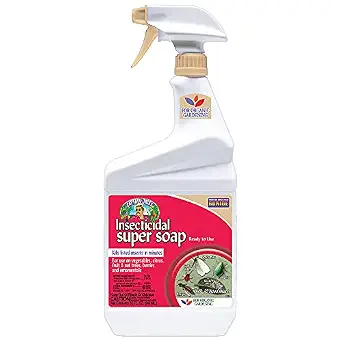 |
| Best Value The sweet spot between price and what you get | Garden Safe Houseplant & Garden Insect Killer, Ready-to-Use, 32 oz |  |
| Best Budget The cheapest option that still gets the job done reliably | Bonide Insecticidal Soap Ready-to-Use Spray, 32 oz |  |
| Highest Rated A top-rated pick with lots of positive feedback | NatureStop Insecticidal Soap (16 oz) |  |
| Most Popular A crowd favorite that many people choose with confidence | Safer 5118-6 Insect Killing Soap Concentrate (16 fl oz) |  |
| Best Seller A high-volume bestseller chosen again and again | Garden Safe Insecticidal Soap Ready-to-Use Spray, 32 oz |  |
Bonide Insecticidal Soap 32 oz Ready-to-Use Spray, Pack of 2

| Item Form | Spray |
|---|---|
| Liquid Volume | 64 fluid ounces |
| Brand | Bonide |
This Bonide insecticidal soap arrives as two 32 oz ready-to-use sprayers designed to kill soft-bodied pests on contact. It is typically used by spraying affected foliage and insects directly in home gardens, ornamentals, greenhouses and on edibles up to the day of harvest. The formula uses potassium salts of fatty acids, which provide quick knockdown of aphids, mites, whiteflies, caterpillars and similar pests while being acceptable for organic production. The spray nozzle and ready-to-use packaging make application simple and consistent without mixing. Because it works by contact, thorough coverage is essential and it will not control pests hidden inside plant tissue or in the soil. Also, repeated applications may be needed for heavy infestations and it can be less effective against hard-bodied insects. For gardeners who prioritize a dependable, low-residue option that is safe around edible plants when used as directed, this product is a practical choice.
Best for: Gardeners who want a reliable, easy-to-use contact insecticide for routine control of soft-bodied pests on vegetables, ornamentals and houseplants and who prioritize organic-approved options.
Less Ideal for: People dealing with soil-borne pests or heavy infestations of hard-shelled insects should consider systemic or targeted alternatives instead.
- Ready-to-use spray requires no dilution and is simple to apply
- Approved for organic gardening and may be used up to the day of harvest
- Effective on a wide range of soft-bodied pests through contact action
- Pack of two provides extended coverage for multiple applications
- Works only by contact so thorough coverage and repeat treatments are often required
- Less effective against hard-bodied or concealed pests
Verdict: Choose this ready-to-use, organic-approved insecticidal soap when you want a straightforward, dependable contact spray for controlling common soft-bodied garden pests.
Bonide Captain Jack's Insecticidal Super Soap Ready-to-Use, 32 oz

| Unit Count | 32 Ounce |
|---|---|
| Liquid Volume | 32 fluid ounces |
| Item Form | Spray |
| Active Ingredients | Potassium Salts of Fatty Acids, Spinosad |
| Specification Met | USDA |
Bonide Captain Jack's Insecticidal Super Soap is a ready-to-use spray that controls more than 30 common garden pests including aphids, caterpillars, mites, and whiteflies while also addressing powdery mildew. It is typically applied directly to infested foliage with the built-in spray nozzle, giving fast contact and ingestion-based kill for soft-bodied insects and leaf-feeding pests. Notable features are its USDA specification and active ingredients of potassium salts of fatty acids plus spinosad, which combine a soap-based knockdown with a biologically derived insecticide for broader effectiveness. Practical benefits include easy deployment without mixing, suitability for organic gardening, and use across vegetables, herbs, fruit, ornamentals, containers, and greenhouses. Important limitations are that it requires direct contact or ingestion so thorough coverage is necessary and results may be reduced against heavy or hard-shelled pests; repeated applications may be needed for full control and care should be taken around beneficial insects. For gardeners who prioritize reliable, ready-to-use performance on a wide range of outdoor plants this product offers a practical, effective option.
Best for: Gardeners who want a performance-focused, ready-to-use insect control for edible and ornamental outdoor plants and who value organic-approved options that work quickly on common soft-bodied pests.
Less Ideal for: People who require systemic long-term control of soil-borne pests or need a single-application solution for armored insects should consider alternative chemistries or integrated approaches.
- Ready-to-use spray with built-in nozzle for immediate application
- Active ingredients include potassium salts of fatty acids and spinosad for both contact and ingestion kill
- Approved for organic gardening and labeled for vegetables, fruits, herbs, ornamentals, and greenhouses
- Fast acting formula that also addresses powdery mildew
- Requires complete coverage and direct contact or ingestion, so thorough spraying is necessary
- Less effective against hard-shelled or heavily protected pests and may need repeat applications
Verdict: Choose this ready-to-use, organic-approved spray when you need fast, broad-spectrum control of soft-bodied garden pests across edible and ornamental plants.
Garden Safe Houseplant & Garden Insect Killer, Ready-to-Use, 32 oz

| Item Form | Spray |
|---|---|
| Target Species | Insects |
| Liquid Volume | 32 fluid ounces |
This ready-to-use Garden Safe spray is a contact insect killer formulated for use on houseplants, ornamentals and edible garden crops. You apply it by spraying the upper and lower leaf surfaces weekly or as needed; the label allows use up to the day of harvest, which makes it practical for vegetable and herb growers. It claims to kill more than 100 listed pests on contact, so it can quickly reduce visible populations of common houseplant pests including spider mites when sprayed thoroughly. Important features include a convenient trigger-spray bottle and instructions for repeated applications up to ten times per season. Be mindful that it is a pesticide with safety precautions: avoid applying in hot weather above 90 F, keep it away from water and bees, and follow first-aid guidance for accidental exposure. For someone who wants an effective, easy-to-use spray to manage outbreaks, this product is a straightforward option, but it requires careful application to protect beneficial insects and aquatic life.
Best for: For practical plant owners who want a simple, grab-and-spray solution to bring down visible pest outbreaks on houseplants and small garden plots without mixing concentrates.
Less Ideal for: Not a good fit for people wanting organically certified or strictly pollinator-safe solutions for flowering plants visited by bees.
- Ready-to-use spray bottle is convenient for spot treatments on houseplants
- Label lists use on edible crops up to day of harvest for flexible garden use
- Fast-acting contact formula that targets over 100 listed insect pests
- Directions support repeat applications (weekly, up to 10 times per season)
- Toxic to aquatic life and bees when directly applied to blooming plants
- Not recommended for use when temperatures exceed 90 degrees Fahrenheit
Verdict: A convenient, ready-to-use spray that quickly reduces common houseplant and garden insect pests and is practical for repeat spot treatments.
Bonide Insecticidal Soap Ready-to-Use Spray, 32 oz

| Unit Count | 32 Ounce |
|---|---|
| Item Form | Spray |
| Target Species | Insects |
| Active Ingredients | Potassium salt of fatty acids |
This ready-to-use insecticidal soap spray kills soft-bodied insects on contact using potassium salts of fatty acids derived from plants, making it suitable for organic vegetable beds and container vegetables. It is applied with the built-in spray nozzle directly to affected foliage to control aphids, mites, caterpillars, whiteflies and other listed pests; the label allows use up to the day of harvest on many food crops. Practical benefits include an easy spray application with no mixing, low residual toxicity compared with conventional insecticides, and a broad list of target species for small-scale home gardens and greenhouses. Important limitations are that it works by contact so complete coverage is required and it will not control pests hidden inside fruit or stems; repeated applications may be necessary for heavy infestations. Users should follow label safety directions and test on a few plants first since some sensitive foliage can show damage under hot conditions.
Best for: Gardeners who prioritize simple, low-residue organic solutions for vegetables and want a no-mix spray they can use quickly on affected plants.
Less Ideal for: Large-scale growers who need systemic or long‑residual control or anyone needing a product to reach pests hidden inside fruit or stems.
- Ready-to-use spray with an easy nozzle for immediate application
- Active ingredient is a plant-derived potassium salt suitable for organic gardening
- Labeled for use on a wide range of vegetables, herbs, ornamentals and houseplants
- Low residual toxicity compared with synthetic insecticides
- Kills only on contact so full coverage and repeat treatments are often required
- May cause phytotoxicity on some sensitive plants or under high heat if not spot-tested
Verdict: A convenient, ready-to-use organic spray that gives practical contact control of common vegetable garden pests with minimal residual impact.
NatureStop Insecticidal Soap (16 oz)

| Item Form | Liquid |
|---|---|
| Target Species | All |
| Liquid Volume | 16 fluid ounces |
| Brand | NatureStop |
NatureStop Insecticidal Soap is a ready-to-use liquid spray aimed at controlling soft-bodied pests such as aphids, whiteflies, mealybugs, and spider mites on houseplants and garden ornamentals. You apply it directly to affected foliage and stems; the soap-based formula works on contact to break down pests and leave cleaner leaves when used as part of a regular care routine. The product emphasizes a natural oil approach, listing peppermint oil as an ingredient, which can be appealing if you prefer alternatives to synthetic pesticides. Practical benefits include suitability for routine use on a range of indoor plants and a straightforward spray application that is easy to integrate into watering and maintenance. Limitations to note are that contact sprays only affect pests they reach so thorough coverage is needed and multiple applications are typically required to suppress infestations. As with all soaps, test on a small area first and avoid applying in hot sun to prevent leaf damage.
Best for: Plant owners who prioritize dependable, low-toxicity pest control and want a straightforward spray they can use regularly to manage aphids, mites, and similar pests on houseplants.
Less Ideal for: People seeking a one-time systemic cure for large or established infestations or those who need an all-in-one broad-spectrum insecticide for outdoor landscape pests.
- Formulated to target common soft-bodied plant pests on contact
- Contains natural oil ingredient (peppermint oil) as an alternative to synthetic chemicals
- Clear liquid spray that is easy to apply directly to leaves and stems
- Suitable for routine use on both houseplants and outdoor ornamentals
- Works only on pests it contacts so complete coverage and repeat applications are required
- May cause leaf sensitivity if applied in direct sun or on already stressed plants
Verdict: A reliable, low-toxicity contact spray that fits into routine care for houseplants and helps suppress common soft-bodied pests.
Safer 5118-6 Insect Killing Soap Concentrate (16 fl oz)

| Unit Count | 16 Fluid Ounces |
|---|---|
| Item Form | Spray concentrate |
| Target Species | Insects (aphids, whiteflies, thrips, spider mites, mealybugs) |
| Active Ingredients | Potassium Salts of Fatty Acids |
Safer 5118-6 is a concentrated insecticidal soap formulated from potassium salts of fatty acids to kill soft-bodied pests like aphids, whiteflies, mealybugs, spider mites, and thrips on contact. You mix the concentrate with water to make spray solution and apply thoroughly to plant surfaces, repeating every 7 to 10 days or sooner while pests are active. Because it works by breaking down the insect outer coating, it provides quick knockdown of visible infestations and is safe to use up until harvest when used as directed. Notable features include OMRI listing for organic gardening and the ability of a single 16 oz bottle to produce several gallons of spray for garden-scale use. Important limitations are that it is a contact killer so multiple applications and good coverage are required for full control, and it should not be applied in the heat of the day or above 90 degrees F to avoid leaf damage on sensitive plants.
Best for: Gardeners who prioritize organic-compliant pest control and want a proven, broad-spectrum contact spray for regular treatment of ornamental and edible plants, including focused control of thrips.
Less Ideal for: People who need a systemic or long-residual insecticide or who want one-application control for heavy infestations should consider other options.
- OMRI listed formula suitable for organic gardens
- Concentrated 16 fl oz bottle produces several gallons of spray for multiple applications
- Effective contact killer for a broad list of soft-bodied pests including thrips and spider mites
- Breaks down naturally within about a week so it does not linger in the environment
- Only kills on contact so thorough coverage and repeat treatments are required
- Can cause leaf damage if applied during hot conditions or above 90 degrees F
Verdict: Buy this if you want an organic-compliant, contact spray concentrate that quickly knocks down thrips and other soft-bodied pests when used with thorough coverage and repeat applications.
Garden Safe Insecticidal Soap Ready-to-Use Spray, 32 oz

| Item Form | Spray |
|---|---|
| Target Species | Insects |
| Liquid Volume | 32 fluid ounces |
| Active Ingredients | Potassium Salts Of Fatty Acids |
Garden Safe Insecticidal Soap is a ready-to-use contact spray formulated with potassium salts of fatty acids to control aphids, mealybugs, mites, whiteflies and similar soft-bodied pests. You use it like a normal garden spray: thoroughly coat insects and all plant surfaces including undersides of leaves, ideally in calm weather and not in full sun. It is safe for use on vegetables, fruit trees, ornamentals, shrubs, flowers and in greenhouses and may be applied to edibles up to the day of harvest, which simplifies timing for vegetable growers. The spray works on direct contact so thorough coverage is essential and multiple applications may be needed for heavy infestations. The product is convenient because no mixing is required, but it can be washed off by rain and is hazardous to aquatic invertebrates so care is needed to avoid runoff into water. For routine control of common garden pests this soap is a practical, low-toxicity option when used as part of an integrated pest management approach.
Best for: Gardeners who prioritize practical, low-toxicity pest control and want a ready-made spray that can be used on edible crops without pre-harvest delays.
Less Ideal for: People needing a long-residual or systemic pesticide for heavy infestations or for pests hidden inside plant tissues should consider other control methods.
- Ready-to-use formula requires no mixing for quick spot treatments
- Labeled for use on vegetables and may be applied up to the day of harvest
- Controls a broad list of soft-bodied pests including aphids, mites and whiteflies
- Plant-safe when used as directed and usable indoors, outdoors and in greenhouses
- Only kills pests by direct contact so it has limited residual or systemic activity
- Can be washed off by rain and must be reapplied after watering or heavy rainfall
- Harmful to aquatic invertebrates so it requires careful application near water
Verdict: A convenient, low-toxicity ready-to-use soap spray that gives effective contact control of common soft-bodied garden pests and is safe to use up to harvest.
Choosing the Right Organic Insecticidal Soap: Key Factors to Consider
Pest Spectrum and Knockdown Time
Different insecticidal soaps vary in how quickly they disable soft-bodied pests and which species they affect. Faster knockdown reduces feeding damage and virus transmission risk, but some formulations work better on aphids than on thrips or mites. Consider how quickly you need control and whether repeated applications will be practical in your garden.
Also factor in life stages. Soaps are most effective against nymphs and larvae and less so against hard-shelled adults. If an infestation includes multiple pest types or life stages, you may need more frequent monitoring and targeted sprays.
Plant Sensitivity and Phytotoxicity Risk
Soap sprays can cause leaf burn if concentrated too highly, applied in heat, or used on sensitive species. Tender seedlings, broad-leafed ornamentals, and certain varieties of tomatoes or peppers may show spotting after treatment. Always check label dilution rates and start with a small test spray on a few leaves before treating the whole plant.
Timing and environmental conditions matter. Apply in the cooler part of the day and avoid spraying when temperatures exceed label recommendations. Rinsing edible foliage before harvest and following pre-harvest intervals reduces residue concerns.
Application Method and Coverage
Coverage is critical because soaps work by direct contact. A fine, even spray that wets both upper and lower leaf surfaces gives the best results. Consider whether you plan to use a handheld pump sprayer, hose-end applicator, or a battery sprayer; some concentrates are easier to measure and mix than others.
Nozzle choice affects droplet size and drift. For dense canopies or undersides of leaves, a sprayer with adjustable spray patterns or a finer mist setting improves penetration. Also think about container size and ergonomics if you will be treating many plants.
Safety for Beneficial Insects and Environment
Although insecticidal soaps are low-toxicity, they can still harm beneficial insects on contact. Avoid spraying flowering plants while bees are active and prefer products with rapid degradation and minimal residual activity. Use targeted applications and spot treatments when possible to preserve natural predators like lady beetles and lacewings.
Consider water quality and runoff. Soaps that rinse cleanly and break down quickly minimize impacts on soil biology and nearby aquatic areas. Read guidance on buffer zones and avoid blanket spraying near water features.
Formulation, Mixing Ease, and Storage
Concentrates require accurate dilution; look for products with straightforward ratios and clear measuring guidance. Pre-mixed ready-to-use options are convenient for small gardens but can be less economical. Check storage recommendations since some soaps separate or degrade; long shelf life and stable mixing reduce waste.
Also assess whether the formulation is compatible with other additives you might use, such as wetting agents or foliar nutrients. Mixing incompatible materials can reduce effectiveness or increase plant risk.
Labeling and Organic Compliance
For organic gardeners, transparent ingredient lists and clear labeling are essential. Confirm that active ingredients are acceptable under your chosen organic standard. Labels should also provide crop-specific guidance, pre-harvest intervals, and temperature restrictions to prevent misuse.
Clear labeling helps you apply treatments within legal and safety guidelines and supports consistent results across different plant types and growing situations.
When to Spray and How Often
Timing applications to pest activity and environmental conditions maximizes efficacy and reduces plant stress. Target early morning or late evening when temperatures are moderate and beneficial insects are less active. Avoid spraying under direct midday sun or when rain is expected within 24 hours.
Frequency depends on infestation severity and the life cycle of the pest. Light infestations often respond to one or two spot treatments a week apart. For heavy populations, plan a series of applications every 5 to 7 days while monitoring for new nymphs or eggs.
- Spot-treat heavily infested plants rather than blanket-spraying a whole bed.
- Recheck plants 48 to 72 hours after treatment to confirm knockdown.
- Reduce applications during peak pollinator activity to protect beneficials.
Safe Spray Practices for Edibles
When treating vegetables and herbs, follow pre-harvest intervals and rinse produce before consuming. Use the lowest effective concentration recommended on the product label, and avoid spraying flowers or blooms that will be eaten.
Test sprays on a single plant or a small portion of a crop and wait 48 hours to watch for phytotoxic symptoms before treating the entire planting.
- Spray soil-avoiding areas only when necessary to reduce residue.
- Record application dates to track pre-harvest windows and reapplication timing.
Tank Mixing and Compatibility
Not all foliar inputs are compatible with insecticidal soaps. Combining products can change pH or surface tension and increase risk of leaf damage. If you plan to tank-mix, consult label compatibility guidance and perform a small jar test before wide application.
When in doubt, separate applications by at least 24 hours. This reduces chemical interactions and makes it easier to identify the cause of any plant reactions.
- Add soap to water after any wetting agents or soluble nutrients are fully dissolved.
- Avoid mixing with oils unless the label explicitly permits it; the combination often raises phytotoxic risk.
Minimizing Impact on Beneficials
To protect predators and pollinators, avoid treating flowering plants during daylight hours and use targeted spot sprays. Hand removal of large clusters and physical barriers can reduce reliance on repeat chemical applications.
Encourage natural enemies by maintaining diverse plantings and providing shelter. Where possible, treat only the affected foliage rather than the entire plant.
- Coordinate treatments with observations of beneficial insect activity.
- Use sticky traps and monitoring to limit unnecessary applications.
Storage, Disposal, and Safety
Store concentrates in a cool, dry place away from direct sunlight and out of reach of children and pets. Keep the original label and measuring instructions handy to avoid mixing errors.
Dispose of empty containers and unused diluted solution according to local regulations. Do not pour concentrated product into storm drains or natural waterways.
- Label secondary containers with dilution ratio and date prepared.
- Wear gloves and eye protection when mixing and spraying to reduce irritation risk.
How We Chose the Best Organic Insecticidal Soap
We shortlisted products based on garden-relevant performance and real-world safety. Our evaluation emphasized pest control effectiveness against soft-bodied insects, measured by reported knockdown time and repeat-application schedules. We also prioritized plant safety, looking for formulations and dilution guidance that reduce phytotoxic risk across common vegetable and ornamental crops. Application practicality was another core filter. We considered dilution flexibility, spray compatibility with hand and pump sprayers, and how easily residues rinse off edible foliage. Environmental safety and risk to beneficial insects guided selections; products that degrade quickly on contact and advise application timing to avoid pollinator activity were favored. Packaging and labeling clarity were judged for accessible dosage instructions and gardener-friendly mixing ratios. We excluded treatments that rely on synthetic systemic actives or that lack clear organic-compatible ingredient lists. Products without transparent usage guidance or those with frequent reports of leaf burn under normal conditions were also removed. The resulting list emphasizes controllable, low-toxicity soap options that fit small-scale, organic-conscious gardening.
FAQ
How quickly does organic insecticidal soap work on aphids?
Organic soaps often produce visible knockdown within hours to a day for many soft-bodied pests. Results depend on thorough coverage and life stage; immature insects are usually more vulnerable than adults.
Will insecticidal soap damage my vegetable plants?
It can if over-concentrated, applied in hot sunlight, or used on sensitive varieties. Follow label dilution rates, test on a small area first, and avoid spraying during heat stress to reduce phytotoxic risk.
Can I use insecticidal soap around pollinators?
Yes, with caution. Apply in early morning or late evening when pollinators are less active and avoid spraying open flowers. Targeted spot treatments help preserve beneficial insects.
Are soaps effective against all garden pests?
Soaps are mainly effective against soft-bodied pests like aphids, whiteflies, mealybugs, and some mites. They are less effective against hard-shelled insects, snails, or established egg stages, so integrated controls may be needed.
How should I mix concentrate for a hand sprayer?
Follow the product label for specific ratios. Use clean water, measure carefully, and mix in a well-ventilated area. Prepare only the amount you will use within a day to maintain effectiveness.
Can I tank-mix insecticidal soap with fertilizer sprays?
Tank-mixing can increase phytotoxic risk and reduce effectiveness. Check label compatibility and perform a small jar test first. When uncertain, separate applications by at least 24 hours.
Final Verdict
Choose organic insecticidal soap based on the pests you need to control, the sensitivity of your plants, and how you plan to apply treatments. Prioritize products with clear dilution guidance and labels that minimize phytotoxic risk for edibles and ornamentals. Balance knockdown speed against environmental impact by using spot treatments and timing sprays to avoid pollinator activity. With careful application and monitoring, an appropriate soap formulation can be a reliable, low-toxicity tool in an integrated pest management plan for home gardens.
