

Note: This article contains affiliate links. If you click on these links and make a purchase, I may earn a small commission at no extra cost to you. This helps support my research and content. Read my full affiliate disclosure here.
Choosing the right living mulch changes how your garden looks and performs across seasons. A good ground cover reduces weeds, protects soil, and supports beneficial insects while occupying space that would otherwise dry out or erode. This guide covers five shortlisted living mulch options suited for garden beds and around ornamentals or edibles, with attention to establishment effort and seasonal behavior. We evaluated candidates for groundcover vigor, compatibility with common garden plants, and how much ongoing care they require. Below you will find practical notes to match a living mulch to your light, soil, and maintenance preferences, followed by the editorial criteria used to select these top picks.
Top Picks at a Glance
| Best Quality Built to a higher standard if you want something more solid | Live Organic Comfrey Plant, Bocking 14 Cultivar, 3" Pot |  |
| Best Value The sweet spot between price and what you get | CZ Grain Peas, Oats & Vetch Cover Crop Seed Mix — 5 lb |  |
| Best Budget The cheapest option that still gets the job done reliably | Pennington Cover Crop Mix, 2 lb |  |
| Highest Rated A top-rated pick with lots of positive feedback | Verdant Treasures Bocking-14 Comfrey Cuttings, 12 Pack |  |
| Most Popular A crowd favorite that many people choose with confidence | Outsidepride Irish Moss (Sagina subulata) Ground Cover Seeds, 5000 count |  |
Live Organic Comfrey Plant, Bocking 14 Cultivar, 3" Pot

| Indoor Outdoor Usage | Outdoor |
|---|---|
| Expected Blooming Period | Spring to Summer |
| Sunlight Exposure | Partial Shade |
| USDA Hardiness Zone | 3 |
| Soil Type | Sandy Soil |
This Bocking 14 comfrey arrives as an established, rooted 3" pot plant intended for outdoor beds and permaculture systems. It grows quickly, produces large nutrient-rich leaves and deep roots that mine minerals from lower soil layers, and is commonly used for chop-and-drop living mulch, compost feedstock, or homemade liquid fertilizer. The sterile Bocking 14 cultivar reduces the risk of self-seeding and spreading compared with fertile comfreys, making it easier to manage as a performance-focused groundcover. It performs in full sun to partial shade and is rated hardy to zone 3, so it will persist across a wide climate range and requires little ongoing care once established. Limitations include seasonal dieback to the crown in cold climates and the potential for large plants to outcompete small annuals if not regularly cut back. For gardeners who want fast biomass production and a reliable source of organic fertility, this plant delivers clear benefits but needs regular harvesting to keep it contained.
Best for: Gardeners focused on building soil fertility and producing lots of organic biomass quickly for mulch, compost, or fertilizer who want a low-maintenance perennial that performs across a wide range of climates.
Less Ideal for: Small container gardeners or those seeking a low-growing, decorative groundcover for tight flower beds should consider lower-growing alternatives that will not need frequent pruning.
- Sterile Bocking 14 cultivar limits self-seeding and spread
- Fast-growing with large leaves useful for chop-and-drop mulch and compost
- Deep roots that help mine nutrients and improve soil structure
- Hardy to USDA zone 3 and tolerates full sun to partial shade
- Can form large clumps that require regular cutting to prevent shading out nearby plants
- Dies back to the crown seasonally in cold climates requiring regrowth each spring
Verdict: Choose Bocking 14 comfrey when you want a fast, reliable perennial that produces abundant biomass for living mulch and natural fertilizer.
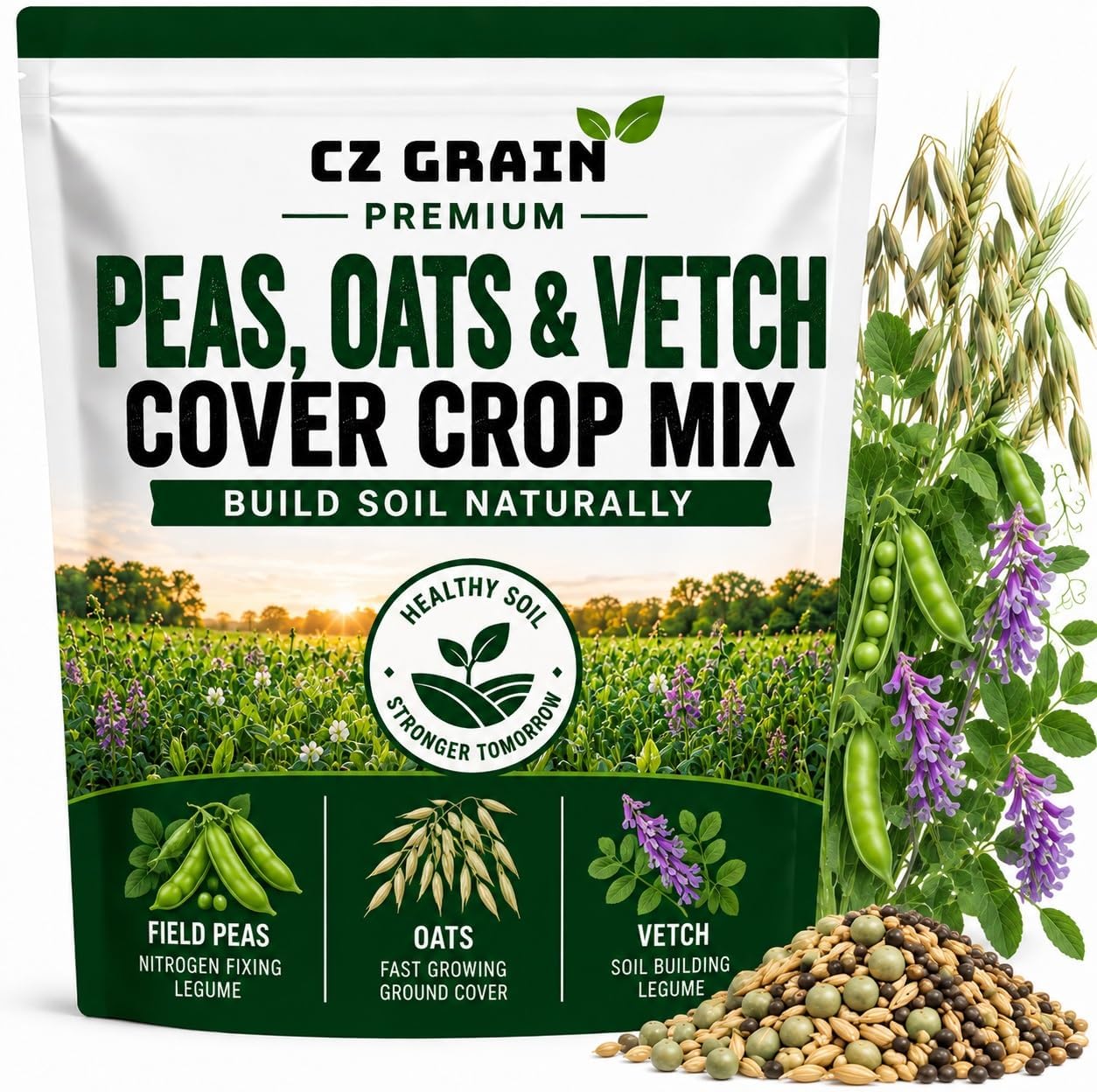
CZ Grain Peas, Oats & Vetch Cover Crop Seed Mix — 5 lb
| Expected Blooming Period | Summer to Winter |
|---|---|
| Sunlight Exposure | Full Sun |
| USDA Hardiness Zone | Zones 4,5,6,7 and 8 |
| Soil Type | Loam Soil |
| Moisture Needs | Moderate Watering |
This CZ Grain mix combines fast-establishing oats with nitrogen-fixing field peas and vetch to create a living mulch that builds soil and protects bare garden ground between cash crops. Sow for quick biomass and erosion control from the oats while the peas and vetch add broadleaf and vining growth that fixes atmospheric nitrogen when nodulation occurs. Typical use is as a seasonal cover crop in vegetable beds, raised planters, or larger plots where you want to smother weeds, add organic matter, and maintain living roots until the next planting. Practical features include a mix of grass and legumes for complementary root structures, guidance for full sun and loam soils, and general care instructions to plant with good seed-to-soil contact and keep evenly moist. Expect to terminate the stand by mowing, cutting, or incorporating based on your climate and rotation schedule. This blend is straightforward for gardeners aiming to maximize soil benefits with a single sowing, but results depend on proper establishment and local nodulation for nitrogen fixation.
Best for: Gardeners who want a low-effort living mulch to improve soil structure and add biomass between vegetable crops and who prioritize practical, season-long soil building.
Less Ideal for: People seeking permanent ornamental groundcovers or a no-maintenance solution for shaded beds should look elsewhere.
- Three-species mix pairs quick-growing oats with two legumes for both biomass and nitrogen fixation potential
- Good for rapid ground cover, erosion control, and weed suppression
- Designed for vegetable gardens, raised beds, and seasonal rotations to build organic matter
- Simple care directions: plant in well-draining loam, provide full sun and regular moisture
- Nitrogen fixation requires proper nodulation and may need inoculant in some soils
- Not intended as a permanent groundcover and must be terminated before planting most crops
Verdict: Choose this mix if you want a simple, fast-establishing living mulch that builds soil and supplies biomass and nitrogen between vegetable plantings.
Pennington Cover Crop Mix, 2 lb

| Expected Planting Period | Fall |
|---|---|
| Sunlight Exposure | 4-8 Hours of Sun Per Day |
| USDA Hardiness Zone | 1-12 |
| Moisture Needs | Regular Watering |
| Material Features | Organic |
Pennington Cover Crop is a ready-to-use seed mix intended for fall planting as a living mulch to restore and protect garden beds over winter. You spread the seeds evenly, rake lightly for seed-to-soil contact, and keep the area watered until established; the mix is formulated to fix nitrogen, break up compaction, suppress weeds, and attract pollinators while adding seasonal color. It works in raised beds, in-ground gardens, and larger plots and tolerates a wide range of soil types and USDA zones 1–12, making it flexible for most home gardens. Because it contains rapeseed, radish, and crimson clover, you get both quick biomass and deeper-rooted benefits like nematode deterrence and improved texture. Limitations are that it is a seasonal, temporary planting meant for fall use and requires regular watering to establish; you will need to manage the residue or terminate growth before spring planting. For budget-focused gardeners looking for a simple way to build soil health, this mix is straightforward and practical.
Best for: Home gardeners who want an inexpensive, low‑effort living mulch to rebuild soil between seasons and prefer a plug‑and‑play seed mix for fall planting.
Less Ideal for: Gardeners who need year‑round groundcover or immediate ornamental lawn replacement should consider dedicated perennial groundcovers or turf alternatives instead.
- Designed for fall/winter cover cropping to restore and protect garden soil
- Contains a mix (rapeseed, radish, crimson clover) that fixes nitrogen and reduces compaction
- Suitable for raised beds, in-ground gardens, and large plots across USDA zones 1–12
- Organic material features and attracts beneficial pollinators while suppressing weeds
- Intended only as a seasonal cover crop so it must be terminated before spring planting
- Requires regular watering to establish, which can be a drawback in dry conditions
Verdict: A straightforward, budget‑friendly cover crop mix that rebuilds soil health over winter and makes an easy living mulch for fall-planted beds.
Verdant Treasures Bocking-14 Comfrey Cuttings, 12 Pack

| Indoor Outdoor Usage | Outdoor |
|---|---|
| Expected Blooming Period | Summer |
| Expected Planting Period | Spring |
| Moisture Needs | Moderate Watering |
| Unit Count | 12 Count |
These Bocking-14 comfrey cuttings are sold as ready-to-plant outdoor cuttings aimed at gardeners who want a productive living mulch and green manure source. The cultivar is described as non-seeding so it will not spread by viable seed, and the listing emphasizes its use for making nutrient-rich compost tea, boosting compost piles, and supplying high-protein livestock feed. Typical use is planting in spring in a moist, clay-friendly site, harvesting leaves through the growing season to layer as mulch or brew into fertilizer. Notable features include the cultivar selection (Bocking-14) for compost tea, organic growing methods, and included planting instructions. Practical benefits are faster nutrient cycling in beds, a steady supply of high-nitrogen “greens” for compost, and a way to supplement animal feed or create homemade salves. Limitations are that comfrey can still be vigorous via root spread despite being non-seeding and requires regular harvesting to prevent dominance, and medicinal uses require caution and professional guidance.
Best for: Gardeners who prioritize reliable, low-cost soil fertility and want a dependable living mulch to produce compost tea, bulk green matter, or supplemental animal feed.
Less Ideal for: Gardeners who need a completely non-spreading groundcover for small, closely planted beds or who cannot commit to regular harvesting and containment.
- Bocking-14 cultivar selected for making nutrient-dense compost tea
- Sold as 12 cuttings, providing multiple plants for living-mulch beds
- Grown with beyond-organic methods and includes planting instructions
- Leaves provide high-protein fodder for livestock and a steady green for compost
- Can be vigorous via root spread and needs regular harvesting to keep in bounds
- Listing mentions medicinal uses but requires medical advice and is not a replacement for care
Verdict: A practical choice for gardeners who want a dependable living mulch and steady source of compost greens and fertilizer material.
Outsidepride Irish Moss (Sagina subulata) Ground Cover Seeds, 5000 count

| Expected Blooming Period | Spring to Fall |
|---|---|
| Sunlight Exposure | Partial Sun |
| USDA Hardiness Zone | 4 |
| Moisture Needs | Moderate Watering |
| Unit Count | 5000 Count |
Outsidepride Irish Moss seeds are intended to establish a dense, low carpet of green that fills gaps between stepping stones, edges pathways, and acts as a lawn alternative in cooler, moist sites. You surface-sow the fine seeds in spring on well-drained but consistently moist soil and keep them damp while they germinate; the company rates coverage at roughly 100 sq ft for the 5,000-count pack. Notable features are the plant's very low height (1–2 inches), tolerance for partial shade, and small white spring blooms that add subtle texture to rock gardens and borders. In practice this makes Irish Moss a good choice where soils stay cool and slightly wet rather than bone dry, and where foot traffic is light. Limitations are that it needs regular moisture during establishment and performs poorly in heavy foot traffic or hot, fully exposed sites; germination and coverage can be uneven if sowing depth or moisture is inconsistent. For gardeners with shaded, damp patches who want a soft, low-maintenance carpet, Irish Moss delivers attractive, resilient ground cover once established.
Best for: Gardeners with shaded or consistently damp patches who want a low-growing, decorative ground cover that stabilizes soil and softens pathways; buyers who prefer a perennial, low-maintenance lawn alternative and are prepared to keep soil moist while plants establish.
Less Ideal for: People needing a hardwearing surface for frequent walking or play, or those with very dry, hot sunny sites that do not retain moisture.
- Creates a dense, mat-forming carpet ideal for filling gaps between pavers and edging pathways
- Perennial and cold-hardy across a wide USDA range, returning year after year
- Tolerates partial shade and prefers consistently moist, well-drained soils suited to wet-ground spots
- Small white flowers in late spring to early summer add seasonal interest without raising height
- Requires steady moisture during germination and establishment to achieve full coverage
- Not suited to heavy foot traffic or very hot, fully exposed locations
Verdict: Choose these Irish Moss seeds if you want a low, shade-tolerant ground cover that establishes a soft, moisture-friendly carpet for pathways and rock gardens.
Choosing the Right Living Mulch for Garden: Key Factors to Consider
Light and Shade Tolerance
Choose a living mulch based on the light levels where you will plant it. Some groundcovers thrive in full sun and spread rapidly, while others tolerate deep shade but grow more slowly. A mismatch can lead to thin cover that fails to suppress weeds or, conversely, a vigorous spreader that outcompetes nearby desirable plants.
Consider seasonal light as well. Areas that receive bright winter sun but summer shade behave differently. Match the living mulch to both peak and off-peak light conditions so the cover remains consistent year-round.
Competition with Desired Plants
Living mulches vary in aggressiveness; some form a shallow mat while others send deeper roots that can compete for moisture and nutrients. When planting near vegetables or shallow-rooted ornamentals, pick a low-competition groundcover or use physical barriers such as root collars or regular trimming to protect the main crop.
Think about timing too. Establish living mulch in fall or after the first productive season for vegetables, giving crops time to mature before the groundcover fills in. That reduces yield risk while still gaining weed suppression benefits later.
Maintenance Requirements
Different living mulches need different levels of upkeep. Some require periodic mowing or shearing to keep them from smothering small plants, while others need only occasional trimming or no maintenance for long stretches. Factor in how often you want to manage groundcover and whether you have the tools and time for regular upkeep.
Also plan for seasonal tasks like removing seed heads or cutting back winter dieback. Maintenance needs affect long-term satisfaction and determine whether a living mulch is a labor-saving solution or an added chore.
Soil and Moisture Effects
Living mulches influence soil temperature, moisture retention, and structure. Groundcovers that create a dense canopy reduce evaporation and can keep surface soils cooler, which helps in dry climates. Others with deep or fibrous roots improve infiltration and add organic matter when they die back or are cut and left to decompose.
Assess your soil type and moisture regime. In heavy clay, choose covers that improve drainage or have shallow roots to avoid waterlogging. In sandy soils, pick species that enhance organic matter and hold moisture near roots of desired plants.
Seasonal Behavior and Longevity
Some living mulches are evergreen or retain significant cover through winter while others die back and leave the soil exposed. Evergreen covers provide year-round protection but may require winter pruning. Perennial groundcovers that die back might need a winter mulch layer to protect soil from erosion and weeds until they regrow.
Consider whether you want a long-lived perennial solution or a short-term cover crop that can be turned under. Longevity affects long-term bed design and how often you will need to replant or renovate beds.
Wildlife and Pollinator Value
Many living mulches produce flowers that support pollinators and beneficial insects. This can be an advantage near fruiting crops or nectar-reliant ornamentals. However, flowering groundcovers can also attract seed-eating birds or prompt extra maintenance when seed heads spread.
Decide if pollinator support is a priority and whether occasional flowering and reseeding fit your maintenance plan. In some cases, timing flowering to avoid overlap with peak crop bloom reduces competition for pollinators.
Best Uses by Garden Situation
Different garden contexts favor different living mulches. In ornamental beds, low, flowering covers can provide seasonal interest while crowding out weeds. In vegetable plots, choose covers that are easy to manage and that do not compete strongly during the growing season.
For slopes or erosion-prone areas, pick groundcovers with fibrous root systems that bind soil. For raised beds or container edges, select shallow-rooting species to avoid interfering with root crops.
- Ornamental borders: low-growing, flowering covers
- Vegetable gardens: non-competitive, easy-to-trim mulches
- Slopes and erosion control: deep or fibrous-rooted covers
- Containers and raised beds: shallow-rooting, compact varieties
Establishing Living Mulch Successfully
Prepare the planting area by removing perennial weeds and loosening the topsoil. Many living mulches establish better in a prepared bed than on compacted or heavily weedy ground. Mulch lightly with compost before planting to provide nutrients if soil is poor.
Space plugs or sow seed according to the growth habit of the species. Water regularly during the first several weeks to help seedlings get established. A temporary layer of straw or biodegradable fabric can protect seedlings from drying and reduce initial weed pressure.
- Remove persistent perennial weeds before planting
- Water consistently until cover is established
- Use light compost topdress if soil is low in organic matter
- Consider temporary protective mulch during establishment
Managing Living Mulch Around Edibles
When using living mulch in vegetable gardens, maintain a balance between cover and crop access. Keep a small weed-free zone around crop stems by hand weeding or shallow cultivation to prevent direct competition. Use periodic trimming to keep the groundcover from overtopping small plants.
If a living mulch produces abundant seed, remove seed heads before dispersal or mow before seeding to limit volunteer seedlings. Choose covers with a growth habit that matches the spacing and lifecycle of your crops to minimize interference.
- Leave a clean ring around crop stems to reduce root competition
- Mow or trim before seed set to limit spread
- Time establishment to avoid competing with young transplants
Renovation and Removal Strategies
If a living mulch becomes too vigorous or starts to invade unwanted areas, mechanical removal is often the safest choice. Smothering with a thick layer of cardboard and compost, followed by solarization or repeated cutting, can weaken populations over a season. Persistent covers may require digging or repeated removal of roots.
For renovating beds back to bare soil, plan for gradual transition. Reduce cover density by cutting and removing biomass, then allow sunlight in to stimulate seeded alternatives. Avoid aggressive chemical controls that can harm soil life; focus on physical methods and reseeding with a preferred cover if needed.
- Use mechanical removal and smothering to control spread
- Cut back and remove biomass before attempting to convert beds
- Avoid harsh chemicals that damage soil ecology
Seasonal Care Calendar
Spring: Evaluate winter dieback, fill thin patches, and start light trimming to keep covers from overshadowing early crops. Replant or overseed bare areas as needed. Summer: Maintain regular irrigation during establishment years, trim before seed set, and monitor for pest or disease issues. Use shade-tolerant covers in hot, exposed sites to reduce heat stress on soil. Fall and Winter: Allow perennial covers to store energy and build roots in fall. Cut back dead topgrowth where it will interfere with spring planting. Consider adding a thin layer of compost over dormant covers to supply nutrients for spring growth.
- Spring: repair bare spots and trim lightly
- Summer: control seeding and maintain moisture
- Fall: encourage root growth and add compost
- Winter: minimal disturbance; plan spring maintenance
How We Chose the Best Living Mulch for Garden
We focused on traits gardeners can observe and manage in real growing situations. Selection centered on groundcover establishment speed, competitiveness with weeds, root and soil benefits, maintenance demands, and compatibility with typical garden plants. We prioritized plants that provide consistent soil cover without requiring constant clipping, and that contribute organic matter or root structure that improves soil stability. Our filters excluded aggressive ground covers that widely invade adjacent beds or natural areas and plants known to become invasive in most temperate garden conditions. We also excluded varieties requiring specialized propagation techniques or greenhouse-only starts. Practical availability and ease of sourcing from standard nurseries or seed suppliers were considered. Concrete evaluation criteria were: how quickly the mulch establishes a dense cover, how well it suppresses weeds once established, how compatible it is with common garden plants (including vegetables and perennials), the level of seasonal maintenance needed, and measurable soil benefits such as root mass and organic contribution. These criteria guided the shortlist and ensured each entry suits ordinary garden environments.
FAQ
Will living mulch steal water and nutrients from my garden plants?
It depends on the species and how closely it is planted. Shallow, low-competition covers usually have minimal impact, while deep-rooted, aggressive covers can reduce available moisture and nutrients. Proper spacing, temporary barriers, and targeted trimming reduce competition.
How long does it take for a living mulch to suppress weeds?
Most living mulches start to noticeably suppress weeds once they form a 70 to 90 percent canopy, which can take several weeks to a season depending on the species and growing conditions. Good site preparation and initial watering speed up establishment.
Can I use living mulch in vegetable beds?
Yes, many gardeners use living mulch around permanent or long-season crops. Select low-competition covers, maintain a small cleared area around crop stems, and time establishment so crops have a growth head start when necessary.
Do living mulches attract pests or diseases?
Living mulches can host some pests or diseases, but they also support beneficial insects. The risk varies by plant choice and local conditions. Monitor regularly and choose species with good disease tolerance for your region.
How do I prevent a living mulch from becoming invasive?
Select species known for controlled growth, avoid aggressive hybrids, and manage by cutting before seed set and installing root barriers if needed. Regular monitoring and quick removal of volunteer plants help keep spread in check.
Final Verdict
Choosing a living mulch is about balancing cover benefits with the amount of management you want to do. Prioritize light tolerance, competition level, and maintenance needs to match the mulch to your garden context. Expect tradeoffs: faster, denser covers provide better weed suppression but often need more control, while gentler covers are lower-maintenance but may require reseeding. Decide whether you want a long-term perennial solution or a temporary cover that improves soil and is easily removed. Matching the living mulch to your bed type and seasonal workflow will deliver the most consistent results.
