

Note: This article contains affiliate links. If you click on these links and make a purchase, I may earn a small commission at no extra cost to you. This helps support my research and content. Read my full affiliate disclosure here.
Choosing the right mulch for camellias matters because these acid-loving shrubs respond to soil conditions more than many garden plants. The wrong material can change pH, trap too much heat, or compact around shallow roots and stunt growth. A good mulch keeps moisture steady, protects the root zone, and helps maintain the slightly acidic conditions camellias prefer. This guide covers seven shortlisted mulches that work well for camellias in garden beds and large containers. We explain why each material made the list and summarize the practical traits gardeners need to match to their site. Expect clear notes on moisture behavior, pH influence, breakdown rates, and application best practices to help you choose the right option for your planting situation.
Top Picks at a Glance
| Best Overall The best all-around choice for most situations | Soil Sunrise Pine Bark Mulch Nuggets (12 Quarts) |  |
| Best Quality Built to a higher standard if you want something more solid | Plantonix Coco Chips Mulch Brick (10 lb) – Compressed Coconut Husk Chips |  |
| Best Value The sweet spot between price and what you get | Hoffman Canadian Sphagnum Peat Moss, 10 Qt Soil Conditioner |  |
| Best Budget The cheapest option that still gets the job done reliably | MAQIHAN Pine Needle Mulch for Orchids and Acid-Loving Plants, 11 oz |  |
| Highest Rated A top-rated pick with lots of positive feedback | Doter Pine Bark Orchid & Garden Mulch (10 qt) |  |
| Most Popular A crowd favorite that many people choose with confidence | SuperMoss Orchid Potting Bark (Natural White Fir), 4 quarts |  |
| Best Seller A high-volume bestseller chosen again and again | Legigo 2-Quart Organic Pine Orchid Bark Potting Mix |  |
Soil Sunrise Pine Bark Mulch Nuggets (12 Quarts)

| Unit Count | 1 Count |
|---|---|
| Item Type Name | Mulch |
| Style Name | Pine Bark |
| Volume | 12 quarts |
Soil Sunrise Pine Bark Mulch is a bagged, all-natural pine bark nugget product intended for use as a soil amendment and decorative top layer in pots, terrariums, and small garden containers. The half-inch nuggets are sized to improve airflow and drainage when mixed into potting mixes and to form a water-retaining top layer that reduces surface evaporation. It is especially suited to acid-loving plants and ornamentals where a coarse, long-lasting mulch is preferred. Practical benefits include improved root insulation, slower decomposition that contributes organic matter over time, and a tidy reddish-brown finish that masks bare soil. Because the product is coarse bark, it will not compact like fine mulches and can help prevent root rot in poorly draining mixes. Limitations are the small package volume for larger beds and the need to mix or top-dress thoughtfully around shallow-rooted shrubs to avoid creating a thick barrier to water penetration if applied too heavily.
Best for: Buyers who prioritize plant performance and root health for container-grown ornamentals and acid-loving shrubs and want a coarse mulch that improves drainage and retains moisture.
Less Ideal for: Not a great choice for gardeners planning to mulch large landscape beds or those who need a fine-textured mulch for immediate soil coverage across wide areas.
- 100% natural pine bark suitable for organic gardening
- Half-inch nuggets improve drainage and increase aeration in potting mixes
- Good moisture retention as a top layer to reduce surface evaporation
- Slow decomposition provides long-term soil health benefits
- Attractive reddish-brown finish that tidies pots and containers
- Small 12-quart volume limits usefulness for full-size landscape beds
- Coarse nuggets can form a surface layer that may divert water if applied too thickly
Verdict: A performance-focused pine bark nugget mulch that improves drainage and root health in containers and small plantings.
Plantonix Coco Chips Mulch Brick (10 lb) – Compressed Coconut Husk Chips

| Unit Count | 160 Ounce |
|---|---|
| Item Type Name | Soil and Soil Amendments |
| Brand Name | plantonix |
| Volume | 15 gallons |
Plantonix Coco Chips arrive as a compact 10 pound brick that hydrates and expands into lightweight coconut husk chips for use as mulch, soil amendment, or terrarium bedding. You soak or wet the block to break it apart, then spread the chips over garden beds, containers, orchid pots, or raised beds to reduce evaporation and moderate soil temperature. The product is pre-screened, washed, and aged to remove dirt and rocks, and the low electrical conductivity and near-neutral pH make it safe to mix with potting mixes. Practical benefits include improved drainage and aeration compared with heavy wood mulches, long-lasting moisture retention that can reduce watering frequency, and an attractive tropical look. Important limitations are that you must rehydrate and break up the compressed brick before use which adds prep time, and coco chips do not supply nutrients so you will still need to fertilize regularly. Also note the safety warning about dust and keeping it away from children and pets during handling.
Best for: Buyers who prioritize reliable, consistent mulch performance and want a sustainable, low-maintenance material that retains moisture and improves soil structure for beds and containers.
Less Ideal for: Gardeners who need a nutrient-rich soil amendment or who prefer a no-prep, ready-to-spread loose mulch should consider alternatives.
- Made from 100% recycled coconut husks, a renewable alternative to peat and wood mulches
- Pre-screened and washed to remove dirt, rocks, and excess fiber
- Excellent at retaining moisture while maintaining airflow and drainage
- Lightweight and long-lasting so it does not compact like some organic mulches
- Requires soaking and manual breakup of the compressed brick before use
- Does not provide plant nutrients and should be used with a fertilizer plan
Verdict: A dependable, renewable mulch solution that holds moisture and improves aeration without compacting, ideal for gardeners who want consistent performance.
Hoffman Canadian Sphagnum Peat Moss, 10 Qt Soil Conditioner

| Item Type Name | Peat Moss |
|---|---|
| Brand Name | Hoffman |
| Volume | 17.9 ml |
| Unit Count | 1 Count |
| Style Name | Peat Moss |
Hoffman Canadian Sphagnum Peat Moss is a straightforward peat-based soil conditioner intended to boost water retention and loosen compacted soils. Gardeners typically work it into native soil or mix it with perlite and vermiculite when making potting media; it is also commonly used as a top dressing or component in mulches for acid-loving plants. The product is made from sphagnum peat harvested from Canadian bogs and sold in a 10 quart bag that is easy to handle for small beds and containers. Practical benefits include improved aeration in heavy or clay soils, increased organic content, and better moisture holding capacity—qualities that help shallow-rooted shrubs establish and stay evenly moist. Important limitations are that peat acidifies soil over time and does not readily break down to supply nutrients, so it is best used as part of a balanced amendment plan rather than the sole soil amendment. Peat is also a nonrenewable resource, so gardeners concerned with sustainability may prefer alternatives like composted bark or coconut coir.
Best for: Buyers who want a reliable, easy-to-use soil conditioner to hold moisture and improve structure in small beds and containers, especially when preparing acidic soil mixes for shrubs and berries.
Less Ideal for: Gardeners prioritizing sustainable or renewable amendments or those who need a nutrient-rich amendment as a primary soil improvement should consider compost or bark alternatives.
- Improves moisture retention for plants that need consistent soil moisture
- Loosens dense or clay soils to improve drainage and root penetration
- Premium-grade sphagnum peat from Canadian bogs suggests consistent texture and performance
- Acidifying nature means pH effects should be monitored for certain plants
- Provides little in the way of nutrients and breaks down slowly
- Peat is a nonrenewable material compared with some alternatives
Verdict: A practical moisture-retentive soil conditioner that reliably improves aeration and structure for acid-loving plants like blueberries.
MAQIHAN Pine Needle Mulch for Orchids and Acid-Loving Plants, 11 oz

| Brand Name | MAQIHAN |
|---|---|
| Unit Count | 11 Ounce |
| Item Highlight | Orchid Potting Mix for Landscaping Repotting Indoor Potted Plants,Gardening,Soil Moisture Retention |
This small 11-ounce bag of pine needle mulch is a lightweight, natural mulch intended for acid-loving plants and potted specimens. It is typically used as a top dressing around root zones, a component in potting mixes for orchids and blueberries, or mixed into compost to slowly release nutrients as it decomposes. Notable features include its naturally acidic pH and loose, breathable texture that improves soil aeration and helps retain moisture. For blueberry growers the mulch can help maintain a slightly acidic root environment and reduce surface evaporation when applied 2 to 4 inches thick. The product is sold in a compact pack, so it is most useful for small beds, containers, or to top-dress individual plants rather than large landscape jobs. Because fresh pine needles can draw nitrogen while breaking down, they are best composted or combined with other organic materials before heavy incorporation into planting beds. Expect modest quantity per bag and the need to reapply seasonally for continuous benefits.
Best for: Home gardeners growing a few blueberry plants or container-grown acid-loving shrubs who prioritize an inexpensive, natural mulch to maintain slightly acidic soil and conserve moisture.
Less Ideal for: Gardeners needing bulk mulch for large landscapes or those growing neutral to alkaline plants that dislike acidic conditions should choose a different product.
- Naturally acidic, suitable for acid-loving plants such as blueberries and azaleas
- Loose, breathable texture improves aeration and reduces surface compaction
- Helps retain soil moisture when applied as a 2 to 4 inch top layer
- Biodegradable and slowly releases nutrients as it decomposes
- Small 11 oz package provides limited coverage and is not suited for large beds
- Fresh needles may temporarily tie up soil nitrogen unless composted first
Verdict: A compact, budget-friendly pine needle mulch that helps create and maintain the slightly acidic, moisture-retentive conditions blueberry plants prefer.
Doter Pine Bark Orchid & Garden Mulch (10 qt)

| Brand | Doter |
|---|---|
| Manufacturer Part Number | PB-001 |
| Volume | 10 quarts |
Doter Pine Bark is a chunky, processed pine bark sold as a gardening mulch and potting medium amendment. It is typically used as a top dressing for acid-loving shrubs or mixed into potting mixes for orchids, succulents, and container plants to increase porosity and prevent compaction. Notable features are its porous structure for good aeration and drainage, slight natural acidity that favors rhododendrons and azaleas, and long-lasting durability so it holds form instead of breaking down quickly. In practice it reduces waterlogging, helps root development, moderates soil temperature, and suppresses some weed growth when used as a mulch layer. Limitations are its coarse texture, which makes it less suitable as a sole growing medium for seedlings and may require blending with finer components for seed starting or full potting mixes, and the need to handle dust carefully to avoid irritation during application.
Best for: Gardeners who prioritize reliable, low-maintenance mulch for acid-loving shrubs and container orchids and want a product that maintains structure over multiple seasons.
Less Ideal for: Growers needing a fine seed-starting mix or a ready-to-use, uniform potting soil for seedlings should choose a blended, finer medium instead.
- Improves soil aeration and drainage to reduce root rot risk
- Naturally slightly acidic, compatible with rhododendrons and other acid-loving plants
- Durable chunks that resist rapid breakdown so mulch layer lasts longer
- Versatile: usable as top dressing, soil amendment, or component in orchid mixes
- Coarse texture is not ideal for seed starting or as a fine potting medium
Verdict: Choose this pine bark when you want a durable, well-draining mulch that reliably supports rhododendrons and other acid-loving plants.
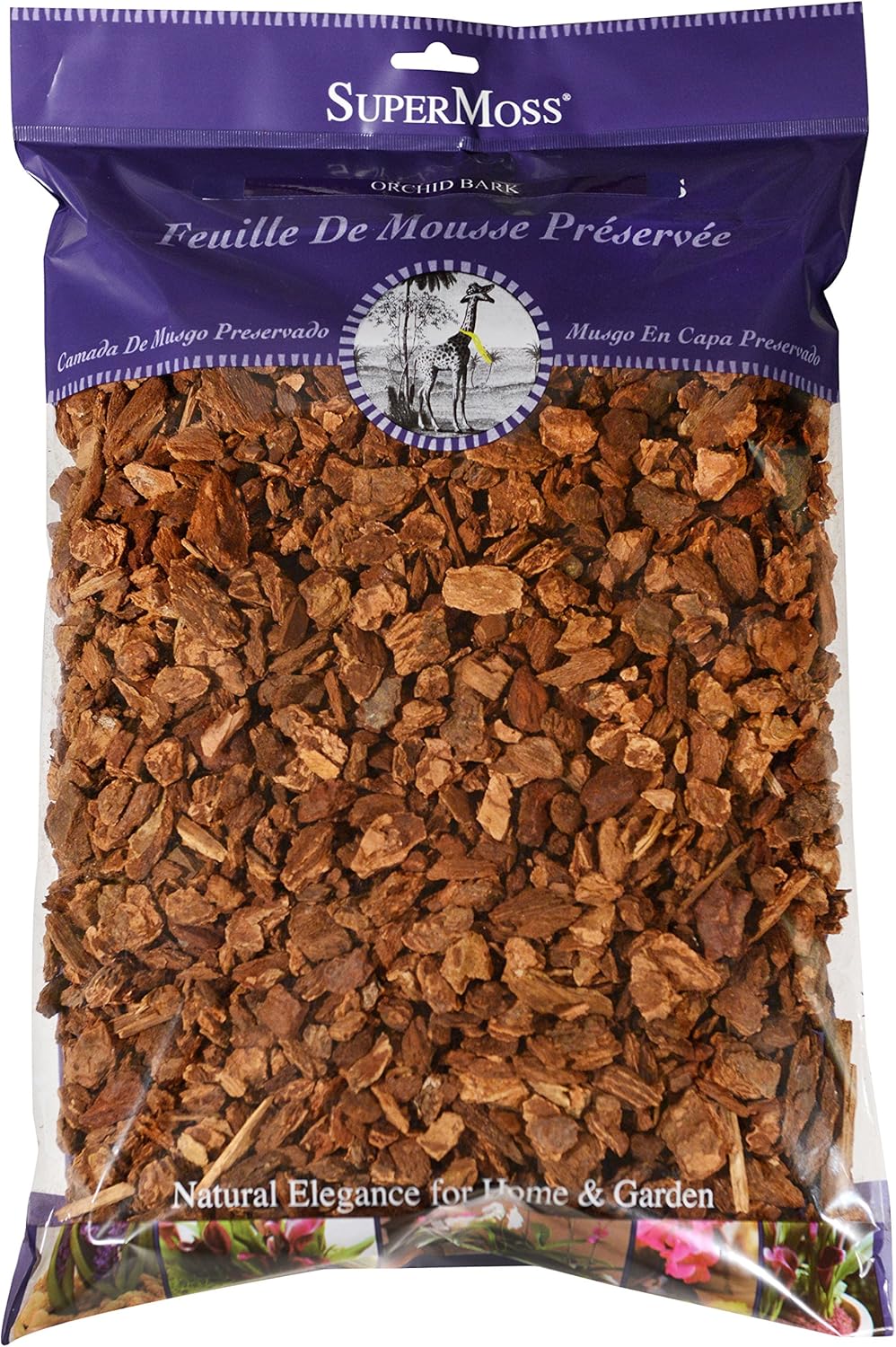
SuperMoss Orchid Potting Bark (Natural White Fir), 4 quarts
| Item Type Name | 100% Natural White Fir Bark |
|---|---|
| Unit Count | 128 Ounce |
| Volume | 4 quarts |
| Manufacturer | Supermoss |
SuperMoss Orchid Potting Bark is a natural Douglas-fir bark sold in a 4-quart retail bag and intended as a potting medium for orchids and other epiphytes. You use it as the main substrate or mixed with other media to recreate the loose, well-aerated conditions orchid roots prefer; its coarse pieces promote fast drainage and good oxygen flow around roots. The product is pH-suited for orchids and marketed as sustainably sourced natural fir bark with no heat treatment mentioned. Practical benefits include easier repotting without compacted soil, reduced risk of root rot from overwatering, and suitability for air plants and decorative uses like floral arrangements. Limitations are that bark breaks down over time and will need replacement or mixing with fresh media as it decomposes, and it does not retain much water so frequent watering or combining with moisture-retentive components may be needed for some growers. Handle with gloves when repotting to avoid splinters and dust.
Best for: Growers who want a natural, easy-to-use medium to recreate the airy, fast-draining conditions orchids prefer and who repot or maintain a few plants regularly.
Less Ideal for: People who need a long-term, high-moisture substrate for heavy-handed watering routines or those who prefer a ready-made, low-maintenance potting mix for many houseplants.
- Coarse Douglas-fir bark structure improves aeration and drainage for orchid roots
- pH appropriate for orchids, supporting their natural growing conditions
- Sustainably sourced natural material suitable for epiphytic species and decorative uses
- Retail 4-quart packaging is convenient for small-scale repotting and hobby growers
- Bark decomposes over time and requires periodic replacement or topping up
- Low water retention means more frequent watering or blending with moisture-holding media may be necessary
Verdict: Choose this natural fir bark if you want a simple, well-aerating potting medium that closely mimics the conditions orchids need to thrive.
Legigo 2-Quart Organic Pine Orchid Bark Potting Mix

| Unit Count | 64 Ounce |
|---|---|
| Material | Pine bark |
| pH | 5.0-6.5 |
| Application | Soil mix & planting media |
Legigo's orchid bark is a simple, single‑ingredient potting medium made from screened pine bark chips intended for orchids and other epiphytic houseplants. Use it alone for plants that need excellent air circulation around roots or mix it with coir, perlite, or potting soil to create a freer‑draining custom mix. The chips are sized to stay chunky in pots so they reduce compaction, speed drainage and help prevent root rot while still holding some moisture to slow evaporation. For gardeners, that means fewer repots and lower watering frequency for tropical potted plants. Packaging is practical for storage and the product is described as slow to decompose, making it suitable as a longer‑lasting mulch or top dressing. Important limits: the 2‑quart bag is small for large collections or outdoor beds, and bark alone does not provide nutrients so regular feeding or mixing with a more complete potting medium is necessary for long‑term growth.
Best for: Buyers who prefer low‑risk, no‑fuss growing media that reduce overwatering problems and mimic natural orchid conditions, especially those with a small indoor collection or who mix their own potting blends.
Less Ideal for: Gardeners needing large volumes for beds, those who want a nutrient‑complete potting soil out of the bag, or growers who prefer finer, moisture‑retentive media for seedlings.
- 100% natural pine bark that mimics orchids' natural growing medium
- Chunky chips maintain aeration and reduce potting mix compaction
- Drains quickly to help prevent root rot in epiphytic plants
- Slow decomposition makes it useful as a longer‑lasting mulch or top dressing
- Small 2‑quart volume which is insufficient for many pots or garden beds
Verdict: A compact, natural pine bark mix that reliably improves aeration and drainage for orchids and indoor tropicals, ideal for gardeners who want a low‑maintenance substrate.
Choosing the Right Mulch for Camellias: Key Factors to Consider
Soil pH and Acid Retention
Camellias thrive in slightly acidic soil. Different mulches can buffer soil pH over time by releasing alkaline or acidic compounds as they decompose. Organic mulches like pine needles or leaf mold tend to be neutral to slightly acidifying as they break down, while some wood ashes or crushed lime-based materials will raise pH and should be avoided.
When choosing a mulch, think about the existing soil pH and whether you test and amend it. A mulch that helps preserve acidity reduces the frequency of corrective soil treatments and supports nutrient uptake specific to camellias.
Moisture Balance and Drainage
Camellias prefer consistent moisture but dislike waterlogged roots. Mulch affects how quickly water penetrates the surface and how long moisture is retained at the root zone. Fine-textured mulches hold water well but can compact and reduce oxygen at the root crown. Coarser materials allow better drainage but may require more frequent watering.
Match the mulch moisture profile to your site: heavier, moisture-retentive mulches are useful in sandy soils or exposed sites, while freer-draining mulches suit heavier clay soils or areas with poor surface drainage.
Particle Size and Root Health
Particle size determines how a mulch behaves around shallow camellia roots. Very fine particles or powdered materials can form a dense layer that limits oxygen exchange and encourages collar rot. Larger chips or whole needles create a loose structure that allows gas exchange and protects fine feeder roots.
Aim for a layer that shields roots without touching the trunk directly. Consider the mulch particle profile when planning depth and when topdressing established plants.
Decomposition Rate and Nutrient Release
How quickly a mulch breaks down affects both maintenance frequency and soil fertility. Fast-decomposing mulches like leaf mold or composted bark will improve organic matter in the root zone faster but need topping up more often. Slow-decomposing wood chips provide long-lasting cover but contribute little immediate nutrient release.
Consider whether you want a mulch that builds humus over a season or one that acts mainly as a physical protector. Also factor in nitrogen tie-up potential with very high-carbon fresh wood materials; partially composted products reduce that risk.
Application Depth and Trunk Clearance
Proper depth is critical for camellias. Too thin a layer fails to moderate moisture and temperature swings; too thick a pile against the trunk can trap moisture and invite pests or disease. Most camellias do best with a moderate layer that protects the root zone without contacting the stem.
Plan to keep mulch pulled back from the base of the trunk, maintain an even depth across the dripline where feasible, and refresh the top layer periodically rather than adding large volumes at once.
Aesthetic and Maintenance Needs
Mulch also contributes to bed appearance and the level of upkeep required. Materials with a uniform color and texture can tidy a planting area but may need more frequent replenishment. Natural-looking mulches blend with woodland or formal beds differently, so choose based on how much seasonal refreshing you want to do.
Consider whether you will rake or topdress the mulch annually, how visible breakdown is in winter, and whether the mulch will stain paths or lower leaves when wet.
Best Practices for Applying Mulch to Camellias
Apply mulch in a uniform layer that covers the root zone without burying the trunk. A 2 to 3 inch layer is usually sufficient for established camellias; adjust slightly depending on particle size and site moisture. Coarser chips may need a touch more depth, while fine leaf litter can be thinner to avoid compaction.
Pull the mulch back several inches from the stem to prevent moisture buildup against the trunk. Replenish thin or decomposed material each year rather than adding large amounts at once. Before mulching, remove weeds and water deeply so the root zone starts at an even moisture level.
- Keep mulch 3 to 6 inches away from the trunk base
- Avoid piling mulch into cones that touch stems
- Water before and after mulching during the first season
Mulch Management Through the Seasons
Mulch functions change with the seasons. In spring, a fresh topdressing helps conserve moisture through bud set and early growth. Summer benefits from a stable mulch that reduces irrigation needs and shields roots from heat. In fall, a layer of insulating mulch lessens freeze-thaw stress on shallow roots.
Inspect the layer after heavy rains and again in late winter to correct compaction or erosion. Remove saturated, slimy material and replace with a breathable alternative if poor drainage is persistent.
- Topdress in early spring or late fall
- Rake lightly to break up compacted layers
- Replace waterlogged mulch with coarser material if drainage is poor
Managing Mulch in Containers and Raised Beds
Camellias grown in containers or raised beds have different needs because root volume is limited and moisture cycles faster. Use a lighter, well-draining mulch and keep depth shallower to allow oxygen exchange. Container-grown camellias may need more frequent refreshes and closer monitoring of moisture.
Avoid heavy wood chips in small pots where they can retain excessive water. Choose mulches that improve aeration and watch for signs of nitrogen deficiency if using high-carbon fresh materials.
- Use 1 to 2 inches of mulch in containers
- Prefer coarse, well-draining material in raised beds
- Monitor soil moisture more frequently than in-ground plantings
Common Mulch Problems and How to Fix Them
Poor drainage, excessive compaction, and pH shifts are the most common mulch-related issues with camellias. If you notice yellowing leaves or stunted growth after a mulch change, test soil pH and inspect the root collar for excess moisture.
Remedies include thinning the mulch, switching to a coarser material, or incorporating organic matter into the topsoil to improve structure. If pH has risen, apply acidifying soil amendments targeted to the root zone and choose a more acidifying mulch going forward.
- Thin compacted layers to restore oxygen exchange
- Switch to coarser mulch if water pools on the surface
- Test pH if foliage shows stress after mulching
How We Chose the Best Mulch for Camellias
We focused on materials that are commonly available to home gardeners and that have demonstrable effects on the soil environment camellias prefer. Evaluation prioritized how a mulch influences soil acidity, moisture retention and drainage, root aeration, and decomposition rate. We also considered texture and particle size because camellias have shallow roots and can suffer from compaction or collar rot when mulch is piled too deep or too fine. Selection filters removed materials known to raise soil pH significantly or those that heat excessively in summer. We excluded decorative or synthetic surface covers that do not interact beneficially with the soil biology. Final choices were judged on durability, how they affect watering needs, their ability to suppress weeds without harming shallow roots, and how cleanly they break down into humus. These criteria align with the scorecard metrics used in our product panels.
FAQ
How deep should I mulch around established camellias?
Aim for 2 to 3 inches for most established camellias. Adjust by material: coarser chips can be a touch deeper while fine leaf mulch should be thinner to avoid compaction. Always keep mulch pulled back from the trunk.
Will mulch change the soil pH around my camellias?
Some mulches do influence pH over time as they decompose. Natural leaf litter and pine needles tend to be neutral to slightly acidifying, while ash or lime-based materials raise pH. Test pH periodically if acidity is a concern.
Can I use fresh wood chips around camellias?
Fresh large wood chips can be used but may temporarily reduce available nitrogen as they decompose. To avoid this in the root zone, use partially composted chips or keep fresh chips as a surface layer and add compost closer to roots.
How often should mulch be replenished?
Frequency depends on material and climate. Fast-breaking mulches like leaf mold may need topping yearly, while coarse bark or chips can last several years before refreshment. Inspect thickness each season and add a light topdressing as needed.
Is it okay to use pine needles under camellias?
Pine needles are often a good match because they stay loose, allow airflow, and tend not to compact. They also help maintain slightly acidic conditions as they slowly break down, making them suitable for acid-loving camellias.
Final Verdict
Choose a mulch for camellias by balancing moisture control, soil acidity, and particle structure. Prioritize materials that support a slightly acidic root zone, allow oxygen exchange, and match your garden's drainage pattern. Keep mulch depth moderate and away from the trunk, and plan for seasonal refreshes based on decomposition rate. The right mulch reduces maintenance and supports healthy blooms. Focus on the tradeoffs described earlier and pick the material that best fits your soil type and watering routine to get the most consistent results.
