

Note: This article contains affiliate links. If you click on these links and make a purchase, I may earn a small commission at no extra cost to you. This helps support my research and content. Read my full affiliate disclosure here.
A multi-outlet timer transforms a handful of hoses or drip lines into an automated irrigation system so you can water different beds, containers, or lawn patches on distinct schedules. Choosing the right 4 outlet watering timer matters because runtime accuracy and programming flexibility determine how uniformly plants get water across varied microclimates. This guide presents six shortlisted 4 outlet watering timers that suit small yards, raised beds, and mixed container gardens. We focus on how easy each unit is to program, how dependable the valves and connections are in outdoor conditions, and which features help you tailor schedules to plant needs. Read on for a clear sense of which features and tradeoffs matter before you pick a model for your garden.
Top Picks at a Glance
| Best Overall The best all-around choice for most situations | MOES 4-Zone Sequential Water Timer with Brass Fittings (No Wi‑Fi) |  |
| Best Quality Built to a higher standard if you want something more solid | Orbit B-hyve XD 4-Port Smart Hose Watering Timer | 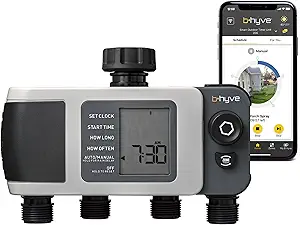 |
| Best Value The sweet spot between price and what you get | Insoma 4-Zone Hose Water Timer with Brass Inlet and Outlet |  |
| Best Budget The cheapest option that still gets the job done reliably | XinFuture 4-Zone Programmable Brass-Inlet Sprinkler Timer |  |
| Highest Rated A top-rated pick with lots of positive feedback | Melnor 4-Zone Programmable Digital Water Timer (77280) |  |
| Most Popular A crowd favorite that many people choose with confidence | Melnor AquaTimer 4-Zone Programmable Digital Water Timer |  |
MOES 4-Zone Sequential Water Timer with Brass Fittings (No Wi‑Fi)

| Number of outlets | 4 |
|---|---|
| Battery type required | AA (4 required) |
| Fitting | 1 in main inlet with 3/4 in adapter |
| Material | Brass, Polycarbonate |
This MOES 4-zone timer lets you run and schedule four separate irrigation lines from one outdoor faucet without any Wi‑Fi setup. It mounts to a standard faucet using the included adapter and solid brass inlet, then runs four internal valves sequentially so zones operate one after another instead of all at once. Programming is done on a large LCD where you set individual durations from 1 minute up to 23:59 and frequencies from hourly to every 30 days, plus rain delay and a manual-start option. Because it uses four internal valves the unit requires four AA alkaline batteries for reliable valve operation and offers low-battery valve protection. The lack of smart connectivity keeps operation simple and increases reliability, but it also means you cannot adjust schedules remotely or integrate with home automation. For multi-zone yards that need dependable, straightforward control and a robust brass inlet, this timer provides flexible scheduling and solid physical connections, while buyers who want app control should look elsewhere.
Best for: Gardeners who want a reliable, no-fuss multi-zone controller to run separate beds, drip lines, or sprinklers from a single faucet and prefer local, physical controls over smart integrations.
Less Ideal for: People who need remote scheduling, voice control, or integration with smart-home systems should consider a Wi‑Fi enabled timer instead.
- Controls four independently programmable outlets for separate zones
- Solid brass 1-inch main inlet with 3/4-inch adapter for a secure faucet connection
- Sequential watering avoids simultaneous zone draw on household water pressure
- Large LCD and wide scheduling range (1 minute to 23:59 and up to 30-day frequency)
- Built-in rain delay, manual watering, and low-battery valve protection
- Requires four AA alkaline batteries and may not work with fewer or rechargeable cells
- No Wi‑Fi or app control for remote adjustments or smart-home integration
Verdict: Choose this timer when you want dependable, locally controlled four-zone irrigation with robust brass fittings and flexible scheduling without the complexity of smart features.
Orbit B-hyve XD 4-Port Smart Hose Watering Timer
| Brand Name | Orbit |
|---|---|
| Item Type Name | Sprinkler Timer |
| Number of settings | 6 |
| Material Type | Plastic |
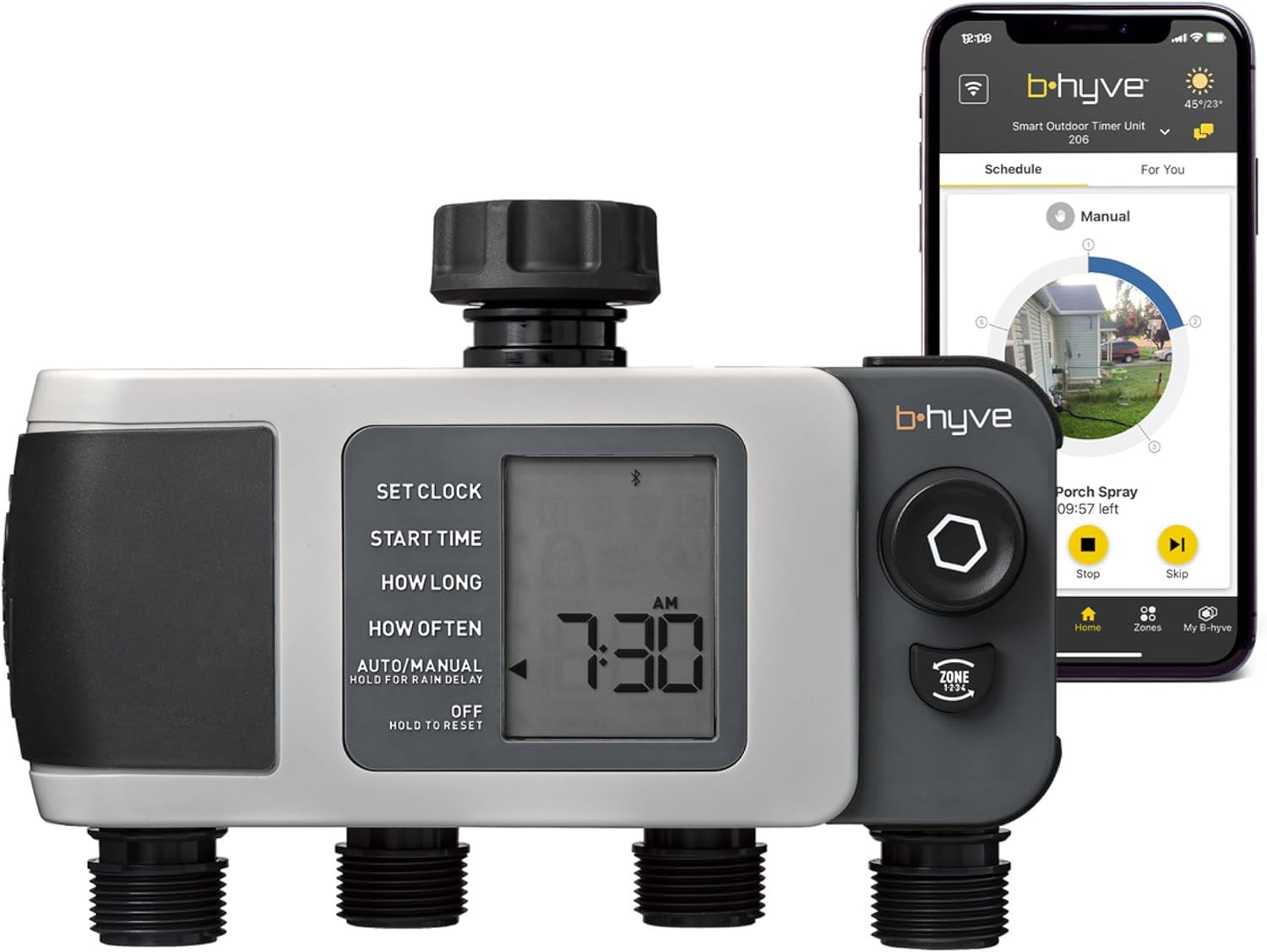
The Orbit B-hyve XD 4-Port Smart Hose Watering Timer turns a single outdoor faucet into a four-zone irrigation hub that is aimed at homeowners who want reliable, automated watering without constant fuss. Each of the four outlets can be scheduled independently using the B-hyve mobile app over Bluetooth, and the device supports remote smart functions when paired with an optional Wi-Fi hub. WeatherSense automatically adjusts watering based on local conditions and drought alerts so the system reduces overwatering during rainy or cool periods. The unit is rated IPX-5 for outdoor durability and includes a simple on-device interface for local programming when a phone is not handy. Practical benefits include consolidated control of multiple garden areas, water savings from weather-based adjustments, and straightforward Bluetooth setup for nearby control. Limitations to note are the dependency on a Wi-Fi hub for full remote/Wi-Fi features and that more advanced networked automation requires that additional accessory. For risk-averse buyers the proven brand, WeatherSense automation, and weatherproof design provide reassuring reliability for a smart sprinkler solution.
Best for: Homeowners who want a low-maintenance, dependable smart sprinkler that automates multiple garden zones and prioritizes water-efficient schedules and simplicity.
Less Ideal for: Users who need full cloud-based remote control out of the box or who require integration with wider smart-home systems without adding the Wi‑Fi hub.
- Four independently programmable outlets for separate zones
- WeatherSense adjusts schedules automatically using local weather data
- Bluetooth control with on-device programming for local access
- IPX-5 rated for outdoor use so it tolerates typical yard conditions
- Full remote Wi-Fi control requires purchasing and pairing a separate Wi‑Fi hub
Verdict: Buy this if you want a durable, water‑saving four-port smart hose timer that automates multiple zones with reliable weather-based scheduling.
Insoma 4-Zone Hose Water Timer with Brass Inlet and Outlet

| Number of Zones | 4 Count |
|---|---|
| Battery Type | AA Alkaline |
| Watering Duration Range | 1–360 minutes |
| Watering Frequency Options | 1 hour to 30 days |
The Insoma 4-zone hose timer lets you automate watering for up to four separate outlets, cycling zones according to a single programmed start time. You set frequency (every 1/3/6/12 hours or 1–30 days) and duration (1–360 minutes) per zone from the large LCD, and the unit supports 12- or 24-hour display formats. Useful practical features include manual watering without removing the timer, a rain-delay pause for 1–15 days, and a child lock to prevent accidental changes. The brass inlet and outlet hardware plus anti-rust, anti-UV construction and an IPX5 rating mean it is built for outdoor use, and four AA batteries should power the unit for months. Limitations to note: the four outlets do not run simultaneously but sequentially based on the programmed start time, so it is not suited to systems that need concurrent flow to multiple valves, and programming can be a bit fiddly until you learn the menu. For straightforward yard, garden, greenhouse, or pool fill tasks where independent schedules are more important than simultaneous flow, this is a practical, weatherproof controller.
Best for: Best for homeowners who want to optimize water delivery across multiple beds, containers, or lawn zones with separate schedules and reliable outdoor durability.
Less Ideal for: Not a good fit for systems that require simultaneous watering across multiple lines or for users who need an expandable, electrically actuated valve network for large irrigation systems.
- Four independent outlets for separate watering schedules
- Brass inlet and outlet hardware for durable hose connections
- IPX5 waterproof and anti-UV/anti-rust construction for outdoor durability
- Manual watering, rain-delay and child-lock add convenient real-world control
- Outlets cannot operate simultaneously and run sequentially based on the start time
- Requires four AA batteries which will need periodic replacement
Verdict: A weatherproof, four-outlet timer that gives practical, independent scheduling for multiple garden zones when sequential operation meets your watering needs.
XinFuture 4-Zone Programmable Brass-Inlet Sprinkler Timer

| Zones | 4 |
|---|---|
| Watering duration | 1–360 minutes |
| Frequency | 1–23 hours or 1–15 days |
| Inlet material | Brass |
| Display rating | IP55 waterproof LCD |
The XinFuture 4-zone sprinkler timer gives you independent control over four outlets so you can run different watering durations and frequencies across beds, lawns, and containers. Each zone can be set for 1–360 minutes and scheduled from hourly cycles to multi-day intervals, with a manual mode for on-demand watering and a rain-delay feature to pause automatic runs. The brass inlet and upgraded connectors aim to reduce leaks and handle typical household water pressure, while an IP55-sealed LCD and child-lock protect settings outdoors. Practical benefits include saving water with precise schedules, running a mix of drip lines and sprinklers without constant supervision, and a rugged connection point that should outlast plastic-only units. Expect basic programming that covers most home garden needs but not advanced smart-home integration or app control, and some users may find the interface and button layout takes a short learning curve to set precisely.
Best for: Home gardeners who need a straightforward, multi-zone solution to automate watering across beds, lawns, and containers and who prioritize reliable hardware over smart features.
Less Ideal for: If you want Wi-Fi control, smartphone scheduling, or advanced irrigation diagnostics, look at smart controllers instead.
- Independent programming for four zones lets you tailor run time and frequency per area.
- Brass inlet and reinforced connectors reduce the chance of leaks and handle higher water pressure.
- Rain delay and manual mode add flexibility for variable weather and occasional tasks.
- IP55-sealed LCD and child lock protect settings and make outdoor use more reliable.
- No wireless or app connectivity for remote control or notifications.
- Interface may be less intuitive than higher-end controllers and requires hands-on programming.
Verdict: A practical 4-zone timer with a durable brass inlet and essential scheduling features that fits buyers wanting a reliable, no-frills solution for automatic garden watering.
Melnor 4-Zone Programmable Digital Water Timer (77280)

| Brand | Melnor |
|---|---|
| Number of settings | 24 |
| Item Type Name | 4 Zone Hydrologic Timer |
| Model Number | 77280 |
The Melnor 4-Zone Programmable Digital Water Timer is a compact controller that manages up to four separate hose-connected zones with simple programming and visible water usage tracking. You mount it at a faucet and attach hoses or splitters to run distinct schedules for flower beds, vegetable gardens, containers, or a small lawn. Notable features include a dirt-resistant valve for durability in outdoor conditions, a straightforward interface that makes setting up 24 available timing presets quick, and built-in water usage tracking to help monitor consumption. The unit does not include battery backup so settings may be lost if power is completely removed, and its lightweight, compact design means it is best for modest systems rather than heavy commercial setups. For gardeners who prioritize dependable basic automation, this timer delivers reliable zone control and easy daily operation, though advanced integrations or robust power-resilience are not offered.
Best for: Gardeners who need a straightforward, reliable timer to automate multiple small to medium zones and who value simple setup and consistent daily operation.
Less Ideal for: Do not choose this if you need smart-home integration, advanced scheduling features, or a heavy-duty timer for large commercial systems.
- Controls four independent watering zones for flexible scheduling
- Dirt-resistant valve improves outdoor durability
- User-friendly interface with 24 settings for quick programming
- Built-in water usage tracking helps monitor consumption
- No battery backup so settings can be lost if power is removed
- Compact/lightweight design may not suit large or commercial irrigation systems
Verdict: A dependable, easy-to-use 4-zone timer that gives consistent basic automation and water tracking for home gardens.
Melnor AquaTimer 4-Zone Programmable Digital Water Timer

| Number of settings | 4 |
|---|---|
| Battery Type | AA |
| Programmable scheduling | Hourly to weekly |
| Rain delay | Up to 7 days |
The Melnor AquaTimer 4-Zone is a straightforward programmable hose timer that controls four independent zones from a single faucet. You set frequency (hourly to weekly) and run time (1 minute to 6 hours) for each zone on the large LCD, then let the unit switch water to sprinklers, soaker lines, or drip systems automatically. Notable features include separate schedules per zone, a 7-day rain delay to avoid unnecessary watering, and a manual watering override when you need the faucet for other tasks. It runs on two AA batteries and has an easy-to-use interface that most home gardeners will program quickly. Practical benefits are consistent, automated watering for mixed plantings and the ability to run different tools on different schedules without rewiring. Limitations are typical of plastic hose-mounted timers: it is not a smart Wi-Fi or Bluetooth controller so you cannot change schedules remotely, and weather sensing requires manual use of the rain delay rather than automatic integration with forecasts.
Best for: Gardeners who want reliable automatic watering for multiple areas without a complex smart system and who value clear on-device controls and proven performance.
Less Ideal for: Users who need Wi-Fi or app-based remote scheduling, integration with weather services, or enterprise-level irrigation features should look at smart controllers instead.
- Independent scheduling for four zones lets you water different areas on different frequencies
- Wide runtime range from 1 minute to 6 hours covers short drip pulses to long soak cycles
- 7-day rain delay helps conserve water when conditions are wet
- Large LCD and simple programming make setup and daily adjustments quick
- No wireless control or smartphone app for remote adjustments
Verdict: Choose the Melnor 4-zone AquaTimer when you need a simple, dependable four-outlet timer that automates varied watering schedules without relying on smartphone apps.
Choosing the Right 4 Outlet Watering Timer: Key Factors to Consider
Number of Outlets and Zone Needs
How many separate areas you need to water determines whether a four-outlet controller is sufficient. A 4 outlet timer lets you run up to four independent schedules, which usually covers a small yard with separate lawn, flower beds, vegetable rows, and a container group. Think about potential future expansion. If you plan to add more beds or an extra drip line, assess whether you can daisy-chain additional valves or whether the controller supports modular expansion.
Also consider how you will group your irrigation. Grouping adjacent containers or beds onto a single outlet can conserve outlets but may force compromises on runtime if those areas have different water needs. Match outlet count to realistic zone boundaries rather than simply counting planted areas.
Programming Options and Schedule Precision
Timers vary from simple dial-and-schedule presets to full-featured programs that let you set different start times, durations, and repeat patterns for each outlet. For plants with varying water needs, being able to set independent durations and multiple start times per day matters. Precision in programming affects water conservation and plant health because overwatering or inconsistent intervals cause stress.
Look for timers that display schedules clearly and let you make quick adjustments. If your garden requires seasonal changes, choose a unit with flexible repeat patterns or an easy master adjustment to scale runtimes without rewriting every outlet.
Connection Type and Valve Compatibility
The physical interface between timer and irrigation system is crucial. Most 4 outlet timers attach directly to a faucet and provide standard hose-thread outlets or quick-connect fittings. If you run a drip system, compatibility with common barb fittings, adapters, or inline valves saves time and prevents leaks. Poorly matched fittings create drips, pressure loss, or premature wear of seals.
Also consider whether the timer's valves accept replacement parts or standard solenoids. Field-replaceable components extend service life and simplify repair when seals age or springs fatigue.
Weather Resistance and Durability
Garden controllers live outdoors and face sun, rain, temperature swings, and occasional freeze-thaw cycles. UV-stable plastics, gasketed seams, and protected electronics reduce the chance of premature failure. If the timer sits in a sunny exposed location, look for housing with UV protection and a design that sheds water from control knobs and battery compartments.
Durability also covers seals around outlets and the robustness of valve actuators. Metal internal components where water flows and quality O-rings reduce leak risk. Consider whether the unit has a protective hood or can be installed under an eave for extra protection.
Power Supply and Reliability
Power options range from battery-only to AC adapters with battery backup. Battery-powered units are simple to install and avoid running power cables but require regular checks for battery life, especially during hot seasons that shorten battery performance. Units with a battery indicator or low-battery alerts reduce the chance of missed watering cycles.
If you prefer a hardwired option, look for models that accept low-voltage adapters or have clear instructions for safe outdoor power connections. Consider how easily batteries can be swapped without tools and whether the unit preserves programming through power changes.
Installation and Maintenance
Ease of installation influences whether you can set up the system yourself or need help. Quick-connect fittings, clear instructions, and a compact footprint make installation faster and less prone to leaks. Maintenance considerations include access to the battery compartment, ability to winterize by draining or removing the unit, and whether moving parts are serviceable.
Routine maintenance tasks such as replacing seals, cleaning screens, or checking valve actuators should be straightforward. A design that minimizes trapped debris and allows easy flushing will save time and keep the system functioning longer.
Setting Up a Four-Zone Layout
Plan zones around plant water needs rather than strict yard sections. Group plants that share similar soil type, sun exposure, and watering frequency so a single outlet program can serve them without compromise.
Map your faucet locations, run-length limitations from each outlet, and any elevation changes that affect pressure. Keep runs short for uniform pressure and use pressure-compensating emitters in drip lines when necessary.
- Place high-water-demand areas on their own outlet for longer runtimes.
- Group shady or drought-tolerant plants together to reduce unnecessary watering.
- Avoid long lateral runs that cause pressure drop on downstream emitters.
Winterizing and Off-Season Storage
Drain and disconnect timers in climates that regularly drop below freezing to avoid water expansion damaging valves or housings. Some timers have a drain position or removable valve assemblies to simplify winter storage.
If a timer remains outdoors, remove batteries and store the unit in a dry place. Clean threads and apply a thin layer of silicone to rubber seals if recommended by the manufacturer to preserve elasticity.
- Turn off the water supply and open all outlets before freezing weather.
- Store removable electronic controllers indoors when temperatures will freeze.
Using Timers with Drip Irrigation
Drip systems benefit from shorter, more frequent runs rather than long soak cycles. Use timers that allow multiple start times per day and short durations to maintain soil moisture without saturating the root zone.
Include simple filtration and pressure regulation upstream of the timer to protect emitters. Regularly inspect emitters and flush lines to avoid clogging that affects distribution across zones.
- Add a pressure regulator if supply pressure exceeds drip system specs.
- Install an easy-access filter to catch debris before it reaches emitters.
Troubleshooting Common Issues
If an outlet is not running, first check the manual valve at the faucet and any inline shutoffs. Then inspect the outlet connection for leaks or cross-threading that could reduce pressure.
Intermittent operation often points to low batteries, corroded contacts, or moisture in the battery compartment. Regular battery checks and keeping the compartment dry solve most intermittent failures.
- Listen for valve clicks to confirm solenoid actuation.
- Swap batteries if cycles are missed or runtimes are inconsistent.
- Check for clogged screens or emitters when flow is uneven across a zone.
Upgrading or Expanding Your System
If you need more than four zones later, plan whether to add a secondary timer at a different faucet or consolidate by installing a larger main controller with remote valves. Adding a second timer can be a cost-effective staged upgrade for separate water sources.
Ensure any expansion maintains proper pressure and that additional valves do not exceed the flow capacity of your supply. Use manifolds or splitter fittings designed for irrigation to minimize leak points.
- Consider future expansion when locating the initial timer for easy access.
- Keep documentation of tubing runs and fittings for easier upgrades.
How We Chose the Best 4 Outlet Watering Timer
We evaluated products that deliver reliable multi-zone irrigation control without requiring complex installation. The shortlist favors units that provide clear scheduling options, durable outdoor-resistant construction, and stable valve performance when connected to common garden hoses or drip systems. Key evaluation criteria included programming flexibility, connection reliability, battery and power options, build weather resistance, and compatibility with standard fittings and drip components. We also assessed durability indicators such as housing materials and valve actuator quality since those determine long-term performance outdoors. Units were excluded if they required professional installation, depended on uncommon proprietary fittings, or lacked clear scheduling controls for multiple outlets. We did not include single-outlet controllers or wireless-only systems that need persistent cloud connectivity. The products that made the list balance intuitive controls with the practical needs of gardeners who run multiple zones from a single tap.
FAQ
Can a 4 outlet timer run drip irrigation and sprinklers at the same time?
Often, yes. Many timers simply control outlets and can run a drip line on one outlet and a sprinkler on another. Check that your supply pressure and flow meet the needs of simultaneous zones to avoid reduced coverage or pressure issues.
How often should I replace the batteries in a battery-powered timer?
Battery life depends on temperature and usage but replacing common alkaline batteries every season is a practical rule for reliability. Units with low-battery indicators or memory backup need less frequent attention but should still be checked before hot, high-use months.
Will a 4 outlet timer handle different watering durations for each zone?
Yes. The main advantage of a multi-outlet timer is setting independent durations and start times for each outlet, letting you tailor runtimes to plant type and sun exposure.
Can I install a 4 outlet timer myself or do I need a professional?
Most gardeners can install a faucet-mounted 4 outlet timer without professional help. Choose models with clear fittings and instructions. More complex installs that integrate many underground valves or require wiring should involve a professional.
How do I prevent leaks at the outlet connections?
Use properly sized washers and hand-tighten connections to the manufacturer's recommended torque. If adapters are needed, match thread types and inspect O-rings. Regularly check for hairline cracks in plastic fittings that can develop over time from UV exposure.
Final Verdict
A 4 outlet watering timer is a practical, space-efficient step toward automated irrigation for small yards, mixed beds, and container gardens. Prioritize programming flexibility and reliable valve connections if you water varied plant types, and choose weather-resistant construction where the unit will be exposed. Balance power preferences against convenience: battery-only units are easiest to install while models with external power or backup preserve settings longer. Match outlet grouping to plant needs and plan for simple winterizing to keep your controller serving the garden season after season.
