

Note: This article contains affiliate links. If you click on these links and make a purchase, I may earn a small commission at no extra cost to you. This helps support my research and content. Read my full affiliate disclosure here.
If you want to protect blooms without damaging fragile perennials, choosing the right insect killer for flower beds matters. Gardeners need a solution that controls chewing and sap-sucking pests while preserving pollinators and the soil life that keeps beds healthy. This guide covers seven top shortlisted options suited for flower beds and evaluates each on effectiveness against common garden pests and safety for plants and beneficial insects. Read on to learn which features matter for your beds and what tradeoffs to expect before you pick a product.
Top Picks at a Glance
| Best Overall The best all-around choice for most situations | Ortho Rose & Flower Insect Killer Ready-to-Use, 24 oz |  |
| Best Quality Built to a higher standard if you want something more solid | Sevin Insect Killer Concentrate II, 32 oz |  |
| Best Value The sweet spot between price and what you get | BioAdvanced All-in-One Rose & Flower Plant Care Spray, 24 fl oz | 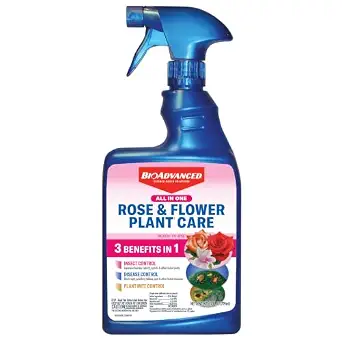 |
| Best Budget The cheapest option that still gets the job done reliably | BioAdvanced Rose & Flower Insect Killer Spray, 24 oz |  |
| Highest Rated A top-rated pick with lots of positive feedback | BioAdvanced 2-in-1 Systemic Rose & Flower Care Granules, 5 lb |  |
| Most Popular A crowd favorite that many people choose with confidence | BioAdvanced All‑In‑One Rose & Flower Care Granules, 4 lb |  |
| Best Seller A high-volume bestseller chosen again and again | Atticus Talak 7.9% Bifenthrin Indoor/Outdoor Insecticide Concentrate, 32 oz |  |
Ortho Rose & Flower Insect Killer Ready-to-Use, 24 oz

| Item Form | Spray |
|---|---|
| Target Species | Insects |
| Manufacturer | The Scotts Company LLC |
Ortho Rose & Flower Insect Killer is a ready-to-use spray designed to control a long list of insect pests on roses and other flowering plants. You use it by adjusting the spray nozzle and applying directly to foliage and blooms; the product combines contact knockdown with a systemic action so treated plants continue to control listed pests for up to four weeks. It is labeled for both indoor and outdoor use and is formulated to avoid harming blooms when used as directed. Practical benefits include simple application from the bottle with no mixing, multi-week residual control that reduces re-spraying, and a formulation targeted specifically for ornamentals rather than general lawn use. Limitations are that protection is limited to the insects listed on the label and the stated duration, so heavy or recurring infestations may still require repeat treatments or integrated pest practices. As with any insecticide, follow label directions and safety precautions when applying around pollinators and during bloom periods.
Best for: Gardeners who want a straightforward, low-fuss insect control for roses and ornamental flowers and value multi-week residual protection with minimal setup.
Less Ideal for: Organic gardeners or those seeking an all-in-one solution for every garden pest should look at non-synthetic or broader integrated pest approaches instead.
- Ready-to-use spray requires no mixing and is simple to apply
- Dual-action formula provides immediate contact kill plus systemic control
- Labeled safe for use on roses and flowers without harming blooms when used as directed
- Provides up to four weeks of residual protection against listed insects
- Protection applies only to pests listed on the label and may not cover every garden pest
- Repeated applications may be needed for heavy infestations or new pest introductions
Verdict: A simple, ready-to-use spray that gives targeted multi-week insect control for roses and flowering plants with minimal effort.
Sevin Insect Killer Concentrate II, 32 oz

| Item Form | Liquid |
|---|---|
| Target Species | Insects |
| Liquid Volume | 32 fluid ounces |
| Active Ingredients | Zeta Cypermethrin |
Sevin Insect Killer Concentrate II is a garden spray concentrate you mix with water and apply with a handheld, tank, or hose-end sprayer to control insects on lawns, vegetables, fruits, shrubs, and ornamentals. The label rate (for example 4 fl oz per gallon) and included measuring cap make mixing straightforward for routine applications. It kills by contact more than 500 listed pests and claims residual control for up to three months on most insects, which reduces how often you need to reapply. The formula lists zeta-cypermethrin as the active ingredient, so it is fast acting against chewing and sap-sucking pests but you must avoid spraying open blooms to protect pollinators and follow label precautions for personal safety. It is versatile for spot treatments or broader landscape use, but users should follow label restrictions for certain pests and regional regulations. Practical gardeners will appreciate the concentrated format and multi-plant label, while those needing an organic or pollinator-safe option will want alternatives.
Best for: Gardeners who want a practical, no-nonsense concentrate to control a wide range of insect pests across vegetable beds, ornamentals, and lawns and who prioritize effective, infrequent applications.
Less Ideal for: People seeking organic, pollinator-safe, or aquatic-friendly pest control should consider non-synthetic or targeted biological options instead.
- Concentrated formula lets you treat large areas from a single bottle when mixed as directed
- Kills over 500 listed insect pests by contact, covering many common garden problems
- Measuring cap and clear mixing instructions make preparation simple and consistent
- Works on both ornamental and edible plants so one product covers multiple garden zones
- Contains a synthetic pyrethroid (zeta-cypermethrin) which can harm pollinators and aquatic life if misused
- Not registered for certain pests or regions so users must check local label restrictions
Verdict: A versatile, concentrated insecticide that gives practical gardeners broad-spectrum, long-lasting control when used according to the label.
BioAdvanced All-in-One Rose & Flower Plant Care Spray, 24 fl oz

| Unit Count | 24 Fluid Ounces |
|---|---|
| Item Form | Liquid |
| Target Species | Fungus |
| Included Components | CARE ROSE&FLOWER RTU 3IN1 24OZ |
This ready-to-use BioAdvanced spray delivers three actions in one bottle: it kills listed insects on contact, controls common fungal diseases, and tackles spider mites while leaving a protective residue that lasts up to 14 days. You use it like a normal garden spray—apply to rose bushes, ornamentals, vines, shrubs, and similar plants when pollinators are not present. The product lists active ingredients (bifenthrin and myclobutanil) and is formulated to be rainproof within about four hours, so it holds up in typical garden conditions. Practical benefits include saving time by combining insect, disease, and mite control in a single application and being convenient as a ready-to-spray bottle. Important limitations are that it targets only the listed pests and diseases, must be used with pollinator safety in mind, and contains synthetic active ingredients that some gardeners prefer to avoid. Follow label directions and safety guidance for effective and responsible use.
Best for: Gardeners who want a simple, time-saving solution to keep roses and ornamental flowers healthy without mixing concentrates and who prioritize broad, short-term protection.
Less Ideal for: Growers seeking strictly organic or pollinator-safe products or those who need treatment for pests or diseases not listed on the label should look elsewhere.
- Three-in-one formula combines insecticide, fungicide, and miticide for fewer separate treatments
- Ready-to-use spray is convenient for spot and whole-plant applications
- Rainproof within about four hours and provides protection up to 14 days
- Kills listed pests on contact for fast visible results
- Active ingredients are synthetic and may be undesirable for organic gardeners
- Protection only covers pests and diseases specifically listed on the label
Verdict: Choose this ready-to-use spray if you want a convenient, single-product solution to kill common rose pests, control fungal diseases, and suppress mites with up to two weeks of protection.
BioAdvanced Rose & Flower Insect Killer Spray, 24 oz

| Unit Count | 24 Fluid Ounces |
|---|---|
| Item Form | Spray |
| Target Species | Insects |
| Active Ingredients | Cyfluthrin |
| Specification Met | EPA |
This ready-to-use BioAdvanced spray is designed for quick spot treatment of roses, flowers, shrubs and vegetable gardens. The bottle delivers a fast-acting cyfluthrin formula that kills common pests such as aphids, whiteflies, Japanese beetles and caterpillars on contact, and the label claims protection for up to 14 days after application. Typical use is a direct spray to foliage until leaves are coated but not dripping, making it convenient for spot treatments or treating individual plants without mixing. The product is easy to apply and covers many common garden pests, which is helpful when you want an immediate reduction in visible damage. Important limitations are that it is a chemical insecticide with a synthetic active ingredient and is formulated for above-ground pests only, so it does not target soil-dwelling stages and should be used according to label precautions around beneficial insects and flowering pollinators. For gardeners needing occasional, effective knockdown of common pests, this is a practical ready-to-use option.
Best for: Gardeners who want an affordable, no-mix spray to quickly knock down visible pests on roses and ornamental plants and who prioritize convenience and immediate results.
Less Ideal for: People looking for organic or pollinator-safe options or those needing systemic or soil-targeted pest control should consider alternatives.
- Ready-to-use sprayer for easy spot application
- Kills a wide range of listed pests on contact
- Provides up to 14 days of residual protection as stated on the label
- Contains a synthetic pyrethroid active ingredient which can harm beneficial insects if applied to blooms
- Not intended for control of soil-dwelling pests or grubs
Verdict: A convenient, budget-friendly ready-to-use spray for rapidly reducing common above-ground garden pests on roses and flowers.
BioAdvanced 2-in-1 Systemic Rose & Flower Care Granules, 5 lb

| Item Form | Granules |
|---|---|
| Target Species | Insects |
| Unit Count | 80 Ounce |
| Specification Met | EPA |
This BioAdvanced 2-in-1 Systemic Rose & Flower Care is a granular fertilizer and insect control that you measure, sprinkle into the root zone, work into the soil, and water in. It delivers a low-dose systemic active ingredient that is taken up by roots so plants are protected from pests such as aphids, whiteflies, leafminers and Japanese beetles for up to eight weeks without foliar spraying. The granule form and rainproof claim make it convenient for flower beds where repeated spraying is undesirable, and a single 5 lb bottle is stated to treat multiple rose bushes. Practical benefits include combined feeding and pest control in one application and simple application that fits routine seasonal maintenance. Important limitations are regulatory restrictions in some states and the fact that it uses a systemic insecticide so it will affect sap-feeding insects broadly rather than targeting a single pest; it is not a quick-contact spray for immediate knockdown. For gardeners prioritizing a reliable, low-effort prevention method for flower beds this product simplifies pest control, but responsible application and attention to local restrictions are required.
Best for: Gardeners who want a low-effort, dependable way to protect established flower beds and roses from common pests while also fertilizing, and who prefer soil-applied treatments over repeated spraying.
Less Ideal for: People who need immediate contact knockdown for an active infestation or those who avoid systemic insecticides and want highly targeted, selective pest control methods.
- Combines fertilizer and systemic insect control in a single granular application
- Provides rainproof protection that lasts up to eight weeks
- Granules are easy to apply by measuring, sprinkling into soil, and watering in
- Systemic uptake protects new growth so repeat foliar sprays are not required
- Contains a systemic insecticide that affects a broad range of sap-feeding insects rather than offering selective control
- Not available for sale in several states due to regulatory restrictions
Verdict: A convenient, low-maintenance granular solution that feeds flower beds while providing up to eight weeks of reliable systemic insect protection.
BioAdvanced All‑In‑One Rose & Flower Care Granules, 4 lb

| Item Form | Granules |
|---|---|
| Target Species | Insects |
| Special Features | Breathable |
| Active Ingredients | 0.11% Imidacloprid, 1.06% Tebuconazole, 0.05% Clothianidin |
BioAdvanced All‑In‑One Rose & Flower Care is a granular, systemic product designed to feed roses and ornamentals while protecting them from common pests and fungal diseases. You broadcast granules around the root zone and water them in; the systemic actives move through the plant so there is no spraying and protection is rainproof for up to six weeks. Notable features include a balanced plant food to promote roots and blooms plus insect control for pests such as aphids and Japanese beetles and a fungicide to help prevent black spot and powdery mildew. For a gardener growing Knock Out roses this simplifies routine care by combining three tasks into one application and reducing labor. Limitations are that it contains low levels of neonicotinoid active ingredients and clothianidin which some gardeners avoid, and it is not labeled for sale in certain states so local restrictions may apply. It is best used as a scheduled maintenance treatment rather than a cure for severe infestations or advanced disease.
Best for: Gardeners who want a low-effort, maintenance product to keep Knock Out roses healthy with regular feeding and broad pest and disease prevention.
Less Ideal for: Those who prioritize organic or pollinator-safe products or who need a targeted treatment for serious infestations or advanced disease.
- Three-in-one formula feeds plants while providing insect and disease control
- Systemic granules that are rainproof and require no spraying
- Provides up to six weeks of protection per application
- Easy application by spreading around the root zone and watering in
- Contains neonicotinoid and related actives that some gardeners prefer to avoid
- Not labeled for sale in some U.S. states which limits availability in those areas
Verdict: If you want a simple, no‑spray maintenance product that feeds Knock Out roses while protecting them from common insects and fungal diseases, this combines all three tasks in one application.
Atticus Talak 7.9% Bifenthrin Indoor/Outdoor Insecticide Concentrate, 32 oz

| Active Ingredient | Bifenthrin |
|---|---|
| Formulation | Suspension Concentrate |
| Liquid Volume | 32 fluid ounces |
| Length of Control | Up to three months |
| Target Species | Insects |
Talak 7.9% is a liquid concentrate for treating lawns, landscaping, outdoor living areas and indoor perimeter spots like baseboards and cabinets. You dilute the concentrate with water to create a spray for barrier treatments, spot applications or lawn mixes; label rates explain how much to mix per gallon depending on the use. The product uses bifenthrin, a proven broad-spectrum active ingredient, and the manufacturer states it controls over 75 species and can give residual control for as long as three months. Its water-based formula dries clear, leaves no odor or visible residue, and is not phytotoxic on plants when used per label. Practical benefits include flexible indoor and outdoor use, clear drying, and a bottle designed for easier pouring. Important limitations are that solutions should be mixed only for same-day use, it is not registered for sale in a few states, and it is not approved for fogger application, so professional-style misting methods are not appropriate.
Best for: Buyers who want a single, reliable product to protect yards, patios and building perimeters from a wide range of common pests and prefer conservative, label-driven application practices.
Less Ideal for: People seeking ready-to-use sprays or fogger-compatible products or those in states where this formulation is not registered should look at alternatives.
- Broad-spectrum control listed for 75+ indoor and outdoor pest species
- Water-based formula that dries clear and leaves no odor or residue
- Flexible label directions for lawns, landscapes, hardscapes and indoor perimeter treatments
- Long residual activity up to three months when applied at recommended rates
- Mixed spray solutions cannot be stored and must be used the same day
- Not approved for fogger application and not available for sale in some states
Verdict: A versatile, water-based bifenthrin concentrate that delivers long-lasting, broad-spectrum outdoor (and perimeter indoor) control when used according to the label.
Choosing the Right Insect Killer for Flower Beds: Key Factors to Consider
Target Pest Spectrum
Knowing which pests are most damaging in your flower beds narrows good choices. Some insect killers are formulated to control chewing pests like caterpillars and beetles, while others target sap feeders such as aphids, whiteflies, and thrips. Choosing a product that matches the pest biology reduces repeat applications and collateral damage.
Consider when those pests are most active in your climate. Systemic options can protect new growth from sap-sucking insects, while contact sprays work best on visible populations. Timing applications for vulnerable life stages, such as early larval stages for caterpillars, increases control odds.
Plant Safety and Phytotoxicity
Flowering plants and tender annuals can be sensitive to certain chemistries and application concentrations. Foliar burn, leaf drop, or blossom injury often results from using a product too strong, applying during heat stress, or treating when plants are wet. Check label directions for ornamental use and recommended dilution rates.
When caring for mixed beds with perennials and young transplants, pick products explicitly labeled safe for ornamentals or allow short reapplication windows. If in doubt, test on a small area or a single plant before whole-bed treatment to avoid widespread damage.
Pollinator and Beneficial Insect Safety
Flower beds are pollinator habitat, so protecting bees, butterflies, and predatory insects matters. Some insect killers are broad-spectrum and remain toxic to pollinators for days, while others break down quickly or act only on contact and during specific application windows.
Prefer products with lower residual activity during bloom or those labeled for spot treatment to reduce exposure. Apply early morning or late evening when pollinators are less active, and avoid spraying open flowers whenever possible to minimize harm to beneficial insects.
Mode of Action and Resistance Management
Repeated use of the same mode of action can select for resistant pest populations. Rotate products with different modes of action when treating the same pest over a season. Systemic chemistries and botanical contact insecticides act differently, and alternating between them helps maintain long-term control.
Read labels to identify the active ingredient class and follow recommended use frequency. Combining cultural controls, such as handpicking and encouraging predators, with measured product use reduces selection pressure and preserves effectiveness.
Application Method and Coverage
Application needs in flower beds vary by product type. Sprays require good coverage of undersides and new growth, while soil drenches move systemically through roots and protect new leaves. Granules or baits have niche uses but are less common for general flower-bed pest control.
Consider whether you have a sprayer, hose-end applicator, or prefer ready-to-use trigger bottles. Ease of achieving even coverage affects both effectiveness and plant safety. For large plantings, products compatible with backpack sprayers or hose attachments reduce labor time.
Persistence and Environmental Breakdown
Residual persistence affects how long a product remains active in the soil and on foliage. Long-persisting products can provide extended control but increase risk to beneficials and may limit replanting schedules. Shorter-lived materials require more frequent applications but reduce long-term exposure in the bed environment.
Balance persistence with your tolerance for reapplication and the need to protect pollinators. In containers or small beds near pollinator plantings, shorter persistence and spot treatments are often preferable.
When to Treat Flower Beds
Decide to treat when you observe active damage or a clear, growing pest population rather than on a fixed calendar. Scouting the underside of leaves, new growth, and flower buds helps catch infestations early when treatments are most effective.
Regular weekly checks during peak season and after warm, rainy spells will reveal spikes in aphids and thrips. Treating at the first sign of pest buildup reduces the need for heavy applications later and helps preserve beneficial predator populations.
- Inspect young shoots, crown areas, and sheltered leaf axils.
- Look for sticky honeydew, distorted growth, or chewed petals as early warning signs.
- Target applications to problem zones rather than blanket-spraying the whole garden.
Safe Timing Around Blooms
Avoid spraying open flowers whenever possible. Many products pose hazard to bees and other pollinators while blossoms are open. If control during bloom is necessary, use spot treatments early morning or late evening when pollinator activity is low.
Consider non-contact or systemic options that can protect new growth without direct flower contact. Also use the lowest effective concentration and follow label directions on bloom-stage restrictions.
- Time sprays for early morning or late evening.
- Remove or shield blooms if doing broader applications when pollinators are active.
- Favor spot treatments for localized infestations.
Application Tools and Dosage Tips
Matched tools and correct dosage improve results and reduce plant stress. Fine-mist sprayers reach undersides of leaves, while coarse sprays avoid excessive drift. Hose-end and backpack sprayers cover larger areas quickly but require calibration to ensure label rates are applied.
Always measure concentrate precisely and mix fresh. Over-diluting can reduce efficacy and under-diluting raises the risk of phytotoxicity. Rinse equipment after use and avoid spraying in windy conditions to prevent drift onto non-target plants.
- Use a hand sprayer for small beds and a calibrated hose-end for larger areas.
- Target undersides of foliage and new buds for sap-sucking pests.
- Follow label re-entry and rainfastness guidance to avoid wash-off.
Combining Cultural Controls With Treatments
Integrating sanitation and habitat management reduces pest pressure and can reduce product reliance. Practices like removing heavily infested foliage, thinning dense plantings to improve air flow, and watering at the soil level rather than overhead lower pest habitat suitability.
Encouraging beneficial insects by planting nectar sources and avoiding broad-spectrum treatments when possible helps keep pest populations in check. When product use is required, aim for targeted applications that preserve these beneficial communities.
- Hand-pick large caterpillars and remove heavily damaged blooms.
- Thin crowded plants to discourage pests that favor humid microclimates.
- Provide water and native blooms to support predators and pollinators.
Safe Storage and Disposal
Store concentrates and ready-to-use products in their original labeled containers in a locked, cool, dry place away from children and pets. Keep them separate from fertilizers and food storage. Follow label guidelines for shelf life and do not mix different active ingredients unless the label permits it.
Dispose of leftover product and rinse water according to local hazardous waste rules. Triple-rinsing empty containers and using the rinsate in applications allowed on the label minimizes waste while ensuring safe disposal.
- Keep a dated inventory so you use older products first.
- Do not pour excess down household drains; follow local disposal guidance.
- Record which active ingredients you use to avoid unintentional mode-of-action repetition.
How We Chose the Best Insect Killer for Flower Beds
To compile these seven picks we used practical gardener-focused filters and measurable criteria. We prioritized products with documented effectiveness against common flower-bed pests such as aphids, thrips, caterpillars, and beetles. Application flexibility was important, so we included options suitable for foliar spray, soil drench, and spot treatment where appropriate. Plant safety was a central filter: we excluded products with widespread reports of foliar burn, transplant shock, or long residual phytotoxicity on ornamental flowers. Exposure risk to pollinators and beneficial insects was another exclusion filter; products with long residual toxicity to bees at bloom were deprioritized. We also considered ease of application, label clarity for ornamental use, and whether re-entry and wait times fit normal garden routines. Our evaluation emphasized measurable performance dimensions gardeners care about: pest control effectiveness, plant safety on ornamentals, application versatility, persistence in the environment, and user guidance on timing and protective measures.
FAQ
Can I treat flower beds while plants are in full bloom?
Treating during full bloom increases risk to pollinators. If treatment is necessary, use spot applications, choose lower-residual options, and apply early morning or late evening when pollinators are less active.
How often should I reapply control in a flower bed?
Reapplication interval depends on the product's persistence and the pest pressure. Short-residual contact treatments may need repeat applications every 7 to 14 days, while systemic options can protect new growth for several weeks. Always follow label intervals.
Will insect killers harm beneficial insects in my beds?
Some broad-spectrum materials can harm beneficials. To reduce impact, use targeted or short-residual products, avoid spraying flowers, and combine treatments with cultural and biological controls to preserve beneficial populations.
Are systemic treatments safe for all ornamental flowers?
Systemics can be effective for sap-sucking pests but are not universally safe for every ornamental. Some plants are more sensitive to active ingredients. Check labels for ornamental use and consider testing on a small area before wide application.
What is the best way to deal with localized outbreaks?
For localized outbreaks, use spot treatments, hand removal, or targeted sprays to limit exposure. Localized action reduces the need for broad applications and helps protect pollinators and predators elsewhere in the bed.
Final Verdict
Choose an insect killer for flower beds that matches the pests you see and the plants you grow. Prioritize plant-safe label instructions, minimize pollinator exposure by timing and targeting treatments, and rotate modes of action to reduce resistance risks. Balancing effectiveness, application ease, and ecological impact will lead to better long-term control and healthier beds. Focus on the decision criteria above to pick the option that fits your garden style and pest pressures.
