

Note: This article contains affiliate links. If you click on these links and make a purchase, I may earn a small commission at no extra cost to you. This helps support my research and content. Read my full affiliate disclosure here.
If you grow table grapes, wine grapes, or backyard vines, pest outbreaks can cut yield and damage fruit quality. Choosing the right insecticide for grape vines matters because some treatments control a broad range of chewing and sucking pests while others are formulated to minimize harm to foliage, beneficial insects, and fruit residues. This guide looks at six shortlisted options suited to grape-growing situations and evaluates each for real garden priorities like pest spectrum, vine safety, application method, and reentry/harvest intervals. Read on to understand the tradeoffs so you can pick a treatment that fits your vineyard or backyard patch.
Top Picks at a Glance
| Best Overall The best all-around choice for most situations | Marrone Bio Innovations Venerate CG Bioinsecticide (32 fl oz) |  |
| Best Quality Built to a higher standard if you want something more solid | Monterey Spinosad Insecticide, 32 oz (concentrate) |  |
| Best Value The sweet spot between price and what you get | BioAdvanced Fruit, Citrus & Vegetable Insect Control Concentrate, 32 oz |  |
| Best Budget The cheapest option that still gets the job done reliably | Bonide Insecticidal Soap Ready-to-Use Spray, 32 oz |  |
| Highest Rated A top-rated pick with lots of positive feedback | Marrone Bio Innovations Venerate CG Bioinsecticide concentrate (1 gallon) |  |
| Most Popular A crowd favorite that many people choose with confidence | Bonide Captain Jack's Neem Oil Ready-to-Use Spray, 128 fl oz |  |
Marrone Bio Innovations Venerate CG Bioinsecticide (32 fl oz)

| Unit Count | 32 Fluid Ounces |
|---|---|
| Item Form | Lotion |
| Target Species | Insects |
| Special Features | organic |
| Liquid Volume | 32 fluid ounces |
Venerate CG is a broad-spectrum bioinsecticide designed for use on fruit and vegetable crops including grape vines to manage aphids, leafhoppers, thrips, mites and other chewing and sucking pests. It is applied as a foliar spray either by ground or air equipment and is positioned to fit into integrated pest management programs because it has multiple modes of action and is reported to be easy on beneficial insects. Practical benefits for grape growers include a zero-day pre-harvest interval and no labeled limit on the number of applications, which helps when timing sprays close to harvest. The formulation is organic-compatible and carries an MRL tolerance exemption for residue-sensitive markets. Important limitations are regulatory restrictions in several U.S. states where registrations are pending and that effectiveness can depend on thorough coverage and correct timing against specific pests, so it works best as part of a rotation rather than a lone-season fix.
Best for: Grape growers seeking a biology-based spray to reduce chemical residues and preserve beneficial insects while controlling common chewing and sucking pests; suitable for those using IPM or organic-compatible programs.
Less Ideal for: Growers who need immediate, broad legal availability across all U.S. states or who require a single highly systemic product for difficult curative situations should consider other options.
- Broad-spectrum activity against common grape pests such as aphids, thrips, leafhoppers and mites
- Multiple modes of action that support resistance management
- Organic-compatible formulation suitable for integrated pest management
- Zero-day pre-harvest interval and MRL tolerance exemption for residue-sensitive production
- Not registered for sale or use in multiple U.S. states, limiting availability
- Performance depends on good spray coverage and proper timing, so it is not a standalone solution
Verdict: Choose Venerate CG when you want an organic-compatible, residue-friendly bioinsecticide that controls common grape pests while protecting beneficials.
Monterey Spinosad Insecticide, 32 oz (concentrate)

| Unit Count | 32 Fluid Ounces |
|---|---|
| Item Form | Oil |
| Target Species | Insects |
Monterey Spinosad is a concentrated, spinosad‑based insecticide designed for home garden use to control caterpillars, leafminers, borers, thrips and many other chewing and crawling pests. Mixed into a trigger, backpack, or hose‑end sprayer, it can be applied to ornamentals, vegetables, lawns, citrus and fruit trees; the concentrate format makes it easy to cover larger areas on a schedule. The product is OMRI listed, fast acting, and practically odorless since spinosad is derived from naturally occurring bacteria. Safety directions on the label are clear and recommend protective clothing and thorough washing after handling. Limitations are that it is a broad contact toxin so beneficial insects like bees and predatory insects can be affected if applied during bloom or while pollinators are active, and you must follow label rates and reentry intervals for edible crops. For gardeners who prioritize reliable, organic‑approved control of chewing insects, this concentrate is a practical tool; those wanting an ant‑specific baiting strategy or systemic option will need a different product.
Best for: Gardeners who want a reliable, organic‑approved concentrate to quickly reduce chewing and boring insect populations across vegetables, ornamentals and fruit trees and who are comfortable following label safety and mixing instructions.
Less Ideal for: People seeking a targeted ant bait or a systemic insecticide for soilborne pests or those who need a product safe to spray during active bloom are better off with specialist ant baits or systemic products.
- OMRI listed for use in organic gardening
- Effective against a wide range of chewing and boring insects including caterpillars and leafminers
- Concentrate format works with trigger, backpack, or hose‑end sprayers for flexible coverage
- Fast acting and essentially odorless when applied properly
- Contact action can harm beneficial insects if applied when pollinators are active
- Requires mixing and careful adherence to label instructions for safe use
Verdict: Choose this OMRI‑listed spinosad concentrate when you need dependable, fast control of chewing garden pests across vegetables, ornamentals and fruit trees.
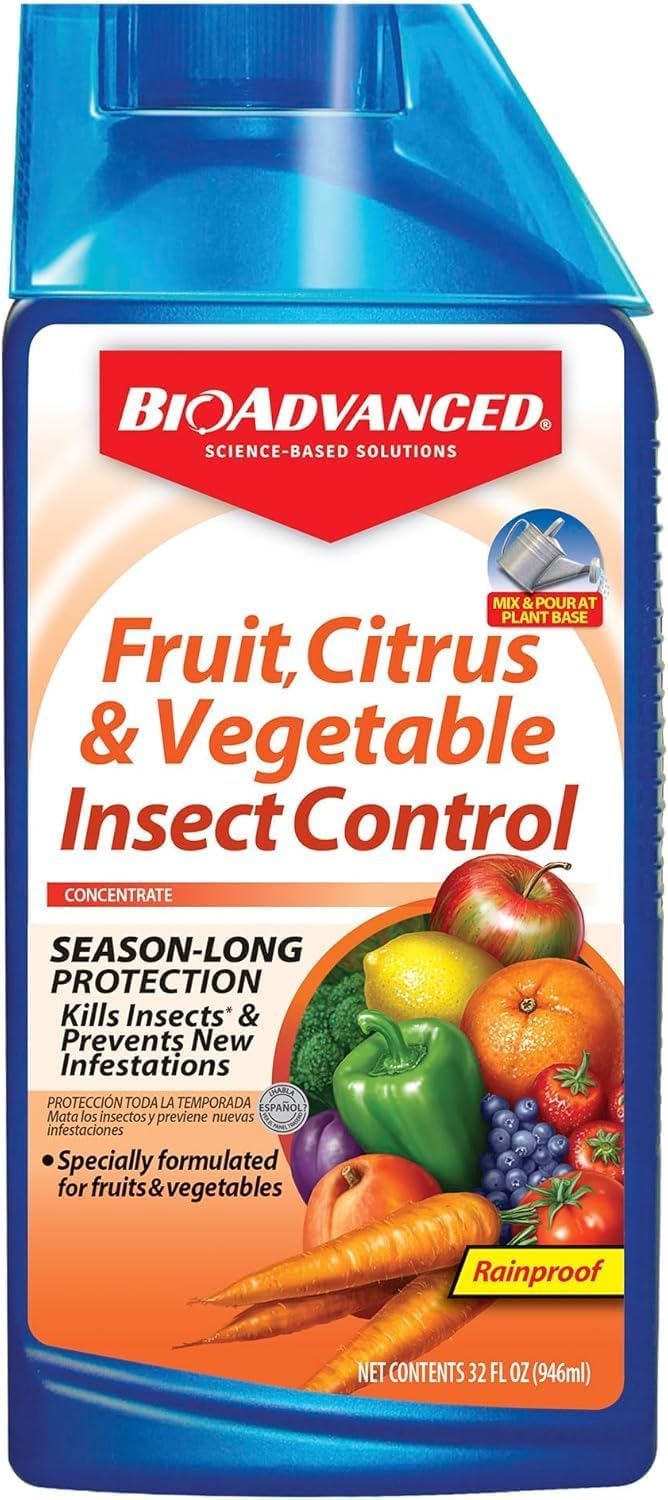
BioAdvanced Fruit, Citrus & Vegetable Insect Control Concentrate, 32 oz
| Item Form | Concentrate |
|---|---|
| Target Species | Aphid, Whiteflies, Japanese Beetles, Mealybugs, Asian Citrus Psyllid |
| Liquid Volume | 32 fluid ounces |
| Specification Met | EPA |
| Active Ingredients | avocado |
This BioAdvanced concentrate is designed as a season-long, systemic insect control for edible gardens. You mix the concentrate with water and pour it around the root zone, so no foliar spraying is required; after uptake the product protects plants from feeding pests such as aphids, whiteflies, leafhoppers, scale and Japanese beetles and is rainproof after one hour. A single application covers large areas and the label states protection for up to two months, which makes it useful for producers who want durable control without repeated sprays. Because it is systemic the active ingredient is taken up by the plant, protecting new growth as well as existing foliage. Important limitations are regulatory restrictions in several U.S. states and the fact that systemic chemistry can affect nontarget insects, so follow label directions and harvest intervals carefully. For gardeners focused on strong, low-effort insect control for edible crops, this product delivers predictable season-long protection when used as directed.
Best for: Gardeners and small-scale growers who prioritize reliable, low-effort, season-long protection for edible vegetables and fruit and who want a pour-in-root treatment instead of repeated foliar sprays.
Less Ideal for: People who prefer organic contact-only treatments or who manage pollinator-heavy plantings where nontarget exposure must be minimized should consider alternative products.
- Systemic mode of action protects new growth and does not require foliar spraying
- Provides rainproof protection one hour after application
- Single application gives season-long control for up to two months
- Covers a wide range of listed pests relevant to vegetables and fruit
- Not permitted for sale or use in several U.S. states and some New York counties
- Contains systemic insecticide chemistry that can impact nontarget insects if misused
Verdict: Choose this concentrate if you want dependable, season-long systemic protection for vegetables and fruit with a single pour-in application.
Bonide Insecticidal Soap Ready-to-Use Spray, 32 oz

| Unit Count | 32 Ounce |
|---|---|
| Item Form | Spray |
| Target Species | Insects |
| Active Ingredients | Potassium salt of fatty acids |
This ready-to-use insecticidal soap spray kills soft-bodied insects on contact using potassium salts of fatty acids derived from plants, making it suitable for organic vegetable beds and container vegetables. It is applied with the built-in spray nozzle directly to affected foliage to control aphids, mites, caterpillars, whiteflies and other listed pests; the label allows use up to the day of harvest on many food crops. Practical benefits include an easy spray application with no mixing, low residual toxicity compared with conventional insecticides, and a broad list of target species for small-scale home gardens and greenhouses. Important limitations are that it works by contact so complete coverage is required and it will not control pests hidden inside fruit or stems; repeated applications may be necessary for heavy infestations. Users should follow label safety directions and test on a few plants first since some sensitive foliage can show damage under hot conditions.
Best for: Gardeners who prioritize simple, low-residue organic solutions for vegetables and want a no-mix spray they can use quickly on affected plants.
Less Ideal for: Large-scale growers who need systemic or long‑residual control or anyone needing a product to reach pests hidden inside fruit or stems.
- Ready-to-use spray with an easy nozzle for immediate application
- Active ingredient is a plant-derived potassium salt suitable for organic gardening
- Labeled for use on a wide range of vegetables, herbs, ornamentals and houseplants
- Low residual toxicity compared with synthetic insecticides
- Kills only on contact so full coverage and repeat treatments are often required
- May cause phytotoxicity on some sensitive plants or under high heat if not spot-tested
Verdict: A convenient, ready-to-use organic spray that gives practical contact control of common vegetable garden pests with minimal residual impact.
Marrone Bio Innovations Venerate CG Bioinsecticide concentrate (1 gallon)

| Unit Count | 128 Fluid Ounces |
|---|---|
| Item Form | Oil |
| Target Species | Insects |
| Special Features | organic |
Venerate CG is a 1-gallon concentrated bioinsecticide designed for use in both conventional and organic production to manage mites, thrips, aphids, whitefly and similar pests on grape vines. It is intended for ground or aerial application and is marketed for integration into IPM and insect resistance management programs because it uses multiple modes of action. Key practical benefits are that it is labeled for use right up to harvest with zero-day pre-harvest interval and leaves no residues, which simplifies timing and reduces crop withholding concerns. Because it is described as easy on beneficial insects, it can be rotated with other products to help avoid resistance. Limitations include state registration restrictions that prevent shipment to several states and the need for appropriate application equipment and calibration for safe, effective coverage at scale. This is a workhorse option for growers who prioritize compatible, low-residue products but who must confirm local registration and follow label directions for mixing and application rates.
Best for: Growers and vineyard managers who need a reliable, low-residue insect control that fits into IPM programs and can be applied up to harvest without downtime.
Less Ideal for: Small hobbyists or urban gardeners without access to spray equipment or who are in states where the product is not registered for use.
- Broad-spectrum activity against mites, thrips, aphids and whitefly suitable for grape pests
- Labeled for organic production and compatible with IPM and resistance management strategies
- Zero-day pre-harvest interval and described as residue-free, simplifying harvest timing
- Available as a concentrated 1-gallon formulation for treating larger plantings
- Not registered for sale or shipment in several U.S. states, limiting availability
- Requires proper spray equipment and calibration for effective coverage and safe use
Verdict: Choose Venerate CG when you need a reliable, organic-compatible, zero-day pre-harvest insecticide that integrates with IPM on grape vines.
Bonide Captain Jack's Neem Oil Ready-to-Use Spray, 128 fl oz

| Item Form | Ready-To-Use |
|---|---|
| Liquid Volume | 128 fluid ounces |
| Active Ingredients | Clarified Hydrophobic Extract Of Neem Oil |
| Target Species | Insects |
Bonide Captain Jack's Neem Oil is a large ready-to-use spray formulated to protect vegetables, ornamentals, and houseplants from common insects, mites, and fungal diseases. It is used by shaking the bottle, fully covering affected foliage, and reapplying every 7 to 14 days or as needed. The product lists clarified hydrophobic extract of neem oil as the active ingredient and is labeled for organic gardening and use up to the day of harvest, which makes it suitable for edible beds. As a combined insecticide, miticide, and fungicide it targets eggs through adults and can help control aphids, whiteflies, spider mites, powdery mildew, and other common problems. The built-in spray nozzle and large 128 fl oz volume reduce the need for frequent repurchasing on medium to large plots. Important limitations are that it requires thorough coverage to work and regular reapplication, and some sensitive plants may show leaf burn if applied in hot sun or at high concentration even with ready-to-use formulas. Follow label directions and test on a small area if using on tender seedlings or stressed plants.
Best for: Gardeners who prioritize organic, low-toxicity options and want a single spray to manage common pests and fungal issues on vegetable beds and mixed home gardens.
Less Ideal for: People seeking a one-time quick fix for heavy infestations or growers who need systemic, long-duration pest control rather than a contact/coverage-dependent spray.
- Approved for organic gardening and labeled for use up to harvest
- Combines insecticide, miticide, and fungicide action in one product
- Ready-to-use with an included spray nozzle for straightforward application
- Large 128 fl oz volume reduces how often you need to buy more
- Requires complete foliar coverage and repeat applications every 7–14 days for control
- Can cause leaf sensitivity on some plants if applied in hot sun or to stressed foliage
Verdict: A large ready-to-use neem spray that gives organic gardeners an all-in-one, harvest-safe option for routine control of common pests and fungal problems.
Choosing the Right Insecticide for Grape Vines: Key Factors to Consider
Pest Control Spectrum
Knowing which pests an insecticide controls is the first step to successful treatment. Some active ingredients target chewing pests like grape berry moth larvae and caterpillars, while others are stronger against sap-sucking insects such as leafhoppers, mealybugs, and aphids. Select a product whose labeled target pests match the insects you actually see in your vineyard rather than relying on general-purpose claims.
A broader spectrum product can reduce the number of treatments when multiple pests are present, but broad-spectrum materials often carry greater risk to beneficial predators and parasitoids. Scout vines regularly to confirm the pest mix and timing so you can choose a product that works against the dominant threats at that growth stage.
Vine and Fruit Safety
Grapevines are sensitive to certain chemistries and to spray timing during bud break, bloom, and ripening stages. Check labels for phytotoxicity warnings and for guidance about using during heat or on new growth. Some formulations explicitly state they are safe for use on fruiting vines, while others list restrictions or require lower concentrations for tender growth.
Preharvest intervals and residue guidance determine when fruit can be harvested after a treatment. For growers producing table grapes or grapes for wine, consider both legal harvest intervals and the potential for off-flavors or surface residues that could affect quality.
Impact on Beneficial Insects
Beneficial predators, parasitoids, and pollinators help keep pest populations lower over time. Many insecticides have short-term or long-term toxicity to these beneficials, so consider treatments that minimize collateral damage when possible. Products labeled as reduced-risk or with targeted modes of action often spare more natural enemies than broad-spectrum contact insecticides.
Application timing can also reduce harm to beneficials. Apply sprays in the evening when pollinators are less active and avoid broad applications during peak parasitoid activity if you rely on biological control in your vineyard.
Application Method and Equipment
How you apply an insecticide affects both efficacy and labor. Some products are designed for foliar sprays, others for systemic uptake via soil drench or trunk injection, and a few are available as baits or traps. Foliar sprays require good coverage of canopy and clusters, while systemic options rely on plant uptake and timing for movement into new growth.
Match the product formulation to the equipment you have. Backpack sprayers, hose-end applicators, and motorized orchard sprayers all deliver different droplet sizes and coverage. Also consider the ease of mixing, whether the product is suspension-concentrate or water-soluble packets, and the need for spreader-stickers for better contact.
Residue, Reentry, and Harvest Intervals
Residue persistence on fruit affects harvest timing and worker safety. Labels specify preharvest intervals that must be followed and reentry intervals that govern when people can safely enter treated areas. Shorter intervals are convenient for frequent treatments during rapid pest outbreaks but may reflect different modes of action or faster breakdown in sunlight.
Plan sprays around labor and harvest windows. If you need multiple treatments during a season, choose options with compatible residues and be mindful of cumulative exposure when rotating materials.
Resistance Management and Rotation
Repeated use of the same active ingredient can select for resistant pest populations. Rotating between insecticides with different modes of action reduces this risk. Labels often include a mode-of-action group number; use that information to plan rotations across the season.
Integrate chemical control with cultural practices like canopy management, timely pruning, and sanitation to reduce pest pressure and extend the useful life of effective insecticide options.
Timing Treatments Around Vine Growth Stages
Spray timing matters as much as product choice. Early-season treatments target overwintering pests and newly hatched larvae before they establish, while midseason sprays focus on protecting clusters during berry set and ripening. Late-season options are limited by harvest intervals and potential residue issues.
Use scouting to guide timings. Look for egg masses, nymphs, or early larval stages and treat when pests are most vulnerable. Avoid spraying during bloom unless the label explicitly permits it, since beneficial insect activity and pollination can be disrupted.
- Target young larvae and nymphs for higher mortality rates
- Avoid heat extremes that increase phytotoxicity risk
- Plan around preharvest intervals when fruit is coloring
Integrating Cultural Controls with Chemical Options
Cultural practices reduce the number of insecticide applications needed. Canopy thinning, removing infested clusters, and sanitation of fallen fruit and prunings lower pest populations and improve spray penetration. These measures are especially helpful in smaller vineyards and backyard patches where mechanical controls are feasible.
Combine cultural tactics with selective insecticides to preserve beneficials. For example, remove overwintering material where certain pests hide and use targeted sprays only on affected blocks to limit broad impacts.
- Sanitation reduces breeding sites for many pests
- Good canopy management improves spray coverage and reduces humidity that favors some pests
Application Best Practices for Good Coverage
Effective control often fails from poor spray coverage rather than lack of potency. Aim for thorough wetting of leaves and cluster bottoms where pests hide. Adjust nozzle type and pressure to create droplets that reach interior canopy without excessive drift.
Calibrate your sprayer and mix according to label directions. Overdilution reduces efficacy while overdosing increases residue and phytotoxic risk. When treating tall or dense vines, consider multiple passes or higher spray volume per acre to ensure penetration.
- Use deflecting nozzles or angled sprays for under-leaf coverage
- Avoid spraying in windy conditions to reduce drift
Minimizing Non-Target Impacts
Protect beneficial insects by choosing selective modes of action and by applying during periods of low pollinator activity. Spot-treating or targeted applications around infested rows reduces exposure across the vineyard.
Be mindful of spray buffers near wildflower areas and neighboring pollinator habitat. Even small home vineyards can support beneficial communities that aid long-term pest suppression.
- Apply at dusk when pollinators are inactive
- Consider mechanical removal before spraying to reduce area treated
Record-Keeping and Monitoring After Treatments
Track applications, dates, rates, and observed pest responses. Detailed records help with resistance management and with timing follow-up treatments. Note weather and any signs of phytotoxicity so you can adjust practices in future seasons.
Continue scouting after treatment to confirm control and to detect reemergence. Use thresholds based on your production goals to decide whether additional treatments are required.
- Keep a log of active ingredient group numbers to guide rotations
- Record preharvest and reentry intervals complied with for each application
How We Chose the Best Insecticide for Grape Vines
We shortlisted insecticides that are commonly used in vineyard and backyard grape production and evaluated each option using practical, garden-focused criteria. Our filters emphasized products with documented control for common grape pests, clear application guidance for woody vines, and compatibility notes for beneficial insects where available. We excluded materials intended only for indoor ornamentals or seed treatments and avoided experimental or unregistered compounds not commonly accessible to home and small-scale growers. Evaluation focused on concrete dimensions that matter when treating grape vines: the pest control spectrum against chewing and sucking pests, documented vine and fruit safety including labels for preharvest intervals, application flexibility for sprays or trunk treatments, and the impact on beneficial insects and pollinators. We also considered ease of mixing and applying in typical backyard or small-vineyard equipment and the clarity of label directions for reentry and harvest timing. These criteria align with the scoring metrics used on each product card and reflect what gardeners and small-scale growers will actually need during a season.
FAQ
Can I spray insecticide on grape clusters close to harvest?
That depends on the product's preharvest interval. Many insecticides specify a minimum number of days between application and harvest. Always follow the label; if you need short intervals, choose products with short or no PHI for your use case.
How do I protect beneficial insects when treating vines?
Select insecticides with selective modes of action where possible and apply in the evening to avoid peak pollinator activity. Spot treatments and limiting applications to affected rows also reduce exposure to beneficials.
Are systemic insecticides better for woody grapevines?
Systemic options can offer longer residual protection by moving into new growth, but their effectiveness depends on uptake, vine size, and timing. They may also have different residue and withdrawal considerations, so check label directions for grapes and application timing.
How often should I rotate insecticide modes of action?
Rotate modes of action every few applications or whenever you change chemical classes to reduce resistance risk. Keep records of group numbers and avoid repeated use of the same active ingredient across the season.
Will mixing a surfactant improve control on grape leaves?
Surfactants can improve coverage and adhesion on waxy leaves, but not all products allow adjuvants. Check the label for compatibility and recommended rates, because some additives increase phytotoxic risk on tender growth.
What should I do if I see phytotoxicity after a spray?
Stop using that product on vines and document the symptoms, weather, and rate used. Report severe reactions to your extension service and choose different chemistries next season. Small leaf burn may not affect yield but widespread damage should be avoided.
Final Verdict
When choosing an insecticide for grape vines, prioritize a product whose labeled pest spectrum matches the insects you are facing and that has clear guidance for vine and fruit safety. Balance efficacy with the potential impact on beneficial insects and follow label directions for application timing, preharvest intervals, and rotations. With good scouting, cultural controls, and careful rotation of modes of action, you can control pests effectively while protecting fruit quality and long-term vineyard health.
