

Note: This article contains affiliate links. If you click on these links and make a purchase, I may earn a small commission at no extra cost to you. This helps support my research and content. Read my full affiliate disclosure here.
If you dread pull-starting your mower every spring or wrestling a choke with a cold engine, an easy start gas lawn mower can make yard work straightforward and less stressful. These mowers prioritize starting systems, engine tuning, and user-friendly controls so you spend less time coaxing the engine and more time mowing. This guide covers seven shortlisted easy start gas lawn mowers chosen for dependable ignition, practical ergonomics, and consistent cutting across common home lawn conditions. We evaluate each option on start reliability, cut quality, maneuverability, and maintenance needs to help you pick the best fit for your yard size and maintenance habits.
Top Picks at a Glance
| Best Overall The best all-around choice for most situations | PowerSmart EasyCut 18-Inch 144cc Gas Lawn Mower |  |
| Best Quality Built to a higher standard if you want something more solid | BILT HARD 21" Self-Propelled Gas Lawn Mower, 201cc 4-Cycle OHV, 3-in-1 |  |
| Best Value The sweet spot between price and what you get | SENIX 21" 144cc 3‑in‑1 Gas Push Lawn Mower |  |
| Best Budget The cheapest option that still gets the job done reliably | Altsuceser 131cc 18" Self-Propelled Gas Lawn Mower with 50L Bag |  |
| Highest Rated A top-rated pick with lots of positive feedback | Bezioie 18" Self-Propelled Gas Lawn Mower, 131cc 4-Stroke, 3-in-1 |  |
| Most Popular A crowd favorite that many people choose with confidence | SENIX 20" Gas Push Lawn Mower, 144cc 4-Cycle Engine |  |
| Best Seller A high-volume bestseller chosen again and again | SENIX 201cc 22" Self-Propelled 3-in-1 Gas Lawn Mower |  |
PowerSmart EasyCut 18-Inch 144cc Gas Lawn Mower

| Engine Displacement | 144cc |
|---|---|
| Engine Type | 4-Stroke OHV |
| Cutting Width | 18" |
| Cutting Options | Mulch, Side-Discharge, Rear Bag |
| Cutting Height Options | 6-position, 1.5" to 3.9" |
The PowerSmart EasyCut is a straightforward, practical push mower aimed at homeowners with small lawns. Its 144cc 4-stroke OHV engine and Prime N Pull with auto choke make starting simple, and the 18-inch steel deck handles routine mowing while supplying fine clippings for mulching. You get three cutting modes — rear bag, side discharge, and mulching — so collecting clippings into the included rear bag is easy for tidy, compost-ready cleanup. Six height positions covering about 1.5 to 3.9 inches let you tune cut height for seasonal needs, and the mostly preassembled unit with foldable handle stores compactly. Important compromises are that it is not self-propelled and is recommended for flat terrain and yards around a quarter acre, so it is best for small, level properties rather than larger or hilly lawns. Expect basic maintenance like seasonal oil changes and occasional blade replacement typical of gas mowers.
Best for: Homeowners who prioritize a simple, efficient mower for a small, level yard and want the flexibility to bag clippings for a neat finish or composting.
Less Ideal for: Buyers with larger lawns, steep or uneven terrain, or those who need a self-propelled or higher-capacity commercial machine should consider other options.
- 3-in-1 cutting system with an included rear bag for easy collection and composting
- 144cc 4-stroke OHV engine with Prime N Pull and auto choke for reliable starting
- Six-position height adjustment to adapt cut height between about 1.5 and 3.9 inches
- Steel 18-inch deck provides durable cutting and produces fine clippings for mulching
- Ships 90% preassembled and has a foldable handle for compact storage
- Push-only design with no self-propelled drive, which increases effort on larger yards
- Recommended for flat terrain and about 1/4 acre yards so not ideal for slopes or large properties
Verdict: Choose this mower if you want a reliable, easy-starting gas push mower that bags clippings cleanly and is optimized for small, flat yards.
BILT HARD 21" Self-Propelled Gas Lawn Mower, 201cc 4-Cycle OHV, 3-in-1

| Cutting width | 21 inches |
|---|---|
| Engine | 201cc 4-stroke OHV |
| Mowing modes | Mulch, rear bagging, side discharge |
| Number of positions | 8 |
The BILT HARD 21-inch mower is a gas-powered, self-propelled walk-behind designed for homeowners who need a dependable, straightforward mower for small to medium yards. It uses a 201cc 4-stroke OHV engine paired with a steel cutting deck and offers mulching, rear bagging, or side discharge so you can handle different grass conditions. The self-propelled drive holds a fixed walking speed to reduce pushing effort on flat or gently sloped lawns, while a single lever adjusts all four wheels across eight cutting heights for quick setup. In practice this mower favors reliability and ease of use rather than advanced features: its robust engine and simple controls make routine mowing predictable, and the 21-inch cut width balances maneuverability with decent coverage. Important limitations are its heavy listed weight, which affects transport and storage, and the fixed drive speed that may not suit users who want variable pace control. Assembly and routine maintenance are typical for a gas mower but necessary to keep performance consistent.
Best for: Homeowners who prioritize reliable, no-frills performance and want an easy-to-use gas mower for routine maintenance of small to medium lawns.
Less Ideal for: People who need frequent transport of the mower, prefer very lightweight or electric models, or require variable-speed traction for steep or highly uneven terrain.
- 201cc 4-stroke OHV engine provides consistent power for regular residential mowing
- Three mowing options (mulch, rear bag, side discharge) adapt to different lawn conditions
- Self-propelled drive reduces physical effort on flat and gently sloped yards
- Single-lever, 8-position height adjustment makes changing cut height quick and uniform
- Heavier unit makes lifting into storage or onto trailers more difficult
- Fixed walking speed drive offers less control than variable-speed systems
Verdict: A solid, easy-to-use gas mower that delivers dependable power and 3-in-1 versatility for routine residential lawn care.
SENIX 21" 144cc 3‑in‑1 Gas Push Lawn Mower

| Power Source | Gas Powered |
|---|---|
| Engine Size | 144 cc |
| Cutting width | 21 inches |
| Number of Positions | 6 |
| Maximum Adjustable Cutting Height | 3.75 inches |
The SENIX 21" 144cc 3‑in‑1 push mower is a straightforward gas-powered mower aimed at everyday lawn maintenance. It uses a 144cc 4-stroke OHV engine that ships pre-filled with oil for quick startup and delivers about 3.4 HP for cutting medium to thick grass. The steel deck supports rear bagging, side discharge, and mulching; a 1.7-bushel catcher is included to reduce how often you stop to empty clippings. Height is adjusted with dual levers across six positions from 1.25 to 3.75 inches to match seasonal needs. Rugged wheels and a vortex-style deck help reduce grass buildup and improve maneuverability on uneven yards. For buyers watching costs, this model gives core features without premium extras, and the ready-to-mow package is convenient. Expect typical gas-mower responsibilities such as fuel, periodic oil and spark-plug maintenance, and louder operation compared with electric alternatives.
Best for: Homeowners who want a capable, no-frills gas mower that handles medium to large suburban lawns on a tighter budget and prefer a proven 3-in-1 cutting setup.
Less Ideal for: People who need a self-propelled mower for steep or very large properties or those seeking a quieter, low-maintenance battery-electric alternative.
- Powerful 144cc 4-stroke engine for reliable cutting performance
- Three mowing modes (bag, mulch, side discharge) for seasonal flexibility
- Pre-filled oil and ready-to-mow kit reduces setup time
- Six-position height adjustment adapts to different grass lengths
- Included 1.7-bushel bagger lowers frequency of stops to empty clippings
- Requires regular gas and engine maintenance typical of small gas mowers
- No self-propelled drive so pushing is required on larger or hilly yards
Verdict: A budget-minded 21" gas push mower that delivers reliable power and 3‑in‑1 versatility for typical suburban lawns.
Altsuceser 131cc 18" Self-Propelled Gas Lawn Mower with 50L Bag
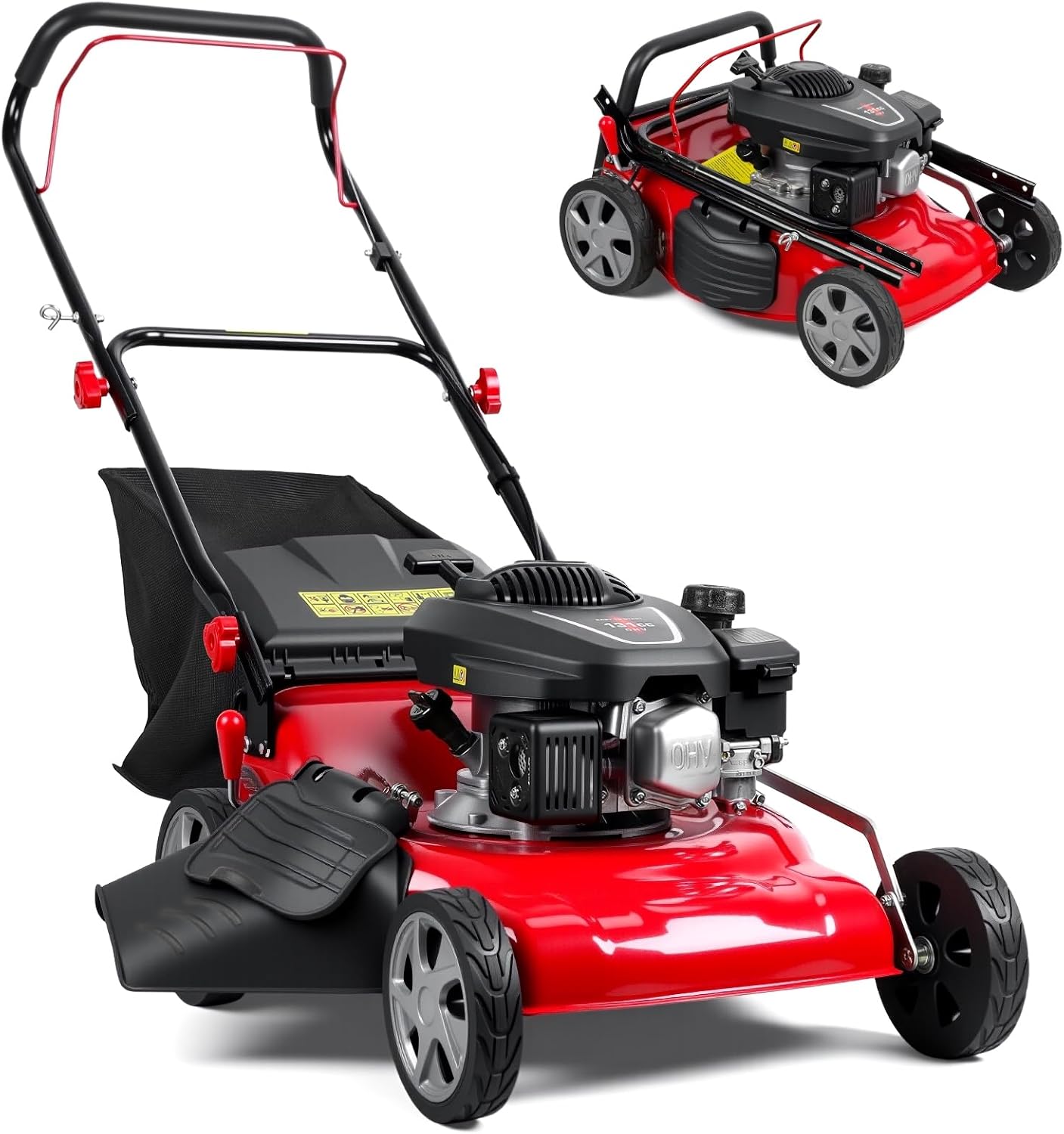
| Power Source | Gas Powered |
|---|---|
| Cutting width | 20 inches |
| Maximum Adjustable Cutting Height | 7.5 centimeters |
| Minimum Adjustable Cutting Height | 2.54 centimeters |
| Material Type | Metal, Plastic |
This Altsuceser gas mower is built to handle regular yard maintenance with a 131cc engine driving an 18-inch deck and a rear-wheel self-propelled system that eases pushing on slopes and uneven ground. It is designed for three modes—mulch, rear bag, or side discharge—so you can switch between feeding clippings back into the lawn or collecting them in the roomy 50L bag. Single-lever height adjustment covers common mowing heights and the push-button start plus included toolkit aim to get you mowing quickly out of the box. Construction mixes metal and durable plastic for a balance of robustness and weight control. Important limits to note are the modest 18-inch cutting width, which means longer runtimes on very large properties, and a small set of documented cutting-height positions compared with premium models. For homeowners who prioritize consistent, no-fuss performance and need an easy-start self-propelled mower for medium to large yards, this model delivers practical features without excessive complexity.
Best for: Homeowners who want a reliable, easy-to-start self-propelled mower that performs consistently on medium to large yards and reduces effort on slopes.
Less Ideal for: Owners of very large acreage who prefer a wider deck for faster mowing or users seeking a premium commercial-grade mower with more cutting-height options.
- Powerful 131cc engine for consistent cutting performance
- Rear-wheel self-propelled drive reduces user fatigue on slopes
- 3-in-1 capability (mulch, bag, side discharge) adds versatility
- Large 50L grass bag for fewer stops to empty
- Push-button start and included toolkit for quick setup and use
- 18-inch cutting width increases time needed for very large lawns
- Number of listed cutting positions is limited compared with higher-end mowers
Verdict: Choose this mower if you want a straightforward, easy-start self-propelled gas mower that reliably handles medium to large yard maintenance.
Bezioie 18" Self-Propelled Gas Lawn Mower, 131cc 4-Stroke, 3-in-1

| Power Source | Gas Powered |
|---|---|
| Cutting width | 18 inches |
| Engine | 131cc 4-Stroke |
| Grass bag capacity | 50L |
| Drive type | Rear-wheel drive, self-propelled |
This Bezioie self-propelled mower is built around a 131cc 4-stroke engine and an 18-inch, 3-in-1 cutting deck that lets you mulch, bag, or side-discharge clippings depending on the yard conditions. It is typically used for weekly mowing and seasonal cleanup on small to medium lawns where easy starting and predictable performance matter. The rear-wheel-drive self-propelled system and large rear wheels make it easier to move across uneven terrain and slopes while the 50L catcher reduces stops to empty clippings. Height adjustment across multiple positions covers short trims and taller growth. Practical benefits include a push-button start, foldable handle for compact storage, and a relatively lightweight frame that simplifies handling and transport. Important limitations are the modest 18-inch cutting width, which means more passes on larger properties, and the absence of detailed manufacturer support or warranty information in the listing, which buyers focused on long-term reliability may want to verify before purchase.
Best for: Homeowners who want a straightforward, easy-to-start gas mower that delivers consistent performance for regular lawn upkeep and prefer a simple, self-propelled machine over electric alternatives.
Less Ideal for: People with large properties who need wider cutting decks to reduce mowing time or those seeking a mower backed by clear long-term service and warranty coverage.
- Reliable 131cc 4-stroke engine suitable for routine lawn maintenance
- Self-propelled rear-wheel drive and large rear wheels improve traction and reduce pushing effort
- 3-in-1 deck (mulch, bag, side discharge) adapts to different yard cleanup needs
- 50L grass catcher reduces frequency of emptying during a mowing session
- Foldable handle and lightweight design make transport and storage easier
- 18-inch cutting width is small for larger yards and requires more passes
- Listing lacks explicit manufacturer warranty or service details
Verdict: Choose this mower if you want an easy-start gas unit that reliably handles routine mowing on small to medium yards with minimal pushing effort.
SENIX 20" Gas Push Lawn Mower, 144cc 4-Cycle Engine

| Power Source | Gas Powered |
|---|---|
| Engine | 144cc 4-Cycle |
| Cutting width | 20 |
| Number of Positions | 3 |
| Material Type | Stainless Steel |
The SENIX 20" gas push mower is a straightforward, no-frills machine for homeowners with small to quarter-acre yards. It uses a 144cc 4-cycle engine and a 20-inch steel deck to cut a wider swath than compact 16" mowers, which speeds up routine maintenance. Typical use is simple push mowing around flower beds, fences, and on modest slopes where its 7" wheels provide traction. The mower offers three cutting heights (1.35, 2.3, 3.15 inches) for quick adjustments between passes and can side-discharge or mulch clippings depending on your yard care preference. Assembly is generally described as quick and the engine tends to start easily on the first pull, with oil and basic tools included. Key limitations are the manual push operation rather than self-propel, and only three height positions compared with more expensive models, so it may require extra effort on larger properties or very tall grass. For everyday trimming and small properties, it delivers practical performance and good value.
Best for: Homeowners with small yards who want a simple, gas-powered mower that starts reliably and maneuvers easily around beds and obstacles while offering decent cutting width for quicker jobs.
Less Ideal for: People with larger lawns, frequent very tall grass, or those who prefer a self-propelled or variable-speed mower for less physical effort.
- 144cc 4-cycle engine that handles overgrown grass and wet conditions
- 20-inch cutting width covers more ground per pass than compact mowers
- Lightweight, narrow body and 7-inch wheels for easy maneuvering in tight spaces
- Includes oil and basic tools and is backed by a 2-year manufacturer warranty
- Manual push operation rather than self-propel makes longer lawns more tiring to mow
- Only three cutting-height positions limit fine adjustment for specialty turf
Verdict: A practical, easy-to-start 20" gas push mower that delivers good cutting performance and maneuverability for small yards at a budget-friendly level.
SENIX 201cc 22" Self-Propelled 3-in-1 Gas Lawn Mower

| Power Source | Gas Powered |
|---|---|
| Cutting width | 22 inches |
| Operation Mode | Automatic |
| Number of Positions | 6 |
| Maximum Adjustable Cutting Height | 4 inches |
The SENIX 201cc 22" self-propelled mower is built to cover medium to large yards more quickly than a standard 20-inch mower thanks to its wider 22-inch steel deck and sharp blade. It is powered by a 201cc OHV 4-cycle engine that provides steady cutting performance and pairs with an eleven-inch rear-wheel drive for easier handling on slopes and uneven ground. The mower offers three discharge options — bagging, mulching, and side discharge — so you can switch modes to match lawn conditions, and a single-lever, six-position height adjustment (1.25" to 4") makes it simple to dial in the desired finish. Practical benefits include faster mowing per pass, improved traction on tougher terrain, and the flexibility to manage grass clippings based on season or yard care goals. Important limitations are its gas engine maintenance needs, heavier weight compared with electric models, and the typical noise and emissions of a gasoline mower, which may matter in noise-sensitive neighborhoods.
Best for: Buyers who prioritize efficient coverage and reliable gasoline power for medium to large lawns and who value proven features and peer-reviewed performance when choosing a robust, wider-cut walk-behind mower.
Less Ideal for: People who need a very quiet, low-maintenance, or lightweight mower for small yards or who prefer emissions-free electric operation should consider compact battery or electric models instead.
- 22-inch steel cutting deck covers more ground per pass than 20-inch mowers
- 201cc OHV 4-cycle engine delivers consistent power for medium to large lawns
- Rear-wheel self-propelled drive with 11-inch wheels improves traction and maneuverability
- 3-in-1 bagging, mulching, and side discharge offers versatile grass management
- Single-lever six-position height adjustment for quick deck changes
- Gas engine requires regular maintenance and fuel handling
- Heavier and louder than battery-electric alternatives
Verdict: Choose this SENIX if you want a wider 22-inch gas mower that combines reliable 201cc power with self-propelled traction for faster, more confident mowing of medium to large lawns.
Choosing the Right Easy Start Gas Lawn Mower: Key Factors to Consider
Starting System and Cold-Start Aids
A mower's starting system is the single most important factor for buyers focused on easy starts. Look for mowers with features such as simplified primer bulbs, auto-choke designs, or predictable recoil systems that reduce the number of pulls or attempts when the engine is cold.
Cold-start aids affect how the carburetor and fuel mix behave at low temperatures. A well-designed system helps prevent flooding, reduces smoke on start, and avoids prolonged cranking that wears components. For occasional mowers or those in cooler climates, better cold-start features translate to fewer stalled mornings and less maintenance over time.
Engine Tuning and Idle Stability
Beyond initial ignition, the engine needs to settle to a stable idle quickly. Carburetor calibration, governor response, and spark timing all play roles in how smoothly a mower runs immediately after starting and while changing throttle under load.
An engine that surges or dies when you engage the deck or move across thicker turf will feel unreliable even if it starts easily. Consider how the engine responds to load changes, whether it chugs uphill, and whether it stalls when you shift speed. These behavior patterns influence how confident you feel using the mower in varied yard conditions.
Deck Design and Cutting Performance
Cutting quality is a major practical concern. Deck shape, blade speed, and airflow determine how evenly the mower cuts, how well it lifts grass for a clean stripe, and how resistant the deck is to clogging when grass is damp.
A mower with a well-engineered deck will require fewer passes, produce a neater finish, and send clippings where you expect them. Deck width and mulching capability also influence run time and the number of passes needed for larger lawns, which ties back to how often you start the engine.
Maneuverability and Weight
How the mower handles directly affects the effort required to mow. Lighter machines are easier to steer and turn, but very light decks can flex and produce uneven cuts. Wheel size, wheel bearings, and front-wheel design determine how well the mower rolls over bumps, curbs, and thick thatch.
If your yard has tight beds, slopes, or narrow gates, choose a mower with a balance of manageable weight and stable handling. Adjustable handle heights and intuitive control placement reduce fatigue, making it more likely you will keep up with routine maintenance that preserves easy starting.
Fuel System Durability and Compatibility
Fuel-system resilience impacts long-term easy-start performance. Modern fuels with ethanol can attract moisture and create varnish in carburetors. A mower with accessible fuel lines, serviceable carburetor components, or ethanol-tolerant materials will maintain starting reliability through seasonal storage.
Also consider whether the fuel tank and cap design reduce leaks and vapor formation during hot storage. Simpler fuel shutoffs and easy-to-drain tanks make winterization and starting after storage far less stressful.
Service Access and Routine Maintenance
Even the best easy-start features need occasional maintenance to stay reliable. Spark plugs, air filters, and carburetor adjustments are common services. A mower designed for easy access to these components minimizes time spent on routine checks and lowers the risk a small issue becomes a no-start problem.
Check that oil-fill points, dipsticks, and blade removal mechanisms are straightforward. The easier these tasks are, the more likely you will perform them regularly, which keeps starting systems working as intended.
What Makes an Easy Start System Work in the Real Yard
An easy start system is more than a label. In practice it is the combination of predictable choke behavior, correct fuel delivery, and a reliable ignition that works across temperature swings and after storage. For everyday mowing, you want a system that does not require repeated priming or fiddly choke adjustments each time you use it.
- Primer bulbs and auto-chokes reduce the need for manual adjustments.
- Ignition coil and recoil quality affect first-pull success.
- Fuel condition and storage practices influence start behavior after winter.
Maintaining Starting Reliability Through the Seasons
Seasonal care preserves easy start performance. End-of-season fuel treatment or tank drainage prevents gum and varnish in the carburetor. Periodic spark plug checks and clean air filters reduce misfires and rough idling that can mimic starting problems.
Simple winterization steps such as running the tank nearly empty, stabilizing fuel, or fogging the engine can mean the difference between a one-pull start in spring and a frustrating hour of troubleshooting.
- Replace air filter at least once per mowing season.
- Inspect spark plug every 25 hours of use.
- Stabilize or drain fuel before long storage.
Adjusting Cutting Height and Deck Setup for Better Starts
While cutting height seems unrelated to starting, a properly set deck reduces engine load and prevents stalls that can be mistaken for starting issues. Taller settings for wet or thick grass reduce strain on the engine and help it maintain rpm while cutting.
Keep blades sharp and balanced. Dull blades make the engine work harder, which can exacerbate idle and start problems over time.
- Use recommended blade pitch and balance procedures.
- Lower deck height for thin, well-maintained turf to improve finish.
- Raise deck height in early spring or when grass is wet to reduce engine load.
Practical Controls and Ergonomic Features That Matter
Controls that are intuitive and reachable speed up startup routines. A clearly labeled throttle, a simple choke mechanism, and a comfortable handle that adjusts to your height make the mower easier to start and operate without strain.
Ergonomic considerations also impact safety; a mower that you can start and stop confidently reduces the temptation to leave the engine running during adjustments.
- Look for single-lever start and drive engagement when possible.
- Adjustable handle height helps operators of different stature.
- Accessible kill switch placement simplifies emergency stops.
Fuel Choices and How They Affect Performance
Many residential mowers tolerate regular gasoline blends, but ethanol content and seasonal fuel formulations can change starting behavior. Using fresh fuel and avoiding old gasoline will improve immediate start success and reduce carburetor varnish.
If you store fuel, use approved containers and avoid long-term storage in the mower tank. Fuel stabilizers compatible with small engines can be helpful if you expect extended downtime.
- Avoid stale fuel; rotate or use it within a month when possible.
- Consider ethanol-free fuel for long-term storage if available.
- Refill in a well-ventilated area and follow safe storage guidelines.
How We Chose the Best Easy Start Gas Lawn Mower
We prioritized features that directly affect how reliably and easily a gas mower starts and stays running in real garden conditions. We evaluated ignition systems and cold-start aids to judge how likely a mower is to start on the first pull or click, then looked at carburetion and engine tuning that affect idle stability and throttle response during mowing. Cutting performance and deck design were also key. A mower that starts easily but produces an uneven cut or clogs frequently is not practical. We assessed deck airflow, blade quality, and cutting-width options to ensure consistent striping and discharge behavior across common grass types. Ergonomics and handling matter for real yards. We screened for simple choke/throttle layouts, reasonable handle height adjustments, and overall weight that make maneuvering driveways, flower beds, and slopes manageable. We also checked maintenance accessibility for spark plugs, air filters, and oil fill points, since easy start performance depends on routine upkeep. Fuel-system resilience and compatibility with common gasoline/ethanol blends were considered to avoid vapor-lock or varnish issues. Excluded were specialty commercial mowers, zero-turn units, and electric-only machines. Our filters focused on residential-grade gas mowers with explicit features or design choices intended to reduce cold starts and make daily use simpler.
FAQ
How often should I change the spark plug to keep easy start performance?
Usually inspect the spark plug every 25 hours of use and replace it at least once a season if you mow frequently. Fouled or worn plugs make ignition weaker and can turn a simple start into repeated cranking.
Will using a fuel stabilizer really help first starts after winter storage?
Often yes. A compatible fuel stabilizer prevents gasoline from breaking down and forming varnish in the carburetor. Stabilizing fuel before storage or draining the tank are both effective ways to protect starting systems.
Does blade condition affect whether the mower starts easily?
Indirectly. Dull or unbalanced blades increase engine load and can cause stalling once you start. While they do not change ignition, poor blade condition can make starting and running seem unreliable.
Is pull-start always harder than electric start on easy start mowers?
It depends. A well-designed recoil system and correct engine tuning can make pull-start mowers nearly as effortless as electric start units. Electric start adds convenience but also complexity; both systems have tradeoffs in reliability and maintenance.
How should I store the mower to ensure it starts easily in spring?
Run the engine until the tank is low or add a stabilizer, then run briefly to circulate treated fuel through the carburetor. Clean or replace the air filter and remove the spark plug to fog the engine if you plan long-term storage.
Final Verdict
Prioritize starting-system features, reliable engine tuning, and service access when choosing an easy start gas lawn mower. Those dimensions most directly affect whether the mower will start quickly and run smoothly across seasons. Balance cutting performance and maneuverability against maintenance needs for the yard you have. If you keep routine upkeep simple and choose a mower with thoughtful starting aids, you will spend less time troubleshooting and more time maintaining a neat lawn.
