

Note: This article contains affiliate links. If you click on these links and make a purchase, I may earn a small commission at no extra cost to you. This helps support my research and content. Read my full affiliate disclosure here.
A residential gas leaf blower can cut yard cleanup time dramatically, especially on larger properties or when you have wet, compacted leaves. The right unit matters for real garden work because gas blowers deliver continuous power, handle heavy debris, and usually run longer between refuels than battery models. In this guide we shortlisted seven top-performing options that suit typical homeowner needs and different yard sizes. We evaluated each blower for raw airflow, runtime and fuel efficiency, vibration and noise levels, weight and handling, and durability. Below you will find clear buying guidance, factors to weigh for your yard, and practical tips for using and maintaining a gas blower safely. Read on to pick the best fit for your landscape and cleanup routine.
Top Picks at a Glance
| Best Overall The best all-around choice for most situations | ECHO PB-9010T X Series 79.9cc Backpack Gas Blower |  |
| Best Quality Built to a higher standard if you want something more solid | Husqvarna 350BT 50.2-cc Gas Backpack Leaf Blower |  |
| Best Value The sweet spot between price and what you get | NEO-TEC NTEB809A 52cc Gas Backpack Leaf Blower |  |
| Best Budget The cheapest option that still gets the job done reliably | YUASDUU Handheld Gas Leaf Blower, 25.4cc 2-Stroke |  |
| Highest Rated A top-rated pick with lots of positive feedback | Houltune 26CC Handheld Gas Leaf Blower — 432 CFM, 180 MPH |  |
| Most Popular A crowd favorite that many people choose with confidence | Husqvarna 150BT 51cc Gas Backpack Leaf Blower |  |
| Best Seller A high-volume bestseller chosen again and again | Husqvarna 125B Gas Handheld Leaf Blower |  |
ECHO PB-9010T X Series 79.9cc Backpack Gas Blower
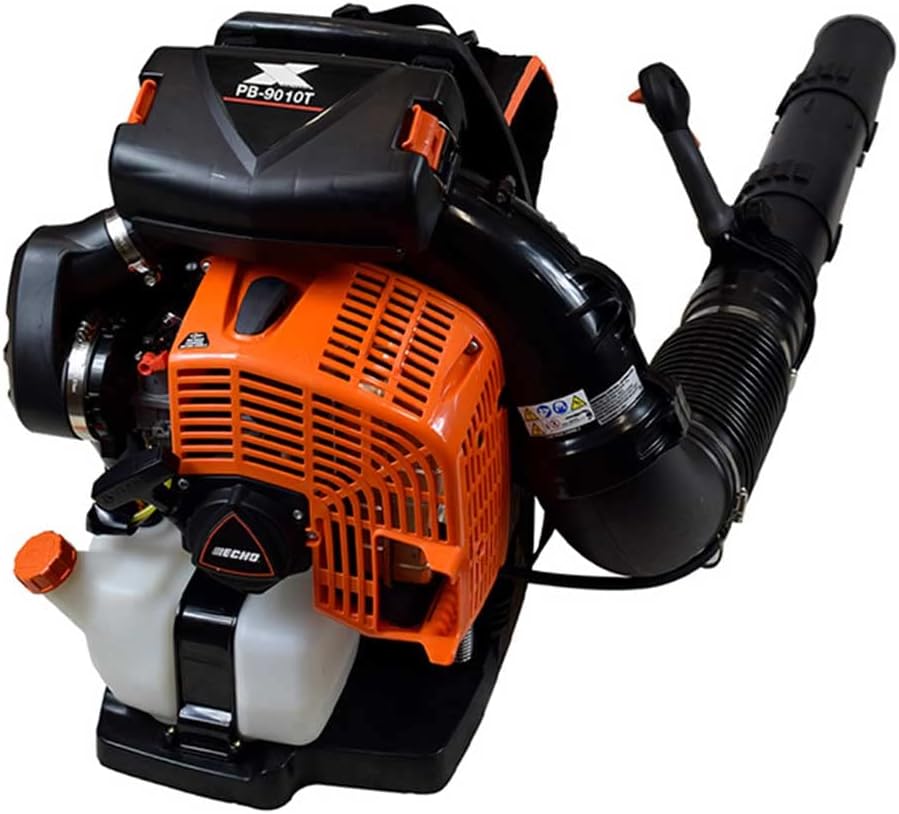
| Power Source | gasoline-powered |
|---|---|
| Form Factor | Backpack |
| Additional Features | Throttle Lock |
| Noise Level | 48 db |
| Maximum Speed | 220 miles_per_hour |
The ECHO PB-9010T X Series is a professional-style backpack blower built for heavy yard work and extended runs. Its 79.9 cc two-stroke engine produces up to 220 mph airspeed and a high airflow so you can move large piles of leaves, debris, and grass clippings quickly. The backpack form factor distributes the engine weight across the shoulders and hips for longer use than handheld units, and the tube-mounted throttle plus throttle lock help maintain a steady output during repetitive jobs. Practical benefits include strong clearing power for lawns, driveways, and beds and a design aimed at home users who need commercial-level performance. Limitations are the usual ones for gas backpack blowers: it requires fuel mixing and periodic engine maintenance, it is heavier and louder than electric alternatives, and it may be overkill for very small yards or infrequent light tasks.
Best for: Homeowners who need a reliable, high-power blower for frequent or large-area cleanup and who prioritize continuous performance over minimal maintenance.
Less Ideal for: Casual users with small yards, those who prefer low-maintenance electric equipment, or anyone seeking the quietest option for noise-sensitive neighborhoods.
- High reported maximum speed of 220 mph for strong clearing power
- Backpack form factor for longer, more comfortable operation than handheld blowers
- Tube-mounted throttle with throttle lock for steady speed control during extended use
- Gasoline power allows untethered operation and sustained output for large properties
- Requires fuel mixing and routine engine maintenance inherent to two-stroke gas engines
- Heavier and louder than electric or battery backpack models
- Likely more power than needed for very small yards or occasional use
Verdict: Buy this if you want a dependable, high-speed gas backpack blower that handles large yards and frequent heavy-duty cleanup.
Husqvarna 350BT 50.2-cc Gas Backpack Leaf Blower

| Power Source | Gas Powered |
|---|---|
| Form Factor | Backpack |
| Air Flow Capacity | 692.17 cfm |
| Maximum Speed | 180 miles_per_hour |
| Additional Features | Anti-Vibration |
The Husqvarna 350BT is a purpose-built backpack leaf blower for regular yard cleanup on medium to large properties. Its 50.2-cc X-Torq two-cycle engine produces up to 180 MPH and about 692 CFM, giving it the power to move leaves, grass clippings and light debris quickly. The unit uses a padded ergonomic harness, hip belt and weight-leveling system so you can run it for extended periods with less strain, and LowVib technology reduces felt vibration. Practical features include an air purge for easier starting, tube-mounted throttle and cruise control for steady operation. The blower favors dependable, proven gas power over quieter electric alternatives, so you should expect regular fuel mixing, periodic two-cycle maintenance and typical engine noise. For buyers who prioritize robust clearing performance and an established brand, the 350BT balances power and operator comfort, but it is not the quietest or lowest-maintenance option available.
Best for: A cautious buyer who wants a reliable, proven gas backpack blower for regular yard maintenance and values operator comfort during longer jobs.
Less Ideal for: Those who need a near-silent, low-maintenance solution or who prefer cordless electric operation for small urban yards.
- Strong clearing power (around 692 CFM and 180 MPH) suitable for medium to large yards
- Ergonomic harness with padded straps and hip belt reduces operator fatigue during long runs
- LowVib technology and weight-leveling harness for improved comfort and control
- Air purge system and tube-mounted throttle with cruise control make starting and steady operation easier
- Gas two-cycle engine requires fuel mixing and routine maintenance
- Significant engine noise compared with battery-powered blowers
Verdict: Choose the Husqvarna 350BT if you want a comfortable, dependable gas backpack blower that delivers professional-level clearing power for medium to large properties.
NEO-TEC NTEB809A 52cc Gas Backpack Leaf Blower

| Power Source | Gas Powered |
|---|---|
| Form Factor | Backpack |
| Additional Features | Adjustable Speed, Anti-Vibration, Throttle Lock |
| Air Flow Capacity | 564 cfm |
The NEO-TEC 52cc backpack blower is built for clearing large yards and tougher tasks like wet or matted leaves and light snow. It produces up to 564 CFM and 216 MPH from a 2-cycle engine, and the backpack form factor moves the weight off your arms so you can work longer without arm fatigue. The unit includes an air purge for easier starting, a variable-speed throttle with cruise lock for sustained runs, and anti-vibration mounting to reduce fatigue on the harness. In practice this makes it effective for seasonal cleanups, commercial properties, and post-storm debris where handheld blowers struggle. Expect the usual gas-blower requirements: fuel mixing, routine maintenance, and more noise than electric models, and the backpack harness still requires some getting used to for comfortable fit and balance. For buyers who prioritize power and runtime over absolute quiet or zero emissions, this blower is a practical, well-featured choice that performs in demanding yard work.
Best for: Buyers who need sustained high-power leaf clearing for large lawns, rental or light commercial work, and want proven features that reduce operator fatigue during long jobs.
Less Ideal for: Casual homeowners with small yards or those who prefer low-noise, low-maintenance electric options should consider a handheld battery or corded blower instead.
- High airflow of 564 CFM and 216 MPH clears wet and matted leaves effectively
- Padded commercial-style harness distributes weight for longer use
- Air purge and easy-start features reduce fuss when starting the engine
- Variable-speed throttle with cruise lock allows consistent, hands-free operation
- Anti-vibration mounting improves comfort during extended runs
- Gas engine requires fuel mixing and routine maintenance
- Noisy compared with electric blowers and not suitable for noise-restricted areas
Verdict: If you need a powerful, durable blower for large or demanding cleanup jobs, this gas backpack model delivers sustained airflow and operator-focused features to get the work done.
YUASDUU Handheld Gas Leaf Blower, 25.4cc 2-Stroke

| Power Source | Gas Powered |
|---|---|
| Form Factor | Handheld |
| Additional Features | 2-Stroke 25.4CC |
| Voltage | 110 volts |
This handheld gas leaf blower is aimed at homeowners who need a straightforward tool for clearing leaves, light debris, and small amounts of gravel or snow. The 25.4cc 2-stroke engine delivers usable airflow (listed as 380 CFM and up to 180 MPH) for quick spot cleanups around driveways, patios, and gutters. It is lightweight and compact, with a translucent 0.2 gallon tank so you can monitor fuel and run short jobs without frequent refills. Practical touches include an anti-vibration handle, anti-suction covers to protect the intake, and slip-resistant feet for storage. Noise is reduced somewhat by the included silencer but the product still lists around 90 dB which is typical for budget gas units. Expect basic engine starting and occasional tuning typical of small 2-stroke motors. Build materials are utilitarian plastic and aluminum which keep cost and weight down but may not hold up as long as premium models under heavy use. For simple residential tasks this blower offers a lot of capability for the price, but users should plan on basic maintenance and wear over time.
Best for: Homeowners who want an inexpensive, gas-powered blower for occasional yard cleanup and spot jobs and who are comfortable doing basic engine maintenance.
Less Ideal for: People who need very quiet equipment, long continuous commercial use, or those who prefer cordless electric convenience and lower maintenance.
- Compact and lightweight design suitable for quick residential jobs
- Translucent 0.2 gallon fuel tank for easy fuel level checks
- Anti-vibration handle and anti-suction covers improve operator comfort and engine protection
- Claims strong airflow (380 CFM, 180 MPH) for effective leaf and debris clearing
- Approximately 90 dB noise level which is loud compared with electric options
- Uses a 2-stroke engine requiring mixed fuel and regular maintenance
Verdict: A budget-friendly handheld gas blower that delivers solid airflow for routine residential cleanup when you want power over quiet and low-maintenance convenience.
Houltune 26CC Handheld Gas Leaf Blower — 432 CFM, 180 MPH

| Power Source | Gas Powered |
|---|---|
| Form Factor | Handheld |
| Air Flow Capacity | 432 cfm |
| Maximum Speed | 7500 rpm |
| Noise Level | 70 db |
The Houltune 26CC handheld gas leaf blower is designed for homeowners who need reliable, cordless power for routine yard cleanup. Its 2-cycle engine produces 432 CFM at up to 180 MPH, making it effective at moving leaves, grass clippings, light snow, and debris into piles so you can finish jobs with fewer passes. The unit is compact and weighs 9.4 pounds, which reduces arm fatigue and makes it easy to maneuver around flower beds, fences, and vehicles. Practical features include an easy-pull reduced-recoil starter, a priming bulb and choke for easier cold starts, and variable-speed control for gentler work near plants. The soft rubber handle and anti-vibration design improve comfort during extended use. Expect about 30 minutes of runtime from the 0.18-gallon tank per fill, and the product includes common accessories like a two-piece blower tube and basic tools. Limitations to note are the shorter runtime compared with larger backpack gas models and the maintenance needs of a two-stroke engine, including fuel mixing and periodic spark plug care.
Best for: Buyers who prioritize dependable, gas-powered performance for regular yard maintenance and who want a portable blower that is easy to start and handle.
Less Ideal for: People who need long, continuous runtime for very large properties or who prefer zero-maintenance electric battery operation.
- Strong continuous airflow (432 CFM) for efficient leaf and debris clearing
- Lightweight 9.4 lb handheld design reduces arm fatigue and eases maneuvering
- Reduced-pull recoil starter, priming bulb, and choke for easier cold starts
- Variable speed control and focused blower tube for precise cleanup
- Includes useful accessories such as a two-piece tube and fuel mixing bottle
- Shorter single-fill runtime (about 30 minutes) compared with larger gas blowers
- Requires two-stroke fuel mixing and routine engine maintenance
Verdict: Choose this compact 26CC gas blower when you want reliable, cordless power and easy starting in a lightweight handheld package.
Husqvarna 150BT 51cc Gas Backpack Leaf Blower

| Power Source | Gas Powered |
|---|---|
| Form Factor | Backpack |
| Air Flow Capacity | 765 cfm |
| Maximum Speed | 270 miles_per_hour |
| Additional Features | Adjustable Speed |
The Husqvarna 150BT is a gas-powered backpack leaf blower built for large yards and frequent clearing jobs. Its 51 cc 2-cycle engine produces up to 765 CFM and 270 MPH, which moves heavy or wet leaves quickly while the padded harness, hip belt, and weight-leveling system help distribute load for longer use. Variable speed throttle with cruise control lets you hold a steady speed without constant throttle input, and the air purge feature makes starting easier after refueling. In practice this blower is best for contractors or homeowners with many trees or large properties who need sustained blowing power and durability. Expect steady high performance and fewer passes on dense debris, but plan for routine maintenance typical of gas engines such as fuel mixing, spark plug checks, and quieter alternatives if noise or emissions are a concern. It comes with basic assembly items and a user manual so you can start using it right away.
Best for: Buyers who need sustained, professional-level blowing power for large yards or frequent heavy cleanups and who prioritize performance and durability over low-maintenance convenience.
Less Ideal for: Small-lot owners, noise-sensitive neighborhoods, or users who prefer low-emissions, low-maintenance electric or battery blowers.
- High clearing power: up to 765 CFM and 270 MPH for moving heavy or wet debris quickly.
- Ergonomic backpack harness with padded straps, hip belt, and weight-leveling for extended comfortable use.
- Variable speed throttle with cruise control for consistent operation without constant hand input.
- Air purge system to simplify starting after refueling and reduce pull-start issues.
- Gas engine requires regular fuel mixing and routine maintenance.
- Louder and higher-emission operation compared with electric or battery models.
Verdict: Choose the Husqvarna 150BT when you need professional backpack blower power and an ergonomic harness to clear large properties quickly.
Husqvarna 125B Gas Handheld Leaf Blower

| Power Source | Gas Powered |
|---|---|
| Form Factor | Handheld |
| Air Flow Capacity | 470 cfm |
| Maximum Speed | 170 miles_per_hour |
| Noise Level | 94 db |
The Husqvarna 125B is a compact gas handheld blower aimed at homeowners who need reliable clearing power for leaves, grass clippings, and sidewalks. It pairs a 28‑cc 2‑cycle engine with an adjustable tube and a flare nozzle to produce 470 CFM and wind speeds up to 170 MPH, which moves large piles and wet debris more effectively than light electric models. The unit is designed to be user-friendly: an ergonomic in-line tube and soft-grip handle reduce wrist twist, an air purge eases starting, and cruise control on the throttle helps maintain steady speed during longer runs. Practical benefits include strong clearing performance for driveways and beds and an adjustable tube for different tasks. Expect the usual gas-blower tradeoffs though — it requires fuel mixing, produces more noise than battery models, and needs routine maintenance on the engine. For routine homeowner jobs it offers a dependable balance of power and handling but it is not intended for heavy professional landscaping shifts.
Best for: Buyers who prioritize proven performance and want a handheld gas blower that handles regular homeowner cleanup with reliable starting and strong clearing power.
Less Ideal for: People who prefer very quiet, low-maintenance equipment or who need zero-emission tools for small urban yards should consider battery or electric models instead.
- High airflow (470 CFM) and strong wind speed (170 MPH) clear leaves and wet debris efficiently
- Ergonomic in-line tube and soft-grip handle reduce wrist torque and improve comfort
- Adjustable tube length and flare nozzle let you tailor airflow for different jobs
- Air purge and auto-reset stop switch simplify starting and restarts
- Gas 2-cycle engine requires fuel mixing and periodic maintenance
- Louder operation (about 94 dB) compared with battery blowers
Verdict: Choose the Husqvarna 125B if you want a compact gas blower that reliably delivers professional-level airflow for routine homeowner leaf and debris cleanup.
Choosing the Right Residential Gas Leaf Blower: Key Factors to Consider
Airflow and Air Speed
Airflow measured in cubic feet per minute affects how much material the blower moves with each pass. Higher CFM is useful for clearing large areas quickly or moving bulky piles of wet leaves. Air speed measured in miles per hour influences how well the unit can dislodge compacted debris or push material across rough surfaces.
For residential tasks you want a balance: very high airspeed with low CFM can spot-blow, while high CFM with moderate speed moves more debris at once. Consider the typical debris in your yard and choose a unit that matches whether you need push power or focused blast.
Runtime and Fuel Use
Gas blowers vary in fuel consumption and tank capacity, which determines how long you can work before refilling. For small yards a short runtime with quick refills may be acceptable, but larger properties or multi-area cleanups require longer continuous operation. Two-stroke engines need a fuel-oil mix, so factor the mixing process and how fuel efficiency will impact ongoing use.
Also consider how easy the refueling process is and whether the blower features fuel-saving modes or throttle response that helps prolong operation between stops. Ease of starting after fuel sits between seasons is another practical runtime-related consideration.
Weight, Balance, and Ergonomics
How a blower feels in your hands affects how long you can comfortably use it. Lighter units reduce fatigue but may transmit more vibration to the operator if balance and dampening are poor. Backpack-style gas blowers spread weight across shoulders for extended work but come with a learning curve for storing and maneuvering around tight landscape features.
Look at handle placement, grip design, trigger responsiveness, and how the center of mass sits during typical sweeping motions. Good ergonomics reduce strain and let you finish tasks faster with less soreness afterward.
Noise Output and Vibration
Gas blowers are louder than most battery models, and sustained exposure contributes to hearing fatigue and neighborhood complaints. Check rated noise levels and whether a model includes vibration dampening between motor and handles. Practical use often reveals perceived loudness differs from spec sheets, so quieter operation at mid-throttle is useful when working in populated areas.
Vibration affects comfort and can cause numbness or hand fatigue during long sessions. Features like anti-vibration mounts, padded straps for backpack units, and ergonomic hand grips materially change the usability of a gas blower.
Durability and Serviceability
A residential gas blower should handle occasional hard use, exposure to dust and grit, and the occasional bump without failing. Durable housings, quality carburetors, and corrosion-resistant components extend service life. Consider how easy routine maintenance is, including air filter access, spark plug replacement, and carburetor cleaning.
Replaceable wear parts, straightforward access to fuel lines, and clear instructions for off-season storage all make a machine easier to keep running year after year. Poor serviceability increases long-term ownership costs and frustration.
Safety Features and Local Restrictions
Operating a gas blower entails risks from hot engines, moving parts, and expelled debris. Features such as solid throttle controls, kill switches, and guarded air intakes reduce hazards. Instructions should clearly cover protective equipment, safe refueling practices, and recommended operating distances from bystanders.
Many municipalities restrict the use of gas blowers by time of day or noise limits. Verify local rules before using a blower and choose quieter, lower-emission models if you regularly work in regulated neighborhoods. Planning around these constraints helps avoid fines and keeps good relations with neighbors.
Comparing Backpack Vs Handheld Residential Gas Blowers
Backpack and handheld formats suit different homeowner workloads. Handheld models are lighter and easier to store, so they work well for routine spot cleanups, pathways, and small yards. They are typically less expensive to operate for short jobs and allow quicker maneuvering around beds and furniture.
Backpack blowers put the engine on your shoulders so you can work longer without arm strain, making them a better choice for large properties, long drives across lawns, or commercial-style seasonal cleanups. However, they require more storage space and slightly more attention during transport and maintenance.
- Handheld: best for small to medium yards, lower upfront handling effort.
- Backpack: best for large yards and extended sessions, better weight distribution.
Practical Tips for Starting and Operating a Gas Blower
Cold starts are the most common difficulty with two-stroke engines. Prime the bulb according to instructions, set choke to the correct position, and use a firm, controlled pull on the starter rope. Warm the engine for a short time at idle before increasing throttle to avoid stalling or flooding.
When operating, use sweeping motions to move debris into manageable piles rather than trying to blast everything at once. Adjust throttle to the minimum effective power to reduce noise and fuel use. Keep a safe distance from bystanders and protect plants and fragile features by angling the nozzle and controlling bursts.
- Prime and choke correctly for cold starts.
- Use low effective throttle to save fuel and reduce noise.
- Sweep debris in controlled passes for efficient cleanup.
Routine Maintenance and Off-Season Storage
Regular maintenance keeps a gas blower reliable. Clean or replace the air filter as needed, check spark plug condition annually, and inspect fuel lines for cracking. Remove accumulated debris from cooling fins and the intake area to prevent overheating.
For winter storage drain or stabilize fuel, fog the cylinder if recommended, and store the unit in a dry, sheltered spot. Regular seasonal checks make sure the blower starts easily when spring cleanup arrives and extend the machine's service life.
- Clean air filter and intake screens after heavy use.
- Inspect fuel lines and replace cracked hoses promptly.
- Stabilize or drain fuel for long-term storage.
Reducing Noise and Minimizing Neighborhood Impact
To limit noise disturbance choose times of day allowed by local rules and use lower throttle settings when practical. Point the nozzle away from houses and toward open spaces when possible. Routine maintenance such as keeping the muffler clear and using recommended fuel mixtures can reduce unnecessary noise.
If noise restrictions are strict in your area, consider alternating work with quieter electric tools for sensitive times or locations. Communicating planned work with close neighbors also reduces conflict when you need to run a gas blower for necessary cleanup.
- Operate during permitted hours and use lower throttle when possible.
- Maintain muffler and engine to prevent excessive noise.
- Coordinate with neighbors for large or noisy jobs.
Using a Gas Blower Safely Around Gardens and Landscape Beds
High-speed air can damage newly planted seedlings, mulch, and lightweight soil. Keep a wider distance and lower the throttle when working near delicate beds. Use directional nozzle tips or angle the airflow to move debris without stripping mulch or scattering soil.
Wear eye and ear protection, long sleeves, and sturdy shoes. Be mindful of pets and children, and never aim the nozzle at people or fragile garden features. Routine site inspection before blowing reduces the chance of launching rocks or other hazards.
- Lower throttle and increase distance near plants and mulch.
- Wear proper protective gear and check the area first.
- Angle nozzle to avoid direct blasts on delicate surfaces.
How We Chose the Best Residential Gas Leaf Blower
We prioritized criteria that matter for everyday residential yard work and real-world handling. Airflow and airspeed were primary filters because blowing power determines how quickly a blower moves wet leaves, small twigs, and grass clippings. Runtime and fuel efficiency were next, since homeowners often need sustained use during seasonal cleanups. Ergonomics and weight were considered closely to reduce fatigue during longer jobs, with attention to vibration control and comfort of handles. We also screened for build quality and durability of key components such as housings, fuel systems, and throttle controls that affect long-term reliability. Noise and emissions were evaluated as practical concerns for neighborhood use and local regulations. Units with unclear specifications, poor user-safety features, or consistently negative handling reports were excluded. The final shortlist emphasizes balanced real-garden performance across airflow, runtime, user comfort, durability, and reasonable noise levels.
FAQ
How loud are residential gas leaf blowers compared with electric models?
Gas blowers are generally louder than electric units and produce more vibration. Noise levels vary by model and throttle setting, so look for models with vibration dampening and lower mid-throttle noise if neighborhood disturbance is a concern.
Can a gas blower handle wet leaves and heavy debris?
Yes, gas blowers typically offer higher sustained power that makes them better at moving wet leaves and heavier debris. Look for higher CFM and airspeed ratings if you routinely deal with damp material or compacted piles.
Are backpack blowers worth it for a typical suburban yard?
Backpack blowers are worth considering if you have a large property, frequent long cleanup sessions, or need to move debris over long distances. For smaller yards, a handheld unit is usually lighter and more convenient.
What maintenance does a two-stroke gas blower need?
Routine tasks include cleaning or replacing the air filter, checking and replacing the spark plug as needed, inspecting fuel lines, and ensuring proper fuel-oil mix. Off-season fuel management and cleaning the intake and cooling fins help prevent starting problems.
Are there neighborhood restrictions I should worry about?
Many municipalities limit hours of operation and sometimes restrict gas blower use due to noise or emissions. Check local ordinances before planning cleanup and choose quieter operating practices or times to comply with rules.
Final Verdict
Choose a Residential Gas Leaf Blower by matching engine power and airflow to the size of your yard and the type of debris you handle. Prioritize ergonomics and vibration control if you plan extended work sessions, and weigh the tradeoff between handheld convenience and backpack comfort for longer jobs. Keep routine maintenance and noise considerations in mind so the unit runs reliably and fits neighborhood rules. Focus on airflow, runtime, and handling to pick a blower that finishes seasonal and routine cleanups quickly and with less fatigue.
