

Note: This article contains affiliate links. If you click on these links and make a purchase, I may earn a small commission at no extra cost to you. This helps support my research and content. Read my full affiliate disclosure here.
If you deal with large piles of fallen leaves, choosing the right stand alone leaf mulcher makes routine cleanup faster and reduces the volume you bag or compost. These machines behave differently depending on leaf moisture, twigs, and how often you run them, so matching a mulcher to your yard conditions matters. This guide covers seven shortlisted stand alone leaf mulchers vetted for typical homeowner and small-property needs. We focused on shredding throughput, clog resistance, durability in outdoor conditions, and user-friendly setup so you can pick a unit that fits your cleanup rhythm. Below we explain the criteria used and share practical tips for operating and maintaining a mulcher in real gardens, then walk through additional considerations to help you decide.
Top Picks at a Glance
| Best Overall The best all-around choice for most situations | LawnMaster LD1501 15-Amp Electric Leaf Shredder |  |
| Best Quality Built to a higher standard if you want something more solid | SuperHandy Electric Leaf Mulcher Shredder, 15‑AMP |  |
| Best Value The sweet spot between price and what you get | Yard Force YF8000 Electric Leaf Mulcher with Accessory Kit |  |
| Best Budget The cheapest option that still gets the job done reliably | GreenSweep XL Bladeless Leaf Shredder & Mulcher |  |
| Highest Rated A top-rated pick with lots of positive feedback | SOYUS Electric Bladeless Leaf Mulcher & Shredder, 15A 8400 RPM |  |
| Most Popular A crowd favorite that many people choose with confidence | WORX WG430 13 Amp Electric Leaf Mulcher |  |
| Best Seller A high-volume bestseller chosen again and again | EWORK 15 Amp Electric Leaf Mulcher/Shredder with Adjustable Rake |  |
LawnMaster LD1501 15-Amp Electric Leaf Shredder

| Motor | 15-Amp |
|---|---|
| Cutting speed | Up to 8,300 RPM |
| Mulch ratio | 18:1 |
| Wheels | 5.5-inch |
The LawnMaster LD1501 is a straightforward corded leaf shredder built to turn piles of leaves and light yard debris into usable mulch. Its 15-amp motor spins up to about 8,300 RPM and the unit advertises an 18:1 mulch ratio, meaning it reduces a large volume of material down to a fraction for composting or bed dressing. Adjustable cut settings let you change performance for wet leaves, dry leaves, or pine needles, and the package includes 20 replacement nylon cutting lines for quick maintenance. The chassis rides on 5.5-inch wheels for moving around a typical yard and the machine is used by feeding leaves into the hopper while standing behind it. Practical benefits include fast processing of seasonal leaf fall, reduced hauling because of the high mulch ratio, and relatively simple upkeep with replaceable lines. Limitations are that it is a corded electric machine so you need an extension cable for larger properties, and it is intended for leaves and light debris rather than heavy branches or thick woody material.
Best for: Buyers who want an efficient, no-frills leaf mulcher to cut down on hauling and produce garden-ready mulch from seasonal leaf fall and light yard debris.
Less Ideal for: People who need to process large branches, dense woody brush, or who prefer completely cordless tools for remote properties should look elsewhere.
- Powerful 15-amp motor capable of high cutting speeds for quick shredding
- Advertised 18:1 mulch ratio significantly reduces bag volume for easier disposal or composting
- Adjustable cut settings for handling wet leaves, dry leaves, and pine needles
- Includes 20 replacement nylon cutting lines for extended use between maintenance
- Wheels allow simple maneuvering across typical yard surfaces
- Corded design requires an extension for larger yards and limits mobility
- Not intended for heavy branches or thick woody material
Verdict: If you need a practical, high-volume leaf mulcher to turn seasonal leaves into usable mulch quickly, this corded 15-amp unit delivers strong shredding and easy maintenance.
SuperHandy Electric Leaf Mulcher Shredder, 15‑AMP
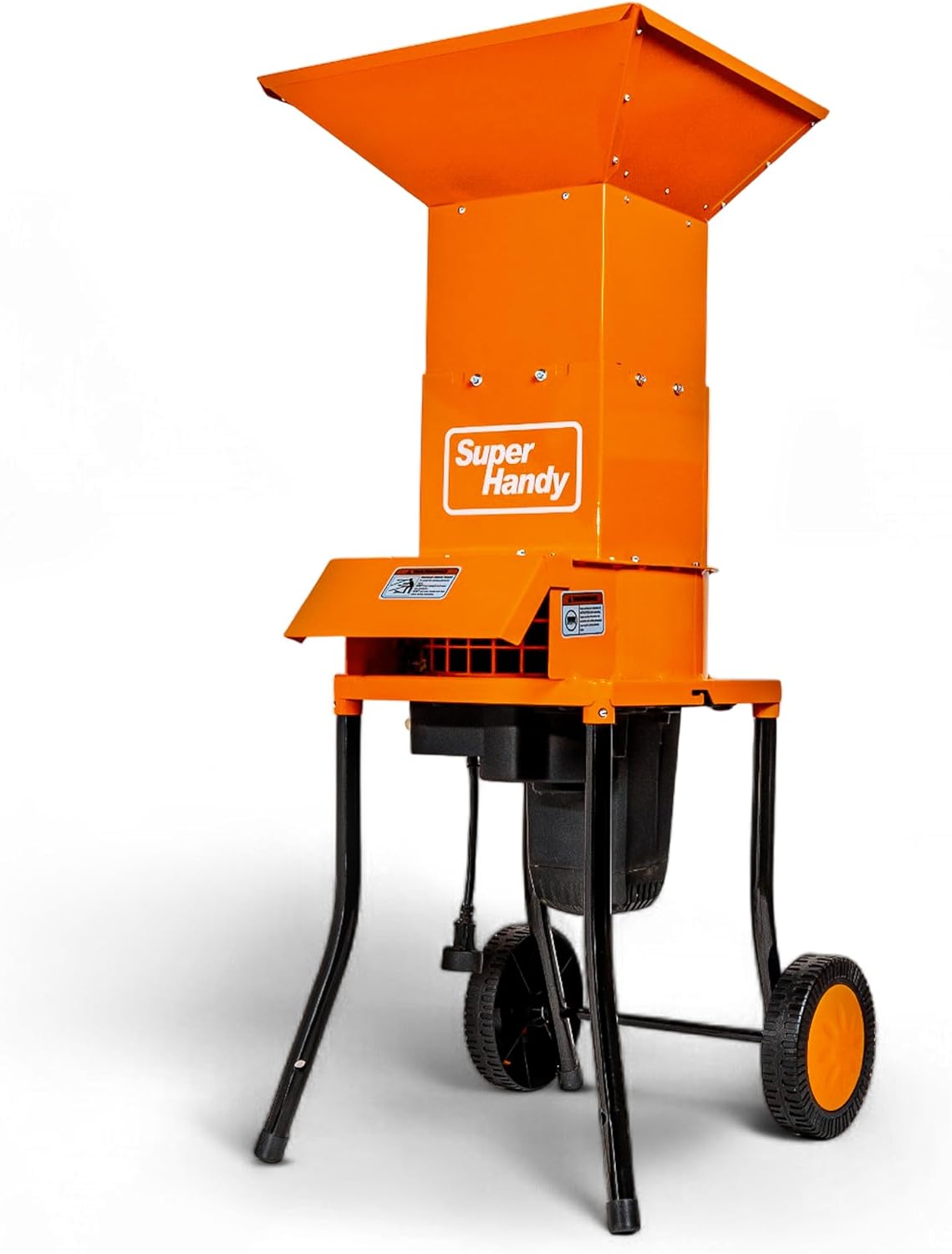
| Motor | 15 AMP / 1800 Watt |
|---|---|
| Blade size | Three 11‑inch blades |
| Max twig capacity | 0.5 inch diameter |
| No‑load speed | 4,100 RPM |
The SuperHandy Electric Leaf Mulcher is built for homeowners who need a powerful, low‑maintenance shredder for seasonal cleanups. Its 15‑amp (1800 W) motor spins three 11‑inch blades at 4,100 RPM to mince leaves, grass clippings, and twigs up to about 0.5 inch diameter, producing fine material suitable for compost or mulch. The steel housing and powder coat finish give a durable feel, while overload protection and an instant‑start switch simplify operation and add safety. Two 6‑inch wheels make it movable around the yard, and because it is electric there are no emissions or gas maintenance. Important limitations are that it is corded, so you must follow extension‑cord requirements and use a GFCI outlet, and the 0.5 inch twig capacity means larger branches need pre‑trimming or a heavier machine. For regular leaf and light yard debris work this model balances quiet, efficient shredding with straightforward upkeep.
Best for: Buyers who prioritize high shredding performance for routine leaf and light yard debris removal and want a durable, low‑maintenance electric machine for composting or mulch production.
Less Ideal for: People who need a cordless or gas unit for remote areas or who regularly process thick branches and heavy woody debris should consider a larger gas or dedicated wood chipper.
- Powerful 15‑amp/1800 W motor with three 11‑inch blades for efficient shredding
- Handles leaves, grass, and twigs up to 0.5 inch diameter for compostable output
- Steel housing and powder coat finish for durable outdoor use
- Overload protection and instant‑start switch improve safety and ease of use
- Two wheels make the unit reasonably portable across lawns and driveways
- Corded design requires appropriate outdoor extension cord and a GFCI outlet limiting remote use
- Not suitable for branches larger than 0.5 inch so larger pruning waste must be reduced first
Verdict: If you want a durable, high‑power electric mulcher that efficiently turns leaves and light twigs into compostable mulch, this SuperHandy model delivers strong, quiet performance.
Yard Force YF8000 Electric Leaf Mulcher with Accessory Kit

| Power source | Corded-Electric |
|---|---|
| Motor | 13 Amp, 8000 RPM |
| Cutting system | Trimmer-line (.095 in) |
| Warranty | 24-month motor warranty |
The Yard Force YF8000 is a lightweight corded-electric leaf mulcher built for small to medium yards where ease of use and storage matter. It uses a 13 Amp, high-RPM motor and trimmer-line cutting system to reduce roughly twelve full paper lawn bags of leaves down to about one bag of mulch, which you can use as organic fertilizer. Setup is straightforward: the unit stacks for compact storage, telescopic legs let you level it on uneven ground, and a bungee bag clamp fits both paper and plastic waste bags. The included hand rake, spare lines, and safety goggles make it ready to run out of the box. Important trade-offs are its reliance on a power cord rather than battery portability and a trimmer-line-style cutter instead of metal blades, which can affect cutting speed on very wet, woody, or thick debris. For routine seasonal leaf cleanup and mulching, it offers a practical, space-saving option that simplifies hauling and produces usable mulch.
Best for: Buyers who want a space-saving, easy-to-use electric mulcher to process seasonal leaf piles into usable mulch without heavy maintenance or complicated setup.
Less Ideal for: Not the best choice for large properties or users who need cordless operation or a heavy-duty metal-blade shredder for branches and very dense debris.
- High-RPM 13 Amp motor shreds large volumes of leaves into compact mulch
- Adjustable telescopic legs provide balance on uneven ground
- Compact, stackable design stores easily and is lightweight for carrying
- Comes with useful accessories including replacement lines, hand rake, bungee cord, and safety goggles
- Corded power limits use away from outlets or across large properties
- Trimmer-line cutter may struggle with very wet, woody, or dense material compared with steel-blade shredders
Verdict: A compact, low-maintenance electric mulcher that quickly reduces multiple bags of leaves into usable mulch for homeowners with small to medium yards.
GreenSweep XL Bladeless Leaf Shredder & Mulcher

| Motor | 15 Amp |
|---|---|
| Reduction ratio | 18:1 |
| Max speed | 9,000 RPM |
| Throughput | 55 gallons per minute |
The GreenSweep XL is a lightweight, bladeless electric mulcher designed to turn leaves, grass clippings, and light yard waste into fine mulch. It uses replaceable 10-gauge nylon cutting lines instead of metal blades, which makes maintenance simple and safer for casual users; 20 extra lines are included. The unit claims an 18:1 reduction ratio and a 15 amp motor running up to 9,000 RPM, allowing it to process debris quickly and produce material you can spread on beds or compost. A toggle control offers different cutting modes for pine needles, wet leaves and grass, which helps tailor the output for different tasks. The plastic frame and two wheels keep the machine easy to move and store, and assembly is straightforward. Limitations to note are the plastic construction and line-based cutter, which make it best suited to leaves and soft yard waste rather than thick branches or heavy woody debris, and users who need industrial throughput may find the capacity modest. For straightforward backyard mulching on a budget, it hits the practical marks.
Best for: Budget-minded homeowners who want a safe, easy-to-use machine for turning leaves and light yard waste into mulch for beds or compost without the complexity of professional chippers.
Less Ideal for: Landscape contractors or property owners who need to process large volumes or heavier woody debris should choose a commercial-grade chipper instead.
- Bladeless nylon cutting lines reduce risk of injury and are easy to replace
- High reduction ratio (18:1) produces fine mulch suitable for beds and compost
- Powerful 15 amp motor with up to 9,000 RPM for efficient processing
- Lightweight design with wheels for easier transport and storage
- Plastic construction may feel less durable than metal-bodied machines
- Not designed for thick branches or heavy woody material
Verdict: A cost-conscious, easy-to-use bladeless mulcher that turns backyard leaves into usable mulch without the hazards or maintenance of metal blades.
SOYUS Electric Bladeless Leaf Mulcher & Shredder, 15A 8400 RPM

| Motor | 15 Amp, 8400 RPM |
|---|---|
| Reduction ratio | 18:1 |
| Throughput | Up to 55 gallons per minute |
| Control | 5-level adjustable dial |
The SOYUS bladeless leaf mulcher is built for fast backyard cleanup: a 15 amp motor spinning at 8400 RPM feeds leaves into a nylon cutting-line system that shreds material down with an advertised 18:1 reduction. You use the front hopper to feed wet or dry leaves and select one of five control-dial settings to match cutting aggressiveness to material. The design omits metal blades in favor of replaceable line, which simplifies maintenance and reduces the risk of large kickbacks while still producing a fine mulch suitable for composting or smaller collection bags. Practical benefits include high throughput of up to 55 gallons per minute and a compact, wheeled frame that is easy to move around the yard. Limitations are the reliance on cutting line that must be replaced over time and the lighter construction that favors routine yard debris rather than heavy branches or woody brush. For someone focused on quick, high-volume leaf shredding this machine delivers strong performance, but it is not a substitute for a heavy-duty chipper if you need to handle thick limbs.
Best for: Buyers who prioritize fast, high-volume leaf processing for routine yard cleanup and want a low-maintenance, maneuverable electric mulcher.
Less Ideal for: Those who need a machine for frequent heavy-duty chipping of branches or for commercial landscape work should choose a more robust chipper-shredder.
- Powerful 15A, 8400 RPM motor supports fast mulching throughput
- Bladeless nylon cutting-line system reduces maintenance complexity and kickback risk
- Five-level control dial lets you adjust processing for wet or dry leaves
- High 18:1 reduction ratio shrinks yard waste volume for easier disposal or composting
- Lightweight wheeled design improves mobility around the yard
- Not intended for heavy woody branches or thick brush
- Cutting line requires periodic replacement and is a consumable expense
Verdict: If you want a fast, high-throughput electric mulcher that turns large volumes of leaves into fine mulch with minimal fuss, this SOYUS bladeless model is a strong pick.
WORX WG430 13 Amp Electric Leaf Mulcher
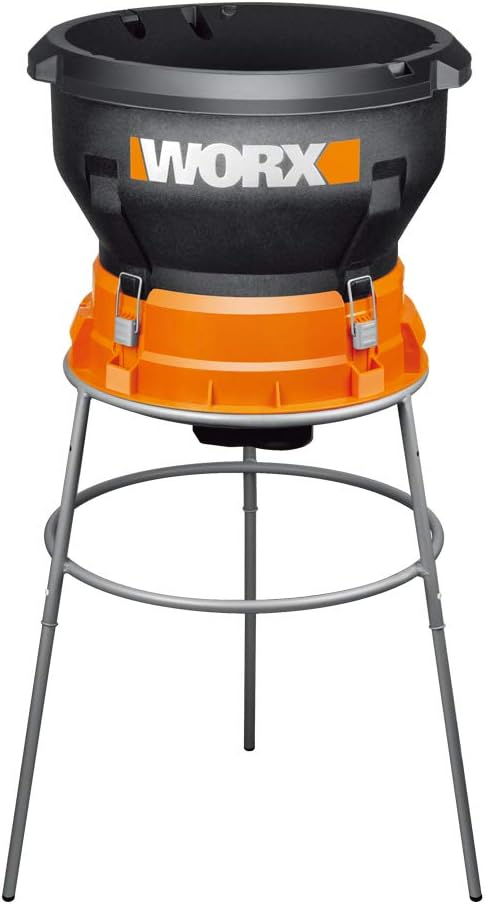
| Motor | 13 Amp |
|---|---|
| Throughput | 53 gallons per minute |
| Mulch ratio | 11:1 |
| Cutting system | Flex-a-Line bladeless line |
The WORX WG430 is an electric leaf mulcher designed for homeowners who need to reduce large volumes of dry leaves and light yard debris quickly. It accepts leaves fed into the top funnel and shreds them with the bladeless Flex-a-Line string system, processing up to about 53 gallons per minute and reducing roughly 11 bags of leaves down to one. The unit sits over a standard bag held by the included support ring so mulch discharges directly into a receptacle for disposal or composting. Practical benefits include tool-free assembly and disassembly for seasonal storage, a dust-reducing motor cooling design, and an included supply of replacement cutting lines to simplify maintenance. Because it is a 13 amp corded electric tool it is quieter and cleaner than gas chippers and avoids blade sharpening, but it is not intended for heavy branches or thick woody material. The need for an appropriately rated outdoor extension cord and indoor storage in winter are additional considerations for regular use.
Best for: Homeowners who want a safer, low-maintenance electric solution to shrink large piles of leaves quickly and prefer a cleaner, quieter alternative to gas chippers.
Less Ideal for: Property owners who need to chip branches, thick brush, or heavy woody debris should consider a dedicated wood chipper or gas-powered shredder instead.
- High processing rate reported at up to 53 gallons of leaves per minute for fast cleanup
- 11:1 mulching ratio significantly reduces bag volume for easier disposal or composting
- Flex-a-Line bladeless system lowers blade-related hazards and includes tool-free line replacement
- Tool-free assembly and compact nesting parts for easier storage and off-season handling
- Not suitable for woody branches or heavy brush since it is a line-based leaf mulcher
- Requires a properly rated outdoor extension cord and access to an electrical outlet
Verdict: Choose the WORX WG430 if you need a fast, low-maintenance electric mulcher that turns large volumes of leaves into manageable mulch for disposal or composting.
EWORK 15 Amp Electric Leaf Mulcher/Shredder with Adjustable Rake

| Motor | 15 Amp, 8000 RPM |
|---|---|
| Compression ratio | 16:1 |
| Feed inlet width | 20 inches |
| Outlet width | 15 inches |
| Rake adjustable width | 7.5–24 inches |
This EWORK mulcher is a corded electric machine aimed at frequent yard cleanup and composting. Its 15 Amp motor runs at high speed to process piles of leaves, dry needles, and light twigs while producing a fine 16:1 reduction for mulch or faster composting. The unit offers three selectable shred textures so you can choose coarse fragments for ground cover or ultra-fine material for soil incorporation. A wide 20-inch feed inlet and 15-inch outlet help reduce clogging, and the upgraded wear-resistant cutting line should last longer than typical trim-line blades. The included adjustable rake extends reach and width to make gathering and feeding leaves quicker, while simple two-screw assembly gets the machine ready fast. Practical benefits include lower bag use, smaller composting volume, and less time spent clearing and reloading. Expect limitations typical of corded electric models: it is best for yard debris and small branches rather than heavy logs, and performance depends on available power and an extension cord for large properties.
Best for: Best for homeowners or small-property managers who prioritize efficient, repeatable leaf reduction and compost-ready mulch to cut disposal and bagging time.
Less Ideal for: Not a good fit for users needing a gasoline-powered chipper for large branches, brush, or remote sites without easy access to electricity.
- Powerful 15 Amp motor for steady shredding of leaves and light yard waste
- 16:1 compression ratio with three texture settings for versatile mulch output
- Wide 20-inch feed inlet and 15-inch outlet reduce clogging during use
- Wear-resistant cutting line designed to last longer than standard trim lines
- Adjustable rake included to gather and feed leaves more efficiently
- Corded design limits mobility on very large properties and needs a reliable power source
- Not intended for heavy logs or thick branches that require a chipper-style machine
Verdict: A high-speed electric mulcher that efficiently converts leaf piles into compost-ready mulch while speeding collection with the included adjustable rake.
Choosing the Right Stand Alone Leaf Mulcher: Key Factors to Consider
Shredding Throughput
Shredding throughput describes how much leaf mass a mulcher can process in an hour. Higher throughput saves time during peak fall cleanup and reduces the number of trips to a compost pile or bagging station.
Throughput depends on motor or engine power, the design of cutting or flailing elements, and feed chute width. Consider how often you clean and the size of common leaf piles in your yard. If you have many trees or a large property, prioritize higher throughput so mulching sessions do not stretch into multiple days.
Clog Resistance and Debris Handling
Leaves vary in moisture and may come mixed with small twigs, pine cones, or wet debris that can lead to jams. Clog resistance covers chute shape, blade or flail arrangement, and whether the unit has features that clear or reduce blockages.
A machine that tolerates mixed debris reduces interruptions and the need to stop and clear the feed. Look for generous chute geometry, anti-clog designs, and an ability to handle occasional small branches without damage. Expect wetter leaves to be more challenging and plan to dry material when possible.
Durability and Weather Resistance
Durability matters because leaf mulchers spend time outdoors and undergo mechanical stress. Steel housings, corrosion-resistant fasteners, and sealed bearings prolong service life. Materials and finish affect how well a unit resists rust and wear from abrasive leaf matter.
Consider where you will store the mulcher and how often it will be exposed to rain or snow. A more durable machine can justify higher initial effort to maintain, while cheaper constructions often show wear quickly and may need replacement sooner.
Ease of Maintenance
Routine maintenance includes blade or flail sharpening or replacement, belt inspection, and cleaning screens or chutes. Units designed for easy access to wear parts reduce downtime and make seasonal servicing less of a chore.
Check whether fasteners are standard sizes, if belts and blades are commonly available, and how simple it is to remove debris. A machine with straightforward maintenance steps is more likely to be kept in good working order and to retain performance across seasons.
Noise, Vibration, and User Comfort
Mulchers can be loud and vibratory machines. Noise level affects when and how long you can operate the unit without disturbing neighbors or family. Excessive vibration accelerates wear and makes the machine harder to control during extended use.
Consider whether the unit has vibration-dampening mounts, insulated handles, and a quieter powertrain if noise is a concern. Plan operating times to minimize disturbance and wear hearing protection if necessary.
Portability and Storage Footprint
Portability determines how easily you can move the mulcher between work areas and into storage. Wheel size, overall weight, and whether handles fold or detach affect maneuverability.
For small sheds or garages, a compact or collapsible footprint matters. If you work on sloped terrain, large wheels and a low center of gravity improve stability. Evaluate how the machine stows and whether moving it alone is feasible for routine use.
How Mulcher Design Affects Leaf Quality for Compost
Different mulcher mechanisms create different particle sizes. Fine, consistent shreds break down faster in a compost pile and reduce the need for turning, while coarser cuts may require more time to decompose. The choice affects not only composting speed but also how the material behaves as mulch around plants.
If you compost, aim for a machine that produces relatively uniform fragments without excessive shredding of healthy woody bits. For using shredded leaves as a surface mulch, a slightly coarser texture can be acceptable and may help retain structure around garden beds.
- Fine shred is better for quick composting and mixing into soil.
- Coarser shred holds structure longer as a surface mulch.
- Avoid machines that bruise leaves into wet clumps, which slow decomposition.
Operating Tips to Reduce Jams and Extend Life
Feed leaves gradually and avoid overstuffing the chute. Working in layers rather than pushing large piles at once reduces stress on blades and motors and lowers the risk of clogging. When material is damp, spread it out to air-dry briefly before mulching to improve performance.
Clear the chute and blades after heavy sessions. Remove debris from screens and check belts and fasteners for wear. Regular light maintenance keeps performance consistent and prevents small issues from becoming failures.
- Process twigs separately or trim to manageable lengths before feeding.
- Run the mulcher in short bursts for mixed or wet material to avoid heat buildup.
- Keep a dedicated set of tools for routine maintenance and blade changes.
Choosing Between Electric and Gas Powertrains
Electric units tend to be quieter, require less maintenance, and are lighter to maneuver, making them a good fit for small to medium yards. They are most convenient near an electrical outlet or when using extension-rated cords. Expect lower torque on some electric models, which can affect ability to handle wet or woody debris.
Gas-powered machines generally deliver higher torque and sustained throughput, helpful for large properties or heavy, mixed debris. They require fuel, oil, and more routine mechanical maintenance. Consider storage and winterization needs if you choose a gas model.
- Electric: quieter, lower maintenance, limited by cord or battery life.
- Gas: more torque and continuous power, needs more maintenance and winter care.
Safe Placement and Use in the Yard
Place the mulcher on a flat, stable surface and clear the surrounding area of bystanders, pets, and flammable material. Keep loose clothing and long hair away from the feed chute. Many models include safety interlocks – confirm these are functional before each use.
When moving the machine, disengage power and allow blades to stop completely. Use wheel locks or chocks on uneven ground to prevent rolling. Proper placement reduces the chance of tipovers and keeps operations predictable.
- Check safety interlocks before every run.
- Allow blades to stop fully before servicing or moving.
- Keep a safe perimeter while operating.
Storage and Off-Season Care
Clean the unit of leaf debris and moisture before storage to avoid rust and gasket degradation. Remove or protect battery packs or fuel, and store the machine indoors if possible. Lubricate pivot points and apply a light corrosion inhibitor to exposed metal surfaces.
If storing outdoors under cover, elevate the mulcher off damp ground and use breathable covers to prevent trapped moisture. Conduct a pre-season check to replace worn belts, sharpen or replace blades, and inspect all safety components.
- Remove fuel or stabilize it for long-term storage on gas units.
- Sharpen or replace blades at season start for best performance.
- Store batteries at recommended charge levels in a cool, dry place.
How We Chose the Best Stand Alone Leaf Mulcher
We shortlisted units that perform reliably in common garden conditions and that meet practical needs for homeowners and small properties. Evaluation prioritized shredding throughput per hour, the ability to handle mixed yard debris without frequent clogs, and build materials that tolerate outdoor storage and occasional damp leaves. Noise output and ease of maintenance were included because loud, hard-to-service equipment discourages regular use. Portability and footprint mattered for gardeners with limited storage or who need to move the machine around the property. Safety features and clear user-accessible guards were required to reduce risk during operation. Excluded from consideration were specialty or commercial-grade chippers intended for professional landscaping, machines that require permanent mounting, and units that depend on nonstandard power sources. We also filtered out models with consistently poor durability reports or those lacking basic safety interlocks. The criteria we used reflect everyday gardener concerns: throughput, clog resistance, durability, noise and maintenance, portability, and safety.
FAQ
Can a stand alone leaf mulcher handle small branches?
Many stand alone leaf mulchers can process small branches, but capacity varies. Thin, dry twigs are usually fine, while larger or green branches may clog or dull cutting elements. If you expect frequent woody debris, choose a unit rated for occasional branch clearance and follow guidelines for maximum branch diameter.
Is it better to let leaves dry before mulching?
Dry leaves generally shred more cleanly and are less likely to compact into wet clumps that cause clogs. If possible, let freshly fallen leaves dry for a day or two, or spread wet piles thinly so air can reduce moisture before running them through the mulcher.
How often should I sharpen or replace blades?
Blade life depends on debris type and frequency of use. Inspect blades after heavy sessions and sharpen when edges appear dull or when shredding efficiency drops. For frequent seasonal use, expect to service blades annually; less frequent users may need replacement less often.
Are electric mulchers powerful enough for large yards?
Electric models can be suitable for medium yards and routine leaf cleanup, especially when material is dry and mostly leaves. Large properties with heavy, mixed debris often benefit from higher-torque gas models, which sustain throughput for longer uninterrupted runs.
What maintenance keeps a mulcher reliable long term?
Regular cleaning of chutes and screens, timely blade sharpening or replacement, belt checks, and lubricating pivot points all contribute to long-term reliability. Store the machine clean and dry, and inspect safety devices before each season to avoid unexpected failures.
Will mulched leaves compact into a mat around plants?
Very fine, wet mulch can compact and form a mat that repels water. To avoid this, aim for moderate fragment size for surface mulch, or fluff and mix material into compost. Applying thinner layers and avoiding overly wet leaves helps maintain aeration around plants.
Final Verdict
Prioritize the features that match how you work in the yard: choose higher shredding throughput and clog resistance if you manage large or mixed debris, or favor quieter, lower-maintenance electric units for smaller properties. Durability and ease of maintenance determine how long the machine retains top performance, while portability and storage shape how practical it will be for your routine. Balance these tradeoffs against operating preferences and storage constraints. With the right combination of throughput, debris handling, and serviceability, you can shorten cleanup time and produce useful mulch or compost feedstock for the garden.
