

Note: This article contains affiliate links. If you click on these links and make a purchase, I may earn a small commission at no extra cost to you. This helps support my research and content. Read my full affiliate disclosure here.
Choosing the right leaf rake for lawns matters because a tool that moves debris efficiently while protecting grass makes seasonal cleanup quicker and less damaging. The best rakes balance wide coverage with gentle tines so you remove leaves without tearing turf or uprooting shallow-rooted grass. This guide covers six top-rated leaf rakes for lawns shortlisted for their tine spread, handle ergonomics, and durability. We explain the key features to compare and why they matter for typical yard and lawn conditions, then move into our top picks and practical use tips.
Top Picks at a Glance
| Best Overall The best all-around choice for most situations | True Temper Clog-Free Poly Leaf Rake with 48-inch Hardwood Handle |  |
| Best Quality Built to a higher standard if you want something more solid | Bully Tools 30-inch Poly Lawn and Leaf Rake with Fiberglass Handle |  |
| Best Value The sweet spot between price and what you get | Serqd Adjustable Heavy-Duty Leaf Rake with 25-Tine Metal Head and 36–73 in Handle |  |
| Best Budget The cheapest option that still gets the job done reliably | Bird Twig 16.5" Leaf Rake with Adjustable Stainless Steel Handle |  |
| Highest Rated A top-rated pick with lots of positive feedback | THE GROUNDSKEEPER II Garden Rake, 21-inch Head with Fiberglass Handle |  |
| Most Popular A crowd favorite that many people choose with confidence | Oliynedy Adjustable Metal Leaf Rake with Expandable Head |  |
True Temper Clog-Free Poly Leaf Rake with 48-inch Hardwood Handle

| Rake Type | Leaf Rake |
|---|---|
| Head Size | 24 inches |
| Handle Material | Wood |
| Head Material | Plastic |
The True Temper Clog-Free leaf rake is built for fast, productive leaf cleanup across medium to large lawns. Its patented 24-inch poly head has flexible tines shaped to prevent leaves from snagging or spearing, so you can gather wide swaths without stopping to clear debris from the head. The 48-inch hardwood handle gives reach and leverage for long sweeping strokes and the cushioned grip reduces hand fatigue during extended use. Because the head is plastic, it handles damp leaves and light mulch without rust concerns and stays lightweight for faster work. Limitations to note are the fixed-length handle and plastic head, which may feel less sturdy than all-metal alternatives for heavy prying tasks. The design favors speed and ease of use when moving large volumes of leaves rather than heavy-duty digging or rock clearing. For homeowners who want an efficient, low-maintenance rake to finish yard cleanup quickly, this is a solid, performance-focused option.
Best for: Homeowners who prioritize fast, efficient leaf cleanup across medium to large yards and want a low-maintenance tool that reduces interruptions during work.
Less Ideal for: People who need a multiuse, heavy-duty tool for prying, moving rocks, or extremely dense debris should consider sturdier metal-head or adjustable-handle rakes.
- Clog-free patented poly head speeds raking by preventing debris buildup
- Large 24-inch head covers more area per sweep for faster work
- 48-inch hardwood handle provides good reach and leverage for long strokes
- Cushioned grip improves comfort during extended use
- Plastic head resists rust and stays lightweight when wet
- Fixed handle length cannot be adjusted for user height or storage
- Plastic head is less suitable for heavy prying or moving dense material
Verdict: Choose this rake if you want a fast, clog-resistant tool that lets you clear large amounts of leaves quickly and with less effort.
Bully Tools 30-inch Poly Lawn and Leaf Rake with Fiberglass Handle

| Head Material | Polypropylene (PP) |
|---|---|
| Handle Material | Fiberglass |
| Grip Material | Wood |
| Head Size | 30 inches |
The Bully Tools 30-inch Poly Lawn and Leaf Rake is built for fast, efficient leaf and yard cleanup across medium to large lawns. Its wide 30-inch poly head with 90-degree angled tines gathers and scoops leaves and grass clippings quickly, while double-sided reinforcement ridges and flexible polypropylene tines resist breakage when hitting twigs or thatch. The triple-wall fiberglass handle with a wood core and extended ferrule gives the tool a rigid, durable feel without adding much weight, and the rubber grip helps reduce hand fatigue during longer sessions. Assembly is minimal and straightforward. Practical benefits include broad coverage to cut raking time, a design that tolerates moderate abuse, and a long handle that reduces bending. Limitations are that the poly head can flex under very heavy loads compared with steel tines and the tool is optimized for loose debris rather than heavy soil or rock removal.
Best for: Buyers who prioritize efficient, high-coverage leaf cleanup and want a durable but lightweight rake for seasonal lawn maintenance.
Less Ideal for: Gardeners who need a tool for heavy-duty digging, moving gravel, or breaking up compacted soil should choose a steel or sturdy landscaping rake instead.
- Wide 30-inch head covers large areas and speeds up leaf collection
- Reinforced polypropylene tines with double-sided ridges reduce breakage
- Triple-wall fiberglass handle with wood core for strong, lightweight durability
- Ergonomic long handle and rubber grip reduce back and hand strain
- Polypropylene head can flex under very heavy or compacted loads compared with steel rakes
- Not designed for heavy soil digging, rock removal, or pruning tasks
Verdict: Choose this rake if you want a durable, lightweight tool that clears large amounts of leaves quickly with minimal effort.
Serqd Adjustable Heavy-Duty Leaf Rake with 25-Tine Metal Head and 36–73 in Handle

| Head Material | Alloy Steel |
|---|---|
| Handle Material | Stainless Steel |
| Grip Material | Plastic |
| Number of Tines | 25 |
This Serqd leaf rake is a practical tool for everyday yard cleanup that combines a sturdy metal head with an extendable stainless steel handle. The 25-tine alloy steel head covers an 18-inch swath so you can clear leaves, pine needles, and grass quickly while the rust-resistant stainless steel handle reduces flex and wear. The telescoping handle adjusts from 36 to 73 inches, making it easy to set a comfortable working height or shorten it for storage and kid use. The package also includes a reusable 32-gallon woven polypropylene leaf bag for collecting debris, which saves trips to a bulk bin. Assembly is tool-free and straightforward, and the plastic grip helps control the rake during longer sessions. Limitations to note are the straight-handle design, which may not suit those who prefer ergonomic bent handles, and the metal tines can still snag on heavy wet debris compared with heavier fan-style steel rakes. For routine leaf and light debris removal this set is efficient, durable, and saves time with the included collection bag.
Best for: Buyers who want a durable, no-nonsense rake that speeds routine leaf and light debris cleanup and values an adjustable handle and included collection bag.
Less Ideal for: Users who need a specialty rake for heavy wet debris, thatching, or who prefer an ergonomically bent handle for back relief should consider other designs.
- 25-tine alloy steel head clears leaves and needles over an 18-inch width
- Rust-resistant stainless steel handle reduces bending and corrosion
- Telescoping handle (36–73 in) adapts to different user heights and storage needs
- Includes a reusable 32-gallon woven polypropylene leaf bag for on-the-spot collection
- Straight handle lacks ergonomic bend favored by some users
- Metal tines can struggle or snag with very wet, heavy debris
Verdict: A tough, adjustable leaf rake with a wide 25-tine metal head and included 32-gallon bag that makes regular yard cleanup faster and more efficient.
Bird Twig 16.5" Leaf Rake with Adjustable Stainless Steel Handle
| Head Material | Polypropylene (PP) |
|---|---|
| Handle Material | Stainless Steel |
| Head Width | 16.5 inches |
| Tines | 23 flexible tines |
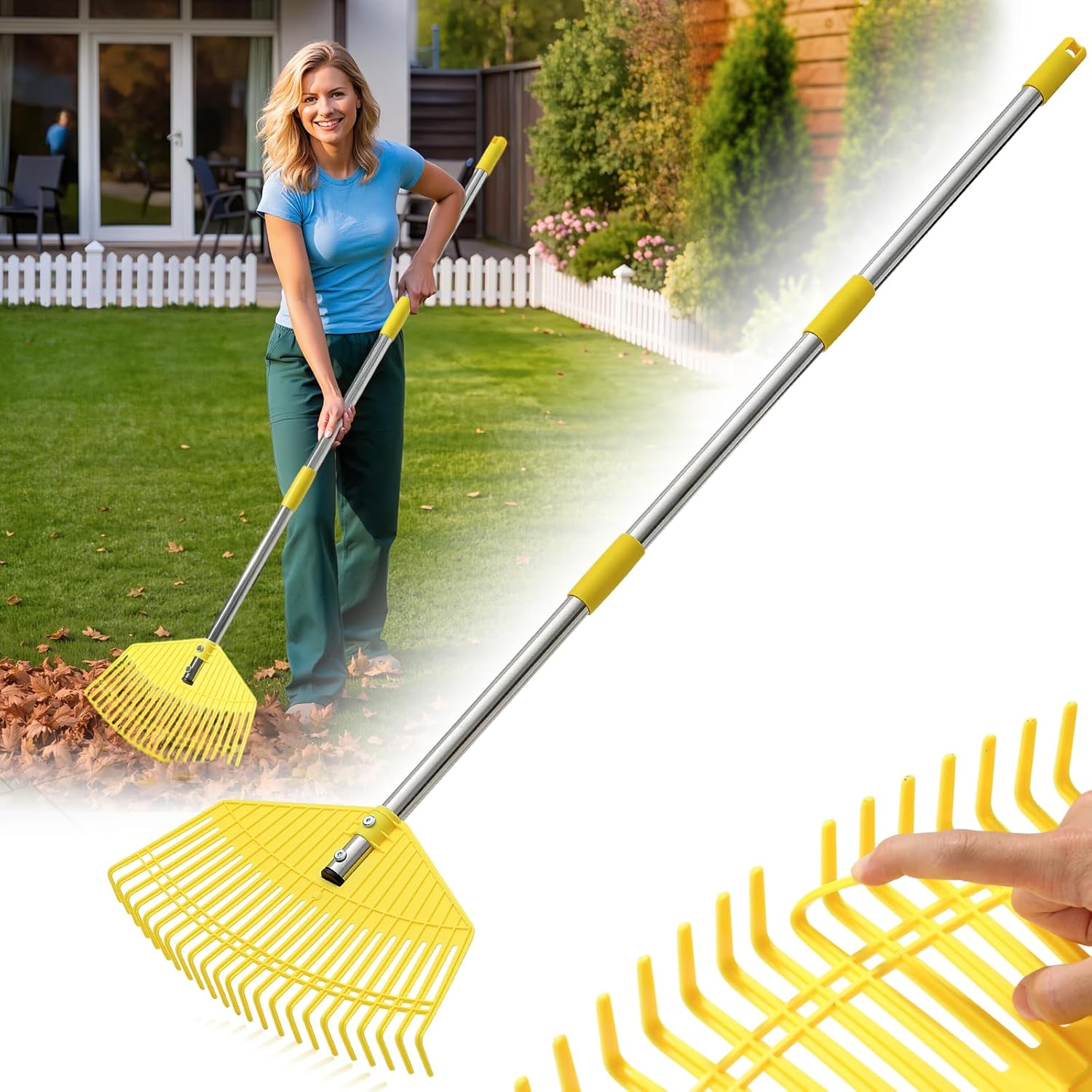
This Bird Twig leaf rake is built for quick, low-effort leaf and light debris cleanup on lawns and around beds. The 16.5 inch wide polypropylene head has 23 flexible tines that skim leaves, needles, and clippings without digging into turf, and the reinforced head reduces the chance of cracking compared with thin plastic designs. The telescoping or multi-section stainless steel handle locks securely so the head stays stable while raking, and the handle breaks down for compact storage or makes it easy to shorten the tool for children. Because the tool is very lightweight it reduces arm and back strain, which helps for longer cleanups or for seniors and families sharing tasks. Limitations are its plastic head and flexible tines, which are ideal for leaves and light material but are not suited for heavy wet debris, rocky areas, or moving large volumes of dense material where a metal leaf rake would perform better.
Best for: A homeowner who wants an affordable, easy-to-use rake for routine lawn leaf cleanup and who values low weight and family-friendly tools.
Less Ideal for: People who need a heavy-duty rake for wet leaves, compacted debris, gravel, or commercial-scale cleanup should choose a sturdier metal-headed rake instead.
- Lightweight design reduces wrist and back fatigue for longer use
- Wide 16.5" head clears more leaves per pass for faster cleanup
- Flexible polypropylene tines are gentle on lawns and garden beds
- Adjustable stainless steel handle with secure locking prevents wobble and allows compact storage
- Plastic head and flexible tines are not ideal for heavy, wet, or rocky debris
Verdict: A lightweight, budget-friendly leaf rake that speeds routine lawn cleanup while being gentle on turf.
THE GROUNDSKEEPER II Garden Rake, 21-inch Head with Fiberglass Handle

| Handle Material | Fiberglass |
|---|---|
| Head Material | Alloy Steel |
| Head Size | 21 inches |
| Number of tines | 28 |
| Handle Length | 55-inch |
The Groundskeeper II is a purpose-built garden rake that uses angled, spring-loaded hardened steel tines and a no-break co-polymer head to move leaves, mulch, pine straw and light debris while allowing live grass stems to pass through. Typical use is seasonal leaf cleanup, light de-thatching and clearing around shrubs or long grass; the rigid tines dig in so you can rake mostly standing up and reduce back strain. Notable features include a 21-inch head with 28 tines, a 55-inch fiberglass handle with a hang hole, and replaceable torsion springs for the tines. The tool is unusually light for its build, so it is easier to use for longer sessions than many all-steel rakes. Important limitations are that the stiff tines are meant for coarser debris and de-thatching rather than delicate finishes or very fine leaf litter, and the head requires basic assembly out of the box. For homeowners looking for a reliable, long-lived rake for regular lawn maintenance, this model balances power and ergonomics well.
Best for: Homeowners who prefer a dependable, low-effort tool for regular lawn care and de-thatching, and who value durability and reduced back strain during yard work.
Less Ideal for: If you need a very flexible leaf rake for delicate plants, fine mulch, or decorative finish work, a softer tine rake would be a better choice.
- Stiff, angled hardened steel tines that dig in for efficient raking and de-thatching
- Fiberglass handle keeps overall weight low for longer use and reduces fatigue
- Replaceable torsion springs and durable co-polymer head increase service life
- 21-inch head with 28 tines covers a good swath for faster cleanup
- Includes hang hole on handle for simple storage
- Stiff tines are less suitable for delicate finishing or very fine debris
- Some assembly required before first use
Verdict: Buy this rake if you want a lightweight, durable tool that makes regular lawn raking and de-thatching faster and easier.
Oliynedy Adjustable Metal Leaf Rake with Expandable Head

| Rake Type | Garden Rake |
|---|---|
| Manufacturer Warranty Description | 1 Year Warranty |
| Head Material | Metal |
| Handle Material | Plastic |
| Head Size | 17 inches |
This adjustable metal leaf rake lets you change the head width from about 9 to 17 inches and breaks down into multiple handle pieces for easier storage and transport. The metal head and 1-inch diameter poles give it enough stiffness for clearing leaves and light debris across lawns and around shrubs, while the narrower setting is useful for tight spots like flower beds or pine straw. The plastic-sleeved handle and grip make it comfortable to hold, and assembly is simple: screw the poles together with no tools. Because the head is painted to resist rust and the pole joints collapse, the rake works well both at home and carried in an RV or trunk. Expect reasonable durability for routine leaf cleanup but not industrial abuse; the plastic handle sections and locking mechanism can wear faster than all-metal models if subjected to heavy leverage or prying. This is a practical, portable option for homeowners who need a versatile rake without specialized features.
Best for: A buyer who values social proof and wants a dependable, versatile rake for routine yard care and occasional travel; good for homeowners who prefer a portable, easy-to-assemble tool.
Less Ideal for: Landscape professionals or gardeners who need a heavy-duty, single-piece all-metal rake for daily commercial use.
- Adjustable head width (9–17 inches) for tight spots and open areas
- Collapsible multi-piece handle for compact storage and transport
- Metal head and 1" diameter poles provide firm raking performance
- Painted finish on head helps resist rust during outdoor use
- Handle sections and plastic top may be less durable than a single-piece wooden or all-metal handle
- Not intended for heavy-duty prying or moving large, wet debris
Verdict: A practical, portable adjustable-head metal rake that balances everyday yard performance with easy storage and transport.
Choosing the Right Leaf Rake for Lawns: Key Factors to Consider
Tine Design and Spacing
Tine shape, material, and spacing determine how a rake interacts with grass. Flexible plastic or thin metal tines will bend to gather leaves without digging into the turf, while stiff, closely spaced tines can snag roots or scalp the lawn. Consider whether your yard tends to accumulate dry, flaky leaves or heavy, wet debris; flexible tines with slightly wider spacing handle wet leaves better by flexing instead of pulling clumps.
Tine length also matters. Longer tines can reach into low spots and under shallow thatch, but overly long tines may tangle in dense grass. Look for designs that let the tines fan out for coverage yet maintain enough stiffness to move leaves in a single pass.
Head Width and Coverage
Head width controls how quickly you clear an area. Wider heads cover more surface on each stroke, reducing total passes on larger lawns, but very wide heads can be harder to control near beds, fences, and around trees. Narrower heads offer precision in tight spaces and better leverage when raking uphill.
Think about the size and layout of your lawn when choosing head width. For medium to large open lawns, a wider head speeds work. For small yards or lawns with many obstacles, a narrower, maneuverable head reduces the need to backtrack.
Handle Length and Ergonomics
Handle length affects posture and leverage. A handle that is too short forces you to bend and rely on your back, increasing fatigue and risk of strain. Too long a handle can be awkward in close quarters and reduce control. Most gardeners prefer a mid-length handle that allows an upright stance while giving enough reach to pull leaves into piles without excessive bending.
Grip material and shape influence comfort during long sessions. Padded or contoured grips reduce slipping and absorb shock from repetitive strokes. Some handles include a slightly offset angle near the head to keep wrists in a neutral position; this ergonomic detail can make a big difference for gardeners who rake frequently.
Weight and Maneuverability
The overall weight of the rake determines how long you can work comfortably. Lightweight materials like aluminum frames with plastic tines reduce fatigue, but extreme lightness can mean less durability or control when handling heavy, wet piles. Heavier builds can feel sturdier and move big clumps more predictably, but they increase shoulder and wrist strain over time.
Balance is important. A well-balanced rake places the head and handle mass so strokes require minimal corrective effort. Also consider how easily the rake turns when you need to change direction around landscape features or load debris into a compost bin.
Durability and Materials
Materials affect longevity and maintenance. Tines and heads exposed to moisture should resist corrosion and cracking; plastic tines should be UV-stabilized if left outdoors. Metal heads and frames benefit from rust-resistant finishes and sturdy welds. Handles come in wood, aluminum, fiberglass, or composite materials-each has tradeoffs in feel, strength, and resistance to weathering.
Assess whether components are replaceable. Rakes with detachable heads or easily replaceable tines extend usable life and reduce waste. A minimal maintenance routine-cleaning off sap and storing the tool dry-helps any rake last longer, but initial material choices set a baseline for durability.
When to Use a Leaf Rake Versus Other Tools
Leaf rakes are designed for gentle surface cleanup on turf and between plants. Use a leaf rake when you need to move loose leaves, pine needles, grass clippings, and lightweight debris without disturbing soil or damaging roots. They are not a substitute for a blower when you need to clear large expanses rapidly, nor are they ideal for heavy debris like branches or sod removal.
In some seasons you may combine tools: a rake to gather and a tarp or wheelbarrow to haul. For wet, matted leaves a stiff-bristled broom or a dethatching rake may be better for smaller areas, while leaf rakes shine at pushing loose material into windrows or piles.
- Best for surface leaves, needles, and light debris
- Gentler on turf than heavy landscape rakes
- Works well in and around beds and borders
Raking Techniques That Protect Your Lawn
Use long, steady strokes and avoid sharp jerking motions that can pull grass. Start at the perimeter and work toward a central collection point so you are not stepping on cleared turf. When dealing with wet leaves, make shallower passes to avoid compacting the material and tearing blades of grass.
If you have a slope, rake across the incline rather than straight downhill to reduce the chance of scalping. When making piles, lift with your legs and keep the rake head close to the ground to minimize turf disruption.
- Begin at edges and work inward
- Use shallow passes on wet leaves
- Rake across slopes to avoid scalping
Storage and Simple Maintenance
After use, remove stuck debris from the tines to prevent mold and accelerate drying. Wipe metal parts dry and apply a light oil to metal joints if the rake has moving parts. Store rakes hanging or kept off damp ground to protect wooden handles and prevent tine deformation.
Replace or repair damaged tines where possible. For plastic tines that crack, check whether the head is replaceable; on metal heads, touch up exposed metal with a rust inhibitor to extend life.
- Clean tines after each session
- Store hanging in a dry place
- Oil metal joints and touch up exposed metal
Adapting Rakes to Different Lawn Conditions
Lawns with dense thatch or heavy clay may need rakes with stiffer tines or a specialized dethatching tool in addition to a leaf rake. On sandy or loamy soils where traction is easier, flexible tines work well and reduce damage. In yards with many trees producing small needles or seeds, tighter tine spacing prevents objects from slipping through.
Consider seasonal shifts. Early fall may require rakes that handle dry leaves well, while late fall and early spring demand models that can cope with damp, decaying material. Having one versatile rake that balances flexibility and strength covers most situations.
- Choose stiffer tines for dense thatch
- Use flexible tines for delicate turf
- Match tine spacing to debris type
How We Chose the Best Leaf Rake for Lawns
We prioritized rakes that meet real lawn-care needs: tine design that clears leaves without scalping grass; handle length and grip options that reduce back and wrist strain; frame durability for repeated seasonal use; and overall maneuverability across turf, around shrubs, and on slopes. We evaluated how well different tine materials and spacing handle wet versus dry leaves, whether head width balances coverage with control, and how lightweight construction affects user fatigue. Excluded from the list were tools intended primarily for heavy-duty landscaping, such as metal landscape rakes meant for gravel or soil grading, and novelty designs that compromise standard ergonomics. We focused on models suited to typical lawns, from small urban yards to larger suburban turf, and tested selection criteria relevant to that context: tine flex and spacing, handle ergonomics, head width and shape, materials and corrosion resistance, and ease of storage and maintenance.
FAQ
How wide should a lawn leaf rake head be?
Head width depends on lawn size and obstacles. Wider heads clear more area faster on open turf, while narrower heads are easier to control near beds and trees. Balance speed with maneuverability for your yard layout.
Are plastic tines better than metal for lawns?
Plastic tines are gentler and resist rust, making them a good choice for delicate turf and wet climates. Metal tines are stiffer and can handle heavier, clumped debris but may risk surface damage if too rigid.
What handle length is best for avoiding back strain?
A mid-length handle that allows you to stand upright and reach the ground without excessive bending is usually best. Taller users may prefer slightly longer handles; look for ergonomic grips to reduce wrist strain.
Can I use a leaf rake on wet leaves?
You can, but wet leaves are heavier and can clump, making raking slower. Use shallower strokes, or let heavy wet mounds partially dry before final collection. A sturdier rake with closer tines helps handle wet material.
How do I store a leaf rake to prolong its life?
Keep rakes in a dry, ventilated area and hang them off the ground. Clean tines after use and protect wooden handles from moisture. Regular maintenance like oiling metal parts prevents rust.
Final Verdict
Choose a leaf rake for lawns by prioritizing the tine design and handle ergonomics that match your turf type and how often you rake. Wider heads speed work on open lawns but sacrifice control near obstacles, while lighter builds reduce fatigue at the cost of pushing heavy, wet piles. Durability and replaceable components matter if you expect heavy seasonal use. Focus on the tradeoffs described here when comparing options: tine flexibility and spacing, head width, handle comfort, balance, and materials. That approach will help you pick a rake that clears leaves efficiently while protecting the health and appearance of your lawn.
