

Note: This article contains affiliate links. If you click on these links and make a purchase, I may earn a small commission at no extra cost to you. This helps support my research and content. Read my full affiliate disclosure here.
Yard leaf cleanup feels endless if your mulcher underperforms. A good lawn leaf mulcher shrinks piles quickly, makes leaves usable as mulch or compost, and reduces trips to the curb. This guide covers six shortlisted options that represent the most useful approaches for homeowners, from lightweight machines for small yards to more powerful units for mature trees. We evaluate cutting power, clog resistance, airflow, and collection options to help you match a machine to your yard size and leaf volume. Read on for practical guidance on what matters in performance, noise, and handling before you choose the best mulcher for your lawn.
Top Picks at a Glance
| Best Overall The best all-around choice for most situations | EWORK 15 Amp Electric Leaf Mulcher/Shredder with Adjustable Rake |  |
| Best Quality Built to a higher standard if you want something more solid | Flowtron Electric Leaf Mulcher and Shredder, 30:1 Ratio |  |
| Best Value The sweet spot between price and what you get | WORX WG430 13 Amp Electric Leaf Mulcher |  |
| Best Budget The cheapest option that still gets the job done reliably | Heywork 3-in-1 Corded Leaf Vacuum Mulcher, 450 CFM (Handheld) |  |
| Highest Rated A top-rated pick with lots of positive feedback | SOYUS Electric Bladeless Leaf Mulcher & Shredder, 15A 8400 RPM |  |
| Most Popular A crowd favorite that many people choose with confidence | WORX Trivac WG509 3‑in‑1 Corded Leaf Blower/Vacuum/Mulcher |  |
EWORK 15 Amp Electric Leaf Mulcher/Shredder with Adjustable Rake

| Motor | 15 Amp, 8000 RPM |
|---|---|
| Compression ratio | 16:1 |
| Feed inlet width | 20 inches |
| Outlet width | 15 inches |
| Rake adjustable width | 7.5–24 inches |
This EWORK mulcher is a corded electric machine aimed at frequent yard cleanup and composting. Its 15 Amp motor runs at high speed to process piles of leaves, dry needles, and light twigs while producing a fine 16:1 reduction for mulch or faster composting. The unit offers three selectable shred textures so you can choose coarse fragments for ground cover or ultra-fine material for soil incorporation. A wide 20-inch feed inlet and 15-inch outlet help reduce clogging, and the upgraded wear-resistant cutting line should last longer than typical trim-line blades. The included adjustable rake extends reach and width to make gathering and feeding leaves quicker, while simple two-screw assembly gets the machine ready fast. Practical benefits include lower bag use, smaller composting volume, and less time spent clearing and reloading. Expect limitations typical of corded electric models: it is best for yard debris and small branches rather than heavy logs, and performance depends on available power and an extension cord for large properties.
Best for: Best for homeowners or small-property managers who prioritize efficient, repeatable leaf reduction and compost-ready mulch to cut disposal and bagging time.
Less Ideal for: Not a good fit for users needing a gasoline-powered chipper for large branches, brush, or remote sites without easy access to electricity.
- Powerful 15 Amp motor for steady shredding of leaves and light yard waste
- 16:1 compression ratio with three texture settings for versatile mulch output
- Wide 20-inch feed inlet and 15-inch outlet reduce clogging during use
- Wear-resistant cutting line designed to last longer than standard trim lines
- Adjustable rake included to gather and feed leaves more efficiently
- Corded design limits mobility on very large properties and needs a reliable power source
- Not intended for heavy logs or thick branches that require a chipper-style machine
Verdict: A high-speed electric mulcher that efficiently converts leaf piles into compost-ready mulch while speeding collection with the included adjustable rake.
Flowtron Electric Leaf Mulcher and Shredder, 30:1 Ratio

| Mulch ratio | 8:1 to 30:1 coarseness |
|---|---|
| Funnel width | 21 in |
| Power source | Plug-in electric |
| Includes | 36 replacement cutting lines and bungee cord |
The Flowtron electric mulcher is built for homeowners who need to reduce large volumes of yard waste quickly. It uses a two-step double shredding action and a rotating 21-inch hopper to pull in leaves, grass clippings, and pine needles, producing mulch suited for either composting or spreading depending on the 8:1 to 30:1 coarseness setting. You can feed material directly through the wide funnel or mount the unit over a trash can with the included bungee cord for bagging. Practical touches include an overload circuit breaker, steel legs for freestanding use, and a storage compartment with 36 replacement cutting lines. For large yards it speeds cleanup and cuts down bulky waste dramatically, but being an electric unit it requires a nearby outlet and is less suited for very thick branches or wet, heavy piles. The adjustable output texture and easy feed make it a versatile choice for regular seasonal cleanups, though users should plan cord access and avoid feeding woody debris beyond its intended capacity.
Best for: Homeowners with medium to large yards who want a dependable electric mulcher to cut down seasonal leaf and grass volume and produce usable mulch for composting or spreading.
Less Ideal for: People who need to shred substantial woody branches, operate far from electrical power, or require a gas-powered commercial-grade chipper for very heavy-duty jobs.
- Wide 21-inch funnel with rotating hopper for easier, faster feeding
- Adjustable 8:1 to 30:1 mulch ratio to match composting or lawn use
- Two-step shredding reduces large volumes of yard waste up to about 30:1
- Includes overload circuit breaker and spare cutting lines for low maintenance
- Can bag or freestand for flexible disposal or spreading
- Requires a standard electrical outlet so cord length or access can limit placement
- Not designed for heavy woody branches or very wet, dense material
Verdict: A versatile electric mulcher that quickly converts large volumes of leaves and yard waste into usable mulch, making seasonal cleanup faster for large home yards.
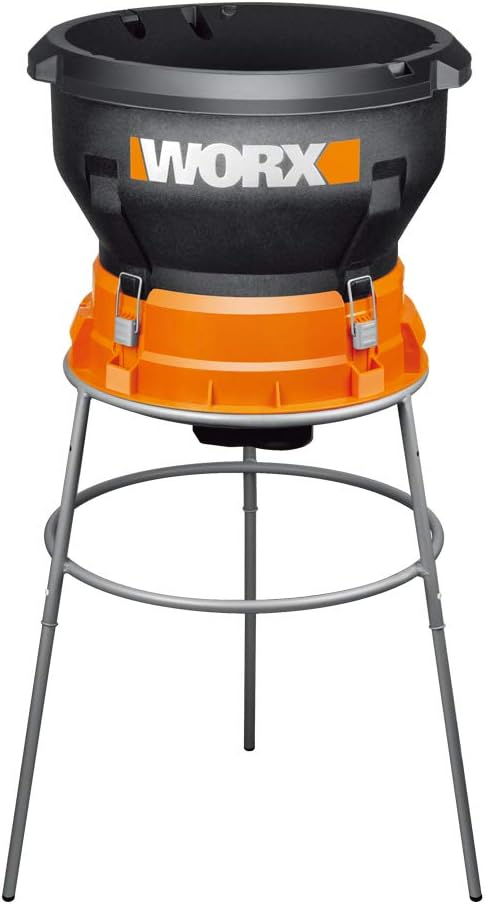
WORX WG430 13 Amp Electric Leaf Mulcher
| Motor | 13 Amp |
|---|---|
| Throughput | 53 gallons per minute |
| Mulch ratio | 11:1 |
| Cutting system | Flex-a-Line bladeless line |
The WORX WG430 is an electric leaf mulcher designed for homeowners who need to reduce large volumes of dry leaves and light yard debris quickly. It accepts leaves fed into the top funnel and shreds them with the bladeless Flex-a-Line string system, processing up to about 53 gallons per minute and reducing roughly 11 bags of leaves down to one. The unit sits over a standard bag held by the included support ring so mulch discharges directly into a receptacle for disposal or composting. Practical benefits include tool-free assembly and disassembly for seasonal storage, a dust-reducing motor cooling design, and an included supply of replacement cutting lines to simplify maintenance. Because it is a 13 amp corded electric tool it is quieter and cleaner than gas chippers and avoids blade sharpening, but it is not intended for heavy branches or thick woody material. The need for an appropriately rated outdoor extension cord and indoor storage in winter are additional considerations for regular use.
Best for: Homeowners who want a safer, low-maintenance electric solution to shrink large piles of leaves quickly and prefer a cleaner, quieter alternative to gas chippers.
Less Ideal for: Property owners who need to chip branches, thick brush, or heavy woody debris should consider a dedicated wood chipper or gas-powered shredder instead.
- High processing rate reported at up to 53 gallons of leaves per minute for fast cleanup
- 11:1 mulching ratio significantly reduces bag volume for easier disposal or composting
- Flex-a-Line bladeless system lowers blade-related hazards and includes tool-free line replacement
- Tool-free assembly and compact nesting parts for easier storage and off-season handling
- Not suitable for woody branches or heavy brush since it is a line-based leaf mulcher
- Requires a properly rated outdoor extension cord and access to an electrical outlet
Verdict: Choose the WORX WG430 if you need a fast, low-maintenance electric mulcher that turns large volumes of leaves into manageable mulch for disposal or composting.
Heywork 3-in-1 Corded Leaf Vacuum Mulcher, 450 CFM (Handheld)

| Power Source | ac |
|---|---|
| Air Flow Capacity | 450 cfm |
| Maximum Speed | 158 miles_per_hour |
| Wattage | 1800 watts |
| Noise Level | 65 db |
This Heywork handheld unit functions as a blower, vacuum, and mulcher so you can clear driveways, patios, and lawns without switching tools. It runs on mains power and the 1800 W motor produces up to 450 CFM and 158 MPH for moving dry leaves and light debris; switching between blowing and vacuuming is tool-free. The built-in mulcher reduces leaf volume roughly 15:1 and feeds debris into a 40L collection bag, which cuts the number of trips to the compost or bin. At about 3.4 pounds plus a shoulder strap and support wheels for vacuum mode, it is easy to carry and maneuver on flat surfaces. Practical limits are that it needs a power cord so reach is constrained and it is best for light-to-moderate debris rather than heavy, wet material or commercial workloads. Noise is moderate at 65 dB, and the plastic construction keeps weight down but may not be as rugged as higher-end pro units. For regular homeowner cleanup it offers a convenient, multi-function solution.
Best for: Homeowners who want a dependable, all-in-one electric tool for regular yard maintenance and seasonal leaf cleanup and prefer low-maintenance corded equipment over batteries.
Less Ideal for: Users with very large properties, commercial landscapers, or those who need to handle heavy wet debris should choose a higher-powered or gas-powered unit instead.
- Three functions in one unit: blower, vacuum, and mulcher for versatile yard cleanup.
- Strong airflow of up to 450 CFM and 158 MPH for moving dry leaves and light debris.
- Built-in mulcher with a 40L collection bag reduces leaf volume and emptying frequency.
- Lightweight handheld design with shoulder strap and support wheels improves portability and ease of use.
- Corded power limits reach and requires an extension for larger yards.
- Plastic construction may feel less durable than professional metal-bodied units.
Verdict: A reliable, lightweight corded 3-in-1 blower/vacuum/mulcher that makes routine homeowner leaf cleanup faster and less frequent.
SOYUS Electric Bladeless Leaf Mulcher & Shredder, 15A 8400 RPM

| Motor | 15 Amp, 8400 RPM |
|---|---|
| Reduction ratio | 18:1 |
| Throughput | Up to 55 gallons per minute |
| Control | 5-level adjustable dial |
The SOYUS bladeless leaf mulcher is built for fast backyard cleanup: a 15 amp motor spinning at 8400 RPM feeds leaves into a nylon cutting-line system that shreds material down with an advertised 18:1 reduction. You use the front hopper to feed wet or dry leaves and select one of five control-dial settings to match cutting aggressiveness to material. The design omits metal blades in favor of replaceable line, which simplifies maintenance and reduces the risk of large kickbacks while still producing a fine mulch suitable for composting or smaller collection bags. Practical benefits include high throughput of up to 55 gallons per minute and a compact, wheeled frame that is easy to move around the yard. Limitations are the reliance on cutting line that must be replaced over time and the lighter construction that favors routine yard debris rather than heavy branches or woody brush. For someone focused on quick, high-volume leaf shredding this machine delivers strong performance, but it is not a substitute for a heavy-duty chipper if you need to handle thick limbs.
Best for: Buyers who prioritize fast, high-volume leaf processing for routine yard cleanup and want a low-maintenance, maneuverable electric mulcher.
Less Ideal for: Those who need a machine for frequent heavy-duty chipping of branches or for commercial landscape work should choose a more robust chipper-shredder.
- Powerful 15A, 8400 RPM motor supports fast mulching throughput
- Bladeless nylon cutting-line system reduces maintenance complexity and kickback risk
- Five-level control dial lets you adjust processing for wet or dry leaves
- High 18:1 reduction ratio shrinks yard waste volume for easier disposal or composting
- Lightweight wheeled design improves mobility around the yard
- Not intended for heavy woody branches or thick brush
- Cutting line requires periodic replacement and is a consumable expense
Verdict: If you want a fast, high-throughput electric mulcher that turns large volumes of leaves into fine mulch with minimal fuss, this SOYUS bladeless model is a strong pick.
WORX Trivac WG509 3‑in‑1 Corded Leaf Blower/Vacuum/Mulcher

| Power Source | Corded Electric |
|---|---|
| Air Flow Capacity | 350 cfm |
| Maximum Speed | 210 miles_per_hour |
| Mulch Ratio | 18:1 |
The WORX WG509 Trivac combines a blower, vacuum, and mulcher in a single corded unit to simplify seasonal yard cleanup around homes. You use it in blow mode to move leaves from driveways, patios, and lawn edges, switch to vacuum to collect debris into the included bag, and engage the metal‑impeller mulcher to reduce leaf volume roughly 18:1 for easier disposal or composting. Variable speed control helps dial back airflow for delicate spots or ramp up for bigger piles, and corded power means uninterrupted runtime for medium‑sized yards. The quick mode switch and removable collection bag make transitions and emptying straightforward. Important limitations are that it is corded so you need an outlet or extension cord and the unit is best suited to hard surfaces and moderate leaf volumes rather than very large properties; heavier professional jobs may benefit from backpack or gas models. For homeowners who want a reliable, no‑battery‑worry electric tool, the WG509 offers efficient cleanup with minimal fuss.
Best for: Homeowners who prioritize reliable, continuous electric power and a single tool to handle regular leaf cleanup on driveways, patios, decks, and small to medium yards.
Less Ideal for: People with large acreage, frequent heavy debris or professional landscaping needs should consider petrol or backpack blowers built for extended heavy use.
- 3‑in‑1 design replaces separate blower, vacuum, and mulcher for simpler storage and use
- Strong airflow (350 CFM, 210 MPH) handles wet leaves and stubborn debris on hard surfaces
- Metal impeller mulches leaves to an 18:1 ratio, reducing bag changes and making composting easier
- Variable speed and a quick switch between modes let you adjust power for different tasks
- Corded power requires an outlet or extension cord which limits mobility
- Not intended for very large properties where commercial or backpack units perform better
Verdict: Buy this if you want a dependable corded 3‑in‑1 blower/vacuum/mulcher that delivers strong airflow and efficient mulching for routine home yard cleanup.
Choosing the Right Lawn Leaf Mulcher: Key Factors to Consider
Cutting Power and Shred Ratio
Cutting power determines how quickly and completely leaves are reduced. Machines with higher torque and better blade or impeller geometry create a finer mulch that settles into garden beds or breaks down faster in compost.
A finer shred ratio also reduces bag volume and hauling. Consider the typical leaf type in your yard. Thin, dry maple leaves need less force than wet oak leaves. Match motor or engine specifications to the expected leaf load to avoid underpowered units that merely move piles instead of shredding them.
Clog Resistance and Intake Design
Intake shape and debris pathway affect how often a unit jams. Wide, ramped intakes and aggressive feeding mechanisms let mixed piles and small branches pass without stalling. Look for systems designed to pull material evenly rather than concentrating on one point.
Clogging is most likely with wet, matted leaves or when users try to feed twigs and large stems. A unit that tolerates occasional woody material without stopping will save time and frustration during long cleanups.
Airflow, Collection, and Discharge Options
Efficient airflow moves shredded material into a bag, onto a lawn, or back into a mulch catcher. Machines that separate airflow pathways from the cutting chamber tend to discharge more consistently and require less clearing.
Decide whether you want a rear collection bag, side discharge for mulch application, or a vacuum mode that deposits directly into a receptacle. The best choice depends on whether you plan to compost on-site, use mulch in beds, or simply reduce volume for disposal.
Handling, Weight, and Noise
Weight and wheel design determine how easy the mulcher is to position around landscaping features. Lighter units are easier to lift into sheds but may bounce or clog more frequently. Heavier machines can be steadier during feeding but are harder to store.
Noise level matters for neighborhood use and longer sessions. Electric models are generally quieter and simpler to maintain, while gas models deliver more power at the cost of extra noise and upkeep. Consider storage access and how often you will move the machine across uneven ground.
Durability and Ease of Maintenance
Durable materials in blades, impellers, and housings reduce long-term ownership costs. Inspect how easily cutting elements can be accessed and sharpened or replaced and whether wear parts are standardized.
Simple maintenance routines like cleaning the intake, clearing debris, and checking fasteners should be possible without specialized tools. Units with clear maintenance instructions and readily available parts extend useful life in the garden environment.
Best Use Cases by Yard Size and Tree Type
Different yards produce different leaf loads. Small urban lawns with ornamental trees usually benefit from compact, lower-powered mulchers that are easy to store and quick to operate. Larger properties with mature shade trees need higher-capacity units that handle volume and thicker leaves without repetitive feeding.
Medium yards with mixed species often require a balance: enough power to shred heavier leaves yet portable enough to navigate beds and driveways. Match machine capacity to peak season leaf fall rather than average daily shedding to avoid overwhelm.
- Small yards: choose lighter, quieter units with rear collection bags
- Medium yards: prioritize clog resistance and moderate cutting power
- Large yards: select higher torque machines or gas-powered options that sustain shredding
Electric Versus Gas: Tradeoffs for Gardeners
Electric mulchers are quieter, lower maintenance, and ideal near houses or in noise-sensitive neighborhoods. Corded electrics have unlimited runtime but need extension planning. Battery-powered units add mobility but check battery runtime against projected cleanup sessions.
Gas units provide stronger sustained power for heavy loads and are less limited by runtime, but they require fuel, more maintenance, and produce more noise. Consider storage and winterization if you choose a gas option, and weigh that against the occasional need to handle thick, woody material.
- Corded electric: continuous power, quieter, dependent on cord management
- Battery electric: mobile, quieter, limited runtime per charge
- Gas: sustained power, higher maintenance, better for heavy leaf loads
Mulching Into Compost or Beds
If you plan to reuse shredded leaves as mulch or compost, aim for a unit that produces a consistently fine shred. Finer particles settle into mulch layers and decompose faster in compost piles. Some mulchers are better at turning leaves into a usable soil amendment without additional processing.
Also consider whether the machine can discharge directly into a wheelbarrow or bag for transport to composting areas. Minimizing handling steps keeps the process efficient and encourages reuse of shredded material.
- Finer shred speeds composting and reduces bag counts
- Direct discharge options ease transport to compost piles
Storage, Portability, and Winter Care
Think about where the mulcher will live between seasons. Compact foldable handles or detachable bags reduce storage footprint. Protecting cutting elements from moisture and rodents during winter extends life.
If you move the machine between locations, check wheel quality and handle ergonomics. Simple winterization steps such as draining fuel or storing batteries at recommended charge levels prevent damage and ensure readiness in spring.
- Foldable or compact designs save shed space
- Follow manufacturer guidance for winter storage of power units
How We Chose the Best Lawn Leaf Mulcher
We focused on real-world gardening needs when selecting Lawn Leaf Mulchers for this list. Key evaluation dimensions were cutting power and shredding ratio to judge how thoroughly leaves are reduced, clog resistance and intake design to avoid stops in heavy, wet piles, collection and discharge options that affect cleanup time, and handling factors such as weight, maneuverability, and noise for routine use in a typical yard. We also considered durability of key components like impellers or blades and the ease of maintenance because long-term reliability matters more than initial punch. Safety features and clear instructions were required for inclusion. We excluded specialty commercial units that are impractical for residential lawns and very small hand tools that cannot process full yard loads. Final picks represent machines that balance shredding effectiveness with gardener-friendly controls, maintenance needs, and realistic yard use cases.
FAQ
Can a lawn leaf mulcher handle small branches and sticks?
Most residential mulchers handle small, flexible twigs but struggle with larger, rigid branches. It often depends on the machine's cutting system and torque. If you expect lots of woody debris, choose a model rated for occasional small branches or plan to remove larger stems before feeding.
Is electric power sufficient for a medium-sized yard with oaks and maples?
Electric models can be sufficient if they have strong motors and designs that resist clogging. For heavy, wet oak leaves or continuous large volumes, a higher-capacity electric or gas unit may be more efficient. Runtime and intake design are key considerations for medium yards.
How fine should shredded leaves be for composting?
Aim for a uniform shred where most pieces are a few centimeters or smaller. Finer material compacts less and mixes with green waste more evenly, accelerating decomposition. If your mulcher leaves large fragments, consider a secondary pass or using a chipper for woody bits.
Are mulched leaves safe to use around plant stems and bulbs?
Mulched leaves are generally safe and beneficial, providing organic matter and moisture retention. Avoid piling mulch directly against woody stems or bulb crowns to prevent rot; keep a small air gap around plant bases. Monitor mulch depth over time and refresh as it breaks down.
How often should I clean and maintain a leaf mulcher?
Clean debris and inspect blades or impellers after each heavy use to prevent buildup. Perform deeper maintenance seasonally, including checking fasteners, sharpening or replacing cutting elements, and following motor or engine service intervals. Regular attention reduces risk of clogs and extends life.
Final Verdict
Prioritize the conditions you face most often when choosing a lawn leaf mulcher. Match cutting power and clog resistance to your dominant leaf types and peak seasonal volume. Consider collection and discharge options if you plan to compost or mulch beds, and weigh portability, noise, and maintenance against raw power needs. Accept tradeoffs: quieter, lighter electrics are easier to use and store while more powerful units handle larger jobs with fewer passes. Choose the machine that aligns with how often and how intensively you will manage leaves so cleanup becomes faster and the shredded material is actually useful in your garden.
