

Note: This article contains affiliate links. If you click on these links and make a purchase, I may earn a small commission at no extra cost to you. This helps support my research and content. Read my full affiliate disclosure here.
Mulch placed beneath trees plays a different role than mulch in beds or vegetable gardens. Under trees the goal is to conserve soil moisture, moderate temperature swings, suppress competing weeds, and protect shallow roots from damage. Choosing the right mulch for under trees affects the long-term health and stability of your landscape. This guide covers six shortlisted mulch options suited for under trees and explains how we evaluated them across durability, root safety, and moisture performance. Read on to understand which features matter for different tree sizes, soil types, and maintenance preferences before you inspect the product blocks below.
Top Picks at a Glance
| Best Overall The best all-around choice for most situations | MUGVELL Coconut Fiber Mulch Rings (6 pack, 11.8 inch) |  |
| Best Quality Built to a higher standard if you want something more solid | Rocky Mountain 24-Inch Recycled Rubber Tree Mulch Ring (Pack of 4) |  |
| Best Budget The cheapest option that still gets the job done reliably | SYWHXY 16-Pack Non-Woven Tree Mulch Rings, 16.5-inch |  |
| Highest Rated A top-rated pick with lots of positive feedback | Home And Country USA Red Triple Shredded Hardwood Mulch, 2 cu ft |  |
| Most Popular A crowd favorite that many people choose with confidence | ZeeDix 24-inch Coconut Fiber Tree Ring Mulch Mat, 6 Pack |  |
| Best Seller A high-volume bestseller chosen again and again | Back to the Roots Organic Coconut Husk Mulch Block (Expands to 2 cu ft) |  |
MUGVELL Coconut Fiber Mulch Rings (6 pack, 11.8 inch)

| Material | 100% coconut fiber (coir) |
|---|---|
| Pack quantity | 6 pcs |
| Diameter | 11.8 inches |
| Biodegradable | Yes |
These coconut fiber mulch rings are simple, biodegradable discs meant to sit around tree trunks, shrubs, or potted plants to conserve moisture and reduce weeds. Made from tightly woven coir, they form a breathable layer that helps regulate soil temperature in summer and slows evaporation so watering frequency can be reduced. The rings also act as a light barrier against surface weeds and a deterrent to pets digging near the root zone. Installation is straightforward: lay the ring around the plant and trim with scissors to fit irregular beds or planters. Because they are organic, the rings will gradually break down and add organic matter to the soil, which is good for long-term soil health but means they are not a permanent barrier. The 11.8 inch diameter works best for small trees, young shrubs, and container plantings rather than large trunks. If you want a low-maintenance, natural-looking alternative to plastic landscape fabric or loose bark mulch, these provide effective seasonal moisture control and tidy edges for beds and planters.
Best for: Gardeners who want a natural, low‑effort way to conserve moisture and tidy the base of small trees, shrubs, or container plants while improving soil health over time.
Less Ideal for: Homeowners seeking a long‑lasting, permanent mulch barrier for large trees or heavy foot-traffic areas should consider more durable mulches or hardscape solutions.
- 100% natural coconut coir that is biodegradable and improves soil as it decomposes
- Dense woven structure helps retain summer moisture and regulate soil temperature
- Breathable material allows air, water, and nutrients to pass to roots
- Easy to install and trim to fit irregular shapes or planters
- Provides light weed suppression and deters pets from digging around plants
- Will decompose over time so it requires periodic replacement
- 11.8 inch diameter is too small for large tree trunks or wide root collars
Verdict: Choose these biodegradable coir rings if you want an easy, natural mulch that conserves moisture and keeps small tree bases neat while enriching soil as it breaks down.
Rocky Mountain 24-Inch Recycled Rubber Tree Mulch Ring (Pack of 4)
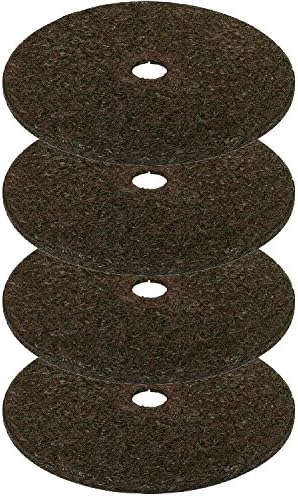
| Material | Recycled heavy duty rubber |
|---|---|
| Pack Quantity | Pack of 4 |
| Diameter | 24-Inch |
| Mower Safe | Yes |
These recycled rubber tree mulch rings create a low-maintenance weed barrier around trunks while blending into planting beds. They are intended to lay flat around a tree base and stay put without landscape staples, and the heavy-duty rubber tolerates being mowed over so it will not get pulled into a lawnmower. The textured, natural-looking surface gives a neat, uniform edge around trees and the porous design allows water to seep through evenly to roots. Installation is simple and quick compared with loose mulch or fabric that needs anchoring. Because they are solid rubber they do not decompose, so you avoid annual replacement and the rings provide durable protection against mower and trimmer damage. Limitations are that the fixed ring shape restricts use to trees of suitable trunk size and prevents easy access for deep soil work or fertilizing without removing the ring, and the product does not offer the insulating or moisture-retention benefits of thick organic mulch.
Best for: Buyers who want a durable, low-maintenance tree surround that holds up to mowing and keeps weeds down with minimal upkeep.
Less Ideal for: Gardeners who prefer organic mulch for soil improvement or who need flexible covers for irregularly shaped plantings.
- Made from heavy-duty recycled rubber for long-lasting, non-degrading protection
- Mower-safe design so it will not get sucked into a mower like lightweight mats
- Porous construction permits even water seepage to roots
- No landscape staples required for quick, tool-free installation
- Fixed ring shape limits fit to certain trunk sizes and may require removal for soil work
- Does not provide the organic benefits of decomposing mulch such as soil enrichment
Verdict: Choose these recycled rubber rings if you want a durable, mower-safe, low-maintenance tree weed barrier that stays in place and lets water reach the roots.
SYWHXY 16-Pack Non-Woven Tree Mulch Rings, 16.5-inch

| Package quantity | 16 pieces |
|---|---|
| Diameter | 16.5 inches |
| Material | Degradable non-woven |
| Includes | Staple stakes |
These non-woven tree mulch rings are an economical option for keeping weeds away from the base of young trees and garden plants. Each 16.5-inch mat slips around trunks or pots, can be trimmed to fit, and is held down with included staples to resist wind. The degradable fabric is breathable so it does not trap moisture against stems while still reducing surface weed growth and limiting mower damage. Practical for staking around multiple small trees or for use in planting beds, the lightweight mats are easy to install and replace seasonally. Limitations are that the 16.5-inch diameter is best suited to small trunks and may require trimming or a larger alternative for bigger trees, and the thin non-woven material is not a long-term permanent barrier where heavy foot traffic or aggressive perennial weeds are present. For routine yard maintenance and seasonal weed control, these rings offer a simple, low-cost way to protect roots and cut down edging work.
Best for: Budget-minded gardeners who need a low-cost seasonal solution to suppress weeds and protect small trees or potted plants without heavy installation effort.
Less Ideal for: Owners of large established trees or landscapes with persistent perennial weeds who need long-lasting, heavy-duty barriers.
- Comes in a 16-piece pack so you can cover multiple small trees or beds at once
- Degradable non-woven fabric reduces weed growth while remaining breathable
- Includes stakes to secure mats and reduce wind displacement
- Easy to trim and install around trunks or potted plants
- 16.5-inch diameter is small for larger trunks and may require trimming or replacement
- Thin material is not a durable permanent barrier against heavy traffic or deep-rooted weeds
Verdict: A cost-effective seasonal mulch ring pack that quickly suppresses weeds and protects small tree trunks with minimal effort.
Home And Country USA Red Triple Shredded Hardwood Mulch, 2 cu ft

| Item Weight | 4.4 pounds |
|---|---|
| Manufacturer | Home and Country USA |
| Item model number | HCM |
This triple shredded hardwood mulch is a straightforward, no-frills option for gardeners who want dependable winter protection and curb appeal. It is used by spreading a 2 to 3 inch layer around trees, shrubs, and flower beds to insulate roots, slow soil freezing and thawing, and reduce moisture loss during cold months. The product is described as non-clumping with long-lasting color and good coverage, which makes it easy to rake into an even layer that stays put through wind and light precipitation. Because it is made from 100 percent natural, USA-sourced materials it will gradually break down and add organic matter to the soil over time. Practical limitations are that color will fade with sun and weather exposure and organic mulches need annual topping to maintain depth and weed control; also the bagged format requires manual handling for larger areas. For gardeners prioritizing reliable winter insulation and tidy beds, this mulch performs as expected without special maintenance.
Best for: Homeowners who want a reliable, low-maintenance winter mulch to protect roots, reduce watering needs, and keep beds looking tidy without specialty products.
Less Ideal for: People managing very large properties who need bulk delivery or those who want a permanent inorganic groundcover alternative.
- Made from 100% natural, USA-sourced hardwood for consistent composition
- Triple shredded texture spreads smoothly and resists clumping for an even layer
- Helps retain soil moisture and insulates roots against winter temperature swings
- Provides weed suppression by forming a light-blocking surface
- Breaks down over time to contribute organic matter to the soil
- Color will gradually fade with sun and weather exposure
- Requires annual refreshing as organic mulch decomposes
- Bagged 2 cu ft format can be labor intensive for large landscapes
Verdict: A dependable, USA-grown hardwood mulch that reliably insulates roots and tidies beds for winter-focused gardeners.
ZeeDix 24-inch Coconut Fiber Tree Ring Mulch Mat, 6 Pack

| Package quantity | 6 pack |
|---|---|
| Diameter | 24 inches |
| Material | Coconut coir |
These coconut fiber tree rings are a simple, natural ground cover for trees and larger potted plants. Made from coconut coir, each 24-inch ring sits around the trunk to block weeds, reduce soil splash when watering, and help the root zone retain moisture and moderate soil temperature. They arrive ready to place and can be trimmed for a closer fit around trunks or pots. The rings are breathable so water drains through while still holding moisture near roots, and the natural fiber gives a tidy, low-profile look under trees or on patios. Because they are an organic material they will slowly break down outdoors, which is useful for adding organic matter but means they will need replacement over time. They do not physically anchor to the ground, so in windy locations or where animals dig they may shift and will not replace a rigid tree guard. For gardeners who want a low-maintenance, natural-looking mulch solution, these rings simplify weed control and improve the appearance around trunks.
Best for: Gardeners who want a natural, low‑maintenance ground cover to tidy the base of trees and retain soil moisture without installing rigid guards.
Less Ideal for: Those needing a long-term, permanent barrier against pests or erosion or anyone who requires a heavy anchored solution for high-wind or high-traffic areas.
- 100% coconut coir provides natural, breathable mulch that retains moisture
- Pre-cut ring shape makes installation quick and easy around trunks or pots
- Improves appearance and reduces soil splash and surface weeds
- Can be trimmed to fit different trunk sizes or pot diameters
- Organic coir will decompose over time and require periodic replacement
- Not anchored or heavy enough to resist digging or strong winds
Verdict: Choose these coconut coir rings when you want a natural, easy-to-install mulch that suppresses weeds and keeps the area around trees neat while improving moisture retention.
Back to the Roots Organic Coconut Husk Mulch Block (Expands to 2 cu ft)

| Item Highlight | Compressed 10 lb coco husk mulch expands to 58 qt; peat-free; OMRI Listed |
|---|---|
| Item Type Name | Mulch |
| Brand Name | Back to the Roots |
| Volume | 2 cubic feet |
This compressed coconut husk mulch block arrives as a compact 10 lb brick that expands to roughly 2 cubic feet after adding water, making it easy to store and handle compared with bulky bags. It is OMRI listed and peat free, so gardeners can use it in vegetable beds, flower borders, and raised planters without adding peat-based material. The coarse husk chips improve surface moisture retention and aeration on the soil, which helps reduce watering frequency and supports root health. Setup is simple: break the block apart, soak, let it fluff, then spread a shallow layer around plants. Because it is lightweight when dry and made from an upcycled byproduct of coconut processing, it is a sustainable alternative to some other mulches. Limitations to note are that coconut husk mulch can float or wash away on steep slopes and may need occasional top-ups as it slowly breaks down, and its coarser texture may not form as uniform a surface as shredded bark for ornamental beds.
Best for: Gardeners who want a compact, easy-to-store organic mulch that improves moisture retention and soil aeration in vegetable beds and raised planters while prioritizing sustainable materials.
Less Ideal for: People needing a heavy, erosion-resistant mulch for steep slopes or those who want a very fine, decorative mulch finish for formal ornamental beds.
- Expands from a compact 10 lb block to about 2 cubic feet, saving storage space
- OMRI listed and peat free for organic gardening use
- Improves moisture retention and soil aeration when applied to beds and raised planters
- Made from upcycled coconut husk, offering a more sustainable option than peat
- Coarse chips can be prone to washing away on steep or exposed slopes
- Breaks down over time and requires periodic replenishing in high-traffic beds
Verdict: A space-saving, OMRI-listed coconut husk mulch block that delivers sustainable moisture retention and aeration for productive garden beds.
Choosing the Right Mulch for Under Trees: Key Factors to Consider
Moisture Retention and Drainage
Mulch under trees should conserve soil moisture while still allowing rainwater and irrigation to reach roots. In dry summers a thicker layer that holds water can reduce drought stress, but in poorly drained soils a mulch that compacts or forms a crust can worsen root oxygen levels.
Think about seasonal rainfall and how often you water. A mulch that balances water-holding capacity with permeability helps maintain steady soil moisture without creating anaerobic pockets that harm roots.
Root Safety and Soil Aeration
Tree roots, especially near the surface, need oxygen and space to grow. Mulches that compact heavily or are applied too deep can suffocate roots and encourage shallow rooting patterns that destabilize trees during storms.
Choose materials that maintain a loose structure and avoid piling mulch up against the trunk. Allowing a small clear zone at the base of the trunk and keeping mulch depth moderate preserves aeration and reduces disease risk.
Decomposition Rate and Nutrient Effects
All organic mulches break down over time and contribute carbon and nutrients to the soil. Fast-decomposing materials improve organic matter quickly but require more frequent replenishment and can temporarily tie up soil nitrogen as microbes consume carbon.
If you want long-lasting coverage with minimal top-ups, choose slower-decomposing mulches. For nutrient-poor soils, faster breakdown can be an advantage, provided you monitor for signs of nitrogen deficiency and amend if necessary.
Weed Suppression and Surface Stability
Mulch reduces weed pressure by blocking light and creating an unfavorable seedbed. Some mulches also interlock or mat and suppress weeds more effectively, while others leave gaps that let weeds establish.
Consider how much hand weeding you are willing to do and whether you need mulch that resists washout on slopes. A more stable mulch reduces maintenance around tree bases and protects feeder roots from disturbance.
Pest and Disease Considerations
Certain mulches can harbor pests like voles or slugs or encourage fungal growth if they stay overly wet. Others are less attractive to nuisance wildlife and shed moisture efficiently.
Select mulches that do not create long-lasting damp conditions against the trunk, and avoid materials known to invite pests in your region. Proper installation and routine inspection reduce most pest and disease risks.
How Mulch Depth Affects Tree Health
Mulch depth is one of the most important practical decisions you make when applying mulch under trees. A shallow layer of about 2 to 3 inches provides moisture conservation and weed control without smothering roots. Deeper layers over 4 inches can restrict oxygen, encourage surface root growth, and trap moisture against the trunk if not managed properly.
- Keep mulch away from direct contact with the trunk to prevent rot and rodent damage.
- Spread mulch evenly and avoid creating a volcano shape that funnels water toward the trunk.
- On slopes, use a thinner layer or stabilize mulch with a grounding fabric to limit washout.
Mulch Options by Tree Size and Root Zone
Young trees with developing root systems are more sensitive to mulch depth and composition than established trees. For newly planted trees choose mulches that break down moderately and promote a healthy microbial environment without excessive nitrogen drawdown. For large, established trees you can prioritize long-lasting mulches that reduce maintenance and protect a wider root zone.
- Small trees: finer-textured organic mulches applied lightly to encourage soil warming and microbial activity.
- Mature trees: chunkier or longer-lasting mulches that cover a broad area and resist compaction.
- Consider extending mulch to the dripline for canopy-fed moisture benefits while monitoring soil moisture gradients.
Seasonal Maintenance and Replenishment
Mulch is not a one-time treatment. Inspect mulch each spring and fall for compaction, mold, or excessive breakdown. Rake lightly to restore structure, top up thin areas, and remove material that touches the trunk. Seasonal checks also let you spot pest activity early and adjust depth as the tree and surrounding plants change.
- Top up organic mulch annually or as needed based on decomposition.
- Loosen compacted mulch with a rake to restore aeration and permeability.
- Replace heavily matted or waterlogged mulch to prevent root suffocation.
Aesthetic and Landscape Integration
Mulch contributes to the overall look of a landscape as well as functional performance. Wood chips and bark offer a formal appearance for planted beds, while shredded leaf mulch and compost provide a more natural look and rapid soil improvement. Choose a color and texture that complements surrounding plantings, but avoid prioritizing appearance over soil health.
- Match mulch texture to the setting: finer mulches near delicate understory plants and chunkier materials in formal beds.
- Blend mulch types if you want both quick soil-building and long-term coverage.
- Consider the visual contrast between mulch and lawn or hardscape for clean edges.
Safe Practices Around Trunks and Root Flares
Avoid piling mulch directly against tree trunks, which creates a moist environment that invites decay organisms and pests. Leave a small mulch-free zone around the base so you can see the trunk flare and monitor for issues. When inspecting or pruning trees, remove and then replace mulch nearby rather than burying wounds under material.
- Keep at least a few inches of trunk flare exposed at the base.
- Do not bury graft unions or root crowns with mulch.
- When mulching mature trees, work outward from the trunk to the dripline to protect as much root area as practical.
How We Chose the Best Mulch for Under Trees
Our selections focused on materials and formulations gardeners commonly use directly under tree canopies and on the qualities that most influence tree health. We prioritized mulches that conserve moisture without smothering roots, resist compaction, and break down at predictable rates so soil biology is supported rather than disrupted. Durability in place, susceptibility to fungus or pests, and the potential for volatile nitrogen tie-up were key exclusion factors. We excluded materials prone to creating an impermeable crust, mulches that leach harmful chemicals, and options that require constant reapplication. Evaluation criteria used to shortlist products included moisture retention and permeability, decomposition rate and nutrient release, root safety and aeration, weed suppression and coverage longevity, and ease of installation and maintenance. We also considered visual appearance for landscaped settings and how each material performs under shade and in common soil types. These criteria align with the scoring labels used on each product card.
FAQ
How deep should mulch be under trees?
Generally apply 2 to 3 inches of mulch under trees. This depth conserves moisture and suppresses weeds without restricting oxygen to shallow roots. Thicker layers can be used selectively, but avoid piling mulch against the trunk.
Can I use grass clippings as mulch under trees?
Fresh grass clippings can mat and create an impermeable layer, so use them sparingly and mix with drier, bulkier material. Dried clippings or thin layers worked into other mulch types are less likely to compact or draw nitrogen away from the soil.
Will mulch attract rodents or pests near tree trunks?
Some mulch types, particularly coarse woody materials and heavy leaf litter, can provide habitat for rodents and insects. Proper depth, regular inspection, and keeping mulch pulled away from trunks reduce pest sheltering. If pests are a known issue, choose less hospitable materials and monitor closely.
How often should I replace or replenish mulch under trees?
Replenish organic mulches annually or when you notice significant thinning or compaction. Slow-decomposing materials may need topping every two to three years. Seasonal checks in spring and fall let you maintain an effective depth without overapplication.
Is dyed mulch safe under trees?
Dyed mulches use colorants to achieve a uniform appearance. Many are safe if fully composted, but check that the material is well-aged and free of chemical residues. When in doubt, choose natural, untreated mulches to avoid potential soil and root concerns.
Final Verdict
Selecting mulch for under trees requires balancing moisture management, root aeration, and long-term soil health. Prioritize materials that retain water without compacting, decompose at a pace that matches your maintenance schedule, and do not contact the trunk. Regular inspection and moderate application depth keep trees healthy while minimizing pests and disease. Focus on the factors most important for your site-drainage, tree age, and maintenance frequency-and use those priorities to pick the best mulch type for under your trees.
