

Note: This article contains affiliate links. If you click on these links and make a purchase, I may earn a small commission at no extra cost to you. This helps support my research and content. Read my full affiliate disclosure here.
Mulching around trees is one of the simplest, most effective things you can do to protect roots, conserve water, and improve soil biology. Choosing the right organic mulch for trees affects how well moisture is retained, how nutrients are released, and how the trunk and root collar stay ventilated over seasons. This guide shortlists six top organic mulches suited for different tree sizes and site conditions and explains the evaluation factors we used. Read on to compare materials by longevity, nutrient contribution, and maintenance needs before you pick a mulch for your trees.
Top Picks at a Glance
| Best Overall The best all-around choice for most situations | Plantonix Coco Chips Mulch Brick (10 lb) – Compressed Coconut Husk Chips |  |
| Best Quality Built to a higher standard if you want something more solid | Mid-Atlantic Pine Straw Mulch — Carolina Longleaf Pine Straw (Small Box) |  |
| Best Value The sweet spot between price and what you get | PlantBest Coco Mulch Compressed Block (expands to 2.5 cu ft) |  |
| Highest Rated A top-rated pick with lots of positive feedback | Home And Country USA Triple Shredded Hardwood Mulch, 2 cu ft |  |
| Most Popular A crowd favorite that many people choose with confidence | Back to the Roots Organic Mulch, 1 Cubic Foot |  |
| Best Seller A high-volume bestseller chosen again and again | Legigo Coconut Fiber Tree Mulch Ring, 24 inch (6 pack) |  |
Plantonix Coco Chips Mulch Brick (10 lb) – Compressed Coconut Husk Chips

| Unit Count | 160 Ounce |
|---|---|
| Item Type Name | Soil and Soil Amendments |
| Brand Name | plantonix |
| Volume | 15 gallons |
Plantonix Coco Chips arrive as a compact 10 pound brick that hydrates and expands into lightweight coconut husk chips for use as mulch, soil amendment, or terrarium bedding. You soak or wet the block to break it apart, then spread the chips over garden beds, containers, orchid pots, or raised beds to reduce evaporation and moderate soil temperature. The product is pre-screened, washed, and aged to remove dirt and rocks, and the low electrical conductivity and near-neutral pH make it safe to mix with potting mixes. Practical benefits include improved drainage and aeration compared with heavy wood mulches, long-lasting moisture retention that can reduce watering frequency, and an attractive tropical look. Important limitations are that you must rehydrate and break up the compressed brick before use which adds prep time, and coco chips do not supply nutrients so you will still need to fertilize regularly. Also note the safety warning about dust and keeping it away from children and pets during handling.
Best for: Buyers who prioritize reliable, consistent mulch performance and want a sustainable, low-maintenance material that retains moisture and improves soil structure for beds and containers.
Less Ideal for: Gardeners who need a nutrient-rich soil amendment or who prefer a no-prep, ready-to-spread loose mulch should consider alternatives.
- Made from 100% recycled coconut husks, a renewable alternative to peat and wood mulches
- Pre-screened and washed to remove dirt, rocks, and excess fiber
- Excellent at retaining moisture while maintaining airflow and drainage
- Lightweight and long-lasting so it does not compact like some organic mulches
- Requires soaking and manual breakup of the compressed brick before use
- Does not provide plant nutrients and should be used with a fertilizer plan
Verdict: A dependable, renewable mulch solution that holds moisture and improves aeration without compacting, ideal for gardeners who want consistent performance.
Mid-Atlantic Pine Straw Mulch — Carolina Longleaf Pine Straw (Small Box)

| Brand Name | Mid-Atlantic Pine Straw Mulch |
|---|---|
| Volume | 1728 cubic inches |
| Item Weight | 5 pounds |
This Mid-Atlantic longleaf pine straw is a lightweight, OMRI-listed organic mulch intended for use around trees, beds, and landscape plantings. It arrives loose in a small box and is easy to spread by hand or with a rake to build a 2–3 inch mulch layer that suppresses weeds, conserves soil moisture, and insulates root zones. Because the product is inspected and sold free of weed seeds and hardwood debris, it is a practical choice when you want a clean, low-maintenance mulch that slowly decomposes to add organic matter. The straw’s natural structure resists compaction better than fine woodmulch so water infiltration remains good while erosion is reduced on slopes. Limitations to note are the need to replenish straw periodically as it decomposes and the potential for wind-blown needles in exposed sites unless anchored with plants or heavier top layers. Safety guidance advises avoiding inhalation of dust during handling.
Best for: Buyers who prioritize organic, high-performing mulch for tree beds and landscapes and want a clean product that is quick to install and supports soil health.
Less Ideal for: Those who need a permanent, no-maintenance groundcover or who have extremely windy, exposed sites where loose straw cannot be secured.
- OMRI listed and USDA inspection compliant so it meets organic standards
- Clean, longleaf straw with low weed seed and debris content
- Lightweight and easy to spread by hand or with a rake
- Slow decomposition provides longer-lasting cover and adds organic matter over time
- Loose straw can blow in very exposed locations without anchoring
- Not as long-lasting as stone or synthetic groundcovers so periodic topping is required
Verdict: A clean, OMRI-listed longleaf pine straw that delivers easy-to-spread, performance-focused organic mulch for tree beds and landscapes.
PlantBest Coco Mulch Compressed Block (expands to 2.5 cu ft)

| Item Form | Block |
|---|---|
| Coverage | 2.5 cubic feet |
| Specific Uses For Product | gardening and landscaping |
| Mixing Ratio | 6 fold in 5 minutes |
| Target Species | plants |
This compressed coco mulch block is designed to expand quickly with water into a lightweight, easy-to-spread mulch for flower beds and borders. One 9.1 lb block soaks up water and expands to roughly 2.5 cubic feet, making it simple to store and handle compared with bulky bags. The coconut fibers form a cohesive layer that helps retain soil moisture, reduce watering frequency, and suppress weed growth while resisting mild washout on slopes. It is peat-free and made from renewable coconut coir, so it avoids dyes and chemicals and can last through up to two seasons in typical garden use. Mixing and expansion are fast using the provided water ratio, and the material is useful around plants, trees, and walkways. Limitations are that coverage claims assume a 1.5-inch depth so you may need more than one block for larger beds, and it will gradually decompose over time so expect to top up after a season or two.
Best for: Gardeners who want an easy-to-store, peat-free mulch for flower beds and borders that conserves water and reduces weed pressure without heavy bags.
Less Ideal for: People needing permanent, decorative bark that lasts many years or those covering very large beds where buying in bulk loose mulch is more economical.
- Expands with water to a usable mulch, reducing storage bulk and handling weight
- Made from renewable coconut coir with no dyes or chemicals
- Helps retain soil moisture and can reduce how often you need to water
- Fibrous structure suppresses weeds and resists minor erosion on slopes
- Coverage is calculated at a 1.5-inch depth so larger beds may require multiple blocks
- Will break down over time and typically needs replenishing after one to two seasons
Verdict: A compact, peat-free coco mulch that expands with water to give flower beds moisture-retaining, weed-suppressing coverage with easy storage and handling.
Home And Country USA Triple Shredded Hardwood Mulch, 2 cu ft
| Manufacturer | Home and Country USA |
|---|---|
| Item model number | HCM |
| ASIN | B0CVM9VW66 |
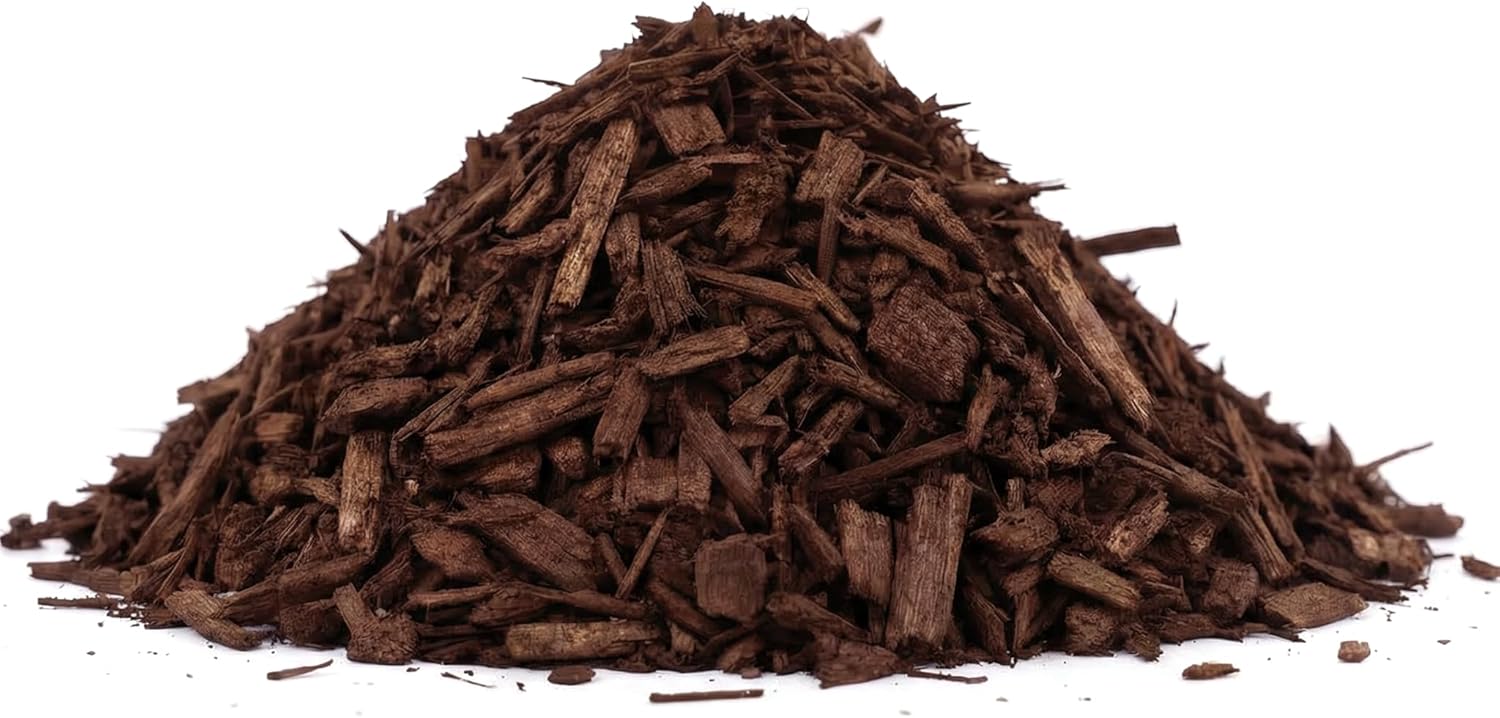
This triple-shredded hardwood mulch is a straightforward organic ground cover intended for garden beds, borders, and around shrubs and fruit plants. It is typically spread in a 2 to 3 inch layer to suppress weeds, reduce evaporation, and help regulate soil temperature. The product emphasizes long-lasting color and gradual decomposition that returns organic matter to the soil, which supports root health over time. Practical benefits for blueberry growers include better moisture retention and reduced weed pressure, both important for shallow-rooted berry bushes. Because it is hardwood and triple shredded, it provides good coverage without compacting heavily, yet still allows water and air to reach roots. Limits to expect are the usual ones with organic mulch: it will slowly break down and require annual top-ups, and hardwood mulches can temporarily immobilize nitrogen if incorporated into soil before fully decomposed, so monitor plant vigor and supplement with nitrogen if needed. For gardeners prioritizing a natural, reliable soil cover, this mulch performs the core tasks well.
Best for: Gardeners who want a dependable, natural mulch to maintain consistent soil moisture and reduce weed upkeep for berry beds and ornamental plantings.
Less Ideal for: Those who need a permanent inorganic groundcover or want a mulch that never needs replenishing should look at nonorganic alternatives.
- 100% natural organic hardwood that adds organic matter as it decomposes
- Triple-shredded texture gives even coverage without compacting
- Designed to retain soil moisture and reduce evaporation
- Helps suppress weeds by creating a physical barrier
- Requires periodic replenishing as it breaks down over a season or year
- May temporarily tie up soil nitrogen during decomposition if mixed into planting beds
Verdict: A reliable, natural hardwood mulch that helps blueberry beds retain moisture and suppress weeds while gradually improving soil health.
Back to the Roots Organic Mulch, 1 Cubic Foot

| Brand Name | Back to the Roots |
|---|---|
| Item Highlight | Premium organic garden mulch; peat-free; 25.7 quart bag |
| Unit Count | 16 Ounce |
| Volume | 23 cubic centimeters |
This organic mulch from Back to the Roots is a peat-free, upcycled plant-matter blend intended for beds, containers, and around shrubs and trees. It includes dolomitic limestone to help balance pH, yucca extract to improve moisture control, and gypsum to aid water absorption, so it both conserves moisture around root zones and contributes modest nutrients. Typical use is spreading a 2–3 inch layer around bushes, avoiding direct trunk contact, or mixing into the topsoil when planting. Its organic base and added plant food make it a good choice for supporting healthy growth and reducing watering frequency. Limitations to keep in mind are the bag size and volume relative to larger beds and that it is formulated as a general mulch rather than a heavy-duty long-lasting bark product, so it may break down faster and need replenishing more often.
Best for: Gardeners who want an eco-conscious, peat-free mulch that improves moisture retention and supports plant health around bushes and in raised beds.
Less Ideal for: People looking for a coarse, long-lasting decorative bark mulch or a single large bag solution for extensive shrub beds.
- Peat-free organic blend made from upcycled plant matter and wood fines
- Contains yucca extract for improved moisture retention and gypsum for better water absorption
- Includes dolomitic limestone to help adjust and stabilize soil pH
- Formulated with all-purpose plant food to support growth of vegetables, herbs, and shrubs
- Bag volume is relatively small for large or multiple bush beds so more bags may be needed
- Breaks down faster than coarse bark mulches and will require periodic replenishment
Verdict: Choose this peat-free organic mulch when you want an eco-friendly, moisture-saving soil cover that also supplies mild nutrients to bushes and raised beds.
Legigo Coconut Fiber Tree Mulch Ring, 24 inch (6 pack)
| Material | Coconut Fiber |
|---|---|
| Diameter | 24 inch |
| Thickness | 0.28 inches |
| Quantity | 6 pack |
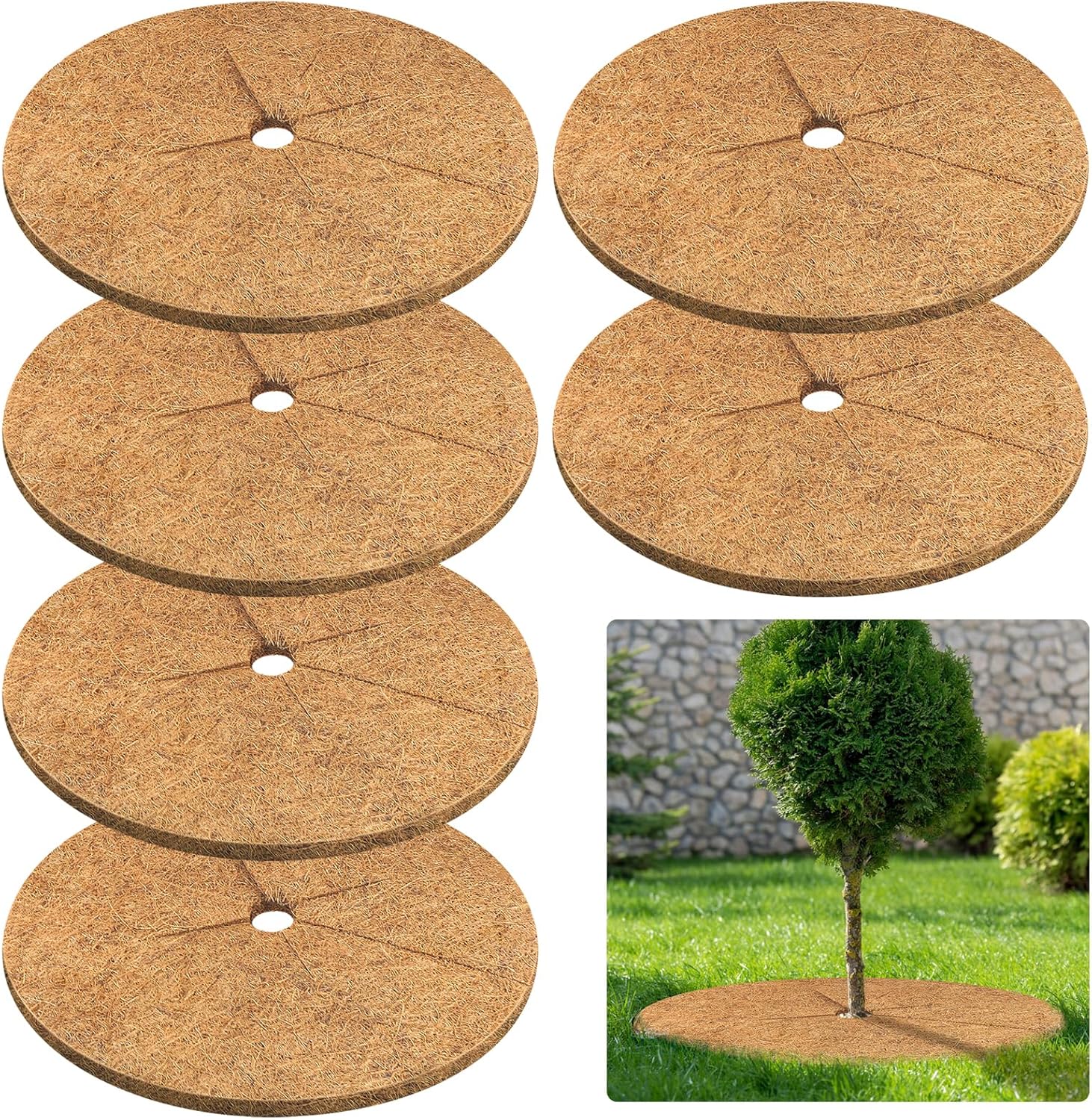
These Legigo coconut fiber mulch rings are simple, no-frills tree protectors intended to sit around trunks or pot rims to conserve soil moisture and block weeds. Each 24-inch round mat is made from dense coconut fiber about 1/4 inch thick, so you lay a ring around the base of a tree or shrub and trim the center to fit the trunk. In practice they help reduce evaporative loss, keep soil looking tidy, and create a barrier that limits grass and weed encroachment and casual digging. The mats are lightweight and easy to position, making them practical for larger landscapes, nurseries, or container groupings. Because they are natural fiber they will slowly break down over time, which is helpful for adding organic matter but means you may need to replace them after a season or two in very wet climates. They do not anchor themselves, so on steep slopes or very windy sites you may need pins or extra finish mulch to hold them in place.
Best for: Gardeners who want a low-maintenance, natural-looking way to conserve soil moisture and keep the base of trees and large pots tidy, without using synthetic materials.
Less Ideal for: People looking for a permanent, heavy-duty mulch barrier or a product that stays fixed on steep or exposed slopes should consider alternatives with anchors or heavier construction.
- Natural coconut fiber retains moisture and slowly adds organic matter as it decomposes.
- 24-inch diameter covers a broad area around trunks or pots to suppress weeds and reduce grass encroachment.
- Lightweight and easy to trim so you can fit the ring neatly around different trunk sizes or container rims.
- Thin profile lies flat and keeps the planting area looking tidy without bulky buildup.
- Natural fiber will break down over time and may need periodic replacement in very wet conditions.
- No built-in anchoring; rings can shift on slopes or in high winds without additional pinning.
Verdict: A natural, easy-to-use coconut fiber ring that conserves moisture and tidies the area under trees, ideal for gardeners who want an eco-friendly seasonal ground cover.
Choosing the Right Organic Mulch for Trees: Key Factors to Consider
Decomposition Rate and Longevity
How quickly a mulch breaks down determines how often you will need to top up around trees. Faster-decomposing materials like fresh leaf mulch or grass clippings add organic matter quickly but require more frequent replenishment. Slower options such as shredded hardwood or bark chips persist longer and maintain an insulating layer for multiple seasons. Consider the tree's root depth and your willingness to reapply when choosing decomposition rate. A balance is often best: a moderate breakdown rate adds organic matter steadily without necessitating constant maintenance.
Nutrient Contribution and Soil Biology
Organic mulches do more than cover soil; they feed a living soil ecosystem as they decompose. High-carbon materials add structure but may temporarily immobilize nitrogen as microbes process them, so pairing high-carbon mulches with a light fertilizer or compost starter can prevent nutrient drawdown. Mulches with a mix of carbon and nitrogen, such as composted wood or leaf mold, tend to support steady nutrient release. Think about long-term soil building when selecting mulch, especially under young trees that need steady nutrient availability for root development.
Moisture Management and Insulation
Mulch affects how much water reaches tree roots and how long it stays there. Dense, compacting mulches can reduce infiltration, while airy, chunky mulches improve water penetration and allow gas exchange. In hot, dry climates prioritize materials that conserve soil moisture and reduce evaporation. In wet sites avoid mulches that hold excess water against roots for long periods. Proper depth and placement also interact with material choice; most trees do best with a 2 to 4 inch mulch layer kept away from direct trunk contact.
Weed Suppression and Surface Stability
A primary practical benefit of mulch is reducing competing plants that steal water and nutrients. Thick, long-lasting mulches suppress weeds more effectively than thin or quickly drifting materials. Fine-textured mulches can blow away or form a crust that inhibits water entry; coarser mulches resist movement and stay in place around trunks. Consider whether you need a tidy appearance or a low-maintenance cover when weighing weed suppression against other factors.
Application, Maintenance, and Safety
How easy a mulch is to spread, how tidy it looks, and whether it poses risks to bark or trunks matters in everyday gardening. Chunky, irregular materials may be harder to position evenly but resist compaction. Fine mulches are easier to rake but can pack around the trunk and create rot if piled against bark. Also consider allergenic potential, pest attraction, and sourcing logistics. Choose materials you can safely handle and refresh without damaging root flare or creating habitats for rodents.
Best Mulch Depth and Placement Practices
A proper mulch layer improves benefits while minimizing problems. Keep organic mulch 2 to 4 inches deep in most situations; deeper layers can suffocate roots, hide pests, or retain too much moisture. Extend the mulch to the tree's drip line when practical, but avoid digging or piling mulch against the trunk. A donut-shaped ring with a clear trunk collar helps prevent bark rot and pest entry. For newly planted trees, keep mulch slightly farther from the stem until roots are established.
- Maintain 2 to 4 inch depth for mature trees.
- Keep mulch 2 to 3 inches away from the trunk base.
- Extend mulch to at least the root flare or drip line when possible.
Timing and Seasonal Refreshing
Apply or refresh organic mulch in spring or fall to match seasonal moisture patterns and biological activity. Spring application helps conserve summer moisture and suppress weeds as they germinate. Fall application adds insulation over winter and supplies organic matter for the following growing season. Avoid heavy fresh applications in midsummer heat if the mulch is high in nitrogen-demanding materials; that can temporarily lock up soil nitrogen as microbes accelerate decomposition.
- Refresh thin or washed-away areas each spring.
- Add a light top dressing rather than removing older mulch unless it is compacted.
- Compost older mulch in place gradually to feed soil organisms.
Managing Mulch Around Sensitive or Young Trees
Young or newly planted trees have different needs than long-established specimens. Use finer, well-composted materials that integrate with soil quickly and reduce nitrogen tie-up for the first year or two. Avoid heavy, coarse bark directly at the trunk of very young trees as it can impede shoot growth and hide insect or rodent damage. Regularly check for signs of stem moisture build-up or rodents under deep mulch and adjust placement if you see issues.
- Choose composted or fine-textured mulch for young trees.
- Inspect trunks seasonally for excess moisture or pest activity.
- Avoid piling mulch above the root flare on any tree.
Composting Mulch In Place and Soil Integration
Some organic mulches improve soil faster when incorporated gradually. Leaf mold, shredded leaves, and composted bark break down into humus that increases water-holding capacity and nutrient exchange. Rather than removing old mulch, add a thin layer of compost or aged material on top to accelerate biological integration. Over several seasons this approach builds a healthier root zone without disturbing roots or compacting soil.
- Top-dress with compost to accelerate soil improvement.
- Allow coarse materials to break down over multiple seasons.
- Avoid tilling or deep mixing near established tree roots.
How We Chose the Best Organic Mulch for Trees
We selected six organic mulches based on criteria that matter in real tree care situations. Durability and decomposition rate were key because they determine how often you must refresh mulch and how quickly nutrients become available to roots. Nutrient contribution was evaluated to favor materials that feed soil biology without causing imbalanced nitrogen drawdown. Moisture management looked at a mulch's ability to retain water while still allowing gas exchange to the root zone. Weed-suppression effectiveness was included since mulches that limit competing plants reduce stress on young trees. Ease of application and maintenance considered particle size, dust, and how tidy a mulch stays over time. We excluded manufactured or inorganic products and coatings that alter natural breakdown behavior. Products that posed known risks to trunk bark or created persistent matting were also filtered out. The resulting list focuses on organic materials that perform reliably across common urban, suburban, and rural planting situations.
FAQ
How close should mulch be to the trunk of a tree?
Keep mulch a few inches away from the trunk to prevent bark moisture and rot. A 2 to 3 inch clearance at the base reduces pest hiding places and allows trunk tissue to dry.
Can I use fresh grass clippings as tree mulch?
Fresh grass clippings can be used in thin layers if dried first. Thick piles of wet clippings may mat, block water, and produce heat as they decompose. Composting clippings or mixing them with other materials reduces risks.
How often should organic mulch be replenished?
Replenishment depends on the material. Fast-decomposing mulches may need topping yearly, while longer-lasting bark chips can go multiple years. Check depth annually and add enough to restore 2 to 4 inches where needed.
Will mulch attract rodents or pests to my trees?
Certain mulches and thick, piled layers can create habitat for rodents or insects. Keep mulch away from the trunk and avoid very deep layers to reduce hiding places. Using coarser materials near trunk bases cuts down on pest shelter.
Is composted mulch better than fresh wood chips?
Composted mulch generally integrates with soil faster and is less likely to cause nitrogen tie-up. Fresh wood chips last longer but may temporarily increase microbial nitrogen demand. Choose based on whether you prioritize quick soil feeding or longer-lasting coverage.
Final Verdict
Prioritize the factors that match your site and tree age when choosing organic mulch for trees. If you want low-maintenance coverage, select coarser, longer-lasting materials and maintain a conservative depth. If soil building and nutrient feed are your goals, choose composted or fast-breaking mulches and plan for more frequent topdressing. Always keep mulch away from direct trunk contact and refresh to maintain a healthy 2 to 4 inch layer. With those tradeoffs in mind, you can confidently select a mulch that supports moisture control, root health, and weed suppression for your trees.
