

Note: This article contains affiliate links. If you click on these links and make a purchase, I may earn a small commission at no extra cost to you. This helps support my research and content. Read my full affiliate disclosure here.
If you grow vegetables or flowers in raised beds, the right green manure can speed up soil repair and boost fertility without heavy amendments. Green manures are cover crops grown specifically to add organic matter, loosen compacted soil, fix nitrogen, or protect beds during fallow periods. This guide shortlisted seven top options suited to the shallow, warmer soil and concentrated root zones of raised beds. We'll explain how each type performs for nutrient contribution, root structure, seasonal timing, and how easy it is to establish in confined beds. Read on to find the right green manure approach for your raised-bed system and planting schedule.
Top Picks at a Glance
| Best Overall The best all-around choice for most situations | Outsidepride Buckwheat Cover Crop Seeds, 1 lb |  |
| Best Quality Built to a higher standard if you want something more solid | Mountain Valley Seed Co Winter Rye Cover Crop Seeds, 5 lb |  |
| Best Value The sweet spot between price and what you get | TIN SHED No-Till Cover Crop Mix Seed (Multi-Species Nitrogen-Fixing Blend) |  |
| Best Budget The cheapest option that still gets the job done reliably | SURVIVAL GARDEN SEEDS Alfalfa Seeds (1 Pack) |  |
| Highest Rated A top-rated pick with lots of positive feedback | VitalizeSeed Carbogro Fall No-Till Cover Crop Mix (16 Species) — 1 lb |  |
| Most Popular A crowd favorite that many people choose with confidence | No-Till Solutions No‑Till Cover Crop 13‑Seed Mix (0.5 lb) |  |
| Best Seller A high-volume bestseller chosen again and again | Eretz Cover Crop Seed Blend (8 oz) — Hairy Vetch, Crimson Clover, Peas, Oats |  |
Outsidepride Buckwheat Cover Crop Seeds, 1 lb

| Indoor Outdoor Usage | Outdoor |
|---|---|
| Other Special Features of the Product | Attracts Pollinators |
| Expected Blooming Period | spring,summer |
| Sunlight Exposure | Full Sun |
| Moisture Needs | Little To No Watering |
Outsidepride buckwheat is a quick-maturing summer annual grown primarily as a cover crop and green manure. Sow after the last frost and expect germination in 3 to 5 days with blooms in about 35 to 40 days; the crop reaches maturity in roughly 70 to 90 days. In practice it is broadcast or lightly raked into raised beds to establish rapid ground cover that smothers weeds, reduces erosion, and produces biomass you can cut and incorporate as green manure. Notable features include strong pollinator attraction and low fertilizer and water needs, which makes it low-maintenance for small-scale raised-bed gardeners. Because it is an annual with a short season, you can fit it between vegetable crops to rebuild organic matter without tying up beds for long. Limitations are that it does not overwinter and must be terminated before seed set to avoid volunteer plants, and it can be less effective than legumes at fixing nitrogen. For raised beds where quick soil conditioning, weed suppression, and pollinator benefit are priorities, buckwheat is a practical, fast option.
Best for: Gardeners who want a quick, low-maintenance cover crop to rebuild organic matter and suppress weeds in raised beds between vegetable rotations.
Less Ideal for: Growers seeking an overwintering cover or a nitrogen-fixing green manure should choose perennial cover crops or legumes instead.
- Very fast germination and bloom cycle for quick soil cover and green manure
- Attracts bees and other pollinators, supporting beneficial insects
- Low input needs requiring little fertilizer and minimal watering
- Suitable for a wide range of soil types and easy to sow in raised beds
- Annual that must be terminated before it sets seed to prevent volunteers
- Does not fix nitrogen like legume cover crops
Verdict: Use this fast-growing buckwheat when you need a quick, low-effort cover crop to build organic matter and attract pollinators in raised beds.
Mountain Valley Seed Co Winter Rye Cover Crop Seeds, 5 lb

| Plant or Animal Product Type | Cover Crop |
|---|---|
| Other Special Features of the Product | High Germination Rate |
| Sunlight Exposure | Full Sun |
| Moisture Needs | Moderate Watering |
| Material Features | GMO Free |
Mountain Valley Seed Co Winter Rye is a practical cover crop for gardeners who want a reliable winter green manure in raised beds. Sow in late fall or early winter and the seed germinates quickly to form a dense stand that holds soil, suppresses weeds, and builds organic matter when tilled in come spring. Notable product features are its high germination rate, broad USDA hardiness range, and non-GMO seed source, which together make it adaptable across climates and easy to establish in cool conditions. In raised beds you can broadcast at the recommended rate, rake lightly, and expect robust root growth that helps break up compaction and improve tilth. The main limitations are that rye exhibits allelopathic effects which can inhibit some following crops if not fully decomposed, and it needs timely termination by cutting/tilling or mowing to avoid becoming overly competitive. For gardeners focused on fast winter soil cover and building organic matter, this rye offers reliable performance with straightforward care.
Best for: Gardeners who prioritize fast, reliable winter soil cover and want to build organic matter in raised beds with a no-fuss, high-performance cover crop.
Less Ideal for: People planning to sow sensitive small-seeded crops immediately after termination or those who want a legume to fix significant nitrogen without supplementing with other cover crops.
- High germination rate for quick groundcover establishment
- Cold-hardy across USDA zones 1 through 11 for wide climate suitability
- Non-GMO heirloom seed sourced and packaged in the USA
- Rapid root growth that improves soil structure and reduces erosion
- Allelopathic properties can suppress germination of some subsequent crops if not fully decomposed
- Requires timely termination to prevent competition with spring plantings
Verdict: Choose this winter rye when you need a fast, cold-tolerant cover crop to protect raised beds and build soil quickly before spring planting.
TIN SHED No-Till Cover Crop Mix Seed (Multi-Species Nitrogen-Fixing Blend)

| Indoor Outdoor Usage | Outdoor |
|---|---|
| Sunlight Exposure | Full Sun |
| Expected Planting Period | Fall planting or between crop rotations |
| USDA Hardiness Zone | 3-8 |
| Material Features | Nitrogen-fixing blend |
This TIN SHED No-Till Cover Crop Mix is a versatile seed blend for gardeners who want to protect and improve soil without tilling. The mix combines grasses (triticale, rye), legumes (hairy vetch, peas, crimson and balansa clover), and deep-rooted brassicas (radish, rapeseed) so it establishes fast, creates a dense cover to shade out weeds, and adds nitrogen and organic matter when left to grow or terminated. Typical use is fall or between-crop planting after harvest in full sun to hold soil, reduce erosion, and loosen compacted layers with radish roots. Its no-till focus makes it easy to integrate into crop rotations or cover cropping plans and beneficial for building soil structure and water infiltration. Limitations are that success depends on proper timing and enough seedbed contact, and you will need to mow or terminate the stand before planting cash crops the next season. Pack sizing and seeding rate guidance are not detailed in the product notes so heavier or larger areas may require planning or multiple bags.
Best for: Gardeners who want a practical, low-disturbance cover crop to suppress weeds and build soil between growing seasons and who plan crop rotations around a fall or between-crop planting schedule.
Less Ideal for: Small pots, ornamental flower beds where intentional green manure is undesirable, or gardeners needing a single-species lawn repair seed rather than a multi-species soil-building blend.
- Diverse mix of grasses, legumes, and brassicas for complementary soil benefits
- Includes nitrogen-fixing legumes to naturally boost soil fertility
- Deep-rooted species help alleviate compaction and improve water movement
- Formulated for no-till systems so it fits into low-disturbance garden practices
- Seeding rate and bag coverage are not specified which complicates planning for larger areas
- Requires proper timing and a termination step before planting crops
Verdict: Choose this mix when you want a no-till, multi-species cover crop that suppresses weeds while building soil fertility and structure.
SURVIVAL GARDEN SEEDS Alfalfa Seeds (1 Pack)

| Indoor Outdoor Usage | Outdoor |
|---|---|
| Sunlight Exposure | Full Sun |
| Expected Planting Period | Spring to Fall |
| USDA Hardiness Zone | 2-9 |
| Seed Treatment Method | Untreated |
These alfalfa seeds are marketed as a versatile cover crop for improving soil in raised beds and small gardens. Plantable by direct sowing in spring or early fall, the packet contains open-pollinated, non-GMO seeds with planting instructions for broadcast sowing and shallow raking. Alfalfa fixes nitrogen, builds organic matter, and produces deep roots that help break up compacted soil and increase drought resilience, so it is typically used as green manure or a living groundcover between vegetable crops. Notable features include untreated seed, heirloom genetics for seed saving, and guidance on planting depth and spacing. For budget-minded gardeners, a single packet is an inexpensive way to test alfalfa in a rotation or to top-dress a raised bed; the low-maintenance, drought-tolerant nature reduces ongoing inputs. Limitations are that alfalfa can take several weeks to establish and may require management if it flowers or reseeds in small beds, and it is not a quick green manure for same-season incorporation in very short rotations.
Best for: Gardeners on a tight budget who want a low-input green manure to improve soil in raised beds and test cover cropping without committing to large seed purchases.
Less Ideal for: Those needing a fast-turnaround green manure for very short crop rotations or who want immediate biomass for same-season incorporation in small intensive beds.
- Fixes nitrogen and adds organic matter to improve raised bed soil health
- Untreated, heirloom non-GMO seed suitable for saving and replanting
- Drought tolerant with deep roots that loosen compacted soil
- Simple direct-sow instructions make it easy for beginner gardeners to use
- Single packet size may be small for larger beds or full-cover plantings
Verdict: A low-cost, no-frills alfalfa seed packet that reliably builds soil and fixes nitrogen in raised beds for budget-focused gardeners.
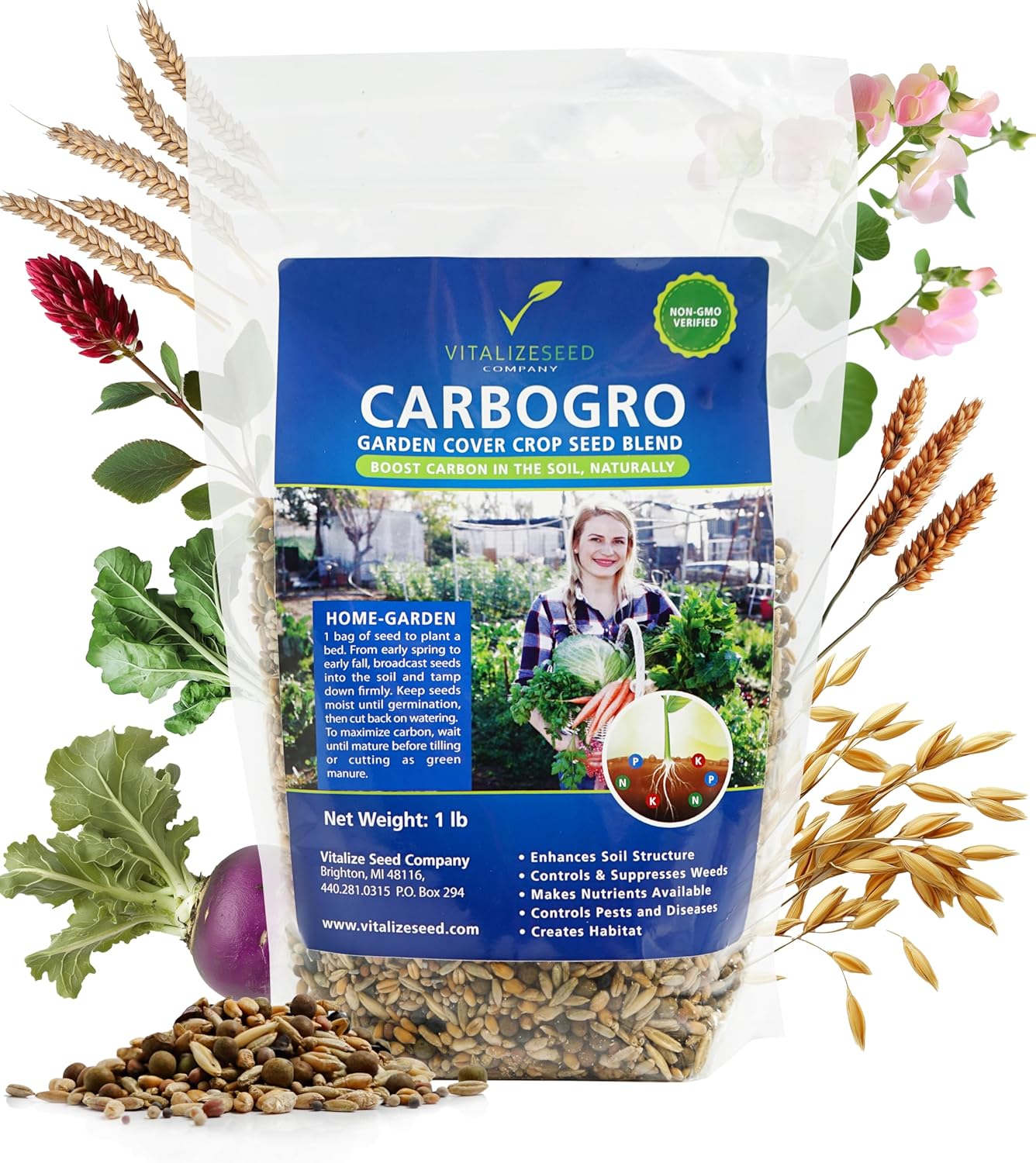
VitalizeSeed Carbogro Fall No-Till Cover Crop Mix (16 Species) — 1 lb
| Sunlight Exposure | Full Sun |
|---|---|
| Unit Count | 16 Ounce |
| Item Type Name | Seed |
| Brand Name | VitalizeSeed |
Carbogro is a diverse, ready-to-use cover crop seed mix intended for fall planting in gardens and small acreage systems. The one-pound bag combines grains, brassicas, clovers, and other species to establish quickly, survive winter, and produce abundant spring biomass that can either form a protective thatch for no-till beds or be incorporated as green manure. Because it mixes fast-establishing grasses and legumes with nutrient-scavenging brassicas, it helps reduce winter nutrient loss and jump-starts soil microbial activity in spring. In raised beds you can broadcast or lightly rake seed into prepared soil, monitor germination, then let the stand grow through frost before cutting or turning under. Practical limitations are that the blend is designed for fall planting and its performance depends on timely establishment and local winter severity, and a one-pound bag covers a relatively small area so multiple bags are needed for larger plots. For gardeners focused on consistent, year-to-year soil improvement, Carbogro offers a dependable, multi-functional cover crop solution.
Best for: Gardeners and small-scale growers who want a reliable, year-to-year cover crop that establishes in fall to protect and build soil in raised beds or small plots.
Less Ideal for: People needing a spring-only green manure or those who want to seed large acreage from a single purchase without buying multiple bags.
- Very diverse mix of 16 species to support broad soil biology and nutrient cycling
- Formulated for fall planting with good winter survival and strong spring biomass
- Suitable for both no-till thatch and green manure incorporation
- Convenient one-pound package sized for small gardens and raised beds
- Designed specifically for fall planting so not suited for spring-only schedules
- One-pound quantity covers a limited area compared with bulk farm blends
Verdict: Choose Carbogro when you need a dependable fall-planted cover crop mix that reliably builds soil biology and produces strong spring biomass for raised beds and small plots.
No-Till Solutions No‑Till Cover Crop 13‑Seed Mix (0.5 lb)

| USDA Hardiness Zone | 1 2 3 4 5 6 7 8 9 10 11 |
|---|---|
| Soil Type | Sandy Soil |
| Moisture Needs | Moderate Watering |
| Material Features | GMO Free, Natural |
This 13‑seed cover crop blend is designed to provide quick soil cover, nitrogen fixation and biodiversity for small plots and raised beds. It combines several clovers (about half the mix) with vetches, peas, cowpeas, buckwheat, millet, lentils, flax and fenugreek so you get both legumes that fix nitrogen and fast-growing species that suppress weeds. Use it for broadcasting onto bare soil, overseeding in no‑till beds, or as a green manure to chop and incorporate before planting. Practical benefits include improved soil structure from diverse root systems, attraction of beneficial insects, and a mix that balances quick biomass with longer‑term nitrogen build‑up. Limitations are that the packet is a general-purpose blend rather than a site‑specific formula, so some species may not establish equally in every climate or very heavy soils, and you may need to thin or manage volunteers in subsequent seasons. For raised‑bed gardeners who value convenience and biodiversity this mix reduces the need to buy separate seed packets, but expect to monitor which species dominate and adjust future plantings accordingly.
Best for: Raised‑bed and no‑till gardeners who want a single convenient seed mix to boost soil fertility, suppress weeds, and attract beneficial insects without buying many individual packets.
Less Ideal for: Gardeners who need a site‑specific cover crop plan tailored to precise soil conditions, extreme climates, or those who prefer single‑species planting for seed saving.
- Diverse 13‑seed blend combines legumes and fast‑growing cover crops for both nitrogen fixation and rapid weed suppression
- Formulated for no‑till and raised beds so it works well for direct broadcasting and overseeding
- Non‑GMO seed sourced from the USA with inoculated rhizobium to encourage nitrogen‑fixing activity
- High biodiversity attracts beneficial insects and supports soil fungal networks for longer‑term fertility
- General blend may not be optimized for every climate or soil type, so some species may underperform
- Half‑clover composition can lead to dominance of clovers in some stands, requiring management to maintain balance
Verdict: A convenient, biodiversity‑focused cover crop mix that speeds weed suppression and builds soil fertility for raised beds and no‑till gardens.
Eretz Cover Crop Seed Blend (8 oz) — Hairy Vetch, Crimson Clover, Peas, Oats

| Unit Count | 8 Ounce |
|---|---|
| Plant or Animal Product Type | clover,peas |
| Material Features | GMO Free, Organic |
| Sunlight Exposure | Full Sun, Partial Sun, Partail Shade |
| Soil Type | Sandy Soil |
This Eretz cover crop blend mixes hairy vetch, crimson clover, Dundale peas, and white oats to give a reliable green manure for small plots and raised beds. Sow and lightly rake the seed; the legumes fix nitrogen while oats provide early structure and suppress weeds as the mix establishes. You can use it as a standing cover to attract beneficial insects and pollinators, then chop and incorporate the growth as compostable biomass or mulch to improve soil organic matter. The seed is marketed as Non GMO and weed-seed free and is sold in a small 8 ounce unit that suits trial plantings or modest raised beds. Expect rapid growth in full or partial sun on well-drained or sandy soils, but you will need to follow recommended seeding rates to get adequate ground cover. For larger areas multiple bags are required and the small unit limits how much area you can reseed from one package.
Best for: Gardeners who want a low-risk, ready-made cover crop for improving soil in raised beds and prefer a proven legume-heavy blend that draws pollinators and builds organic matter.
Less Ideal for: People needing to seed large plots from a single purchase or those who want a single-species cover crop for forage or specific management goals.
- Balanced mix of legumes and oats provides nitrogen fixation plus structural biomass for easy green manuring
- Non-GMO and advertised weed-seed free which reduces the chance of introducing unwanted plants
- Attractive blooms that can draw beneficial insects and pollinators to the garden
- Suitable for full sun to partial shade so it works in typical raised bed exposures
- Small 8 ounce package covers only a limited area so multiple purchases are needed for larger beds
- Seeding rate must be followed carefully to ensure adequate ground cover and weed suppression
Verdict: A convenient, low-risk legume-and-oat blend that quickly builds organic matter and improves soil health in raised beds.
Choosing the Right Green Manure for Raised Beds: Key Factors to Consider
Growth Habit and Biomass
How much aboveground growth a green manure produces affects how much organic matter you can return to the raised bed. High-biomass species like fast-growing grasses or brassicas add bulk that breaks down into humus and improves moisture retention.
In small beds, very tall or sprawling green manures can shade adjoining beds or compete with established plantings, so consider growth habit relative to bed layout. Also think about the timing of biomass production: rapid summer growers can be cut and incorporated quickly, while slower winter covers may protect soil but add less immediate organic matter.
Nutrient Contribution
Different green manures offer different nutrient benefits. Legumes add biologically fixed nitrogen through root nodules, helping nitrogen-hungry vegetables in the following crop. Non-legumes like rye or buckwheat do not fix nitrogen but mine phosphorus and other nutrients and lock them in biomass for later release.
Match the nutrient profile to your rotation. If you plan a heavy-feeding crop after the green manure, prioritize nitrogen-fixing species or follow a high-carbon cover with a legume mix to balance carbon to nitrogen ratios for efficient decomposition.
Root Structure and Soil Improvement
Root architecture determines how well a green manure improves soil in shallow raised beds. Deep taproots can break compacted layers and improve drainage, while fibrous roots create a dense network that stabilizes soil and reduces erosion.
For raised beds, look for species whose roots exploit the full soil depth without requiring deep tillage. Root channels left after decomposition help future crops establish roots and can reduce the need for mechanical cultivation.
Seeding and Establishment
Ease of seeding matters when you are working in narrow or elevated beds. Species with small seed that require fine seedbeds may need pre-raked beds or mixing with sand for even distribution, while larger-seeded legumes are easier to hand-sow.
Consider germination speed and cold tolerance. Raised beds warm earlier in spring, so you can often sow earlier than in-ground beds, but also expect faster drying at the surface. Choose seed types and sowing times that match your local climate and the microclimate of raised beds.
Termination Method and Timing
How you remove or incorporate green manure affects the next crop and the bed's readiness. Some species are simple to cut and compost in place, while others require thorough incorporation or repeated cutting to prevent regrowth.
Timing is critical: terminating too early reduces biomass and nutrient return, while terminating too late can make incorporation difficult and delay planting. Select green manures that fit your schedule and available labor methods-hand-cutting, shallow turning, or allowing natural winter-kill are common options for raised beds.
Pest and Disease Considerations
Some cover crops can host pests or diseases that affect your crop rotation. For example, brassicas may harbor diseases harmful to subsequent brassica crops, and volunteer grain can attract rodents. Raised beds concentrate plants, so any pest or disease reservoir can have an outsized effect.
Rotate species and avoid repeating the same family of green manure where susceptible crops follow. Choose mixes or single-species covers with low local pest risk, and monitor beds after termination to catch volunteer regrowth early.
When to Sow Green Manure in Raised Beds
Sowing timing depends on your climate and the crop schedule in the beds. In spring, sow cold-tolerant covers as soon as beds can be worked to protect and quickly build organic matter before summer planting. Warm-season covers suit mid-spring to mid-summer windows and can be used between quick vegetable successions.
For winter cover, pick species that tolerate frost and provide soil protection during wet months. In many regions a late-summer sowing that establishes before first frost gives good root development and spring biomass. Always leave enough time between termination and transplanting to allow residue to settle and young roots to access nutrients.
- Sow early in warmed raised beds for fast germination.
- Match cover crop cycle to your vegetable rotation length.
- Allow at least two weeks after incorporation before planting sensitive seedlings.
Mixes Versus Single Species in Small Beds
Using a blend of species can combine benefits, such as pairing a legume for nitrogen with a fibrous grass for biomass. In raised beds the limited area means mixes must be balanced so aggressive species do not dominate. Choose blends designed for short rotations or hand-sown beds.
Single-species sowings are easier to manage and predict, particularly if you have a clear goal like breaking compacted layers or fixing nitrogen. If you are new to green manures, start with a single species appropriate to your primary need and scale up to mixes as you gain experience.
- Mixes provide multiple benefits but need careful balance.
- Single species are simpler to establish and terminate in confined beds.
Best Termination Techniques for Raised Beds
Hand-cutting and leaving residue as a mulch or lightly forking it into the top few inches works well for raised beds. Shallow incorporation preserves soil structure and avoids bringing up subsoil. For beds used for small-scale vegetable production, repeat cutting a few weeks before planting speeds residue decomposition.
If you prefer to remove biomass, composting off-bed is an option. Store removed material until it has partially broken down, then return the compost to beds to prevent temporary nitrogen tie-up that raw high-carbon material can cause.
- Cut and leave residue as mulch for quick decomposition.
- Shallow fork-in avoids deep disturbance in raised beds.
- Compost removed biomass before reintroducing to avoid nitrogen lockup.
Managing Green Manure in Narrow or Contained Spaces
Raised beds often sit close together and have limited access. Use short-statured covers or mow pathways to keep access open. Plan sowing strips rather than seeding entire beds if you need to maintain production in adjacent areas.
Containerized or narrow beds can benefit from relay sowing where a cover is planted in sections to maintain continuous soil protection while allowing staged planting. Keep a small toolkit of hand tools for cutting and shallow incorporation suited to confined spaces.
- Choose compact varieties when bed width is narrow.
- Relay sowing keeps some bed area productive while covering the rest.
- Use hand tools designed for raised-bed work to avoid over-disturbance.
Composting and Returning Biomass Safely
If you compost green manure before returning it to beds, monitor carbon to nitrogen balance. High-carbon residues such as mature grasses or straw decompose slowly and can temporarily tie up nitrogen if incorporated raw. Mixing legume residues with carbon-rich material and allowing partial decomposition mitigates this.
Keep composting piles aerated and turned to reach temperatures that reduce weed seeds and pathogens. When the compost is stable and dark, it is safe to reintroduce to raised beds to boost microbial life and soil structure without shocking follow-on plantings.
- Mix high-carbon and high-nitrogen residues for balanced composting.
- Ensure compost reaches stable, dark humus before reintroduction.
- Avoid adding disease-prone residues to compost unless hot composting is achieved.
How We Chose the Best Green Manure for Raised Beds
We prioritized choices that reliably improve the distinct conditions of raised beds: limited soil depth, faster warming, and closer proximity to plant roots. Selection centered on crops that deliver measurable benefits to soil structure, organic matter accumulation rate, and either nitrogen fixation or biomass production. We evaluated ease of seeding and establishment in small plots, compatibility with common vegetable rotations, and how cleanly the crop can be terminated before planting. Resistance to common pests and diseases in home garden settings was considered to avoid introducing problems into intensive bed systems. We excluded cover crops that require deep plowing or long-term pasture-style management because raised beds need options that fit short seasons and manual incorporation. Final filters favored species with predictable growth in shallow beds, clear nutrient benefits, and straightforward termination methods such as cutting, rolling, or light turning.
FAQ
Can I grow green manure between every vegetable crop in a raised bed?
Often yes, but it depends on season length and your crop schedule. Short-cycle covers can be grown between quick successions, while longer covers are better for fallow periods. Make sure termination timing fits your planting date to avoid delays.
Will green manure reduce my soil temperature in spring?
Green manures typically warm beds earlier in spring by protecting soil from erosion and retaining organic matter. However, heavy surface residue can shade and cool the soil slightly until it breaks down, so time termination to allow warming before planting heat-loving crops.
How long before planting should I incorporate green manure?
Usually allow one to three weeks after cutting or shallow incorporation before transplanting to give residues time to settle and initial decomposition to occur. Cooler weather or high-carbon residues may require a longer wait to prevent nitrogen immobilization.
Are there green manures that are safe to use in small raised beds without deep tilling?
Yes. Select shallow-rooted or fibrous-root covers that can be hand-cut and folded into the top few inches of soil. These are easy to manage in raised beds and improve surface structure without the need for deep cultivation.
Can green manure introduce weeds or pests to my raised beds?
It can, especially if seed mixes contain weedy species or residues host pests. Use certified, weed-free seed and avoid species known to share diseases with your intended crops. Regular monitoring after termination helps catch volunteer seedlings early.
Is it better to compost green manure off-bed or incorporate it directly?
Both approaches work. Direct incorporation adds immediate organic matter but can temporarily tie up nitrogen if residues are high in carbon. Composting off-bed first reduces that risk and allows you to manage pathogens and seeds, but it delays nutrient return.
Final Verdict
Choose a green manure that matches the specific needs of your raised beds: prioritize nitrogen-fixing legumes when you need fertility, high-biomass grasses when you want quick organic matter, and deep-rooted species when improving drainage and breaking compaction. Balance establishment ease and termination method with your planting schedule and available labor. By matching species or mixes to bed depth, rotation, and timing, you can build soil health steadily without disrupting production.
