

Note: This article contains affiliate links. If you click on these links and make a purchase, I may earn a small commission at no extra cost to you. This helps support my research and content. Read my full affiliate disclosure here.
Choosing the right manure for citrus trees matters because these evergreen fruit trees respond quickly to both nutrient boosts and changes in soil structure. The wrong material can burn roots, tie up nutrients, or introduce weeds. This guide focuses on manures suited for citrus trees and explains how each type behaves in a real garden setting. We shortlisted seven top options gardeners commonly use for citrus and evaluated them on nutrient balance, ease of application, and impact on soil health. Below you will find practical guidance on application rates, timing, and handling so you can pick the manure that best supports steady growth and reliable fruiting.
Top Picks at a Glance
| Best Overall The best all-around choice for most situations | BRUT Worm Farms Cow Compost — 10 Quart Bag |  |
| Best Quality Built to a higher standard if you want something more solid | Black Cow Composted Cow Manure, 1 cu ft, 2-Pack |  |
| Best Value The sweet spot between price and what you get | Kreher Family Farms Organic Pelleted Compost (Composted Poultry Manure), 50 lb (2 x 25 lb bags) |  |
| Best Budget The cheapest option that still gets the job done reliably | Black Kow Composted Cow Manure, 35 lb Bag |  |
| Highest Rated A top-rated pick with lots of positive feedback | Lancaster Agriculture Chicken Manure Pellets, 4 lb |  |
| Most Popular A crowd favorite that many people choose with confidence | Black Kow Composted Cow Manure Fertilizer, 8 qt |  |
| Best Seller A high-volume bestseller chosen again and again | Espoma Organic Cow Manure Compost Blend, 1 Cubic Foot |  |
BRUT Worm Farms Cow Compost — 10 Quart Bag

| Unit Count | 192 Ounce |
|---|---|
| Volume | 10 quarts |
| Brand Name | BRUT WORM FARMS |
| UPC | 860000284295 |
Brut Cow Compost is a ready‑to‑use bagged cow manure compost aimed at improving soil fertility and structure. It is made from 100% composted cow manure that has been finely sifted, which makes it easy to mix into potting mixes, top‑dress containers, or incorporate into garden beds. Notable features include an OMRI listing for organic use, a nutrient profile with nitrogen, calcium and iron, and a low‑odor, non‑burning formula that is safe around seedlings and houseplants. In practice the compost increases microbial activity and helps retain moisture, so plants show healthier foliage and better growth when used regularly. The 10 quart bag is convenient for small gardens, potted plants, or spot treatments without handling bulk loads. Limitations are the modest volume per bag for larger beds and the product is a general amendment rather than a complete, balanced fertilizer, so heavier feeding or specific NPK management may still be needed for high‑demand crops.
Best for: Gardeners who want an easy, certified organic soil amendment to boost soil life and moisture retention in containers, small beds, or targeted spots without handling raw manure.
Less Ideal for: People establishing large garden plots or those seeking a complete NPK fertilizer for heavy feeding crops should consider bulk compost or supplemental fertilizers instead.
- OMRI‑listed organic compost safe for edible and ornamental plants
- Finely sifted, low‑odor formula suitable for indoor use and seedlings
- Adds organic matter and beneficial microbes to improve moisture retention and soil structure
- Versatile application as top dressing, mix‑in amendment, or container soil enhancer
- Small 10 quart volume requires multiple bags for larger garden projects
- Not formulated as a balanced complete fertilizer for high‑demand crops
Verdict: A compact, OMRI‑listed bag of finely composted cow manure that reliably adds organic matter and microbial life to containers and small garden beds.
Black Cow Composted Cow Manure, 1 cu ft, 2-Pack

| Number of Packs | 2 |
|---|---|
| Volume | 1 cubic feet |
| Style Name | nutrient-rich |
| Brand Name | Generic |
This 2-pack of composted cow manure is a straightforward organic soil conditioner for improving soil structure and long-term fertility. Made from fully composted cow manure, it is designed to be worked into planting beds, mixed with native soil around established trees, or added to containers to boost microbial life and moisture retention. The manure releases nutrients slowly, which reduces the risk of burning roots and supports steady growth rather than a quick flush. Practical benefits include improved tilth for heavy soils, added organic matter that helps retain water for drought-prone citrus roots, and a microbial boost that aids nutrient cycling. Limitations are its coarse bulk form which requires mixing into the root zone and several months of gradual application for best results, and the need to follow safety guidance to avoid dust and direct contact. For citrus, expect improved root health and soil biology over a season rather than instant foliar effects.
Best for: Gardeners who prioritize long-term soil health and steady nutrient delivery for fruit trees and want an organic amendment to improve root zone biology.
Less Ideal for: People seeking an instant foliar feed or a fast-acting soluble fertilizer for quick leafy growth should choose a water-soluble fertilizer instead.
- 100% composted cow manure provides organic matter and microbial activity
- Slow-release nutrients reduce risk of root burn and feed trees steadily
- Suitable for beds, borders and containers so it can be used at planting or as a top amendment
- Two-pack gives coverage for multiple trees or repeat applications over a season
- Needs to be mixed into soil or applied gradually over months to be effective
- Bulk product can be messy to handle and produces dust that requires precautions
Verdict: A simple, fully composted cow manure pack that builds soil biology and provides slow steady nutrition ideal for long-term citrus tree health.
Kreher Family Farms Organic Pelleted Compost (Composted Poultry Manure), 50 lb (2 x 25 lb bags)

| Item Form | Pellet |
|---|---|
| Application Method | by hand or with a standard fertilizer spreader |
| Coverage | Top Dressing (½ inch depth): Approximately 24 square feet |
| Target Species | Vegetables |
| Included Components | Organic Compost Bag |
Kreher’s pelleted compost fertilizer is a composted poultry manure product designed for easy, controlled applications to garden beds and around trees. The pellets make spreading by hand or with a standard broadcast spreader straightforward and reduce dust and odor compared with loose compost. It is OMRI listed, so it fits into organic programs, and the product description and ingredients emphasize calcium content and a balanced supply of macronutrients to support root development and leaf growth. In practice this product works well as a top dressing or soil amendment to improve structure, water retention, and microbial activity over time rather than provide an instant synthetic nutrient spike. Coverage guidance is given for a half-inch top dressing so you can estimate how much to use. Limitations are that analysis numbers for N-P-K are not listed on the packaging details here, and it is sold in bulk bags that require storage space and occasional screening for larger clumps before use. For gardeners who prioritize organic soil-building and neat, easy application, this pelleted poultry compost is a practical choice.
Best for: Gardeners who want a low-maintenance, organic soil-building amendment for regular applications around fruit trees and garden beds and who value neat, pelletized product that spreads evenly.
Less Ideal for: Growers seeking an immediate, measured synthetic nutrient boost or exact N-P-K feeding schedule should consider a formulated fertilizer instead.
- OMRI listed for use in organic systems
- Pelleted form allows clean, even spreading by hand or with a standard spreader
- Made from 100% composted poultry manure, which adds organic matter and nutrients
- Improves soil structure, water retention, and microbial activity over time
- No specific N-P-K fertilizer analysis provided in the listed product details
- Bulk bags need storage space and occasional screening to remove clumps
Verdict: A practical OMRI-listed pelleted poultry compost that makes organic soil building and tidy spreading simple for backyard citrus and garden use.
Black Kow Composted Cow Manure, 35 lb Bag

| Item Form | Granules |
|---|---|
| Specific Uses For Product | Organic |
| Coverage | Medium |
| Target Species | Plants, Houseplants, Vegetables |
| Mixing Ratio | 0.5-0.5-0.5 |
Black Kow Composted Cow Manure is a ready-to-use organic soil amendment that supplies slow-release nutrients and improves soil texture. Gardeners typically work it into topsoil or use it as a side dressing on lawns and planting beds; the product can also be used as a planting medium for tomatoes by cutting and planting directly in the bag. Notable features include a mild 0.5-0.5-0.5 nutrient analysis that will not burn roots and a granulated, composted form that increases moisture retention in sandy soils and improves aeration in clay soils. Practical benefits for lawns are better water-holding capacity, improved soil structure, and a steady nutrient supply that reduces the need for frequent feeding. Limitations are that the nutrient analysis is very low compared with concentrated fertilizers, so it is more of a long-term soil builder than a quick lawn green-up solution, and the bagged format means you will need to handle and spread multiple bags for larger lawns. The package also includes handling guidance and cautions to avoid direct ingestion and contact with skin or eyes.
Best for: Homeowners who want an inexpensive, low-risk way to build soil health over time and improve lawn soil structure rather than seeking immediate greening.
Less Ideal for: People needing a fast, high-nitrogen lawn boost or landscapers covering large turf acreage who prefer concentrated fertilizers or bulk delivery options.
- Organic, composted material that improves soil structure and aeration
- Slow-release 0.5-0.5-0.5 nutrient profile that will not burn roots
- Granular, bagged form is easy to spread or incorporate into topsoil
- Helps increase moisture retention in sandy soils and loosens compacted clay soils
- Low nutrient concentration so it is not a quick fix for nitrogen-deficient lawns
- Bag handling required for covering large lawn areas
Verdict: Choose Black Kow if you want an affordable, organic compost that steadily improves lawn soil structure and moisture retention over time.
Lancaster Agriculture Chicken Manure Pellets, 4 lb
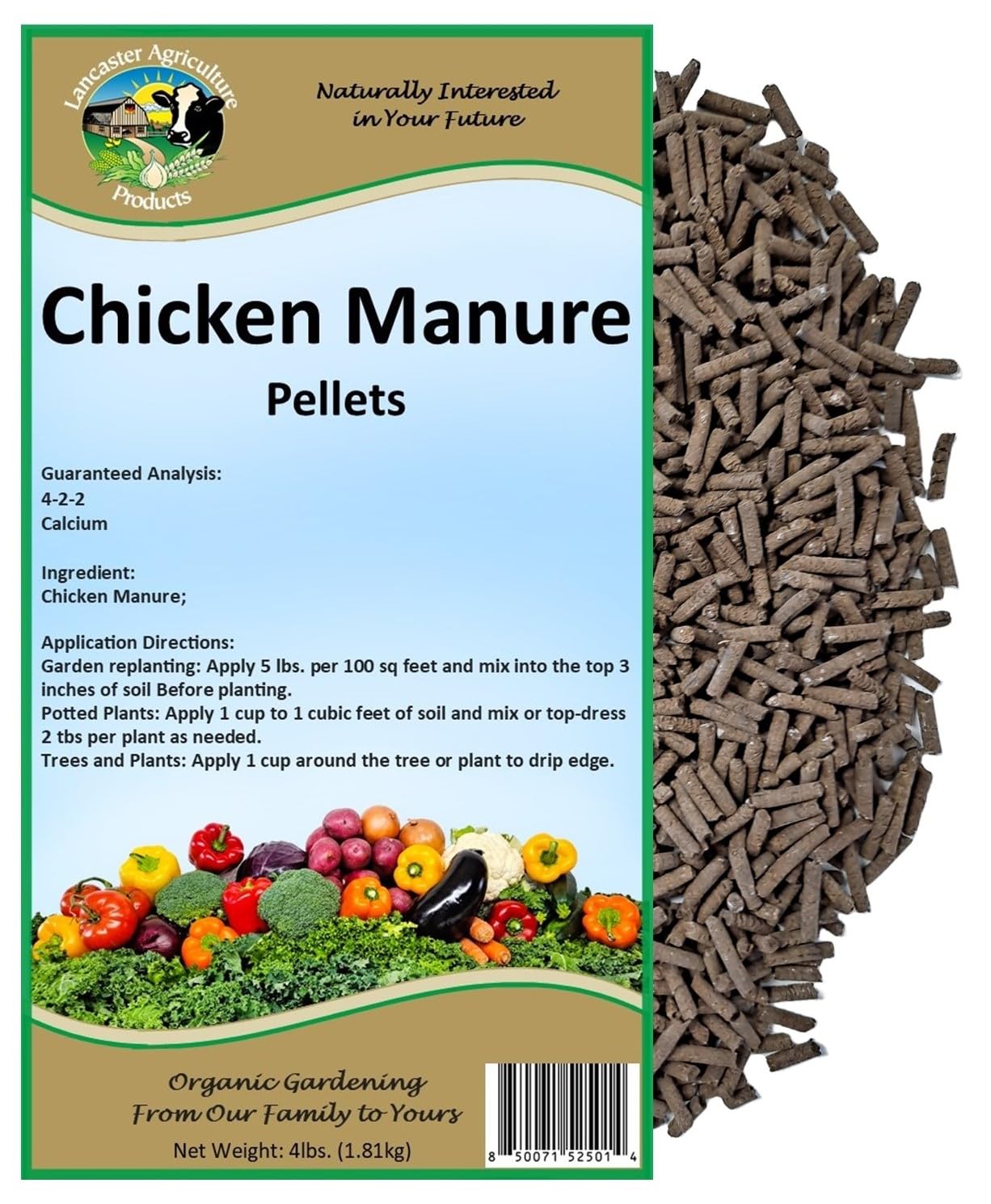
| Item Form | Pellets |
|---|---|
| Target Species | Flowers |
| Unit Count | 64 Ounce |
| Mixing Ratio | 4:2:2 |
These chicken manure pellets are a ready-to-use organic fertilizer intended to boost soil fertility in vegetable and flower beds. The product comes as heat-treated, dehydrated pellets that you sprinkle around the drip line and water in, so there is no mixing or composting required before application. With a 4-2-2 NPK ratio and about 8% calcium, the pellets supply steady, slow-release nitrogen and useful phosphorus and potassium for leafy and fruiting vegetables. Practical benefits include convenience of pellets for targeted side-dressing, suitability for monthly feeding of vegetables during the growing season, and a clear mixing ratio listed for custom blends. Because the material is heat-treated, it is safer to handle than raw manure, but the nutrient release is not instant so expect gradual soil improvement rather than rapid greening. The bag size is small for larger plots, so frequent purchases or larger-volume sourcing may be necessary for sizeable vegetable gardens. This product suits gardeners who prioritize an organic, consistent fertilizer that is simple to apply and integrates well into regular feeding schedules.
Best for: Home vegetable gardeners who want an organic, low-hassle fertilizer they can apply regularly to maintain soil fertility and support steady crop growth.
Less Ideal for: Gardeners needing a high-volume solution for large-scale plots or those who require fast-acting, high‑nitrogen feed for immediate greening should consider bulk amendments or concentrated fertilizers instead.
- Heat-treated, pelleted form for easy, mess-free application
- Balanced 4-2-2 NPK analysis with added calcium for general vegetable needs
- Suitable for monthly side-dressing of vegetables and regular use on flowers and shrubs
- Small 4 lb unit may be insufficient for larger vegetable plots
- Slow-release action means nutrients are gradual rather than immediate
Verdict: A convenient, organic pelleted chicken manure that provides steady, slow-release nutrition ideal for regular feeding of home vegetable gardens.
Black Kow Composted Cow Manure Fertilizer, 8 qt

| Item Form | Granules |
|---|---|
| Unit Count | 256 Fluid Ounces |
| Included Components | Cow Manure |
| Mixing Ratio | 1:1 |
Black Kow composted cow manure is a ready-to-use organic soil amendment formulated to improve moisture retention, aeration, and nutrient availability in planting areas. Gardeners typically mix it into raised bed soil before planting or use it as a top dressing and it can also be brewed into compost tea using the 1:1 mixing ratio supplied. The product is granular and contains beneficial microbes that help convert nitrogen into plant-available forms, so it feeds slowly without burning young roots. Practical benefits for raised vegetable beds include better water-holding in sandy mixes and improved crumb structure in heavier soils, which helps root development and reduces nutrient leaching. Important limitations are that nutrient content is not given as an N-P-K analysis and dosing is less precise than bagged balanced fertilizers, so heavy feeders may still need supplemental fertilizers. The safety notes mean you should handle with gloves and a mask and avoid direct contact with edible harvests immediately after fresh application.
Best for: Home gardeners building or refreshing raised vegetable beds who want an affordable, organic soil conditioner to improve texture, water retention, and microbial activity.
Less Ideal for: Gardeners who need a precise, high-analysis fertilizer program for heavy-feeding crops or who prefer fully screened, potting-grade composts for container vegetables.
- Organic composted manure improves soil structure and moisture retention
- Contains beneficial microbes that help make nutrients available to plants
- Versatile use as soil amendment, top dressing, or compost tea ingredient
- Granular form is easy to mix into raised bed mixes and garden soil
- No detailed N-P-K nutrient breakdown provided for precise feeding
- May require supplementary fertilizer for heavy-feeding vegetables
Verdict: A budget-friendly organic soil amendment that improves structure and moisture retention in raised vegetable beds while supplying slow-release nutrients.
Espoma Organic Cow Manure Compost Blend, 1 Cubic Foot

| Item Form | Powder |
|---|---|
| Specific Uses For Product | Plant Growth, Root Development, Seed Development, Soil Conditioning |
| Application Method | Mix into soil |
| Target Species | vegetables, flowers, trees, shrubs |
| Liquid Volume | 1 cubic feet |
Espoma Organic Cow Manure is a dehydrated manure blend intended to be mixed into planting soil or existing beds to improve aeration and moisture retention while supplying a light, balanced nutrient boost (0.5-0.5-0.5). Typical use is to work the product into the topsoil when planting citrus or to top-dress around established trees and lightly fork it in to avoid root disturbance. The powder form makes it easy to spread and incorporate compared with heavy wet manures, and the aged forest products help add organic matter without a strong odor. Because the nutrient analysis is low, this product is best as a long-term soil conditioner rather than a quick corrective fertilizer when trees show acute nutrient deficiency. It is made by a well-known organic brand and labeled for use on vegetables, flowers, trees, and shrubs, so it fits routine seasonal soil improvement. Expect gradual improvement in soil structure and water-holding capacity but plan to pair it with targeted fertilizers if laboratory soil tests show specific nutrient shortfalls for citrus production.
Best for: Home gardeners who prefer a conservative, low-risk soil amendment for routine seasonal feeding and improving soil structure around citrus trees.
Less Ideal for: Growers needing fast correction of specific nutrient deficiencies or high nitrogen feed for rapid vegetative growth should choose a formulated citrus fertilizer instead.
- Organic, all-natural dehydrated cow manure blended with aged forest products
- Powder form is easy to spread and mix into soil without bulky handling
- Improves soil aeration and moisture-holding capacity for long-term soil health
- Low, balanced nutrient analysis reduces risk of overfeeding sensitive plants
- Low nutrient concentration so it will not correct acute deficiencies quickly
Verdict: A gentle, easy-to-use organic manure blend that improves soil structure around citrus trees without risking nutrient overload.
Choosing the Right Manure for Citrus Trees: Key Factors to Consider
Nutrient Profile and Release Rate
Citrus trees need a steady supply of nitrogen plus adequate phosphorus and potassium during active growth. Different manures vary widely in nutrient concentration and how quickly those nutrients become available. Fresh manure often releases nutrients quickly but carries a higher risk of burning fine feeder roots if applied too heavily. Composted or well-aged manure generally provides a slower, more even release that matches citrus nutrient uptake and reduces the chance of salt or ammonia stress.
Knowing the release characteristics of the manure you choose helps set application timing and rate. If a material is high in readily available nitrogen, use it sparingly and later in the season; if it is slower-release composted material, it can be applied more liberally without harming roots.
Organic Matter and Soil Structure
One of the major benefits of using manure is the addition of organic matter, which improves moisture retention in sandy soils and increases drainage and aeration in heavy clays. For citrus trees, improved soil structure encourages deeper, healthier root systems and better nutrient exchange.
Consider how much bulk the manure will add and whether it will need to be mixed into the planting area or left as a surface mulch. Some manures break down quickly and integrate into the soil, while others provide longer-lasting fiber that slowly amends texture over seasons.
Sanitation, Pathogens, and Weed Seed Risk
Raw manure can contain weed seeds, human pathogens, and high ammonia levels. For fruit trees you harvest and handle, sanitation matters. Composting at sufficient temperatures reduces pathogen and seed risk and stabilizes nutrients.
If you are using manure around citrus, prefer composted or well-aged materials for safety. If fresh manure must be used, apply it well away from harvestable fruit and allow sufficient aging time before the next harvest season to reduce contamination risk.
Salt Content and Root Safety
Some manures and bedding materials contain higher soluble salts that can stress citrus roots, especially in containers or poorly drained soil. High salt levels can cause leaf burn, reduced fruit set, and slowed growth.
Assess salt risk by knowing the source and processing of the manure. Composting often reduces soluble salts, and applying materials as a surface mulch rather than mixing them directly into root zones can reduce immediate exposure. Young trees and container-grown citrus are the most sensitive and need the safest, lowest-salt options.
Ease of Application and Handling
Practical factors like odor, moisture level, and how easy a manure is to spread or work into the soil matter in a home garden. Some materials are dusty and light, needing more volume to deliver nutrients, while others are dense and heavy to transport.
Choose a manure form that fits your physical setup. For small urban yards or potted citrus, compact, low-odor options are easier to handle. For larger yards, bulk composted manures that require spreading equipment or wheelbarrows may be acceptable and cost-effective.
Availability and Consistency
The source and consistency of manure influence both nutrient predictability and practical use. Locally sourced manures can vary seasonally depending on animal diets and bedding. Commercially processed or bagged manures tend to be more uniform in texture and nutrient content.
If you rely on a manure as a regular part of your citrus fertility plan, choose a type you can obtain reliably or plan to test and adjust application rates from batch to batch. Consistent materials make it easier to evaluate tree response and avoid surprises.
When to Apply Manure Around Citrus
Timing applications to the citrus growth cycle helps maximize benefit and minimize risk. Apply manure in late winter to early spring as trees move into active growth to supply nitrogen when new foliage and flushes begin. A lighter follow-up application in midsummer can support fruit development if the material is slow-release.
Avoid heavy applications in late fall or early winter when trees are slowing growth because available nitrogen can stimulate tender growth that is vulnerable to cold. Also allow composted materials time to settle before heavy rains to prevent nutrient runoff.
- Main application: late winter to early spring
- Optional light top-up: midsummer for long-release materials
- Avoid heavy late-season applications that encourage tender flushes before cold periods
How to Apply Manure Safely
For established citrus, apply manure as a shallow surface layer or worked into the top few inches of soil within the active root zone but not piled against the trunk. Spread evenly across the dripline to support the feeder roots that explore that area. For new transplants, keep any raw or high-nitrogen manure away from direct root contact and use well-aged material instead.
Always water after applying a dry, high-nitrogen manure to help move nutrients into the root zone and reduce ammonia concentration at the soil surface. For composted manures, a light mulching layer around the canopy edge can slowly feed trees while conserving soil moisture.
- Keep material off the trunk flare to prevent rot
- Spread evenly under the canopy and slightly beyond the dripline
- Incorporate lightly or top-dress depending on compost maturity
Testing Soil Before and After Applications
A simple soil test gives a baseline for pH, salt levels, and nutrient status so you can choose the right manure and set safe application rates. Citrus prefers slightly acidic to neutral pH and moderate nutrient levels; tests will flag high soluble salts or excess phosphorus that could arise from certain manures.
After a season or two of using a manure, re-test to track changes. Adjust application frequency or switch materials if salts creep up, if nitrogen is consistently excessive, or if phosphorus becomes imbalanced relative to potassium.
- Baseline soil test before changing fertility routines
- Re-test annually when introducing a new manure source
- Watch for rising electrical conductivity as a sign to reduce application
Composting and Aging Manure at Home
If you produce or can access fresh manure, composting it before use reduces pathogens and weed seeds while stabilizing nutrients. A hot composting phase at typical backyard temperatures will substantially improve safety and reduce odor. Turning and monitoring moisture accelerates stabilization.
Well-aged manure still provides organic matter benefits and is safer to apply to fruit-bearing trees. Label and store batches to avoid confusion between fresh and finished material, and allow at least several months of curing for most types.
- Hot composting reduces pathogens and weed seeds
- Turn piles regularly and maintain moisture for even decomposition
- Cure composted manure before applying near harvestable fruit
Container Citrus and Manure Use
Potted citrus are more sensitive to nutrient spikes and salt buildup because of limited soil volume. Use low-salt, well-composted manure sparingly and mix it into potting medium rather than adding thick surface layers. Monitor electrical conductivity and leach pots periodically to prevent buildup.
Slow-release, low-salt amendments or a light annual top-dressing of composted material are usually better choices for container-grown citrus than repeated fresh-manure applications.
- Mix composted manure into potting mix at low rates
- Leach containers occasionally to flush salts
- Prefer low-salt, slow-release materials for long-term container health
How We Chose the Best Manure for Citrus Trees
We prioritized manures that deliver steady, predictable nutrition for citrus trees while supporting long-term soil health. Evaluation criteria included nutrient profile and release rate to judge how quickly a material supplies nitrogen and other key elements; sanitation and weed seed risk, since untreated manures can introduce pests or volunteer plants; organic matter contribution and structure improvement to assess effects on drainage and root environment; ease and safety of application, including odor and potential for root burn; and sourcing and consistency, which matters because composted or processed manures behave differently than raw materials. We excluded raw, unprocessed sources that present high pathogen or weed seed risks unless they are explicitly composted or aged. Materials that require specialized equipment or industrial composting beyond what a home gardener can reasonably access were also filtered out. The result is a list focused on options that balance predictable nutrition, low risk, and practical usability in backyard citrus culture.
FAQ
Can I use fresh manure directly on mature citrus trees?
Fresh manure can supply a quick nutrient boost but carries higher risks of root burn, ammonia damage, and weed seeds. If using fresh manure, apply it sparingly, keep it away from the trunk, and water it in thoroughly. For safer long-term care, prefer composted or well-aged materials.
How often should I apply manure to established citrus trees?
Most established citrus benefit from a main application in late winter to early spring and, if needed, a light midseason top-up. Frequency depends on the manure type and release rate; slow-release composted manures can be applied annually, while more concentrated materials may require smaller, more frequent doses.
Is manure safe for citrus in containers?
Container citrus are sensitive to salt and nutrient spikes, so use low-salt, composted manure in small amounts mixed into potting medium. Avoid heavy surface applications and leach containers periodically to prevent salt buildup.
Will manure change soil pH around citrus trees?
Some manures can influence soil pH slightly depending on their source and bedding. Composted manure tends to have a more neutral effect, while certain fresh materials may cause short-term shifts. Regular soil testing will reveal any trend and guide amendments to maintain the preferred pH range.
How do I reduce weed seeds and pathogens in manure?
Composting at sufficiently high temperatures for an extended period is the most reliable way to reduce weed seeds and pathogens. Well-aged or commercially composted manure is typically the safest choice for fruit trees. If you must use raw material, allow it to age and avoid applying it directly to soil used for harvestable fruit until it is stabilized.
Final Verdict
When selecting manure for citrus trees, prioritize safety, steady nutrient release, and organic matter benefits over rapid short-term gains. Composted or well-aged materials offer predictable feeding, lower weed and pathogen risk, and improved soil structure, while fresh manures should be used cautiously and sparingly. Match the manure type to your setting: low-salt, slow-release options for containers and sensitive sites, and bulk composted materials for established trees in the ground. Focus on timing, proper application, and regular soil testing to track salt and nutrient changes. Those practices will help you choose with confidence and keep citrus productive and healthy across seasons.
