

Note: This article contains affiliate links. If you click on these links and make a purchase, I may earn a small commission at no extra cost to you. This helps support my research and content. Read my full affiliate disclosure here.
Choosing the right manure for garlic matters because garlic reacts strongly to soil fertility and structure. The wrong material can burn young cloves or introduce too much salt and weed seed, while the right manure improves drainage, feeds bulbs through the season, and supports larger, healthier cloves. This guide shortlists the best manures for garlic growing conditions and explains why each type made the cut. We evaluated options on nutrient balance, salt content, ease of application, and how they affect soil texture and disease risk. Read on to find manure options and practical guidance for applying them in beds, raised planters, or rows so you get steady feeding without harming plants.
Top Picks at a Glance
| Best Overall The best all-around choice for most situations | Doter Worm Castings Organic Fertilizer, 1.1 lb |  |
| Best Quality Built to a higher standard if you want something more solid | Wiggle Worm Pure Worm Castings Organic Fertilizer, 4.5 lb |  |
| Best Value The sweet spot between price and what you get | Wiggle Worm Pure Worm Castings Organic Fertilizer, 15 lb |  |
| Best Budget The cheapest option that still gets the job done reliably | 2nd Nature Organic BSFL Frass Pellets 3-3-2 Shake-n-Spread 2.2 lb |  |
| Highest Rated A top-rated pick with lots of positive feedback | True Organic Worm Castings Natural Fertilizer (64 oz) |  |
| Most Popular A crowd favorite that many people choose with confidence | Espoma Organic Chicken Manure Granules, 3.75 lb |  |
| Best Seller A high-volume bestseller chosen again and again | Wiggle Worm 100% Pure Organic Worm Castings, 30 lb (Pack of 2) |  |
Doter Worm Castings Organic Fertilizer, 1.1 lb

| Item Form | Granules |
|---|---|
| Specific Uses For Product | Garden |
| Coverage | 1.1 pounds |
| Target Species | Tomato, Strawberry, Flower, and Herbs |
| Unit Count | 17.6 Ounce |
Doter Worm Castings is a ready-to-use organic soil amendment made from pure worm castings in granular form. You apply it directly around plants or mix it into potting mix to boost root development, increase nutrient availability, and improve soil structure and water retention. The product is marketed for tomatoes, strawberries, flowers and herbs but works the same for shallow-rooted vegetables like garlic when used as a top dressing or incorporated into bed soil before planting. Notable features are its single-ingredient composition and nontoxic, low-odor profile, which makes it safe around children and pets and easy to handle in small gardens. Because it is a straight castings product there is no pre-mixing or dosing confusion, but nutrient levels are natural and relatively mild compared with synthetic fertilizers, so results are gradual rather than instantaneous. For gardeners wanting a simple, low-risk way to enrich soil biology and support steady growth, this is a practical choice; those seeking fast, high-nitrogen boosts will need to supplement with other fertilizers.
Best for: Gardeners who prioritize healthy, sustainable soil and want a simple organic amendment to support steady bulb and vegetable growth, especially for small beds and container garlic production.
Less Ideal for: Growers who need rapid, high-nitrogen feeding or who manage large-scale garlic plots will find this product insufficient on its own and should consider concentrated fertilizers or larger-volume amendments.
- Pure worm castings as the sole ingredient for a natural soil amendment
- Granular, ready-to-use form requires no pre-mixing or special preparation
- Low odor and nontoxic, safe to use around children and pets
- Improves soil structure and water retention to help drought resistance
- Mild nutrient content so plant response is slower than concentrated synthetic fertilizers
- Small unit coverage at 1.1 pounds limits usefulness on larger beds without buying multiple packs
Verdict: A simple, safe organic worm-castings amendment that steadily builds soil health and is ideal for small-scale garlic beds and home gardeners seeking a low-risk fertilizer.
Wiggle Worm Pure Worm Castings Organic Fertilizer, 4.5 lb

| Item Form | Granules |
|---|---|
| Specific Uses For Product | Soil Conditioning |
| Target Species | Houseplants, vegetables, flowers |
| Unit Count | 72 Ounce |
Wiggle Worm Pure Worm Castings are finely screened, 100% worm castings sold in a resealable 4.5 lb pouch for easy use around the garden or in containers. You sprinkle a small handful or up to a half cup around transplants, work a bit into planting holes, or mix one part castings to four parts potting soil for container plants. The material is odorless and non-burning so it is safe for vegetables, flowers, houseplants, and established perennials. Notable features include OMRI listing for organic use, a mineral-dense formula that supports microbial activity, and a multi-screened product that is free of debris and worm eggs. Practically, that means faster nutrient uptake from water-soluble forms, improved soil aeration and water retention, and a low-risk way to boost root health without synthetic fertilizers. Limitations are mostly practical: the 4.5 lb bag is small for larger beds or repeated top-dressing on lawns, and results are gradual rather than instant like some high-N synthetic feeds. The pouch is convenient for storage but you will need larger quantities for expansive gardens.
Best for: Buyers who prefer low-risk, natural soil amendments and want an easy-to-use organic option for containers, vegetables, and ornamental beds that supports long-term soil health.
Less Ideal for: Gardeners who need a quick, high-nitrogen boost or those with large lawns and beds who would prefer bulk-sized amendments for cost efficiency.
- OMRI listed organic product safe for certified organic gardens
- 100% pure, finely screened castings with minimal debris
- Odorless and non-burning so safe for seedlings and houseplants
- Improves soil structure, microbial activity, and water retention
- Small bag size may not be economical for large beds or frequent top-dressing
- Provides gradual, long-term nutrition rather than a fast-acting nutrient spike
Verdict: Choose this product if you want a proven, OMRI-listed pure worm casting that's safe and effective for building healthy soil in containers and small to medium garden beds.
Wiggle Worm Pure Worm Castings Organic Fertilizer, 15 lb

| Item Form | Granules |
|---|---|
| Specific Uses For Product | Soil Conditioning |
| Coverage | vegetable gardens, lawns and turf grasses, houseplants and indoor gardens |
| Unit Count | 240 Ounce |
| Contains Fertilizer | Yes |
Wiggle Worm Pure Worm Castings is a ready-to-use organic soil amendment made from 100% worm castings that you can sprinkle into planting holes, top-dress containers, or mix into potting mixes. Typical uses include lining seed furrows, mixing with soil when transplanting, top-dressing established plants, and brewing diluted casting tea for quick nutrient uptake. Notable features are its OMRI listing for organic use, fine granular form that improves soil aeration and water retention, and a manufacturing process that removes contaminants and worm eggs. Practical benefits for mint and other herbs include steady, non-burning nutrition, improved root health, and increased microbial activity that supports vigorous, aromatic foliage. Limitations are that it is a slow-release amendment rather than a quick high-N fertilizer for an instant green-up and you will need to apply modest amounts periodically rather than a single heavy dose; it is also sold in a 15 lb bag which may be more than needed for a few small pots. For gardeners focused on long-term soil health, it integrates easily into raised beds and container mixes.
Best for: Gardeners who prioritize steady, organic soil building for herbs and containers and who prefer low-risk, long-term nutrition to support healthy root systems and aromatic mint growth.
Less Ideal for: Buyers who need a rapid, high-nitrogen feed for quick leafy growth or those who only want a tiny sample-sized product for a single pot.
- OMRI listed organic pure worm castings safe for organic gardens
- Fine granules that improve soil aeration and water retention
- Plant-ready, non-burning nutrients that can be used as top-dress or mixed into potting mix
- Versatile applications including casting tea, transplanting, and compost layering
- Not a high-salt quick-release fertilizer so it does not deliver an immediate strong nitrogen boost
- Sold in a single 15 lb bag which may exceed needs for small indoor herb collections
Verdict: Use this OMRI-listed pure worm castings bag when you want a safe, low-risk organic amendment that builds soil health and keeps mint thriving over the long term.
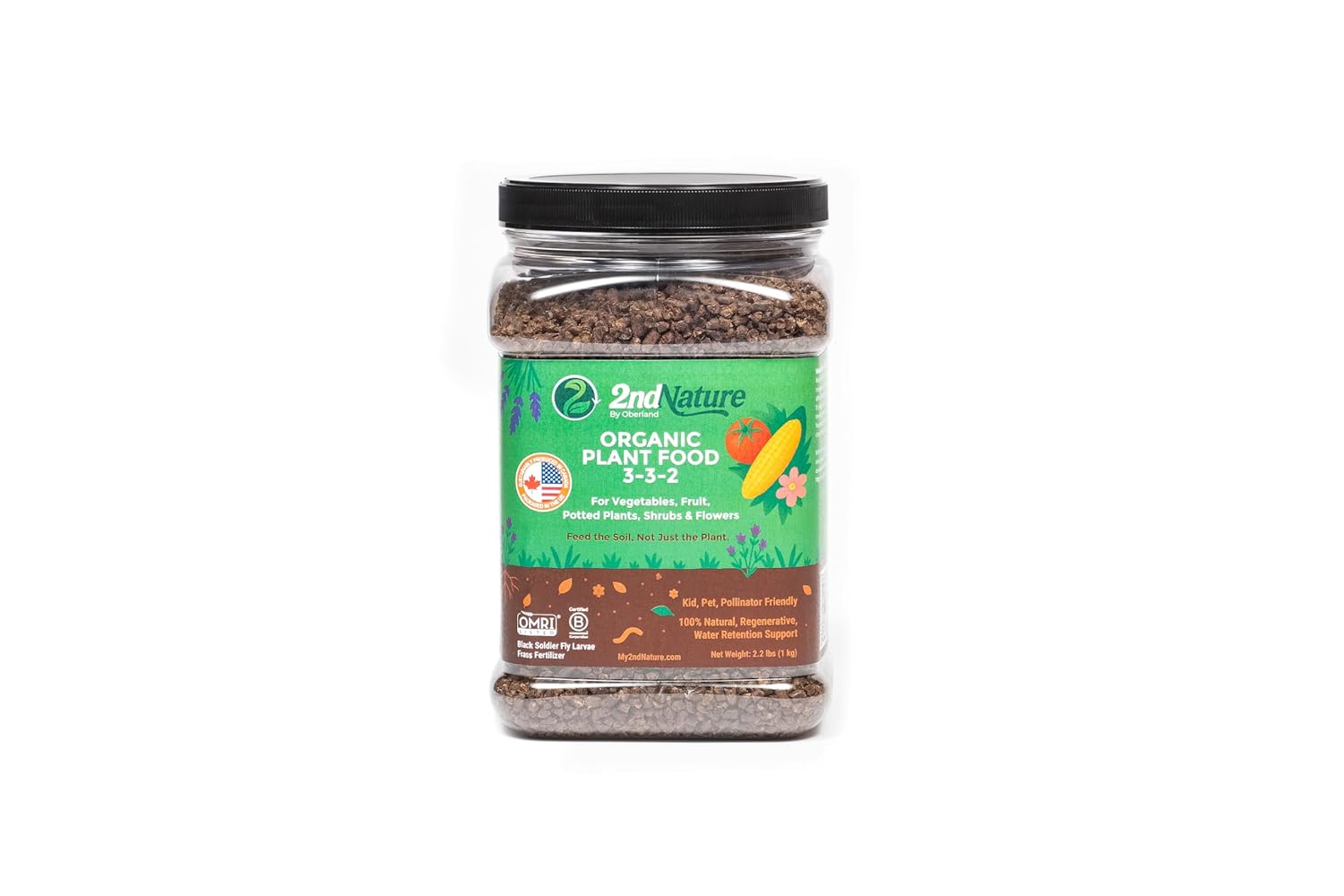
2nd Nature Organic BSFL Frass Pellets 3-3-2 Shake-n-Spread 2.2 lb
| Item Form | Pellet |
|---|---|
| Application Method | Shake-n-Spread |
| Unit Count | 35.2 Ounce |
| Ingredients | 100% Black Soldier Fly Larvae |
| Mixing Ratio | 3:3:2 |
This product is a bagged pellet fertilizer made from black soldier fly larvae frass and packaged in a resealable 2.2 pound Shake-n-Spread container for easy application. You use it by opening the lid and shaking the pellets over soil, potting mix, or around established plants; it is intended as a gentle, slow-release feed that supports foliage, roots, blooms and soil conditioning. Notable features include the organic 3-3-2 NPK profile, chitin content for natural pest support, and an OMRI-listed formulation that replaces or complements worm castings. Practical benefits are straightforward: it improves root strength, helps moisture retention, provides a broad micronutrient mix, and is safe around pets and pollinators. Limitations are that the 2.2 lb container is a modest size for larger beds and that results are gradual rather than instant, so it is best used as part of routine feeding rather than a quick fix for nutrient-deficient plants.
Best for: Gardeners who want an easy-to-apply, organic, pet- and pollinator-safe fertilizer to support steady growth and soil health in outdoor beds and containers while keeping costs moderate.
Less Ideal for: Large-scale gardeners who need bulk quantities or growers seeking rapid corrective feeding for acute nutrient deficiencies should consider higher-volume or faster-acting alternatives.
- OMRI-listed organic frass with a balanced 3-3-2 NPK profile suitable for many garden plants
- Resealable Shake-n-Spread container makes distribution quick and low-mess
- Contains chitin and a range of micronutrients that support root health and natural pest defense
- Pet- and pollinator-friendly formulation safe for mixed outdoor plantings
- Small 2.2 lb container may need frequent replenishing for medium to large gardens
- Slow-release action means not ideal when immediate nutrient correction is required
Verdict: A compact, easy-to-use OMRI-listed frass fertilizer that gives outdoor plants steady organic nutrition and soil benefits without synthetic chemicals.
True Organic Worm Castings Natural Fertilizer (64 oz)

| Unit Count | 64 Ounce |
|---|---|
| Item Form | Granules |
| Application Method | Mix into soil, use for seeding and transplants |
| Specific Uses For Product | Agriculture, Gardening, Root Development, Seed Development |
This 64-ounce bag of True Organic Worm Castings is a concentrated, easy-to-use soil amendment for gardeners who want to improve soil health and steady nutrient delivery. Applied by mixing into potting mixes, garden beds, or used with seeding and transplants, the granules increase beneficial microbial activity, improve aeration and water retention, and supply about 1% total nitrogen with most of that in a slow-release form. For lettuce beds the castings help create a steady nutrient environment without the burn risk of synthetic fertilizers and can improve root development and leaf vigor when blended into the topsoil or starter mix. The product is entirely derived from worm castings and requires no additional processing, but because its nutrient numbers are modest you should not expect it to replace a balanced fertilizer program for long-season heavy feeders. Lightweight to handle and straightforward to incorporate, this is a practical organic option for gardeners seeking healthier soil biology and gentler, longer-lasting nutrient supply.
Best for: Gardeners who prioritize healthier soil biology and steady, low-risk nutrient delivery for leafy crops like lettuce and want an easy-to-use organic amendment to mix into beds or starter mixes.
Less Ideal for: Growers looking for a high-N quick-feed fertilizer or a complete concentrated fertilizer program for heavy-feeding, long-season vegetables.
- Boosts soil microbial activity to improve nutrient availability
- Improves soil structure, aeration, and water retention for better root growth
- Contains slow-release nitrogen for steady feeding without burning plants
- Versatile application for mixing into soil, seeding, and transplants
- Low nutrient percentages mean it may not be sufficient alone for long-term heavy-feeding crops
Verdict: If you want a simple organic amendment to strengthen soil life and provide gentle, slow-release nutrients for lettuce beds, this worm castings bag is an effective choice.
Espoma Organic Chicken Manure Granules, 3.75 lb

| Item Form | Granules |
|---|---|
| Application Method | Scatter around plants |
| Target Species | Flowers, Vegetables, Trees, Shrubs |
| Specific Uses For Product | Gardening, Organic, Plant Food |
Espoma Organic Chicken Manure is a ready-to-use, granulated poultry manure fertilizer aimed at home gardeners who want an organic nitrogen-rich soil amendment. With a 5-3-2 NPK analysis and added calcium, it is scattered around the plant drip line and watered in to release nutrients; the granulated, heat-treated form makes application tidy and eliminates the need for mixing. It is labeled for monthly use on vegetables and for seasonal use on trees and shrubs, which makes it practical for routine feeding of tomatoes, peppers and other vegetable beds. The product is registered for organic production and contains no fillers, so you get mostly poultry manure rather than blended proprietary mixes. Because it is dehydrated and granulated there is minimal odor and easier storage than fresh manure, but nutrient levels are moderate so heavy-feeding crops may need larger or repeated applications. Also it does not supply specific micronutrient balances or slow-release polymers, so pairing it with a balanced organic program will give best results.
Best for: Gardeners who prioritize certified organic inputs and want a simple, easy-to-apply manure fertilizer for regular feeding of vegetable beds and common garden plants.
Less Ideal for: Growers seeking a single-product, high-analysis or slow-release fertilizer for intensive commercial production should consider concentrated or formulated alternatives.
- Certified for organic gardening and made from dehydrated poultry manure
- Granulated, heat-treated form is easy to apply and has lower odor than fresh manure
- Straightforward 5-3-2 NPK plus calcium provides usable nitrogen for vegetables
- Ready-to-use with no mixing required and simple scatter-and-water application
- Moderate nutrient analysis may require more frequent applications for heavy feeders
- Does not list a full micronutrient profile or slow-release formulation
Verdict: A simple, certified organic chicken manure in granule form that makes monthly feeding of vegetable beds easy and low-odor.
Wiggle Worm 100% Pure Organic Worm Castings, 30 lb (Pack of 2)

| Unit Count | 960 Ounce |
|---|---|
| Included Components | 2 Bags |
| Item Form | Granules |
| Specific Uses For Product | Fertilzer and Soil Amendment |
| Target Species | Houseplants, Vegetables, Flowers |
Wiggle Worm Pure Worm Castings are a concentrated, all-organic soil amendment made from 100% worm castings and sold as two 30 pound bags. You use it as a topdress, a planting hole amendment, or mixed into potting mix and raised beds; the product description includes simple application rates for vegetables, containers, perennials, and lawns. Key features are that it is OMRI listed for organic use, odorless and non-burning, and designed to add water-soluble nutrients and beneficial microbes to improve soil structure, aeration, and water retention. In practice this means small, regular amounts will boost root health and microbial activity without the risk of fertilizer burn, and it can be brewed into a quick liquid feeding (casting tea) for faster uptake. The main limitations are that castings supply modest amounts of plant-available nutrients compared with concentrated synthetic fertilizers and that you will need to apply periodically for ongoing fertility rather than a single long-term feed. For gardeners seeking a safe, low-risk organic fertilizer this is straightforward to use around garlic when blended into soil at planting or as a gentle side dress during the growing season.
Best for: Gardeners who prefer low-risk, organic fertility and want a safe, microbial-rich soil amendment to gently feed and improve soil for garlic and other vegetables.
Less Ideal for: Growers who need a rapid, high-nitrogen boost right before harvest or those looking for a single fast-acting concentrated feed.
- OMRI listed organic product appropriate for certified organic gardens
- Odorless and non-burning so it is safe to use around seedlings and sensitive roots
- Adds beneficial microbes and improves soil structure and water retention
- Versatile application methods: topdress, mix into potting mix, or make casting tea
- Lower immediate nutrient concentration compared with synthetic fertilizers so more frequent applications may be needed
- Large bags may be bulky to handle for gardeners with limited storage or mobility
Verdict: If you want a safe, organic way to improve soil health and feed garlic gradually without burning roots, this OMRI-listed worm casting is a reliable choice.
Choosing the Right Manure for Garlic: Key Factors to Consider
Nutrient Balance and Timing
Garlic needs a steady supply of nutrients but is sensitive to high soluble nitrogen at planting. Manure that has been composted or aged tends to offer a gentler, more balanced release of nitrogen and phosphorus, which supports healthy leaf growth early and bulb development later. Consider the total nitrogen content but also how quickly that nitrogen becomes available. Applying high-nitrogen fresh manure at planting can promote lush tops at the expense of bulb formation and can burn tender roots.
Timing matters because garlic planted in fall benefits from slow-release fertility that feeds growth in spring. Plan applications so the manure has time to integrate into soil and begin breaking down before bulbs need heavy feeding.
Salt Content and Burn Risk
High soluble salt levels in some manures can damage garlic cloves or suppress emergence. Salt comes from concentrated waste streams or from manures that were not leached or composted properly. If you are working in a raised bed or container, salt accumulation is a greater risk because there is less soil volume to dilute salts.
Look for sources with low electrical conductivity or that have been composted and tested. When in doubt, incorporate manure ahead of planting and water thoroughly to help flush salts away from seed cloves before they start to grow.
Level of Decomposition
Fresh or 'hot' manure releases a burst of nutrients and heat as microbes decompose it, which can scorch seeds and young roots. Composted or well-aged manure is more stable, provides humus, and reduces disease and weed-seed concerns. For garlic, which is typically planted from cloves, well-decomposed material reduces the chance of root damage and supports long-term soil biology.
Assess whether a manure is described as composted, aged, or cured and prefer those forms for fall incorporation. If only fresh manure is available, give it several months of composting or blending with finished compost before planting garlic.
Weed Seed and Contaminant Risk
Manures sourced from animals fed a wide variety of forage can contain viable weed seeds unless the material was heated during composting. Weed pressure is a long-term management issue in garlic beds because garlic is a slow-growing crop and weeds can outcompete young shoots. Also be aware of the risk of persistent herbicide residues in manure from animals that ate treated hay; these residues can cause distorted growth or crop failure.
Choose manure that is certified or described as weed-seed reduced or that comes from composted sources where thermophilic composting likely destroyed seeds. When in doubt, use a small test patch or incorporate extra weeding effort early in the season.
Effect on Soil Structure and Drainage
Garlic bulbs need loose, well-drained soil. Manure contributes organic matter that improves soil tilth, increases water-holding capacity in sandy soils, and improves drainage in heavy clay by breaking up aggregates. Different manures vary in carbon to nitrogen ratio and fiber content, which influences how they affect soil texture over seasons.
Consider how much bulk the manure will add and whether you need to balance it with coarse materials or mineral amendments to maintain ideal bulb-rooting conditions. Regular additions over seasons build a healthy soil profile for bulb development.
Practicality and Local Availability
Even the ideal manure is only useful if you can obtain and handle it. Bulk volumes, transport, smell, and storage affect whether a gardener can realistically use a material. Some manures are only sold in large farm quantities and are impractical for small urban plots, while bagged composted manure is easier to store and apply.
Factor in handling needs, odor sensitivity of neighbors, and the ability to mix and age material on-site. Local sources may also allow you to ask about feed, composting method, and timing so you can make an informed choice.
When to Apply Manure in the Garlic Cycle
Apply well-aged or composted manure in the fall before planting cloves so it can settle and begin to integrate into the soil. This gives microbes time to stabilize the nutrients and reduces the chance of burning cloves during early growth.
For spring feeding, use a light sidedressing of a stable, low-salt manure or compost when shoots begin to green. Avoid heavy fresh applications in spring because fresh material can create nutrient spikes and uneven growth.
- Fall incorporation: main application for soil building
- Late winter or early spring: light feed if growth looks pale
- Avoid fresh manure at planting to prevent burn
How Much Manure to Use for Beds and Raised Planters
A practical approach is to blend composted manure into the top 6 to 8 inches of soil rather than piling it directly on cloves. In garden beds, a general guideline is to add enough to raise organic matter without overwhelming the soil-commonly a few inches worked in, depending on existing soil quality.
In raised planters or containers, use smaller amounts and focus on well-aged, low-salt products because containers have limited buffering capacity. Over-application in containers can lead to salt accumulation and poor bulb development.
- Mix composted manure into planting zone, do not place directly on cloves
- Adjust quantity by soil type: more for sandy, less for clay
- Use low-salt, well-aged products for containers
Compost Blends and Complementary Amendments
Pair manure with finished compost to balance nutrients and add beneficial microbial activity. Adding some coarse material like leaf mold or well-rotted straw can help improve structure without tying up nitrogen.
If soil tests show low phosphorus or potassium, choose manure types or compost blends that supply those nutrients or plan supplemental mineral amendments. Lime or sulfur adjustments should be guided by soil pH readings, as manure can slightly alter pH over time.
- Blend manure with finished compost to stabilize nutrients
- Use coarse carbon materials to improve texture
- Follow soil test recommendations for mineral adjustments
Sourcing and Verifying Manure Quality
Ask about composting method and how long the manure was cured. Thermophilic composting that reaches high temperatures is more likely to kill weed seed and pathogens. For bagged products, look for language indicating the product is composted, aged, or cured.
If sourcing from farms, ask about livestock feed and any recent herbicide use on forage. Some herbicides persist through digestion and composting and can damage garlic. A small trial patch can reveal issues before you commit large areas.
- Prefer thermophilically composted or well-aged manure
- Ask suppliers about herbicide-treated feed or persistent chemicals
- Test a small area if quality information is limited
Handling and Storage Tips
Store manure in a dry, ventilated area and allow extra curing time if material was recently received. Cover piles to prevent nutrient leaching but ensure airflow to avoid anaerobic conditions that create odors and phytotoxic byproducts.
When spreading, use gloves and a mask if dust is a concern. Wash hands and tools after handling and avoid applying manure directly where you will harvest shortly after application.
- Cure and store covered but ventilated
- Handle composted manure with basic protective gear
- Avoid recent application immediately before harvest
How We Chose the Best Manure for Garlic
We focused on attributes that directly influence garlic health and bulb development. Key evaluation criteria included nutrient balance, especially available nitrogen and phosphorus levels appropriate for bulb formation; salt content and risk of burn; level of decomposition and composting to avoid fresh manure shock; contaminant risks such as weed seeds, pathogens, or persistent herbicide residues; and how the material affects soil structure, drainage, and organic matter over time. Application practicality was also assessed, considering ease of spreading, odor, and compatibility with common garlic planting schedules. We excluded manures that are typically too fresh, too high in soluble salts, or known to carry persistent herbicides that can harm bulb crops. Bulk availability and common use in small-scale vegetable and kitchen gardens were prioritized so recommendations are realistic for home gardeners. The scoring emphasized measurable, product-specific dimensions gardeners can verify on labels or by source information, aligning with real-world handling and seasonal timing needs.
FAQ
Can I use fresh manure for garlic if it is mixed into the soil?
Fresh manure is risky because it releases heat and soluble nitrogen that can burn cloves and damage roots. If only fresh manure is available, compost or age it for several months before incorporating, or apply it well ahead of planting to allow decomposition.
Which manures are safest for use in raised beds and containers?
Composted, low-salt manures and bagged composted mixes are safest for confined soil volumes. These products have lower soluble salt levels and are more stable, reducing the risk of bulb burn and salt buildup in containers.
How can I tell if manure contains weed seed or herbicide residues?
Thermophilic composting that maintains high temperatures typically destroys weed seed. Ask suppliers about composting methods and recent forage treatments. A quick test is to spread a thin layer in a small bed and monitor for unusual weed emergence or crop distortion before wider use.
Should I soil-test before applying manure to my garlic beds?
Yes. A soil test helps you understand pH and nutrient baselines so you can choose manure types and any mineral supplements appropriately. Tests are especially helpful for adjusting phosphorus, potassium, and pH needs for optimal bulb development.
Is there a risk of disease transmission from manure to garlic?
Properly composted manure greatly reduces disease risk because high temperatures in the pile kill many pathogens. Fresh manure carries higher risk, so use only well-aged or composted material and avoid applying it too close to planting without adequate curing.
Final Verdict
Prioritize well-aged, composted manures that supply balanced nutrients, low soluble salts, and organic matter to build soil structure for garlic bulbs. Match application timing to the garlic cycle by incorporating stable material in fall and using light, conservative spring feedings if needed. Weigh tradeoffs between bulk application for long-term soil building and the need to avoid fresh, hot materials that can burn cloves. When in doubt, choose low-salt, thermophilically composted sources, do a small patch test, and adjust quantities based on soil type and container limitations.
