

Note: This article contains affiliate links. If you click on these links and make a purchase, I may earn a small commission at no extra cost to you. This helps support my research and content. Read my full affiliate disclosure here.
Picking the right 4 stroke lawn mower matters because engine type shapes daily use, noise, and maintenance needs in real lawns and yards. A four-stroke engine delivers separate oil and fuel systems, which usually means quieter operation, cleaner exhaust, and longer service intervals compared with two-stroke alternatives. That makes this family of mowers a strong option for homeowners who mow medium to large lawns, value ease of maintenance, and want consistent starting. This guide covers seven shortlisted 4 Stroke Lawn Mowers that suit typical yard sizes and mowing conditions. We evaluate models across practical criteria gardeners care about, including engine reliability, cutting performance, deck construction, ease of use, and fuel economy. Read on to see how each mower performs against those factors and which features matter most for the kind of grass, terrain, and storage you have.
Top Picks at a Glance
| Best Overall The best all-around choice for most situations | PowerSmart 21-Inch Gas Push Lawn Mower with 144cc OHV Engine |  |
| Best Quality Built to a higher standard if you want something more solid | PowerSmart EasyDrive Pro 22-Inch 170cc Self-Propelled Gas Lawn Mower |  |
| Best Value The sweet spot between price and what you get | SENIX 21-Inch Gas Push Lawn Mower, 144cc 4-Cycle, 2-in-1 Mulching/Side Discharge |  |
| Best Budget The cheapest option that still gets the job done reliably | SENIX 20" Gas Push Lawn Mower, 144cc 4-Cycle Engine |  |
| Highest Rated A top-rated pick with lots of positive feedback | SENIX 21-Inch Gas Push Lawn Mower, 144cc 4-Stroke, Steel Deck |  |
| Most Popular A crowd favorite that many people choose with confidence | SENIX 201cc 22" 3-in-1 Variable Speed Self-Propelled Gas Lawn Mower |  |
| Best Seller A high-volume bestseller chosen again and again | PowerSmart EasyCut 18-Inch Gas Walk-Behind Lawn Mower (144cc) |  |
PowerSmart 21-Inch Gas Push Lawn Mower with 144cc OHV Engine

| Engine Displacement | 144cc |
|---|---|
| Power Source | Gasoline-Powered |
| Deck Material | 16 Gauge Steel |
| Cutting Options | Mulch, Side-Discharge |
| Cutting Height Range | 1.5" to 3.9" (6 positions) |
This PowerSmart 21-inch push mower pairs a 144cc 4-stroke OHV engine with a durable 16-gauge steel deck to deliver straightforward, reliable mowing for small to medium yards. It is designed for manual push operation and offers mulching and side-discharge modes so you can return fine clippings to the lawn or eject them to the side. A single-lever, six-position height adjuster (1.5" to 3.9") makes it quick to change cut height, while larger rear wheels aid control on slightly uneven ground. The mower ships mostly assembled and starts with a primer and pull-cord, so initial setup is simple for anyone comfortable with small engines. Practical touches include a foldable handle for compact storage and a 0.21 gal fuel tank for short mowing sessions. Limitations are that it is not self-propelled and is best suited to flat yards up to about a quarter acre; users who expect power-assist or long runtime will need a different model. Routine small-engine maintenance is required to keep the unit starting reliably.
Best for: Homeowners who prioritize straightforward, no-frills performance and low initial cost for mowing small to medium flat lawns and who are comfortable with basic small-engine upkeep.
Less Ideal for: People with hilly or large lawns who want a self-propelled or longer-run solution or buyers seeking a cordless, low-maintenance electric option.
- Powerful 144cc OHV 4-stroke engine for reliable starting and consistent cutting
- Durable steel 21-inch deck that supports mulching and side-discharge
- Single-lever, six-position height adjustment for quick cut-height changes
- Foldable handle and compact folded size for space-saving storage
- Larger rear wheels improve tracking and handling over uneven spots
- Push-only design with no self-propelled drive may be tiring on slopes or larger lawns
- Small fuel tank limits continuous runtime for bigger jobs
Verdict: A capable, budget-friendly 21-inch gas push mower that delivers solid cutting performance and compact storage for small flat yards.
PowerSmart EasyDrive Pro 22-Inch 170cc Self-Propelled Gas Lawn Mower

| Engine displacement | 170cc |
|---|---|
| Cutting width | 22 in. |
| Drive type | Self-Propelled RWD |
| Cutting options | Mulch, Rear Bag, Rear Discharge |
| Cutting height range | 1.5 in to 3.9 in (6 positions) |
The PowerSmart EasyDrive Pro is a practical self-propelled gas mower built to cover medium-size lawns without premium pricing. Its 170cc 4-stroke OHV engine and 22-inch cutting deck let you tackle thicker grass and finish a half-acre yard more quickly than a smaller push mower. The rear-wheel drive reduces pushing effort on slopes and uneven ground, and six cutting heights from 1.5 to 3.9 inches plus a 3-in-1 mulch/bag/rear discharge system handle common lawn conditions. A 1.4-bushel bag and durable 16-gauge steel deck make it suitable for regular suburban maintenance, and the folding handle helps save garage space. Starting uses a recoil pull cord and the small fuel tank and recommended oil type mean minimal additional setup. Expect basic, no-frills assembly and straightforward maintenance rather than premium conveniences like electric start or larger fuel capacity. For buyers prioritizing value, it delivers solid cutting performance but sacrifices some higher-end features and conveniences found on more expensive models.
Best for: Buyers who need a capable mower for a suburban lawn up to about half an acre and who prioritize strong cutting performance and value over premium features.
Less Ideal for: Homeowners who want premium conveniences like electric start, large fuel capacity, or professional-grade components for very large properties should consider higher-end models.
- 170cc OHV engine provides enough power for thicker grass and quicker passes on up to 1/2 acre
- 22-inch cutting deck reduces mowing time compared with smaller decks
- Self-propelled rear-wheel drive eases work on slopes and uneven terrain
- 3-in-1 cutting system (mulch, bag, rear discharge) matches changing lawn conditions
- Folding handle for compact storage when space is limited
- Pull-cord start rather than electric start requires more effort to start
- Small fuel tank capacity limits continuous run time between refills
- Basic features and materials compared with higher-end mowers
Verdict: A value-focused self-propelled mower that delivers strong cutting power and a wide 22-inch deck for efficient upkeep of lawns up to half an acre.
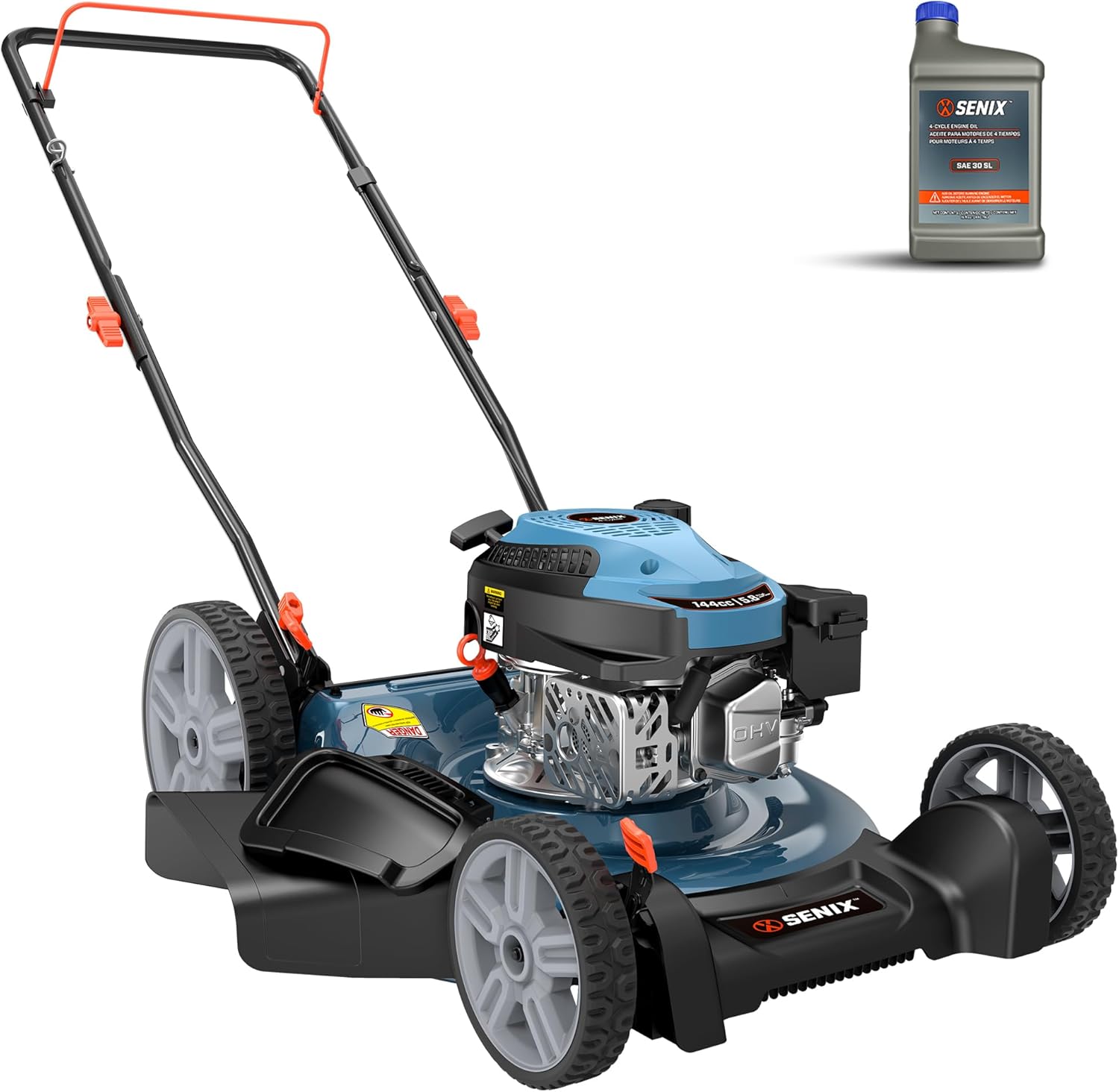
SENIX 21-Inch Gas Push Lawn Mower, 144cc 4-Cycle, 2-in-1 Mulching/Side Discharge
| Power Source | Gasoline-Powered |
|---|---|
| Cutting width | 21 inches |
| Number of Positions | 6 |
| Item Highlight | 4-Cycle Engine, Side Discharge, 6-Position Height Adjustment |
This SENIX 21-inch push mower pairs a 144cc 4-cycle engine with a 2-in-1 deck so you can mulch or side-discharge depending on grass conditions. It is built for routine residential mowing and is most useful for yards up to roughly 1/2 acre where corded or battery options are inconvenient. The high-rear 11-inch wheels and oversized front wheels make it easier to push across uneven lawns and through taller turf, while the dual-lever six-position height adjustment (1.25 to 3.75 inches) lets you switch quickly between a close cut and a taller, protective setting. Assembly is straightforward and the mower comes with a basic tool kit. Expect reliable power on thicker turf and slopes without frequent stalling, but remember a gas mower needs regular fuel, oil, and spark plug upkeep and makes more noise and emissions than electric alternatives. For a homeowner who prioritizes straightforward power, wide cutting path, and adjustable finish, this is a practical and capable choice; if you need zero-emission operation or are unwilling to maintain an engine, consider an electric or battery model instead.
Best for: Homeowners who want a straightforward, gas-powered mower that reliably handles thicker turf and uneven lawns and who value runtime and cutting width over zero-emission operation.
Less Ideal for: City dwellers or small-lot owners who prefer quiet, low-maintenance, and emission-free mowing should consider electric or battery alternatives instead.
- Powerful 144cc 4-cycle engine delivers steady performance on thick grass and gentle slopes
- 21-inch cutting deck covers more ground per pass for faster mowing of medium yards
- 2-in-1 mulching and side-discharge options adapt to different grass and cleanup needs
- High 11-inch rear wheels improve maneuverability over uneven terrain
- Dual-lever six-position height adjustment allows quick, tool-free changes
- Requires regular gas engine maintenance and produces more noise and emissions than electric mowers
- Heavier than comparable battery models which can make transport and storage less convenient
Verdict: Choose this mower if you need a practical, gas-powered 21-inch machine that delivers reliable power and easy height adjustment for medium residential lawns.
SENIX 20" Gas Push Lawn Mower, 144cc 4-Cycle Engine

| Power Source | Gas Powered |
|---|---|
| Engine | 144cc 4-Cycle |
| Cutting width | 20 |
| Number of Positions | 3 |
| Material Type | Stainless Steel |
The SENIX 20" gas push mower is a straightforward, no-frills machine for homeowners with small to quarter-acre yards. It uses a 144cc 4-cycle engine and a 20-inch steel deck to cut a wider swath than compact 16" mowers, which speeds up routine maintenance. Typical use is simple push mowing around flower beds, fences, and on modest slopes where its 7" wheels provide traction. The mower offers three cutting heights (1.35, 2.3, 3.15 inches) for quick adjustments between passes and can side-discharge or mulch clippings depending on your yard care preference. Assembly is generally described as quick and the engine tends to start easily on the first pull, with oil and basic tools included. Key limitations are the manual push operation rather than self-propel, and only three height positions compared with more expensive models, so it may require extra effort on larger properties or very tall grass. For everyday trimming and small properties, it delivers practical performance and good value.
Best for: Homeowners with small yards who want a simple, gas-powered mower that starts reliably and maneuvers easily around beds and obstacles while offering decent cutting width for quicker jobs.
Less Ideal for: People with larger lawns, frequent very tall grass, or those who prefer a self-propelled or variable-speed mower for less physical effort.
- 144cc 4-cycle engine that handles overgrown grass and wet conditions
- 20-inch cutting width covers more ground per pass than compact mowers
- Lightweight, narrow body and 7-inch wheels for easy maneuvering in tight spaces
- Includes oil and basic tools and is backed by a 2-year manufacturer warranty
- Manual push operation rather than self-propel makes longer lawns more tiring to mow
- Only three cutting-height positions limit fine adjustment for specialty turf
Verdict: A practical, easy-to-start 20" gas push mower that delivers good cutting performance and maneuverability for small yards at a budget-friendly level.
SENIX 21-Inch Gas Push Lawn Mower, 144cc 4-Stroke, Steel Deck

| Power Source | Gas Powered |
|---|---|
| Cutting width | 21 inches |
| Maximum Adjustable Cutting Height | 3.75 inches |
| Minimum Adjustable Cutting Height | 1.25 inches |
| Number of Positions | 6 |
This SENIX 21-inch gas push mower is built around a 144cc OHV 4-stroke engine and a stamped steel deck to handle regular lawn maintenance for small to mid-size yards. Typical use is straightforward: fill with oil and gas, set one of six cutting heights from 1.25 to 3.75 inches, then choose mulching, side discharge, or rear bagging with the included 1.7-bushel catcher. Notable features include the low-vibration OHV engine that delivers about 3.4 HP, a vortex-style deck to reduce clumping, and larger rear wheels that help when mowing uneven turf. Practical benefits are reliable starting and longer engine life from the 4-stroke design, decent cutting coverage from the 21-inch deck, and flexibility for different grass conditions thanks to the 3-in-1 system. Important limitations are that it is a manual push model rather than self-propelled and the bag capacity is modest, so it is best suited to up to roughly a third-acre rather than large properties.
Best for: Buyers who prioritize a dependable, serviceable gas mower for routine lawn care on small to mid-size yards and want straightforward mechanics that are easy to maintain.
Less Ideal for: People with larger properties, steep slopes, or those who prefer low-effort mowing should consider a self-propelled or larger-capacity model instead.
- 144cc OHV 4-stroke engine designed for reliable starting and longer service life
- 3-in-1 steel deck supports mulching, side discharge, and rear bagging for flexible mowing
- Six-position dual-lever height adjustment for precise cut from 1.25 to 3.75 inches
- Vortex deck design reduces grass buildup and larger rear wheels improve maneuverability on uneven ground
- Push-only operation requires more physical effort than self-propelled mowers for larger yards
- 1.7-bushel grass bag is relatively small, requiring frequent emptying on dense growth
Verdict: A sturdy, easy-to-maintain gas push mower that delivers reliable performance for routine care of small to mid-size lawns.
SENIX 201cc 22" 3-in-1 Variable Speed Self-Propelled Gas Lawn Mower

| Power Source | Gas Powered |
|---|---|
| Cutting width | 22 inches |
| Operation Mode | Automatic |
| Number of Positions | 6 |
| Material Type | Stainless Steel |
This SENIX mower pairs a 201cc four-cycle OHV engine with a 22-inch steel deck to tackle medium to large lawns efficiently. It is self-propelled with large 11-inch rear wheels, so it eases forward motion on slopes and thicker turf while letting you control pace with variable drive. The mower offers a 3-in-1 system so you can bag clippings, mulch them back into the lawn, or side-discharge depending on grass conditions. Height is adjusted quickly with a single lever across six positions from 1.25 to 4 inches to suit seasonal needs. The steel construction and sizeable cutting width help you finish jobs faster than a typical 20-inch push mower. Expect routine maintenance typical of gas machines such as fuel, oil, spark plug checks, and occasional blade sharpening; it is heavier and louder than electric models and needs winter storage to avoid carburetor issues. For buyers prioritizing proven mechanical performance and versatility, this mower delivers a substantial, practical package for regular lawn care.
Best for: Homeowners who value reliable gas power and versatility for maintaining medium to large yards and who prefer equipment with established mechanical performance and visible user feedback.
Less Ideal for: People who prioritize low-noise, low-maintenance electric options or have very small yards where a lighter push mower or battery model would be more convenient.
- Powerful 201cc OHV engine provides consistent cutting performance for medium to large lawns
- 22-inch steel cutting deck covers more ground per pass than 20-inch mowers
- Rear-wheel self-propelled drive with 11-inch wheels improves traction and handling on slopes
- 3-in-1 cutting system (bag, mulch, side discharge) adapts to different lawn care needs
- Single-lever, six-position height adjustment lets you change cutting height quickly
- Gas engine requires regular maintenance and winter storage to avoid fuel system issues
- Heavier and louder than electric alternatives which may affect maneuverability and noise sensitivity
Verdict: Choose this mower if you want a tough, gas-powered 22-inch self-propelled machine that handles larger lawns and offers bagging, mulching, and side-discharge versatility.
PowerSmart EasyCut 18-Inch Gas Walk-Behind Lawn Mower (144cc)

| Engine displacement | 144cc |
|---|---|
| Power source | Gas Powered |
| Cutting width | 18-Inch |
| Cutting height options | 1.5 – 3.9 Inch |
| Number of positions | 5-Position |
The PowerSmart EasyCut is a straightforward gas push mower aimed at small-yard maintenance. It uses a 144cc OHV 4-cycle engine with a primer bulb and auto choke for easier starting and a pull-cord starter. The 18-inch reinforced steel deck and specialized blade are designed to deliver a clean cut while the side-discharge setup keeps clippings moving for continuous mowing. Height is adjusted via a 5-position lever that ranges from 1.5 to 3.9 inches to suit common turf needs. Large front and rear wheels and a compact, quick-fold handle make it maneuverable around beds and simple to store. Practical benefits include reliable gasoline power for thicker grass, simple controls with few electronics to worry about, and a size well matched to roughly quarter-acre yards. Expect the typical maintenance of a gas mower such as fueling, oil, spark-plug checks, and occasional sharpening; there is no bagging or mulching attachment included so you will need an alternative for clipping collection. The build favors value and ease of use over advanced features like self-propel or a grass collection system.
Best for: A buyer who wants a dependable, no-frills gas mower for routine upkeep of a small yard and values straightforward starting and durable cutting performance informed by other users' positive experience.
Less Ideal for: Homeowners who need a grass-collection solution, prefer self-propelled mowers, or who have larger or steeply sloped properties should consider different models.
- Easy-start 144cc 4-cycle OHV engine with primer and auto choke for reliable ignition
- Reinforced 18-inch steel deck and blade designed for a consistent cut
- Five-position height adjustment covering 1.5 to 3.9 inches for common lawn heights
- Compact folding handle for simple storage in a garage or shed
- Large front and rear wheels improve maneuverability around obstacles
- Side-discharge only with no bag or mulching attachment included
- Manual push drive requires physical effort on slopes or larger yards
- Fuel and basic engine maintenance are required regularly
Verdict: A simple, reliable gas push mower that delivers solid cutting performance for small yards and buyers who prioritize dependable starts and proven user satisfaction.
Choosing the Right 4 Stroke Lawn Mower: Key Factors to Consider
Engine Reliability and Servicing
A four-stroke engine separates oil and fuel, which reduces smoke and simplifies starting. Look for accessible oil fill and drain points, clear dipstick marks, and an engine layout that allows routine checks without tools. Regular oil changes and air filter maintenance are straightforward when service points are well placed, and that increases the mower's lifespan.
Engine reliability affects how often you spend time on maintenance versus mowing. For homeowners, a reliably starting engine reduces frustration on early morning chores and ensures you can follow a consistent mowing schedule.
Cut Quality and Deck Width
Cut quality depends on blade design, deck shape, and the mower's ability to maintain consistent ground clearance. Wider cutting decks reduce mowing time but can struggle in tight beds or around obstacles. Consider the balance between deck width and your yard layout: wider decks for open lawns, narrower decks for yards with trees, beds, or tight passes.
Deck shape and anti-scalp features influence how clean the cut looks across uneven terrain. A well-designed deck also promotes efficient grass discharge or mulching, which affects the appearance and health of the lawn.
Deck Construction and Corrosion Resistance
Deck material and fabrication determine long-term durability. Steel decks are common and offer strength, but cheaper stamped steel can rust and warp over seasons. Look for thicker gauge steel, factory-applied corrosion-resistant coatings, or decks designed to shed clippings and moisture.
Weld quality, reinforcement ribs, and the design of discharge or mulching ports affect how the deck holds up under repeated impacts and moisture exposure. A robust deck reduces the chance of costly repairs and maintains even cutting geometry.
Maneuverability and Drive System
How a mower handles affects daily usability. Consider whether you need a self-propelled drive and whether it should be rear-wheel, front-wheel, or all-wheel drive. Self-propelled mowers reduce physical effort on slopes and larger plots, but the system should offer variable speed control and reliable belts or transmissions.
Handle ergonomics, operator height, and folding or telescoping handles matter for both comfort and storage. Good maneuverability reduces time spent edging and makes it easier to follow lawn contours for a cleaner finish.
Maintenance Accessibility and Consumables
Routine maintenance tasks should be simple and safe. Easy-access air filters, spark plugs, oil drains, and blade removal systems shorten service time and encourage proper upkeep. Blade balance and replacement procedures also affect long-term cutting performance.
Availability of common consumables like replacement blades, air filters, and belts can influence lifecycle costs and downtime. Choose designs that use standard parts or have documented service procedures to keep the mower running season after season.
Noise, Vibration, and Neighborhood Impact
Four-stroke engines are generally quieter than two-stroke alternatives, but noise levels still vary by muffler design, engine mounts, and blade speed. Lower noise reduces neighbor disturbance and lets you mow earlier or later in the day. Vibration control through rubber mounts or balanced components improves comfort and reduces operator fatigue.
Consider how noise and vibration affect your household and neighbors, especially in close subdivisions. Quieter, low-vibration designs often indicate better-engineered mounts and muffler systems that also contribute to engine longevity.
Sizing the Mower to Your Lawn
Match mower width and fuel tank capacity to the size and complexity of your yard. For half-acre and larger lawns, wider decks and larger fuel tanks reduce the number of passes and refueling stops. For smaller or intricately landscaped yards, narrower decks and more compact machines make it easier to navigate tight spaces and store the unit between uses.
- Open lawns: prioritize cutting width and self-propelled drive.
- Yards with obstacles: choose maneuverability and smaller deck sizes.
- Sloped terrain: favor rear-wheel drive or variable-speed self-propel systems.
Mulching, Bagging, and Side Discharge Options
Decide how you want to handle grass clippings. Mulching blades finely chop clippings and return organic matter to the lawn, which helps soil over time. Bagging keeps lawns tidy and is useful when clippings are excessive or when weed seeds are present. Side discharge clears tall grass quickly but can leave visible clumps.
- Look for mowers that offer quick-change options between mulching and bagging.
- Consider how often you mow: frequent mowing makes mulching more practical.
- Bag capacity affects how often you need to stop to empty.
Storage, Winterizing, and Off-Season Care
Proper storage preserves engine condition and deck integrity. Drain or stabilize fuel for long storage, change oil, clean the deck to prevent rust, and store the mower in a dry, covered space. A simple annual winterizing routine extends the life of a four-stroke engine and reduces starting problems in spring.
- Stabilize fuel or drain fuel system before extended storage.
- Clean clippings from the deck and undercarriage to prevent corrosion.
- Store mower on blocks or level surface and disconnect battery if applicable.
Safety Features to Expect
Ensure the mower includes reliable operator presence controls that stop the blade when the handle is released. Shields and guards around belts and blades reduce risk during maintenance. Clear labeling for fuel and oil fills and easy-to-access shutoffs improve safe operation and routine service.
- Operator presence lever or kill switch should be within easy reach.
- Blade engagement systems should have clear on/off positions.
- Keep a basic tool kit and blade removal tool accessible for safe servicing.
How We Chose the Best 4 Stroke Lawn Mower
We prioritized real-world performance and durability for typical homeowner mowing tasks. Selection began by filtering for 4-stroke engines with proven design features: separate oil and fuel systems, accessible service points, and clear maintenance schedules. We then evaluated cutting systems and decks for even clipping across common lawn types, and considered deck materials and construction that resist corrosion and warping. Ease of use factors included starting reliability, intuitive drive controls, and deck height adjustments that gardeners actually use during a season. Noise and vibration levels were considered because quieter operation is important in suburban settings. Fuel efficiency and accessible fuel-cap designs were also weighed to reduce trips to refuel and minimize spills. Finally, we excluded specialty commercial mowers and niche models designed exclusively for large estates or professional crews to keep the list focused on homeowner and small-property needs. Excluded from consideration were machines with unclear maintenance access, unserviceable decks, or designs that required frequent oil mixing or nonstandard fuels. The resulting picks balance engine dependability, cutting quality, and practical features that matter during daily yard care.
FAQ
How often should I change the oil in a 4-stroke lawn mower?
Oil-change intervals depend on hours of use but commonly fall between every 25 and 50 hours, or once per mowing season for typical homeowners. Check the engine manual, use the correct oil grade, and replace the oil more frequently if you operate in dusty conditions.
Can I use ethanol-blended fuel in a 4-stroke lawn mower?
Ethanol blends are often usable in small engines but can attract moisture and cause carburetor issues if left sitting. Use low-ethanol fuel when possible, avoid long-term storage with fuel in the tank, and consider a stabilizer for short-term storage.
Is a self-propelled mower necessary for small yards?
Self-propelled drive is helpful on uneven terrain or for users who prefer less physical effort, but it is not always necessary for small, flat yards. A push mower can be lighter, simpler, and easier to maintain for very small plots.
How do I choose the right cutting height for my grass type?
Cutting height depends on species: cool-season grasses typically do best at 2.5 to 3.5 inches, while warm-season grasses often tolerate lower heights. Avoid removing more than one-third of the blade length in a single mowing to reduce stress on the turf.
What maintenance should I do before the first mow of the season?
Perform an oil and air filter check, sharpen or replace blades, inspect the deck for rust or damage, and confirm that the spark plug and fuel system are in good condition. A quick safety check of controls and belts helps prevent surprises during the season.
Final Verdict
Choose a 4 Stroke Lawn Mower that fits your lawn size, terrain, and how much time you want to spend on maintenance. Prioritize engine accessibility, deck construction, and the drive system that matches your yard's slope and obstacles. Expect tradeoffs between cutting width and maneuverability, and weigh noise and vibration if you mow during early or late hours. A carefully matched mower reduces mowing time and maintenance headaches. Focus on the core criteria outlined here to select a model that delivers consistent starts, good cut quality, and straightforward upkeep for years of reliable lawn care.
