

Note: This article contains affiliate links. If you click on these links and make a purchase, I may earn a small commission at no extra cost to you. This helps support my research and content. Read my full affiliate disclosure here.
Getting the potting mix right makes a noticeable difference in how Aglaonema grows and how often you need to water. These evergreen houseplants prefer a substrate that holds some moisture but also drains and breathes so roots do not sit in water. Too heavy a mix invites root rot; too light and the plant will stress from drying out too quickly. This guide shortlists the top potting mixes suited for Aglaonema and explains the practical strengths of each type. We evaluated mixes for moisture control, aeration, ingredient stability, and how they behave in a typical home environment. Use the summaries and the decision checklist below to pick the mix that fits your light, watering habit, and pot style.
Top Picks at a Glance
| Best Overall The best all-around choice for most situations | Top Tier Genetics AROID Potting Mix for Monstera and Aroids (4 qts) |  |
| Best Quality Built to a higher standard if you want something more solid | Wekiva Foliage Aglaonema Soil Mix (3 Quarts) |  |
| Best Value The sweet spot between price and what you get | Grow Queen Craft Houseplant Potting Mix, 2 Quart |  |
| Best Budget The cheapest option that still gets the job done reliably | Back to the Roots Organic Indoor Potting Mix, 6 Quart |  |
| Highest Rated A top-rated pick with lots of positive feedback | Miracle-Gro Indoor Potting Mix for All Plants, 6 qt., 2-Pack |  |
| Most Popular A crowd favorite that many people choose with confidence | Miracle-Gro Houseplant Potting Mix, 4 qt. |  |
| Best Seller A high-volume bestseller chosen again and again | Miracle-Gro Potting Mix, 16 qt. |  |
Top Tier Genetics AROID Potting Mix for Monstera and Aroids (4 qts)
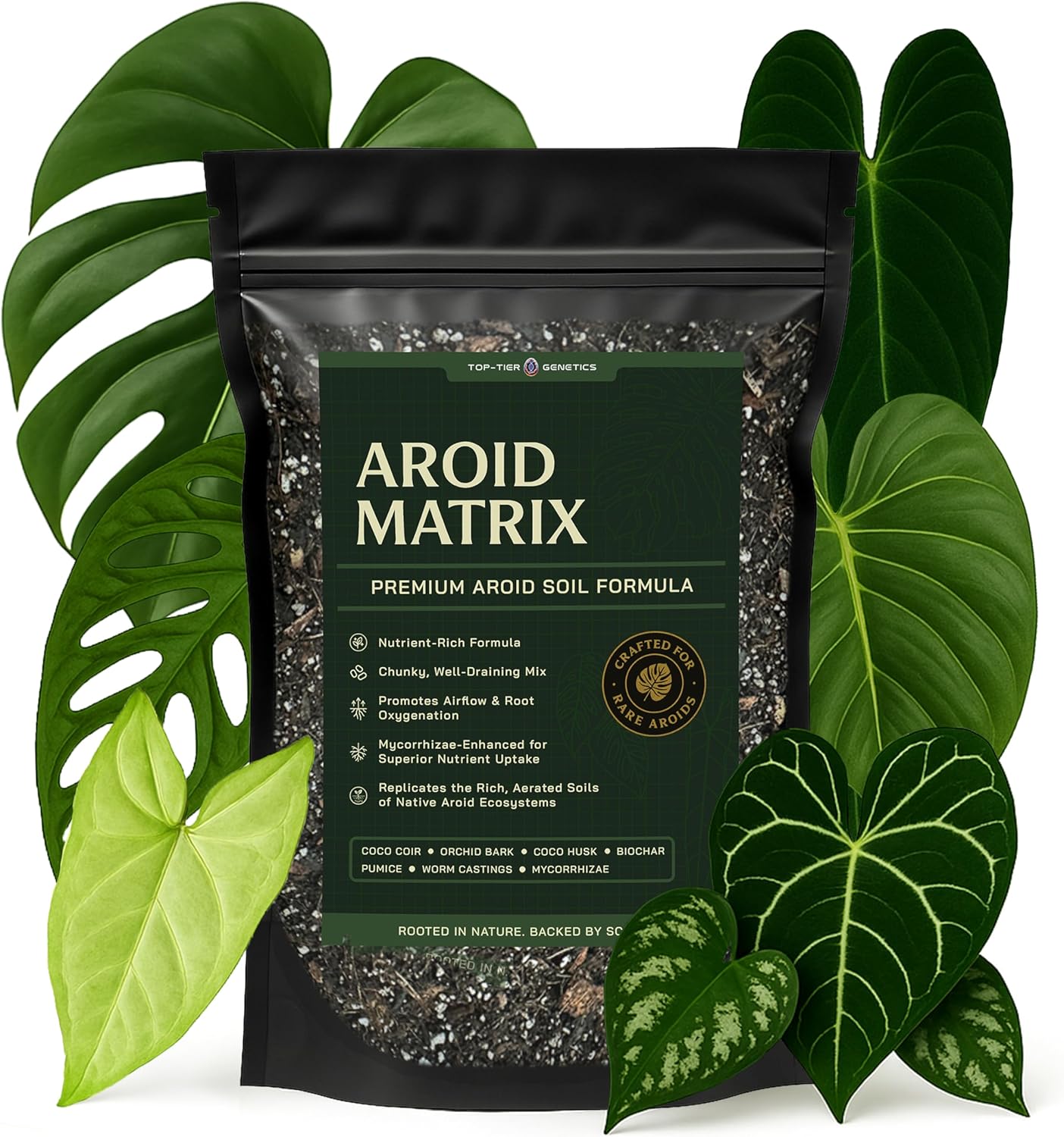
| Brand | Top Tier Genetics |
|---|---|
| Unit Count | 128 Ounce |
| Ingredients | Orchid bark; Coco coir; Pumice; Coco husk; Worm castings; Biochar; Mycorrhizae |
| Volume | 4 quarts |
This AROID potting mix is formulated specifically for monsteras and other aroids and is ready to use straight from the bag. The chunky texture from orchid bark, coco husk, and pumice gives strong drainage and aeration, which helps prevent waterlogged roots and encourages fibrous root growth in large-leaved tropicals. Coco coir provides moisture retention without compaction, while worm castings and mycorrhizae supply a gentle, ongoing nutrient and microbial boost for healthier foliage. Biochar adds longer-term soil health benefits by improving nutrient retention and supporting microbial life. It is practical for repotting and regular refreshes of Monstera deliciosa because you do not need to mix components yourself. The main limitation is the small 4 quart volume, which makes it best for individual plant repots or top-ups rather than filling large containers or multiple plants at once. Shoppers who want a dependable, aroid-focused medium will appreciate the balanced moisture control and built-in biological amendments.
Best for: Buyers who want a reliable, ready-made potting medium tailored to Monstera and other aroids and prefer a mix that minimizes setup and reduces repotting risk.
Less Ideal for: Gardeners needing large volumes for many plants or big container fills who should look for bulk mixes or larger bags.
- Chunky mix (orchid bark, coco husk, pumice) provides excellent drainage and root aeration
- Contains worm castings and mycorrhizae to support steady nutrient availability and root health
- Coco coir balances moisture retention without promoting compaction
- Includes biochar to improve long-term soil microbial activity and nutrient holding capacity
- Small 4 quart bag size is insufficient for large pots or multiple repots
Verdict: A convenient, aroid-focused potting mix that delivers reliable drainage, moisture balance, and microbial support for healthy Monstera growth.
Wekiva Foliage Aglaonema Soil Mix (3 Quarts)

| Brand Name | Wekiva Foliage |
|---|---|
| Unit Count | 3 Count |
| Volume | 1 quarts |
| Item Weight | 16 ounces |
This Aglaonema soil mix is a ready-to-use blend aimed at encouraging healthy foliage and strong roots for indoor Aglaonema varieties. The mix combines peat moss and HydraFiber for moisture retention with coarse perlite and aged bark to improve drainage and aeration, so it is typically used when repotting or refreshing the top layer of potted plants. Included lime, gypsum, and Nitroform supply starter nutrients and help stabilize pH, reducing the need for immediate fertilization after repotting. For everyday use it handles common indoor watering routines well and helps prevent waterlogging and root rot while keeping medium moisture available to the plant. Limitations are its small 3-quart size, which means multiple bags are needed for larger collections or big pots, and it does not specify long-term nutrient concentrations so occasional feeding is still advisable for heavier feeders. Overall it is a focused, nursery-developed option for growers who want a tailored medium for Aglaonema health and appearance.
Best for: Plant owners who prioritize plant performance and want a professionally blended medium that reduces common moisture and drainage problems when repotting Aglaonema.
Less Ideal for: Gardeners looking to pot many large specimens from seed or repot dozens of plants at once will find the small unit inefficient; those who need a customizable, ingredient-by-ingredient mix may prefer raw components instead.
- Formulated specifically for Aglaonema with components to support foliage and root health
- Good balance of drainage and moisture retention thanks to perlite, aged bark, peat moss, and HydraFiber
- Includes lime, gypsum, and starter nutrient (Nitroform) to help stabilize pH and provide initial feeding
- Ready-to-use mix suitable for repotting, top-dressing, and container use indoors
- Small 3-quart unit is insufficient for multiple or large plants
- No detailed long-term nutrient levels or feeding schedule provided
Verdict: Choose this premium Aglaonema mix when you want a nursery-formulated, ready-to-use medium that improves drainage and moisture balance for healthier foliage.
Grow Queen Craft Houseplant Potting Mix, 2 Quart

| Unit Count | 64 Ounce |
|---|---|
| Item Type Name | Potting Mix |
| Volume | 2 quarts |
| Ingredients | Douglas Fir Bark, Lava Rock, Pumice, Coco Coir, Organic Worm Castings, Charged Biochar |
This Grow Queen craft houseplant mix is a chunky, peat-free potting soil made for repotting and ongoing care of indoor plants like peace lily. The blend uses Douglas fir bark, lava rock and pumice to create permanent air pockets so the mix drains quickly and resists compaction, which helps prevent root rot while still allowing the soil to dry evenly between waterings. It arrives slightly moist and ready to use, which makes repotting new plants or rooting cuttings faster and less messy. Organic worm castings and charged biochar supply steady micronutrients and help retain water and nutrients at the root zone without synthetic fertilizer burn. The formula excludes peat and perlite and is designed to stay structured for multiple seasons, so you repot less often. Note that the bag is small at 2 quarts, so you will need larger sizes for bigger plants or multiple repots and should confirm quantity before starting a project.
Best for: Buyers who want a low-maintenance, sustainable indoor potting mix that prevents soggy roots and feeds plants gradually while minimizing repotting frequency.
Less Ideal for: People who need large volumes of soil for many plants or very large containers should choose bigger bag sizes or bulk potting mix alternatives.
- Chunky mix with bark, lava rock and pumice for lasting aeration and fast drainage
- Contains organic worm castings and charged biochar for slow-release nutrition and improved moisture retention at roots
- Peat-free and perlite-free formula reduces compaction and uses renewable ingredients
- Arrives pre-moistened and ready to use for immediate repotting or rooting cuttings
- Small 2 quart bag may not be enough for larger peace lilies or multiple plants
Verdict: A sustainable, chunky houseplant mix that keeps peace lilies healthy by combining fast drainage with bioactive nutrition.
Back to the Roots Organic Indoor Potting Mix, 6 Quart

| Unit Count | 192 Fluid Ounces |
|---|---|
| Item Type Name | Indoor Potting Mix 6qt |
| Item Highlight | Peat-free, 100% organic, made in the USA |
| Ingredients | Coconut Coir, Yucca, Mycorrhizae, Perlite, Horticultural Sand |
This Back to the Roots indoor potting mix is a ready-to-use, 6-quart blend designed for common houseplants such as pothos, monstera and ferns. It combines coconut coir, yucca extract, mycorrhizae, perlite and horticultural sand to improve moisture retention, drainage and root development without peat. In practice it feels light and friable, so it is easy to pot seedlings or repot mature plants and it reduces compaction that can suffocate roots. The added mycorrhizae helps young roots establish and take up nutrients more efficiently while yucca extract helps the mix hold water between waterings, which is convenient for forgetful or busy plant owners. Because it is peat-free and made in the USA, it is a more sustainable choice versus traditional peat-based mixes. Limitations are the small 6-quart size, which means frequent repurchasing for larger collections, and the bag does not include fertilizer so you will need to feed plants separately as they grow.
Best for: Buyers who prioritize low-risk, easy-care houseplant solutions and want an organic, ready-to-use potting mix that reduces watering hassles and supports healthy root growth.
Less Ideal for: Not ideal for gardeners who need large-volume soil for many pots or for those expecting a mix that includes built-in fertilizer for long-term feeding.
- Peat-free organic formula that reduces environmental impact
- Yucca extract improves moisture retention between waterings
- Contains mycorrhizae to support root development and nutrient uptake
- Light, well-draining texture suitable for repotting seedlings and houseplants
- Small 6-quart volume may require frequent repurchasing for larger plant collections
- Does not include fertilizer so additional feeding is necessary
Verdict: A compact, peat-free potting mix that simplifies indoor plant care by holding moisture and boosting root establishment.
Miracle-Gro Indoor Potting Mix for All Plants, 6 qt., 2-Pack

| Number of Packs | 2 |
|---|---|
| Unit Count | 400.58 Ounce |
| Item Highlight | Feeds for up to 6 Months |
| Ingredients | Sphagnum Peat Moss, Coir, Perlite, Fertilizer, Wetting Agent |
This Miracle-Gro indoor potting mix is formulated as an all-purpose soil for indoor container plants and is sold in a two-pack of 6‑quart bags. It combines sphagnum peat moss, coconut coir, and perlite to create a lightweight, well-draining mix that holds moisture yet releases it to roots, which helps tropical houseplants like a Dragon Tree avoid waterlogged roots. The bagged mix includes a slow-release fertilizer meant to feed plants for up to six months so you do not need to amend immediately after potting. Notably the formula excludes bark and compost, which can reduce habitats for fungus gnats — useful when repotting indoor specimens. Use is straightforward: fill a pot with drainage, set the plant, backfill with mix, and water. Limitations are that the fertilizer schedule is fixed to the included feed and heavy feeders may need additional fertilizing after several months, and serious growers who want a custom cactus or orchid-style mix will find the texture too fine. For routine repotting of Dragon Trees and similar tropical houseplants this mix is convenient and consistent.
Best for: Buyers who want a reliable, low-effort potting mix for repotting tropical houseplants like Dragon Trees and prefer a product with built-in feeding and pest-reduction features.
Less Ideal for: Specialist growers who need custom texture blends for succulents, orchids, or aggressive feeders should choose purpose-formulated mixes or amend this product accordingly.
- Balanced blend of peat moss, coir, and perlite for good moisture retention and drainage
- Includes slow-release fertilizer that feeds up to six months for low-maintenance care
- Bark- and compost-free formula reduces places for fungus gnats to breed
- Ready-to-use bag makes repotting quick with no mixing required
- Fertilizer is fixed for about six months so additional feeding may be necessary for heavy feeders
- Texture may be too fine for plants that prefer very fast-draining or chunky mixes
Verdict: A convenient, low-maintenance indoor potting mix that keeps Dragon Trees healthy with good drainage and up to six months of built-in feeding.
Miracle-Gro Houseplant Potting Mix, 4 qt.

| Unit Count | 128 Ounce |
|---|---|
| Volume | 5 quarts |
| Item Highlight | Fertilized, Perlite Soil for Indoor Gardening, Designed to Be Less Prone to Gnats |
| Ingredients | Perlite, Sphagnum Peat Moss, Fertilizer, Wetting Agent, Coir |
Miracle-Gro Houseplant Potting Mix is a ready-to-use indoor potting soil for common houseplants such as pothos, monstera, spider plants and philodendrons. The mix combines sphagnum peat moss, coir and perlite with a built-in fertilizer and a wetting agent so it holds moisture evenly while remaining airy enough for container roots. It is designed to avoid ingredients like compost and bark that can attract fungus gnats, which makes it a sensible choice when repotting plants indoors. Use it to fill a container with a drainage hole, set the root ball, top up and water thoroughly; one 4-qt bag is intended to fill an 8-inch pot. The included fertilizer feeds plants for up to six months, but you should start a regular feeding schedule after that for sustained growth. This is a convenient, widely available option for quick repotting, though larger or specialty mixes may be a better fit for growers who need exact pH control or custom blends for orchids and succulents.
Best for: Houseplant owners who want a dependable, ready-made potting mix for routine repotting and steady results without fuss; good for people who prioritize convenience and fewer pest issues indoors.
Less Ideal for: Collectors who need custom media for orchids, cacti, or bonsai or growers who require precise control over pH and nutrient profiles.
- Formulated for indoor plants with perlite and coir to improve aeration and drainage
- Contains fertilizer that feeds houseplants for up to six months after potting
- Designed to be less prone to fungus gnats by excluding compost and bark
- Includes a wetting agent to help the mix absorb water evenly when watering
- Bag size (4 qt.) is small for multi-plant households and may require frequent repurchasing
- Not formulated for specialty plants that require very fast drainage or coarse media
Verdict: A convenient, fertilized potting mix that makes repotting houseplants quick while reducing the risk of fungus gnats.
Miracle-Gro Potting Mix, 16 qt.

| Unit Count | 592 Ounce |
|---|---|
| Volume | 16 quarts |
| Feeds | Up to 6 Months |
| Intended Use | Container plants, flowers, vegetables, shrubs, annuals, perennials |
Miracle-Gro Potting Mix is a ready-to-use container potting soil designed to give potted flowers, vegetables, shrubs and perennials a nutrient-rich, well-draining growing medium. You fill a pot with the mix, loosen and set the plant, top up and water; the bag is sized to fill a typical 12-inch container. The formula combines processed forest products or peat-based components with perlite for aeration, a wetting agent to improve water uptake, and a low-rate coated fertilizer that releases nutrients for up to six months. In practice that means less frequent feeding early in the season, consistent moisture behavior in most watering routines, and good root support for transplanting and repotting. The product is convenient for seasonal container planting and annual repotting cycles. Limitations are that it is a bagged, single-use mix so you will need to repot or topdress each season and supplement feeding after the initial fertilizer period for long-term containers or heavy-feeding edibles.
Best for: Buyers who want a low-effort, reliable potting medium to start or refresh outdoor container plants and prefer a product that supplies initial nutrients and predictable moisture behavior.
Less Ideal for: Gardeners who prefer to blend custom soil mixes, need prolonged heavy feeding for large edibles, or want organic-only ingredients should consider other options.
- Includes coated slow-release fertilizer that feeds container plants for up to six months
- Formulated for good drainage and aeration with perlite to reduce compaction
- Contains a wetting agent to help even water absorption
- Convenient bag size that fills a standard 12-inch container for easy seasonal potting
- Fertilizer effect tapers after six months, so additional feeding is needed for long-term containers
- Bagged single-use mix requires annual repotting or topping up for continuing plant vigor
Verdict: A convenient, proven potting mix that simplifies seasonal container planting by combining good drainage with six months of slow-release fertilizer.
Choosing the Right Potting Mix for Aglaonema: Key Factors to Consider
Water Holding Vs Drainage Balance
Aglaonema likes substrate that stays slightly moist between waterings but never remains soggy. A mix with good water-holding components such as peat or coir combined with chunky drainage elements like perlite or pumice gives you that balance.
If a mix is too fine-textured it will compact and repel air, which encourages root rot under lower light and cooler indoor conditions. Conversely, a very fast-draining mix will force you to water more frequently and can stress the plant if ambient humidity is low. Think about your typical watering frequency and ambient humidity when choosing the water-holding versus drainage balance.
Particle Size and Aeration
Particle size determines air space around roots. Larger particles such as coarse perlite, pumice, orchid bark, or coarse sand create stable air pockets and slow compaction over time. That improves root respiration and helps beneficial microbes thrive.
Fine particles pack down and reduce oxygen exchange, so even a mix that initially drains well can become dense after repeated watering cycles. For Aglaonema, aim for a mix where at least some particles remain chunky to preserve structure across multiple waterings.
Organic Content and Nutrient Release
Organic components supply nutrients and help with moisture retention. Peat moss releases nutrients slowly and holds water; coconut coir is more sustainable and retains moisture while offering better aeration in many blends. Compost or well-aged bark can add fertility but may also introduce variable nutrient levels.
Consider whether you want a mix that provides months of feeding on its own or a cleaner, neutral base that you fertilize regularly. Strong organic mixes reduce the need for frequent fertilizer but can change physical structure as they break down, altering drainage over time.
pH and Mineral Content
Aglaonema generally prefers a slightly acidic to neutral root environment. The pH of a mix affects nutrient availability; mixes high in lime or certain mineral additives can raise pH and lock out micronutrients important for leaf color and health.
If you use municipal water with high alkalinity, a slightly acid mix can help balance root-zone pH. Check whether a mix is labeled pH-adjusted or neutral and remember that regular fertilization will also influence long-term pH.
Longevity and Stability
How long a mix holds its structure matters for repotting frequency and plant health. Some mixes break down faster as organic matter decomposes, leading to compaction and poorer drainage after a year or two. Mixes that combine stable mineral components with conservative organic matter often remain workable longer.
If you prefer infrequent repotting, choose mixes with inert components like pumice or perlite and modest organic percentages that resist rapid decomposition.
Pest and Pathogen Risk
Some potting mixes are more likely to harbor pests or fungal pathogens, especially if they include fresh compost or uncomposted bark. Sterile, well-processed mixes reduce the chance of introducing fungus gnats or soilborne diseases to houseplants.
If you have had pest issues before, look for mixes described as horticulturally processed or pasteurized. Keep in mind that overwatering and dense mixes create conditions that favor pests, so substrate choice is only part of prevention.
How Mix Components Behave with Indoor Light and Watering
Light levels and watering rhythm change how a mix performs. Under lower light, Aglaonema uses water more slowly, so a mix that drains too slowly becomes a liability. In bright, humid spots, a slightly faster-draining mix tolerates more generous watering.
Match the mix to the weakest link in your setup. If you tend to overwater, prioritize aeration. If you forget to water, favor mixes with higher water-holding capacity and layer drainage at the pot bottom.
- Low light: increase aeration to avoid soggy roots
- High light: moderate water retention helps reduce watering frequency
- Inconsistent watering: mixes with steady moisture release smooth out extremes
Choosing Pot Size and How It Affects Soil Choice
Smaller pots dry out faster and amplify any drainage problems. For compact pots, use a mix with better water retention so the plant does not need daily attention. Larger pots hold more water and can hide poor drainage, so improve aeration in bigger containers.
Also consider the plant's root habit. Aglaonema tends to develop a dense root ball; a mix that supports that structure without packing down will help the roots access oxygen and moisture evenly.
- Small pots: favor mixes with more coir or peat and fine but airy particles
- Large pots: include coarse components to prevent waterlogging
- Tall pots: ensure bottom drainage and avoid deep layers of fine material
Amending a Base Mix for Better Aglaonema Performance
You can modify a general indoor potting mix to better suit Aglaonema by adding pumice or coarse perlite for aeration and a small portion of coir or peat for moisture retention. Aim for roughly 70 percent base mix to 30 percent amendment as a starting point, adjusting by feel and watering patterns.
Avoid adding too much organic compost to the initial blend unless it is well-aged. Fresh compost can be nutrient-rich but unpredictable in structure and moisture behavior.
- Add pumice or perlite to improve oxygen flow
- Mix in coir to increase water capacity without compaction
- Test amended mixes in one pot before applying broadly
Repotting Timing and How Mix Choice Changes Schedule
A mix that decomposes faster will require repotting sooner as it compacts and reduces drainage. Watch for signs such as slower drying, yellowing lower leaves, and root-bound behavior. Transplanting into fresh mix every 12 to 24 months is common for mixes with higher organic content.
When repotting, take the chance to refresh the entire root ball and replace degraded material, especially in pots where waterlogging has occurred. Using a more stable mix can stretch the interval between repots and reduce disturbance for the plant.
- High-organic mixes: expect more frequent repotting
- Stable mineral-heavy mixes: longer intervals between repots
- Inspect roots for rot or compaction when repotting
Managing Pests and Root Health with the Right Substrate
Fungal gnats are attracted to consistently moist organic matter. Reducing surface moisture by using coarser top layers or a drier surface mix helps break the life cycle. Proper drainage and avoiding overwatering are the most effective controls.
If root disease appears, switching to a more aerated mix and trimming affected roots in a clean environment reduces recurrence. Preventive substrate choices reduce the need for chemical controls and intensive interventions.
- Use coarse top dressing to discourage gnats
- Improve drainage to reduce fungal pathogen risk
- Keep repotting tools and pots clean to prevent cross-contamination
How We Chose the Best Potting Mix for Aglaonema
We focused on characteristics that matter for Aglaonema care in home and office settings. Key evaluation criteria included moisture management, aeration and structure, nutrient profile and longevity, ingredient quality and consistency, and pH stability. We prioritized mixes that maintain even moisture without compaction, allow oxygen to reach roots, and provide slow-release nutrition or a neutral base suitable for occasional feeding. We also considered how mixes perform in common container types and sizes used for these plants. Excluded items included straight garden soil, heavy clay blends, and mixes with ingredients known to retain excessive water indefinitely. We did not include specialty products designed only for outdoor beds or for plants with very different needs. Our shortlist emphasizes ready-to-use blends and slightly amended mixes that balance drainage and water retention for Aglaonema rather than extreme formulations.
FAQ
How often should I repot Aglaonema when using a moisture-retentive mix?
Often it depends on the organic content, but repotting every 12 to 18 months is common for moisture-retentive mixes because organic matter breaks down and compacts. If the mix stays airy and you see healthy root growth, you can extend that interval.
Can I use straight coconut coir for Aglaonema?
Coir is a good moisture-retaining base, but used alone it can be too uniform and may compact. Blend coir with coarse materials like pumice or perlite to maintain aeration and avoid waterlogging.
Will adding sand improve drainage for Aglaonema?
Coarse builder's sand or grit can help drainage when mixed in small amounts, but fine sand can actually reduce aeration by filling pore spaces. Choose coarse, inert particles and avoid heavy quantities.
Does pH matter for Aglaonema potting mixes?
Yes, a slightly acidic to neutral pH supports nutrient availability for Aglaonema. Extremely alkaline mixes can limit uptake of micronutrients. If your water is alkaline, aiming for a slightly acidic mix can help maintain balance.
How do I prevent fungus gnats in potting mix?
Allow the surface to dry between waterings, use coarser surface amendments, and avoid persistent high moisture. Sticky traps and improved drainage help, and switching to a less organic, more sterile mix reduces breeding sites.
Final Verdict
Pick a potting mix that balances water retention and aeration for healthy Aglaonema growth. Prioritize mixes with stable, chunky components plus enough organic matter to hold moisture without compacting. Decide based on your light level, pot size, and watering habits. If you water infrequently, choose a mix with more water-holding material. If you tend to overwater or keep plants in lower light, favor a more aerated blend. Those tradeoffs will guide a confident choice for long-term plant health.
