

Note: This article contains affiliate links. If you click on these links and make a purchase, I may earn a small commission at no extra cost to you. This helps support my research and content. Read my full affiliate disclosure here.
If you grow aroids-philodendrons, monsteras, anthuriums, or alocasias-the right potting mix makes a big difference in root health and leaf growth. Aroids need mixes that drain quickly enough to avoid root rot but still hold pockets of moisture and nutrients near the roots. This guide shortlists seven top potting mixes for aroids and explains why each type of ingredient matters in a real home or indoor garden. Below you will find practical evaluation criteria used across the shortlisted mixes and clear notes on how different textures and components behave in pots and hanging baskets. Read on for the factors that matter when choosing a mix and common care tips to get the most from your aroid potting media.
Top Picks at a Glance
| Best Overall The best all-around choice for most situations | Rosy Soil Aroid Potting Mix, Chunky Biochar Soil, 4 Quarts |  |
| Best Quality Built to a higher standard if you want something more solid | Top Tier Genetics Aroid Potting Mix for Monstera & Tropical Houseplants (8 qts) |  |
| Best Value The sweet spot between price and what you get | HydraGarden Forbidden Cereal Aroid Potting Mix, 6.5 QT |  |
| Best Budget The cheapest option that still gets the job done reliably | Gardenera Premium Monstera Potting Soil, 1 Quart |  |
| Highest Rated A top-rated pick with lots of positive feedback | Molly's Aroid Potting Mix (5 Dry Quarts) |  |
| Most Popular A crowd favorite that many people choose with confidence | Grow Queen Craft Aroid Potting Mix, Chunky Monstera & Tropical Plant Soil, 2 qt |  |
| Best Seller A high-volume bestseller chosen again and again | Back to the Roots Organic Indoor Potting Mix, 6 Quart |  |
Rosy Soil Aroid Potting Mix, Chunky Biochar Soil, 4 Quarts

| Unit Count | 128 Ounce |
|---|---|
| Volume | 4 quarts |
| Item Highlight | Peat-Free, Microbially Active, Superior Aeration & Drainage |
| Style Name | Aroid Soil |
Rosy Soil Aroid Potting Mix is designed specifically for Monsteras, philodendrons, anthuriums and other tropical aroids that need fast-draining, airy media. The mix combines pine bark fines, pumice and biochar to give a chunky structure that resists compaction and lets roots breathe while water moves through quickly. It is also enriched with worm castings, mycorrhizae and compost to create a microbially active medium that supports nutrient uptake and root vigor over time. Because it is peat-free and formulated to be carbon negative, it is a good choice for growers who want an environmentally friendlier alternative to peat-based mixes. In practical use the mix fills multiple small pots from a 4-quart bag, comes in a resealable bag to stay fresh, and is well-suited for repotting and top-ups where drainage and aeration are priorities. Limitations are the small package size for larger collections and the chunky texture may dry faster than peat blends, requiring more frequent watering for some indoor conditions.
Best for: Buyers who prioritize plant performance and root health for Monsteras and other tropical aroids and who want a fast-draining, microbially active soil that keeps roots airy.
Less Ideal for: Casual plant owners who prefer low-maintenance, moisture-retentive peat blends or who need large volumes for many pots should consider other options.
- Chunky mix with pine bark and pumice provides excellent drainage and prevents compaction
- Includes biochar and beneficial microbes to boost nutrient availability and root health
- Peat-free, designed to reduce carbon impact compared with traditional peat mixes
- Resealable bag and 4-quart volume convenient for repotting multiple small houseplants
- 4-quart bag is small for larger collections or multiple repots
- Chunky texture dries faster than peat-based mixes and may require more frequent watering
Verdict: Choose this mix if you want a high-performance, chunky potting medium that gives Monsteras and other aroids superior drainage, aeration, and microbial support.
Top Tier Genetics Aroid Potting Mix for Monstera & Tropical Houseplants (8 qts)
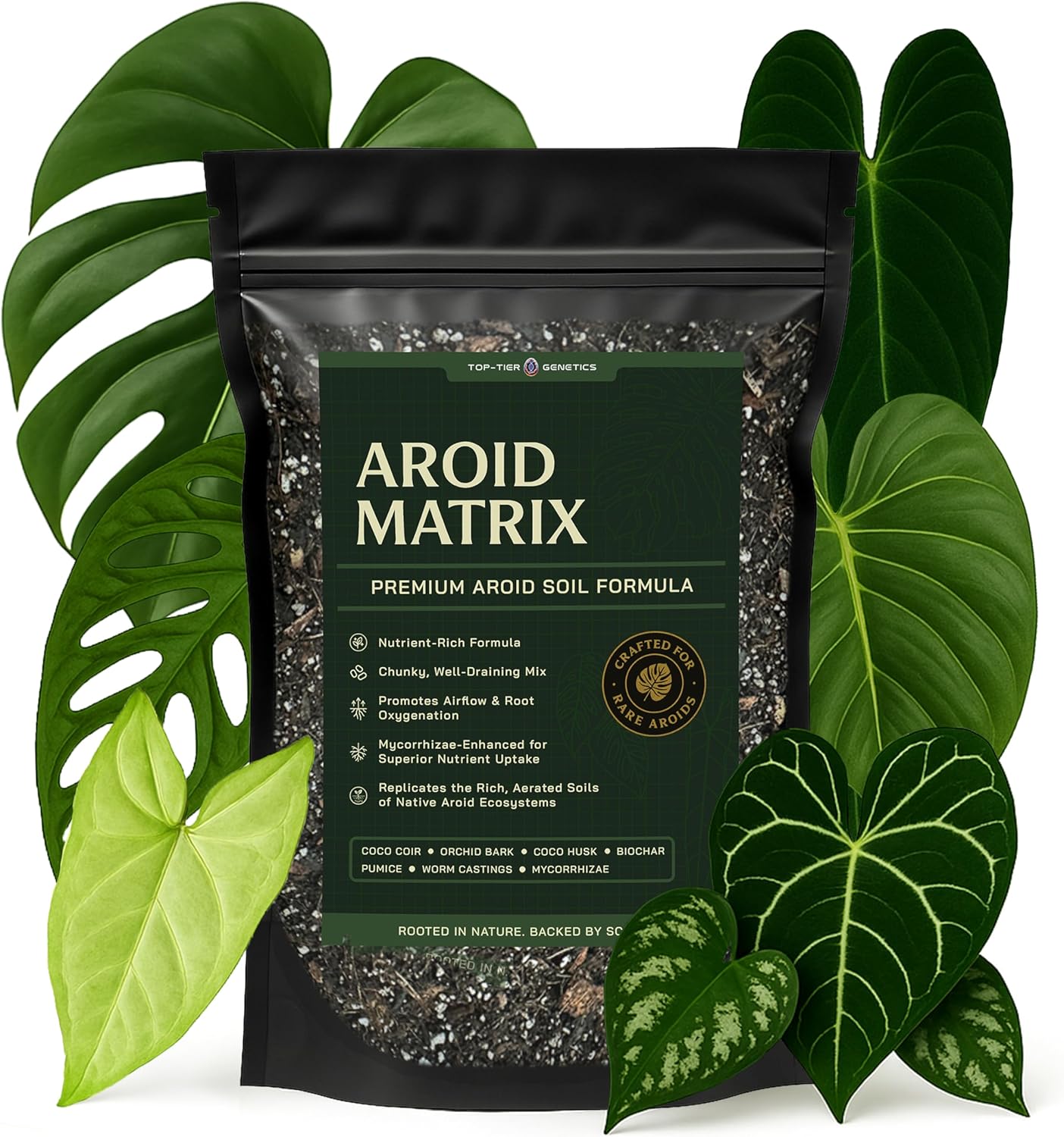
| Volume | 8 quarts |
|---|---|
| Ingredients | Orchid bark, coco coir, pumice, coco husk, worm castings, biochar, mycorrhizae |
| Style Name | Nutrient-rich, moisture-retaining |
This aroid-specific potting mix is designed for Monstera and similar tropical houseplants, providing chunky aeration and organized moisture retention straight from the bag. The blend uses orchid bark, coco husk and pumice to keep the medium open so roots get oxygen and excess water drains quickly, while coco coir and worm castings supply steady moisture and nutrients. Biochar and mycorrhizae help build microbial life and improve nutrient availability over time, which can support stronger root systems and fuller foliage. It is convenient for repotting or top-ups because no additional mixing is required, and the organic ingredients make it appealing for growers who prefer natural amendments. Limitations are mainly pack size and precision: the 8-quart bag is convenient for one or two small to medium plants but means frequent repurchases for larger collections, and the ready mix does not allow heavy customization of drainage versus moisture for very particular setups.
Best for: Plant owners who want a reliable, low-effort potting mix tailored to Monstera and other aroids and who value organic amendments and biological support for steady growth.
Less Ideal for: Growers who prefer to create custom mixes for precise moisture control or those managing large collections who need bulk quantities in a single purchase.
- Chunky components (orchid bark, pumice, coco husk) provide excellent aeration and fast drainage to reduce root rot risk
- Contains worm castings and biochar to supply nutrients and support long-term soil health
- Includes mycorrhizae to improve root establishment and nutrient uptake
- Ready to use out of the bag, making repotting faster and simpler
- 8-quart bag is relatively small for people with multiple or large plants
- Pre-mixed formula limits ability to fine-tune drainage or moisture for very specific setups
Verdict: A convenient, ready-made organic mix that gives Monstera and other aroids the chunky drainage and biological boost they need for healthy roots and foliage.
HydraGarden Forbidden Cereal Aroid Potting Mix, 6.5 QT

| Unit Count | 6.5 Ounce |
|---|---|
| Brand Name | HydraGarden |
| Style Name | Houseplants & Aroids |
| Ingredients | Orchid Bark, Charcoal, Perlite, Coco Chunks, Coco Coir, LECA Clay Pebbles, Worm Castings, Sphagnum Moss |
HydraGarden Forbidden Cereal is a high-drainage, soilless potting mix built from chunky components like orchid bark, coco coir, coco chips, perlite, biochar, worm castings and LECA clay pebbles with a small bag of New Zealand sphagnum moss layered on top. It is used as a repotting and growing medium for aroids and many common houseplants where preventing waterlogging and improving root oxygenation are priorities. The mix’s large particle profile lets water move quickly through containers, reduces the chance of root rot, and keeps roots from becoming compacted while still offering organic matter and nutrients from castings and charcoal. The separated sphagnum allows you to add a moisture-retaining topper when needed without compromising overall drainage. Practical limits are that its chunky texture holds less water than peat-rich mixes so watering frequency will increase for moisture-loving species, and the soilless formula may require more frequent feeding compared with a loam-based soil. For growers who prioritize fast drainage, root health, and a lightweight, peat-free blend, this mix delivers predictable, performance-focused results.
Best for: Serious growers who prioritize root health and fast drainage for aroids and tropical houseplants and who monitor watering and feeding closely to maximize plant performance.
Less Ideal for: Casual owners who want a low-maintenance, moisture-retentive potting medium or growers of very moisture-loving species that require consistently damp substrate.
- Very high drainage and aeration from chunky ingredients reduces risk of root rot
- Peat-free, soilless organic components including worm castings and biochar for nutrient support
- Layered sphagnum moss gives flexible moisture retention as a topper or propagation aid
- Includes LECA clay pebbles for improved structure and long-term stability
- Holds less moisture than peat-based mixes so plants may need more frequent watering
- Soilless formula typically requires more regular fertilizing for sustained nutrient supply
Verdict: Choose this mix if you need a chunky, peat-free medium that maximizes drainage and root aeration for high-performance aroid growing.
Gardenera Premium Monstera Potting Soil, 1 Quart

| Brand Name | Gardenera |
|---|---|
| Item Type Name | Monstera Potting Mix |
| Unit Count | 37 Ounce |
| Volume | 1 quarts |
Gardenera Premium Monstera Potting Soil is a ready-to-use blend designed for repotting Monstera deliciosa and related aroids. The mix combines peat moss, coco coir, perlite, aged bark, biochar and worm castings to create an airy, quick-draining medium that helps prevent root rot and brown leaf spots while retaining enough moisture between waterings. It comes sterilized in a resealable bag and is meant for repotting into a container several inches larger than the current pot. Practical benefits include improved root aeration for faster recovery after repotting, added micro-nutrients from biochar and worm castings to support steady growth, and a texture that reduces overwatering risk for people who tend to err on the wet side. Limitations are its small 1 quart volume, which makes it best for small plants or topping up rather than full repots of large specimens, and the presence of peat may be a concern for growers seeking peat-free mixes. For a balanced home grower caring for Swiss cheese plants, this offers a convenient, plant-focused formula that simplifies repotting and early growth stages.
Best for: Houseplant owners looking for an off-the-shelf, aroid-focused potting mix to simplify repotting and improve root health for small to medium Swiss cheese plants.
Less Ideal for: Growers who need large-volume mixes for mature or multiple big plants or those who require fully peat-free or custom media blends.
- Formulated blend (peat moss, coco coir, perlite, bark) for fast drainage and good aeration
- Includes biochar and worm castings to help retain nutrients and support steady growth
- Sterilized and non-toxic, reducing risk of pests and pathogens
- Resealable bag for convenient storage and use
- Only 1 quart volume, so multiple bags are needed for larger repots
- Contains peat moss which some growers avoid for environmental reasons
Verdict: A convenient, aroid-specific small-batch mix that improves drainage and root health for small to medium Swiss cheese plants.
Molly's Aroid Potting Mix (5 Dry Quarts)

| Volume | 5.5 liters |
|---|---|
| Ingredients | Coir fiber, perlite, expanded clay, coir chips, charcoal, orchid bark, worm castings, mycorrhizae, rhizobacteria |
| Style Name | Houseplants & Aroids |
Molly's Aroid Potting Mix is a chunky, soilless blend designed to keep roots airy and reduce overwatering for tropical container plants. It combines coco coir, orchid bark, perlite, expanded clay and charcoal to create a fast-draining structure, with added worm castings and beneficial microbes including mycorrhizae and rhizobacteria to support nutrient uptake. The mix is typically used for repotting Monstera, Philodendron and other aroids but also works when you need a light, well-aerated medium for plants that dislike soggy conditions. The resealable, heat-sealed bag helps keep the mix fresh between uses and the absence of garden soil makes it cleaner to handle indoors. Limitations include smaller bag volume for larger pots and the soilless formula means you may need to supplement nutrients for long-term feeding of heavy feeders. Expect quicker drying than soil-based mixes, which is an advantage for drainage but requires slightly more frequent watering for plants that prefer consistent moisture.
Best for: Buyers who want a reliable, low-compaction potting mix for tropical houseplants and prioritize drainage and root health over raw soil volume.
Less Ideal for: Not the best choice for gardeners who prefer traditional garden soil textures or need a single large-volume bag for outdoor beds or large specimen plants.
- Chunky, fast-draining structure reduces risk of overwatering
- Includes mycorrhizal fungi and beneficial bacteria to aid root nutrient uptake
- Clean, soilless mix that is lighter and easier to handle indoors
- Contains organic inputs like worm castings for some built-in fertility
- Small 5.5 liter bag may require multiple bags for larger plants or multiple repots
- Soilless formula will need supplemental fertilization for long-term heavy feeding
Verdict: Choose this mix when you need a clean, chunky, fast-draining medium to keep pineapple-family and other tropical container plants healthy and avoid overwatering.
Grow Queen Craft Aroid Potting Mix, Chunky Monstera & Tropical Plant Soil, 2 qt

| Brand | Grow Queen |
|---|---|
| Volume | 2 quarts |
| Ingredients | Tree fern fiber, earthworm castings, lava rock, biochar, coco coir, gypsum, alfalfa meal |
| Designed for | Monstera, Alocasia, Philodendron, Anthurium and tropical houseplants |
This Grow Queen Craft Aroid Mix is a ready-to-use, chunky potting soil built to replicate a rainforest floor for Monsteras, Alocasias and similar tropical houseplants. The blend combines large bark pieces, pumice and lava rock for fast drainage and aeration, while coco coir and charged biochar retain modest moisture so the mix does not go bone dry between waterings. It also includes earthworm castings, alfalfa meal and gypsum to support beneficial microbes and provide gentle nutrition out of the bag. The mix arrives pre‑moistened and is straightforward for repotting, especially when you want to reduce compaction and lower the risk of overwatering. Notable limitations are the small 2 quart bag size for larger repotting jobs and the absence of perlite if you prefer that specific amendment. This is a practical, botanist‑informed option for people who want a sustainable, peat‑free alternative tailored to aroids and other chunky‑soil‑loving houseplants.
Best for: Buyers who want a ready-made, sustainable potting mix that mimics tropical forest soil for Monsteras and other aroids and who value drainage with living amendments over DIY mixing.
Less Ideal for: Growers repotting many large plants at once or those who prefer to fully customize their own soil recipe with specific additives like perlite or added fertilizer concentrates.
- Chunky, well aerated formula with bark, pumice and lava rock to improve drainage and prevent compaction
- Includes charged biochar and earthworm castings to support microbes and provide starter nutrients
- Peat free and perlite free, using coco coir and natural porous aggregates for sustainability
- Pre‑moistened and ready to use straight from the bag for easy repotting
- Small 2 quart volume may be impractical for repotting multiple or large plants
- Does not contain perlite, which some growers prefer for a lighter texture
Verdict: Choose this mix if you want a peat‑free, botanist‑designed chunky soil that gives Monsteras and other aroids the fast drainage and living nutrition they need straight from the bag.
Back to the Roots Organic Indoor Potting Mix, 6 Quart

| Unit Count | 192 Fluid Ounces |
|---|---|
| Item Type Name | Indoor Potting Mix 6qt |
| Item Highlight | Peat-free, 100% organic, made in the USA |
| Ingredients | Coconut Coir, Yucca, Mycorrhizae, Perlite, Horticultural Sand |
This Back to the Roots indoor potting mix is a ready-to-use, 6-quart blend designed for common houseplants such as pothos, monstera and ferns. It combines coconut coir, yucca extract, mycorrhizae, perlite and horticultural sand to improve moisture retention, drainage and root development without peat. In practice it feels light and friable, so it is easy to pot seedlings or repot mature plants and it reduces compaction that can suffocate roots. The added mycorrhizae helps young roots establish and take up nutrients more efficiently while yucca extract helps the mix hold water between waterings, which is convenient for forgetful or busy plant owners. Because it is peat-free and made in the USA, it is a more sustainable choice versus traditional peat-based mixes. Limitations are the small 6-quart size, which means frequent repurchasing for larger collections, and the bag does not include fertilizer so you will need to feed plants separately as they grow.
Best for: Buyers who prioritize low-risk, easy-care houseplant solutions and want an organic, ready-to-use potting mix that reduces watering hassles and supports healthy root growth.
Less Ideal for: Not ideal for gardeners who need large-volume soil for many pots or for those expecting a mix that includes built-in fertilizer for long-term feeding.
- Peat-free organic formula that reduces environmental impact
- Yucca extract improves moisture retention between waterings
- Contains mycorrhizae to support root development and nutrient uptake
- Light, well-draining texture suitable for repotting seedlings and houseplants
- Small 6-quart volume may require frequent repurchasing for larger plant collections
- Does not include fertilizer so additional feeding is necessary
Verdict: A compact, peat-free potting mix that simplifies indoor plant care by holding moisture and boosting root establishment.
Choosing the Right Potting Mix for Aroids: Key Factors to Consider
Drainage and Particle Size
Drainage determines how long water stays near the roots after watering and affects oxygen availability. Aroids prefer mixes with a range of particle sizes so water moves through freely but some micropores hold moisture. Coarse components like chunky bark or pumice create larger pore spaces that speed drainage and keep fine root tips oxygenated.
Too-fine mixes compact and reduce airflow, increasing risk of root rot. Conversely, an overly chunky mix may dry out too quickly and starve plants between waterings. Look for blends that combine coarse and fine textures for steady moisture cycling.
Moisture-Holding Components
Moisture-holding ingredients such as coconut coir, peat, or well-aged compost provide reservoirs of water and slow-release nutrients around the root zone. These components wick moisture into finer particles that roots can access between waterings.
The key is balance: include enough moisture-retentive material to avoid rapid drying but not so much that drainage is compromised. Consider how often you want to water and the local humidity when selecting the ratio of water-retaining ingredients.
Aeration and Root Oxygenation
Aroids develop dense root systems that need oxygen as well as moisture. Aeration comes from larger, stable particles that do not collapse under watering, such as bark, perlite, or pumice. These materials maintain air pockets even when the mix is moist, preventing anaerobic conditions that lead to rot.
When repotting, handle roots gently and avoid compacting the mix. For larger containers, increasing the proportion of chunky material helps roots explore and reduces the chance of soggy lower layers.
Nutrient Sources and Slow Release
Aroids are not heavy feeders, but they do benefit from a steady supply of nutrients. Natural organic components like composted bark, worm castings, or slow-release organic granules provide gentle feeding without spikes in soluble salts.
Fast-release fertilizers can be used, but mixes that already include organic matter reduce the need for frequent feeding. Also consider whether the mix contains inert ingredients only; pure inert blends give you more control over fertilizing but require a feeding schedule.
pH, Salts, and Sensitivities
Some aroids are sensitive to high soluble salt buildup or extreme pH levels. Ingredients vary in their natural pH and salt content-peat and coir tend to be neutral to slightly acidic, while some composts or fertilizers can raise salt levels.
Choose mixes with stable, near-neutral pH where possible, and flush containers periodically to prevent salt accumulation. For plants with known sensitivities, look for mixes described as low-salt or formulated for sensitive tropicals.
Mixing Your Own Aroid Soil
Making a DIY potting mix lets you tailor drainage and moisture retention to your plants and pot size. A common starting point is a blend of chunky orchid bark, a moisture-retentive base like coconut coir or peat, and an aeration component such as perlite or pumice. Adjust ratios by pot size: larger pots tolerate a bit more moisture-retentive material; small pots dry faster and need more chunky material.
- Typical DIY ratio for mature aroids: 40% bark, 30% coir or peat, 30% pumice/perlite.
- For seedlings and cuttings reduce bark to 20% and increase finer organic material to support root establishment.
- Include a small amount of slow-release organic amendment or worm castings for steady nutrients.
Repotting Timing and Technique
Aroids often benefit from repotting every 12 to 24 months, depending on growth rate and how quickly the mix breaks down. Signs you need repotting include slower drainage, compacted or decomposed media, or roots circling and emerging from the pot drain holes. When repotting, gently tease tangled roots and avoid compressing the new mix; place the crown at the same soil level to prevent stem rot.
- Use pots with good drainage holes and consider breathable containers for large aroids.
- Replace only a portion of the top mix for slightly rootbound plants to reduce transplant shock.
Watering Practices for Aroid Mixes
Watering frequency depends on mix composition, pot size, and indoor humidity. With airy mixes that include a lot of bark or pumice, water thoroughly and allow the top inch or two to dry before the next soak. For mixes with more coir or peat, water when the top half-inch feels dry but monitor the lower root ball in larger pots.
- Use a soak-and-drain approach rather than light daily misting for established aroids.
- Flush containers occasionally to remove soluble salts if you use regular fertilizer.
Using Additives and Fertilizers Safely
Additives such as slow-release organic granules or a small dose of balanced liquid feed can support steady growth. Be cautious with concentrated synthetic feeds in rich organic mixes because salts can accumulate faster. Tailor feeding strength to your mix: inert mixes need more frequent feeding at low doses; organic-rich mixes require less frequent feeding.
- Apply dilute liquid feed during active growth, reduce or stop in winter when growth slows.
- Avoid overuse of high-nitrogen feeds that encourage leggy growth rather than healthy root development.
Troubleshooting Common Mix Problems
If your mix stays soggy, check for compacted layers or lack of chunky components. Repot into a grittier blend with more bark or pumice to restore aeration. If the mix dries out too quickly, increase the proportion of moisture-retentive ingredients and consider a slightly larger pot to moderate drying. White crust on the surface often indicates salt buildup; flush the pot and topdress with fresh mix. Slow leaf yellowing combined with firm roots may point to nutrient deficiency rather than overwatering-adjust feeding rather than changing the mix immediately.
- Break up compacted mixes during repotting to restore airflow.
- Topdress with fresh mix annually for potted aroids to replenish decomposed organics.
How We Chose the Best Potting Mix for Aroids
We focused on mixes that match the specific root and moisture preferences of aroids rather than generic indoor soils. Our selection filters prioritized: drainage profile, water retention balance, aeration and root access, organic nutrient content, pH stability, and long-term component durability. We excluded plain garden loam, heavy clay-based soils, and mixes formulated solely for succulents or cacti because those do not meet aroid moisture needs. Concrete evaluation criteria used were the mix particle size and porosity, the presence and quality of chunky components such as bark or perlite, the organic matter type and nutrient release rate, and the expected lifespan before repotting is needed. We also checked reported pH ranges and salt content where available since aroids can be sensitive to high soluble salts. The result is a shortlist of seven mixes that cover airy, chunky blends for large specimens and finer blends for seedlings and small pots. These criteria align with the scoring measures gardeners care about when choosing potting mixes for aroids.
FAQ
How often should I repot aroids into fresh potting mix?
It depends on growth rate and mix breakdown. Many aroids benefit from repotting every 12 to 24 months. Faster-growing plants or mixes with lots of organic matter may need more frequent attention.
Can I use standard indoor potting soil for aroids?
Standard indoor soils are often too fine and retain too much water. Aroids do better with mixes that include chunky components for aeration and some moisture-holding ingredients for steady hydration.
Is coconut coir or peat better for aroids?
Both can work. Coir is more sustainable and holds water while retaining airflow; peat holds moisture well but can compact over time. Choose based on availability and how often you want to water.
What is the best potting mix ratio for aroid cuttings?
Cuttings and seedlings prefer a slightly finer mix with more moisture-retentive material and less large bark. A higher proportion of coir or fine compost with some perlite works well until roots establish.
How can I tell if my potting mix has too many salts?
White crust on the surface, slowed growth, and brown leaf edges can indicate salt buildup. Flush the pot thoroughly and reduce fertilizer concentration. Replacing the top few inches of mix can help.
Final Verdict
Choosing the right potting mix for aroids is about balancing drainage, aeration, and moisture retention for the specific plant and container. Prioritize mixes with stable chunky components for oxygen, paired with enough organic matter to supply water and gentle nutrients. Expect to repot as mixes decompose and adjust watering and feeding to the blend you use. With the right mix and routine, you can reduce root issues and support vigorous aroid growth.
