

Note: This article contains affiliate links. If you click on these links and make a purchase, I may earn a small commission at no extra cost to you. This helps support my research and content. Read my full affiliate disclosure here.
Choosing the right potting mix for a birds nest fern matters because this plant prefers steady moisture, good aeration, and organic richness without staying soggy. The wrong substrate leads to root rot, yellowing fronds, or slow growth. This guide summarizes the top shortlisted potting mixes suited for birds nest fern in a range of growing situations, from bright indoor pots to humid terrariums. We evaluated mixes for how well they hold moisture, how they drain and aerate roots, and how their texture and feeding profile affect fern health. Below are the best options we considered, followed by practical advice on picking, repotting, and caring for birds nest ferns in different containers.
Top Picks at a Glance
| Best Overall The best all-around choice for most situations | Wekiva Foliage Fern Growing Soil Mix, 1 Quart |  |
| Best Quality Built to a higher standard if you want something more solid | Soil Sunrise Fern Potting Soil Mix (8 Quarts) |  |
| Best Value The sweet spot between price and what you get | Doter Potting Soil Mix for Ferns, 2 qt |  |
| Best Budget The cheapest option that still gets the job done reliably | Nyobely Orchid Potting Mix (1 qt) |  |
| Highest Rated A top-rated pick with lots of positive feedback | Rio Hamza Trading Fern Potting Soil Mix (8 Quart) |  |
| Most Popular A crowd favorite that many people choose with confidence | Doter Fern Potting Soil Mix, 1 qt | |
Wekiva Foliage Fern Growing Soil Mix, 1 Quart

| Brand Name | Wekiva Foliage |
|---|---|
| Unit Count | 1 Count |
| Volume | 1 quarts |
This 1 quart fern soil blend is built specifically for common potted fern varieties and combines peat moss, aged bark, perlite, and hydrafiber to deliver both moisture retention and good aeration. In practice it is used as a repotting or top-up mix for Boston, Maidenhair, Kimberly Queen and similar ferns in pots and hanging baskets. The perlite and bark improve drainage so roots avoid sitting in water while peat and hydrafiber hold enough moisture between waterings, which helps keep fronds healthy without daily watering. Lime, gypsum and a slow-release nitrogen source are included to help stabilize pH and feed plants for a period after repotting. Because the product is sold in a 1 quart size it is convenient for small jobs, propagation and experimenting with individual plants, but you will need multiple bags for repotting larger collections. The formula is straightforward and focused on fern needs rather than general-purpose use.
Best for: Buyers who want a purpose-built, ready-to-use potting mix for individual potted or hanging ferns and value a balance of moisture retention and drainage without blending their own media.
Less Ideal for: Gardeners repotting many large ferns or filling garden beds who need bulk quantities or a more customizable professional media.
- Balanced mix of peat moss and hydrafiber for steady moisture retention
- Perlite and aged bark provide improved drainage and root aeration
- Includes lime, gypsum and nitrogen source to help adjust pH and feed plants
- Formulated specifically for common fern varieties and container use
- Small 1 quart volume means multiple bags are needed for larger pots or collections
- Ingredients list is general rather than giving exact ratios or guaranteed analysis
Verdict: A ready-made small-batch potting mix that gives potted ferns reliable moisture balance and drainage for healthy foliage.
Soil Sunrise Fern Potting Soil Mix (8 Quarts)

| Volume | 8 quarts |
|---|---|
| Ingredients | Peat, pine bark, perlite, sand, charcoal, lime |
| Unit Count | 1 Count |
| Manufacturer | Soil Sunrise |
This 8-quart Soil Sunrise fern mix is a purpose-made potting medium for container ferns such as Boston, maidenhair, and bird's nest. It combines peat moss for moisture retention with perlite and sand to keep the mix airy and draining, while pine bark and horticultural charcoal improve structure and protect roots. Use it for repotting house ferns, refreshing container soil in hanging baskets, or starting new transplants; the small-batch hand blend aims for consistent texture and pH suited to ferns. Practical benefits include less compaction than standard houseplant soils, improved aeration that reduces root rot risk, and a mix that holds enough moisture so plants do not need daily watering. Limitations are inherent to the bag size and ingredients: 8 quarts covers roughly one large 12-inch pot so multiple bags are needed for several plants, and peat-based mixes dry differently across climates so you may still need to adjust watering frequency. Safety notes advise keeping contact with skin and eyes to a minimum and using in ventilated areas.
Best for: Buyers who want a ready-made, fern-focused potting mix to simplify repotting and container care and who prioritize consistent performance over mixing their own media.
Less Ideal for: People creating large-scale beds or filling many pots at once who need bulk volumes or gardeners who prefer peat-free or purely organic formulas.
- Formulated specifically for ferns with ingredients that balance moisture and drainage
- Perlite and sand reduce compaction and improve aeration for healthier roots
- Pine bark and horticultural charcoal enhance soil structure and help protect roots
- Hand-blended in small batches for consistent texture and pH
- Suitable for both indoor house ferns and outdoor container use
- 8-quart bag is small for multi-plant projects so you may need several bags
- Peat-based composition can require watering adjustments in different climates
Verdict: A convenient, small-batch potting mix that delivers the moisture balance and aeration potted ferns need.
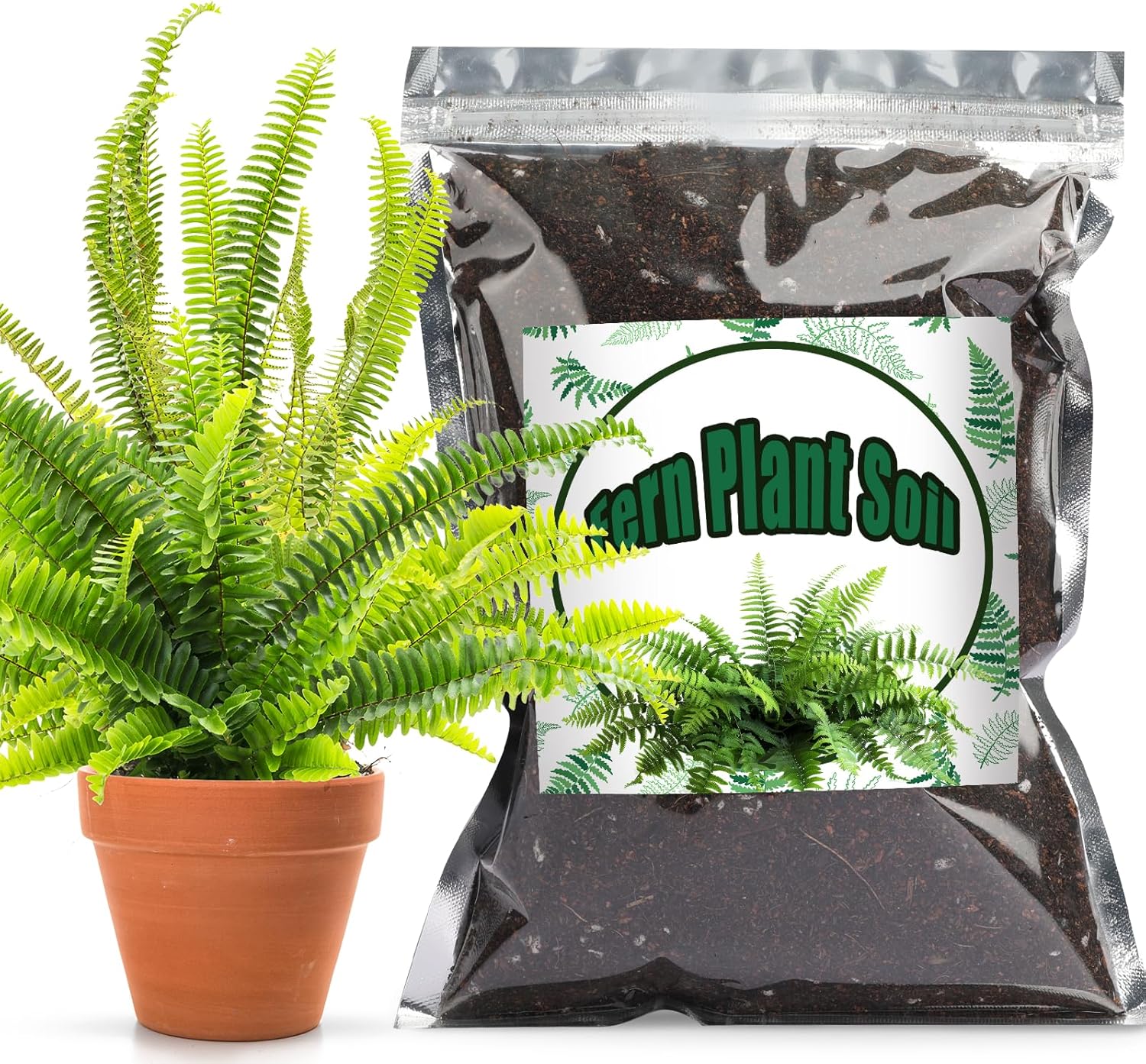
Doter Potting Soil Mix for Ferns, 2 qt
| Brand Name | Doter |
|---|---|
| Item Type Name | Garden soil |
| Manufacturer | Doter |
| Volume | 2 quarts |
This 2 quart Doter fern potting mix is a ready-to-use blend designed for birds nest ferns and other moisture-loving ferns. The formula combines moisture-retentive components like peat moss and worm castings with chunky perlite, pine bark, and horticultural charcoal to balance water holding and aeration. In practice it keeps the root zone consistently damp without sitting in water, which reduces watering frequency and lowers the risk of root rot for plants kept in pots or hanging baskets. The texture is loose enough to re-pot small to medium ferns easily and the inclusion of organic amendments supplies gentle nutrition for gradual growth. Limits to be aware of are the small 2 quart volume, which means you will need multiple bags for larger pots or repeat re-pottings, and the product information does not list a specific nutrient analysis or pH so heavier feeders may need supplemental fertilizer. For container fern care this mix covers the basic needs and simplifies routine watering and repotting tasks.
Best for: Buyers who want a low-effort, purpose-made potting mix to keep birds nest ferns consistently moist and reduce watering maintenance for indoor or container displays.
Less Ideal for: Gardeners needing bulk soil for outdoor beds or those who require exact nutrient and pH specifications for heavy-feeding plants should look elsewhere.
- Formulated to retain moisture while still allowing drainage, matching ferns' preferences.
- Contains a mix of organic amendments such as worm castings and peat moss for steady nutrient supply.
- Chunky perlite and pine bark improve aeration and reduce compaction in pots.
- Small 2 quart package is insufficient for large pots or multiple plants.
- No specific N-P-K or pH values provided for precise fertilizing plans.
Verdict: A compact, ready-made potting mix that keeps birds nest ferns evenly moist while improving pot aeration for fuss-free container care.
Nyobely Orchid Potting Mix (1 qt)

| Unit Count | 32 Ounce |
|---|---|
| Item Type Name | Orchid Potting Mix |
| Item Highlight | Blend of Pine Bark, Perlite, Coco Peat & Moss |
| Volume | 1 quarts |
This Nyobely orchid potting mix is a pre-blended medium intended for repotting epiphytic orchids and other moisture-sensitive plants. The mix pairs coarse pine bark with perlite to create air channels and quick drainage while coco peat and moss retain enough moisture and organic matter to support roots between waterings. It comes in a resealable 1 quart bag, so small-scale hobbyists can use just what they need and keep the rest fresh. In practice the texture is chunky enough for Phalaenopsis and Dendrobium, and the lightweight components make it easy to work with during repotting. The main limitation is the small 1 qt volume, which is best for individual plants or trial repots rather than multiple orchids, so you may need to buy several bags for a collection. For gardeners on a budget this product delivers the standard ingredients you expect in a commercial orchid mix without extra additives.
Best for: Best for beginner to budget-minded orchid owners who need a ready-made, small-quantity mix for repotting one or two plants and prefer convenience over buying components separately.
Less Ideal for: Not a good fit for collectors or growers who need large volumes of mix for many plants or for users who prefer to customize ingredient ratios themselves.
- Pre-mixed blend of pine bark, perlite, coco peat and moss tailored for orchids
- Resealable bag keeps unused mix fresh between uses
- Chunky texture provides good aeration and drainage for epiphytic orchids
- Suitable for other moisture-sensitive plants like succulents and ferns
- Small 1 quart volume means multiple bags are needed for several plants
Verdict: A convenient, budget-friendly pre-blend that gives small-scale orchid owners the drainage and aeration they need for repotting single plants.
Rio Hamza Trading Fern Potting Soil Mix (8 Quart)

| Volume | 8 quarts |
|---|---|
| Ingredients | peat moss, perlite, lime, sand, charcoal, mulch |
This fern potting soil is formulated to give ferns a balance of water retention and airflow that supports healthy fronds and root growth. Typical use is potting or repotting indoor and outdoor ferns in containers where consistent moisture and good drainage matter; the mix lists peat moss, perlite, sand, charcoal, mulch, and lime as ingredients, which together help hold moisture without letting soil compact. The 8-quart size is convenient for repotting several small to medium plants or refreshing the top layer of larger pots. Practical benefits include improved root aeration from perlite and sand, gentle nutrient support from the organic components, and moisture buffering from peat moss. Limitations are that the bag is a modest single 8-quart unit, so larger collections will need multiple bags, and peat-based mixes can dry out in very warm, low-humidity indoor environments requiring closer watering attention. This is a straightforward, plant-focused mix for gardeners who want a ready-made fern substrate without needing to blend components themselves.
Best for: Buyers who want a ready-made, no-mix substrate that reliably supports fern health and saves time when potting or repotting small to medium collections.
Less Ideal for: Large-scale gardeners who need bulk soil or growers who prefer a peat-free or custom-blended substrate for specific environmental conditions.
- Formulated blend tailored for ferns with peat moss and perlite for moisture retention and aeration
- Includes sand and charcoal to improve drainage and reduce compaction
- Nutrient-containing organic components to support foliage growth
- Convenient 8-quart package suitable for potting or repotting multiple small plants
- Only an 8-quart quantity which may be insufficient for larger collections or full soil replacement
- Contains peat moss which may require more frequent watering in dry indoor conditions
Verdict: A convenient ready-to-use fern mix that delivers the moisture retention and aeration ferns need for healthy foliage.
Doter Fern Potting Soil Mix, 1 qt
| Brand | Doter |
|---|---|
| Unit Count | 32 Ounce |
| Item Type | Garden soil |
| Volume | 1 quarts |
This 1 quart Doter fern potting mix is a ready-to-use blend formulated to give potted ferns consistent moisture without waterlogging. It combines moisture-retentive components like peat moss with chunky perlite and horticultural charcoal to improve aeration and drainage, which helps prevent root rot in consistently damp-loving species. In practice the bag works well for repotting small ferns, topping off shallow fern pots, or starting new divisions; the small size makes it easy to handle and mix with existing media. Notable features include added organic matter and worm-casting style amendments mentioned by the brand, plus sterile additives to reduce pests. The main limitation is the 1 quart volume, which means you will need multiple bags for larger pots or several plants, and the mix description does not give specific nutrient or pH values so experienced growers may want to amend for long-term feeding. For casual indoor fern care and quick repotting jobs this blend provides a balanced, low-effort medium.
Best for: Buyers who want an affordable, ready-made potting mix to repot or top-dress a few small ferns quickly and with minimal fuss.
Less Ideal for: Gardeners who need bulk quantities for many plants or who require exact pH and nutrient specifications for specialized fern cultivars should look elsewhere.
- Formulated to retain moisture while including components that improve drainage to reduce root rot risk
- Contains organic amendments and sterile additives aimed at healthier root development
- Small 1 quart size is easy to handle for repotting small plants or topping pots
- Versatile for indoor and outdoor potted ferns, mosses, and similar moisture-loving plants
- Only a 1 quart volume so multiple bags are required for larger pots or multiple plants
- No explicit nutrient analysis or pH information provided for precise long-term fertilization planning
Verdict: A convenient, budget-friendly small-bag fern mix that keeps soil moist without becoming waterlogged, ideal for quick repots and small collections.
Choosing the Right Potting Mix for Birds Nest Fern: Key Factors to Consider
Water Retention Versus Drainage Balance
Birds nest ferns need a mix that holds consistent moisture around the root crown but does not stay waterlogged. A blend that retains water in the fine organic fraction while allowing excess to move through coarse particles prevents root suffocation and rot.
When assessing mixes, look for a moderate proportion of coir or peat to trap moisture paired with perlite, pumice, or chunky bark to create air pockets. Too much fine material compacts and reduces oxygen; too much coarse material drains too quickly and stresses the fern between waterings.
Aeration and Root Oxygenation
Roots require oxygen to function, and poor aeration is a common cause of decline in indoor ferns. Components that create stable pore space, like orchid bark or pumice, keep the substrate light and breathable even when damp.
Aeration also affects how often you water. A well-aerated mix allows you to water thoroughly less frequently without creating anaerobic zones. Consider particle size and how the mix compacts with repeated wet-dry cycles.
Organic Content and Feeding Profile
Organic materials supply slow-release nutrients and influence microbial activity around roots. Materials like composted bark, well-aged compost, or coir offer gentle fertility that supports steady frond growth.
Avoid mixes with overly rich, fresh compost or raw manures that can burn tender roots. If a mix has low nutrient content, plan a feeding schedule with diluted liquid fertilizer or incorporate a slow-release formula appropriate for foliage plants.
pH and Salt Levels
Birds nest ferns prefer slightly acidic to neutral substrates. High soluble salts or an alkaline pH can cause fringe browning and inhibit nutrient uptake. Potting mixes vary in base materials, so look for labels indicating low soluble salts and a pH near neutral.
If you suspect elevated salts from water or fertilizer, flush the pot occasionally and consider using rainwater or filtered water to reduce buildup. New mixes with residual fertilizers should be used with caution for sensitive ferns.
Texture Stability and Longevity
Some mixes break down rapidly into fine muck, reducing drainage and forcing repotting more often. Stability matters for fewer repots and consistent care. Stable mixes retain a mix of coarse and fine particles across seasons.
Look for components known to resist compaction, such as baked clay aggregates, pumice, or coarse bark. If a mix contains large proportions of peat that collapse, expect to refresh the top layer or repot more frequently.
Suitability for Container Type and Environment
The same mix behaves differently in a shallow ceramic bowl versus a tall nursery pot. Shallow containers warm and dry faster, so they benefit from mixes with higher moisture retention. Deep pots can use a bit more coarse material to prevent soggy bottoms.
Also factor in local humidity and indoor heating. In dry, heated homes, mixes that hold moisture longer reduce stress. In humid homes, emphasize drainage and aeration to avoid prolonged saturation.
Mix Adjustments for Different Containers
You can tailor a base potting mix to the container you plan to use. For shallow cachepots or decorative ceramic bowls, add a slightly higher proportion of moisture-retaining material so the crown stays evenly moist between waterings.
For deep nursery pots, add extra coarse material to the lower two inches of the pot to encourage drainage while keeping the root zone airy. Use a liner or layer of coarse grit if the pot has poor drainage holes.
- Shallow pots: increase coir or peat by 10 to 20 percent
- Deep pots: add 10 to 25 percent pumice or bark for drainage
- Unglazed terracotta: slightly wetter mixes are acceptable due to faster evaporation
Repotting Timing and Technique
Repot birds nest ferns when roots start circling the pot or the mix becomes compacted and dries unevenly. Typically this is every 12 to 24 months depending on mix stability and plant growth rate.
When repotting, gently tease root mass and replace no more than one third of the root ball volume if the plant is healthy. Fresh substrate should match the moisture and aeration profile the fern thrived in, unless you are correcting a known issue such as poor drainage.
- Water the fern lightly a day before repotting to reduce transplant shock
- Avoid burying the crown deeper than it was previously
- Firm the mix lightly to remove large air pockets while preserving fine-root contact
Amending Existing Mixes
If a current potting mix is too dense or dries erratically, you can amend it rather than repotting completely. Work in coarse components like pumice or orchid bark to improve aeration and drainage.
For mixes that shed nutrients quickly, add a small amount of aged compost or a slow-release granular formulated for foliage plants. Monitor the plant for a few watering cycles before making further changes.
- Add up to 20 percent coarse amendment to improve drainage
- Top-dress with a thin layer of compost or well-balanced slow-release fertilizer if feeding is needed
- Avoid over-amending with fresh organic matter that can lock up nitrogen
Watering Strategy With the Right Mix
A well-chosen potting mix changes how you water. With a moisture-balanced substrate, water thoroughly until excess exits the drainage holes, then allow the top inch to dry slightly. This rhythm promotes deeper root growth and steadier frond condition.
Always check the root crown for dampness rather than relying only on surface dryness. In higher humidity, reduce frequency; in heated indoor environments, monitor more closely to avoid dry stress.
- Water deeply, then pause until top 1 inch is slightly dry
- Use a finger test or moisture meter for consistent checks
- Adjust for season: less in winter, more during active growth
Feeding and Long-Term Care
Because potting mixes vary in baseline fertility, set a feeding schedule based on observation. A diluted liquid fertilizer every 4 to 6 weeks during the growing season supports lush fronds without fertilizer burn when concentrations are low.
If the mix is high in organic, slow-release nutrients, reduce supplemental feeding frequency. Periodic flushing of the pot with clean water helps prevent salt buildup in mixes that retain soluble minerals.
- Feed more lightly in mixes with higher organic content
- Flush potted ferns every few months if you notice white crusts on the surface
- Reduce feeding in winter when growth slows
How We Chose the Best Potting Mix for Birds Nest Fern
We focused on attributes that directly affect birds nest fern health. Primary evaluation criteria included moisture retention versus drainage, substrate aeration and texture, organic content and slow-release nutrition, and pH and salt levels that influence root function. We also considered suitability for common container types and whether mixes break down quickly and require frequent repotting. For exclusions we omitted blends designed specifically for succulents, cacti, or heavy-sanding mixes intended for outdoor beds because those do not meet the moisture needs of birds nest ferns. We also excluded potting soils that rely heavily on synthetic wetting agents that can mask drainage problems. Editorial filters prioritized mixes with a balanced ratio of coarse components (perlite, orchid bark, or pumice) and fine organic matter (peat, coir, or compost) so roots receive oxygen without drying too fast. We checked stability over time, typical nutrient contribution, and compatibility with indoor humidity levels. The scoring emphasized water management, root aeration, texture stability, and feeding profile as the most relevant, practical dimensions for everyday fern care.
FAQ
Can I use standard indoor potting soil for a birds nest fern?
Often standard indoor potting soil is too dense or contains too much peat alone. It can be improved by adding coarse material like perlite or bark to increase aeration and drainage while retaining some moisture.
How often should I repot a birds nest fern?
Usually every 12 to 24 months depending on mix stability and growth. Repot sooner if the mix compacts, drainage worsens, or roots become pot-bound.
Is coir or peat better for birds nest ferns?
Coir and peat both retain moisture, but coir drains more reliably and is less likely to compress over time. Either works when balanced with coarse aerobic components.
Do birds nest ferns need fertilizer in the potting mix?
They benefit from moderate, slow-release nutrition. A mix with some organic content reduces immediate need for fertilizer, but light, regular feeding during the growing season supports foliage production.
Will adding perlite help brown frond edges?
Adding perlite can improve drainage and aeration, which may reduce root-related browning. Brown edges can also result from low humidity, fertilizer salts, or watering issues, so check those factors as well.
Final Verdict
Prioritize a potting mix that balances water retention with good aeration for birds nest ferns. Stable texture, low soluble salts, and moderate organic nutrients create the steady root environment these ferns need for lush fronds. Adjust the mix slightly for container type and indoor humidity, and be ready to amend or repot if the substrate compacts. Focus on moisture management and root oxygenation first, then feeding and container fit. With a suitable mix and consistent care, you can minimize common problems and keep your birds nest fern healthy and vibrant.
