

Note: This article contains affiliate links. If you click on these links and make a purchase, I may earn a small commission at no extra cost to you. This helps support my research and content. Read my full affiliate disclosure here.
Raising potted plants a few inches changes how water moves through the pot, how air reaches the root ball, and how you care for plants on patios, decks, and in tight greenhouse benches. The right pot riser reduces standing water, improves airflow under containers, and makes watering and maintenance less awkward. This guide highlights seven top shortlisted pot risers selected for real gardening situations, from heavy ceramic planters to lightweight plastic containers. We evaluated products on factors that matter in the garden like drainage performance, material durability, and stability so you can pick a riser suited to your pots and season. Read on for the practical considerations that informed our picks.
Top Picks at a Glance
| Best Overall The best all-around choice for most situations | Bosmere Pot Toes Plant Pot Risers, Pack of 6 (Terra-cotta) |  |
| Best Quality Built to a higher standard if you want something more solid | Potrisers PR2-6 Large Invisible Pot Feet, 6 Pack |  |
| Best Value The sweet spot between price and what you get | UFelice 24-Pack Invisible Rubber Pot Feet with Enhanced Non-Slip Grip |  |
| Best Budget The cheapest option that still gets the job done reliably | YUFDA Rubber Square Pot Risers, 6-Pack (2" x 0.6") |  |
| Highest Rated A top-rated pick with lots of positive feedback | TAICHEUT 12" Plastic Plant Pot Risers, Pack of 20 |  |
| Most Popular A crowd favorite that many people choose with confidence | Bamworld 12-inch Wooden Plant Caddy, 2-Pack |  |
| Best Seller A high-volume bestseller chosen again and again | AZADESJET Adjustable Metal Plant Stand (fits 8–12 in pots) |  |
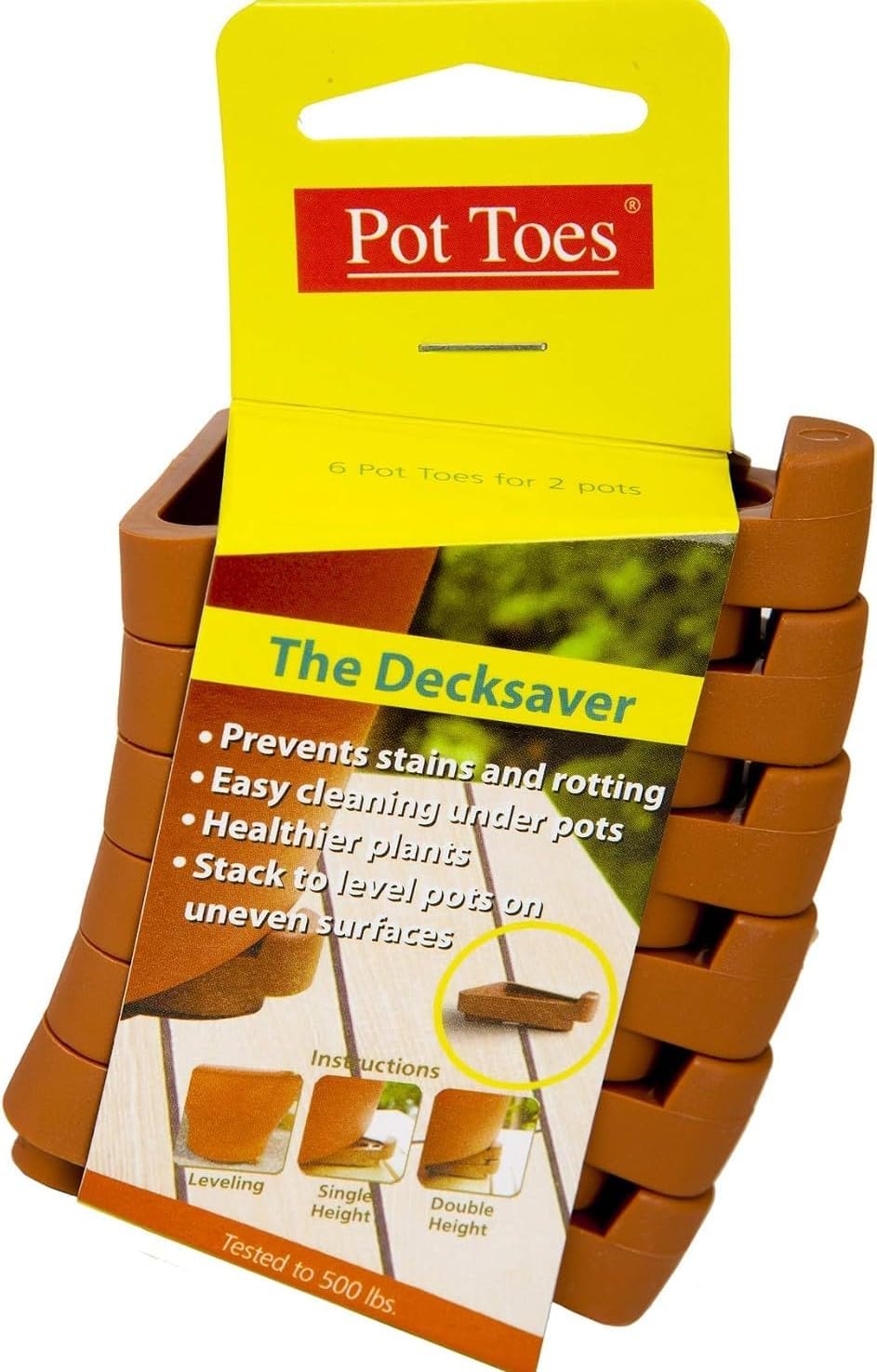
Bosmere Pot Toes Plant Pot Risers, Pack of 6 (Terra-cotta)
| Material Type | Plastic |
|---|---|
| Number of Pieces | 6 |
| Indoor Outdoor Usage | Indoor |
| Other Special Features of the Product | Drainage Hole |
Bosmere Pot Toes are small plastic feet you slide under plant pots to lift them off floors, decks, or shelves. They are intended to prevent water stains and wood rot by keeping planters ventilated and dry and can also help level pots on slightly uneven surfaces. Each pack contains six discreet risers that can be trimmed to fit pots with bases in the 6 to 12 inch range, and the manufacturer states they will support very heavy pots. The risers are lightweight, easy to position, and disappear under most pots, which makes them convenient for indoor use on wood, tile, or carpet. Limitations are their simple plastic construction, which may wear over time and can be less stable with very narrow-based containers; very large or irregular bases may still need a different support. For someone looking for a low-effort way to protect surfaces and improve pot drainage and airflow, these are a practical, unobtrusive option.
Best for: Gardeners who want a low-maintenance, discreet way to protect indoor floors or patio surfaces and improve pot ventilation without changing pots or stands.
Less Ideal for: Those needing heavy-duty, long-term outdoor supports or users with large irregular planters that require broader, more stable bases.
- Keeps pots raised to promote air circulation and reduce surface staining
- Trim-to-fit arms let you adapt risers to pots with 6 to 12 inch bases
- Pack of six provides enough pieces for several containers or grouped displays
- Very easy to install and mostly hidden under pots for a tidy look
- Basic plastic material may degrade or compress over long outdoor exposure
- May offer limited stability for very narrow or unusually shaped pot bases
Verdict: A simple, adaptable set of risers that protects surfaces and improves airflow for everyday indoor potted plants.
Potrisers PR2-6 Large Invisible Pot Feet, 6 Pack

| Manufacturer | Potrisers, Inc. |
|---|---|
| Item model number | PR2-6 |
| Item Weight | 0.8 ounces |
These Potrisers are simple, heavy-duty risers designed to lift large planters about 3/4 inch off the ground to improve drainage and air circulation. Made from recycled rubber and CNC-cut for uniformity, the 2" square feet are low profile and non-marking on most surfaces, and the manufacturer claims three risers can support very heavy statuary or pots. In practice they are easy to fit under pre-planted containers and make routine watering and cleaning easier because water drains away instead of pooling beneath pots. The recycled rubber construction gives them strong grip and durability that resists compression over time, which is useful if you move pots seasonally. They are not recommended for certain vinyl composite surfaces, so test first on vulnerable decking. Also, because they are small and low, they are less useful if you need a large gap for insulation or very high clearance under a pot.
Best for: Buyers who prioritize reliable, long-lasting performance and want a straightforward way to improve pot drainage and stability for medium to large containers.
Less Ideal for: If you need tall elevation under planters, active portability with integrated wheels, or have delicate vinyl-composite decking, look for alternative risers or platforms suited to those needs.
- Durable recycled rubber construction resists compression and provides long-term support
- Low-profile 3/4" height improves drainage and airflow without dramatically raising planter height
- Non-skid, non-marking design protects most surfaces and keeps pots stable
- CNC-cut uniformity ensures consistent contact and balance across multiple risers
- Not recommended for some vinyl or vinyl composite surfaces that may mark
- Low height limits usefulness when higher elevation is needed for insulation or clearance
Verdict: A compact, heavy-duty set of recycled-rubber risers that reliably improve drainage and keep large pots stable for buyers focused on lasting performance.
UFelice 24-Pack Invisible Rubber Pot Feet with Enhanced Non-Slip Grip

| Included Components | 24 x Strong Adhesive Pads |
|---|---|
| Material Type | Rubber |
| Mounting Type | Floor Standing |
| Indoor Outdoor Usage | Indoor |
These UFelice invisible pot feet raise planters a fraction off the floor to improve air circulation, prevent water and soil stains, and reduce the chance of pots sticking to surfaces. Each riser is a solid EPDM rubber pad with a textured non-slip surface that helps keep pots stable on tile, wood, and concrete. The pieces are heavier and denser than foam alternatives so they resist compression and should hold shape under typical houseplant loads. The low-profile design stays tucked under the pot so it is unobtrusive in most displays. Limitations include a fixed small footprint that may not suit very large or irregular pot bases and they attach with adhesive pads rather than removable mechanical mounts, so repositioning or reuse on another pot is more difficult. For everyday indoor use these risers are a straightforward, durable way to protect surfaces and improve planter drainage.
Best for: Buyers who want a simple, durable way to protect indoor floors and improve planter drainage without changing the look of their pots, and who value a long-lasting rubber solution over lightweight foam options.
Less Ideal for: People who need removable or adjustable pot stands for frequent reconfiguration or who have very large outdoor planters that require wider support.
- Solid EPDM rubber construction resists flattening and compression compared with foam pads
- Textured non-slip surface improves stability on a variety of indoor floors
- Low-profile, discreet design stays hidden under pots for a neat display
- Pack of 24 provides enough risers for multiple pots or staggered setups
- Adhesive-mounted pads are not easily repositioned or reused on different pots
- Small footprint may not adequately support very large or uneven pot bases
Verdict: A durable, low-profile rubber riser pack that reliably protects indoor floors and stabilizes planters for practical everyday use.
YUFDA Rubber Square Pot Risers, 6-Pack (2" x 0.6")

| Material Type | Rubber |
|---|---|
| Unit Count | 6 Count |
These YUFDA rubber square pot risers are simple, heavy-duty pads that elevate pots to improve airflow and drainage while protecting decks and patios from stains. Sold as a set of six, each 2 inch square riser is thick and dense rubber, so three under a medium or large planter provide stable support and the manufacturer claims very high load capacity. In practice they are easy to place, work with round or square containers, and wipe clean when muddy. The raised design helps water escape from pot bottoms and keeps undersides drier, which reduces rot and staining on wood or concrete surfaces. Limitations are their small footprint, which means very lightweight or narrow-bottomed pots can still tip if not positioned carefully, and the rubber may pick up debris over time requiring occasional cleaning. These are a straightforward, no-frills solution for gardeners who want an affordable way to improve pot drainage and protect outdoor surfaces.
Best for: Practical gardeners and renters who want an affordable, low-maintenance way to protect patios and improve container drainage without altering planters.
Less Ideal for: People who need integrated leveling for uneven surfaces or very wide, heavy commercial planters that require specialized supports should look for purpose-built stands.
- Durable rubber construction resists compression and supports heavy planter loads
- Elevates pots to improve drainage and airflow, reducing water pooling under containers
- Easy to clean with a damp cloth and reusable season after season
- Sold in a six-pack so a few risers can support multiple planters or one large planter
- Small contact area can allow narrow or top-heavy pots to wobble if risers are not positioned carefully
Verdict: A budget-friendly, durable set of rubber risers that raises planters for better drainage and surface protection.
TAICHEUT 12" Plastic Plant Pot Risers, Pack of 20

| Unit Count | 20 Count |
|---|---|
| Material | Polypropylene (PP) |
| Special Features | Drainage |
| Number of Levels | 1 |
These plastic pot risers are a straightforward solution for lifting planters off trays and hard surfaces to improve drainage and air circulation. Each 12-inch round riser is made from polypropylene, is lightweight and easy to move, and the perforated circular mesh lets excess water escape instead of pooling under pots. A pack of 20 covers multiple containers or a group of pots on a patio or windowsill. The risers are described as sturdy with solid load-bearing capacity, so they help prevent pots from sliding or tipping while still being simple to clean and resistant to fading. Expect a low-profile lift rather than a decorative stand since the pieces are flat and utilitarian. They will not raise pots very high, so they are best when you only need modest elevation for drainage and airflow rather than a showpiece or tiered display.
Best for: Buyers who prioritize reliable, no-fuss performance for improving pot drainage and preventing moisture buildup across several containers.
Less Ideal for: Gardeners seeking decorative or high-elevation plant stands for presentation or tiered displays should consider other options.
- Large 20-piece pack covers multiple pots or whole displays
- Perforated design improves drainage and prevents standing water
- Polypropylene construction resists fading and is easy to clean
- Lightweight and easy to reposition for seasonal changes
- Low profile lift provides only modest elevation, not suitable for tall display needs
- Made of plastic so it lacks the aesthetic finish of metal or wood stands
Verdict: Choose this 20-pack if you want a dependable, easy-to-use way to lift multiple pots for better drainage and plant health.
Bamworld 12-inch Wooden Plant Caddy, 2-Pack

| Unit Count | 2 Count |
|---|---|
| Load Capacity | 240 pounds |
| Material | Wood |
| Special Features | Wheels |
| Finish Type | Polished |
These Bamworld plant caddies are simple wooden dollies on casters made to make moving heavy pots easy. Each 12-inch round tray sits on a low-legged wooden base with metal connections and two rolling caster wheels that provide 360 degree mobility plus locking capability to keep a pot in place. Typical use is sliding a potted plant onto the tray and rolling it across a patio, deck, or hardwood floor to reposition for light, watering, or winter storage. The polished wood finish looks more attractive than plastic and the stated 240 pound capacity means they can handle large ceramic or stone planters as well as other heavy items like laundry baskets. They arrive ready to use with no assembly required. Limitations are the small footprint that suits medium pots but not very wide saucers or irregular bases, and wood exposed to constant outdoor moisture will need care to avoid swelling or rot compared with plastic or metal dollies.
Best for: Buyers who want an inexpensive, attractive solution to move medium to large pots around patios, porches, or inside the home without tools or complicated assembly.
Less Ideal for: People who need an all-weather, maintenance-free dolly for constant outdoor exposure or those who must support extra-large planters with very wide bases.
- Ready-to-use wooden dollies with a polished finish for a neater look than basic plastic caddies
- High stated load capacity of 240 pounds for moving very heavy planters
- Locking casters provide both mobility and secure placement
- Two-pack gives extra value for moving multiple pots or pairing indoors and outdoors
- Wood construction requires occasional protection or maintenance if left outdoors in wet conditions
Verdict: A budget-friendly, ready-to-use wooden set that gives attractive, high-capacity mobility for medium and large pots.
AZADESJET Adjustable Metal Plant Stand (fits 8–12 in pots)

| Load Capacity | 200 pounds |
|---|---|
| Special Features | 2 Height Options, Adjustable Width |
| Material | Metal |
| Finish Type | Powder Coated |
This AZADESJET plant stand is a simple, heavy-duty riser for elevating pots, pet bowls, or small decor items. The metal frame expands from about 8 to 12 inches so it can accommodate a range of pot diameters, and flipping the stand gives two display heights that help with sunlight access and layered staging. The reinforced triangle construction and powder-coated finish make it stable and weather-resistant, and the maker rates its load capacity at up to 200 pounds, so it will handle large ceramic planters. Assembly is tool-free and quick thanks to the design, and non-slip foot pads protect floors and add stability. It is a straightforward, space-saving choice when you want a neat, modern look without a bulky base. The stand is a single-level riser rather than a multi-tier shelving system, so you will need multiple units for larger displays or those wanting built-in shelving functionality.
Best for: Buyers who need an inexpensive, sturdy way to lift individual pots for better light and cleaner displays and who prioritize function and quick setup over decorative flair.
Less Ideal for: Those who want a multi-tier shelving system or coordinated matching sets across a large display should consider other options.
- Adjustable width fits 8 to 12 inch pots for flexible use
- Two height settings let you change plant exposure and layering
- Heavy-duty metal frame with a 200 pound load capacity
- Powder-coated finish and non-slip pads improve durability and floor protection
- Single-level design does not replace multi-tier plant shelving
- Limited decorative variation if you want a more ornate stand
Verdict: A durable, no-fuss adjustable metal riser that gives budget-minded plant owners a stable way to elevate single pots for improved display and sunlight access.
Choosing the Right Pot Riser: Key Factors to Consider
Drainage Improvement
A pot riser works first and foremost by improving drainage. Elevating the pot allows excess water to flow freely from bottom drainage holes instead of pooling against a flat surface. Better drainage reduces the chance of saturated soil and root oxygen deprivation, which are primary causes of root rot and poor plant health.
When assessing drainage improvement, think about how much elevation you need for your pot's drainage holes to clear the surface it sits on. Shallow risers may help on impervious patios but not enough for pots with slow-draining media. Good risers channel water away and leave an air gap beneath the pot to increase evaporation and airflow around the base.
Load Capacity and Stability
Your riser must safely hold the pot's full weight when filled with potting mix and a saturated root ball. Heavy ceramic or concrete planters impose a much larger static load than small plastic pots. A stable riser prevents tipping when plants are top-heavy, when wind hits, or when you water.
Consider the riser's diameter relative to the pot base, how the weight is distributed across legs or a platform, and whether the riser design resists lateral movement. Low, wide risers generally offer better stability for large pots, while taller risers must balance height with a sufficiently broad footprint to avoid wobble.
Material Durability and Weather Resistance
Pot risers sit in wet conditions and face sun exposure, freeze-thaw cycles, and occasional contact with fertilizer salts in runoff. Materials that resist UV breakdown, cracking, and corrosion last longer and maintain their elevation and grip over seasons.
Plastic varieties vary in UV stabilization and may become brittle if not formulated for outdoor use. Metal risers need coatings or rust-resistant alloys if they will sit on damp surfaces. Natural materials like hard wood can perform well if treated, but untreated wood will rot. Choose materials suited to your local climate and expected time outdoors.
Surface Grip and Non-slip Features
A riser must keep the pot from sliding during watering or in windy conditions. Non-slip surfaces, rubber pads, or textured platforms improve safety and keep pots aligned for consistent drainage.
Evaluate where you place pots. Smooth deck boards, tile, and metal shelves all present different slip risks. Risers with integrated rubber feet or raised ridges under the pot provide added friction and reduce noise or scratching on delicate surfaces.
Compatibility With Different Pot Shapes and Sizes
Pots come in tapered, round, square, and multi-tiered shapes. A riser that clamps, nests, or provides a broad platform will work with more pot styles. Some risers adjust or stack to fit a range of diameters, while others are single-size and best suited to specific pot bases.
Think about future use. If you rotate pots or repot seasonally, a versatile riser that accepts a range of diameters will be more useful than a single-diameter pedestal. Compatibility also covers clearance for saucers if you use them, and whether the riser allows easy removal of the saucer for cleaning.
Maintenance and Cleaning
Risers will collect soil, algae, and mineral deposits. Easy-to-clean designs reduce the time you spend scrubbing and prevent blocked drainage channels. Consider whether the riser disassembles, resists staining, and allows hose-down cleaning without trapping water.
Low-maintenance materials and smooth, sloped surfaces shed debris better than porous or deeply textured ones. If you move pots frequently, lightweight risers that tolerate repeated handling without losing shape are preferable.
When Raising Pots Matters Most
Raising pots is most beneficial in environments where water tends to pool or evaporative airflow is limited. On concrete patios, tile floors, and greenhouse benches, an air gap stops bottoms from sitting in a wet film and prevents water from wicking back into the soil. Elevation also helps when pot drainage holes are partially blocked by compacted media or root mats.
Elevating pots can also protect decking and outdoor furniture from stains caused by water and mineral runoff. On balconies and upper-level patios, risers help avoid trapped moisture that can cause rot or staining on the surface beneath the pot.
- Improves drainage on impervious surfaces
- Reduces risk of root rot in cool, wet climates
- Protects deck and balcony surfaces from staining
Types of Pot Risers and How They Behave
Pot risers come as solid platforms, ring-style supports, multi-leg pedestals, and adjustable or stackable systems. Solid platforms give uniform support and can incorporate drain channels. Ring-style risers lift the pot at a single plane and work well when you need a minimal footprint.
Legged pedestals often allow the most airflow beneath the pot but can be less stable with narrow pot bases. Adjustable risers provide flexibility for different pot diameters but sometimes sacrifice load capacity for versatility.
- Solid platform: best for heavy, wide pots
- Ring support: minimal contact, good for saucer clearance
- Legged pedestal: maximum airflow, needs wide base
- Adjustable/stackable: versatile, check load limits
Placement Tips for Best Results
Place risers so the pot's drainage holes clear the surface entirely. If you use a saucer, set it under the riser rather than directly under the pot so water exits the pot into the saucer without being blocked by the surface. On uneven surfaces, test the riser for wobble before leaving heavy pots in place.
For plants that like drier surface layers, add two risers stacked for extra height rather than relying on a single tall, narrow pedestal. That provides both height and a lower center of gravity for stability.
- Ensure drainage holes are fully unobstructed
- Use risers under saucers to manage runoff
- Stack low risers instead of using one tall narrow riser
Caring for Risers Over Time
Regularly clean risers to remove algae, mineral buildup, and trapped soil. A quick hose-down or scrub with a brush keeps drain channels clear and prevents slip hazards. Inspect metal risers for rust and plastic risers for cracks after winter.
If you use pesticide or salt-based fertilizers, rinse risers more frequently to avoid corrosive damage. Replace risers that lose rigidity or develop sharp edges that could damage pots or decking.
- Hose down and scrub periodically
- Inspect for cracks, rust, or UV damage
- Rinse after fertilizer or salt exposure
Using Risers in Containers and Raised Beds
In large container groupings and raised beds with multiple pots, risers help standardize drainage and make moving pots simpler. When plants are grouped, slightly different riser heights can improve light exposure between pots and keep lower plants from being shaded out.
For raised beds with integrated containers, small riser platforms allow seasonal repositioning and simplify replacing pots without disturbing nearby plants.
- Use consistent riser heights for uniform drainage
- Adjust heights to optimize light in grouped plantings
- Risers simplify seasonal repositioning of pots
How We Chose the Best Pot Riser
We focused on attributes that directly affect a pot riser's performance in active gardens. Key evaluation criteria included drainage effectiveness, which measures how much the riser reduces standing water and promotes outflow; load capacity and stability, which assesses the riser's ability to hold different pot sizes without tipping; material durability against sun, moisture, and freeze-thaw cycles; and footprint and compatibility, which looks at how well the riser fits common pot shapes and sizes. We also considered ease of use, including whether risers stack, adjust, or have non-slip features that simplify placement and movement. Exclusions: we did not consider decorative-only risers that offer no functional elevation or products intended solely as plant stands for living-room furniture. Our shortlist emphasizes practical performance for outdoor and greenhouse use, prioritizing long-term reliability and real-world garden handling over ornamental features.
FAQ
How high should a pot riser be for good drainage?
A modest elevation of one to two inches is enough for many pots to clear drainage holes and allow water to flow. Larger pots or very slow-draining mixes benefit from higher elevation of two to four inches to increase airflow and evaporation.
Can I use risers on wooden decks without causing damage?
Yes, but choose risers with rubber feet or a broad platform to distribute weight and prevent point loading. Place a saucer or tray under the riser to catch mineral runoff and check periodically for staining or moisture buildup.
Are plastic risers durable enough for year-round outdoor use?
Some plastics are formulated for outdoor use and resist UV and freeze-thaw damage, but cheaper plastics can crack over time. Look for solid, UV-stabilized materials if you plan to leave risers outside through winter.
Do risers help with pests or mold under pots?
By improving airflow and reducing standing moisture, risers can make conditions less favorable for mold and some soil-surface pests. They do not eliminate pests, but they reduce damp microclimates where fungi and moisture-loving insects thrive.
Should I stack risers to increase height?
Stacking low-profile risers can be safer than using a single, tall narrow riser because it keeps the center of gravity lower while providing added clearance. Ensure stacked components interlock securely and still provide stable support for the pot.
How do I choose a riser for odd-shaped pots?
Choose adjustable or wide-platform risers that accommodate tapered and square bases. Alternatively, use multiple small risers placed beneath the pot rim to create stable support points that follow the pot's shape.
Final Verdict
When selecting a pot riser, prioritize how much drainage improvement you need and the stability required for your heaviest pots. Materials and weather resistance matter for long-term outdoor use, while non-slip features and compatibility with different pot shapes affect day-to-day handling. Balance elevation with a broad footprint to avoid tipping and choose risers that are easy to clean and inspect. By focusing on drainage, load capacity, and durability you can confidently pick a riser that protects your plants and the surfaces beneath them.
