

Note: This article contains affiliate links. If you click on these links and make a purchase, I may earn a small commission at no extra cost to you. This helps support my research and content. Read my full affiliate disclosure here.
Elephant ears need a potting mix that holds steady moisture without staying waterlogged, supplies steady nutrients for large leaves, and supports developing tubers. If you grow elephant ears in containers, patios, or indoors during cool months, the right mix makes the difference between floppy, pale foliage and bold, healthy leaves. This guide shortlists seven top mixes suited for elephant ears and explains how we evaluated drainage, moisture retention, nutrient content, and structure. Use the assessments and buying criteria below to pick a mix that matches your growing container, watering style, and planting timeline.
Top Picks at a Glance
| Best Overall The best all-around choice for most situations | LAPOND Chunky Aroid Potting Mix for Monstera, Philodendron & Alocasia (3.2 qt) |  |
| Best Quality Built to a higher standard if you want something more solid | Soil Sunrise Elephant Ear Potting Soil Mix (8 Quarts) |  |
| Best Value The sweet spot between price and what you get | Soil Sunrise Aroid Potting Soil Mix (8 Quarts) |  |
| Best Budget The cheapest option that still gets the job done reliably | Grow Queen Craft Aroid Potting Mix, Chunky Monstera & Tropical Plant Soil, 2 qt |  |
| Highest Rated A top-rated pick with lots of positive feedback | Gardenera Elephant Ear Potting Mix — 2 Quart |  |
| Most Popular A crowd favorite that many people choose with confidence | Grow Queen Craft Aroid Potting Mix, Chunky Soil for Monstera, Alocasia & Tropical Houseplants, Peat-Free, 4 qt |  |
| Best Seller A high-volume bestseller chosen again and again | Rosy Soil Aroid Potting Mix, Chunky Biochar Soil, 4 Quarts |  |
LAPOND Chunky Aroid Potting Mix for Monstera, Philodendron & Alocasia (3.2 qt)

| Brand Name | LAPOND |
|---|---|
| Unit Count | 101 Ounce |
| Style Name | Chunky |
This LAPOND chunky aroid mix is formulated for tropical houseplants and works well for elephant ear types like Alocasia because it combines chunky particles with a peat moss and coco coir blend to keep roots airy yet evenly moist. You use it straight from the bag for repotting or top-ups; the larger particles create natural air pockets that reduce compaction and help roots anchor, while the mix sheds excess water so pots are less likely to stay waterlogged. The peat and coco coir make the texture light and tidy compared with dense garden soils, which simplifies handling during repotting. Because it is ready-to-use there is no need to measure or add coarse amendments for typical container sizes, which is convenient for routine maintenance. The main limitation is bag size and lack of detailed nutrient information, so growers who prefer specific fertilizer schedules or larger projects will need to amend or supplement accordingly.
Best for: Growers who want an easy, all-purpose aroid mix for repotting and maintaining elephant ear type tropicals and who value good drainage and root aeration without custom blending.
Less Ideal for: Large-scale growers or gardeners who need a specialized nutrient program or bulk quantities for many plants should choose a commercial or customizable mix instead.
- Chunky particle structure improves root aeration and reduces compaction
- Balanced peat moss and coco coir blend retains moisture without becoming soggy
- Ready-to-use mix requires no additional mixing before repotting
- Lightweight, clean texture makes repotting less messy
- No nutrient or fertilizer profile provided in the product details
- Small bag size may require multiple bags for larger plants or repeated repotting
Verdict: A convenient ready-to-use chunky aroid mix that gives elephant ear and other tropical houseplants improved drainage and root aeration with minimal fuss.
Soil Sunrise Elephant Ear Potting Soil Mix (8 Quarts)

| Volume | 8 quarts |
|---|---|
| Ingredients | Peat moss, perlite, sand, worm castings, lime |
| Style Name | Peat Moss,Potting,Potting Soil Mix |
This 8-quart Soil Sunrise mix is made specifically for elephant ear plants and combines peat moss, sand, perlite, worm castings, and lime to recreate a loose, tropical-style growing medium. In practice it is used straight from the bag for repotting or filling patio containers and provides steady moisture retention from peat and sand while perlite keeps the mix airy so roots do not suffocate. Worm castings add slow-release nutrients that support vigorous foliage and root development, and the formulation is suitable for both indoor specimens and outdoor containers. The resealable bag and natural ingredients make it easy to store and handle with gloves, but the peat content means growers who prefer peat-free or fully organic-certified mixes will need a different product. Volume is modest at 8 quarts, so you may need multiple bags for large containers or multiple plants. For a balanced, purpose-made potting mix that reduces compaction and encourages lush leaves, this is a convenient option for container elephant ears.
Best for: Buyers who want an off-the-shelf, ready-to-use potting mix tailored to elephant ear plants and who value balanced moisture, aeration, and natural nutrient support for container growing.
Less Ideal for: Growers seeking peat-free or bulk landscape soil for in-ground planting, or those needing large volumes for multiple large containers.
- Formulated specifically for Alocasia and Colocasia, matching tropical soil needs
- Good moisture balance from peat moss and sand while perlite improves aeration
- Contains worm castings for organic nutrient support
- Works for both indoor specimens and outdoor container plantings
- Resealable bag for easier storage
- Small 8-quart volume may require multiple bags for large pots or several plants
- Contains peat moss, which some growers avoid for environmental or peat-free preferences
Verdict: A ready-made, balanced potting mix that simplifies repotting and container growing for elephant ear plants.
Soil Sunrise Aroid Potting Soil Mix (8 Quarts)
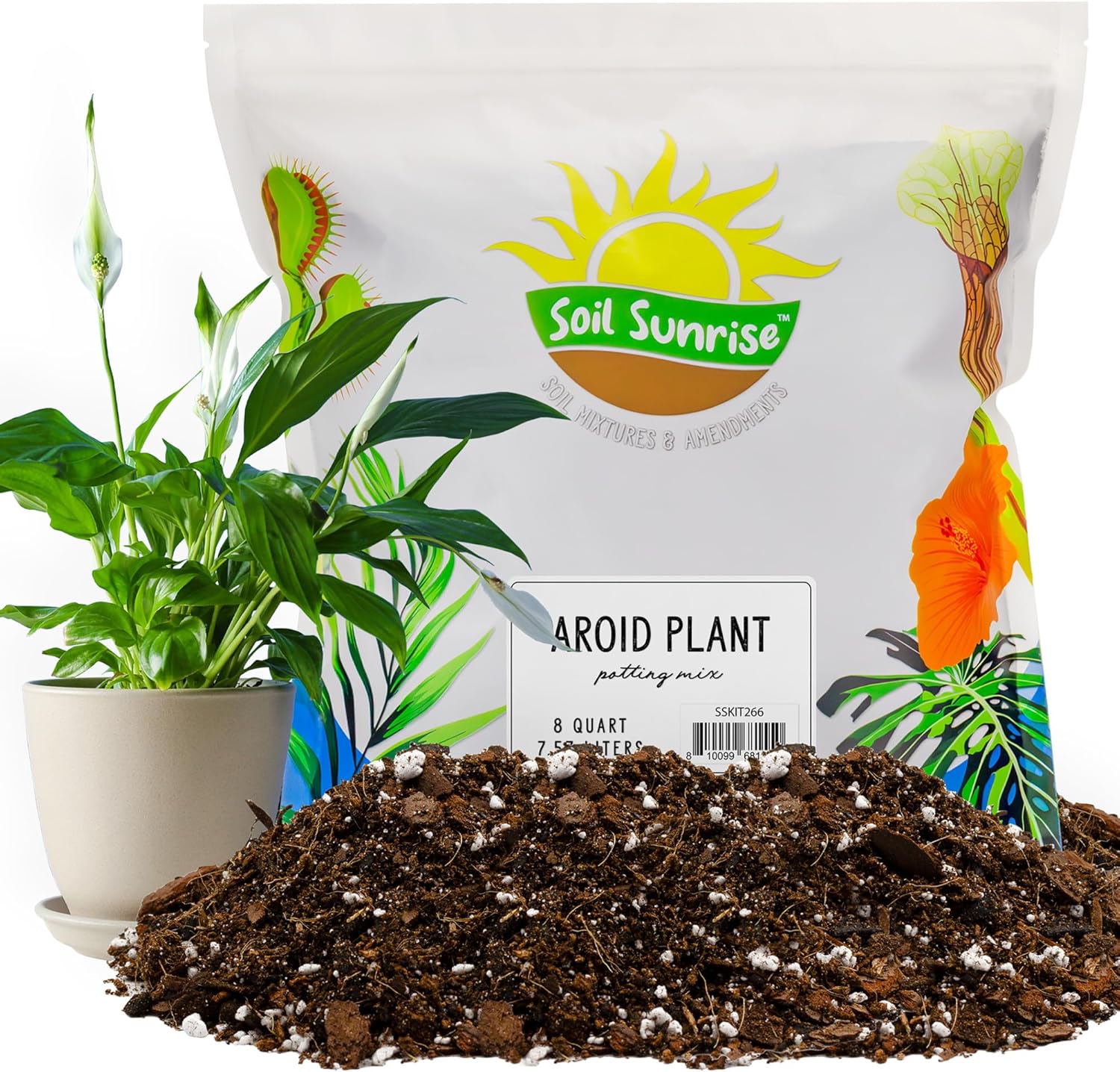
| Volume | 8 quarts |
|---|---|
| Ingredients | Coco coir, bark, perlite, worm casting, charcoal |
| Unit Count | 1 Count |
This 8-quart Soil Sunrise aroid mix is designed specifically for jungle-type houseplants like golden pothos and other Araceae. The blend of coco coir, pine bark, perlite, worm castings, and horticultural charcoal creates a light, chunky texture that promotes fast drainage while holding enough moisture for steady root growth. In practice it is useful for repotting store plants into a more breathable medium or refreshing the top layer of older pots. Notable features include organic amendments for nutrition, perlite and bark for aeration to reduce root rot risk, and charcoal to help with moisture regulation and odor control. The bag states it will fill a large 12-inch planter, so a single pack suits one or two typical pothos repots. Limitations are the small volume for multi-plant households and the absence of added slow-release fertilizer, so you will need to plan feedings after repotting for vigorous growth.
Best for: Balanced houseplant owners who want a ready-made, all-natural mix that mimics jungle soils for healthy pothos root development and easier repotting.
Less Ideal for: People who need large quantities for many plants or who want a potting mix with built-in slow-release fertilizer.
- Aroid-specific blend with coco coir, pine bark, perlite and charcoal for matching pothos root needs
- Includes worm castings to provide natural, gentle nutrients
- Light, chunky texture improves aeration and reduces chance of root rot
- Suitable for both young and mature plants and fits a 12-inch pot
- 8-quart bag is modest volume if you need to repot many plants
- No added fertilizer means you must supplement nutrients after repotting
Verdict: A purpose-made, all-natural aroid mix that gives golden pothos the drainage and airy texture they need for healthier roots and easier repotting.
Grow Queen Craft Aroid Potting Mix, Chunky Monstera & Tropical Plant Soil, 2 qt

| Brand | Grow Queen |
|---|---|
| Volume | 2 quarts |
| Ingredients | Tree fern fiber, earthworm castings, lava rock, biochar, coco coir, gypsum, alfalfa meal |
| Designed for | Monstera, Alocasia, Philodendron, Anthurium and tropical houseplants |
This Grow Queen Craft Aroid Mix is a ready-to-use, chunky potting soil built to replicate a rainforest floor for Monsteras, Alocasias and similar tropical houseplants. The blend combines large bark pieces, pumice and lava rock for fast drainage and aeration, while coco coir and charged biochar retain modest moisture so the mix does not go bone dry between waterings. It also includes earthworm castings, alfalfa meal and gypsum to support beneficial microbes and provide gentle nutrition out of the bag. The mix arrives pre‑moistened and is straightforward for repotting, especially when you want to reduce compaction and lower the risk of overwatering. Notable limitations are the small 2 quart bag size for larger repotting jobs and the absence of perlite if you prefer that specific amendment. This is a practical, botanist‑informed option for people who want a sustainable, peat‑free alternative tailored to aroids and other chunky‑soil‑loving houseplants.
Best for: Buyers who want a ready-made, sustainable potting mix that mimics tropical forest soil for Monsteras and other aroids and who value drainage with living amendments over DIY mixing.
Less Ideal for: Growers repotting many large plants at once or those who prefer to fully customize their own soil recipe with specific additives like perlite or added fertilizer concentrates.
- Chunky, well aerated formula with bark, pumice and lava rock to improve drainage and prevent compaction
- Includes charged biochar and earthworm castings to support microbes and provide starter nutrients
- Peat free and perlite free, using coco coir and natural porous aggregates for sustainability
- Pre‑moistened and ready to use straight from the bag for easy repotting
- Small 2 quart volume may be impractical for repotting multiple or large plants
- Does not contain perlite, which some growers prefer for a lighter texture
Verdict: Choose this mix if you want a peat‑free, botanist‑designed chunky soil that gives Monsteras and other aroids the fast drainage and living nutrition they need straight from the bag.
Gardenera Elephant Ear Potting Mix — 2 Quart

| Item Type Name | Elephant Ear Soil Blend |
|---|---|
| Brand Name | Gardenera |
| Volume | 2 quarts |
| Style Name | Peat Moss,Potting,Potting Mix |
Gardenera's Elephant Ear Potting Mix is a focused 2 quart blend designed to give Alocasia, Colocasia, and Xanthosoma the moisture balance and nutrients they need. The formula pairs Canadian peat moss for water retention and pH moderation with worm castings to supply slow-release nutrients that support steady root and foliage growth. Charcoal helps keep the root zone cleaner by absorbing impurities while a small amount of sand improves drainage so containers do not stay waterlogged. In practice this mix works as a ready-to-use container medium for planting bulbs or repotting young plants and reduces the need for immediate fertilizer top-ups. The bag is small, so it is convenient for trialing different plants or topping up pots but not intended for large landscaping projects. Buyers should plan to supplement with additional volume or periodic fertilization for heavy feeders or mature, fast-growing specimens. The blend is reliable for routine container culture where balanced moisture and clean root conditions are priorities.
Best for: Buyers who prioritize a dependable, ready-to-use container mix for Elephant Ear species and want a low-effort medium that promotes clean roots and consistent moisture for indoor or patio pots.
Less Ideal for: Gardeners needing large quantities for beds, pond-side plantings, or those who prefer custom mixes with precise nutrient guarantees.
- Balanced ingredient mix (peat moss, worm castings, charcoal, sand) for moisture retention and drainage
- Worm castings provide organic nutrients that support steady root and foliage development
- Charcoal helps reduce impurities in the root zone for healthier container-grown plants
- Compact 2 quart size is convenient for trialing, repotting small plants, or topping up pots
- Small 2 quart volume makes it impractical as the sole medium for larger containers or multiple plants
- Does not specify NPK or detailed nutrient analysis so heavier feeders may need added fertilizer
Verdict: A compact, well-balanced potting mix that reliably supports healthy container-grown Elephant Ear plants by combining moisture retention, drainage, and organic nutrition.
Grow Queen Craft Aroid Potting Mix, Chunky Soil for Monstera, Alocasia & Tropical Houseplants, Peat-Free, 4 qt

| Brand Name | Grow Queen |
|---|---|
| Item Type Name | Potting Mix |
| Volume | 4 quarts |
| Ingredients | Coco Coir, Pumice, Lava Rock, Earthworm Castings, Alfalfa Meal, Gypsum, Tree Fern Fiber, Fir Bark |
This Grow Queen Craft Aroid Mix is a ready-to-use, chunky potting soil made for aroids and other tropical houseplants such as Anthurium. The blend uses fir bark, pumice, lava rock and tree fern fiber to create large pore spaces so water drains quickly and roots get oxygen, while coco coir and charged biochar hold modest moisture between waterings. It also contains earthworm castings, alfalfa meal and gypsum to support soil biology and gentle feeding. In practice the mix makes overwatering less likely and is easy to work with when repotting smaller collectors or standard houseplants. Because it arrives pre-moistened you can pot right away, and the manufacturer notes the pH is tuned toward slightly acidic conditions favored by many aroids. Limitations are the small 4 quart volume for larger plants or multiple repots and the absence of perlite if you prefer that specific material. For someone wanting a sustainable, peat-free alternative that mimics a tropical forest substrate, this mix performs as advertised.
Best for: Buyers who want an easy, botanist-crafted potting mix for Anthurium and other tropical houseplants that reduces the risk of overwatering while supporting soil life.
Less Ideal for: Growers repotting large specimens or outfitting many plants at once who need bulk volumes or a heavier, moisture-retentive substrate.
- Chunky blend of fir bark, pumice and lava rock for excellent drainage and aeration
- Includes charged biochar and earthworm castings to support microbes and provide starter nutrition
- Peat-free, perlite-free formula using washed coco coir and tree fern fiber for more sustainable sourcing
- Pre-moistened and pH balanced toward slightly acidic conditions favored by aroids
- Small 4 quart volume so multiple bags are needed for larger plants or several repots
- Does not contain perlite, which some growers prefer for specific drainage characteristics
Verdict: A peat-free, chunky aroid mix that gives Anthurium and similar tropical houseplants excellent drainage and living soil nutrition in an easy, ready-to-use bag.
Rosy Soil Aroid Potting Mix, Chunky Biochar Soil, 4 Quarts

| Unit Count | 128 Ounce |
|---|---|
| Volume | 4 quarts |
| Item Highlight | Peat-Free, Microbially Active, Superior Aeration & Drainage |
| Style Name | Aroid Soil |
Rosy Soil Aroid Potting Mix is designed specifically for Monsteras, philodendrons, anthuriums and other tropical aroids that need fast-draining, airy media. The mix combines pine bark fines, pumice and biochar to give a chunky structure that resists compaction and lets roots breathe while water moves through quickly. It is also enriched with worm castings, mycorrhizae and compost to create a microbially active medium that supports nutrient uptake and root vigor over time. Because it is peat-free and formulated to be carbon negative, it is a good choice for growers who want an environmentally friendlier alternative to peat-based mixes. In practical use the mix fills multiple small pots from a 4-quart bag, comes in a resealable bag to stay fresh, and is well-suited for repotting and top-ups where drainage and aeration are priorities. Limitations are the small package size for larger collections and the chunky texture may dry faster than peat blends, requiring more frequent watering for some indoor conditions.
Best for: Buyers who prioritize plant performance and root health for Monsteras and other tropical aroids and who want a fast-draining, microbially active soil that keeps roots airy.
Less Ideal for: Casual plant owners who prefer low-maintenance, moisture-retentive peat blends or who need large volumes for many pots should consider other options.
- Chunky mix with pine bark and pumice provides excellent drainage and prevents compaction
- Includes biochar and beneficial microbes to boost nutrient availability and root health
- Peat-free, designed to reduce carbon impact compared with traditional peat mixes
- Resealable bag and 4-quart volume convenient for repotting multiple small houseplants
- 4-quart bag is small for larger collections or multiple repots
- Chunky texture dries faster than peat-based mixes and may require more frequent watering
Verdict: Choose this mix if you want a high-performance, chunky potting medium that gives Monsteras and other aroids superior drainage, aeration, and microbial support.
Choosing the Right Potting Mix for Elephant Ears: Key Factors to Consider
Moisture Retention Versus Saturation Risk
Elephant ears demand consistently moist soil because their large leaves transpire heavily, but they are vulnerable to root rot if the mix stays saturated. A good potting mix will include components that hold water-such as coir, peat, or well-decomposed compost-while also keeping pore space for oxygen. When assessing mixes, look for blends that describe both water-holding ingredients and chunky aggregates; this combination reduces the need for constant watering while avoiding prolonged anaerobic conditions.
In containers, depth and pot material influence how long a mix stays wet, so choose a mix with higher water retention for shallow pots or sun-exposed sites, and a faster-draining blend for deep, heavy containers or areas where you cannot irrigate frequently.
Drainage and Aeration
Adequate drainage prevents tuber suffocation and disease. Materials like perlite, pumice, coarse sand, or pine bark create larger pores that let excess water escape and roots breathe. The ideal mix balances fine, water-holding particles with larger aggregates so that free drainage occurs after heavy watering but the root zone still retains sufficient moisture between irrigations.
Also consider how the mix settles over time. Very fine sphagnum or uncomposted fines can compact and reduce aeration after a season. Choosing blends that advertise chunkier structure or that include aged bark and pumice preserves long-term porosity for tuber development.
Baseline Nutrient Level and Amendment Compatibility
Elephant ears are heavy feeders when developing foliage and tubers, so the starting fertility of a potting mix matters. A modest level of slow-release organic fertilizer or inclusion of composted material gives new transplants a nutrient boost without forcing excessive salts. At the same time, mixes should accept additional feeding through topdressings, liquid feeds, or controlled-release granules.
Avoid mixes with high initial soluble salt levels that can stress young roots. If you prefer to manage fertility yourself, choose a low-fertility, neutral mix that accepts compost and fertilizer easily. For lower-maintenance gardeners, look for mixes with a stated balance of organic matter and slow-release nutrients tailored to container plants.
Physical Structure and Longevity
The physical makeup of the mix affects how long it performs in a container. Components that decompose quickly will collapse and reduce aeration over a single season, forcing repotting or refreshing. Materials like coconut coir, perlite, pumice, and aged bark maintain structure longer than fresh compost or fine peat alone.
Consider how often you want to repot. If you plan to keep elephant ears in the same container for multiple seasons, choose a stable mix and plan annual topdressing rather than relying on mixes that break down rapidly.
pH Balance and Salt Levels
Elephant ears prefer slightly acidic to neutral conditions. A mix with a pH near neutral helps nutrients remain available and supports healthy tuber development. Some bagged mixes include lime or other pH modifiers, so gardeners growing in containers should check ingredient notes to avoid unexpected alkalinity.
Salt accumulation is a common issue in containers where frequent fertilization or hard water is used. Pick mixes that advertise low soluble salts or that are compatible with leaching practices. Periodic flushing and use of low-salt fertilizers reduce the risk of leaf tip burn and stunted growth.
Weight and Container Considerations
The weight of a potting mix matters for large elephant ear plants because oversized leaves create wind and handling stress on the container. Heavy mixes with high clay or fine peat content increase the load and make moving pots difficult. Lighter mixes with coir and pumice are easier to handle and place on patios or stands.
When using hanging, raised, or decorative containers, prioritize lighter blends and add stability with a proper pot size or anchor. For ground-level planters where weight is less of a concern, a denser mix that holds more moisture may be acceptable.
Preparing Mixes for Planting Elephant Ears
Prepare your chosen mix by adding coarse aggregate or compost to suit your pot size and watering routine. For container-grown elephant ears, blend a water-retentive base like coir or well-aged compost with 15 to 30 percent coarse material such as perlite, pumice, or chunky bark to keep pore space open.
When planting tubers, ensure the final medium is loose enough for roots to expand and dense enough to support the plant. Wet the mix lightly before planting to settle it but avoid packing; gently firm around the tuber while leaving some air pockets for root growth.
- For shallow containers increase water-holding components by 10 to 20 percent.
- For windy sites or outdoor beds increase drainage elements to reduce saturation risk.
- Topdress with compost after growth begins to supply ongoing nutrients.
Adjusting Fertility for Vigorous Foliage
Elephant ears respond to steady feeding. If your chosen mix is low in nutrients, apply a balanced slow-release fertilizer at planting and follow with liquid feeds during the growing season to support leaf expansion. Organic amendments like compost tea or fish emulsion supply quick nutrients without sudden salt spikes.
If you start with a higher-fertility mix, reduce initial fertilizer applications to avoid burning young roots and to prevent overly rapid, weak growth. Monitor leaf color and growth rate and adjust feeding frequency rather than blanket-applying heavy fertilizer.
- Apply a slow-release formula at planting in accordance with container size.
- Supplement with diluted liquid feed every 2 to 4 weeks during peak growth.
Container Depth and Root Space Considerations
Elephant ears develop substantial tubers and appreciate deeper pots that allow roots to spread. Aim for containers at least 12 to 18 inches deep for most varieties grown in pots. Depth gives the tuber room to expand and helps the root zone buffer short dry spells.
If your container is shallow, choose a mix with higher water retention and plan for more frequent watering and feeding. In deep containers, ensure good drainage at the bottom and avoid placing the plant in standing water.
- Use pots with drainage holes and a porous mix to balance water retention.
- Consider using a sleeve or liner with coarse gravel under the soil only if it improves drainage for very heavy pots.
Seasonal Care and Repotting
During the active season, monitor moisture and adjust watering as leaves expand. In cooler months, slow watering and reduce feeding as growth slows. If you keep elephant ears overwintered indoors, refresh the top several inches of mix each season to replenish organic matter and nutrients.
Repotting every one to three years keeps the medium from compacting and restores aeration. When repotting, assess the mix and replace decomposed portions with fresh, structured components to maintain root health.
- Refresh topsoil annually and fully repot when the mix shows signs of compaction.
- Store tubers dry and cool in winter if you remove them, then repot in fresh mix before spring growth.
Watering Practices That Complement Your Mix
Match watering frequency to the mix and container. Fast-draining blends need more frequent, thorough watering, while mixes with higher water-holding capacity allow lighter, less frequent applications. Water deeply until excess drains from the pot, then allow the top inch or two to dry slightly before the next irrigation.
Use saucers and trays carefully; standing water raises the saturation risk even in well-draining mixes. Periodic flushing helps control salt buildup if you fertilize frequently or use hard water.
- Water deeply and infrequently rather than lightly and constantly to encourage robust root systems.
- Flush containers monthly during heavy feeding periods to prevent salt accumulation.
How We Chose the Best Potting Mix for Elephant Ears
We focused on mixes that deliver the physical properties elephant ears need: consistent moisture retention without compaction, free drainage to avoid root rot, and a nutrient profile or amendment friendly to vigorous leaf growth. We prioritized substrate texture and structure because coarse components like bark, perlite, and coir determine how well a mix balances air and water around bulky tuber roots. Evaluation criteria included particle size and structure for aeration, water-holding capacity, baseline fertility and compatibility with organic feeding, pH buffering, and long-term stability in containers. We tested descriptions and lab-backed composition notes rather than brand claims to verify whether mixes contained appropriate proportions of peat or coir, mineral amendments, and chunkier aggregates. We excluded mixes formulated strictly for seed starting or cacti because they lack the moisture and feeding profile elephant ears require. Also excluded were heavy garden soils and mixes with persistent salts or unclear ingredient lists. The final picks emphasize mixes or base blends that gardeners can adjust with compost, slow-release fertilizer, or added drainage amendments to suit container depth and watering habits.
FAQ
Can I use garden soil for potted elephant ears?
Garden soil is usually too dense for containers and can compact, restricting oxygen to tubers. It is better used in raised beds where drainage and structure are naturally different. For pots, use a loose, amended potting mix designed for containers.
How often should I fertilize elephant ears in containers?
Typically apply a slow-release fertilizer at planting and supplement with diluted liquid feeds every 2 to 4 weeks during active growth. Frequency depends on the starting fertility of the mix and the vigor of leaf growth.
Is peat or coir better for elephant ears?
Both can work. Peat holds water well but can compact and is more acidic. Coir is more sustainable, holds moisture, and maintains structure with less compaction. Choose based on availability, pH adjustments, and whether you need a lighter or more stable base.
How do I prevent root rot in containers?
Use a mix with good drainage and chunky aggregates, ensure pots have adequate drainage holes, avoid letting plants sit in water, and allow the top portion of the soil to dry slightly between waterings. Periodic repotting to refresh the mix also reduces disease risk.
Should I add compost to every mix?
Adding a modest amount of well-aged compost improves nutrient content and microbial activity, but avoid excessive fresh compost that can hold too much water or burn roots. A topdressing or 10 to 20 percent mix-in of stable compost is usually beneficial.
What pH should potting mix be for elephant ears?
Aim for slightly acidic to neutral pH, roughly in the 6.0 to 7.0 range. This range helps maintain nutrient availability for leaf and tuber development. Test if you suspect persistent yellowing or nutrient lockup.
Final Verdict
When choosing a potting mix for elephant ears, prioritize a balance of moisture retention and drainage, stable structure that resists compaction, and a baseline nutrient level you can manage. Match the mix to your container depth and watering routine, and plan for seasonal refreshes or repotting if components break down. Focus on the tradeoffs: mixes that hold more water reduce watering frequency but require reliable drainage, while chunkier, lighter mixes improve aeration but need more frequent feeding and watering. Decide which tradeoff fits your setup and adjust the chosen mix with compost, aggregates, or fertilizers to suit your growing conditions.
