

Note: This article contains affiliate links. If you click on these links and make a purchase, I may earn a small commission at no extra cost to you. This helps support my research and content. Read my full affiliate disclosure here.
Growing potatoes that produce large, healthy tubers starts with feeding the soil and plants the right nutrients at the right time. The wrong fertilizer or mistimed feeding can push leafy growth at the expense of tuber set or cause scab and other tuber disorders. This guide focuses on fertilizers formulated for potatoes and for gardeners who want reliable yields in home beds, containers, or small-scale plots. We shortlisted seven top options that reflect different nutrient approaches and application styles. Each pick is evaluated on nutrient balance, ease of use, and how it performs in typical garden situations. Read on to find the feeding approach that fits your soil, planting method, and harvest goals.
Top Picks at a Glance
| Best Overall The best all-around choice for most situations | Old Cobblers Farm Wicked Growth Seed Potato Fertilizer 8-16-16 (5 lb) | 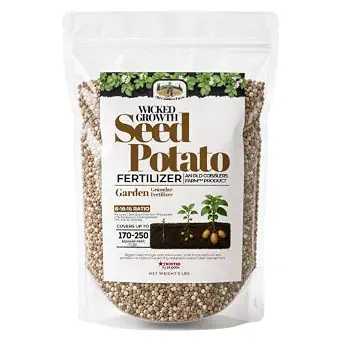 |
| Best Quality Built to a higher standard if you want something more solid | BuildASoil Craft Blend Organic Fertilizer for Vegetable Gardens (3 lb) |  |
| Best Value The sweet spot between price and what you get | Dr. Earth Organic Tomato, Vegetable & Herb Fertilizer (64 oz) |  |
| Best Budget The cheapest option that still gets the job done reliably | Miracle-Gro Water Soluble Tomato Plant Food, 1.5 lb |  |
| Highest Rated A top-rated pick with lots of positive feedback | Ocean's Bounty Organic Seaweed Liquid Kelp Concentrate, 16 oz |  |
| Most Popular A crowd favorite that many people choose with confidence | Miracle-Gro Water Soluble All Purpose Plant Food, 1.5 lb |  |
| Best Seller A high-volume bestseller chosen again and again | BuildASoil Organic Fertilizer for Vegetable Garden (10 lb) |  |
Old Cobblers Farm Wicked Growth Seed Potato Fertilizer 8-16-16 (5 lb)

| Item Form | Granules |
|---|---|
| Application Method | Mix into soil |
| Target Species | Potatoes |
| Mixing Ratio | 8:16:16 |
This granular fertilizer is formulated with an 8-16-16 NPK that favors phosphorus and potassium to encourage tuber set and storage quality in potatoes. It is designed to be mixed into soil at planting, used as a side-dress after emergence, and reapplied midseason, or measured for container plantings using the provided tablespoon guideline. Notable features include a three-stage feeding schedule, clear application rates (for example 2 to 3 lbs per 100 sq ft at planting), and a concentrated total analysis that reduces the amount you need to apply. In practice it benefits gardeners focused on larger, more uniform tubers and those who want a product that works in rows, raised beds and grow bags. Important limitations are that it is a targeted potato feed so it is not a balanced all-purpose garden fertilizer and you should check a soil test before applying to avoid overfeeding; also granules must be kept off foliage and watered in. For growers who follow measured rates, it is an effective tuber-focused option.
Best for: Gardeners who want a potato-focused fertilizer to boost tuber size and storage quality and who follow label rates and a scheduled feeding plan.
Less Ideal for: Casual gardeners looking for a one-product solution for all vegetables or those who prefer liquid or slow-release all-purpose feeds.
- High phosphorus and potassium formulation (8-16-16) targets tuber development and storage quality
- Clear three-stage application schedule for planting, side-dressing, and midseason feedings
- Suitable for rows, raised beds and containers with specific container dosing guidance
- Concentrated formula reduces total product volume needed compared with lower-analysis feeds
- Formulated specifically for potatoes rather than as a general-purpose vegetable fertilizer
- Requires careful measuring and soil testing to avoid overapplication
Verdict: Buy this if you want a concentrated, potato-specific granular feed that emphasizes phosphorus and potassium to produce larger, better-storing tubers.
BuildASoil Craft Blend Organic Fertilizer for Vegetable Gardens (3 lb)

| Item Form | Granules |
|---|---|
| Specific Uses For Product | Plant Growth, Soil Conditioning |
| Coverage | Medium |
| Mixing Ratio | 1/4 to 1 cup per 5 gallons of water |
| Unit Count | 48 Ounce |
BuildASoil Craft Blend is an organic granule fertilizer designed to boost vegetable and flowering plant performance by supplying a balanced 2-4-2 NPK formula with added rock dust and calcium. It is used as a top dress, soil amendment, or brewed into a nutrient tea (1/4 to 1 cup per 5 gallons) to feed plants during both vegetative and flowering stages. For re-amending used soil the guidance is 2 to 4 cups per cubic foot, and small-scale top dressing is straightforward at about 1/4 to 1 cup per plant. The product’s emphasis on mineral inputs and slow-release granules supports steadier growth, stronger roots, and improved flowering over simple soluble feeds. Practical benefits include multi-purpose use across containers and in-ground beds and compatibility with organic gardening approaches. Limitations are the small bag size for larger potato beds and the lack of an explicit potato-specific feeding schedule, so larger plantings will need multiple bags and the gardener should adapt the mixing directions for tuber crops.
Best for: Gardeners focused on maximizing crop performance who prefer organic inputs and want a mineral-rich all-purpose fertilizer they can use as a top dress or brewed feed for individual plants or small beds.
Less Ideal for: Large-scale growers or those seeking a ready-made, crop-specific fertilizer program for potatoes should look for bulk formulations or potato-specific products that include application schedules.
- Balanced 2-4-2 NPK formula suitable for encouraging tuber bulking and foliage development
- Contains rock dust and calcium to supply trace minerals that support soil biology and crop quality
- Versatile application methods: top dress, soil amend, or make a nutrient tea for foliar/soil feeding
- Organic, granulated form that provides slower, steadier nutrient release compared with straight soluble feeds
- 3 lb bag is small for full-season potato beds and will require multiple bags for larger plots
- No potato-specific feeding schedule provided, so growers must translate general directions to tuber timelines
Verdict: A mineral-rich organic fertilizer that gives small-scale potato gardeners a steady, multi-use feed to improve tuber yield and plant vigor.
Dr. Earth Organic Tomato, Vegetable & Herb Fertilizer (64 oz)

| Item Form | Granules |
|---|---|
| Specific Uses For Product | Organic |
| Coverage | Medium |
| Target Species | Herb |
| Unit Count | 64 Ounce |
This organic granular fertilizer is designed to boost vegetable and herb production by supplying steady, plant-available nutrients and beneficial soil microbes. It is typically worked into garden soil, added to raised beds, or used in containers at planting, at transplant, or mid-season every six weeks for containers. Notable features include a 100 percent natural formula, multiple strains of beneficial microbes and mycorrhizae to improve nutrient uptake and drought tolerance, and a medium coverage that releases nutrients quickly then continues feeding for months. In practice it helps support healthier, more productive tuber and leafy crops without synthetic chemicals, and it can also be brewed into compost tea for supplemental feeding. Limitations to consider are that it contains phosphorus so local restrictions may apply and it does not list N-P-K values on the available product details, so exact nutrient ratios must be confirmed before precise feeding plans for potatoes.
Best for: Gardeners who prioritize organic inputs and want a ready-to-use granular fertilizer that supports soil biology and steady feeding for vegetable beds and containers.
Less Ideal for: Growers who need precise N-P-K formulations for tailored potato feeding plans or those restricted by local phosphorus application rules should consider alternatives.
- 100 percent natural organic formula suitable for organic gardens
- Includes multiple strains of beneficial microbes and mycorrhizae to improve nutrient availability and drought tolerance
- Granular form feeds quickly and continues releasing nutrients for several months
- Versatile for use in beds, raised beds, containers, and as compost tea
- N-P-K or exact nutrient ratios are not listed in the provided details
- Contains phosphorus which may be restricted for non-agricultural turf in some areas
Verdict: A reliable organic granular fertilizer that supports soil microbes and sustained feeding for gardeners who want healthier, more productive vegetable crops.
Miracle-Gro Water Soluble Tomato Plant Food, 1.5 lb

| Item Form | Liquid |
|---|---|
| Application Method | Water Soluble |
| Target Species | Great for tomatoes and vegetables |
| Mixing Ratio | 18-18-21 |
Miracle-Gro Water Soluble Tomato Plant Food is a water-soluble fertilizer intended to boost vegetable growth by delivering nutrients quickly through a watering can or Miracle-Gro Garden Feeder. Its 18-18-21 mixing ratio supplies balanced nitrogen, phosphorus, and potassium so plants get a steady supply of the elements they need for leafy growth, flowering, and fruit set. Use it by mixing the recommended dose into a watering can for outdoor containers or in-ground beds and apply every 7 to 14 days during the growing season. The product works fast because it dissolves completely and can be applied directly to the root zone, which is useful for impatient gardeners trying to push tuber and foliage development in potatoes. On the downside it is a concentrated chemical fertilizer rather than an organic option and requires careful measuring to avoid overfeeding. Coverage notes from the brand indicate a small 1.5 lb package is meant to feed a modest area when used with the Garden Feeder, so larger plots will need multiple containers.
Best for: Ideal for gardeners on a budget who want a straightforward, fast-acting fertilizer to boost potato foliage and tuber development without complicated application methods.
Less Ideal for: Not the best choice for growers seeking organic or slow-release nutrition or for those managing large acreages who need bulk, long-lasting supplies.
- Water-soluble formula mixes easily for quick nutrient uptake
- Balanced NPK (18-18-21) supports foliage, flowers, and fruit development
- Designed for use with watering cans or the Miracle-Gro Garden Feeder for convenient application
- Feeds quickly when applied every 7 to 14 days during the growing season
- Concentrated synthetic formula, not an organic fertilizer
- 1.5 lb package is small for larger vegetable plots and will require frequent repurchasing
Verdict: A simple, fast-acting water-soluble fertilizer that gives budget-minded vegetable growers an easy way to boost potato growth and yields.
Ocean's Bounty Organic Seaweed Liquid Kelp Concentrate, 16 oz

| Item Form | Liquid |
|---|---|
| Target Species | plants |
| Liquid Volume | 16 fluid ounces |
This organic liquid kelp concentrate is a seaweed-based fertilizer meant to give plants a nutrient-rich tonic that supports deeper roots and stronger stems. It is typically diluted and applied as a drench or foliar feed for container plants, garden beds, lawns, and indoor plants to encourage greener leaves and improved vigor. Notable features include OMRI certification and a blend of tropical red and brown seaweeds harvested for micronutrients, which makes it appealing for growers who prefer organic inputs. Practical benefits for potato growers include improved root development and stress resilience during tuber formation when used as a supplement to a balanced NPK program. Limitations are that it is not a complete fertilizer by itself and provides primarily micronutrients and biostimulants rather than the higher nitrogen or potassium potatoes need for vigorous foliage and tuber bulking. Expect to use it regularly as a complementary treatment rather than a sole source of fertility.
Best for: Gardeners who prioritize reliable organic inputs and want a consistent, certified seaweed biostimulant to support root health and plant resilience alongside their regular potato fertilization routine.
Less Ideal for: Growers looking for a single product to meet primary nitrogen or potassium needs for high-yield potato production should choose a balanced NPK fertilizer instead.
- OMRI certified organic seaweed concentrate suitable for organic gardening
- Formulated to stimulate root development and strengthen stems
- Works as a foliar spray or soil drench for versatile application
- Sustainably sourced seaweed with community support in harvesting regions
- Not a complete NPK fertilizer so additional fertilization is required for crops like potatoes
- 16 oz bottle may require frequent repurchases for larger gardens
Verdict: Use this OMRI‑certified liquid kelp as a dependable organic root and vigor booster alongside a proper NPK program for healthier potato plants.
Miracle-Gro Water Soluble All Purpose Plant Food, 1.5 lb

| Item Form | Powder |
|---|---|
| Application Method | Watering Can |
| Target Species | All flowers, vegetables, trees, shrubs and houseplants |
| Mixing Ratio (NPK) | 24-8-16 |
Miracle-Gro Water Soluble All Purpose Plant Food is a fast-acting powder fertilizer you mix with water and apply with a watering can or garden feeder to supply plants with nitrogen, phosphorus, and potassium. Typical use is a routine feed every 7 to 14 days outdoors and every 2 weeks for houseplants; the package includes dosing guidance for small and large applications. The high-nitrogen 24-8-16 formula promotes quick leafy growth and overall vigor, which is helpful when you want visible results within days. It dissolves easily and is compatible with the Miracle-Gro Garden Feeder for larger beds. Important limits: the formula is a generalist and leans heavy on nitrogen, so it may not be ideal as a bloom-boost or tuber-specific maintenance feed long-term without adjusting timing or pairing with other formulations. Also it requires regular reapplication rather than providing slow-release nutrition. For gardeners who follow label directions it is safe and straightforward, but careful dosing matters to avoid overfeeding sensitive plants.
Best for: Gardeners who want a dependable, proven booster that delivers quick, visible growth and who value established user feedback when choosing plant food.
Less Ideal for: Growers aiming for a low-nitrogen, bloom-focused, or slow-release program for tuber crops should consider specialty formulas or combine this with other nutrient sources.
- Water-soluble powder that dissolves quickly for fast nutrient uptake
- Clear mixing instructions for indoor and outdoor use make dosing straightforward
- Broad compatibility with flowers, vegetables, shrubs, trees, and houseplants
- Can be used with a garden feeder for larger areas to speed application
- High nitrogen ratio may encourage foliage over tuber or fruit development if used continuously
- Requires frequent reapplication since it is not slow-release
Verdict: A quick-acting, easy-to-mix all-purpose fertilizer that reliably jumpstarts plant growth when you need fast results.
BuildASoil Organic Fertilizer for Vegetable Garden (10 lb)

| Item Form | Granules |
|---|---|
| Specific Uses For Product | Plant Growth, Soil Conditioning |
| Mixing Ratio | 1:400 (nutrient tea); 1:12 to 1:6 (soil amendment) |
| Coverage | Full |
BuildASoil Organic Fertilizer is a hand-crafted granular blend designed to boost vegetable garden performance by improving soil fertility and feeding plants. It is typically used as a top-dress, soil amendment, or brewed into a nutrient tea using the provided mixing ratios. Notable features include a 2-4-2 NPK ratio, rock dust and calcium for mineral support, and a multi-ingredient organic formulation aimed at improving vigor and flavor. In practice you can sprinkle 1/4 to 1 cup per plant as a top dressing or mix 2 to 4 cups per cubic foot to recondition depleted soil; the product also recommends 1/4 to 1 cup per 5-gallon bucket for teas. Benefits you will see are steadier, more balanced growth in vegetable crops and improved soil conditioning over time rather than a sudden chemical push. Limitations are that precise NPK needs for specific crops like potatoes may require complementary potassium-heavy inputs at certain stages, and results depend on existing soil conditions and proper application rates rather than instant corrective action.
Best for: Gardeners who prioritize steady, low-risk soil improvement and prefer organic, multi-mineral fertilizers for home vegetable plots, including those who want a simple top-dress or tea recipe.
Less Ideal for: Growers who need aggressive, fast-acting single-nutrient feeds or those growing potatoes in intensive commercial systems that require precise, high-K formulations.
- Organic granular formula suitable for top-dressing or soil amendment.
- Balanced 2-4-2 NPK with added rock dust and calcium to support overall plant and soil health.
- Clear mixing and application guidance for nutrient tea, top dress, and soil re-amendment.
- Not specialized for high-potassium feeding that some potato growers use during tuber bulking.
- Effects are gradual and rely on repeated application and good soil management rather than immediate visible change.
- Single bag size may be bulky for very small container growers.
Verdict: A dependable organic granular fertilizer that improves soil health and supports steady vegetable growth, making it a safe choice for risk-averse potato gardeners who want gradual, long-term improvement.
Choosing the Right Fertilizer for Potatoes: Key Factors to Consider
Nutrient Ratios and Timing
Potatoes respond differently to nitrogen, phosphorus, and potassium at each growth stage. Early growth benefits from modest nitrogen to establish foliage, but excessive nitrogen late in the season can produce lush leaves while reducing tuber size. Phosphorus supports root establishment and early tuber initiation, while potassium improves tuber quality and storage performance.
Choose a fertilizer that provides the right N-P-K balance for the stage you are targeting and that allows you to shift feeding as plants move from vegetative growth into tuber bulking. Time-release or split-feeding options can help maintain steady availability without repeated high-nitrogen pulses that encourage excessive top growth.
Formulation and Nutrient Availability
Granular, water-soluble, and organic formulations release nutrients differently. Granular mineral fertilizers give a steady supply as they break down, while soluble feeds allow fast correction of deficiencies but require more frequent application. Organic options release nutrients slowly and can improve soil biology but may not provide the quick phosphorus or potassium boosts needed for tuber set.
Consider how quickly you need nutrients to be available and whether your soil biology and temperature will allow organic materials to mineralize in time. Cold soil slows nutrient release, so soluble forms are more dependable early in cool springs.
Application Method and Labor
How you apply fertilizer affects both plant response and your workload. Side-dressing along the row concentrates nutrients where roots will access them, while broadcasting is faster but less precise. Foliar feeds can correct certain deficiencies but they do not replace soil-applied phosphorus and potassium for tuber development.
Think about how often you want to feed and whether you prefer a one-time application at planting, split dressings during the season, or a continuous-release approach. Pick a product that matches the practical rhythm of your gardening routine.
Salt Index and Root Safety
Some concentrated fertilizers carry a higher salt index and can damage seed pieces or young roots if placed too close. This is especially important when planting seed potatoes or starting in shallow containers. High-salt feeds can also reduce soil microbial activity if overapplied.
Look for products with clear application rates and guidance about placement relative to seed pieces. When planting, place fertilizer off to the side or mixed with compost rather than directly against tubers to prevent burn and germination problems.
Micronutrients and Soil Health
Potatoes need more than just N-P-K. Magnesium, calcium, iron, manganese, and boron play roles in tuber set, skin finish, and disease resistance. Micronutrient deficiencies can show as leaf discoloration or poor tuber quality even when primary nutrients are adequate.
Consider soil test results when selecting a fertilizer. Products that include chelated micros or those compatible with occasional micronutrient foliar feeds give you flexibility to correct specific deficiencies without overloading primary nutrients.
Compatibility with Organic Practices
If you favor organic growing, choose fertilizers that are OMRI-listed or composed of recognizable organic inputs like rock phosphate, kelp, or composted manures. Organic growers must account for slower nutrient release and often rely on pre-plant soil building to ensure adequate phosphorus and potassium.
Organic fertilizers can improve structure and microbial life, but you may need to plan earlier applications or pair them with soluble supplements to support tuber initiation in cooler soils.
Feeding Schedule by Growth Stage
Adjust feeding to match potato growth stages: establishment, tuber initiation, bulking, and post-harvest. Early feeds should favor phosphorus and moderate nitrogen to support roots and initial foliage. Once tubers begin forming, reduce nitrogen and maintain potassium to encourage bulking and skin set.
A practical schedule for many home gardeners is to apply a starter at planting, side-dress once at early tuber initiation, and optionally apply a low-nitrogen topdress during bulking if plants look pale or stunted. Always follow label guidance and base adjustments on plant appearance and soil test results.
- Starter application: modest N, higher P at planting
- First side-dress: around tuber initiation, moderate K
- Bulking stage: lower nitrogen, maintain potassium and micros
Soil Testing and Interpreting Results
A simple soil test provides the baseline phosphorus and potassium levels you need to choose a fertilizer and determine application rates. Tests also highlight pH and micronutrient issues that influence nutrient availability. Potatoes prefer slightly acidic soils; pH affects availability of phosphorus and many micros.
Use test results to decide whether a balanced N-P-K or a phosphorus- or potassium-focused amendment is needed. In many home gardens, correcting low P or K ahead of planting yields better results than heavy feeding during the season.
- Submit soil samples in fall or early spring for best planning
- Adjust lime or sulfur to correct pH before planting
- Target P and K correction well ahead of tuber bulking
Container and Small-Bed Considerations
Containers and small raised beds have limited nutrient and water buffering, so fertilizer choice and timing matter more than in large in-ground plots. Slow-release granules can reduce the frequency of feeding, but salts can accumulate in containers, so flush with water periodically and avoid overapplication.
If you grow potatoes in containers, use formulations with lower salt risk and consider split applications of soluble potassium during bulking. Also plan for a larger initial organic matter charge to help retain moisture and nutrients.
- Prefer low-salt or controlled-release feeds in containers
- Flush containers after heavy feeding to prevent salt buildup
- Add compost or well-rotted organic matter at planting
Common Fertilizer Application Mistakes
Placing concentrated fertilizer against seed pieces and young roots is a frequent cause of poor emergence and seed rot. Always follow spacing guidance or mix amendments into the soil rather than placing them in direct contact with seed potatoes. Overapplying nitrogen late in the season is another common error that reduces yields by favoring foliage.
Underfeeding in low-fertility soils can also limit tuber size even when plants look healthy early on. A soil test and a modest feeding plan typically prevent both under- and overfeeding mistakes.
- Never place high-salt fertilizer in direct contact with seed pieces
- Avoid late-season heavy nitrogen applications
- Base rates on soil tests rather than visual guesswork
Using Organic Amendments Effectively
Compost, well-rotted manures, bone meal, and kelp provide nutrients plus organic matter that improves soil structure and moisture retention. These materials benefit potatoes by supporting steady nutrient release and soil life, which enhances tuber development and disease resilience.
Balance organic amendments with targeted mineral supplements when quick phosphorus or potassium is needed. Apply heavy organic inputs in the fall to allow mineralization and avoid nitrogen flushes at planting that can encourage pests and diseases.
- Apply compost and manures early to allow breakdown
- Use bone meal or rock phosphate for long-term phosphorus needs
- Pair organics with soluble K when immediate correction is required
How We Chose the Best Fertilizer for Potatoes
We evaluated products that are explicitly suitable for potato production and that fit common home-gardening situations such as in-ground rows, raised beds, and containers. Selection prioritized fertilizer formulations and application methods that influence tuber development and plant health. Key evaluation criteria included the primary nutrient ratios and forms, timing and flexibility of application, ease of measuring and spreading, potential for salt buildup or burn, and compatibility with common soil amendment practices. We excluded general-purpose fertilizers without clear guidance for tuber crops, products intended only for large-scale commercial operations, and any items lacking transparent nutrient analysis. We also filtered out fertilizers with practices that increase disease risk for potatoes, such as excessive high-nitrogen blends applied late in the season. Overall the list favors options that let gardeners control N-P-K timing, avoid excessive foliage at tuber expense, and maintain balanced micronutrients essential for root and tuber health.
FAQ
When should I apply fertilizer to potatoes for best tuber development?
Apply a starter at planting with modest nitrogen and higher phosphorus. Side-dress around tuber initiation and reduce nitrogen during bulking. Exact timing depends on local climate and plant progress.
Can I use a general vegetable fertilizer on potatoes?
Often yes, but choose one with an appropriate balance that does not promote excessive late-season nitrogen. If soil tests show low phosphorus or potassium, supplement accordingly.
How much nitrogen do potatoes need compared with phosphorus and potassium?
Potatoes need moderate nitrogen early for foliage but proportionally more potassium for tuber quality. Phosphorus is important at establishment; adjust ratios based on soil tests rather than fixed assumptions.
Are organic fertilizers good enough for potatoes in cool climates?
They can be, but organic materials release nutrients slowly and may not supply needed phosphorus or potassium early in cool soils. Plan earlier applications or combine organics with soluble supplements when soils are cold.
Will foliar feeding replace soil fertilization for potatoes?
No. Foliar feeds can correct certain micronutrient deficiencies quickly but they do not supply the bulk phosphorus and potassium required for tuber formation.
How do I avoid fertilizer burn when planting seed potatoes?
Keep concentrated fertilizers away from seed pieces by side-dressing or mixing amendments into soil rather than placing them in direct contact. Use lower-salt options when planting in shallow soil or containers.
Final Verdict
Choose a fertilizer strategy that matches your soil test results, planting method, and timing needs. Prioritize balanced nutrient ratios that favor phosphorus at establishment and potassium during bulking, while avoiding excessive late-season nitrogen. Consider formulation and salt risk when planting seed pieces, and favor flexible application methods that let you fine-tune feeding through the season. With the right feeding schedule and attention to soil health, you can confidently select a fertilizer approach that supports bigger, healthier tubers while minimizing common crop and soil issues.
