

Note: This article contains affiliate links. If you click on these links and make a purchase, I may earn a small commission at no extra cost to you. This helps support my research and content. Read my full affiliate disclosure here.
Choosing the right anthurium potting mix matters more than container size or fertilizer for healthy, glossy foliage and strong blooms. Anthuriums prefer a light, open medium that drains quickly yet holds enough moisture and nutrients for steady growth. This guide covers seven shortlisted potting mixes that match the needs of these tropical houseplants, each evaluated for root oxygenation, moisture management, and nutrient delivery. Read on to understand how mixes behave in real indoor garden situations and which performance factors we used to select the top options.
Top Picks at a Glance
| Best Overall The best all-around choice for most situations | Soil Sunrise Anthurium Potting Soil Mix (4 Quarts) |  |
| Best Quality Built to a higher standard if you want something more solid | Rosy Soil Aroid Potting Mix, Chunky Biochar Soil, 4 Quarts |  |
| Best Value The sweet spot between price and what you get | Molly's Aroid Potting Mix — Chunky Soilless Mix for Indoor Aroids, 10 Dry Quarts |  |
| Best Budget The cheapest option that still gets the job done reliably | Kapecute 2QT Anthurium Potting Soil |  |
| Highest Rated A top-rated pick with lots of positive feedback | Top Tier Genetics AROID Potting Mix for Monstera and Aroids (4 qts) |  |
| Most Popular A crowd favorite that many people choose with confidence | Grow Queen Craft Aroid Potting Mix, Chunky Monstera & Tropical Plant Soil, 2 qt |  |
| Best Seller A high-volume bestseller chosen again and again | Grow Queen Craft Aroid Potting Mix, Chunky Soil for Monstera, Alocasia & Tropical Houseplants, Peat-Free, 4 qt |  |
Soil Sunrise Anthurium Potting Soil Mix (4 Quarts)

| Volume | 4 quarts |
|---|---|
| Ingredients | Peat moss, pine bark, charcoal, perlite, sand, lime |
| Unit Count | 1 Count |
| Brand Name | Soil Sunrise |
This Soil Sunrise mix is formulated specifically for Anthuriums and is ready to use straight from the bag. It combines peat moss, pine bark, horticultural charcoal, perlite, sand, and lime to create a light, airy medium that drains quickly while still holding moisture and nutrients. In practice the mix makes repotting simple: pour into a pot, set the plant, and water without needing extra additives. Notable features are the perlite and sand for fast drainage to reduce root rot risk, peat to retain water between waterings, and charcoal and bark to keep the root zone breathable and help filter impurities. For growers focused on consistent bloom and glossy foliage, the formula supports healthy roots and longer-lasting flowers. Limitations are the small 4 quart bag size for larger plants or multiple repots and the peat content, which some gardeners avoid for sustainability reasons.
Best for: A practical indoor plant owner who wants a ready-made mix that simplifies repotting and supports consistent blooms without extra amendments.
Less Ideal for: Large-scale growers, nurseries, or anyone who avoids peat-based products should look for bulk soil or peat-free alternatives instead.
- Blended for Anthuriums with ingredients that support flowering and glossy foliage
- Fast-draining mix reduces risk of waterlogged roots
- Peat moss component holds nutrients and moisture between waterings
- Charcoal and bark improve aeration and help filter toxins
- Small 4 quart volume may not be enough for multiple plants or full repots
- Contains peat moss which some buyers prefer to avoid for environmental reasons
Verdict: Choose this premixed Anthurium soil when you want a convenient, plant-specific potting medium that balances drainage and moisture to encourage lasting blooms.
Rosy Soil Aroid Potting Mix, Chunky Biochar Soil, 4 Quarts

| Unit Count | 128 Ounce |
|---|---|
| Volume | 4 quarts |
| Item Highlight | Peat-Free, Microbially Active, Superior Aeration & Drainage |
| Style Name | Aroid Soil |
Rosy Soil Aroid Potting Mix is designed specifically for Monsteras, philodendrons, anthuriums and other tropical aroids that need fast-draining, airy media. The mix combines pine bark fines, pumice and biochar to give a chunky structure that resists compaction and lets roots breathe while water moves through quickly. It is also enriched with worm castings, mycorrhizae and compost to create a microbially active medium that supports nutrient uptake and root vigor over time. Because it is peat-free and formulated to be carbon negative, it is a good choice for growers who want an environmentally friendlier alternative to peat-based mixes. In practical use the mix fills multiple small pots from a 4-quart bag, comes in a resealable bag to stay fresh, and is well-suited for repotting and top-ups where drainage and aeration are priorities. Limitations are the small package size for larger collections and the chunky texture may dry faster than peat blends, requiring more frequent watering for some indoor conditions.
Best for: Buyers who prioritize plant performance and root health for Monsteras and other tropical aroids and who want a fast-draining, microbially active soil that keeps roots airy.
Less Ideal for: Casual plant owners who prefer low-maintenance, moisture-retentive peat blends or who need large volumes for many pots should consider other options.
- Chunky mix with pine bark and pumice provides excellent drainage and prevents compaction
- Includes biochar and beneficial microbes to boost nutrient availability and root health
- Peat-free, designed to reduce carbon impact compared with traditional peat mixes
- Resealable bag and 4-quart volume convenient for repotting multiple small houseplants
- 4-quart bag is small for larger collections or multiple repots
- Chunky texture dries faster than peat-based mixes and may require more frequent watering
Verdict: Choose this mix if you want a high-performance, chunky potting medium that gives Monsteras and other aroids superior drainage, aeration, and microbial support.
Molly's Aroid Potting Mix — Chunky Soilless Mix for Indoor Aroids, 10 Dry Quarts

| Volume | 11 liters |
|---|---|
| Style Name | Houseplants & Aroids |
| Ingredients | Orchiata Bark, Coco Chips, Worm Castings, Horticultural Charcoal, Mycorrhizae |
Molly's Aroid Potting Mix is a chunky, soilless blend intended for Monstera, Philodendron and similar tropical houseplants. You use it straight from the bag as a container medium or when repotting to replace heavy garden soils. The mix combines coco chips, orchid bark, perlite and worm castings with horticultural charcoal and mycorrhizae to keep the root zone airy and well drained, which reduces the chance of soggy roots and root rot. Because it contains organic amendments and mycorrizal fungi, it supports steady root development and nutrient uptake without needing frequent amendment. The resealable bag and heat-sealed packaging help keep the mix fresh between uses. Limits to be aware of are that it is a soilless potting medium so you may need to supplement with slow-release or liquid fertilizer for heavy feeders over time, and the chunky texture can dry faster so watering cadence may need adjustment compared with standard potting soils. For growers who prioritize clean, fast-draining media for aroids, this mix is a reliable option.
Best for: Growers who want a dependable, clean potting medium that reduces overwatering risk for Monstera and other tropical houseplants and who value steady root health over time.
Less Ideal for: People who prefer a moisture-retentive, soil-based mix or those who want an all-in-one fertilized medium without planning to top up nutrients.
- Chunky, soilless formula drains quickly and resists compaction
- Includes mycorrhizae to aid root nutrient and water uptake
- Contains organic amendments like worm castings for gradual nutrition
- Resealable, heat-sealed bag preserves freshness between uses
- May require supplemental fertilization for heavy-feeding plants
- Chunky texture can dry faster than traditional potting soil, requiring more frequent watering
Verdict: Choose this mix when you need a clean, fast-draining, mycorrhizae‑boosted medium that reliably protects Monstera roots from overwatering.
Kapecute 2QT Anthurium Potting Soil

| Item Type Name | potting soil |
|---|---|
| Brand Name | Kapecute |
| Volume | 2 quarts |
| Contains | Sphagnum moss, perlite, NPK slow‑release fertilizer |
Kapecute 2QT Anthurium Potting Soil is a compact, ready‑to‑use mix aimed at growing anthurium. The product ships as a compressed sphagnum moss puck with individually wrapped perlite and slow‑release NPK granules; you rehydrate the moss, mix in the perlite and fertilizer, and pot the plant. Its formulation emphasizes persistent humidity for moisture-loving anthuriums while still allowing fast drainage to reduce the risk of waterlogged roots. For small collections or trialing a new potting medium it is convenient because no additional mixing is required and the included fertilizer offers a short-term nutrient boost. Important limitations are the small 2 quart/mini package size and light weight, which make it suitable only for a few plants or repotting small specimens rather than frequent use across many pots. Also follow the safety guidance and avoid inhaling dust or prolonged skin contact when handling the dry components.
Best for: Buyers who want an inexpensive, no‑mix solution to repot one or a few anthuriums and prefer a product tailored to their moisture needs without extra formulation work.
Less Ideal for: Growers with larger collections, frequent repotting needs, or who prefer to blend their own custom mixes should choose larger or bulk potting media instead.
- Formulated specifically for anthurium to balance moisture retention and drainage
- Includes slow‑release NPK fertilizer so plants get nutrients without separate feeding
- Comes as a ready‑to‑use compressed moss plus perlite system that simplifies potting
- Very small 2 quart package not suitable for multiple repots or larger plants
- Contains dry dust and granular components that can irritate skin or lungs during handling
Verdict: A convenient, budget-friendly single‑use potting mix made for anthuriums that simplifies repotting small plants.
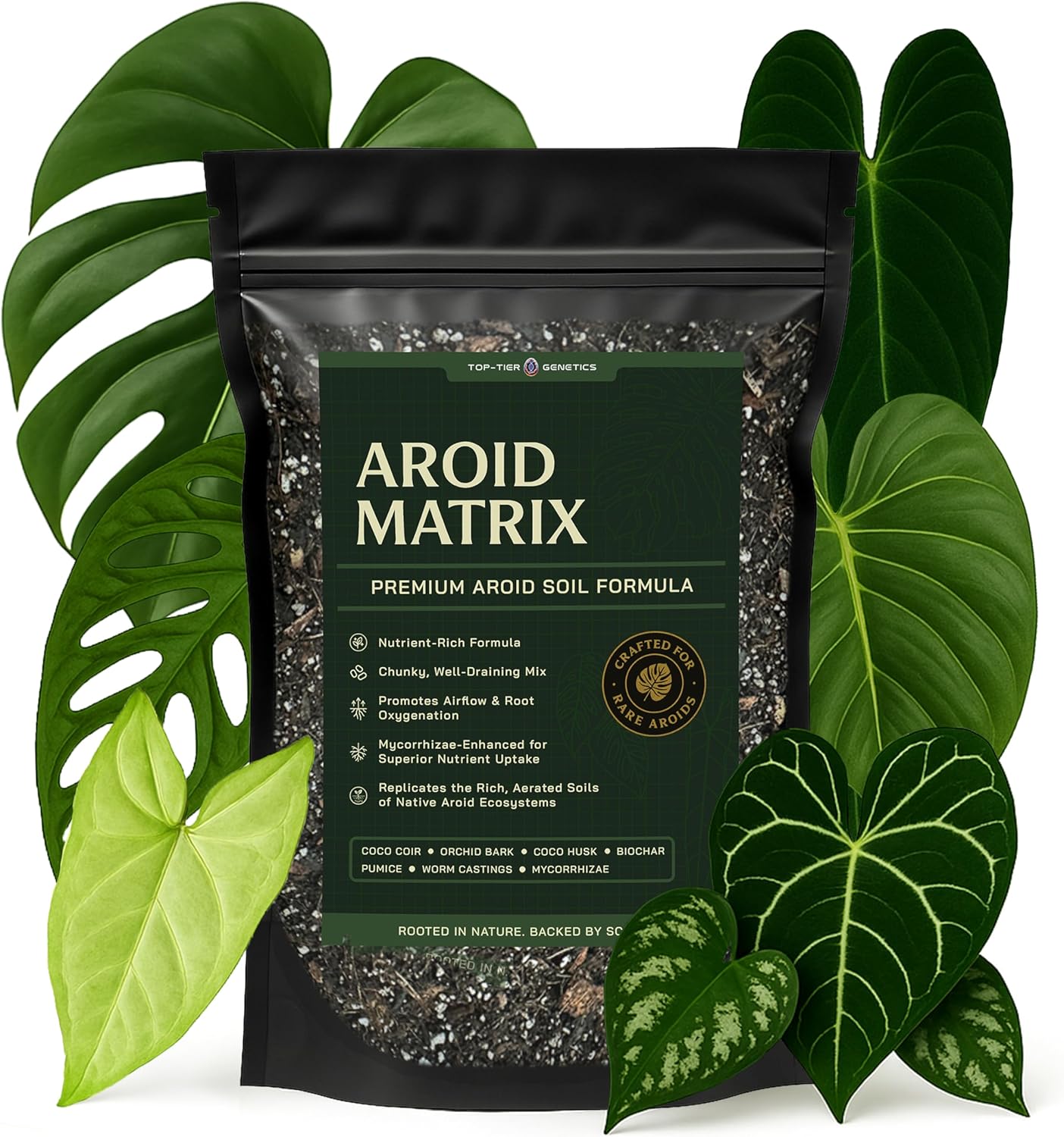
Top Tier Genetics AROID Potting Mix for Monstera and Aroids (4 qts)
| Brand | Top Tier Genetics |
|---|---|
| Unit Count | 128 Ounce |
| Ingredients | Orchid bark; Coco coir; Pumice; Coco husk; Worm castings; Biochar; Mycorrhizae |
| Volume | 4 quarts |
This AROID potting mix is formulated specifically for monsteras and other aroids and is ready to use straight from the bag. The chunky texture from orchid bark, coco husk, and pumice gives strong drainage and aeration, which helps prevent waterlogged roots and encourages fibrous root growth in large-leaved tropicals. Coco coir provides moisture retention without compaction, while worm castings and mycorrhizae supply a gentle, ongoing nutrient and microbial boost for healthier foliage. Biochar adds longer-term soil health benefits by improving nutrient retention and supporting microbial life. It is practical for repotting and regular refreshes of Monstera deliciosa because you do not need to mix components yourself. The main limitation is the small 4 quart volume, which makes it best for individual plant repots or top-ups rather than filling large containers or multiple plants at once. Shoppers who want a dependable, aroid-focused medium will appreciate the balanced moisture control and built-in biological amendments.
Best for: Buyers who want a reliable, ready-made potting medium tailored to Monstera and other aroids and prefer a mix that minimizes setup and reduces repotting risk.
Less Ideal for: Gardeners needing large volumes for many plants or big container fills who should look for bulk mixes or larger bags.
- Chunky mix (orchid bark, coco husk, pumice) provides excellent drainage and root aeration
- Contains worm castings and mycorrhizae to support steady nutrient availability and root health
- Coco coir balances moisture retention without promoting compaction
- Includes biochar to improve long-term soil microbial activity and nutrient holding capacity
- Small 4 quart bag size is insufficient for large pots or multiple repots
Verdict: A convenient, aroid-focused potting mix that delivers reliable drainage, moisture balance, and microbial support for healthy Monstera growth.
Grow Queen Craft Aroid Potting Mix, Chunky Monstera & Tropical Plant Soil, 2 qt

| Brand | Grow Queen |
|---|---|
| Volume | 2 quarts |
| Ingredients | Tree fern fiber, earthworm castings, lava rock, biochar, coco coir, gypsum, alfalfa meal |
| Designed for | Monstera, Alocasia, Philodendron, Anthurium and tropical houseplants |
This Grow Queen Craft Aroid Mix is a ready-to-use, chunky potting soil built to replicate a rainforest floor for Monsteras, Alocasias and similar tropical houseplants. The blend combines large bark pieces, pumice and lava rock for fast drainage and aeration, while coco coir and charged biochar retain modest moisture so the mix does not go bone dry between waterings. It also includes earthworm castings, alfalfa meal and gypsum to support beneficial microbes and provide gentle nutrition out of the bag. The mix arrives pre‑moistened and is straightforward for repotting, especially when you want to reduce compaction and lower the risk of overwatering. Notable limitations are the small 2 quart bag size for larger repotting jobs and the absence of perlite if you prefer that specific amendment. This is a practical, botanist‑informed option for people who want a sustainable, peat‑free alternative tailored to aroids and other chunky‑soil‑loving houseplants.
Best for: Buyers who want a ready-made, sustainable potting mix that mimics tropical forest soil for Monsteras and other aroids and who value drainage with living amendments over DIY mixing.
Less Ideal for: Growers repotting many large plants at once or those who prefer to fully customize their own soil recipe with specific additives like perlite or added fertilizer concentrates.
- Chunky, well aerated formula with bark, pumice and lava rock to improve drainage and prevent compaction
- Includes charged biochar and earthworm castings to support microbes and provide starter nutrients
- Peat free and perlite free, using coco coir and natural porous aggregates for sustainability
- Pre‑moistened and ready to use straight from the bag for easy repotting
- Small 2 quart volume may be impractical for repotting multiple or large plants
- Does not contain perlite, which some growers prefer for a lighter texture
Verdict: Choose this mix if you want a peat‑free, botanist‑designed chunky soil that gives Monsteras and other aroids the fast drainage and living nutrition they need straight from the bag.
Grow Queen Craft Aroid Potting Mix, Chunky Soil for Monstera, Alocasia & Tropical Houseplants, Peat-Free, 4 qt

| Brand Name | Grow Queen |
|---|---|
| Item Type Name | Potting Mix |
| Volume | 4 quarts |
| Ingredients | Coco Coir, Pumice, Lava Rock, Earthworm Castings, Alfalfa Meal, Gypsum, Tree Fern Fiber, Fir Bark |
This Grow Queen Craft Aroid Mix is a ready-to-use, chunky potting soil made for aroids and other tropical houseplants such as Anthurium. The blend uses fir bark, pumice, lava rock and tree fern fiber to create large pore spaces so water drains quickly and roots get oxygen, while coco coir and charged biochar hold modest moisture between waterings. It also contains earthworm castings, alfalfa meal and gypsum to support soil biology and gentle feeding. In practice the mix makes overwatering less likely and is easy to work with when repotting smaller collectors or standard houseplants. Because it arrives pre-moistened you can pot right away, and the manufacturer notes the pH is tuned toward slightly acidic conditions favored by many aroids. Limitations are the small 4 quart volume for larger plants or multiple repots and the absence of perlite if you prefer that specific material. For someone wanting a sustainable, peat-free alternative that mimics a tropical forest substrate, this mix performs as advertised.
Best for: Buyers who want an easy, botanist-crafted potting mix for Anthurium and other tropical houseplants that reduces the risk of overwatering while supporting soil life.
Less Ideal for: Growers repotting large specimens or outfitting many plants at once who need bulk volumes or a heavier, moisture-retentive substrate.
- Chunky blend of fir bark, pumice and lava rock for excellent drainage and aeration
- Includes charged biochar and earthworm castings to support microbes and provide starter nutrition
- Peat-free, perlite-free formula using washed coco coir and tree fern fiber for more sustainable sourcing
- Pre-moistened and pH balanced toward slightly acidic conditions favored by aroids
- Small 4 quart volume so multiple bags are needed for larger plants or several repots
- Does not contain perlite, which some growers prefer for specific drainage characteristics
Verdict: A peat-free, chunky aroid mix that gives Anthurium and similar tropical houseplants excellent drainage and living soil nutrition in an easy, ready-to-use bag.
Choosing the Right Anthurium Potting Mix: Key Factors to Consider
Drainage and Aeration
Anthuriums develop thick, fleshy roots that need abundant oxygen. A mix that drains quickly and leaves air pockets prevents root rot and supports active root growth. Look for coarse components such as pine bark, chunky perlite, or pumice that break up fine particles and maintain structure over time.
Poor aeration often shows as yellowing lower leaves, soft stems at the soil line, and sluggish growth. Choosing a medium optimized for airflow reduces these risks and lowers the frequency of rescue repots or root pruning.
Moisture Retention Balance
Anthuriums like steady moisture but not saturation. The ideal mix holds enough water to keep the root zone evenly damp for several days while allowing excess to drain away after watering. Ingredients such as coconut coir or fine sphagnum peat add water-holding capacity, but they must be balanced with coarse elements to avoid becoming a water trap.
How much moisture a mix retains determines your watering cadence and whether your plant tolerates lower humidity environments. Overly thirsty mixes increase the risk of overwatering, while overly fast-draining ones demand more frequent checks and can stress plants between waterings.
Nutrient Content and Release
Anthuriums are moderately hungry and benefit from a mix that offers some baseline nutrients while allowing supplemental feeding. A potting medium with a modest slow-release component or a slightly higher organic content can sustain growth for weeks after repotting.
However, mixes that are densely composted may release nutrients too quickly and then compact. Opt for blends that provide steady, moderate nutrient availability so you can fine-tune fertilizing frequency without masking underlying cultural issues.
pH and Chemical Stability
Root nutrient availability is governed by medium pH. Anthuriums prefer a slightly acidic to neutral range, so a mix with stable pH helps avoid micronutrient lockup or unexpected deficiencies. Avoid components that dramatically shift pH as they break down.
Stable chemistry also means fewer sudden swings after watering with hard or soft water. A predictable medium simplifies feeding schedules and reduces diagnostic time when leaves show signs of nutrient stress.
Decomposition Rate and Longevity
Some organic components break down quickly, causing the mix to compact and lose aeration after a few months. Long-lasting structure is important to minimize repotting frequency and preserve root health. Components like aged bark, coarse perlite, and pumice retain porosity longer than fine compost.
Selecting a mix with durable ingredients saves time and helps maintain consistent care. Expect to refresh or repot when you notice shrinkage, reduced drainage, or widespread root crowding.
Particle Size and Consistency
Uniform particle size across a mix ensures even watering and root distribution. A mix with a range of particle sizes can help with water retention at the fine end and aeration at the coarse end, but extremes reduce predictability. Consistent texture also makes potting and repotting easier, and gives you a reliable baseline for adjusting irrigation and feeding.
When mixing your own potting medium, aim for components you can sieve or judge by eye so each repot yields similar behavior. This reduces surprises and helps plants settle quickly into a new container.
Optimizing Mix Texture for Indoor Conditions
Climate and indoor humidity affect how a potting mix performs. In dry homes or spaces with HVAC, a mix that retains a little more moisture can reduce watering frequency. Conversely, in very humid rooms or poorly ventilated spaces, prioritize coarser mixes to avoid persistent dampness at the root crown.
Adjust texture by adding measured amounts of pumice, perlite, or coarse bark rather than changing the whole mix. Small tweaks let you tune drainage and retention without altering nutrient content or pH significantly.
- Add pumice or coarse perlite to increase aeration.
- Blend in a small portion of coconut coir to boost water holding in dry environments.
- Avoid dense compost alone as it will compact and reduce oxygen to roots.
Repotting and When to Refresh the Mix
Anthuriums generally need repotting when pot-bound or when the medium has compacted and no longer drains well. Signs include slower growth, water pooling on top, or visible root crowding at the drainage holes. Fresh mix restores aeration and often improves flowering for the season following repotting.
When refreshing a plant, remove only the outer old soil and tease roots gently rather than stripping the entire root ball. This reduces transplant shock and preserves beneficial microbes that help nutrient uptake.
- Repot every 12 to 24 months depending on decomposition and root growth.
- Use a pot only slightly larger to avoid excess moisture retention.
Watering Strategies With Different Mix Types
How you water should change with the mix. Fast-draining blends need more frequent, thorough watering until moisture reaches roots. Heavier mixes require slower, lighter waterings to avoid saturation near the crown. Always water based on the feel of the medium and plant cues rather than a fixed schedule.
Allow the top inch or two of medium to dry slightly for many anthurium varieties, but monitor humidity and leaf turgor. Use a moisture meter or finger test to gauge actual root-zone moisture when learning a new mix's behavior.
- Saturate quickly draining mixes until excess drains freely.
- For moisture-retentive mixes, water slowly to allow even penetration.
- Adjust frequency seasonally; less in cooler, lower-light months.
DIY Mix Ideas and Safe Additives
You can tailor a potting medium with a simple base of high-quality peat or coir, combined with chunky orchid bark and a drainage amendment like perlite or pumice. Add a small amount of slow-release organic pellet or a controlled liquid feed schedule rather than heavy compost in the mix itself.
Avoid heavy garden soils or fine bark fines that compact. Sterilized components reduce pest introduction, and pre-wetting coir or peat before mixing helps you assemble a consistent texture.
- Typical DIY ratio: 40% chunky bark, 30% coir or peat, 20% perlite/pumice, 10% compost or slow-release ingredient.
- Sterilize reused potting media by sunning or brief baking to cut pests and pathogens.
Addressing Common Problems Related to Potting Mix
Yellowing lower leaves and mushy stems often point to overly wet media and poor aeration. Investigate drainage, and if necessary repot into a chunkier medium. Brown, crispy leaf edges can be a sign of inconsistent watering or low humidity rather than the mix itself.
If plants fail to bloom despite healthy foliage, consider whether the mix is too fertile or too depleted. Both extremes can suppress flowering. Adjust feeding and, if needed, provide a fresh medium with moderate nutrient content.
- Check root health before assuming nutrient deficiency.
- Replace media that smells sour or drains poorly.
How We Chose the Best Anthurium Potting Mix
We focused selection on attributes that directly affect anthurium health in typical indoor growing conditions. Key evaluation criteria included drainage and aeration, because anthurium roots need abundant oxygen and will rot in compacted, waterlogged media. Moisture retention was assessed to ensure mixes hold enough water between irrigations without staying soggy. Nutrient profile and slow-release behavior were considered so mixes support foliage and flowering without frequent heavy feeding. pH stability and long-term decomposition rate were important for predictable care and to avoid rapid compaction over a single season. Particle size and uniformity were evaluated to ensure consistent potting and repotting behavior. We excluded any media formulated primarily for succulents, orchids, or seed starting, since those use cases require very different textures and nutrient levels. Our picks are narrowed to mixes or blend formulas that meet these criteria and perform well for anthuriums in typical home environments.
FAQ
How often should I repot an anthurium?
Often repotting is needed every 12 to 24 months depending on how quickly the mix decomposes and how fast roots fill the pot. Repot sooner if drainage falters or roots grow through the drainage holes.
Can I use orchid bark or mix for anthuriums?
Yes, chunky orchid bark is a useful component for aeration and can be blended with coir or peat for moisture retention. Pure orchid mix may drain too fast for some anthurium types, so balance it with a water-holding ingredient.
Should I add fertilizer into the potting mix?
A small amount of slow-release organic material in the mix helps, but most growers prefer light, regular liquid feeding after repotting. This keeps nutrient levels predictable and reduces the chance of salt buildup in the medium.
Is coconut coir better than peat for anthuriums?
Coir and peat both hold water but behave differently. Coir is more sustainable and drains a bit faster, while peat is finer and can compact more quickly. Either works when balanced with coarse components to preserve aeration.
How do I tell if the mix is compacted or losing structure?
Compaction shows as slow drainage, a flat surface crust, and visible root circling near the pot edges. If water sits on the surface or the plant shows signs of overwatering despite infrequent watering, the medium has likely broken down and needs refreshing.
Final Verdict
Choose a potting mix that prioritizes aeration while providing moderate moisture and a stable nutrient baseline. Expect to tweak texture for your home environment and refresh media when it compacts or drainage declines. Prioritize mixes with durable, chunky components if you want fewer repots and steadier root health. With the right medium and routine adjustments to watering and feeding, you can keep anthuriums vigorous and flowering for many seasons.
