

Note: This article contains affiliate links. If you click on these links and make a purchase, I may earn a small commission at no extra cost to you. This helps support my research and content. Read my full affiliate disclosure here.
If you want heavy clinging foam and controlled detergent delivery for cars, decks, or siding, the right foam pressure washer makes the job faster and reduces scrubbing. In everyday garden and outdoor use these units change how soap contacts surfaces, letting foam dwell longer to break down dirt without aggressive rubbing that can damage finishes. This guide covers seven shortlisted foam pressure washers chosen for real-world cleaning tasks around the yard and home. We evaluated spray control, foam thickness and consistency, detergent handling, and ease of setup so you can pick a unit suited to your surface and cleaning frequency. Read on for the editorial criteria and practical buying guidance before the full product list.
Top Picks at a Glance
| Best Overall The best all-around choice for most situations | Westinghouse ePX3100s Electric Pressure Washer (2100 PSI, 1.76 GPM) with Foam Cannon and Turbo Nozzle |  |
| Best Quality Built to a higher standard if you want something more solid | MJJC PRO V3.0 Foam Cannon for Pressure Washers with 44 fl oz Bottle and 1/4" Quick Connector |  |
| Best Value The sweet spot between price and what you get | AstroAI 1L Foam Cannon for Pressure Washer with 1/4" Quick Connect |  |
| Best Budget The cheapest option that still gets the job done reliably | Fasmov Adjustable Snow Foam Lance with 1L Bottle and 1/4" Quick Connector |  |
| Highest Rated A top-rated pick with lots of positive feedback | Chemical Guys EQP412 Adjustable Foam Cannon, 32 oz |  |
| Most Popular A crowd favorite that many people choose with confidence | Tool Daily Foam Cannon with 1/4" Quick Connect and 1 L Bottle (includes 5 Nozzle Tips) |  |
| Best Seller A high-volume bestseller chosen again and again | Westinghouse ePX3500 Electric Pressure Washer (2500 PSI, 1.76 GPM) |  |
Westinghouse ePX3100s Electric Pressure Washer (2100 PSI, 1.76 GPM) with Foam Cannon and Turbo Nozzle

| Power Source | ac |
|---|---|
| Maximum Flow Rate | 1.76 gpm |
| Maximum Pressure | 2100 psi |
| Hose Length | 20 feet |
The Westinghouse ePX3100s is a compact, plug-in pressure washer designed for regular vehicle and light exterior cleaning. It produces a maximum of 2100 PSI (rated 1800 PSI) and up to 1.76 GPM, and comes with a foam cannon, 15° and 25° nozzles plus a turbo nozzle so you can switch between gentle rinses for paint and more aggressive jets for concrete or stubborn grime. The long power cord and 20 foot high-pressure hose give good reach around most cars without constantly changing outlets, and built-in holders keep the gun and nozzles organized for quick setup. Because it is electric and engineered as a grab-and-go unit, it is quieter, easier to maintain, and safer to operate than a gas model. Limitations include modest water flow compared with larger machines and a reliance on household power, which reduces portability and continuous high-demand performance for heavy commercial jobs. For routine car washing and occasional patio or driveway cleaning it balances cleaning power, convenience, and low upkeep.
Best for: A cautious buyer who wants a reliable, easy-to-use electric washer for regular car cleaning and occasional home exterior jobs without dealing with gas engines or complex maintenance.
Less Ideal for: People who need sustained high-volume cleaning or frequent heavy-duty commercial use should choose a higher-flow or gas-powered model instead.
- Compact, lightweight design for easy carrying and storage
- Includes foam cannon and multiple nozzles for washing cars and varying surfaces
- Long 35 foot GFCI power cord and 20 foot high-pressure hose for good reach
- Electric power source is quieter and lower maintenance than gas alternatives
- Lower flow rate than larger pressure washers, which can slow cleaning of large areas
Verdict: Choose this Westinghouse if you want a low-maintenance, compact electric washer that delivers enough power and foam capability for confident regular car washing.
MJJC PRO V3.0 Foam Cannon for Pressure Washers with 44 fl oz Bottle and 1/4" Quick Connector

| Tank Volume | 1300 ml |
|---|---|
| Maximum Pressure | 4000 psi |
| Included Components | 1/4 Inch Quick Connector Adapter |
| Manufacturer Warranty Description | 1 year manufacturer |
The MJJC PRO V3.0 is a heavy-duty foam cannon built to deliver dense, clinging foam when paired with a pressure washer. It attaches via the included 1/4" quick connector and uses a wide-mouth 44 fl oz (1300 ml) bottle that is easy to fill and hold. Three orifices are supplied so you can match spray characteristics to a range of pressure washers, and the stainless steel components improve durability for frequent use. In practice it sprays 360 degrees and maintains foam at odd angles, letting you cover whole vehicles, bikes, or boats without constant repositioning. The adjustable spray and quick-fill bottle make repeated passes faster, while the manufacturer recommends a matching soap for best results because foam density varies with detergent. Limitations are that peak foam performance depends on both soap choice and matching orifice to washer pressure, and very low-pressure machines will need a different orifice sold separately to achieve the thickest foam.
Best for: Buyers who prioritize high-performance, repeatable foam coverage for regular car washing and detailing and who own a compatible pressure washer or plan to match orifices to machine pressure.
Less Ideal for: Casual users with only a garden hose or very low-pressure washers and those who want a ready-made foam solution without selecting compatible detergents or orifices.
- Stainless steel construction for corrosion resistance and longer service life.
- Large 44 fl oz (1300 ml) wide-mouth bottle for quick, spill-free refills and a secure grip.
- Includes three orifices to tune foam output across a wide pressure range.
- 1/4" quick connector enables fast, tool-free hookup to compatible pressure washers.
- 360-degree spray capability lets you foam at any angle to cover complex surfaces.
- Foam quality is highly dependent on the soap used and may require the manufacturer detergent for best results.
- Very low- or very high-pressure washers may need additional orifice sizes sold separately to reach optimal foam performance.
Verdict: Pick the PRO V3.0 if you want a durable, pro-level foam cannon that produces rich, clinging foam when you match the orifice and soap to your pressure washer.
AstroAI 1L Foam Cannon for Pressure Washer with 1/4" Quick Connect

| Inlet Connection Type | 1/4" Quick Connector |
|---|---|
| Maximum Operating Pressure | 3000 psi |
| Bottle Capacity | 1 L |
| Material Type | Brass, Plastic |
| Valve Type | Globe Valve |
The AstroAI foam cannon attaches to pressure washer wands with a 1/4" quick connect and converts detergent into thick foam for vehicle and outdoor surface cleaning. You fill the wide‑mouth 1 L bottle with a foaming soap solution, connect it to a compatible pressure washer (1000–3000 PSI), then use the top knob to adjust foam concentration and rotate the nozzle to change spray direction. Brass valve and metal fittings make it more robust than all‑plastic alternatives, and the wide neck reduces spills when mixing. In practice it speeds up pre‑wash and loosens grime on paint, wheels, and siding so you can rinse or lightly scrub afterward rather than heavy hand washing. It is not compatible with garden hoses, and performance depends on using a pressure washer in the indicated PSI range and a quality foaming soap; waxy formulas may clog the unit. Regular rinsing and storage in a ventilated place help avoid buildup and prolong the cannon’s life.
Best for: Buyers who want a practical way to speed up regular vehicle or exterior cleaning using an existing pressure washer and who prioritize durability and adjustable foam control.
Less Ideal for: People without a compatible pressure washer or those who need a hose‑connected foam sprayer; not the best choice for users who prefer fully automated or foam‑only commercial setups.
- 1 L wide‑mouth bottle for easier mixing and enough solution for a full car wash
- Adjustable foam control knob lets you tune foam thickness for light snow or heavy lather
- Brass valve and metal fittings increase durability compared with plastic‑only units
- 360° rotating nozzle provides flexible spray angle for wheels, bumpers, and panels
- Requires a pressure washer with a 1/4" quick connect and 1000–3000 PSI so it will not work with garden hoses or low‑pressure systems
- Can clog if used with wax‑based or poor quality soaps without regular rinsing
Verdict: A durable, easy‑to‑use 1 L foam cannon that delivers adjustable thick foam for faster, less abrasive car and outdoor surface cleaning when paired with a compatible pressure washer.
Fasmov Adjustable Snow Foam Lance with 1L Bottle and 1/4" Quick Connector

| Exterior | Brass |
|---|---|
| Container Capacity | 1 Liter |
| Connection | 1/4" quick disconnect |
| Required Pressure | ≈1000 PSI and 2.0 GPM+ |
The Fasmov Adjustable Snow Foam Lance is a simple foam cannon that mounts to pressure washer wands via a 1/4" quick disconnect and uses a 1 liter bottle to mix detergent into thick foam. It is used by filling the bottle with solution, attaching the brass lance to a compatible pressure washer (requires about 2.0 GPM and 1000 PSI or higher), then dialing the top knob and nozzle to set foam thickness and spray pattern from a jet to a wide fan. The brass fittings and adjustable mixer make it durable for regular use, and the vertical jet nozzle lets you switch between heavy foaming and rinsing without changing attachments. Practical benefits include easy setup, a full‑size 1 L reservoir so you can cover a typical car, and the ability to reduce contact washing by loosening grime before hand washing. The main limitations are that it depends on a sufficiently powerful pressure washer to perform well and some learning is required to find the optimal detergent setting for maximum foam.
Best for: Buyers who want an affordable, easy-to-use foam lance to add thick pre-wash foam to routine car cleaning and who already own a medium to high-pressure washer.
Less Ideal for: People without a sufficiently powerful pressure washer or those wanting a self-contained electric foam sprayer for occasional light cleaning.
- Brass construction and fittings for improved durability
- Adjustable top knob and nozzle let you control foam thickness and spray pattern
- 1 liter bottle provides enough solution to cover a typical car without frequent refills
- 1/4" quick disconnect makes attachment to compatible pressure washer wands fast and tool-free
- Requires a pressure washer with at least ~2.0 GPM and 1000 PSI to produce good foam
- No flow or pressure regulator included so performance depends on your washer
Verdict: A budget-friendly, brass-built foam lance that gives thick clinging foam and easy spray control when paired with a sufficiently powerful pressure washer.
Chemical Guys EQP412 Adjustable Foam Cannon, 32 oz

| Bottle capacity | 32 oz |
|---|---|
| Adjustability | Top knob for foam thickness and flow |
| Compatibility | Quick-connect for most pressure washer wands |
| Design | Air-injection foam cannon |
The Chemical Guys EQP412 foam cannon turns a standard pressure washer into a high-coverage foam sprayer for pre-wash and routine detailing. It mixes soap, water, and air inside an air-injection head to produce clinging suds that dwell on vertical panels and help loosen road film before you touch the paint. Setup is straightforward: fill the 32 oz bottle using the clear measurement marks, snap the quick-release adapter onto a compatible wand, and adjust foam thickness with the top control knob to match light maintenance rinses or heavier cleaning. The narrow nozzle gives a focused spray for wheels, lower panels, and trim while the durable fittings and brass connections help resist corrosion with regular use. The main limitations are that it relies on a pressure washer for proper lather so it will not perform like a hose-mounted gun, and the focused spray pattern may take more passes to cover very large surfaces than a wide-pattern cannon. For regular at-home detailers who want consistent, controllable foam and sturdy construction, this is a reliable tool that simplifies safe pre-soaking.
Best for: Buyers who prioritize dependable, repeatable performance for regular at-home detailing and want a low-fuss pre-wash tool that holds up to frequent use.
Less Ideal for: People looking for a hose-only foam solution or those who need ultra-wide coverage in a single pass for very large vehicles without making multiple sweeps.
- Adjustable top knob lets you dial foam thickness and flow for light or heavy pre-soaks
- 32 oz clear HDPE bottle with measurement markings for consistent dilution
- Quick-connect fitting designed to mate with most pressure washer wands for fast setup
- Air-injection design produces thick, clinging foam that stays on vertical panels
- Requires a pressure washer to generate proper foam so a garden hose cannot replicate results
- Narrow coverage nozzle is more targeted and may need extra passes on very large surfaces
Verdict: A sturdy, easy-to-use foam cannon that delivers consistent, controllable thick suds for reliable pressure-washer pre-washing and detailing.
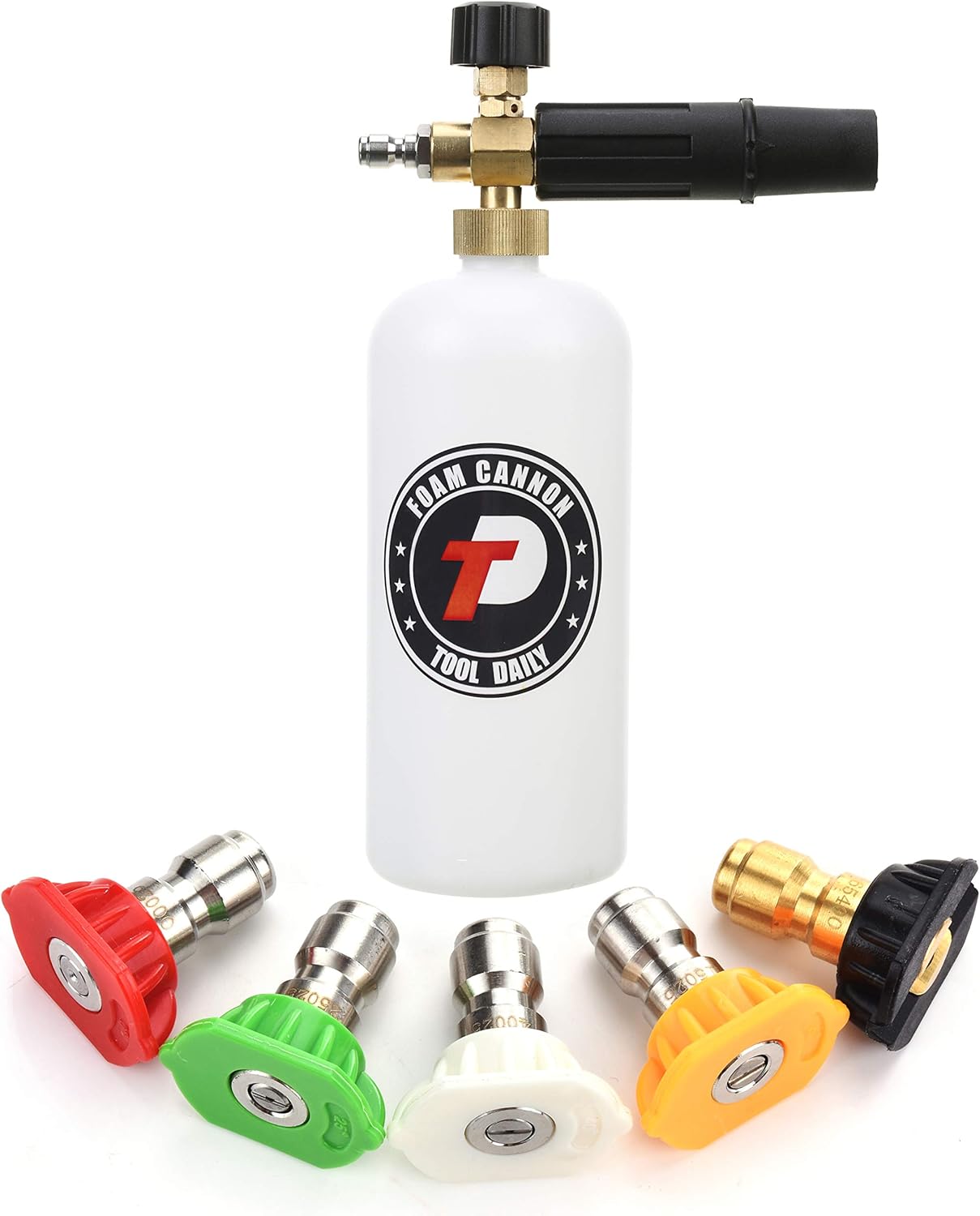
Tool Daily Foam Cannon with 1/4" Quick Connect and 1 L Bottle (includes 5 Nozzle Tips)
| Maximum Operating Pressure | 3000 psi |
|---|---|
| Connection | 1/4" Quick Connect |
| Capacity | 1 Liter |
| Maximum Temperature | 60℃/140℉ |
The Tool Daily foam cannon turns a pressure washer into a sudsy pre-wash tool for cars, motorcycles, driveways, siding and other exterior surfaces. You fill the 1 L bottle with diluted soap, snap the 1/4" quick-connect onto a compatible pressure-washer gun or wand, then use the top adjustment knob to change foam thickness and the nozzle to set spray pattern. The package includes five nozzle tips that cover common spray angles for rinse and rinse-plus-foam tasks. At rated pressures up to 3000 psi the cannon produces thick foam when the settings and soap ratio are right, and the plastic construction keeps the unit lightweight and easy to handle. Practical benefits include faster, more even soap coverage and an adjustable output for delicate finishes or heavier cleaning. Important limitations are that it only fits pressure washers with a 1/4" quick-connect connection and is made mostly of plastic, so expect to treat it gently and clear occasional clogs using the suggested needle method.
Best for: Buyers who want an affordable, adjustable foam lance to speed up vehicle and light exterior cleaning and who prefer products with many user reviews and broad real-world use examples.
Less Ideal for: Commercial detailers who need heavy-duty metal fittings or users who do not own a pressure washer with a 1/4" quick-connect.
- Adjustable top knob and nozzle let you control foam density and spray pattern
- Includes five nozzle tips for multiple spray angles and tasks
- 1 liter bottle provides a useful capacity for car and small exterior cleaning jobs
- 1/4" quick-connect makes attachment to compatible pressure-washer guns fast and tool-free
- Designed for 1/4" quick-connect pressure washers only and will not attach to a garden hose
- Mostly plastic construction may wear faster under heavy commercial use
Verdict: A budget-friendly, adjustable foam cannon that gives reliable thick suds and versatile spray options for DIY car and light exterior cleaning when used with a compatible 1/4" quick-connect pressure washer.
Westinghouse ePX3500 Electric Pressure Washer (2500 PSI, 1.76 GPM)

| Power Source | ac |
|---|---|
| Maximum Pressure | 2500 psi |
| Maximum Flow Rate | 1.76 gpm |
| Hose Length | 25 feet |
| Tank Volume | 20 fluid ounces |
The Westinghouse ePX3500 is a compact, electric pressure washer built to handle tough home cleaning tasks like driveways, decks, fences and cars. It produces up to 2500 max PSI and up to 1.76 GPM for short, powerful bursts, while its rated output of 2000 PSI at 1.2 GPM gives a realistic working performance for common jobs. The unit includes a pro-style steel wand with five quick-connect nozzles (including a turbo and soap tip), a 25-foot easy-coil nylon hose and a 20-ounce onboard soap tank that makes detergent application simple. Four quick-lock wheels and a low center of gravity reduce tipping and improve maneuverability across concrete and lawn. A Total Stop System automatically halts the pump when the trigger is released to save energy and extend pump life. Trade-offs are typical of high-pressure compact electrics: flow is modest compared with larger gas models and maximum ratings are brief peak figures rather than sustained continuous output. For buyers wanting a small footprint and reliable cleaning power with user-friendly features, this model balances power and portability well.
Best for: Buyers who prioritize a compact, easy-to-store pressure washer that still delivers strong cleaning power for typical home tasks and who like proven, well-reviewed gear.
Less Ideal for: Users who need sustained high-flow performance for large commercial or industrial jobs or who require fully cordless operation in remote locations.
- High peak pressure (2500 PSI) for stubborn grime and quick spot-cleaning
- Compact, lightweight design with four quick-lock wheels for easy storage and maneuvering
- Includes five quick-connect nozzles and a pro-style steel wand for versatile spray patterns
- Onboard 20 oz detergent tank simplifies soap application for deep cleaning
- Total Stop System conserves energy and reduces pump wear when not spraying
- Rated continuous flow (2000 PSI at 1.2 GPM) is lower than the peak spec, so heavy-duty jobs may take longer than with larger gas units
- Electric power limits portability compared with gas models since an outlet is required
Verdict: If you want a small, easy-to-maneuver electric washer that packs serious peak pressure for home heavy-cleaning jobs, the Westinghouse ePX3500 is a top choice.
Choosing the Right Foam Pressure Washer: Key Factors to Consider
Foam Quality and Dwell Time
Foam quality determines how long soap stays on a surface and how effectively it loosens grime. Thicker, more stable foam clings to vertical surfaces like siding and wet glass without running off immediately, giving detergents time to break down road film, pollen, and mildew.
Dwell time matters for delicate tasks such as cleaning painted surfaces or automotive finishes because it reduces the need for abrasive scrubbing. Look for systems with adjustable foam concentration or interchangeable foam cannons so you can dial in thicker foam for vertical surfaces and lighter foam for rinsing or rinsing-sensitive materials.
Spray Pressure and Pattern Versatility
Pressure and spray pattern control affect both cleaning speed and surface safety. High pressures remove stubborn dirt faster but can damage paint, wood, and softer plastics if not moderated. Adjustable nozzles and multiple spray patterns let you switch from a gentle wide fan for washing to a narrower setting for stubborn spots.
Practical gardeners value a wide fan setting for rinsing soap and a gentle soft setting for delicate finishes. Consider whether the unit includes variable pressure control or quick-change nozzles so you can adapt to different cleaning tasks without changing equipment.
Detergent System and Dilution Control
How a machine mixes and delivers detergent directly impacts performance and operating cost. A metered detergent system or an adjustable siphon makes it easy to set consistent soap-to-water ratios, which is important when using concentrated cleaners or specialized formulas.
Reliable valves and a clearly marked reservoir reduce guesswork and waste. Some gardeners prefer a removable bottle or reservoir for easy filling and cleaning, while others like an inline adjustable injector for on-the-fly adjustments during large jobs.
Hose, Wand, and Connector Quality
The durability of hoses, wand fittings, and connectors matters because leaks and weak threads create frustration and reduce cleaning power. A kink-resistant high-pressure hose and robust quick-connect fittings extend service life and reduce downtime during outdoor projects.
Comfortable wand ergonomics and an easy-to-reach trigger can make longer cleaning sessions less tiring. Also note the compatibility of connectors with common garden fittings and whether adapters are required for existing hoses and taps.
Portability and Power Source
Where you plan to clean shapes which unit you should choose. Cordless or battery-assisted foam washers give mobility for remote garden structures, while corded electric or gas-powered units provide longer run time and higher flow for big driveways and decks.
Weight, built-in wheels, and handle design influence how easily you move the machine around the yard. Also consider where you will store the unit and whether it needs winterizing; lighter, compact designs are easier to stow in sheds and garages.
Ease of Setup and Ongoing Maintenance
A unit that is quick to set up and simple to maintain saves time across many cleaning sessions. Clear instructions, tool-free assembly of the lance and fittings, and accessible filters or strainers make routine maintenance straightforward.
Check whether the machine needs frequent cartridge changes, whether seals are user-replaceable, and how easy it is to flush the detergent system to prevent clogging. Practical maintenance features reduce the likelihood of unexpected failures during peak outdoor cleaning seasons.
Best Uses Around the Yard
Foam pressure washers work well for vehicles, outdoor furniture, decks, siding, and garden tools where soap dwell time improves cleaning without heavy scrubbing. For cars and scooters, thick foam softens road grime and insect residue while reducing the risk of swirl marks caused by aggressive rubbing.
For vertical surfaces like siding and fences, a foam cannon that produces clingy suds can treat mildew and pollen more effectively than spray-only machines. On deck boards and stone pavers, foam helps loosen embedded dirt so a gentle rinse and light agitation finish the job.
- Vehicles and bikes: use gentler spray and thicker foam to protect finishes
- Siding and fences: foam increases contact time for mildew cleaners
- Patios and pavers: apply foam then agitate with a brush for stubborn stains
Soap Choices and Mixing Tips
Choose soaps formulated for the surface you are cleaning. Car shampoos are low-foaming when agitated but make great foam cannon solutions because they are pH-balanced and safe for paint. For concrete and masonry, cleaners with stronger surfactants are better, but they may require rinsing sooner to avoid residue.
When mixing, start with the manufacturer-recommended dilution and test on an inconspicuous area. Thicker foam often comes from a combination of higher detergent concentration and lower-pressure spray settings. If you see streaking or residue after rinsing, reduce concentration or increase water flow during the final rinse.
- Always dilute concentrated cleaners as recommended
- Test detergents on a small area before full application
- Rinse surfaces thoroughly after detergent dwell time to avoid residue
Protecting Sensitive Surfaces
Not all surfaces tolerate the same pressure or chemical strength. Painted wood, older varnishes, and thin plastic trims can lift or haze under high pressure or too-strong detergents. Use the gentlest effective spray pattern and a mild soap for these areas.
Consider pre-wetting delicate areas and applying foam from a greater distance to lower impact. Finish with a wide fan rinse at low pressure and inspect for any finish changes before moving to higher settings.
- Avoid narrow, high-pressure jets on painted or thin materials
- Use mild, pH-neutral soaps for automotive finishes and painted wood
- Start at lower pressure and move closer only if needed
Storage, Winterizing, and Longevity
Proper storage extends the life of a foam pressure washer. Drain water from pumps and hoses before storing to prevent freeze damage, and remove or flush detergent from reservoirs to avoid clogs and residues. Keep connectors and o-rings clean and lightly lubricated to prevent drying and cracking.
If you leave the unit outdoors for short periods, use a weather-resistant cover and keep it off the ground to reduce exposure to moisture. Regularly inspect hoses and seals for wear and replace consumables before they fail to keep the machine reliable across seasons.
- Flush detergent lines after each use
- Drain and store in a frost-free space for winter
- Inspect hoses, seals, and connectors annually
Safety Tips for Use
Treat a pressure washer as a tool that can cause injury or damage if misused. Always wear eye protection and sturdy footwear, and avoid pointing the wand at people, pets, or fragile materials. Never use a narrow high-pressure jet on glass, thin plastics, or painted surfaces without testing first.
Be mindful of runoff when cleaning with strong detergents. Rinse thoroughly and contain runoff when possible, especially near garden beds or storm drains. Use only recommended detergents and follow safety directions on product labels.
- Wear eye protection and closed-toe shoes
- Avoid direct spray on people, animals, and fragile materials
- Contain and manage detergent runoff to protect plants and soil
How We Chose the Best Foam Pressure Washer
We prioritized features and performance metrics that matter in garden, yard, and vehicle cleaning rather than marketing claims. Key evaluation criteria included foam output and consistency, because a dense, clingy foam reduces dwell time and manual scrubbing; spray control and nozzle options, since adjustable pressure and fan width affect cleaning effectiveness and surface safety; detergent delivery systems and dilution control, to ensure predictable soap-to-water ratios and easy refills; and ease of setup and maintenance, because gardeners prefer units that start quickly and require minimal upkeep. We also considered build durability for outdoor storage and the quality of hoses and connectors to avoid leaks. Portability and power source were factored in according to typical yard use cases, from small patios to larger driveways. We excluded units that lack adjustable detergent control or that only produce a thin, watery foam, since those do not meet the practical needs of gardeners seeking cling and cleaning power. Final selections reflect a balance of foam performance, spray versatility, and user convenience.
FAQ
Is a foam pressure washer safe for car paint?
Usually yes if you use a mild, automotive-safe soap and a wide fan spray at moderate pressure. Thick foam reduces friction during washing, but you should avoid narrow, high-pressure jets directly on paint and always rinse thoroughly.
Can I use regular dish soap in a foam cannon?
Often dish soap creates heavy foam but can strip wax or protective coatings and may leave residue. It is better to use soaps formulated for the surface you are cleaning to avoid finish damage.
How do I get thicker foam from my unit?
Increase the detergent concentration within the manufacturer guidelines and switch to a lower-pressure, narrower spray setting if available. Many foam cannons also let you adjust the nozzle to create denser bubbles.
Will foam pressure washers damage wood decking?
It depends. Gentle foam and low-pressure spray usually clean wood without damage, but high pressure or repeatedly aggressive use can lift wood fibers. Test a small area first and use light agitation rather than high pressure for stubborn spots.
Do I need special detergents for plants nearby?
Yes, you should avoid harsh chemicals near garden beds. Use biodegradable, plant-safe detergents and rinse runoff away from shrubs and flower beds. When in doubt, protect sensitive plants or hose them down after cleaning.
Final Verdict
When choosing a foam pressure washer, prioritize foam quality, reliable detergent delivery, and adjustable spray control. Those features determine how safely and quickly you can clean vehicles, siding, and outdoor surfaces while minimizing damage. Balance portability and power based on the size of your cleaning tasks, and plan for simple maintenance and proper storage to keep performance steady over time. Focus on the tradeoffs between foam cling and water flow to match the unit to your most common chores, and you will have a practical, long-lasting cleaning solution.
