

Note: This article contains affiliate links. If you click on these links and make a purchase, I may earn a small commission at no extra cost to you. This helps support my research and content. Read my full affiliate disclosure here.
Cleaning an outdoor air conditioner condenser with the right pressure washer keeps coils clear, improves airflow, and extends system life. The wrong machine or nozzle can bend fins, force water into electrical components, or strip protective coatings, so choosing equipment tuned for AC work matters. This guide covers seven shortlisted pressure washers suited for air conditioner use. We focus on adjustable pressure, nozzle variety, water delivery consistency, and portability so you can pick a unit that cleans effectively without risking damage. Read on for the decision factors we used to narrow the list and what to check before you clean your unit.
Top Picks at a Glance
| Best Overall The best all-around choice for most situations | Opergen ZPB140 Port-A-Blaster HVAC Coil Cleaning Sprayer |  |
| Best Quality Built to a higher standard if you want something more solid | WIPCOOL C10B Portable HVAC Coil Cleaning Machine (AC/DC, Dual Pressure) |  |
| Best Value The sweet spot between price and what you get | Caoooort ZPB140 Port-A-Blaster HVAC Coil Cleaner (120V, 80W) |  |
| Best Budget The cheapest option that still gets the job done reliably | Portable Intelligent Electric High-Pressure Pump Cleaning Kit |  |
| Highest Rated A top-rated pick with lots of positive feedback | WIPCOOL C10BW Portable HVAC Coil Cleaner (Dual Power, Dual Pressure) |  |
| Most Popular A crowd favorite that many people choose with confidence | Supplying Demand ZPB140 Port-A-Blaster Portable Coil Cleaning Pressure Washer | 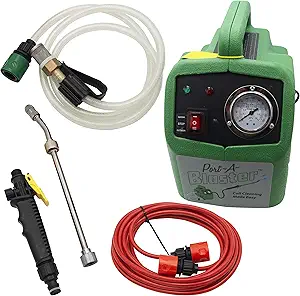 |
| Best Seller A high-volume bestseller chosen again and again | Nurfosttek ZPB140 Portable Pressure Washer (for HVAC), 145 psi, 4 L/min |  |
Opergen ZPB140 Port-A-Blaster HVAC Coil Cleaning Sprayer

| Power Source | ac |
|---|---|
| Maximum Flow Rate | 4 liters per minute |
| Maximum Pressure | 140 psi |
| Hose Length | 5 meters |
The Opergen ZPB140 Port-A-Blaster is a small, purpose-built pressure sprayer for cleaning air conditioner evaporator and condenser coils and other HVAC components. It uses an 80W AC-driven self-priming pump to draw cleaning solution from a container and deliver up to 4 L/min at a working pressure around 140 psi. Typical use is simple: connect the inlet to a container of water or mild coil cleaner, attach the wand and outlet hose, select the lower pressure setting for indoor coils or the higher setting for outdoor units, and rinse away dirt and mold. Notable features include a removable filter, a pressure gauge, an 11.5-inch wand, and a 5 meter outlet hose that give reach into tight cabinets and outdoor condensers. Practical benefits are easy portability for service calls, straightforward setup for nontechnical users, and pressure control to avoid damaging delicate fins. Limitations are its modest power compared with full-sized pressure washers, inability to connect to a garden hose, and it is not compatible with caustic cleaning chemicals, so heavier industrial deposits may require stronger equipment or professional service.
Best for: Technicians or homeowners who need a lightweight, easy-to-use coil cleaner for routine AC maintenance and on-site service visits where portability and gentle pressure control matter.
Less Ideal for: Users who need high-impact cleaning for heavily corroded or industrial HVAC systems or who want a unit that connects directly to a continuous water supply.
- Portable and easy to carry for on-site HVAC cleaning
- Two pressure settings for safe indoor coil rinsing or stronger outdoor cleaning
- Self-priming pump and removable filter simplify setup and maintenance
- Includes long outlet hose and wand to reach tight or recessed coils
- Lower power than full-size pressure washers limits effectiveness on heavy buildup
- Cannot connect to a garden hose and must draw solution from a container
- Not compatible with caustic coil cleaners
Verdict: A compact, easy-to-use coil-cleaning sprayer that balances portability and pressure control for routine residential and service-call HVAC cleaning.
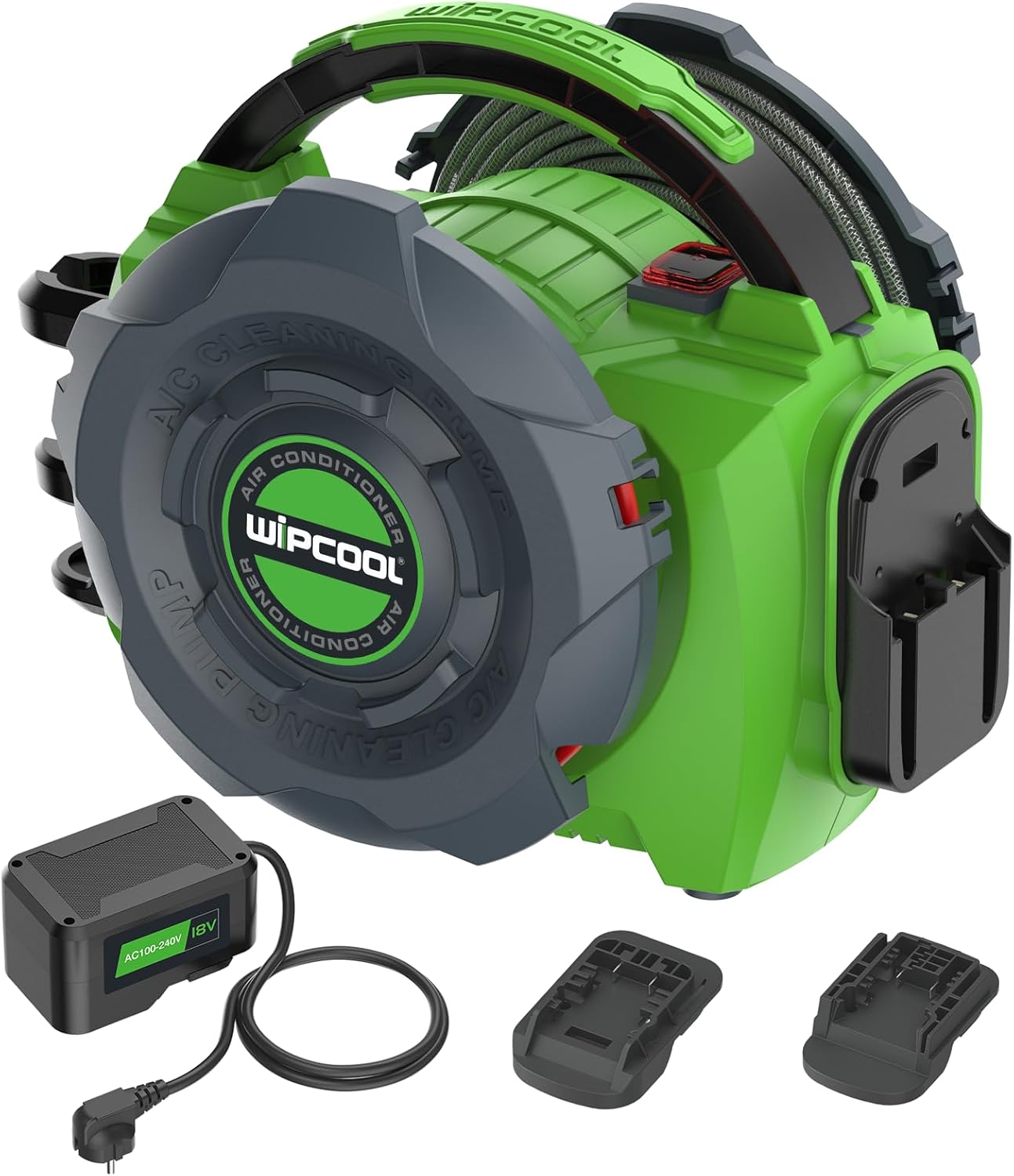
WIPCOOL C10B Portable HVAC Coil Cleaning Machine (AC/DC, Dual Pressure)
| Power Source | ac_dc |
|---|---|
| Maximum Flow Rate | 4 liters per minute |
| Maximum Pressure | 145 psi |
| Hose Length | 5 meters |
The WIPCOOL C10B is a purpose-built coil cleaner for HVAC technicians and performance-minded homeowners who need a compact, mobile washer for air conditioner coils. It offers AC operation plus 18V compatibility via included adapters for Milwaukee and DeWalt batteries so you can run on mains power indoors or use battery power on service calls. The unit provides two pressure ranges (44–73 PSI and 102–145 PSI) and a 4 L/min flow rate, letting you choose gentler settings for delicate evaporator fins or higher output for outdoor condensers. Self-priming capability with a suction hose means you can draw water from a bucket on sites without hookups. Accessories such as a rotating 290° nozzle, straight and zero-degree tips, spray gun, and a 14.6-inch extension wand make it easier to reach tight coil spaces. Expect solid portability and professional convenience, though batteries are not included and the unit is heavier than small consumer washers, so plan battery sourcing and transport accordingly.
Best for: Technicians and performance-focused DIYers who need a compact, jobsite-ready coil cleaner that runs on mains or common 18V batteries and can handle both indoor evaporator and outdoor condenser work.
Less Ideal for: Casual users who only need an occasional light rinse or those unwilling to supply their own batteries or manage a heavier portable unit.
- Dual AC and 18V battery power for flexible indoor or mobile use
- Two selectable pressure ranges for delicate coils or tougher outdoor cleaning
- Self-priming suction hose allows bucket-fed operation where no water supply exists
- Includes professional accessories (rotating nozzle, spray gun, extension wand) for precise coil access
- Battery not included so you must provide compatible 18V batteries separately
- Not as lightweight as small consumer pressure washers which affects transport for solo technicians
Verdict: Buy this if you want a professional, portable coil cleaner that switches between AC and 18V battery power and gives selectable pressures for safe, effective AC coil maintenance.
Caoooort ZPB140 Port-A-Blaster HVAC Coil Cleaner (120V, 80W)

| Power | 80W |
|---|---|
| Voltage | 100-120V or 220V |
| Maximum Flow Rate | 4 liters per minute |
| Maximum Pressure | 0.7-1.0 MPa |
| Hose Length | 5 meters |
The Caoooort ZPB140 Port-A-Blaster is a purpose-built, lightweight pressure washer made for cleaning indoor and outdoor air-conditioner coils and other HVAC components. It pairs an 80 W pump with a maximum flow of 4 L/min and adjustable pressure so you can switch between a low mist mode for delicate indoor evaporator coils and a higher straight spray for outdoor condenser fins. The unit ships with a 5 m outlet hose, inlet tube, detachable filter, quick-connect wand and trigger gun, and a built-in compartment stores attachments for mobile use. Practical features include a waterproof, durable casing and pressure regulation that helps avoid damaging fins when used carefully. Limitations are its modest flow and power compared with full-size pressure washers, so jobs that require heavy rinsing or long continuous runs will be slower, and the device must never run dry. For someone who needs a compact, targeted coil cleaner for regular AC maintenance or service calls, it offers a convenient, portable solution; users needing high-volume commercial rinsing should look at more powerful machines.
Best for: Buyers who want a compact, mobile tool to perform routine AC coil and fin cleaning at home or on service calls and who prioritize portability and targeted cleaning over raw power.
Less Ideal for: Users who need high-volume or industrial-scale pressure washing for large outdoor equipment or long continuous jobs should choose a more powerful commercial unit.
- Adjustable pressure with mist and straight-spray modes for indoor and outdoor coil cleaning
- Portable, durable casing with built-in storage for hoses and attachments
- Includes 5 m outlet hose, inlet tube, detachable filter, wand and trigger gun for immediate use
- Compact pump delivers steady 4 L/min flow suitable for targeted HVAC cleaning tasks
- Low power and flow compared with full-size pressure washers limits speed on heavy-duty rinsing
- Requires careful use to avoid running dry and potential pump damage
Verdict: A lightweight, portable coil-cleaning pressure washer that makes routine AC maintenance easy for technicians and homeowners who need targeted cleaning rather than high-volume power.
Portable Intelligent Electric High-Pressure Pump Cleaning Kit

| Voltage | AC 100-240V |
|---|---|
| Motor material | All-copper motor |
| Hose type | Reinforced PVC hose |
| Includes | Pump, metal spray gun, inlet hose, sleeve hose, power adapter |
This compact electric pressure pump is a budget-friendly option for routine cleaning tasks like air conditioner coils, car exteriors, patios, and small equipment. It pairs an all-copper motor with an intelligent pump that maintains stable high-pressure output and an auto shut-off behavior when the trigger is released to save water and power. The kit includes a metal spray gun with an ergonomic trigger and adjustable flow, an inlet hose with filter, and a reinforced PVC sleeve hose that resists pressure and stays flexible. For air conditioner use it is convenient: the adjustable spray and steady pressure help dislodge dust from fins without a large, heavy machine. Limitations are its basic accessories and likely lower maximum pressure and flow compared with full-size electric pressure washers, so it is best for light to medium cleaning rather than deep industrial grime. Assembly is straightforward and its light, portable design makes it easy to move around balconies or ladders when servicing AC units.
Best for: Buyers who need an affordable, portable cleaner for routine air conditioner maintenance and light outdoor cleaning and who prioritize water and energy savings over commercial power.
Less Ideal for: Professional cleaners or users who need high flow rates or very high pressure for deep industrial cleaning should choose a larger, higher-capacity pressure washer.
- Auto shut-off trigger saves water and reduces power use during intermittent cleaning
- All-copper motor and intelligent pump deliver steady high-pressure output for light to medium cleaning
- Ergonomic metal spray gun with adjustable flow for controlled cleaning of AC fins and car surfaces
- Reinforced PVC hose with good flexibility and pressure resistance included
- Includes inlet filter and basic accessory set so it is ready to use out of the box
- Not intended to match the flow or raw pressure of full-size electric pressure washers
- Accessories and fittings are basic and may not suit heavy professional use
Verdict: A compact, energy-saving pressure pump that gives budget-conscious buyers an easy, portable solution for cleaning air conditioners and light outdoor jobs.
WIPCOOL C10BW Portable HVAC Coil Cleaner (Dual Power, Dual Pressure)

| Tank Volume | 4.75 gallons (water) + 0.5 gallons (solution) |
|---|---|
| Maximum Flow Rate | 1.1 gpm |
| Maximum Pressure | 145 psi |
| Power Source | AC or 18V battery (batteries not included) |
The WIPCOOL C10BW is a purpose-built portable coil cleaner that delivers controlled cleaning for air conditioner and HVAC coils. It is typically used by service technicians or advanced DIYers for indoor and rooftop coil maintenance where mobility matters. Key features include dual power compatibility with 18V battery platforms or the included AC converter, a dual-tank design that separates clean water (4.75 gal) and cleaning solution (0.5 gal), and two pressure modes (73 and 145 PSI) with a 1.1 GPM flow rate to balance cleaning power and fin protection. The unit is mounted on a lightweight trolley with wheels, a push handle, and an optional strap for carrying up ladders or into attics. Practical benefits are reduced refill frequency, on-site flexibility when a cordless battery is needed, and pressure control to avoid damaging delicate fins. Limitations are that batteries are not included and only neutral coil cleaners are recommended, so you must supply compatible batteries and cleaning fluid and observe chemical restrictions for safe use.
Best for: Technicians and experienced homeowners who prioritize reliable, repeatable coil cleaning and need a mobile unit that works on AC or common 18V battery platforms.
Less Ideal for: Casual users who expect a plug-and-play unit with batteries included or those who need a general-purpose pressure washer for non-HVAC cleaning tasks.
- Dual power options: works on AC or with 18V battery platforms for true portable operation
- Separate water and solution tanks let you switch between clean rinse and mixed cleaning solution
- Two pressure settings (73 and 145 PSI) with 1.1 GPM flow balance cleaning effectiveness and fin safety
- Wheeled trolley, handle, and strap improve mobility for attic, roof, or ladder work
- Batteries are not included so you must provide compatible 18V battery packs
- Restricted to neutral coil cleaners only and cannot use acidic or alkaline detergents
Verdict: Choose the WIPCOOL C10BW when you need a mobile, professional-grade coil cleaner that combines battery or AC power with controlled pressure and separate solution handling for reliable HVAC maintenance.
Supplying Demand ZPB140 Port-A-Blaster Portable Coil Cleaning Pressure Washer

| Voltage | 120 volts |
|---|---|
| Wattage | 80 watts |
| Flow Rate | 0.25 gpm |
| Hose Length | 16 feet |
| Certification | CE, CSA |
The Supplying Demand ZPB140 Port-A-Blaster is built specifically for HVAC coil and appliance cleaning tasks. It uses a pressure-activated pump to deliver up to 140 PSI at 0.25 GPM, and offers two pressure settings for indoor or outdoor use. Typical use is coil cleaning on evaporator and condenser coils, mini-split indoor coils, and drain pans, where the included wand, trigger sprayer, and quick-connect hoses help reach tight areas. The machine is lightweight and has an onboard storage compartment for accessories, making it easy to move between service calls or around a property. It runs on 120V electric power and is intended for non-acidic cleaners and water only. Important limitations are the low flow rate and modest maximum pressure, which make it unsuited for heavy-duty exterior surface cleaning, and the unit cannot connect to a garden hose or run on batteries, so you must supply water and mains power on site. Certifications and replaceable parts support professional maintenance and parts availability.
Best for: Technicians or homeowners who need a compact, purpose-built machine for cleaning evaporator and condenser coils and who prioritize portability and serviceability.
Less Ideal for: Users who need a high-flow, high-pressure washer for general exterior cleaning or who require cordless operation should look at more powerful pressure washer models.
- Purpose-built for HVAC coil and appliance cleaning with an adjustable wand and 90° nozzle for hard-to-reach areas
- Portable and lightweight with onboard accessory storage for easy transport between jobs
- Quick-connect hoses and replaceable parts simplify maintenance and reduce downtime
- Low flow rate and relatively low maximum pressure limit effectiveness on heavy exterior grime
- Requires a mains 120V connection and a separate water supply because it cannot attach to a garden hose
Verdict: Buy this if you want a lightweight, serviceable portable washer made specifically to clean HVAC coils and reach tight areas.
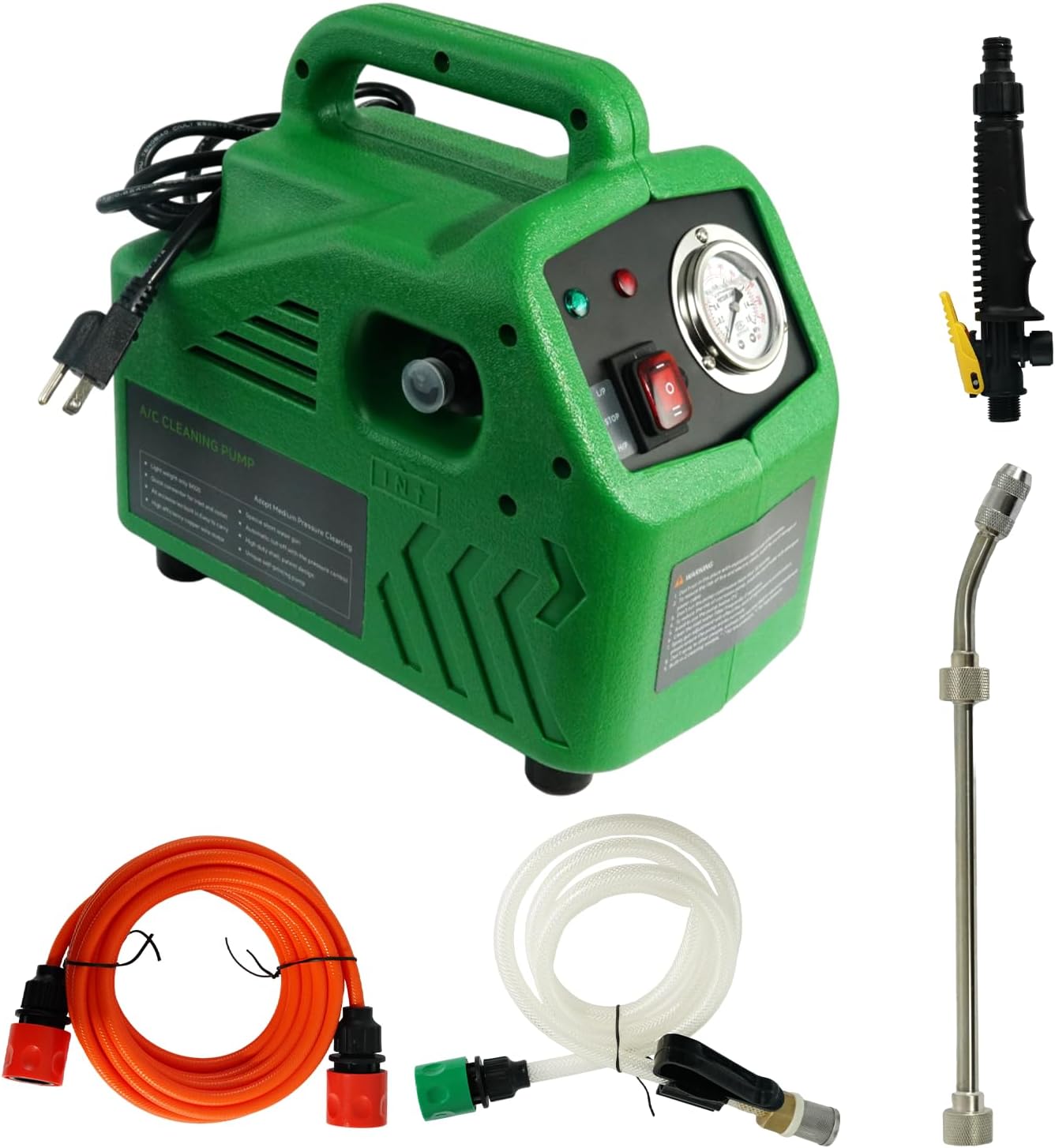
Nurfosttek ZPB140 Portable Pressure Washer (for HVAC), 145 psi, 4 L/min
| Power Source | ac |
|---|---|
| Maximum Flow Rate | 4 liters per minute |
| Maximum Pressure | 145 psi |
| Hose Length | 5 meters |
The Nurfosttek ZPB140 is a lightweight portable pressure washer built for on-site HVAC and general light-duty cleaning. It plugs into AC power, draws water through the included 1.5 m suction hose, and delivers up to 145 psi and 4 liters per minute through a 5 m discharge hose. Two pressure modes let you switch to a low mist for delicate indoor HVAC coils or a higher jet for exterior grime, and stainless steel nozzles on the spray gun provide selectable spray patterns. Its compact body and integrated accessory storage make it easy to carry between service calls or store in a utility closet. Practical benefits include quick setup with tool-free quick-connects and enough pressure to dislodge dust and debris from condenser coils without hauling a full-size washer. Important limitations are its modest maximum pressure and flow, which are appropriate for coils and light outdoor tasks but not for heavy-duty surface stripping or thick paint removal, and the requirement to avoid corrosive cleaners and to never run the pump dry. For a risk-averse buyer focused on safe, controlled HVAC cleaning, this unit offers sensible features in a portable package.
Best for: Technicians or homeowners who need a portable, easy-to-use unit for routine HVAC coil and light exterior cleaning and who prioritize safe, controlled pressure over brute force.
Less Ideal for: Users who need high-pressure, high-flow equipment for large decks, concrete, or paint stripping should choose a more powerful washer.
- Dual pressure modes for gentle misting and higher-pressure spray tailored to HVAC and light outdoor cleaning
- Compact, lightweight design with built-in storage keeps hoses and gun organized for transport
- Tool-free quick-connect hoses and standard spray gun make setup fast and simple
- Includes both suction and 5 m discharge hoses so it can draw water from a bucket or tank on site
- Maximum 145 psi and 4 L/min flow are insufficient for heavy-duty surface cleaning or paint removal
- Not suitable for use with corrosive or alkaline cleaners and must not run dry, limiting some maintenance tasks
Verdict: A portable, user-friendly pressure washer that gives risk-averse HVAC cleaners controlled low- and high-pressure options for safe coil and light outdoor cleaning.
Choosing the Right Pressure Washer for Air Conditioner: Key Factors to Consider
Adjustable Pressure and Low-Pressure Modes
Air conditioner coils and fins can be easily damaged by concentrated high-pressure streams. A pressure washer that offers a true adjustable pressure range, including low-pressure or bypass modes, lets you start gentle and increase only if needed. Look for machines with a reliable pressure regulator or a variable-output trigger wand so you can fine-tune force while watching how the coil responds.
A clear pressure control matters because nominal maximum PSI is not enough information. What counts is the machine's ability to hold a low working pressure under continuous flow. If a unit spikes when the trigger is pulled or drops in pressure as the pump warms up, you risk either insufficient cleaning or accidental damage.
Nozzle Types and Spray Patterns
Different nozzles produce vastly different impact patterns. A wide-angle fan, soft curtain, or dedicated low-pressure detergent nozzle spreads force over a larger area and reduces the chance of bent fins. Interchangeable nozzle sets that include a 40-degree or soap nozzle are ideal for condenser cleaning.
Consider whether the machine allows tool-free nozzle changes and whether the spray pattern can be easily visualized from a safe distance. A wand with an adjustable fan tip gives more control than a fixed narrow tip and reduces the need to reposition the entire unit.
Flow Rate and Water Delivery Consistency
Gallons per minute determines how effectively loosened debris is rinsed away. Too low a flow and dirt stays in crevices; too high a flow at high pressure increases risk. For AC work you want consistent GPM at low working pressure so rinse cycles remove grime without the need for repeated high-impact passes.
Check manufacturer flow specifications and, when possible, choose units known to maintain their rated GPM under residential water supply conditions. Variations between idle and operating flow can change cleaning results, so steady delivery is preferable.
Hose and Wand Reach for Safe Stand-Off Distance
Maintaining a safe distance from condenser fins reduces the risk of damage. Longer hoses and extended wands let you clean while standing back on a stable surface. Evaluate both hose length and the ergonomics of the wand; a heavy extended wand handled awkwardly increases fatigue and the chance of accidental contact.
Also consider connection durability and kink resistance. A hose that restricts flow or fails at the coupling will undermine low-pressure cleaning control and may force you to operate closer than is safe.
Soap and Chemical Delivery Options
Many condensers benefit from a mild coil cleaner to dissolve grease and oily residues. Machines with an adjustable soap-draw system or a chemical injector let you apply cleaners at low pressure and then rinse with a wider fan spray. Being able to switch between detergent and plain water without swapping hardware saves time and reduces handling risks.
Ensure the washer's soap delivery is compatible with coil-safe cleaners and that dilution ratios are controllable. Avoid systems that only offer high-pressure chemical injection, which can embed cleaner into unwanted crevices.
Build Quality, Safety, and Pump Protection
Pressure washers used around electrical outdoor units must be dependable and safe. Look for durable pump construction, thermal protection or auto-shutdown features, and a trigger lock to prevent accidental discharge. Corrosion-resistant fittings and weather-tolerant power components increase longevity when storing and transporting the unit around wet outdoor environments.
Maintenance accessibility is also important. Machines with easy-to-service pumps, accessible filters, and clearly labeled drains reduce downtime and the chance of bringing a faulty washer near a sensitive AC unit.
Preparing the Condenser and Work Area
Before you use a pressure washer, cut power to the outdoor unit at the disconnect box and cover exposed electrical components. Clear tall grass and debris around the condenser so you can work from all sides, and gently remove large surface debris by hand or with a soft brush to reduce the load on the washer.
- Turn off power at both the thermostat and outdoor disconnect.
- Remove loose debris and large obstructions by hand.
- Position the washer on a stable surface away from the unit to avoid tripping hazards.
Recommended Cleaning Sequence
Start by selecting a low-pressure or soap nozzle and apply a coil-safe detergent if grease or sticky deposits are present. Let the cleaner dwell according to product directions but avoid prolonged saturation of electrical components. After the cleaner has loosened grime, switch to a wide-angle fan spray at low pressure to rinse from the top down so loosened material flows away from the fins.
- Use detergent only with a low-pressure soap setting.
- Rinse top-to-bottom to avoid forcing water into housings.
- Inspect fins after a pass and stop if you see visible damage.
Techniques to Avoid Bending Fins or Forcing Water Into the Unit
Keep the wand at an angle and maintain at least a few feet of distance when using any pressurized spray. Avoid short, concentrated pulses perpendicular to the fins. If you need to remove stubborn spots, increase the angle and back away rather than ramp the pressure to high settings. If fins are dirty but fragile, consider using a garden hose with a wide spray or a dedicated low-pressure washer attachment instead of high-pressure modes. Gentle scrubbing with a soft brush plus low-pressure rinse often gives the safest results.
- Hold the wand at a shallow angle, not straight on.
- Maintain a steady standoff distance and move slowly across the coil.
- Use wide fan patterns rather than pinpoint jets.
Safety Gear and Electrical Precautions
Wear eye protection and non-slip footwear when working with water and pressurized equipment. Keep extension cords and power connections elevated and dry. Never spray into the disconnect, control box, or compressor openings. If you are uncomfortable working near electrical components, call a qualified HVAC technician. Simple mistakes can damage the system or create a shock hazard, so err on the side of caution.
- Wear safety glasses and waterproof gloves.
- Keep electrical connections dry and clear of spray paths.
- Confirm the unit is powered off before rinsing.
Maintenance After Cleaning
Allow the condenser to dry fully before restoring power. Check for displaced fins or loose panels and straighten fins using a fin comb if needed. Inspect hose fittings and the washer pump for leaks or wear after each session so the machine remains safe for future AC work. Store the pressure washer in a dry location and flush any soap systems to prevent clogging. Regularly inspect O-rings and quick-connect couplings to maintain consistent low-pressure performance.
- Let the condenser air-dry before powering the unit.
- Inspect and straighten fins if required.
- Flush detergent system and inspect hose fittings after use.
How We Chose the Best Pressure Washer for Air Conditioner
We prioritized features that matter when using a pressure washer specifically on air conditioner condensers and similar delicate outdoor HVAC components. Core evaluation criteria included the ability to dial down pressure accurately, availability of low-angle fan or curtain nozzles to avoid concentrated impact, and a stable flow rate to rinse away loosened debris without blasting fins. We also assessed hose and wand length for safe standoff distance, the presence of adjustable chemical or soap delivery for coil cleaners, and portability for moving around tight condenser locations. Units that lacked any low-pressure nozzle options or could not reliably deliver a consistent low PSI under working load were excluded. We also filtered out machines without basic safety features such as trigger locks or thermal protection on pumps. The result is a selection of pressure washers that balance gentle cleaning control with enough rinsing power to remove grime and pollen from AC coils.
FAQ
What PSI is safe for cleaning an air conditioner condenser?
Safe PSI depends on the nozzle and flow, but generally a low setting under 500 PSI with a wide-angle spray is recommended for delicate fins. Many condenser cleaning jobs work well at lower pressures combined with proper detergent use.
Can I use hot water or steam with a pressure washer on my AC unit?
Hot water is usually unnecessary and can risk damaging coatings or seals. Steam is not recommended for condensers because heat and pressure together can deform fins and harm components.
How often should I pressure wash my outdoor AC unit?
Frequency depends on your local conditions. In dusty or pollen-heavy areas, a yearly spring cleaning plus occasional rinses may be appropriate. In cleaner environments, an annual inspection and targeted cleaning as needed is sufficient.
Is it better to use a garden hose than a pressure washer on fragile fins?
A garden hose with a wide spray is safer for very fragile fins because it eliminates concentrated pressure. If you use a pressure washer, keep it on a low-pressure, wide-angle setting and maintain distance.
Will pressure washing void my HVAC warranty?
Warranty terms vary. Some manufacturers caution against improper cleaning methods that damage coils, so check warranty documentation or consult a professional if concerned. Using gentle techniques and coil-safe cleaners reduces risk.
Final Verdict
Choosing the right pressure washer for air conditioner work means prioritizing controllable low pressure, gentle spray patterns, and consistent water delivery over raw maximum PSI. Hose length, soap delivery, and safety features matter equally because they influence how close you need to work and how safely you can apply cleaners. Focus on machines that let you start gentle, apply detergent at low pressure, and rinse with a wide fan. That approach minimizes risk to fins and electrical components while restoring airflow and system efficiency.
