

Note: This article contains affiliate links. If you click on these links and make a purchase, I may earn a small commission at no extra cost to you. This helps support my research and content. Read my full affiliate disclosure here.
If you tackle thick grass, overgrown edges, or brushy patches, a heavy string trimmer can save hours compared with light-duty tools. Choosing the right Heavy String Trimmer matters because construction, power delivery, and line capacity determine how efficiently it cuts dense vegetation and how long it lasts under hard use. This guide shortlisted six top-performing Heavy String Trimmers built for demanding yard work and evaluates them on the performance traits that matter most to gardeners and landscapers. Read on for a clear look at the features and tradeoffs that influence real-world trimming, plus practical advice for matching a trimmer to your yard size and vegetation.
Top Picks at a Glance
| Best Quality Built to a higher standard if you want something more solid | ECHO X Series SRM-3020T 30.5cc Professional Gas String Trimmer |  |
| Best Value The sweet spot between price and what you get | SENIX 22" High-Wheel Gas Walk-Behind Brush Cutter and String Trimmer (160 cc) |  |
| Best Budget The cheapest option that still gets the job done reliably | PROYAMA PBC40 40cc 4-Cycle Gas Brush Cutter (3-in-1) |  |
| Highest Rated A top-rated pick with lots of positive feedback | Elegarden 51.7cc 2-Cycle Gas 4‑in‑1 Weed Wacker and Brush Cutter |  |
| Most Popular A crowd favorite that many people choose with confidence | BILT HARD 22-Inch Walk-Behind 170cc 4-Cycle Gas String Trimmer |  |
| Best Seller A high-volume bestseller chosen again and again | YARDMAX YL2250 22 in. 170cc Gas Walk-Behind String Trimmer Mower |  |
ECHO X Series SRM-3020T 30.5cc Professional Gas String Trimmer

| Power Source | Gas Powered |
|---|---|
| Cutting width | 12 inches |
| Speed | 10000 rpm |
The ECHO X Series SRM-3020T is built for high-performance trimming on large properties and commercial jobs. Its 30.5 cc engine delivers strong torque and, combined with a 1.62:1 gear reduction, produces fast, aggressive cutting that handles dense turf and thick weeds. The unit uses a flex cable drive and bellows-type fuel intake for lower vibration and more reliable hot restarts, which helps during long shifts. Magnesium fan housing and over-molded front and rear grips reduce operator fatigue and improve comfort when used for extended periods. Typical use is line trimming and edge work across extensive lawns, brushy areas, and professional landscaping sites where power and uptime matter. Limitations include the typical maintenance and noise of a gas engine and a weight profile more suitable for experienced users rather than casual gardeners. Protective gear and attention to exhaust ventilation are required when operating.
Best for: Buyers who prioritize cutting performance and uptime for large lawns or professional landscaping crews and need a durable trimmer that runs well under heavy use.
Less Ideal for: Casual homeowners with small yards or those who prefer low-noise, low-maintenance electric or battery trimmers.
- High 30.5 cc engine output for strong cutting power
- 1.62:1 gear reduction for faster, more efficient cutting through thick growth
- Flex cable drive and bellows-type fuel intake for reduced vibration and more reliable hot restarts
- Magnesium fan housing and over-molded grips improve operator comfort during long use
- Gas engine requires regular maintenance and fuel handling
- Heavier and louder than electric alternatives, less suited to small yards
Verdict: Choose the ECHO SRM-3020T when you need a powerful, professional gas trimmer that delivers fast, reliable cutting on large or demanding jobs.
SENIX 22" High-Wheel Gas Walk-Behind Brush Cutter and String Trimmer (160 cc)

| Power Source | gasoline-powered |
|---|---|
| Cutting width | 22 inches |
| Size | 22-Inch |
| Recommended Uses For Product | Maintaining large lawns, trimming around edges, clearing brush |
The SENIX walk-behind brush cutter is a high-capacity wheeled string trimmer built to clear heavy weeds, overgrowth, and large lawn edges without pushing a full mower. It uses a 160 cc 4-cycle engine to drive a .155-inch line across a 22-inch cutting swath, so you cover wide passes quickly while the 14-inch rubber wheels smooth movement over uneven ground. Height is adjustable via a five-position steel deck so you can set cut height between about 1.6 and 3 inches, and the ergonomic, fold-down handle makes operation more comfortable and storage simpler. The unit arrives with engine oil and extra line and emphasizes durability with a steel deck and large wheels that resist rough terrain. Expect typical gas-tool maintenance such as fuel management, spark plug and air-filter care, and louder operation than electric alternatives. It is heavier and bulkier than handheld trimmers, so storage space and occasional tuning are required to keep peak performance when used frequently on big yards or brush areas.
Best for: Buyers who need a cost-effective, powerful wheeled trimmer to clear heavy weeds or maintain large yards and who are willing to perform basic gas-engine upkeep.
Less Ideal for: People with small yards, strict noise restrictions, or those who prefer low-maintenance electric or battery tools should consider lighter, quieter options.
- Large 22-inch cutting swath covers wide areas faster than handheld trimmers
- 160 cc 4-cycle engine provides steady power for heavy weeds and brush
- Five-position height adjustment for controllable cutting heights
- 14-inch rubber wheels improve maneuverability on uneven terrain
- Includes engine oil and replacement trimmer line out of the box
- Requires regular gas-engine maintenance and storage considerations
- Louder and heavier than electric or battery-powered alternatives
Verdict: If you want an affordable, gas‑powered wheeled trimmer that clears heavy brush and large areas quickly, this SENIX 22" walk‑behind unit delivers strong cutting power and durability.
PROYAMA PBC40 40cc 4-Cycle Gas Brush Cutter (3-in-1)

| Power Source | Gas Powered |
|---|---|
| Cutting width | 18 inches |
| Size | 40cc |
| Recommended Uses For Product | heavy-duty gardening tasks, trimming thick brush, and maintaining large and small areas |
The PROYAMA PBC40 is a 40cc 4-stroke brush cutter built for homeowners and landscapers who need more power than a cordless trimmer. It uses a 4-cycle 1.5HP engine so you run regular gasoline without premixing oil, which simplifies refueling and reduces mess. The unit ships as a 3-in-1 system with a string head for grass and replaceable metal blades for thick brush, and a wide 18-inch cutting width lets you cover ground quickly. Ergonomic touches include a U-shaped bike handle for control and a padded shoulder harness that spreads the load for longer sessions. Because it is gas powered and has a solid steel shaft, it handles heavy-duty trimming and brush-clearing tasks that smaller electric trimmers struggle with. Expect typical gas-tool maintenance such as carburetor and filter cleaning and occasional tuning to keep it running smoothly, and it is heavier and louder than electric alternatives which affects storage and short-session convenience.
Best for: Buyers who want a robust, gasoline-powered trimmer that can switch between string and metal blades for both lawn trimming and heavy brush clearing and who value runtime and cutting power over ultra-lightweight convenience.
Less Ideal for: Not a good choice for users who need a lightweight, quiet tool for small urban lawns or who prefer low-maintenance electric or battery-powered trimmers.
- 4-cycle engine runs on regular gasoline so no fuel mixing is required
- 3-in-1 cutting system (dual-line head plus metal blades) handles grass, weeds, and thick brush
- Ergonomic harness and U-shaped bike handle reduce operator fatigue during long jobs
- Steel shaft and 18-inch cutting width provide durability and efficient area coverage
- Heavier and louder than electric models, making it less convenient for small yards or short jobs
- Requires routine gas-engine maintenance and occasional carburetor or filter adjustments
Verdict: Choose the PROYAMA PBC40 when you need a no-mix 4-stroke gas trimmer that delivers real brush-cutting power and versatile cutting options for larger or tougher yards.
Elegarden 51.7cc 2-Cycle Gas 4‑in‑1 Weed Wacker and Brush Cutter

| Power Source | Gas Powered |
|---|---|
| Cutting width | 16 inches |
| Speed | 10000 rpm |
The Elegarden 51.7cc gas weed wacker is built for heavy yard work where a battery trimmer would struggle. Its 2-cycle 51.7cc engine delivers about 2 HP and up to 10,000 rpm, driving a 16-inch dual-line head for wide swaths and multiple metal blades (3T, 40T and 80T) for cutting dense weeds, brush and small saplings. The straight shaft, U-handle and shoulder strap make longer sessions more manageable, and the quick-release split shaft simplifies assembly, transport and storage. The kit ships with protective gear and tools so you can switch cutting attachments on the job. Expect strong cutting performance and durability for farm, trail or overgrown-property cleanup, but keep in mind it is a two-stroke gas tool so it needs fuel mixing, regular maintenance and generates more vibration and noise than electric models. It is not CARB certified and cannot be used in California.
Best for: Buyers who prioritize a dependable, gas-powered cutter for heavy-duty trimming and brush clearing and who prefer a tool that handles a variety of tough cutting tasks with metal blades.
Less Ideal for: Casual lawn owners who prefer quieter, low-maintenance electric or battery trimmers or users restricted by state emissions rules.
- Powerful 51.7cc 2-cycle engine provides strong cutting performance up to 10,000 rpm
- 4-in-1 configuration includes dual-line trimmer plus 3T, 40T and 80T metal blades for versatile cutting tasks
- Straight shaft with U-handle and shoulder strap improves control and reduces fatigue during extended use
- Quick-release split shaft enables faster assembly, transport and storage
- Complete kit includes safety gear and installation tools so it is ready to use out of the box
- Requires two-stroke fuel mixing and regular engine maintenance
- Not CARB certified and cannot be used in California
Verdict: Choose this robust gas trimmer if you need a reliable, heavy-duty machine that swaps between line and metal blades to tackle thick grass, dense weeds and brush.
BILT HARD 22-Inch Walk-Behind 170cc 4-Cycle Gas String Trimmer
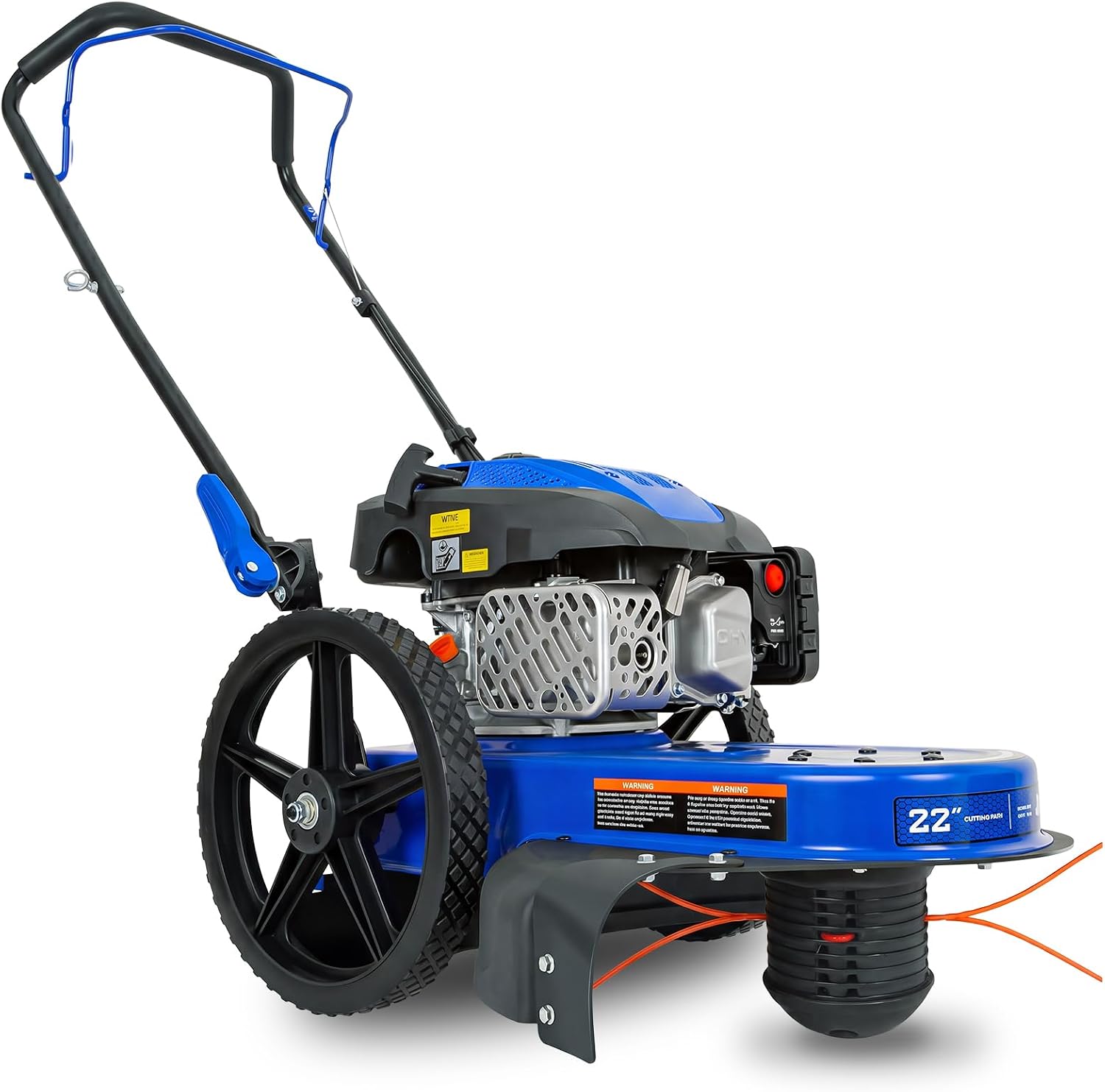
| Power Source | Gasoline-Powered |
|---|---|
| Cutting width | 22 inches |
| Wheel Size | 14 inches |
| Material Type | Alloy Steel |
| Operation Mode | Manual |
This BILT HARD walk-behind string trimmer is designed to clear heavy grass and weeds where a standard mower or handheld trimmer struggles. It uses a 170cc 4-cycle OHV engine with a manual recoil start to power a heavy-duty nylon line across a 22-inch cutting width, and a one-piece steel deck improves strength and reduces vibration while you work. Large 14-inch flat-free wheels make it easier to push over uneven ground and the foldable ergonomic handle helps with control and compact storage. Typical uses include edging along fences, clearing overgrown patches, and cutting through dense, tall grass or light brush around obstacles. Important limitations are the manual start and small 0.2 gallon fuel tank, which mean occasional refueling and some effort starting compared with electric or e-start models, and regular engine maintenance is required. For buyers who want a robust gas-powered solution for heavy trimming, this machine delivers straightforward performance without complex electronics.
Best for: A buyer who prefers a straightforward, durable gas-powered tool for heavy-duty backyard trimming and values reliability over advanced features. Good for homeowners who want a machine that tackles thick grass and tight spots where a lawn mower cannot reach.
Less Ideal for: Not the best choice for users who prioritize low-noise, zero-emissions operation or who need electric push-button starting; consider electric or e-start gas models instead.
- Powerful 170cc 4-cycle OHV engine for cutting dense grass and weeds
- 22-inch cutting width covers wide swaths and reduces passes
- One-piece steel deck increases durability and reduces vibration
- 14-inch flat-free wheels improve maneuverability on uneven terrain
- Foldable ergonomic handle for improved control and compact storage
- Manual recoil start requires physical effort and may be harder for some users
- Small 0.2 gallon fuel tank means more frequent refueling during long jobs
Verdict: Buy this if you want a no-frills, heavy-duty gas walk-behind trimmer that reliably clears thick grass and overgrown areas.
YARDMAX YL2250 22 in. 170cc Gas Walk-Behind String Trimmer Mower

| Cutting width | 22 inches |
|---|---|
| Power Source | gasoline-powered |
| Number of Positions | 5 |
| Wheel Size | 14 inches |
The YARDMAX YL2250 is a wheeled, gas-powered string trimmer mower built to cover large areas and reach edges that a regular mower misses. You push it like a lawn mower while the offset head and 22-inch cutting width let you trim close to fences, beds, and structures without awkward angling. It stores extra pre-cut string in an onboard cord caddy and offers tool-free height adjustment across five positions from 1.5 to 3.5 inches, so you can adapt quickly between light touch-ups and heavier cuts. Rugged 14-inch ball-bearing wheels and a one-piece seamless metal deck reduce vibration and help it roll over uneven ground. Because it is gasoline-powered and manually operated, expect louder operation and the usual maintenance for small engines, and it is heavier to move than a battery model. For routine yard maintenance where fuel range and continuous power matter, this unit is a practical, no-frills performer.
Best for: Buyers who want a dependable, gas-powered wheeled trimmer to handle larger yards and frequent edge work with minimal refilling downtime and straightforward controls.
Less Ideal for: People who need a lightweight, quiet, low-maintenance solution for very small yards or who prefer cordless electric tools for zero-emission operation.
- Wide 22-inch cutting width covers more ground per pass than handheld trimmers
- Offset head design helps trim close to fences and landscaping without repositioning
- Onboard cord caddy stores extra pre-cut string for quick replacements
- Tool-free adjustment with five cutting heights from 1.5 to 3.5 inches
- 14-inch ball-bearing wheels and seamless metal deck reduce vibration and improve roll
- Gasoline engine requires regular maintenance and produces noise and emissions
- At over 60 pounds it is heavier to maneuver than battery-powered alternatives
Verdict: A robust gas walk-behind string trimmer mower that lets you trim wide swaths and finish edge work efficiently without frequent recharging.
Choosing the Right Heavy String Trimmer: Key Factors to Consider
Power Delivery and Duty Cycle
Power delivery determines whether a heavy string trimmer can maintain cutting speed through dense grass, tough weeds, and occasional brush. For gas models that means engine displacement and torque characteristics; for electric models it means continuous motor output and battery runtime or sustained amp draw. A trimmer that spasms or bogs down under load will require multiple passes and increase operator fatigue.
Duty cycle matters because heavy trimming tasks often run longer than casual edging sessions. Look for drive systems and cooling designs built to handle extended periods of use without overheating. Higher-quality components and serviceable parts help the tool survive repeated hard sessions over seasons.
Cutting Width and Line Options
Cutting width affects how much ground you clear per pass. Wider swaths speed work on open areas but can be harder to control near obstacles and landscape plants. Line capacity and the ability to use thicker or multi-strand line influence how well a trimmer slices through coarse stems and thick grass.
Also consider how easy it is to replace or upgrade the line head. Heavy-duty work benefits from heads that accept larger-diameter line and have reliable feed systems that do not jam when fed with tougher cord options.
Shaft, Head, and Build Durability
The shaft and cutting head take the most punishment from knocks, drops, and prolonged vibration. A robust, well-supported shaft resists bending and keeps the head aligned for consistent cuts. Metal-reinforced heads or heavy-duty attachment points reduce the risk of breakage when striking hidden debris.
Materials and assembly quality in the gearbox and head determine long-term reliability. Sealed or serviceable gearboxes and replaceable head components extend useful life and make repairs simpler when a hard season takes its toll.
Operator Comfort and Vibration Control
High vibration levels make long trimming sessions tiring and can lead to numbness or discomfort. Good vibration isolation in the handle, a balanced weight distribution, and comfortable grips reduce fatigue and improve control during precision edging or heavy brush clearing.
Harness or strap compatibility matters for very heavy units. A proper shoulder strap or harness spreads the load across your body and keeps hands from bearing the full weight, making extended jobs safer and more efficient.
Fuel, Battery, and Runtime Considerations
For gas models you should weigh tank capacity, fuel efficiency, and ease of starting. A large tank reduces refueling stops but adds weight. For battery-powered trimmers examine battery capacity, runtime under load, and the availability of spare batteries for continuous work.
Runtime ratings often drop significantly under heavy loads. Choose a power system that meets the expected job length without pushing the engine or battery past its efficient range, and consider how quickly a battery can be swapped or a fuel tank refilled in the middle of a job.
Maintenance and Serviceability
Heavy-duty tools require routine maintenance to last. Easy access to spark plugs, air filters, gearboxes, and trimmer heads reduces downtime and routine service hassle. Components that can be replaced without special tools make field repairs feasible.
Consider whether common wear items are readily available and how simple consumable replacement is. For example, heads that allow quick line changes and gearboxes designed for periodic lubrication cut long-term ownership time and expense.
Choosing Between Gas and Battery Heavy Trimmers
Gas and battery power each have distinct advantages for heavy trimming. Gas models typically deliver longer runtimes and consistent torque for cutting through very thick vegetation, but they require fuel handling, more frequent maintenance, and generate noise and exhaust. Battery models offer quieter operation, lower routine maintenance, and instant starting, but runtime under heavy load can be limited unless you carry spare batteries.
Decide based on job length and access to power. If you regularly tackle acres or long continuous stretches of dense growth, gas models often remain the practical choice. If you do shorter heavy sessions, work in noise-sensitive neighborhoods, or prefer lower upkeep, a high-capacity battery system with spare cells may be the best fit.
- Gas for extended heavy-duty runtime and higher sustained torque
- Battery for quieter operation, less maintenance, and cleaner use
- Consider hybrid workflows: battery trimmers for detail work, gas for big clear-outs
Line Types and When to Use Them
Trimmer line comes in varied diameters and shapes. Thicker and multi-strand lines resist wear and slice through stems better, while round lines run smoothly and spin faster for fine grass. Braided or twisted lines can be useful for cutting woody stems but may stress the head if not compatible.
Match line type to the vegetation you expect. Thicker, reinforced line is worth the slightly increased fuel or battery draw when battling coarse weeds and small brush. For typical turf and light edging, smaller-diameter line gives cleaner results with less load.
- Use thicker line for coarse weeds and brush
- Round or thin line for manicured lawns and edges
- Check head compatibility before buying larger-diameter line
Safety Practices for Heavy Trimming
Heavy trimming increases the risk of thrown debris, so protective gear is essential. Always use eye protection, hearing protection for gas units, long pants, and sturdy footwear. Consider gloves and a face shield when cutting thick brush or near thorny plants.
Trim in controlled passes, keeping a safe distance from bystanders, pets, and delicate plantings. Inspect the work area for rocks, wire, and other hazards before starting to reduce the chance of head damage or dangerous projectiles.
- Wear eye and hearing protection, long pants, and sturdy shoes
- Clear stones and hidden debris from the work area
- Work methodically to reduce missed spots and operator fatigue
Attachments and Versatility
Some heavy string trimmers accept accessories that expand their capabilities, such as brush cutter blades, edging attachments, and detachable pole saws. These options can turn a trimmer into a multi-use tool for seasonal tasks but add complexity and weight.
Assess whether accessory compatibility matters for your yard. If you frequently switch between trimming, edging, and light brush cutting, a platform with supported attachments adds value. If you only need robust string trimming, a simpler dedicated head may be lighter and more reliable.
- Brush cutter blades for woody stems and very thick stalks
- Edging attachments for crisp bed lines
- Prefer integrated designs if you do not need frequent accessory swaps
Transport, Storage, and Winter Care
A heavy trimmer needs sensible storage to preserve its longevity. Drain or stabilize fuel for seasonal storage in gas models and keep batteries stored lightly charged in a cool, dry place. Clean debris and grass from the head and shaft after each session to prevent corrosion and clogging.
Consider how you will transport the tool to job sites. Heavier models benefit from padded cases or straps and good racks in trucks. Routine winterization practices such as fogging the engine and removing batteries keep the tool ready for the next season.
- Store batteries in cool, dry places at recommended charge levels
- Drain or stabilize fuel for long-term gas storage
- Clean and inspect the head and gearbox after heavy use
How We Chose the Best Heavy String Trimmer
We focused on durability, cutting capability, and real-world handling to assemble a shortlist of heavy string trimmers suited for demanding yards. Selection began with models designed for prolonged use in thick grass, brush, and edge work rather than light ornamental trimming. We prioritized units with robust drive systems, generous line capacity, and build materials meant to withstand vibration and impact. Evaluation criteria emphasized motor or engine durability and continuous cutting power, cutting swath and line feed capacity, shaft and head durability, vibration control and operator comfort, and maintenance accessibility. We excluded any tools intended only for light residential use or those with underpowered drive systems that stall in thick growth. We also screened out models with poor accessory support or difficult routine maintenance. Final choices reflect tools that perform well across the specific dimensions gardeners rely on during heavy trimming tasks.
FAQ
How much engine or motor power do I need for heavy brush?
It depends on the vegetation density. For persistent brush and thick stems you want higher torque and sustained power rather than peak RPM alone. In practice, choose a unit marketed for heavy-duty use with a reputation for maintaining speed under load or a battery system with high continuous output and spare cells.
Can I use a thicker line in any heavy string trimmer?
Not always. Heads and feed systems have maximum line diameters they accept. Installing line that is too thick can jam the head or overload the motor. Check compatibility and choose heads rated for heavier, multi-strand line when you expect coarse work.
Are anti-vibration features worth paying attention to?
Yes. Vibration reduction improves comfort and control during long sessions and reduces fatigue. Look for isolated handles, balanced weight distribution, and models compatible with shoulder straps or harnesses for extended use.
What routine maintenance keeps a heavy trimmer reliable?
Keep the head and gearbox clean, replace or service worn bearings and brushes as recommended, check and replace line frequently, and follow the engine or battery maintenance schedule. Easy access to consumables and common parts simplifies servicing and keeps the tool working longer.
Is a harness necessary for a heavy string trimmer?
A harness is highly recommended for extended heavy work because it distributes weight off your arms and shoulders. For short jobs you might manage without one, but using a strap reduces fatigue and improves control on long sessions.
Final Verdict
Prioritize sustained power, build durability, and comfortable handling when choosing a heavy string trimmer. Expect tradeoffs between runtime, weight, and maintenance needs: gas units typically deliver longer continuous power while battery systems offer quieter, lower-upkeep operation. Match the tool to the vegetation and typical job length, and favor models with serviceable heads and vibration mitigation for long-term reliability. Focus on the performance dimensions discussed earlier rather than single specifications. That approach helps you pick a heavy string trimmer that will do the hard work reliably season after season.
