

Note: This article contains affiliate links. If you click on these links and make a purchase, I may earn a small commission at no extra cost to you. This helps support my research and content. Read my full affiliate disclosure here.
Picking a string trimmer that starts reliably makes a big difference when you are mowing small lawns, edging beds, or cleaning up growth around a patio. A tool that fires up quickly avoids frustration and wasted time, especially for gardeners who do not use a trimmer every day. This guide covers seven shortlisted starting string trimmers that excel at easy starting and garden handling. We evaluated models for starting reliability, user comfort, and practical performance in typical yard and patio tasks. Read on for the features and tradeoffs that matter for getting a dependable trimmer you will reach for all season.
Top Picks at a Glance
| Best Overall The best all-around choice for most situations | DEWALT 20V MAX XR 14-Inch Brushless String Trimmer (Tool Only, DCST922B) |  |
| Best Quality Built to a higher standard if you want something more solid | Husqvarna 130L Gas String Trimmer, 18-Inch Straight Shaft |  |
| Best Value The sweet spot between price and what you get | BLACK+DECKER 20V MAX 12" Cordless String Trimmer and Edger (LST300) |  |
| Best Budget The cheapest option that still gets the job done reliably | WEN 10-Inch Corded Electric String Trimmer (ET1003) |  |
| Highest Rated A top-rated pick with lots of positive feedback | Elegarden 51.7cc 2-Cycle Gas 4‑in‑1 Weed Wacker and Brush Cutter |  |
| Most Popular A crowd favorite that many people choose with confidence | BLACK+DECKER 6.5-Amp 14-inch AFS Electric String Trimmer/Edger (BESTA510) |  |
| Best Seller A high-volume bestseller chosen again and again | WORX 20V 12" 2-in-1 Cordless String Trimmer & Lawn Edger (WG163) |  |
DEWALT 20V MAX XR 14-Inch Brushless String Trimmer (Tool Only, DCST922B)

| Power Source | Battery Powered |
|---|---|
| Cutting width | 14 inches |
| Speed | 6000 rpm |
The DEWALT 20V MAX XR 14-inch string trimmer is a performance-focused cordless trimmer built around a brushless motor, a 14-inch cutting swath, and a variable-speed trigger with Hi/Lo speed control. It is designed for homeowners who need a reliable tool for edging, trimming around beds, and cutting through thicker grass and light brush. The folding hinge reduces overall length by about 40 percent for easier storage and transport, and the QuickLoad spool speeds line replacement so you spend less time reloading and more time trimming. In use the brushless motor provides consistent power across the speed range and the Hi/Lo setting helps balance runtime versus cutting force. Important limitations are that this listing is tool-only so you must already own or separately buy a compatible 20V battery and charger, and runtime will depend on the battery you pair with it. The trimmer is solidly built for regular yard work and is best when paired with high-capacity batteries for longer sessions.
Best for: Homeowners who prioritize cutting power and durability for regular lawn maintenance and want a compact, transportable cordless trimmer that can handle thicker grass and edging tasks.
Less Ideal for: Buyers who need an all-in-one kit with batteries included or those who only need an occasional, light-duty trimmer and prefer a cheaper, simpler model.
- Brushless motor delivers strong, consistent power and improved efficiency
- Variable-speed trigger and Hi/Lo switch let you tune power versus runtime
- Folding hinge reduces length for easier storage and transport
- QuickLoad spool simplifies and speeds line replacement
- Tool-only package requires purchasing a compatible 20V battery and charger separately
- Runtime depends entirely on the battery chosen and is not specified with the tool
Verdict: Choose this DEWALT 20V brushless trimmer if you want a compact, performance-oriented cordless trimmer that balances power and portability for regular homeowner use.
Husqvarna 130L Gas String Trimmer, 18-Inch Straight Shaft

| Power Source | Gas Powered |
|---|---|
| Cutting width | 18 inches |
| Speed | 8000 rpm |
The Husqvarna 130L is a gas straight-shaft string trimmer built for homeowners who need a powerful, reliable unit for edging and trimming around yards and tough spots. Its 28-cc 2-cycle engine and 18-inch cutting width let you cover more area faster than smaller trimmers, and features like digital ignition, Air Purge and Smart Start reduce the fuss when starting the engine. The Rapid Replace trimmer head simplifies line changes by letting you align, load and twist the line instead of wrestling with small parts. LowVib anti-vibration design and a comfortable handle help reduce fatigue during longer runs. Expect robust cutting performance and straightforward controls suitable for routine lawn maintenance. The trade-offs are those common to gas models: it requires fuel mixing, occasional tune-ups, and produces more noise and emissions than battery alternatives, so it is less suitable where quiet or zero-emission operation is a priority.
Best for: Homeowners who want a robust gas trimmer that starts reliably and handles larger yards or tougher vegetation, and who prioritize proven features and ease of use.
Less Ideal for: People who need a quiet, low-emission tool for small yards or who prefer low-maintenance battery systems should consider electric alternatives.
- Powerful 28-cc engine with 18-inch cutting width covers more area per pass
- Digital ignition, Air Purge and Smart Start make cold starts easier
- Rapid Replace trimmer head speeds up line changes
- LowVib anti-vibration system and ergonomic handle reduce operator fatigue
- Requires mixed fuel and regular engine maintenance typical of 2-cycle gas units
- Noisy and produces emissions compared with battery trimmers
Verdict: Choose the Husqvarna 130L when you want a dependable, easy-starting gas trimmer that delivers strong cutting performance for medium to large yards.
BLACK+DECKER 20V MAX 12" Cordless String Trimmer and Edger (LST300)

| Power Source | Battery Powered |
|---|---|
| Cutting width | 12 inches |
| Speed | 6200 rpm |
| Number of Batteries | 1 Lithium Ion (included) |
The BLACK+DECKER LST300 is a compact, battery-powered 2-in-1 string trimmer and wheeled edger designed for routine yard maintenance and edging tasks. It uses a 20V Powerconnect lithium-ion battery (included) and a PowerDrive transmission to deliver higher torque at the cutting head, while a 12-inch cutting swath makes it easy to navigate around garden beds and sidewalks. The automatic feed spool keeps line length correct without bumping, and adjustable height plus a textured handle improves comfort for longer sessions. Because it is cordless and lightweight it starts quietly and avoids the fuss of gas tools, and the included wall-mountable charger simplifies storage. Expect solid performance on standard grass and moderate overgrowth; however the 12-inch head and single included 2.0 Ah battery limit runtime and may require slower passes or a second battery for large yards or very thick weeds. For homeowners focused on convenience and everyday trimming, this model balances ease of use with enough cutting power for typical light-to-moderate jobs.
Best for: Homeowners who want an easy-to-use, low-noise cordless trimmer for regular lawn touch-ups and clean edging around sidewalks and beds and who value simplicity and proven performance.
Less Ideal for: Those with several acres, dense brush, or frequent heavy clearing needs should look at higher-voltage cordless or gas-powered trimmers instead.
- Converts quickly between string trimmer and wheeled edger for two common tasks
- Automatic Feed Spool (AFS) keeps line fed without bumping
- PowerDrive transmission increases torque for stronger cutting at the head
- Lightweight with adjustable handle and height for comfortable use
- Includes 20V lithium-ion battery and charger so it is ready to use out of the box
- 12-inch cutting swath and single 2.0 Ah battery limit runtime and may be slow on large yards or very thick weeds
- Not suited for heavy-duty brush cutting compared with more powerful gas or higher-voltage cordless models
Verdict: A lightweight, easy-to-use 2-in-1 cordless trimmer that is ideal for everyday light-to-moderate lawn trimming and edging tasks.
WEN 10-Inch Corded Electric String Trimmer (ET1003)

| Power Source | ac |
|---|---|
| Cutting width | 10 |
| Speed | 10500 rpm |
The WEN 10-Inch Corded Electric String Trimmer is a lightweight, budget-friendly tool aimed at routine trimming and edging in small yards. It runs on a 3-amp AC motor that spins the cutting line up to 10,500 RPM and uses an automatic feed system so you can trim continuously without manually advancing line. The rotating handle converts to an edger for quick cleanup along walkways, and a cord storage hook helps manage extension cords during use. At about 4 pounds and a compact length, it is easy to maneuver for shorter users and reduces operator fatigue during brief sessions. Because it is corded, it delivers consistent power without gas or battery recharging but is limited by cord reach and a smaller 10-inch cutting swath, so jobs take longer on larger areas. The unit includes a spool of replacement string and is compatible with WEN ET-400 cartridges, with a two-year warranty for peace of mind.
Best for: Best for budget-minded owners of small lawns who need a simple, easy-to-use trimmer for quick touch-ups and edging rather than extended heavy-duty work.
Less Ideal for: Not a good choice for owners with large properties, thick brush, or frequent heavy-duty clearing where a wider cutting swath or cordless/gas power would save time.
- Very lightweight and compact for easy handling and reduced fatigue
- Automatic line feed keeps cutting continuous without manual adjustments
- Rotating handle converts to an edger for more precise borders
- Plug-in corded power provides steady torque without batteries or gasoline
- 10-inch cutting width covers less ground per pass compared with larger trimmers
- Corded design restricts range and requires an extension for larger yards
Verdict: A very affordable, lightweight corded trimmer that makes quick work of small yards and edging tasks.
Elegarden 51.7cc 2-Cycle Gas 4‑in‑1 Weed Wacker and Brush Cutter

| Power Source | Gas Powered |
|---|---|
| Cutting width | 16 inches |
| Speed | 10000 rpm |
The Elegarden 51.7cc gas weed wacker is built for heavy yard work where a battery trimmer would struggle. Its 2-cycle 51.7cc engine delivers about 2 HP and up to 10,000 rpm, driving a 16-inch dual-line head for wide swaths and multiple metal blades (3T, 40T and 80T) for cutting dense weeds, brush and small saplings. The straight shaft, U-handle and shoulder strap make longer sessions more manageable, and the quick-release split shaft simplifies assembly, transport and storage. The kit ships with protective gear and tools so you can switch cutting attachments on the job. Expect strong cutting performance and durability for farm, trail or overgrown-property cleanup, but keep in mind it is a two-stroke gas tool so it needs fuel mixing, regular maintenance and generates more vibration and noise than electric models. It is not CARB certified and cannot be used in California.
Best for: Buyers who prioritize a dependable, gas-powered cutter for heavy-duty trimming and brush clearing and who prefer a tool that handles a variety of tough cutting tasks with metal blades.
Less Ideal for: Casual lawn owners who prefer quieter, low-maintenance electric or battery trimmers or users restricted by state emissions rules.
- Powerful 51.7cc 2-cycle engine provides strong cutting performance up to 10,000 rpm
- 4-in-1 configuration includes dual-line trimmer plus 3T, 40T and 80T metal blades for versatile cutting tasks
- Straight shaft with U-handle and shoulder strap improves control and reduces fatigue during extended use
- Quick-release split shaft enables faster assembly, transport and storage
- Complete kit includes safety gear and installation tools so it is ready to use out of the box
- Requires two-stroke fuel mixing and regular engine maintenance
- Not CARB certified and cannot be used in California
Verdict: Choose this robust gas trimmer if you need a reliable, heavy-duty machine that swaps between line and metal blades to tackle thick grass, dense weeds and brush.
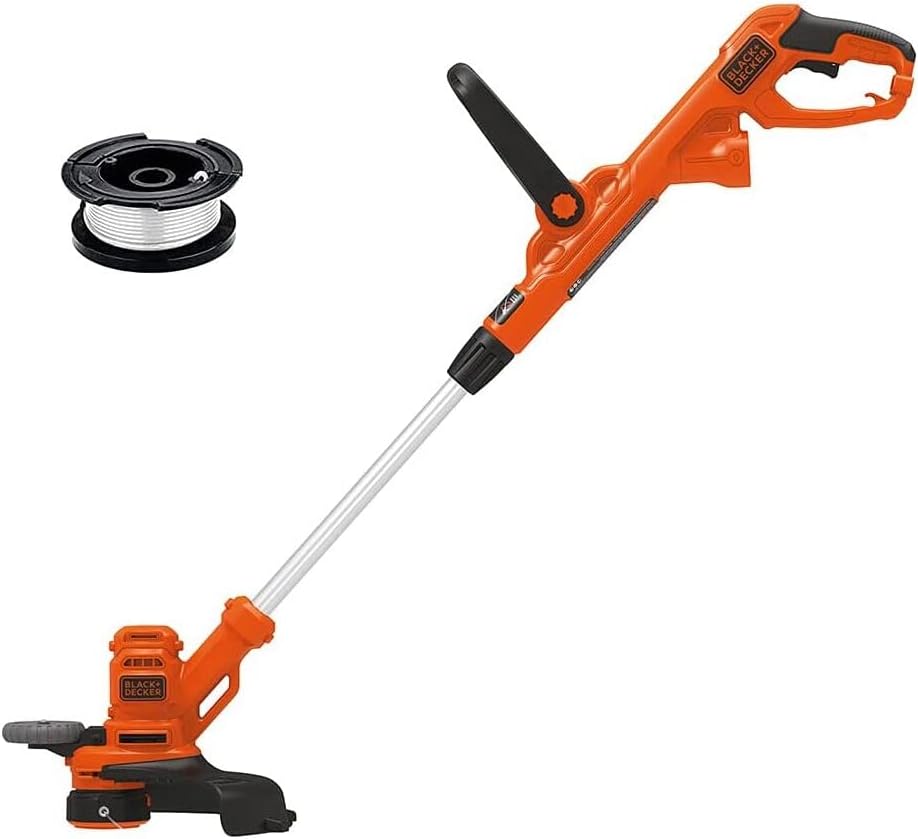
BLACK+DECKER 6.5-Amp 14-inch AFS Electric String Trimmer/Edger (BESTA510)
| Power Source | Corded Electric |
|---|---|
| Cutting width | 14 inches |
| Speed | 8000 rpm |
| Included Components | AF-100 Spool, Auxiliary Handle, Guard |
| Manufacturer Warranty Description | 2 Year Limited Warranty, 30 Day Money Back Guarantee |
This BLACK+DECKER model is a straightforward corded electric trimmer that converts to a wheeled edger, letting you trim tight spots and define borders without buying two tools. The 6.5‑amp motor with POWERDRIVE transmission supplies steady torque for grass and light overgrowth, while the 14‑inch cutting swath gets jobs done quickly. AFS automatic feed spool removes the need to bump the head and keeps line feeding consistent, and the integrated cord retention reduces accidental unplugging during use. The tool is relatively lightweight and includes an auxiliary handle and adjustable positions for more comfortable handling. Because it is corded, runtime is effectively unlimited but you are limited by reach from an outlet and need to manage an extension cord for larger yards. The edging wheel converts easily but is basic compared with dedicated gas or battery pro edgers. For homeowners on a budget who need reliable, low-maintenance edging and trimming around sidewalks, driveways, and flower beds, this is a practical choice.
Best for: Homeowners who want an affordable, no-frills electric trimmer that also converts to an edger for routine lawn edge and small-yard trimming tasks.
Less Ideal for: People with large properties who need cordless mobility or professionals who require heavy-duty gas-powered edging and cutting performance.
- 2‑in‑1 trimmer and wheeled edger covers both tasks without extra tools
- AFS automatic feed spool eliminates bump feeding for uninterrupted work
- 6.5‑amp motor with POWERDRIVE transmission delivers steady torque for common yard weeds and grass
- Integrated cord retention prevents accidental unplugging during use
- Lightweight with adjustable handle for easier control and comfort
- Corded design limits reach and requires managing an extension cord
Verdict: A budget-friendly corded trimmer that doubles as a simple wheeled edger and reliably handles routine edging and trimming around the yard.
WORX 20V 12" 2-in-1 Cordless String Trimmer & Lawn Edger (WG163)

| Power Source | Battery Powered |
|---|---|
| Cutting width | 12 inches |
| Speed | 7600 rpm |
| Number of Batteries | 2 Lithium Ion batteries required. (included) |
The WORX WG163 is a compact 2-in-1 cordless string trimmer that converts quickly to a wheel-guided edger for straight, clean borders. It uses a Command Feed spool so you only advance line when you want to, and the head tilts 90 degrees to reach slopes and tight areas. Rubberized support wheels help guide edging for consistent results and the adjustable spacer guard protects flowers and landscaping during trimming. Included with the tool are two 20V PowerShare batteries and a charger, which makes it ready to work on small to medium yards and lets you swap batteries across other WORX 20V tools. At about 5.5 pounds it is easy to maneuver and less fatiguing for longer sessions. Limitations to consider are the modest 12-inch cutting swath and single-speed motor, so it is not the fastest option for very large properties or heavy brush. The Command Feed system reduces bump-feed interruptions but you will still need to keep replacement line on hand for sustained use.
Best for: Buyers who want a lightweight, easy-to-use 2-in-1 trimmer and edger for small to medium lawns and value included batteries and proven features backed by many user reviews.
Less Ideal for: Not well suited for homeowners with large acreage, dense brush, or who need variable-speed power for heavy-duty cutting tasks.
- Converts quickly between trimmer and wheel-guided edger for two tools in one
- Command Feed spool provides on-demand line advance without bumping
- Two 20V PowerShare batteries included so you can work longer and use batteries across other WORX tools
- 90° tilting head and adjustable spacer guard improve access and protect plants
- Lightweight design eases fatigue during extended use
- 12-inch cutting width and single-speed motor limit efficiency on large yards or thick vegetation
Verdict: Choose the WORX WG163 if you want a lightweight, battery-ready 2-in-1 trimmer and edger that is easy to use and works well on small to medium lawns.
Choosing the Right Starting String Trimmer: Key Factors to Consider
Starting System and Ease of Pull
How a trimmer starts matters for usability. A recoil design that engages smoothly with minimal extra effort reduces arm strain and frustration. Some starting systems incorporate primer bulbs or automatic choke features that make cold starts and after-storage starts more reliable.
If you are a casual gardener who uses the tool intermittently, prioritize a starting mechanism that requires fewer and lighter pulls. Frequent hard pulls can lead to fatigue and discourage timely maintenance. Also consider whether the trimmer's handle and starter placement let you apply steady force without awkward twisting of the wrist.
Engine Type and Fuel Handling
Two-stroke and four-stroke engines behave differently in the yard. Two-stroke engines are lighter and often simpler mechanically but require mixing oil with gasoline, which adds a step before use. Four-stroke engines eliminate fuel mixing but can be heavier and slightly more complex to service.
Think about storage and winterizing. If you expect long storage periods between uses, a type with easier fuel management and cleaner shutdown reduces starting problems later. Also look for accessible fill points and clear fuel instructions to avoid user error that can complicate starting.
Weight, Balance, and Harness Options
Weight affects nimbleness and how long you can comfortably work. A lighter trimmer is easier to lift and maneuver around flower beds and fence lines. Balance is equally important; a poorly balanced unit places torque on your shoulders and back even if the overall weight is moderate.
Some trimmers come with shoulder straps or harness attachments that help distribute weight for longer sessions. If your yard has mixed tasks-edging, under-shelf trimming, light clearing-prioritize models with good balance and optional harness compatibility to reduce fatigue.
Cutting System and Line Feed
The cutting head and line feed determine how much time you spend repairing the tool mid-task. Bump-feed and automatic feed heads have different tradeoffs. Bump-feed heads let you deploy more line on the fly but can require manual intervention; automatic heads keep feeding line but may be more complicated to service.
Line thickness and head compatibility influence durability and the ability to handle coarse grass or light weeds. Consider how often you want to change or refill line and whether the head design is straightforward for tool-free replacement.
Maintenance Access and Serviceability
A trimmer that is easy to service stays reliable. Accessible air filters, simple spark plug access, and straightforward carburetor adjustments reduce the chance of avoidance when regular maintenance is needed. Clear, simple maintenance steps help keep starting reliable season after season.
Also consider parts availability and whether routine items like line spools and replacement heads are common sizes. The less obscure the parts, the easier it will be to keep the tool in working order without long downtime.
Noise, Vibration, and Comfort
Noise and vibration affect comfort and acceptable usage windows in residential areas. High vibration can make a trimmer feel harder to start because of the physical discomfort it causes during initial pulls and subsequent operation. Quieter, smoother-running engines make it easier to work for longer without fatigue.
Look for vibration-dampening handles and designs that isolate the engine from the shaft and grips. Also check typical noise levels if neighborhood restrictions or early-morning tasks are factors in your choice.
Preparing a New Trimmer for Reliable Starts
Before first use and after storage periods, prepare a trimmer to maximize starting reliability. Use fresh, correctly mixed fuel if the engine is two-stroke, and inspect the spark plug, air filter, and primer bulb for debris or signs of damage. Running a short break-in procedure can help seat moving parts and improve future starts.
Store the tool with a small amount of stabilizer in the fuel or run the engine dry according to the owner's instructions to avoid stale fuel causing hard starts. Keep the starter rope free of frays and check that the recoil spring snaps back cleanly. Small setup steps like these reduce no-start situations at the worksite.
- Check fuel mixture and primer bulb function
- Inspect and clean air filter and spark plug
- Run short break-in or idle checks on new units
- Use a shoulder strap for stability during starts
Common Starting Problems and Simple Fixes
If a trimmer is hard to start, common culprits include stale fuel, a fouled spark plug, or a clogged air filter. Address these first because they are quick fixes that restore normal operation in most cases. For two-stroke engines, confirm the fuel-to-oil ratio is correct; an incorrect mix often leads to hesitation or fouling.
If the starter rope slips or the engine does not crank, inspect the recoil mechanism and starter handle for wear. For persistent no-starts after basic checks, consider a quick carburetor cleaning and confirm the ignition coil and kill switch wiring are secure. Many start troubles are maintenance-related rather than design flaws.
- Replace old fuel and check for water contamination
- Swap or clean the spark plug
- Clean or replace a clogged air filter
- Inspect starter rope and recoil mechanism
Best Practices for Comfortable Trimming Sessions
Adopt body mechanics that reduce strain: hold the trimmer at a slight angle and use a shoulder strap to take weight off your arms. Move your feet rather than twisting your torso to reach along long beds. Short, frequent breaks reduce fatigue and maintain precision.
Plan trimming in stages. Start with the edges and high-traffic areas that show most wear, then move to lighter touch-ups. This approach reduces heavy initial loads on the engine and keeps starting simpler if you need to stop and restart the tool multiple times.
- Use a shoulder strap to distribute weight
- Angle the head for efficient cutting without overreaching
- Work in short sessions to maintain control
- Keep a small toolkit handy for roadside adjustments
Storing and Winterizing a Starting String Trimmer
Proper storage prevents starting failures when you next need the trimmer. For short-term storage, run the engine until it is out of fuel to avoid varnished deposits in the carburetor. For seasonal storage, drain the fuel tank or add a fuel stabilizer, and store the unit in a dry, sheltered place.
Disconnect the spark plug or follow manufacturer safety steps before doing any long-term maintenance. Clean debris from the cutting head and remove line if it will sit for months to avoid nesting pests and line deformation.
- Run or drain fuel before long storage
- Clean the head and remove leftover grass
- Store in a cool, dry place out of direct sunlight
- Protect the starter rope from kinks or damp
When to Choose a Heavier-Duty Unit
If your yard regularly includes dense brush, thick weeds, or large tracts of overgrowth, a heavier-duty unit may be more appropriate despite a slightly more demanding starting experience. Heavier models often provide greater torque and cutting capacity, which means fewer passes and less overall work despite the extra initial effort.
Balance heavier power against starting and handling. If easy starting is your top priority but you occasionally need more power, look for models that offer improved starting features paired with stronger engines rather than a full step up to commercial equipment.
- Reserve heavy-duty units for frequent thick brush
- Expect more weight and slightly more complex maintenance
- Look for improved starting aids in higher-power models
- Consider harnesses to offset added weight
How We Chose the Best Starting String Trimmer
We selected Starting String Trimmers using practical, garden-focused criteria that matter for first pulls and everyday outdoor cleanup. Key evaluation points included starting reliability under normal conditions, such as cold starts and after short storage intervals. We tested pull mechanisms conceptually for low effort and consistent engagement. Ergonomics and weight distribution were considered so that the trimmer is comfortable during common tasks like edging, under-bush clearing, and light lawn trimming. Cutting effectiveness and line feed systems were assessed for how quickly a user can complete typical jobs without constant rework. Durability of the drive and basic maintenance needs were factored to estimate long-term owner satisfaction. We excluded heavy-duty commercial units and specialized brush cutters that require professional experience or advanced safety gear. Also excluded were models that rely solely on unusual or proprietary fuels and those needing complex assembly beyond common homeowner skills. The final list balances easy starting, manageable weight, reasonable maintenance, and dependable cutting for small-to-medium yards and occasional heavier growth.
FAQ
Why does my starting string trimmer hesitate when I pull the cord?
Hesitation often stems from stale fuel, a fouled spark plug, or a dirty air filter. Check and replace fuel, inspect the plug, and clean the air filter first. For two-stroke models, confirm the fuel-oil mix is correct.
How many pulls should it normally take to start a trimmer?
Many trimmers start within a few pulls when warm and properly maintained. Cold starts or after long storage may take more effort, but consistent hard-pull requirements usually indicate a maintenance issue that should be addressed.
Is a two-stroke or four-stroke engine better for easy starting?
Two-stroke engines are lighter and often simpler to start after correct fueling, but they require pre-mixing oil. Four-stroke engines avoid mixing and can be more forgiving for infrequent users, though they are generally heavier. Choice depends on your tolerance for fuel prep and desired weight.
Can poor starting be caused by the starter rope or handle?
Yes. A frayed rope or a sticking recoil mechanism can prevent smooth engagement and make starting feel harder. Inspect the rope for wear and ensure the recoil spring and pulley return correctly.
How should I store fuel to prevent starting problems later?
Use fresh fuel and, for two-stroke engines, properly mixed gasoline. If fuel will be stored for more than a month, add a fuel stabilizer or run the tank dry before storage to avoid varnish in the carburetor that leads to hard starts.
Final Verdict
Prioritize reliable starting and comfortable handling when choosing a Starting String Trimmer, because these factors determine whether you will reach for the tool when needed. Balance starting systems against engine type, weight, and cutting needs to match how you use the trimmer in your yard. In practice, pick the model that minimizes pull effort, is simple to maintain, and fits the typical tasks you do most often.
